- Space
- Astronomy
- The Sun
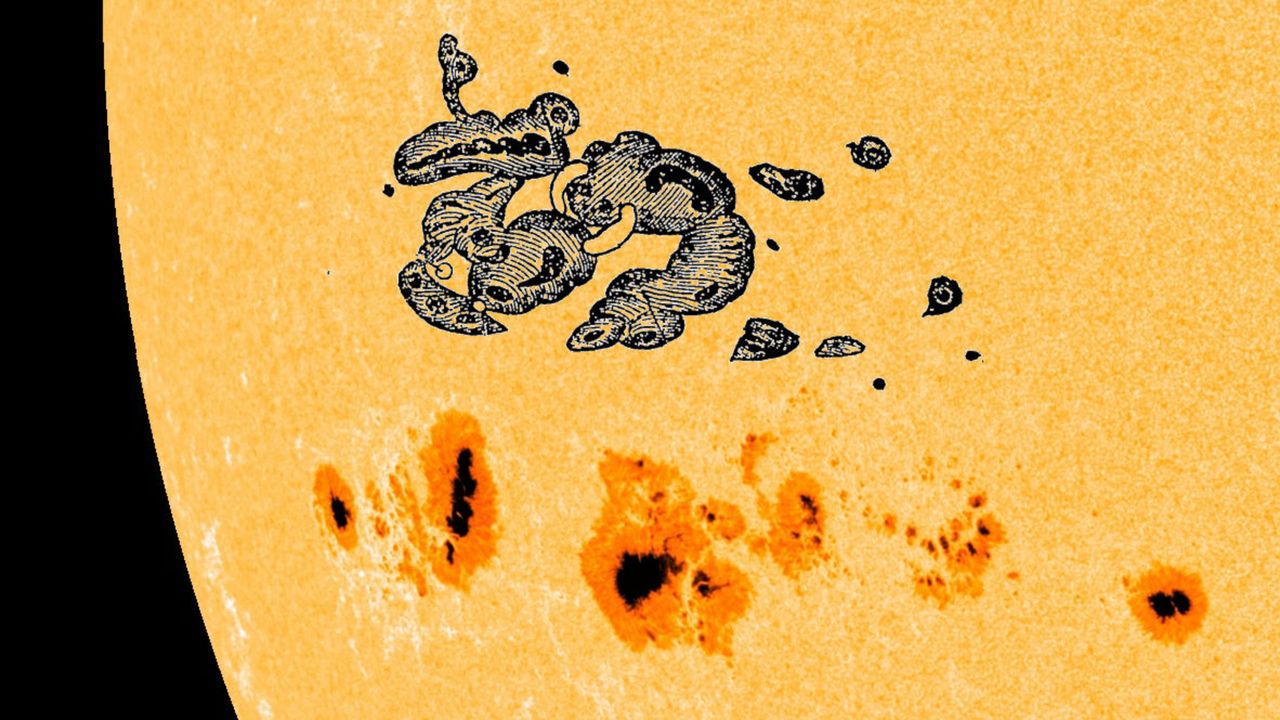
A massive new sunspot complex, dubbed AR 4294-4296, has emerged on the sun and is facing directly at Earth. The dark patch is on par with the infamous sunspot that birthed the 1859 Carrington Event — but, for now, it's staying quiet.
4 Comments Join the conversationWhen you purchase through links on our site, we may earn an affiliate commission. Here’s how it works.
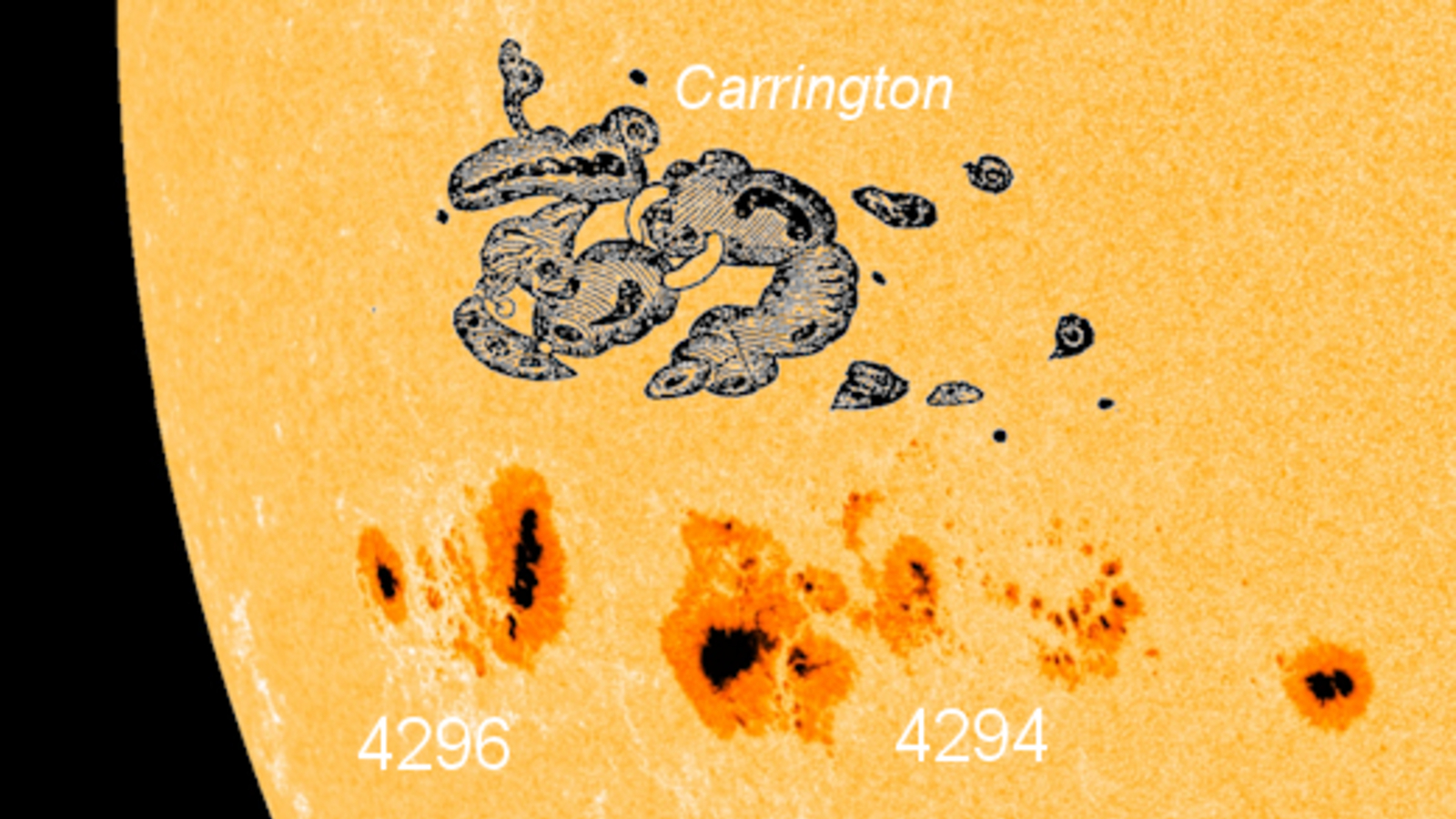 The new sunspot complex AR 4294-4296 is collectively around the same size as the dark patch that triggered the infamous Carrington Event in 1859.
(Image credit: NASA)
The new sunspot complex AR 4294-4296 is collectively around the same size as the dark patch that triggered the infamous Carrington Event in 1859.
(Image credit: NASA)
A gigantic cluster of sunspots — collectively around the same size as the one that birthed the largest solar storm in recorded history — has just emerged on the sun's Earth-facing side, and is now pointed directly at our planet. But don't panic! While auroras and some technological disturbances are possible over the coming week, the new sunspot complex seems unlikely to unleash a second Carrington Event.
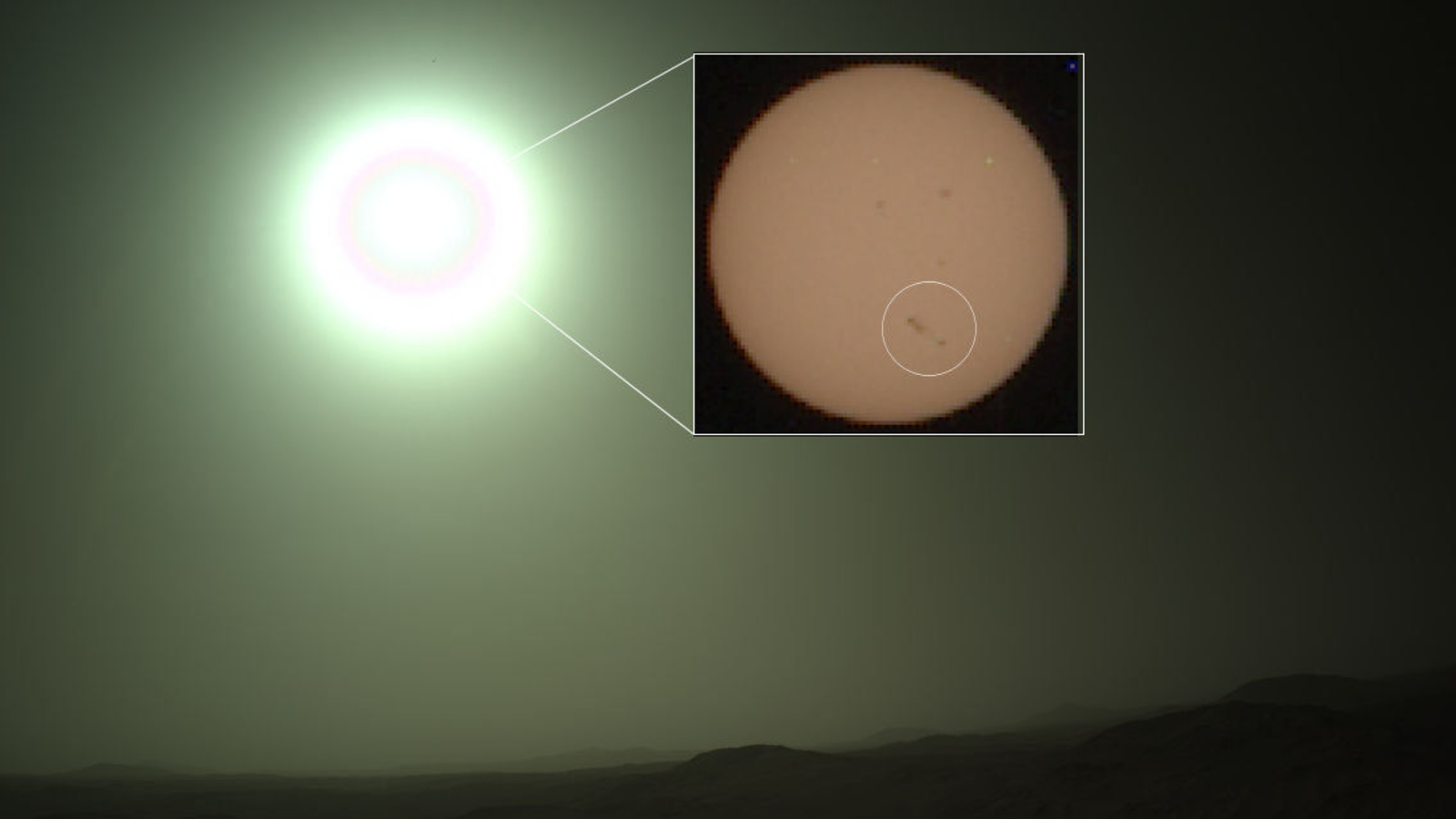
The complex, dubbed AR 4294-4296, is made up of two different sunspot groups, AR 4294, and AR 4296, that are magnetically intertwined. It first became visible on Nov. 28, when it rotated onto the sun's Earth-facing side on our home star's western limb. However, the dark patches were first spotted around a week earlier by NASA's Perseverance Mars rover, which was spying on the sun's far side relative to Earth.
AR 4294-4296 is around the same size as a giant sunspot observed by British astronomer Richard Carrington in September 1859, which subsequently birthed the "Carrington Event" — the biggest solar storm ever seen by humans. The image above, first shared by Spaceweather.com on Dec. 2, shows the sunspot complex alongside Carrington's sketch of the giant 19th-century behemoth. At first glance, the new sunspot complex appears to be larger. However, in reality, its dark spots cover an area of the solar surface around 90% the size of the Carrington sunspot.
You may like-
 Gigantic 'letter S' spotted on the sun just before a 'dark eruption' hurls a fiery shadow at Earth
-
 Earth's magnetic field has a weak spot — and it's getting bigger, putting astronauts and satellites at risk
-
 That was the week in science: Comet 3I/ATLAS glows green | Roman roads | Bear attacks
Sunspots have the capacity to unleash powerful blasts of radiation, or solar flares, when their invisible magnetic field lines contort and snap, unleashing energy into space. These explosive outbursts can trigger temporary radio blackouts on Earth and launch massive, fast-moving clouds of plasma, or coronal mass ejections (CMEs), at our planet. When this happens, it can subsequently cause disturbances in our planet's magnetic field, known as geomagnetic storms, which can interfere with electronics and paint vibrant auroras in the night sky.
The new dark patches are "one of the biggest sunspot groups of the past 10 years" and have the capacity to unleash supercharged X-class flares — the most powerful type on the National Oceanic and Atmospheric Administration’s solar flare categorization system — Spaceweather.com representatives recently wrote. If it does blow and unleashes a CME, then the resulting solar storm "will be geoeffective," they added.
The Carrington Event unleashed an estimated X45 magnitude solar flare in 1859, which remains a record, although there is geological evidence that even more powerful blasts occurred long before humans emerged. For context, an X45 flare is more than five times stronger than the most powerful solar flare of the last decade — an X7 blast in October 2024.
If an equally powerful blast impacted Earth today, the radiation would knock out every satellite in orbit around our planet, recent simulations revealed. It would also wreak havoc on the ground, potentially damaging parts of the electrical grid. Experts estimate that the total damages would easily exceed $1 trillion.
Sign up for the Live Science daily newsletter nowContact me with news and offers from other Future brandsReceive email from us on behalf of our trusted partners or sponsorsBy submitting your information you agree to the Terms & Conditions and Privacy Policy and are aged 16 or over.If AR 4294-4296 is close in size to the sunspot that birthed the Carrington Event, that means a huge solar storm is likely, right? Well, yes and no.
Larger sunspots do have the potential to launch more powerful solar flares. For example, the sunspot that birthed a geomagnetic "superstorm" in May 2024 was more than 15 times wider than Earth. However, with sunspots, size isn't everything.
Whether or not a sunspot reaches its maximum explosive potential is also tied to the configuration of its magnetic field and the frequency with which it explodes, meaning that some giant sunspots can be completely harmless.
You may like-
Gigantic 'letter S' spotted on the sun just before a 'dark eruption' hurls a fiery shadow at Earth
-
Earth's magnetic field has a weak spot — and it's getting bigger, putting astronauts and satellites at risk
-
That was the week in science: Comet 3I/ATLAS glows green | Roman roads | Bear attacks
The magnetic fields of AR 4294-4296 are quite entangled, meaning that flares are possible, and the complex has already unleashed a potential X-class flare while still on the sun's farside, according to Spaceweather.com. However, despite this, experts say there is no clear sign of a superstorm on par with the Carrington Event in the immediate future.
Scientists will be keeping a particularly close eye on the magnetic field of the latest behemoth for signs of incoming activity. But if it happens to rotate past Earth without any outbursts, the hefty dark spots are likely large enough to survive more than one trip around the sun, meaning they could be back for "round two" sometime closer to Christmas.
RELATED STORIES—'The sun is slowly waking up': NASA warns that there may be more extreme space weather for decades to come
—Invisible 'flickering' on the sun could predict potentially dangerous solar flares hours in advance
—We are fast approaching the sun's 'battle zone' — and it could be even worse than solar maximum, experts warn
The sun has been particularly active in recent years, because it has recently been in the most active phase of its roughly 11-year solar cycle, known as solar maximum.
That has fueled several recent X-class flares, including two back-to-back explosions, which triggered a G4 (severe) geomagnetic storm between Nov. 11-12. In fact, 2024 had the highest number of X-class flares in a single year since modern records began in 1996.
A lot of these flares have triggered geomagnetic storms on Earth, including the extreme disturbance in May 2024, which was the most powerful of its kind for 21 years and triggered some of the most widespread auroras in centuries.
Sun quiz: How well do you know our home star?
 Harry BakerSocial Links NavigationSenior Staff Writer
Harry is a U.K.-based senior staff writer at Live Science. He studied marine biology at the University of Exeter before training to become a journalist. He covers a wide range of topics including space exploration, planetary science, space weather, climate change, animal behavior and paleontology. His recent work on the solar maximum won "best space submission" at the 2024 Aerospace Media Awards and was shortlisted in the "top scoop" category at the NCTJ Awards for Excellence in 2023. He also writes Live Science's weekly Earth from space series.
You must confirm your public display name before commenting
Please logout and then login again, you will then be prompted to enter your display name.
Logout Read more Gigantic 'letter S' spotted on the sun just before a 'dark eruption' hurls a fiery shadow at Earth
 Earth's magnetic field has a weak spot — and it's getting bigger, putting astronauts and satellites at risk
 That was the week in science: Comet 3I/ATLAS glows green | Roman roads | Bear attacks
 A massive weak spot in Earth's magnetic field is growing, scientists discover
 Scientists detect monster blast from nearby star that could rip the atmosphere off a planet
 Powerful solar storms, exploding comets and pigs from hell
Latest in The Sun
Powerful solar storms, exploding comets and pigs from hell
Latest in The Sun
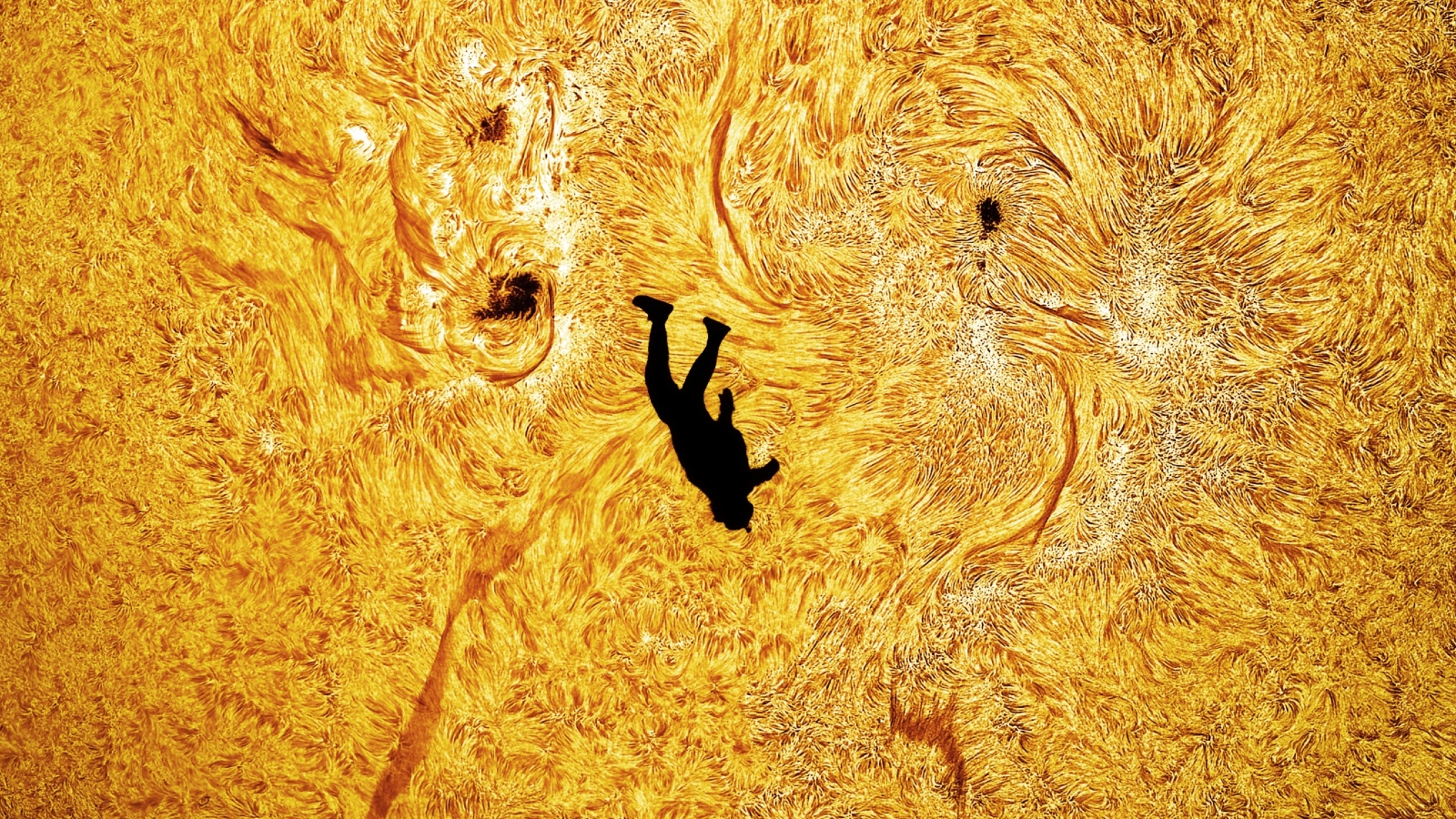 Astrophotographer snaps 'absolutely preposterous' photo of skydiver 'falling' past the sun's surface
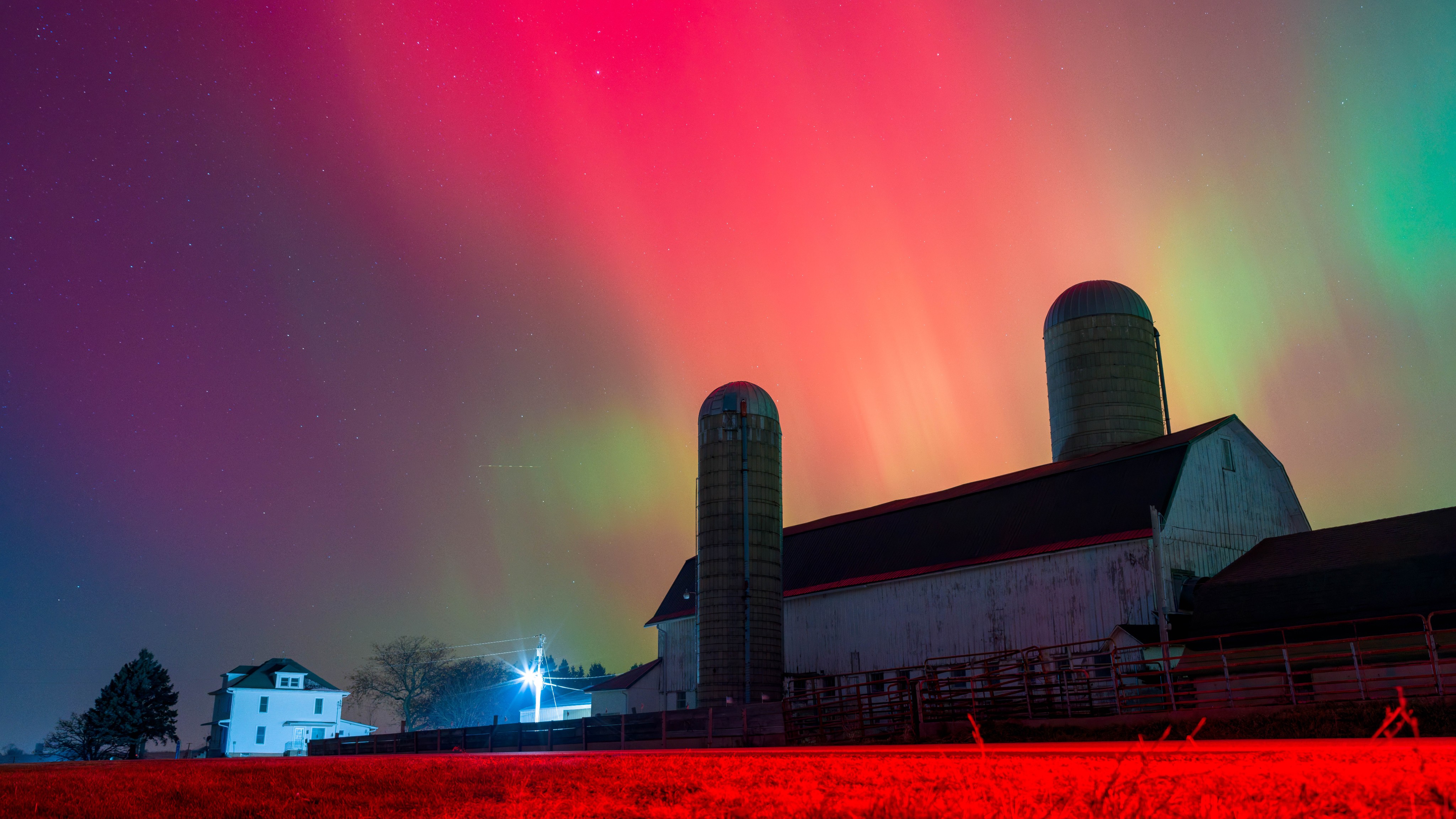 'Severe' solar storm brings auroras as far south as Florida — and more are on the way tonight
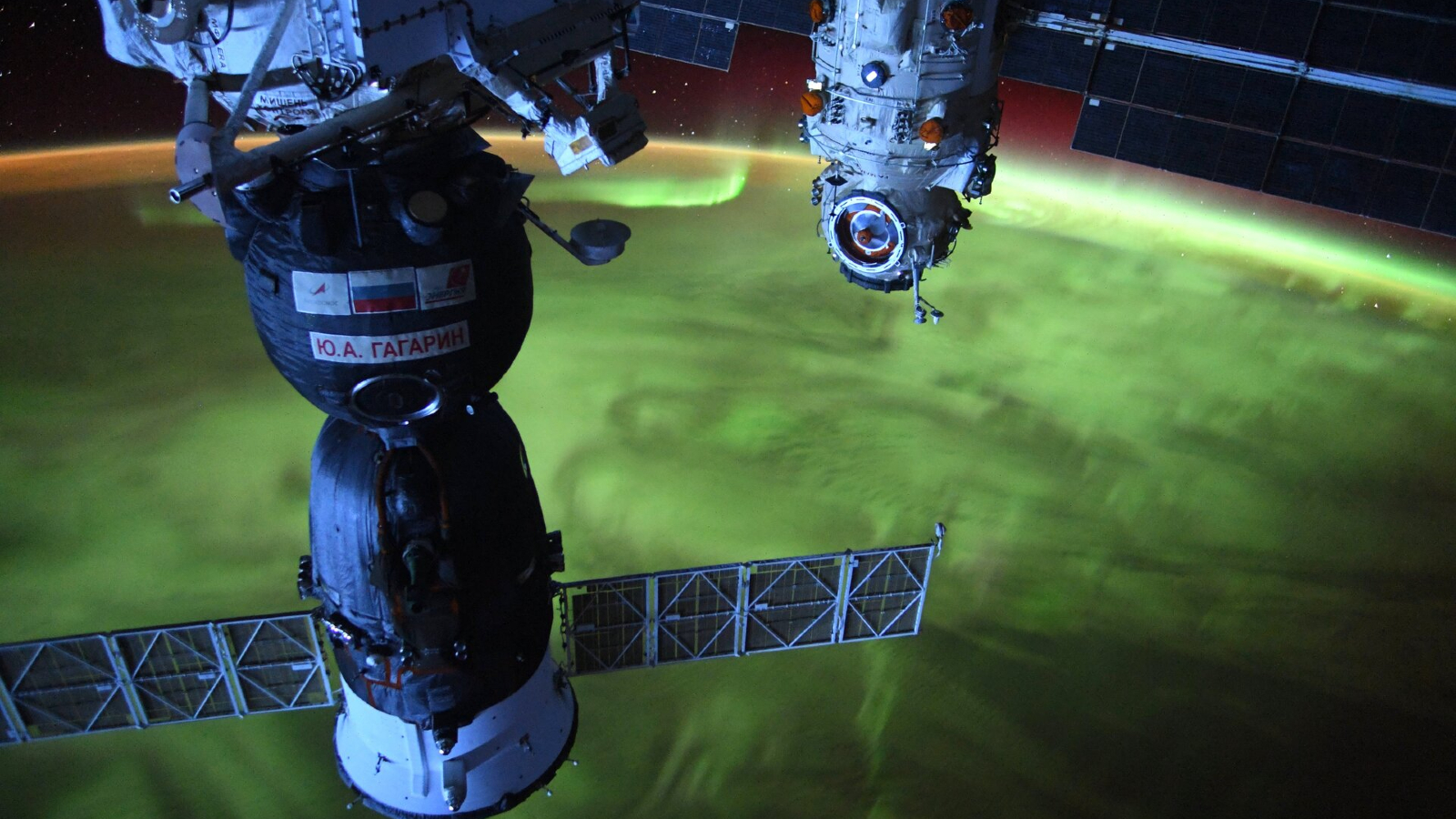 The next Carrington-level solar superstorm could wipe out 'all our satellites,' new simulations reveal
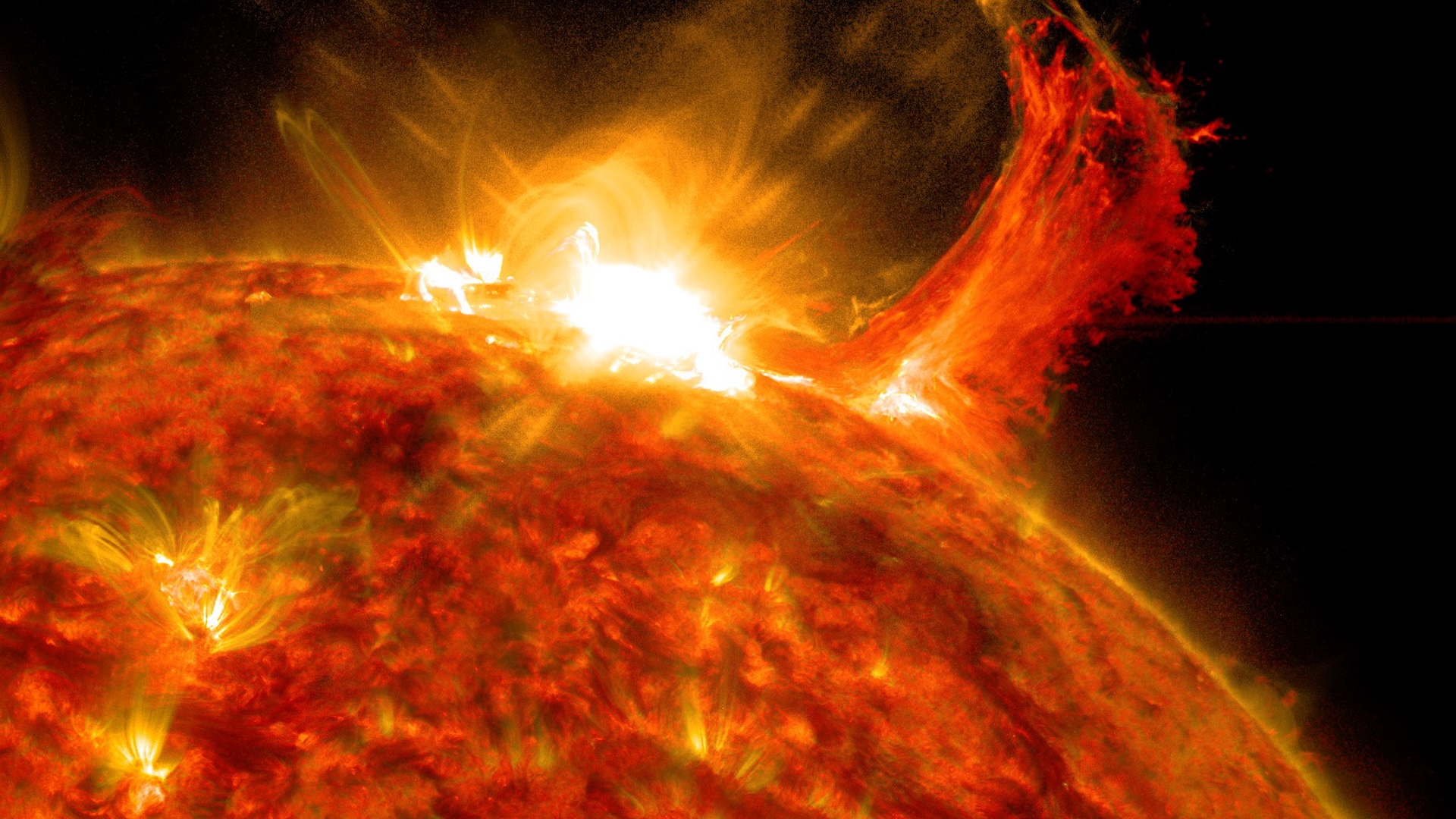 Mystery of the sun's mind-bogglingly hot atmosphere may finally be solved
 'The sun is slowly waking up': NASA warns that there may be more extreme space weather for decades to come
Gigantic 'letter S' spotted on the sun just before a 'dark eruption' hurls a fiery shadow at Earth
Latest in News
'The sun is slowly waking up': NASA warns that there may be more extreme space weather for decades to come
Gigantic 'letter S' spotted on the sun just before a 'dark eruption' hurls a fiery shadow at Earth
Latest in News
 New 3I/ATLAS images show the comet getting active ahead of close encounter with Earth
 Ethereal structure in the sky rivals 'Pillars of Creation' — Space photo of the week
 Unusual, 1,400-year-old cube-shaped human skull unearthed in Mexico
 Strangely bleached rocks on Mars hint that the Red Planet was once a tropical oasis
 Lost Indigenous settlements described by Jamestown colonist John Smith finally found
 2,400-year-old 'sacrificial complex' uncovered in Russia is the richest site of its kind ever discovered
LATEST ARTICLES
2,400-year-old 'sacrificial complex' uncovered in Russia is the richest site of its kind ever discovered
LATEST ARTICLES- 1Lost Indigenous settlements described by Jamestown colonist John Smith finally found
- 2Strangely bleached rocks on Mars hint that the Red Planet was once a tropical oasis
- 32,400-year-old 'sacrificial complex' uncovered in Russia is the richest site of its kind ever discovered
- 4Ethereal structure in the sky rivals 'Pillars of Creation' — Space photo of the week
- 5What was the loudest sound ever recorded?