- Technology
- Engineering
A new device cuts down the time it takes to harvest water from the atmosphere from days to minutes, MIT researchers say.
2 Comments Join the conversationWhen you purchase through links on our site, we may earn an affiliate commission. Here’s how it works.
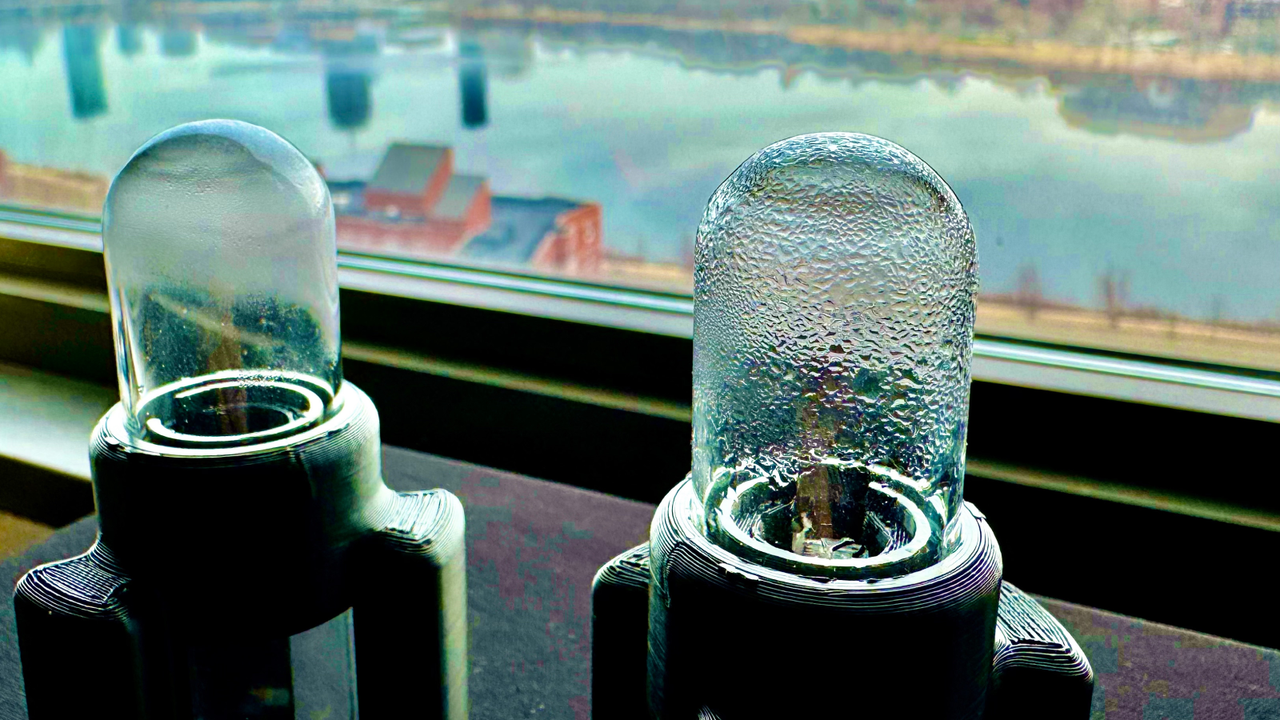
 MIT engineers designed an ultrasonic system to “shake” water out of an atmospheric water harvester. The design (two prototypes shown in photo) can recover captured water in minutes rather than hours.
(Image credit: Ikra Iftekhar (CC BY-NC-ND 3.0))
MIT engineers designed an ultrasonic system to “shake” water out of an atmospheric water harvester. The design (two prototypes shown in photo) can recover captured water in minutes rather than hours.
(Image credit: Ikra Iftekhar (CC BY-NC-ND 3.0))
Researchers at MIT have developed a device that collects moisture from the air and turns it into drinking water within minutes. The team hopes that the technology could eventually be used to provide clean water to communities where natural sources are scarce.
Atmospheric water harvesting (AWH) systems work by drawing moisture from the air and condensing it into liquid water. This typically involves cooling humid air or using sponge-like materials called "sorbents" that absorb water vapor, which is then released and condensed into droplets.
You may like-
 'An increasing attack on water resources from multiple fronts': Scientists warn 'day zero droughts' could hit before 2030
-
 World's biggest X-ray laser discovers never-before-seen type of ice that's solid at room temperature
-
 Microsoft unveils new liquid-cooled computer chips — they could prevent AI data centers from massively overheating
 Watch On
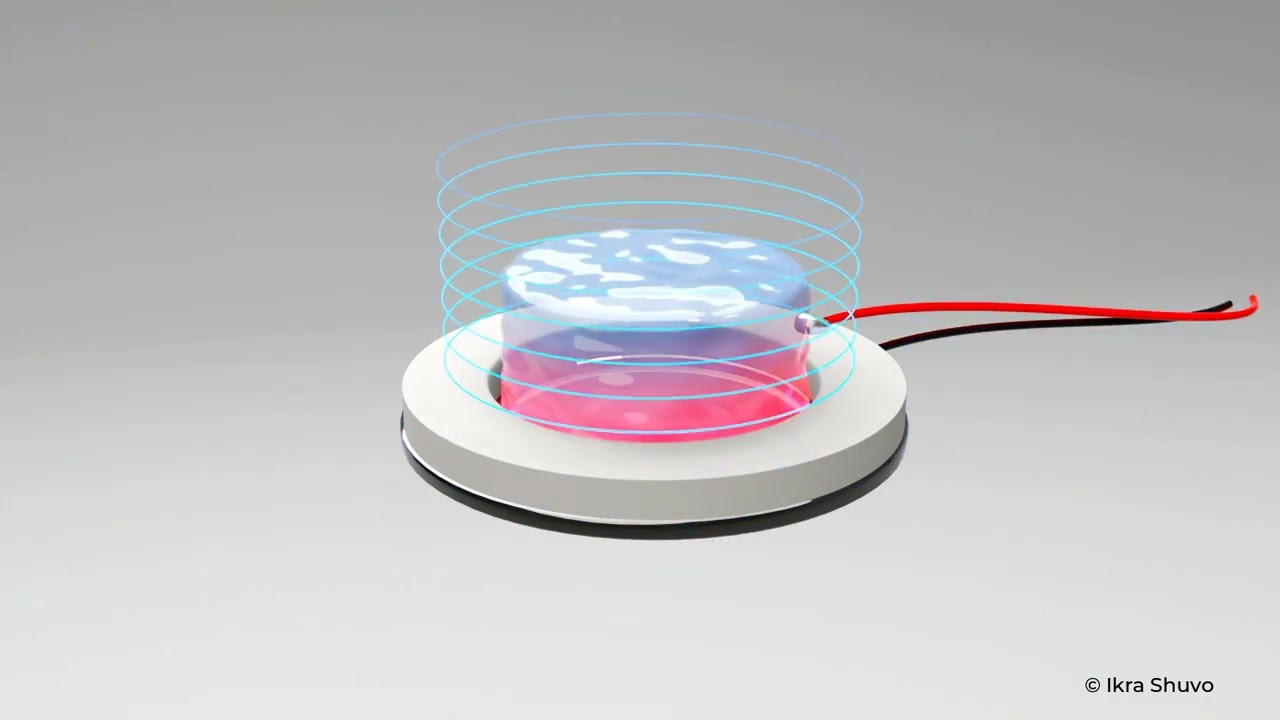
MIT's new device, however, uses ultrasonic waves (ultrasound) to shake moisture loose from the sorbent. The released moisture then drains through small nozzles at the base of the device, where it can be collected and used.
According to the researchers, their ultrasonic prototype is 45 times more efficient at extracting captured water compared to evaporation alone. They detailed their findings in a paper published Nov. 18 in the journal Nature Communications.
"People have been looking for ways to harvest water from the atmosphere, which could be a big source of water particularly for desert regions and places where there is not even saltwater to desalinate," study co-author Svetlana Boriskina, a principal research scientist at MIT, said in a statement. "Now we have a way to recover water quickly and efficiently."
Drinking water — from days to minutes
MIT's approach uses ultrasound — sound waves that travel at frequencies above 20 kilohertz, beyond the range of human hearing — to liberate moisture from the sorbent.
Sign up for the Live Science daily newsletter nowContact me with news and offers from other Future brandsReceive email from us on behalf of our trusted partners or sponsorsBy submitting your information you agree to the Terms & Conditions and Privacy Policy and are aged 16 or over.The heart of the AWH device is a flat ceramic ring that vibrates when voltage is applied. Researchers found that high-frequency pulses were ideal for breaking the weak bonds between the absorbed water and the material surface.
"It's like the water is dancing with the waves, and this targeted disturbance creates momentum that releases the water molecules, and we can see them shake out in droplets," lead study author and MIT graduate student, Ikra Iftekhar Shuvo, said in the statement.
The researchers tested the device by placing quarter-sized samples of sorbent material in a humidity chamber set to different levels. When the samples were saturated, they were placed on the ultrasonic actuator and vibrated at high frequency. In each case, the device shook the samples dry in just a few minutes.
RELATED STORIES—Self-healing 'concrete batteries' now 10 times better — they could one day power cities, scientists say
—China's new 'solar-power window coating' can capture energy and power household devices
—Scientists inserted a window in a man's skull to read his brain with ultrasound
A potential challenge is that the new device needs a power source, unlike AWH systems that use sunlight alone. The researchers suggest that their device could be paired with a small solar cell that also acts as a sensor to detect when the sorbent is full. This could trigger a release cycle that would allow the system to collect and release water multiple times a day.
The team envisions a compact household setup that combines a fast-absorbing material with an ultrasonic actuator, each about the size of a window, that vibrates to release the trapped water.
"The beauty of this device is that it’s completely complementary and can be an add-on to almost any sorbent material," said Boriskina. "It's all about how much water you can extract per day. With ultrasound, we can recover water quickly, and cycle again and again. That can add up to a lot per day."
 Owen Hughes
Owen Hughes is a freelance writer and editor specializing in data and digital technologies. Previously a senior editor at ZDNET, Owen has been writing about tech for more than a decade, during which time he has covered everything from AI, cybersecurity and supercomputers to programming languages and public sector IT. Owen is particularly interested in the intersection of technology, life and work – in his previous roles at ZDNET and TechRepublic, he wrote extensively about business leadership, digital transformation and the evolving dynamics of remote work.
You must confirm your public display name before commenting
Please logout and then login again, you will then be prompted to enter your display name.
Logout Read more 'An increasing attack on water resources from multiple fronts': Scientists warn 'day zero droughts' could hit before 2030
 World's biggest X-ray laser discovers never-before-seen type of ice that's solid at room temperature
 Microsoft unveils new liquid-cooled computer chips — they could prevent AI data centers from massively overheating
 Comet 3I/ATLAS is losing water 'like a fire hose' on full blast
 China has planted so many trees it's changed the entire country's water distribution
 Best humidifiers 2025: Banish dry air from your home
Latest in Engineering
Best humidifiers 2025: Banish dry air from your home
Latest in Engineering
 NASA’s ultraquiet supersonic 'flying swordfish' makes history with first test flight
 Science history: The Tacoma Narrows Bridge collapses, forcing a complete rethink in structural engineering — Nov. 7, 1940
 China's new 'solar-power window coating' can capture energy and power household devices
 A scalding hot 'sand battery' is now heating a small Finnish town
 Secretive X37-B space plane to test quantum navigation system — scientists hope it will one day replace GPS
 China builds record-breaking floating wind turbine — it could change the face of renewable energy
Latest in News
China builds record-breaking floating wind turbine — it could change the face of renewable energy
Latest in News
 New 3I/ATLAS images show the comet getting active ahead of close encounter with Earth
 Unusual, 1,400-year-old cube-shaped human skull unearthed in Mexico
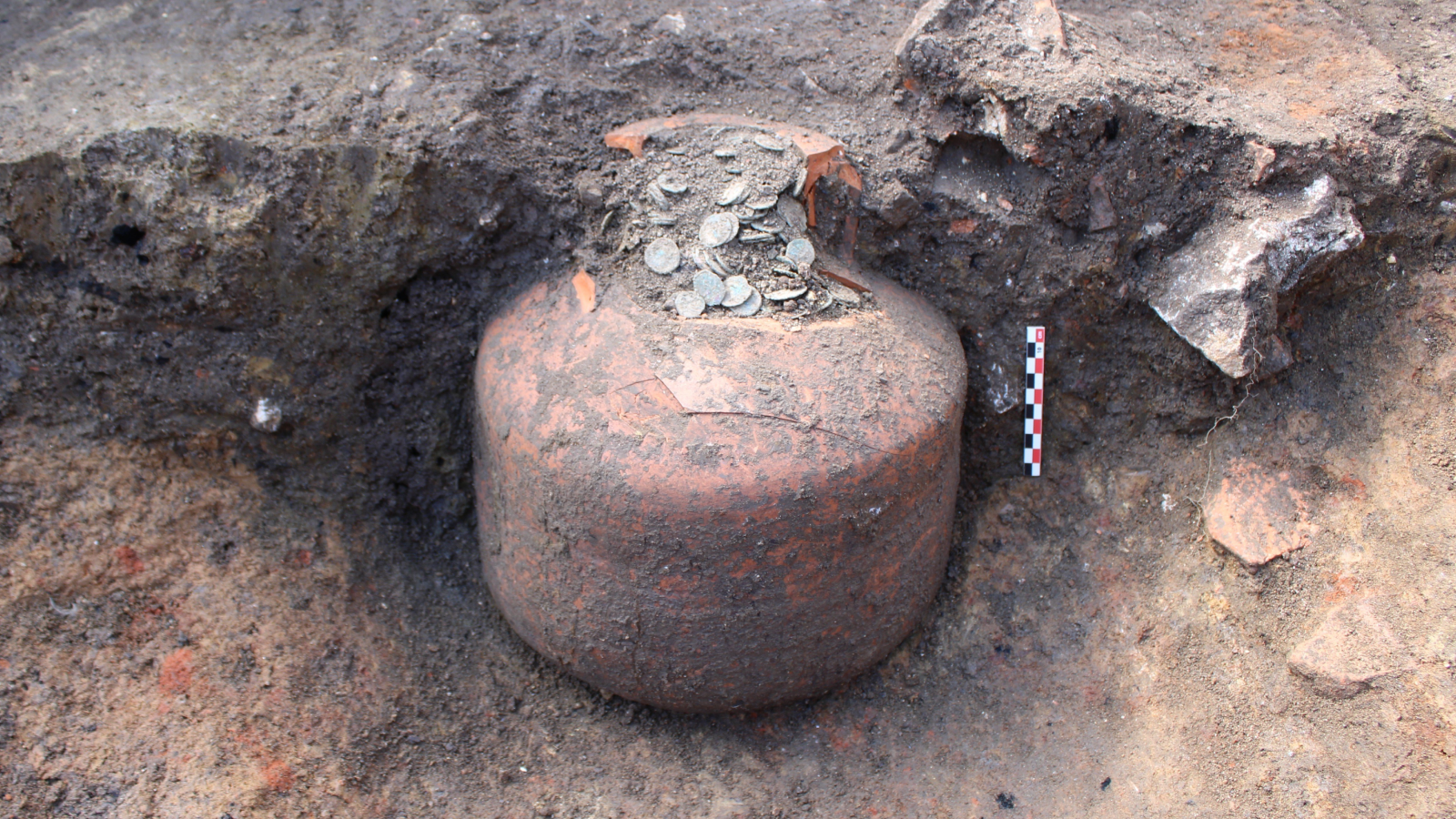 1,800-year-old 'piggy banks' full of Roman-era coins unearthed in French village
 CDC panel, stuffed with vaccine skeptics, votes to end recommendation for universal newborn hepatitis B vaccination
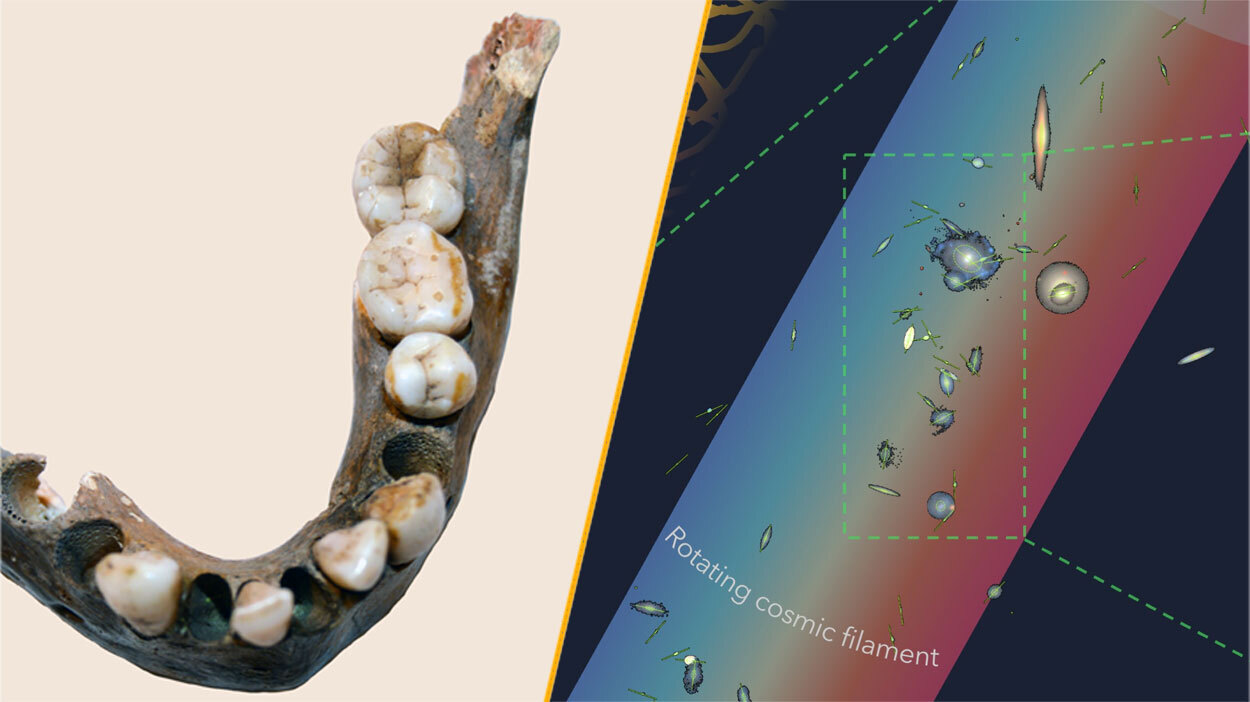 Science news this week: A human population isolated for 100,000 years, the biggest spinning structure in the universe, and a pit full of skulls
 Giant sunspot on par with the one that birthed the Carrington Event has appeared on the sun — and it's pointed right at Earth
LATEST ARTICLES
Giant sunspot on par with the one that birthed the Carrington Event has appeared on the sun — and it's pointed right at Earth
LATEST ARTICLES- 1New 3I/ATLAS images show the comet getting active ahead of close encounter with Earth
- 2Unusual, 1,400-year-old cube-shaped human skull unearthed in Mexico
- 31,800-year-old 'piggy banks' full of Roman-era coins unearthed in French village
- 4What if Antony and Cleopatra had defeated Octavian?
- 5Science history: Female chemist initially barred from research helps helps develop drug for remarkable-but-short-lived recovery in children with leukemia — Dec. 6, 1954