- Archaeology
Remains of what was likely a funeral feast were discovered in a 4,000-year-old jug in Africa.
5 Comments Join the conversationWhen you purchase through links on our site, we may earn an affiliate commission. Here’s how it works.
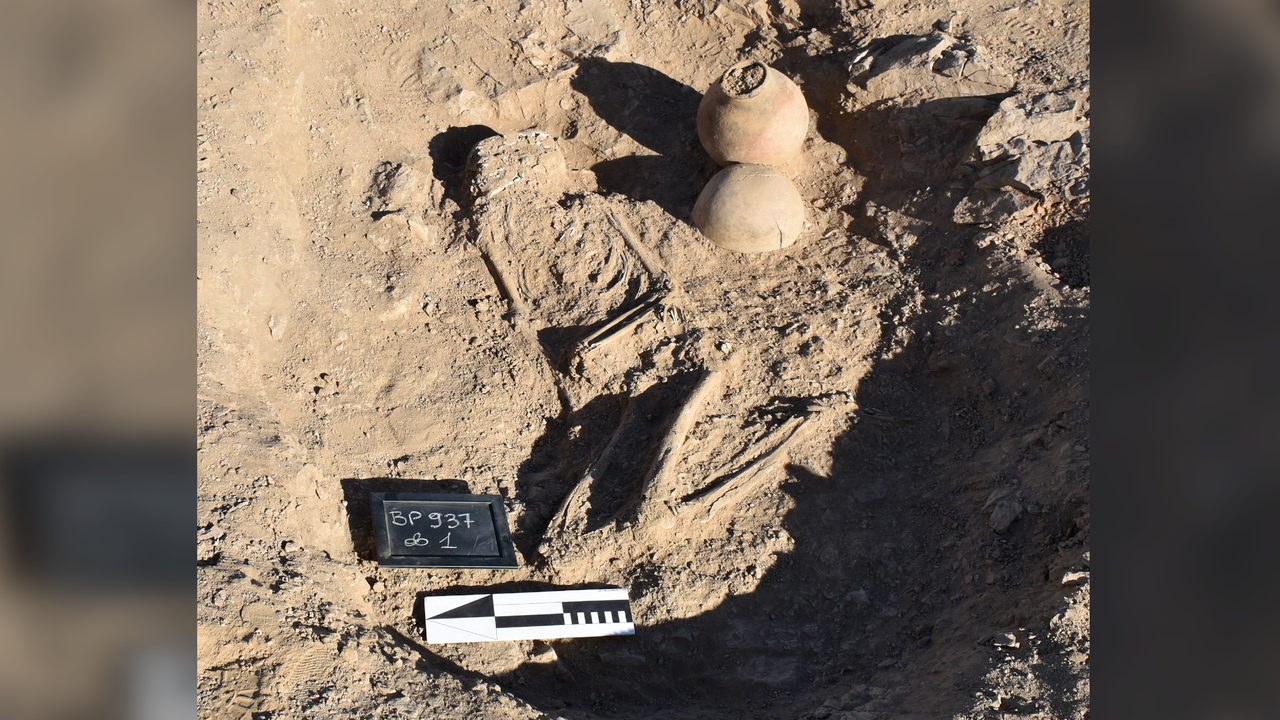
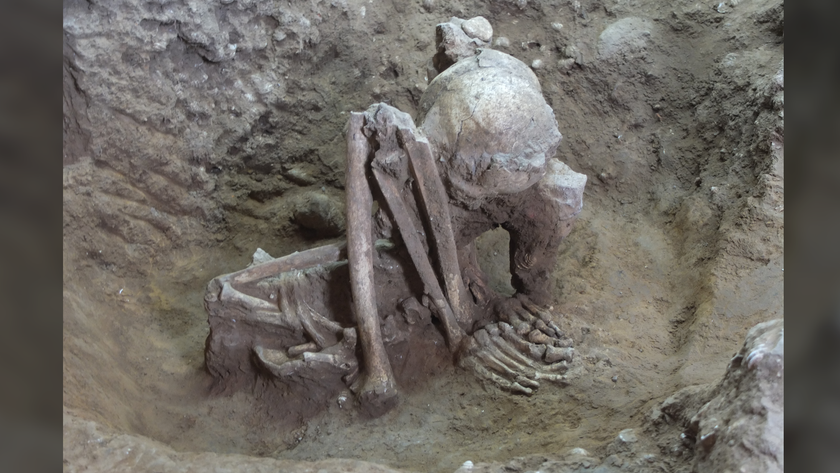
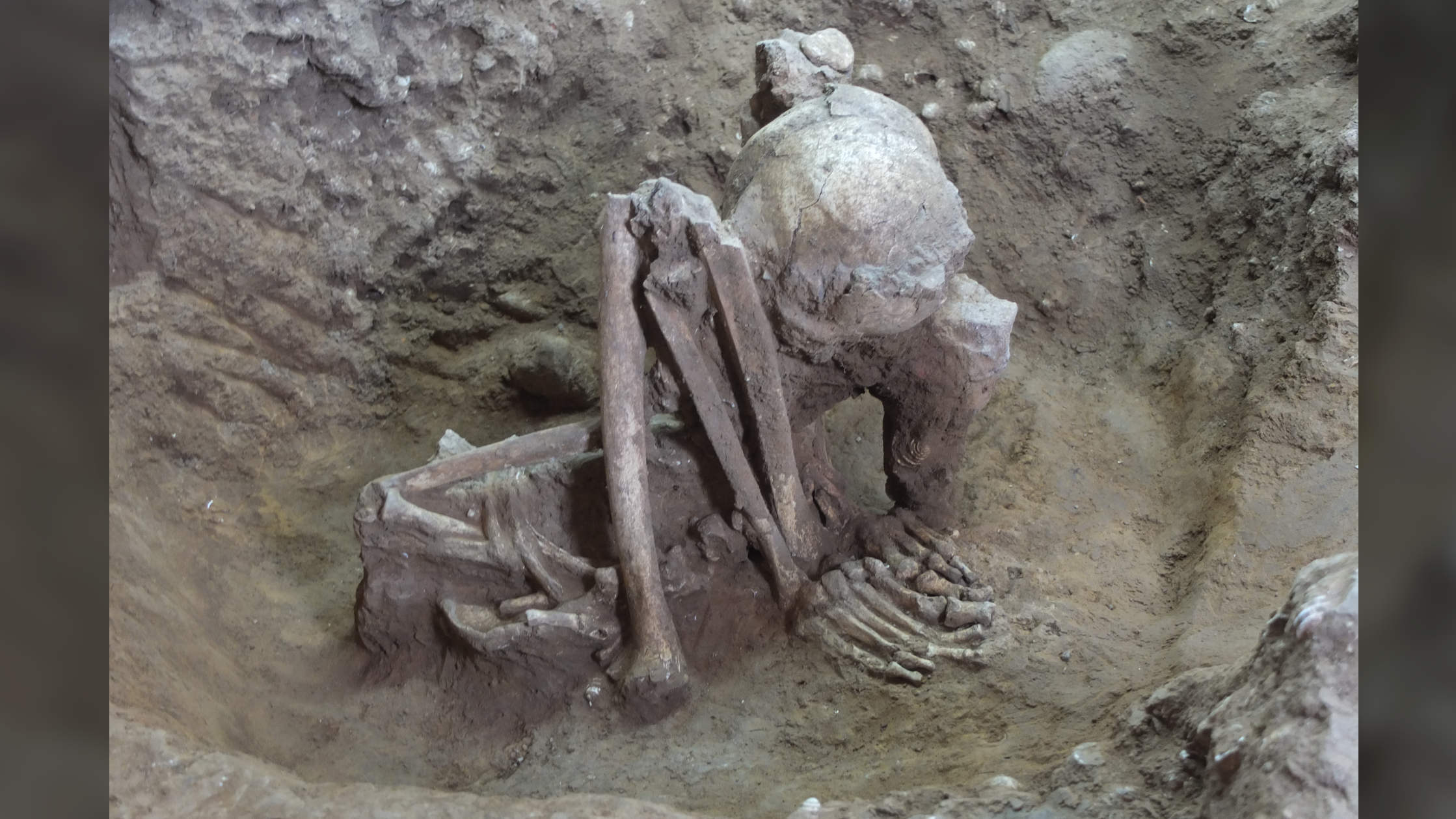
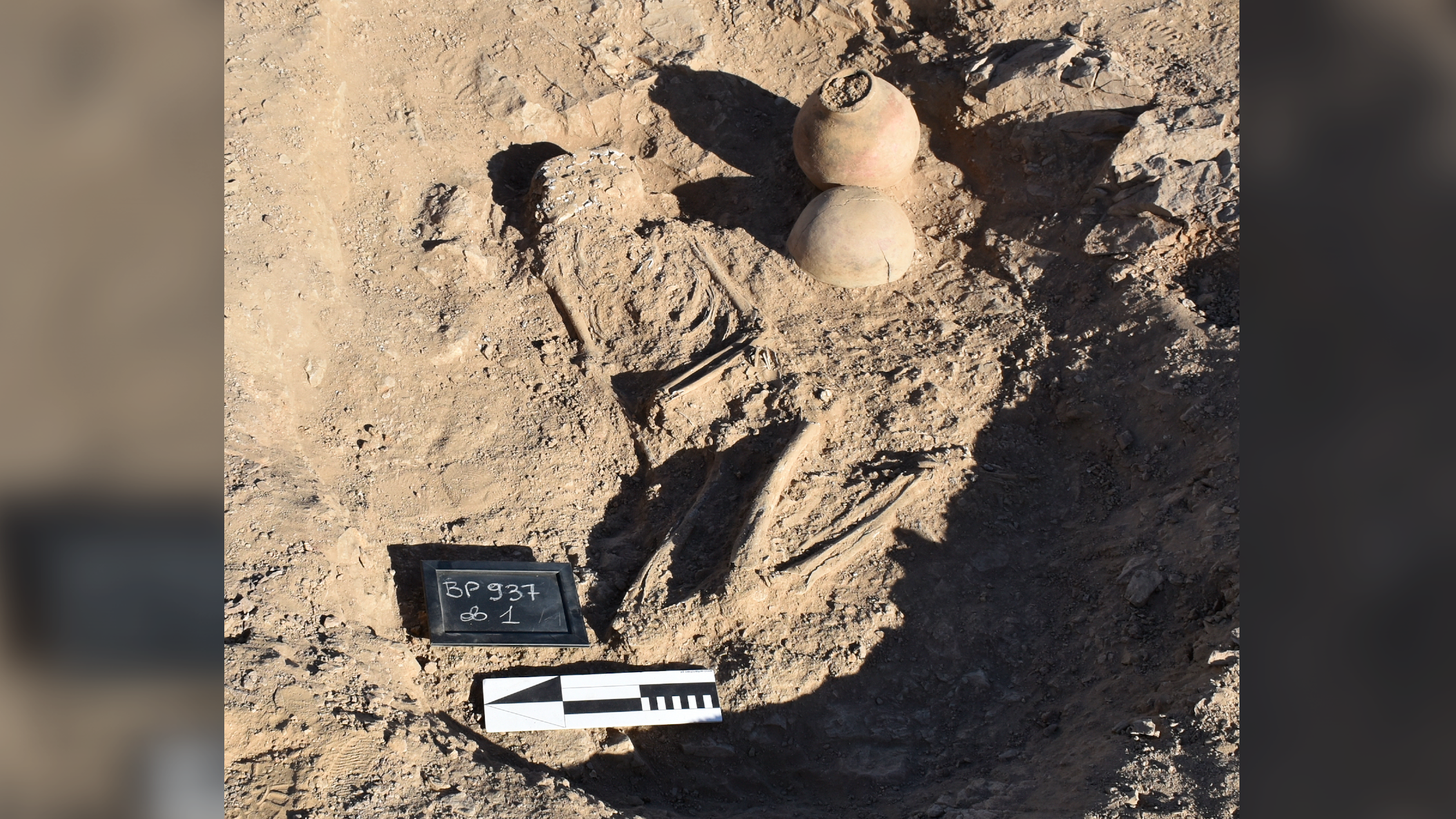 A view of the grave during the excavation. (The skull is toward the top, with two large ceramic vessels to the right of it.)
(Image credit: Ewa Lesner)
A view of the grave during the excavation. (The skull is toward the top, with two large ceramic vessels to the right of it.)
(Image credit: Ewa Lesner)
An isolated burial in Sudan has revealed the first evidence of an unknown funeral ritual that took place nearly 4,000 years ago in a little-known African kingdom, a new study finds.
In the grave, archaeologists discovered a ceramic vessel that contained charred plant and wood remains, animal bones and pieces of insects, all of which the team thinks were the remains of a funeral feast.
You may like-
 2,400-year-old 'sacrificial complex' uncovered in Russia is the richest site of its kind ever discovered
-
 5,000-year-old skeleton masks and skull cups made from human bones discovered in China
-
 World's oldest mummies were smoke-dried 10,000 years ago in China and Southeast Asia, researchers find
In the study, published Nov. 13 in the journal Azania, researchers described the burial of a middle-aged man, which they found in 2018 during an archaeological survey project in the Bayuda Desert in northeast Sudan. The grave was dated to between 2050 and 1750 B.C., meaning the man was likely part of the Kingdom of Kerma, an early Nubian civilization that neighbored ancient Egypt. Within the burial, which had an oval mound of dirt on top of it, archaeologists discovered a male skeleton, two ceramic vessels placed behind his head, and 82 blue-glazed ceramic disc beads around his neck.
"The burial mound is not particularly impressive, and the grave goods, including beads and ceramic vessels, are quite common," Paner said, all of which suggest the man did not have elite social status. But "the contents of one of the vessels are unusual," he said, possibly "relics of the fire associated with a funeral ritual."
Within a medium-sized ceramic jug, the researchers discovered a treasure trove of charred remains of plants, wood, animals, insects and coprolites (fossilized feces). Most of the wood was determined to have come from acacia trees, and the researchers identified two legumes — likely a lentil and a bean — and cereal grains among the charred botanical remains. The jug also contained a few weevils, which likely hitched a ride on the plants in ancient times.
"Since the vessel does not show any signs of having been burned, these remains, along with the fragments of animal bones found, were probably simply inserted into it," the researchers explained in the study. "The bones in question are likely evidence of consumption during a funeral feast, some of the remains from which were then thrown into the fire."
Sign up for the Live Science daily newsletter nowContact me with news and offers from other Future brandsReceive email from us on behalf of our trusted partners or sponsorsBy submitting your information you agree to the Terms & Conditions and Privacy Policy and are aged 16 or over.RELATED STORIES—'Christ' tattoo discovered on 1,300-year-old body in Sudan
—Remains of ancient temple with hieroglyphic inscriptions discovered in Sudan
—4,000-year-old rock art of boats and cattle unearthed in Sudan paint a picture of a green Sahara
The botanical remains also indicate that this geographic area was a more humid savanna-type environment when the man was buried, compared with the open desert it is now. "Even a seemingly modest site" like this isolated burial "can provide important clues for reconstructing past environments and climates," the researchers wrote.
The other vessel found in the burial was placed upside down near the individual, but it was empty, the researchers noted.
This burial is the first from the Kingdom of Kerma to reveal evidence of a funeral ritual that took place four millennia ago. But the lack of similar known burials could point to the area's complex cultural exchange processes, the researchers wrote, meaning more work is needed to understand the trade of goods and ideas in ancient Africa.
 Kristina KillgroveSocial Links NavigationStaff writer
Kristina Killgrove is a staff writer at Live Science with a focus on archaeology and paleoanthropology news. Her articles have also appeared in venues such as Forbes, Smithsonian, and Mental Floss. Kristina holds a Ph.D. in biological anthropology and an M.A. in classical archaeology from the University of North Carolina, as well as a B.A. in Latin from the University of Virginia, and she was formerly a university professor and researcher. She has received awards from the Society for American Archaeology and the American Anthropological Association for her science writing.
You must confirm your public display name before commenting
Please logout and then login again, you will then be prompted to enter your display name.
Logout Read more 2,400-year-old 'sacrificial complex' uncovered in Russia is the richest site of its kind ever discovered
 5,000-year-old skeleton masks and skull cups made from human bones discovered in China
 World's oldest mummies were smoke-dried 10,000 years ago in China and Southeast Asia, researchers find
 Ancient Egyptian pharaoh moved another ruler's body and stole his tomb, hundreds of funerary figurines suggest
 2,000-year-old gold ring holds clue about lavish cremation burial unearthed in France
 2,000-year-old Celtic teenager may have been sacrificed and considered 'disposable'
Latest in Archaeology
2,000-year-old Celtic teenager may have been sacrificed and considered 'disposable'
Latest in Archaeology
 Unusual, 1,400-year-old cube-shaped human skull unearthed in Mexico
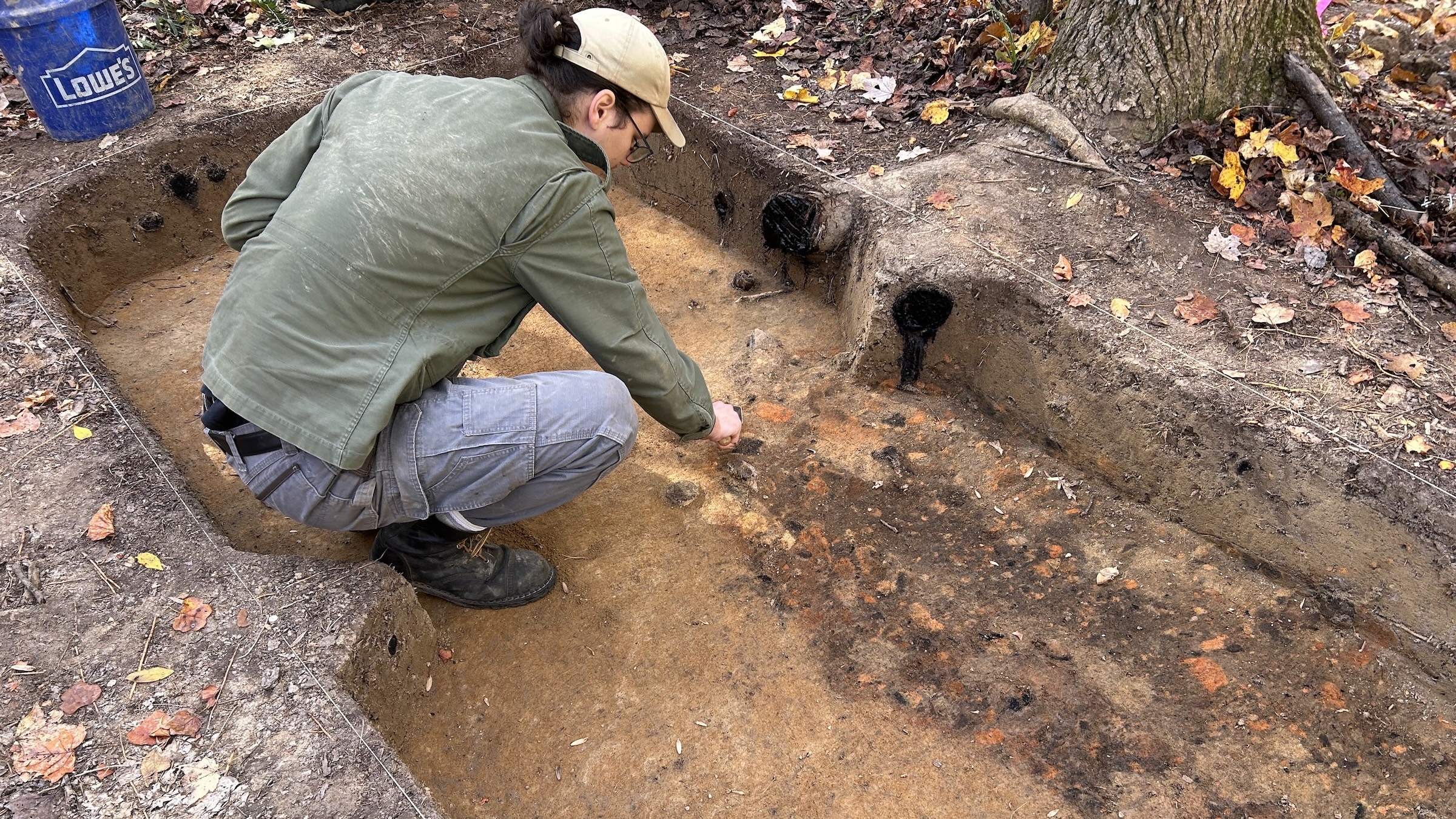 Lost Indigenous settlements described by Jamestown colonist John Smith finally found
2,400-year-old 'sacrificial complex' uncovered in Russia is the richest site of its kind ever discovered
Lost Indigenous settlements described by Jamestown colonist John Smith finally found
2,400-year-old 'sacrificial complex' uncovered in Russia is the richest site of its kind ever discovered
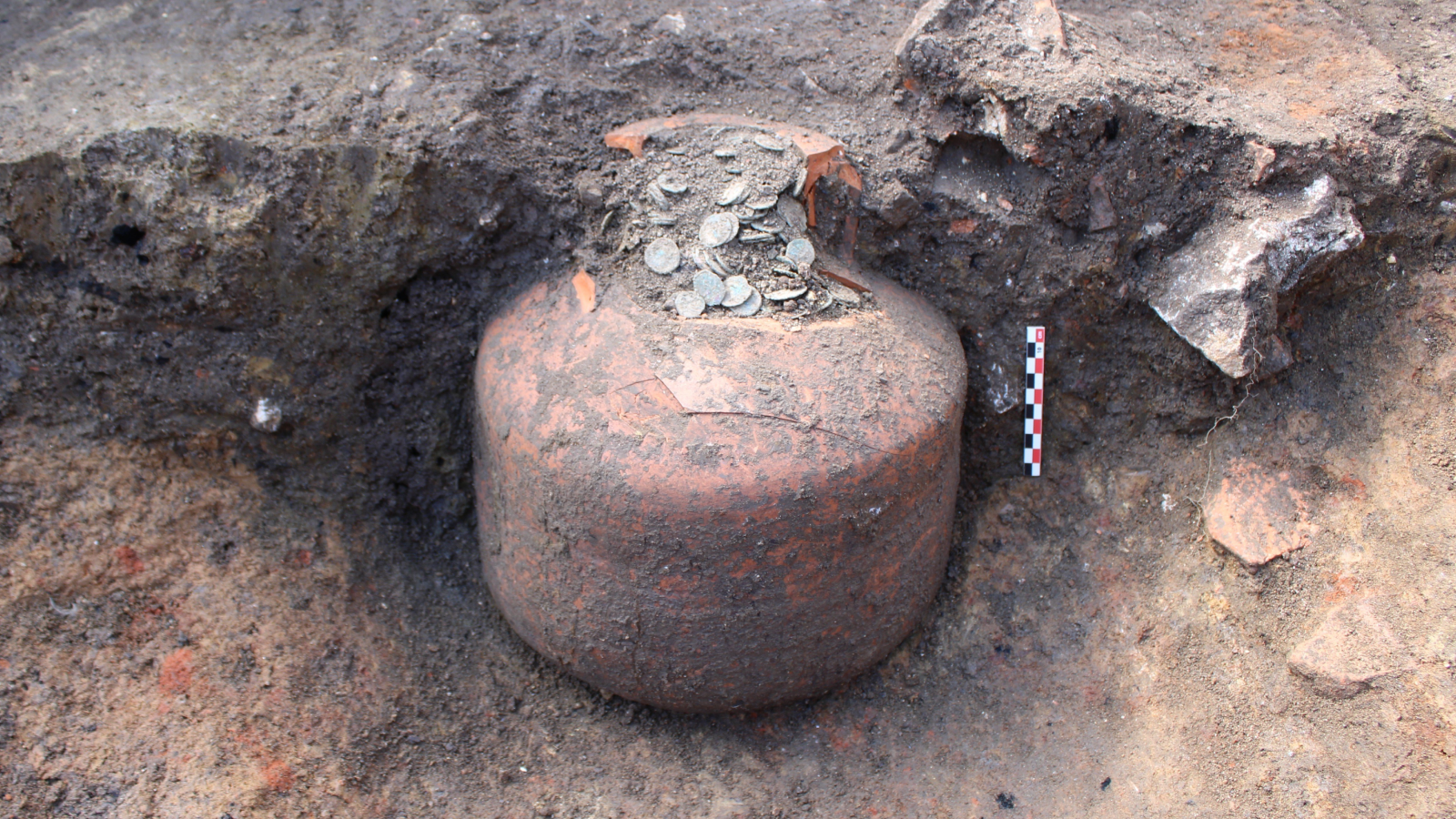 1,800-year-old 'piggy banks' full of Roman-era coins unearthed in French village
 Science news this week: A human population isolated for 100,000 years, the biggest spinning structure in the universe, and a pit full of skulls
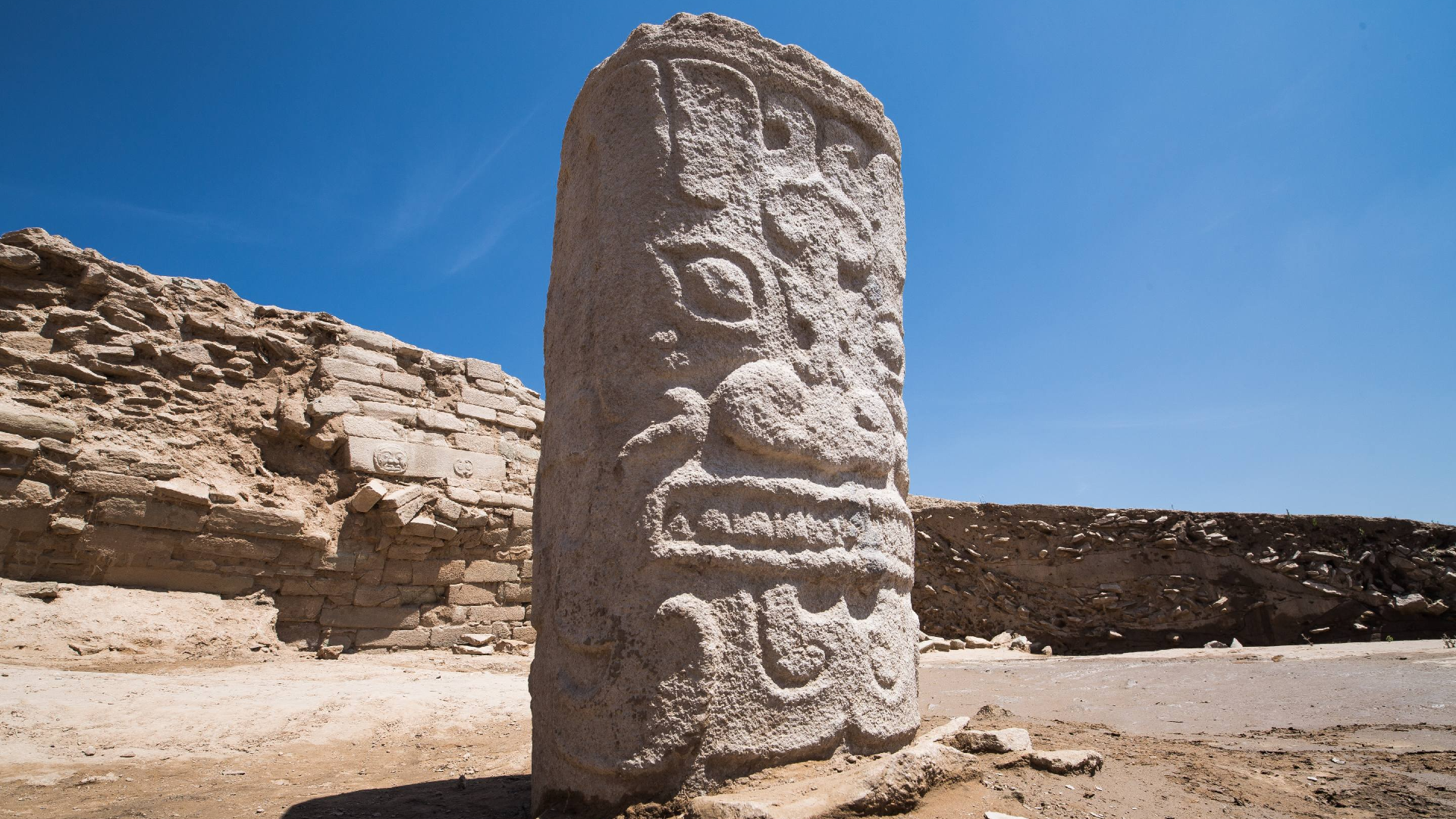 Male human heads found in a 'skull pit' in an ancient Chinese city hint at sex-specific sacrifice rituals
Latest in News
Male human heads found in a 'skull pit' in an ancient Chinese city hint at sex-specific sacrifice rituals
Latest in News
 New 3I/ATLAS images show the comet getting active ahead of close encounter with Earth
 Ethereal structure in the sky rivals 'Pillars of Creation' — Space photo of the week
 Strangely bleached rocks on Mars hint that the Red Planet was once a tropical oasis
 CDC panel, stuffed with vaccine skeptics, votes to end recommendation for universal newborn hepatitis B vaccination
 Giant sunspot on par with the one that birthed the Carrington Event has appeared on the sun — and it's pointed right at Earth
 Could aging eggs be 'rejuvenated'? New tool may help pave the way to fertility-extending treatments
LATEST ARTICLES
Could aging eggs be 'rejuvenated'? New tool may help pave the way to fertility-extending treatments
LATEST ARTICLES- 1Lost Indigenous settlements described by Jamestown colonist John Smith finally found
- 2Strangely bleached rocks on Mars hint that the Red Planet was once a tropical oasis
- 32,400-year-old 'sacrificial complex' uncovered in Russia is the richest site of its kind ever discovered
- 4Ethereal structure in the sky rivals 'Pillars of Creation' — Space photo of the week
- 5What was the loudest sound ever recorded?