- Archaeology
- Human Evolution
A fossil jaw of a distant human relative was discovered much farther north than previously thought possible, revealing new information about diversity in human evolution.
When you purchase through links on our site, we may earn an affiliate commission. Here’s how it works.
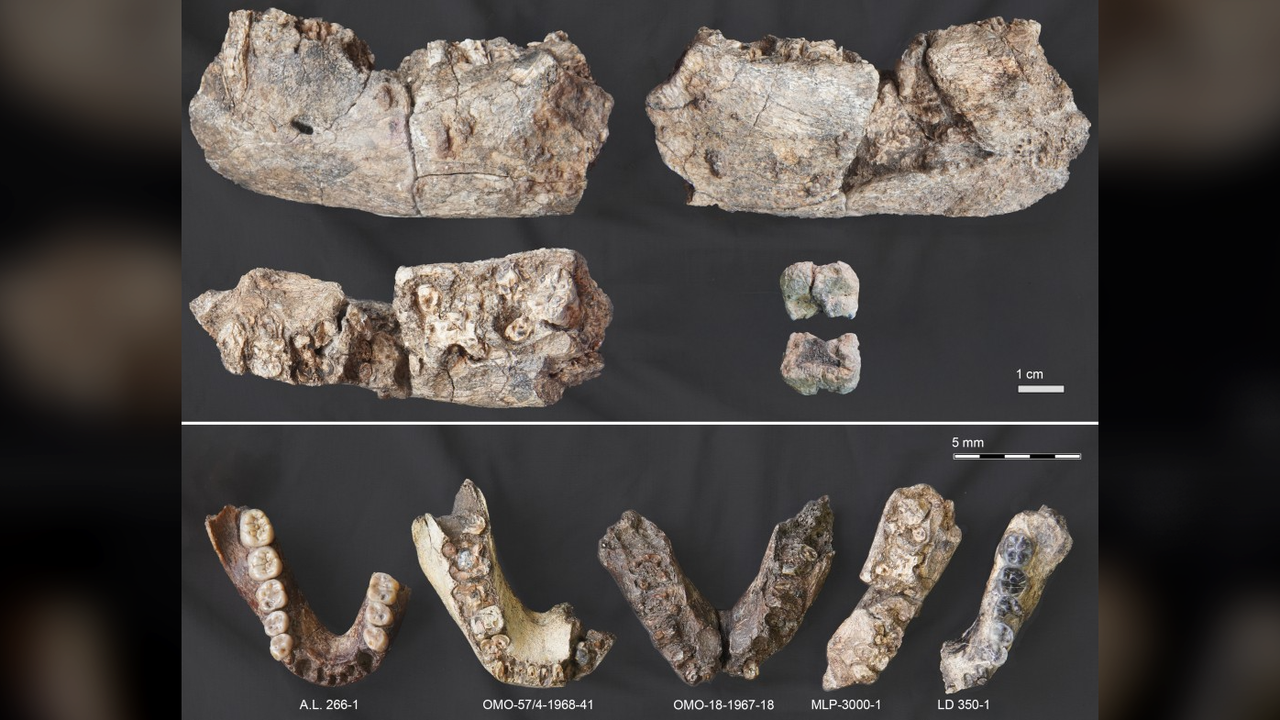
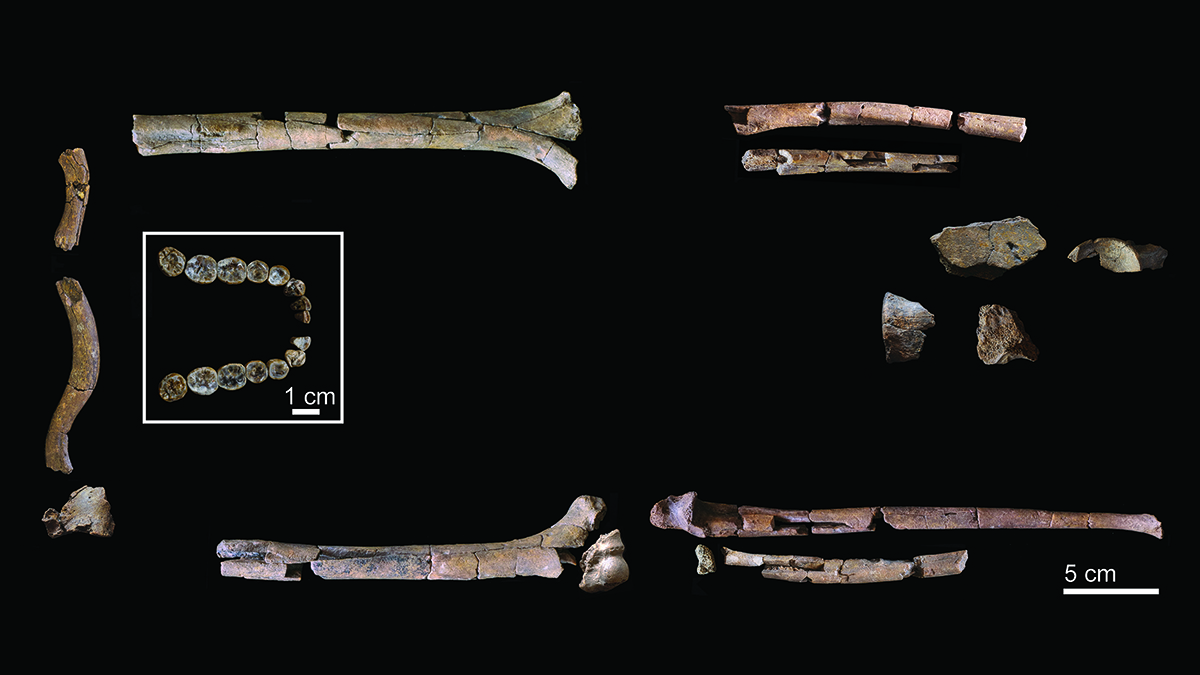
 Multiple views of the new Paranthropus jaw (MLP-3000-1) discovered in Ethiopia (top); comparisons of the new jaw with previously discovered specimens (bottom).
(Image credit: Alemseged Research Group)
Share
Share by:
Multiple views of the new Paranthropus jaw (MLP-3000-1) discovered in Ethiopia (top); comparisons of the new jaw with previously discovered specimens (bottom).
(Image credit: Alemseged Research Group)
Share
Share by:
- Copy link
- X
Fragments of a 2.6 million-year-old fossil jaw discovered in northeastern Ethiopia are transforming the picture of early human evolution in Africa. The jaw, from a bipedal hominin — an extinct relative of humans — shows that its kind journeyed far north, to a region where other hominins were already living.
The ancient jaw belongs to the genus Paranthropus and was found more than 620 miles (1,000 kilometers) farther north than any other fossil of its kind.
You may like-
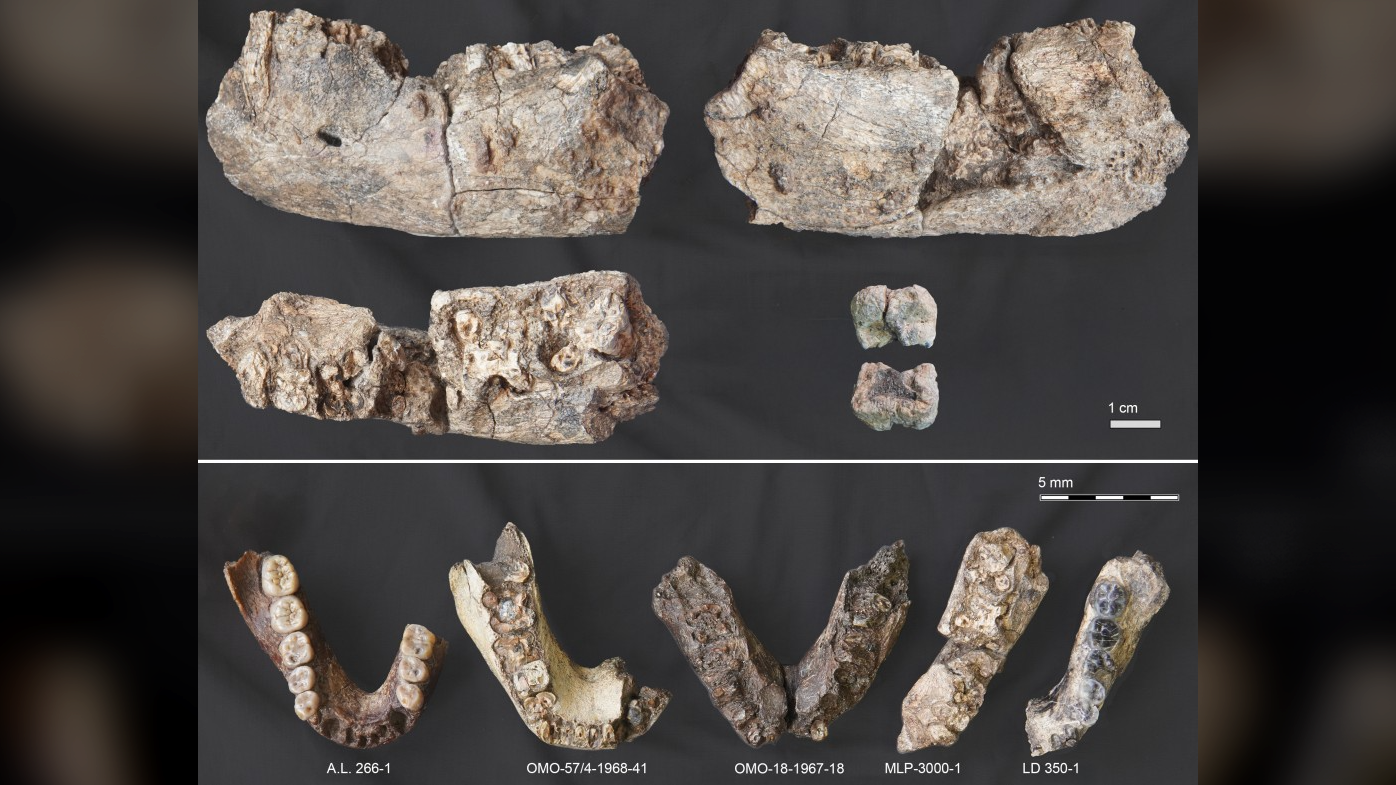
 Last common ancestor of modern humans and Neanderthals possibly found in Casablanca, Morocco
-
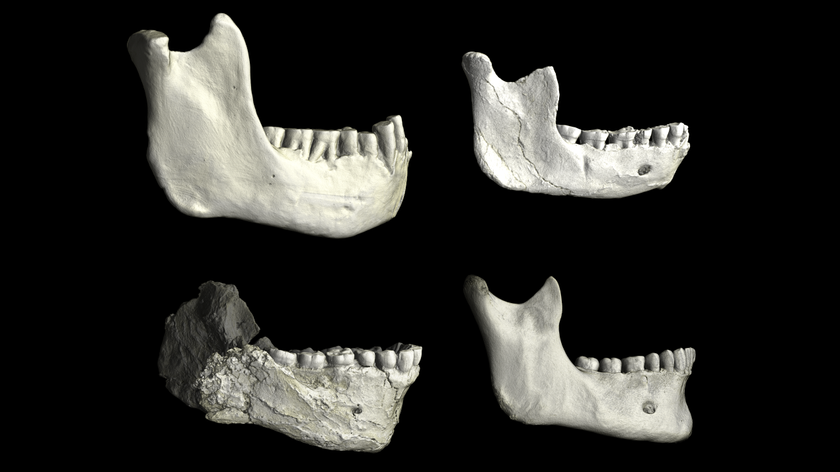
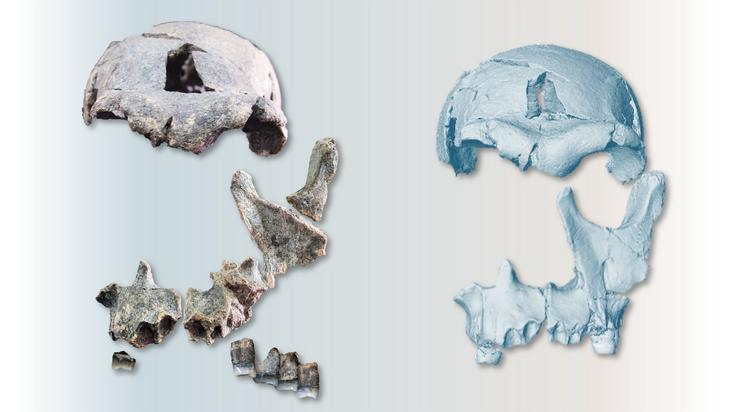 1.5 million-year-old Homo erectus face was just reconstructed — and its mix of old and new traits is complicating the picture of human evolution
-
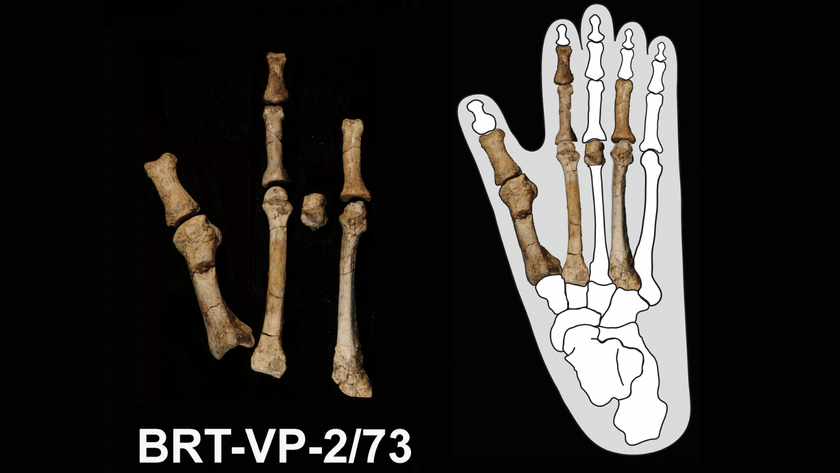 A fossilized foot found 15 years ago belonged to enigmatic human relative that lived alongside Lucy, scientists say
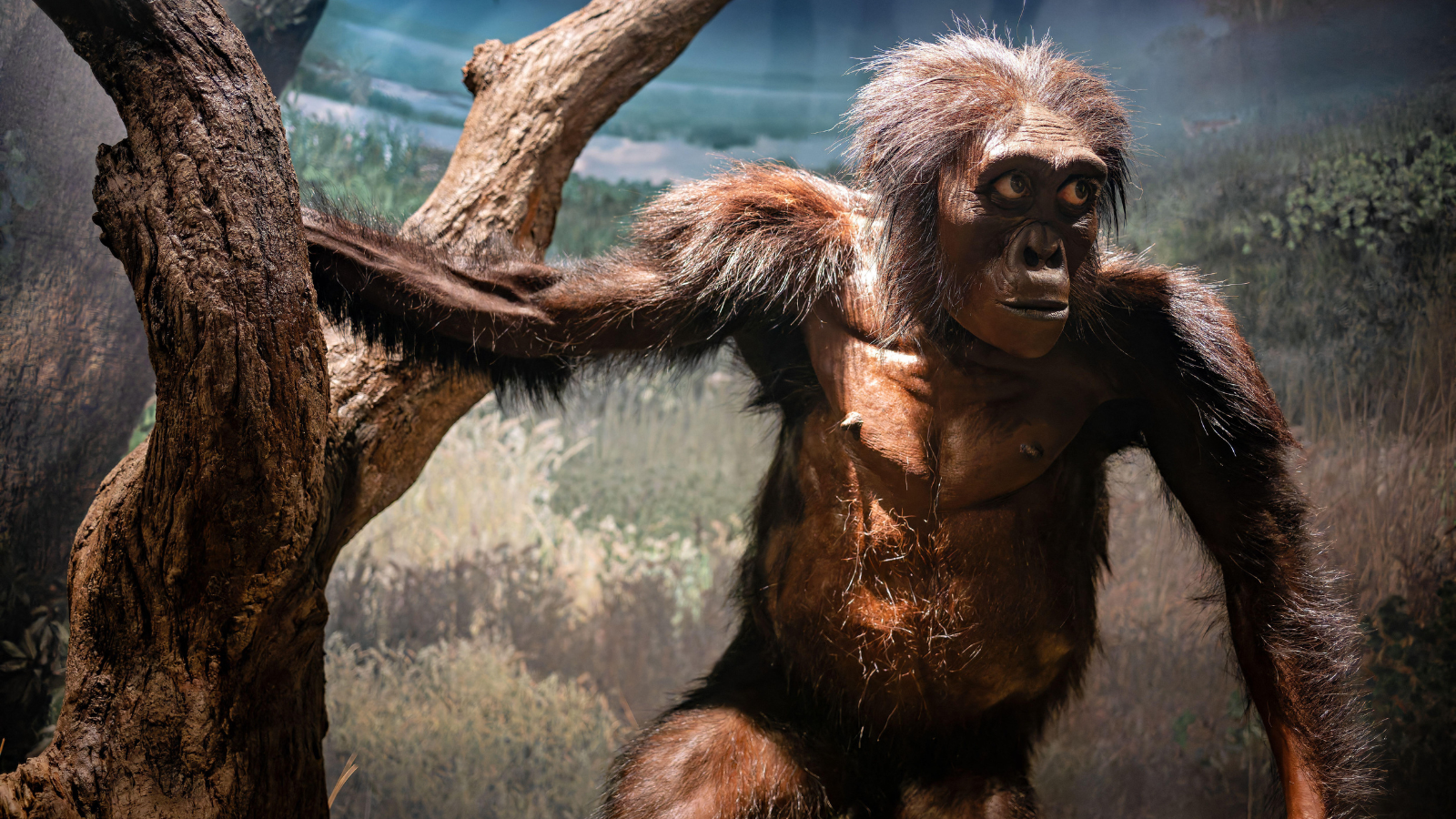
The genus Paranthropus contains three species distantly related to humans: P. robustus, P. boisei and P. aethiopicus, collectively known as the "robusts." These species walked upright beginning around 2.7 million years ago, but they are unique in having massive teeth and jaws, which earned one fossil skull the nickname "Nutcracker Man." Paranthropus fossils were previously found in locations from southern Ethiopia to southern Africa and have been dated to between 2.8 million and 1.4 million years ago.
Jaw-dropping find
In January 2019, paleoanthropologists discovered a partial lower jaw, designated MLP-3000, at the site of Mille-Logya in the Afar region of northeast Ethiopia. Dated to about 2.6 million years ago, the jaw came from an older individual whose teeth and bone structure resembled those of members of the Paranthropus genus. While one species — P. aethiopicus — has been found in southern Ethiopia, the new MLP-3000 jaw was discovered much farther north than any previous fossil from this genus.
"The discovery of Paranthropus in the Afar provides critical new information," the researchers wrote, suggesting that "the genus could exploit diverse habitats and regions from north Ethiopia to South Africa as Australopithecus and Homo did." This means that Paranthropus likely had a much more flexible diet than the "Nutcracker Man" moniker suggests, enabling these hominins to disperse and adapt to a wide range of environmental conditions.
The newfound Paranthropus fossil at Mille-Logya adds a third genus to the variety of hominins present in the Afar region between 2.8 million and 2.5 million years ago, including Australopithecus and early Homo. It is not yet clear, though, whether the species would have encountered one another directly.
Sign up for the Live Science daily newsletter nowContact me with news and offers from other Future brandsReceive email from us on behalf of our trusted partners or sponsorsBy submitting your information you agree to the Terms & Conditions and Privacy Policy and are aged 16 or over."Discoveries like this really trigger interesting questions in terms of reviewing, revising, and then coming up with new hypotheses as to what the key differences were between the main hominin groups," Alemseged said.
RELATED STORIES—10 things we learned about our human ancestors in 2025
—Most complete Homo habilis skeleton ever found dates to more than 2 million years ago and retains 'Lucy'-like features
—2.2 million-year-old teeth reveal secrets of human relatives found in a South African cave
Carol Ward, a biological anthropologist at the University of Missouri who was not involved in the study, wrote in an accompanying perspective that, given the diversity of hominin species present, "the revelation that Paranthropus inhabited the Afar between 3 million and 2.4 million years ago is particularly exciting."
Although all humans on the planet today are one species, hominin diversity lasted millions of years, until our extinct cousins the Neanderthals and Denisovans disappeared more than 30,000 years ago, Ward noted.
"Researchers can no longer accept that humans evolved from a single lineage of species marching towards modernity in isolation from others," she wrote.
Article SourcesAlemseged, Z., Spoor, F., Reed, D., et al. Afar fossil shows broad distribution and versatility of Paranthropus. Nature (2026). https://doi.org/10.1038/s41586-025-09826-x
Human origins quiz: How well do you know the story of humanity?
 Kristina KillgroveSocial Links NavigationStaff writer
Kristina Killgrove is a staff writer at Live Science with a focus on archaeology and paleoanthropology news. Her articles have also appeared in venues such as Forbes, Smithsonian, and Mental Floss. Kristina holds a Ph.D. in biological anthropology and an M.A. in classical archaeology from the University of North Carolina, as well as a B.A. in Latin from the University of Virginia, and she was formerly a university professor and researcher. She has received awards from the Society for American Archaeology and the American Anthropological Association for her science writing.
Show More CommentsYou must confirm your public display name before commenting
Please logout and then login again, you will then be prompted to enter your display name.
Logout Read more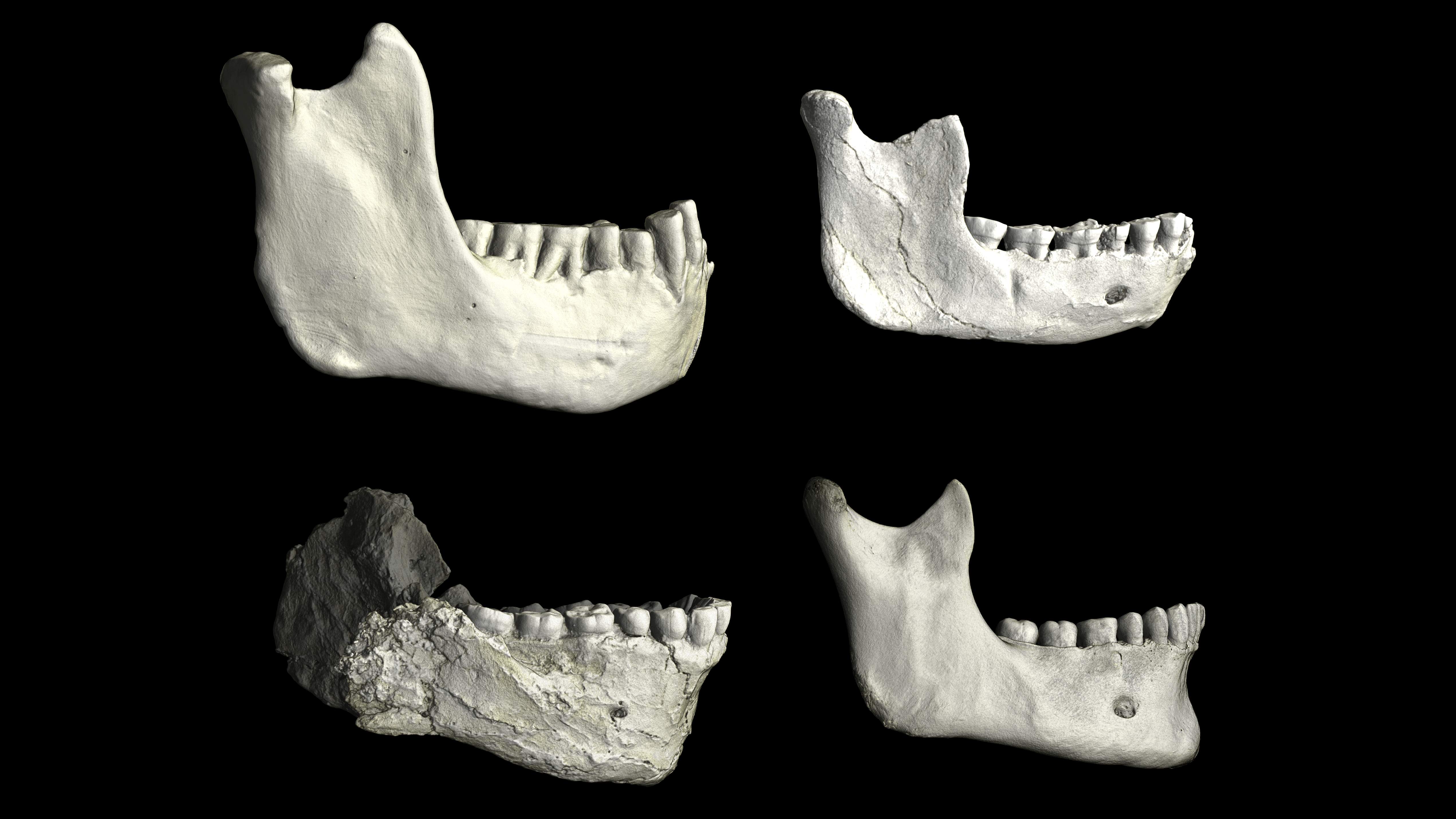 Last common ancestor of modern humans and Neanderthals possibly found in Casablanca, Morocco
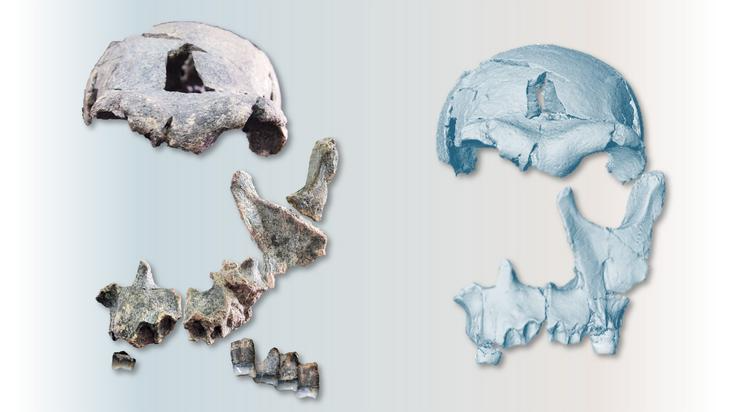 1.5 million-year-old Homo erectus face was just reconstructed — and its mix of old and new traits is complicating the picture of human evolution
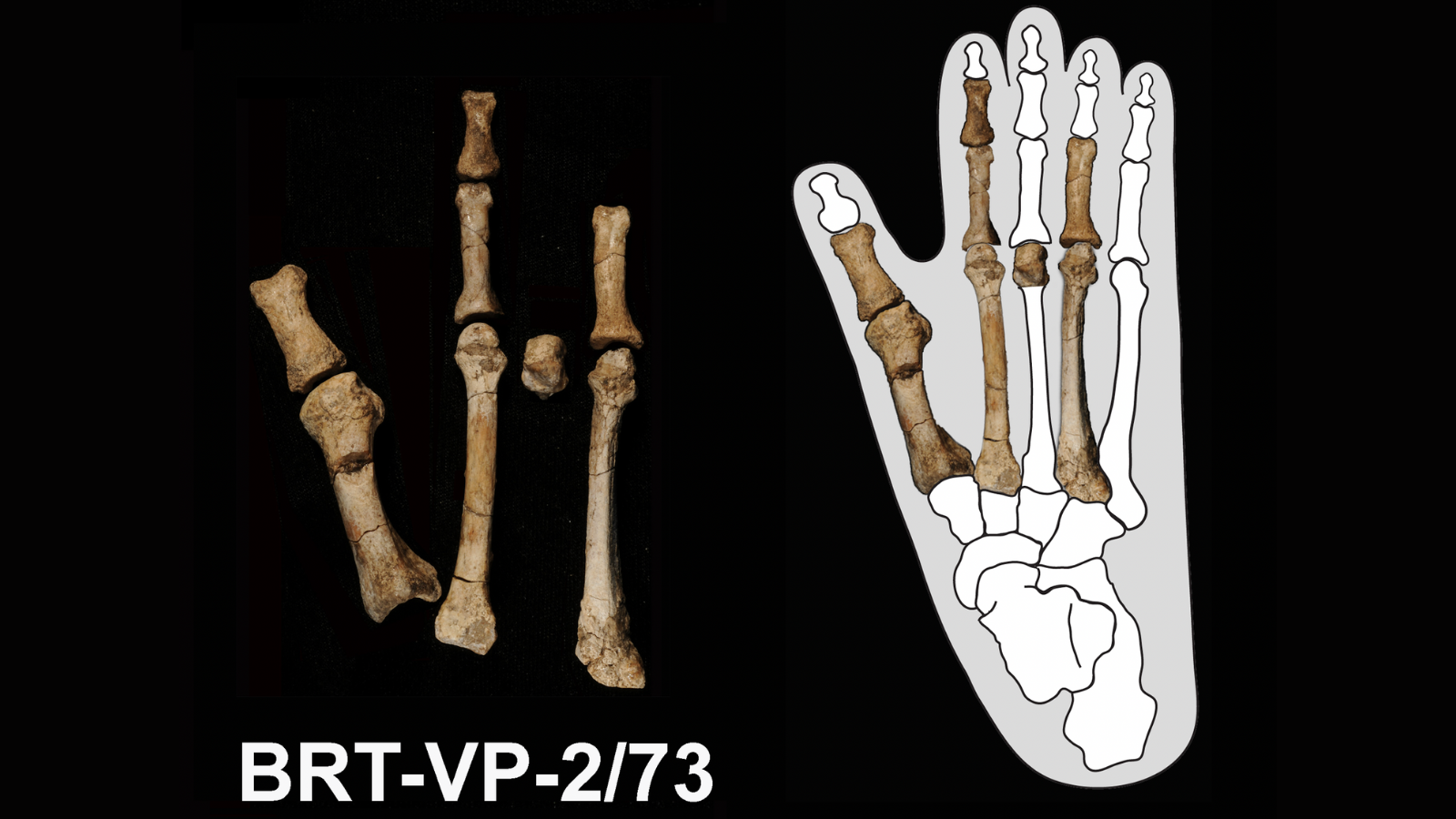 A fossilized foot found 15 years ago belonged to enigmatic human relative that lived alongside Lucy, scientists say
 Homo erectus wasn't the first human species to leave Africa 1.8 million years ago, fossils suggest
 Scientists claim 'Lucy' may not be our direct ancestor after all, stoking fierce debate
 Tiny bump on 7 million-year-old fossil suggests ancient ape walked upright — and might even be a human ancestor
Latest in Human Evolution
Tiny bump on 7 million-year-old fossil suggests ancient ape walked upright — and might even be a human ancestor
Latest in Human Evolution
 Most complete Homo habilis skeleton ever found dates to more than 2 million years ago and retains 'Lucy'-like features
 Human origins quiz: How well do you know the story of humanity?
Homo erectus wasn't the first human species to leave Africa 1.8 million years ago, fossils suggest
Tiny bump on 7 million-year-old fossil suggests ancient ape walked upright — and might even be a human ancestor
Last common ancestor of modern humans and Neanderthals possibly found in Casablanca, Morocco
1.5 million-year-old Homo erectus face was just reconstructed — and its mix of old and new traits is complicating the picture of human evolution
Latest in News
Human origins quiz: How well do you know the story of humanity?
Homo erectus wasn't the first human species to leave Africa 1.8 million years ago, fossils suggest
Tiny bump on 7 million-year-old fossil suggests ancient ape walked upright — and might even be a human ancestor
Last common ancestor of modern humans and Neanderthals possibly found in Casablanca, Morocco
1.5 million-year-old Homo erectus face was just reconstructed — and its mix of old and new traits is complicating the picture of human evolution
Latest in News
 Lab mice that 'touch grass' are less anxious — and that highlights a big problem in rodent research
 Coyote scrambles onto Alcatraz Island after perilous, never-before-seen swim
 Enormous freshwater reservoir discovered off the East Coast may be 20,000 years old and big enough to supply NYC for 800 years
2.6 million-year-old jaw from extinct 'Nutcracker Man' is found where we didn't expect it
Enormous freshwater reservoir discovered off the East Coast may be 20,000 years old and big enough to supply NYC for 800 years
2.6 million-year-old jaw from extinct 'Nutcracker Man' is found where we didn't expect it
 Stunning time-lapse video captured using 'artificial eclipse' shows 3 massive eruptions on the sun
 2,400-year-old Hercules shrine and elite tombs discovered outside ancient Rome's walls
LATEST ARTICLES
2,400-year-old Hercules shrine and elite tombs discovered outside ancient Rome's walls
LATEST ARTICLES- 1Lab mice that 'touch grass' are less anxious — and that highlights a big problem in rodent research
- 22,400-year-old Hercules shrine and elite tombs discovered outside ancient Rome's walls
- 3Coyote scrambles onto Alcatraz Island after perilous, never-before-seen swim
- 4Stunning time-lapse video captured using 'artificial eclipse' shows 3 massive eruptions on the sun
- 5Enormous freshwater reservoir discovered off the East Coast may be 20,000 years old and big enough to supply NYC for 800 years