- Technology
- Communications
 Could there ever be a worldwide internet outage?
Features
By
Abby Wilson
published
18 January 2026
Could there ever be a worldwide internet outage?
Features
By
Abby Wilson
published
18 January 2026
We've all dealt with bad internet connections. But could the entire internet ever collapse?
When you purchase through links on our site, we may earn an affiliate commission. Here’s how it works.
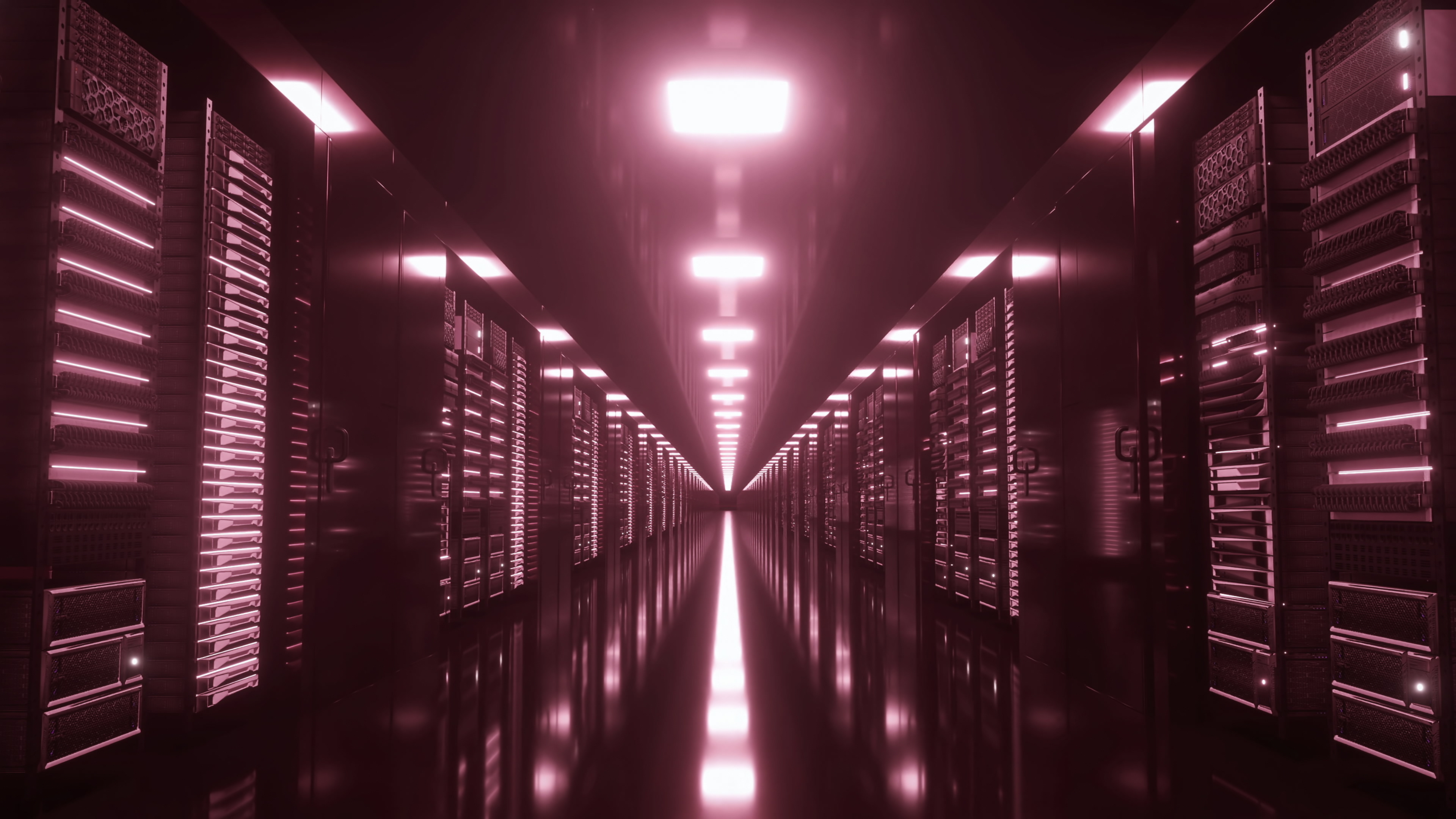 Could every internet server fail at the same time?
(Image credit: Getty Images)
Share
Share by:
Could every internet server fail at the same time?
(Image credit: Getty Images)
Share
Share by:
- Copy link
- X
Whether it disrupts access at work or makes your favorite show buffer at its most suspenseful moment, the inconvenience of an unreliable internet connection is something we've all experienced. Large-scale outages over the years have served as reminders that the internet can also face more widespread issues and bring everyday tasks to a halt. But would it ever be possible for the entire internet, all across the world, to go down?
The internet is often called a "network of networks," including those linking devices across homes, businesses, public spaces and more. For the entire internet to go down, therefore, many pieces of infrastructure would need to be impacted within a short time.
You may like-
 'It won’t be so much a ghost town as a zombie apocalypse': How AI might forever change how we use the internet
-
 Orbiting satellites could start crashing into one another in less than 3 days, theoretical new 'CRASH Clock' reveals
-
 The next Carrington-level solar superstorm could wipe out 'all our satellites,' new simulations reveal

Sign up for our weekly Life's Little Mysteries newsletter to get the latest mysteries before they appear online.
Quite a bit of "heterogeneity, randomness and distributed asynchronicity" were built into the internet from the start, so a whole-system failure is very unlikely and would be extremely difficult to cause, Cybenko said. "We have local networks as well, say within a home or a business, that could continue to function even if the global nature of the internet has failed," he explained.
When information is shared over the internet — for example, as a text message is sent from one smartphone to another — it is broken into small packets of information, each of which is routed through the quickest available path through the network. That means that, even if one of these routes is compromised, the message can still travel because it has a long list of alternatives, according to The Open University.
This design consideration alone protects the entire network from completely failing due to either physical damage — for example, if an undersea cable were cut or a large internet hub lost power — or software damage, whether caused by systems issues or hackers. Even when a large infrastructure provider, like Cloudflare, goes down, the disruption may last only a few hours and cannot spread to other providers or systems.
If a larger outage were to occur — for instance, from a powerful and unexpected solar storm — repairs could take time to resolve. However, many governments and large companies have plans for how to recover from a large internet outage and resume operations as quickly as possible, which often include tools like cloud storage systems and backup power generators, Cybenko said.

Conversely, some governments have shut off the internet in times of massive protests. This is accomplished by dismantling or destroying internet infrastructure like power grids and fiber optic cables, or throttling — intentionally limiting the processing speed of an internet connection via broadband providers, according to the World Economic Forum. But even those intentional outages can be resolved relatively quickly.
"It is surprising how rapidly people can recover [the internet] — it continues to befuddle people how resilient the internet is," William Dutton, a senior fellow and advisory board member at the Oxford Internet Institute and the University of Oxford's first professor of internet studies, told Live Science.
In the meantime, though, the impacts of such an outage could go much further than inconvenience. Critical infrastructure, such as hospital IT systems, often depend on the internet, and essential services, like power grids and traffic management, could be shut off indefinitely.
Related mysteries—What happens when a plane makes an emergency landing?
—Why do AI chatbots use so much energy?
—Will we ever have quantum laptops?
"The more central the internet becomes to so many different functions, from health care to even warfare, the more critical it is that it be secure and that it be reliable," Dutton said. "These kinds of outages and so forth are obviously concerning, even for short periods of time."
Since the internet's invention, fears have circulated that as it continues to expand, its foundations run the risk of being strained or overloaded. But Dutton said this is a common misconception.
"The more you add nodes and so forth, the internet actually becomes more resilient — growth actually makes it stronger rather than weaker," Dutton said. "It's certainly possible, but I doubt that it will collapse at all."
TOPICS Life's Little Mysteries Abby WilsonSocial Links NavigationLive Science Contributor
Abby Wilson is a London-based freelance journalist with experience writing about the intersections of technology, health and the environment. Her work has appeared in The Week, New York Daily News, Homes & Gardens, and Better Homes & Gardens, among other outlets. She has a master's degree in investigative journalism from City St George's, University of London, and a bachelor's degree in journalism from New York University.
Show More CommentsYou must confirm your public display name before commenting
Please logout and then login again, you will then be prompted to enter your display name.
Logout Read more 'It won’t be so much a ghost town as a zombie apocalypse': How AI might forever change how we use the internet
 Orbiting satellites could start crashing into one another in less than 3 days, theoretical new 'CRASH Clock' reveals
 The next Carrington-level solar superstorm could wipe out 'all our satellites,' new simulations reveal
 'Putting the servers in orbit is a stupid idea': Could data centers in space help avoid an AI energy crisis? Experts are torn.
 Science history: First computer-to-computer message lays the foundation for the internet, but it crashes halfway through — Oct. 29, 1969
 Forced closure of premier US weather-modeling institute could endanger millions of Americans
Latest in Communications
Science history: First computer-to-computer message lays the foundation for the internet, but it crashes halfway through — Oct. 29, 1969
Forced closure of premier US weather-modeling institute could endanger millions of Americans
Latest in Communications
Science history: First computer-to-computer message lays the foundation for the internet, but it crashes halfway through — Oct. 29, 1969
 Science history: First two-way phone call across outdoor lines made by Alexander Graham Bell — Oct. 9, 1876
 Scientists invent 'Pulse-Fi' prototype — a Wi-Fi heart rate monitor that's cheaper to set up than the best wearable devices
 Scientists develop 'full-spectrum' 6G chip that could transfer data at 100 gigabits per second — 10,000 times faster than 5G
 Google has turned 2 billion smartphones into a global earthquake warning system — it's as effective as seismometers, tests show
 Japan sets new internet speed record — it's 4 million times faster than average US broadband speeds
Latest in Features
Japan sets new internet speed record — it's 4 million times faster than average US broadband speeds
Latest in Features
 Giant underwater plumes triggered by 7-story waves at Nazaré captured off Portuguese coast
Could there ever be a worldwide internet outage?
Giant underwater plumes triggered by 7-story waves at Nazaré captured off Portuguese coast
Could there ever be a worldwide internet outage?
 How much of your body could you lose — and still survive?
 Parkfield, San Andreas, and the quest for a 'crystal ball' for predicting earthquakes before they happen
 How to watch 'Pole to Pole with Will Smith' — TV and streaming details as Oscar-winning actor blends adventure and scientific discovery
 Nebra Sky Disc: The world's oldest depiction of astronomical phenomena — and it may depict the Pleiades
LATEST ARTICLES
Nebra Sky Disc: The world's oldest depiction of astronomical phenomena — and it may depict the Pleiades
LATEST ARTICLES- 1Giant underwater plumes triggered by 7-story waves at Nazaré captured off Portuguese coast
- 2Indigenous TikTok star 'Bush Legend' is actually AI-generated, leading to accusations of 'digital blackface'
- 3Ever seen a pet cow pick up a broom and scratch herself with it? You have now
- 4HP Omen Max 16 (2025) review: This heavyweight pushes everything to the max
- 5Eerie 'sand burials' of elite Anglo-Saxons and their 'sacrificed' horse discovered near UK nuclear power plant