 Photography Kento NagayoshiJanuary
21,
2026Art & Photography
/
LightboxArt & Photography /
LightboxUncensored photos from Tokyo’s longest-running fetish night
Photography Kento NagayoshiJanuary
21,
2026Art & Photography
/
LightboxArt & Photography /
LightboxUncensored photos from Tokyo’s longest-running fetish nightKento Nagayoshi’s latest project Kinky Love documents the hedonistic thrills from a night at Department H
ShareLink copied ✔️January 21, 2026January 21, 2026TextTiarnaKinky Love
 Gallery / 22 images
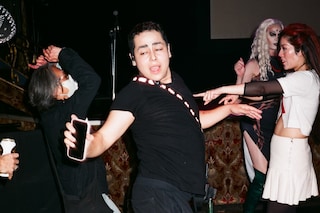
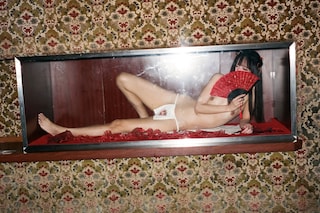
On the first Saturday of every month, Tokyo Kinema Club in Uguisudani transforms into one of Tokyo’s most loved fetish nights. Housed inside the former cabaret theatre venue, Department H has become a haven for the city’s kink community, coming together monthly to create their own kind of fun.
The venture is run by Gogh Imaizumi, an illustrator renowned for his American comics style, whose flashy, graphic event posters help draw a devoted crowd of monthly regulars. Among the crowd is photographer Kento Nagayoshi, whose latest project, Kinky Love, takes us inside the venue’s gaudy interior for a single night.

 Photography Kento Nagayoshi
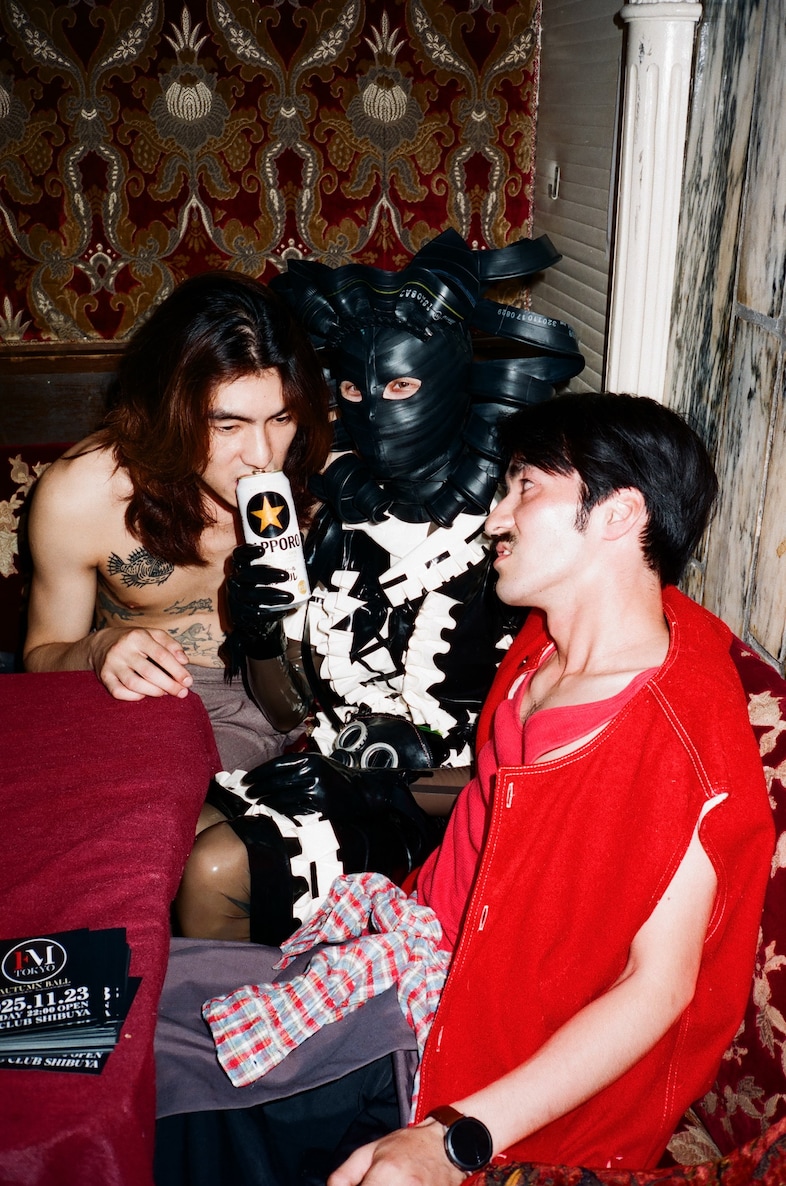
Department H operates with a particular openness that is part of the night’s appeal. Anyone can enter, though those who dress up receive a discount. Cameras are permitted, but little of what goes on inside is documented online. Posts tagged with the venue are often years old – some show shiny latex outfits laid out ahead of the night, others feature partygoers posted up outside, leathered up for the evening, and a few masked for anonymity.
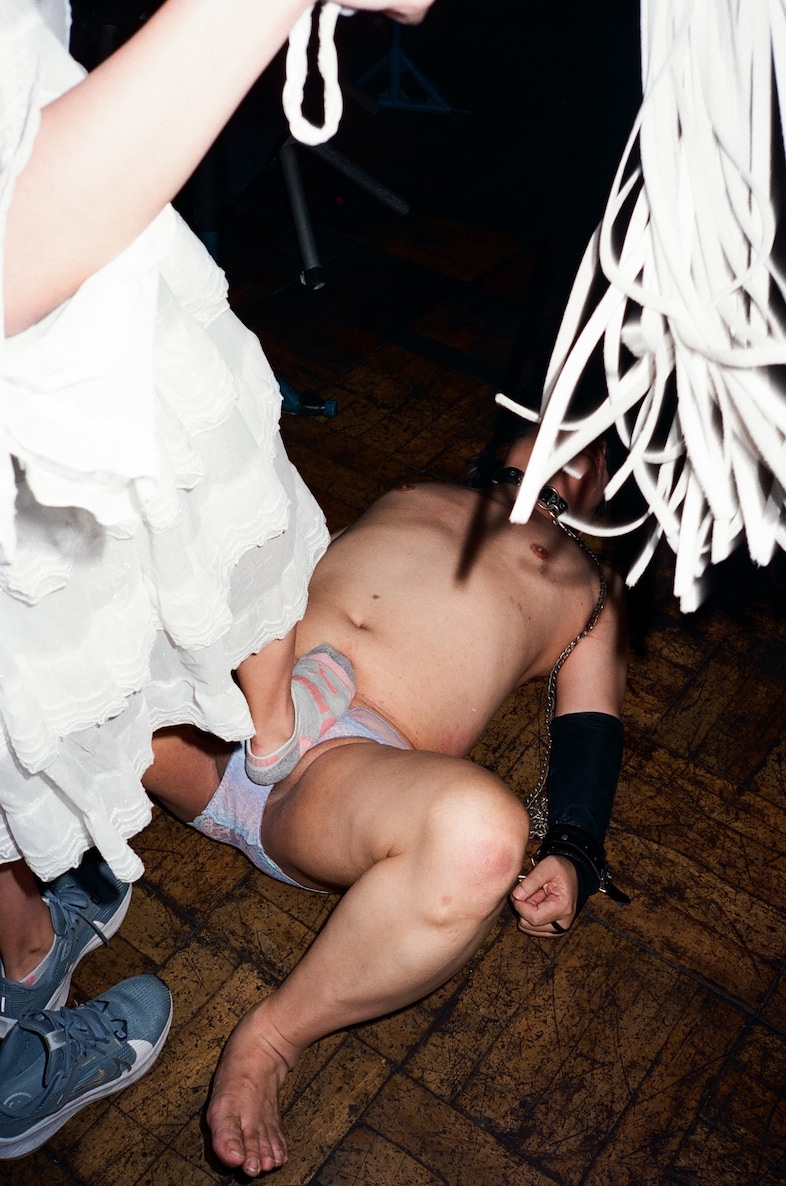
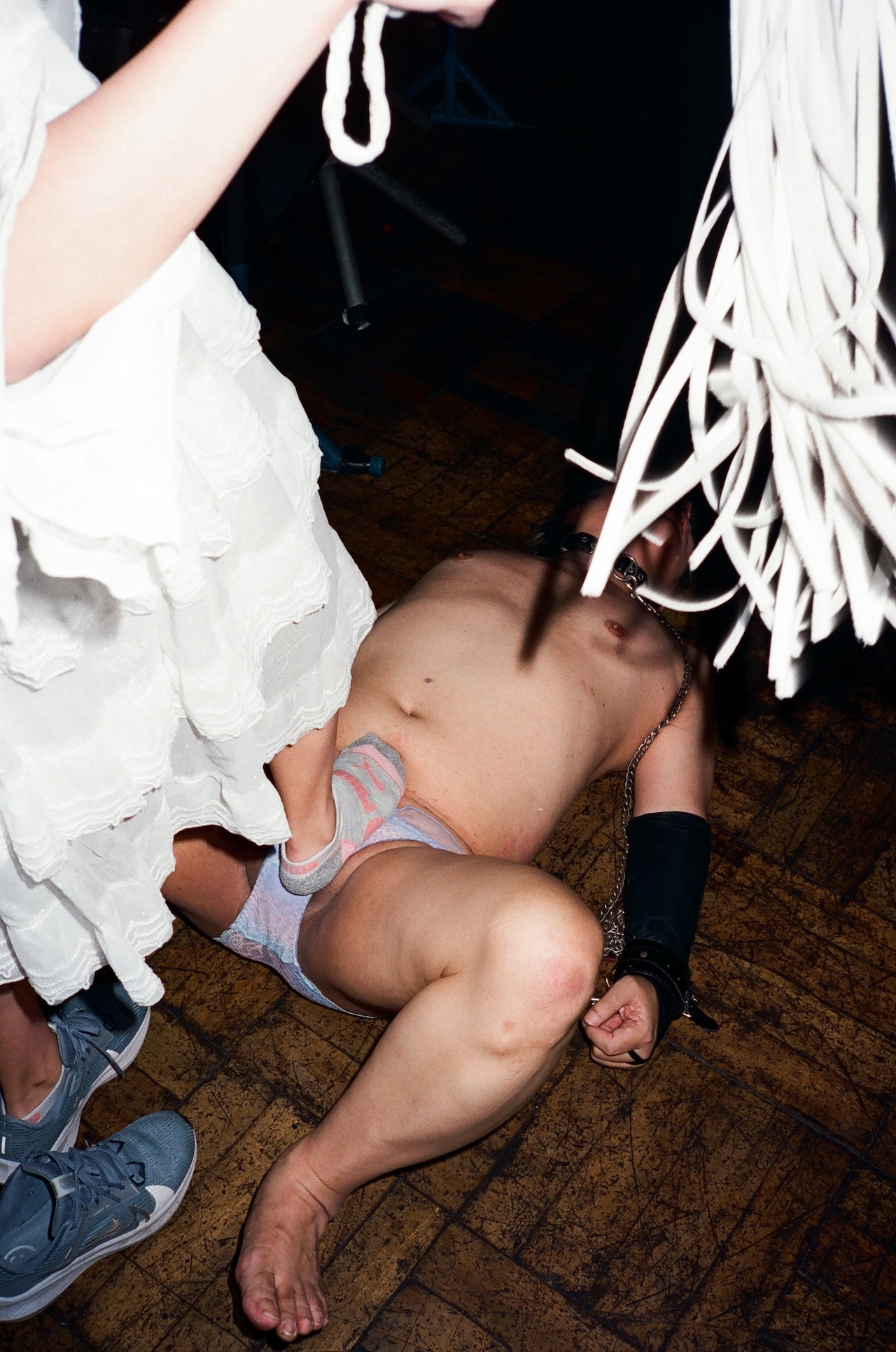
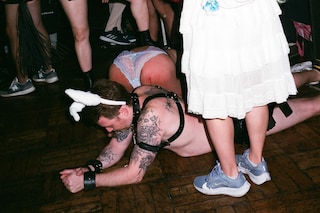
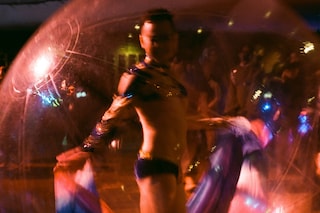
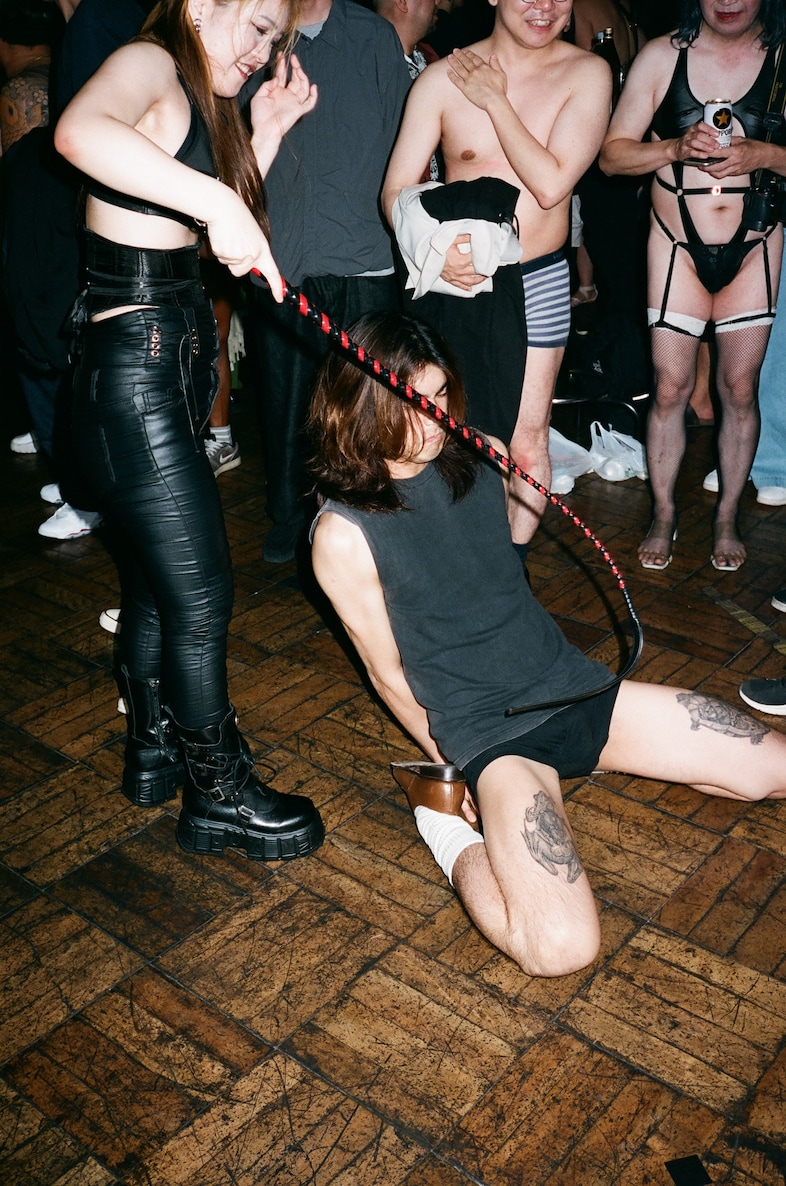
Beneath beams of coloured light and banners bearing hard-left political slogans, Nagayoshi captured bodies writhing on the dancefloor. Some submit, others intertwine, and most wear little to no clothing as they stretch across futons. One of his favourite photos from the series is a dizzying shot of two partygoers embracing on the dancefloor. “I was particularly struck by moments where people reunited in this space, and later, toward the end of the event, seemed reluctant to part ways,” he explains.
 Photography Kento Nagayoshi
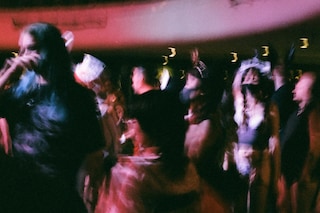
There’s a sense of movement that underpins the kink community in the city. “The events and the people within the night are constantly shifting and transforming, and they change depending on the time as well. It felt almost inevitable that the photographs would take on this same sense of movement rather than stillness,” Nagayoshi tells us. As the night progressed, shots became increasingly in motion, the photographer finding his place between the thicket of bodies on the dancefloor. “My attention shifted away from the camera, and I was mostly reacting instinctively, pressing the shutter in the moment, which resulted in a lot of blur. I think that helped convey a sense of the audience dissolving into the space.”
It’s an emotional pull that is central to Department H’s longevity; one that the photographer describes as “incredibly stimulating”. He continues, “You’re surrounded by people dressed in ways you’d never normally see, many of them wearing outfits they’ve made themselves. I personally felt a strong sense of safety and comfort alongside that intensity... I think for many people it becomes a kind of emotional anchor. There are very few places where you can openly express these kinds of fetishes, after all.”
 Photography Kento Nagayoshi
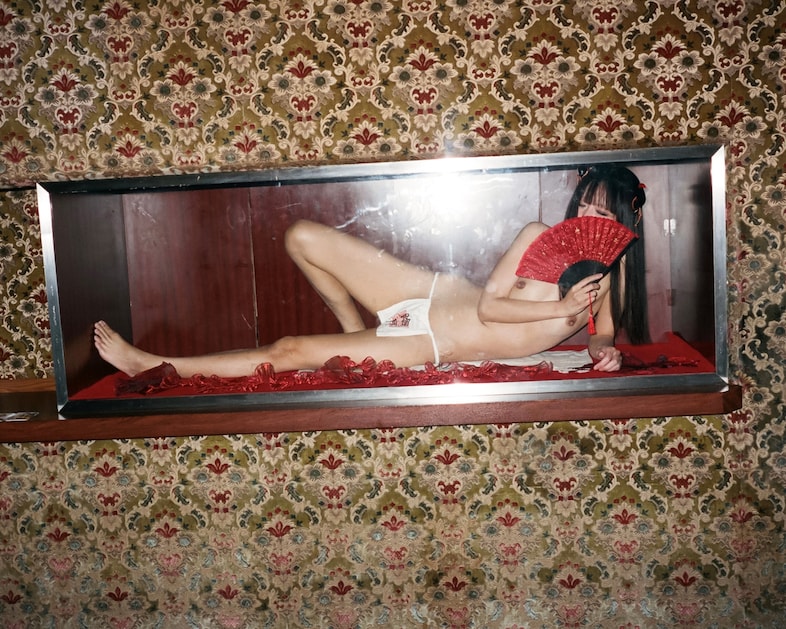
Nagayoshi was initially cautious about photographing in such an intimate setting – while his previous work often focused on the nude form, this was his first time photographing people he hadn’t met before. “From the very beginning, I didn’t approach the work with an intention to sexualise or fetishise the subjects. I felt I was simply photographing what was present in front of me.” He quickly found the crowd to be openly receptive. “I made a point of asking people for permission whenever possible, but most people would start posing as soon as I raised my camera.”
On a sociological level, Japan’s approach to sex is complicated. Historically open in some ways, conservative social expectations still limit public discussion. “Through my work outside of photography, I often interact with people who don’t usually go to clubs or parties. Through these conversations, I’ve personally felt that – perhaps influenced by the media – there has been a growing intolerance and harsher attitudes toward people who differ from conventional social norms compared to the past.” It’s with this in mind that he hopes the documentation of Kinky Love will “encourage a sense of tolerance and kindness toward people and expressions that may feel unfamiliar”.
Escape the algorithm! Get The DropEmail address SIGN UPPrivacy policy
Thank you. You have been subscribed
Privacy policy ShareLink copied ✔️More on these topicsArt & PhotographyLightboxfetishQueer CultureJapanclubbingPhotographersExpand your creative community and connect with 15,000 creatives from around the world.
READ MORE
Cova da Moura: Vibrant portraits from the hip-hop capital of Lisbon
These dreamy portraits rebel against stereotypes of Asian youth culture
Dsquared2
Dsquared2 turns up the Heated Rivalry at Milan Fashion Week
Lenovo & Intel

Watch: How three artists make space for AI, creativity and worldbuilding

Dazed Club callout! Apply to bring your exhibition project to life

US fascism is killing art

See Nan Goldin’s The Ballad of Sexual Dependency in London

In pictures: The nostalgia-fuelled traditions of Ukraine’s lost towns

These photos explore the uncanny world of love dolls

Arresting portraits of Naples’ third-gender population

10 major photography shows you can’t miss in 2026