- Archaeology
Archaeologists found hundreds of burials in the Copper Age cemetery in Varna, Bulgaria, some of which were littered with gold artifacts.
When you purchase through links on our site, we may earn an affiliate commission. Here’s how it works.
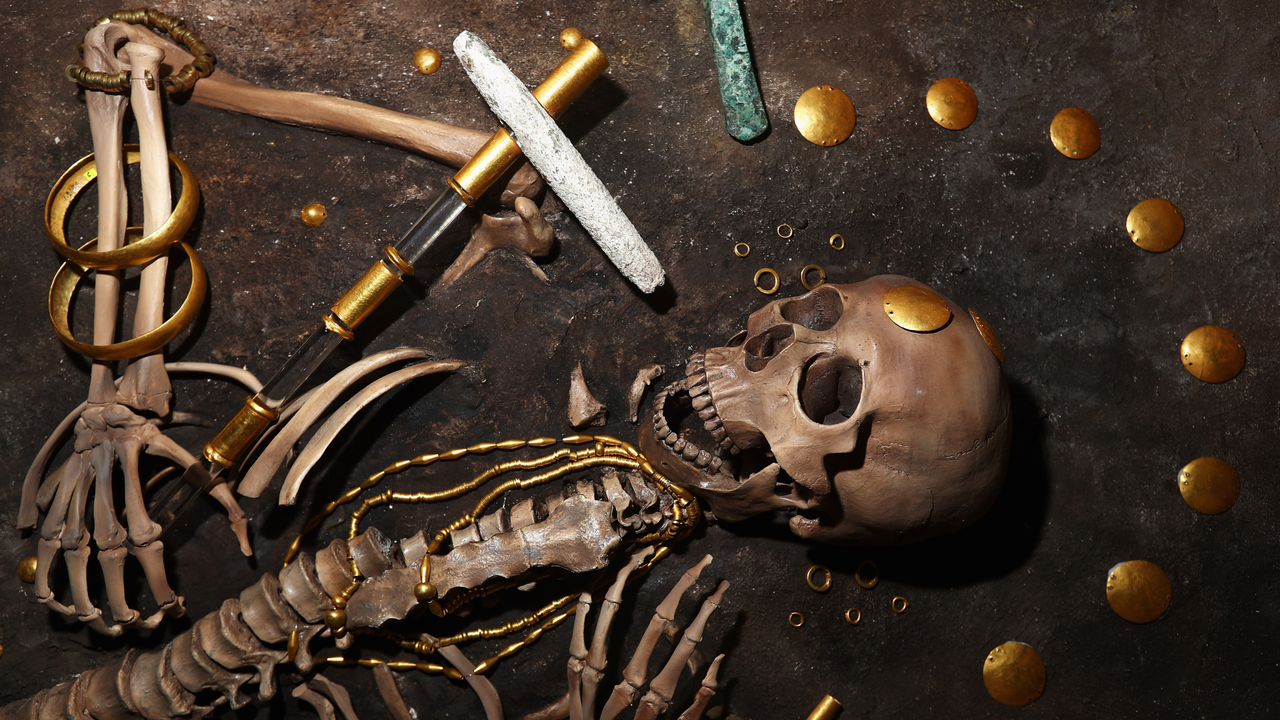
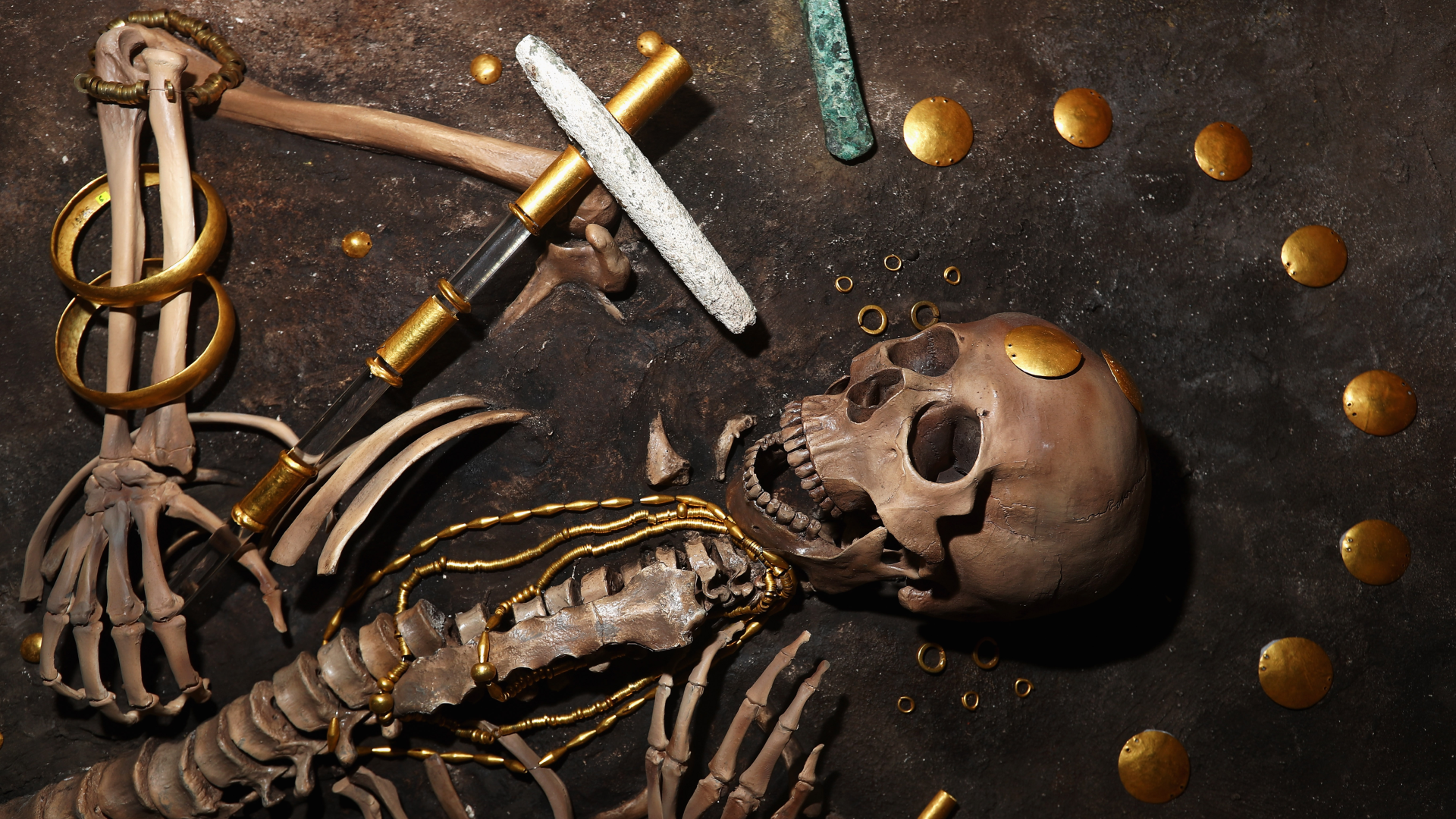 A re-creation of the skeleton discovered in Grave 43 in the Varna necropolis, together with the numerous gold artifacts dating to the mid-fifth millennium B.C.
(Image credit: Getty Images)
Share
Share by:
A re-creation of the skeleton discovered in Grave 43 in the Varna necropolis, together with the numerous gold artifacts dating to the mid-fifth millennium B.C.
(Image credit: Getty Images)
Share
Share by:
- Copy link
- X
Name: Varna Gold
What it is: A collection of gold artifacts
Where it is from: Varna, Bulgaria
When it was made: Circa 4600 B.C.
In the fall of 1972, workers in the coastal Bulgarian city of Varna accidentally stumbled upon an ancient cemetery filled with treasure. The burial ground contained more than 3,000 gold artifacts that date to between 4600 and 4300 B.C., making them the oldest gold artifacts in the world.
The man in Grave 43, who may have been a metalsmith, was buried with a variety of gold artifacts, including beaded gold necklaces, bangles, earrings and pendants; small, gold discs that were once attached to his clothes; an ax with a gold-wrapped handle; as well as a gold penis sheath.
You may like-
 Detectorists find Anglo-Saxon treasure hoard that may have been part of a 'ritual killing'
-
 Pectoral with coins: 'One of the most intricate pieces of gold jewelry to survive from the mid-sixth century'
-
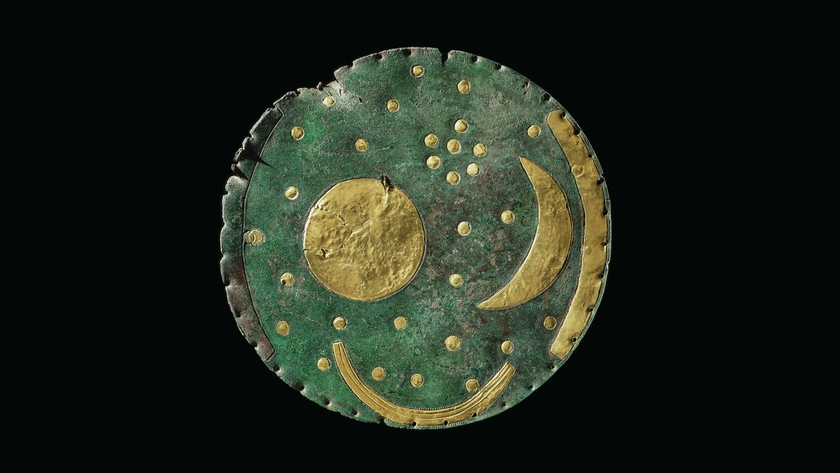 Nebra Sky Disc: The world's oldest depiction of astronomical phenomena — and it may depict the Pleiades
In total, archaeologists found more than 13.2 pounds (6 kilograms) of gold in the Varna cemetery. At up to 6,600 years old, this treasure trove boasts the oldest evidence of humans crafting gold anywhere in the world. (A tiny gold bead discovered in 2016 at Tell Yunatsite, another site in southern Bulgaria, may be a century older, but that date has not been confirmed.)
MORE ASTONISHING ARTIFACTS—Nebra Sky Disc: The world's oldest depiction of astronomical phenomena — and it may depict the Pleiades
—Tumba Madžari Great Mother: A boxy goddess figurine from North Macedonia designed to protect Stone Age houses 7,800 years ago
—The Alfred Jewel: A 1,100-year-old treasure from England's first king that proclaims 'Alfred ordered me to be made'
Archaeologists are still unsure why gold-working was invented in the Balkans more than six millennia ago during the Copper Age (roughly 4500 to 3000 B.C.), although it might be related to a number of innovations in mining, metallurgy and long-distance trade that occurred during this era, according to the Varna Museum of Archaeology, which houses the collection of gold.
"The Varna cemetery illustrates the early stage of the emergence of a class-segregated society, a proto-type of social and political structure," Museum of Archaeology representatives wrote. "As attributes designating the social status of their owners, gold objects were sacred and symbolic rather than indicators of wealth."
The handful of people buried in the Varna cemetery with extraordinary amounts of gold, such as the man in Grave 43, were likely the society's leaders, according to the museum, making Varna possibly one of the world's earliest civilizations.
For more stunning archaeological discoveries, check out our Astonishing Artifacts archives.
TOPICS gold astonishing artifacts Kristina KillgroveSocial Links NavigationStaff writer
Kristina Killgrove is a staff writer at Live Science with a focus on archaeology and paleoanthropology news. Her articles have also appeared in venues such as Forbes, Smithsonian, and Mental Floss. Kristina holds a Ph.D. in biological anthropology and an M.A. in classical archaeology from the University of North Carolina, as well as a B.A. in Latin from the University of Virginia, and she was formerly a university professor and researcher. She has received awards from the Society for American Archaeology and the American Anthropological Association for her science writing.
Show More CommentsYou must confirm your public display name before commenting
Please logout and then login again, you will then be prompted to enter your display name.
Logout Read more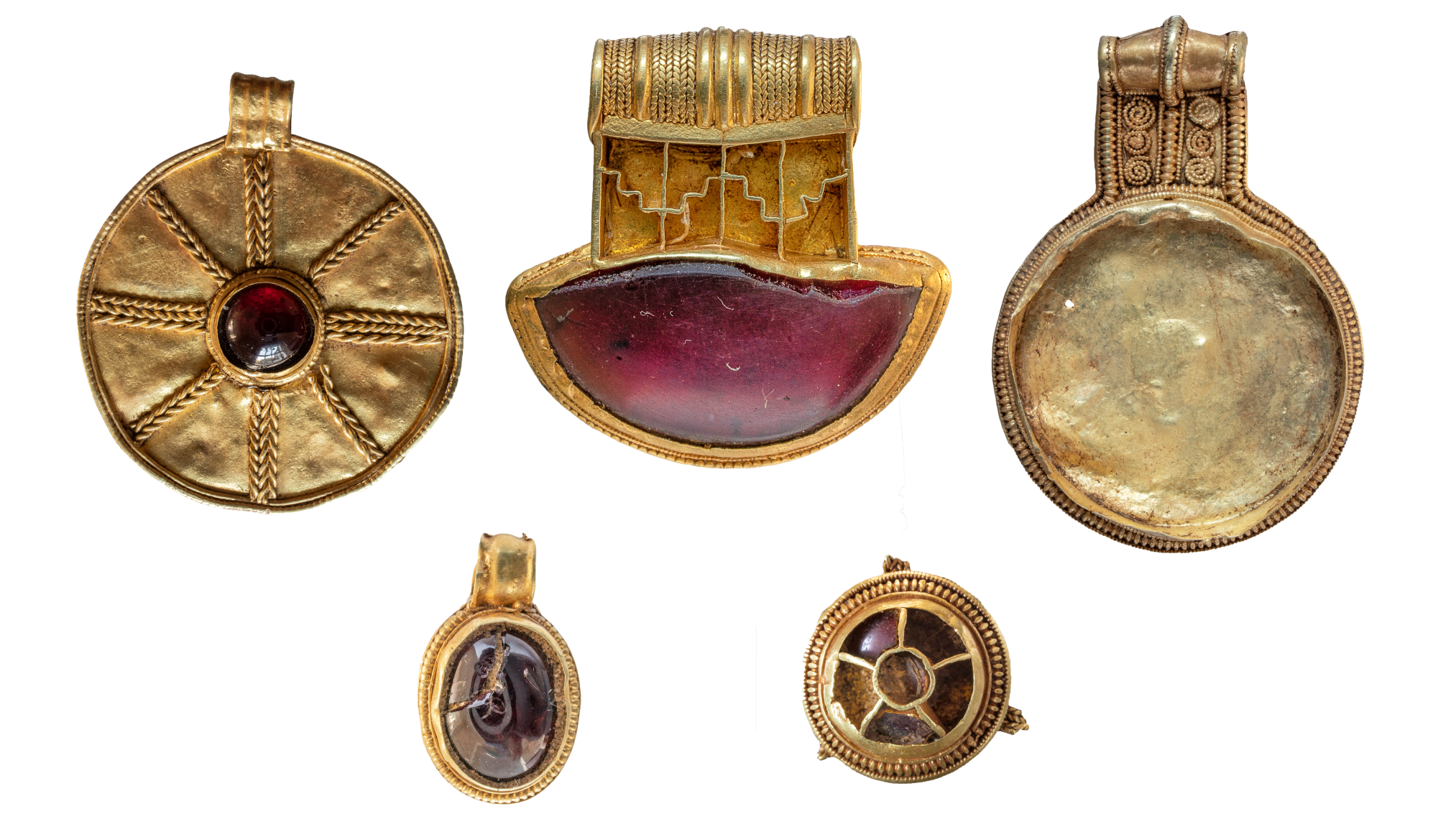 Detectorists find Anglo-Saxon treasure hoard that may have been part of a 'ritual killing'
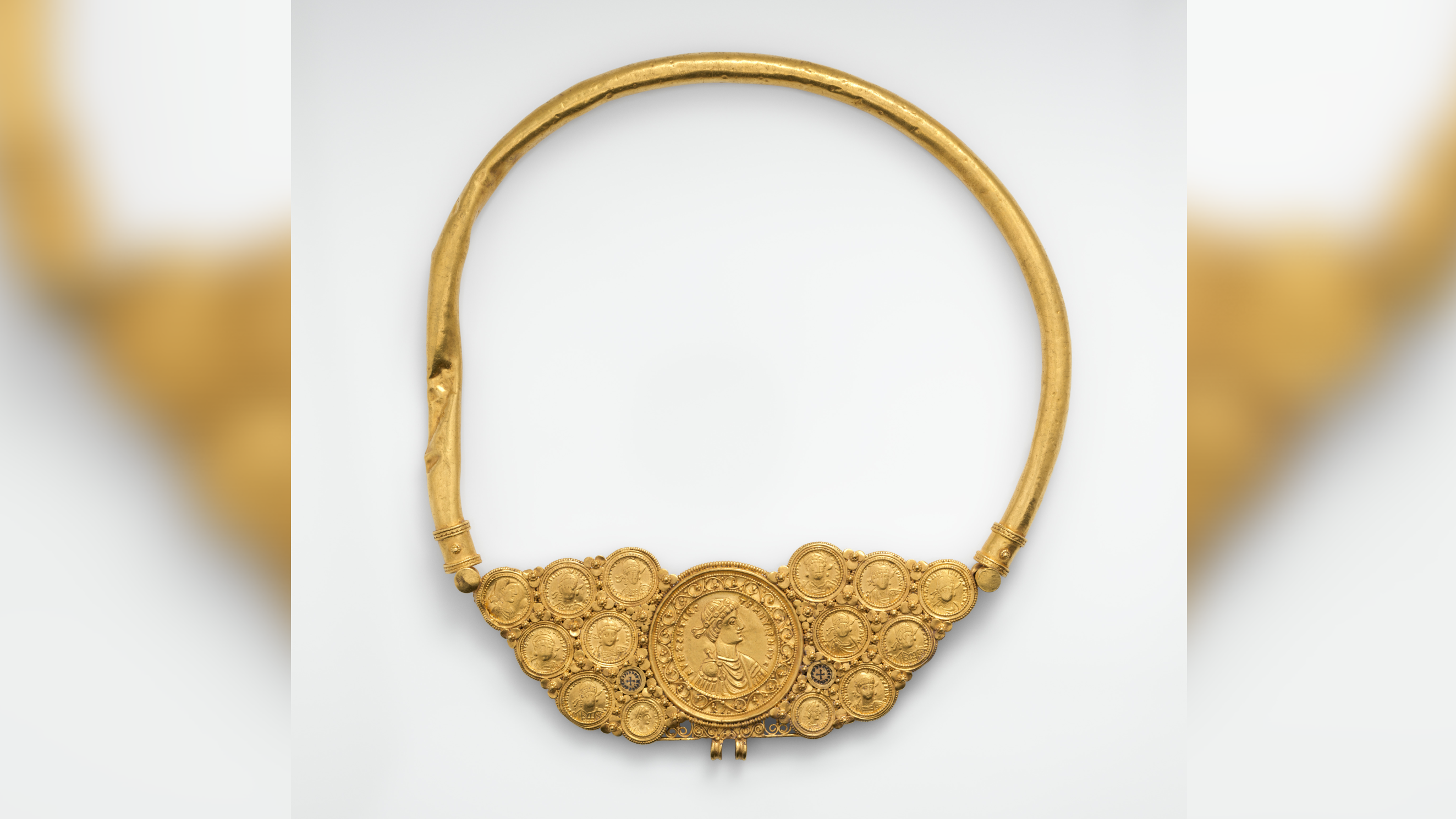 Pectoral with coins: 'One of the most intricate pieces of gold jewelry to survive from the mid-sixth century'
 2,200-year-old Celtic 'rainbow cup' in 'almost mint condition' found in Germany
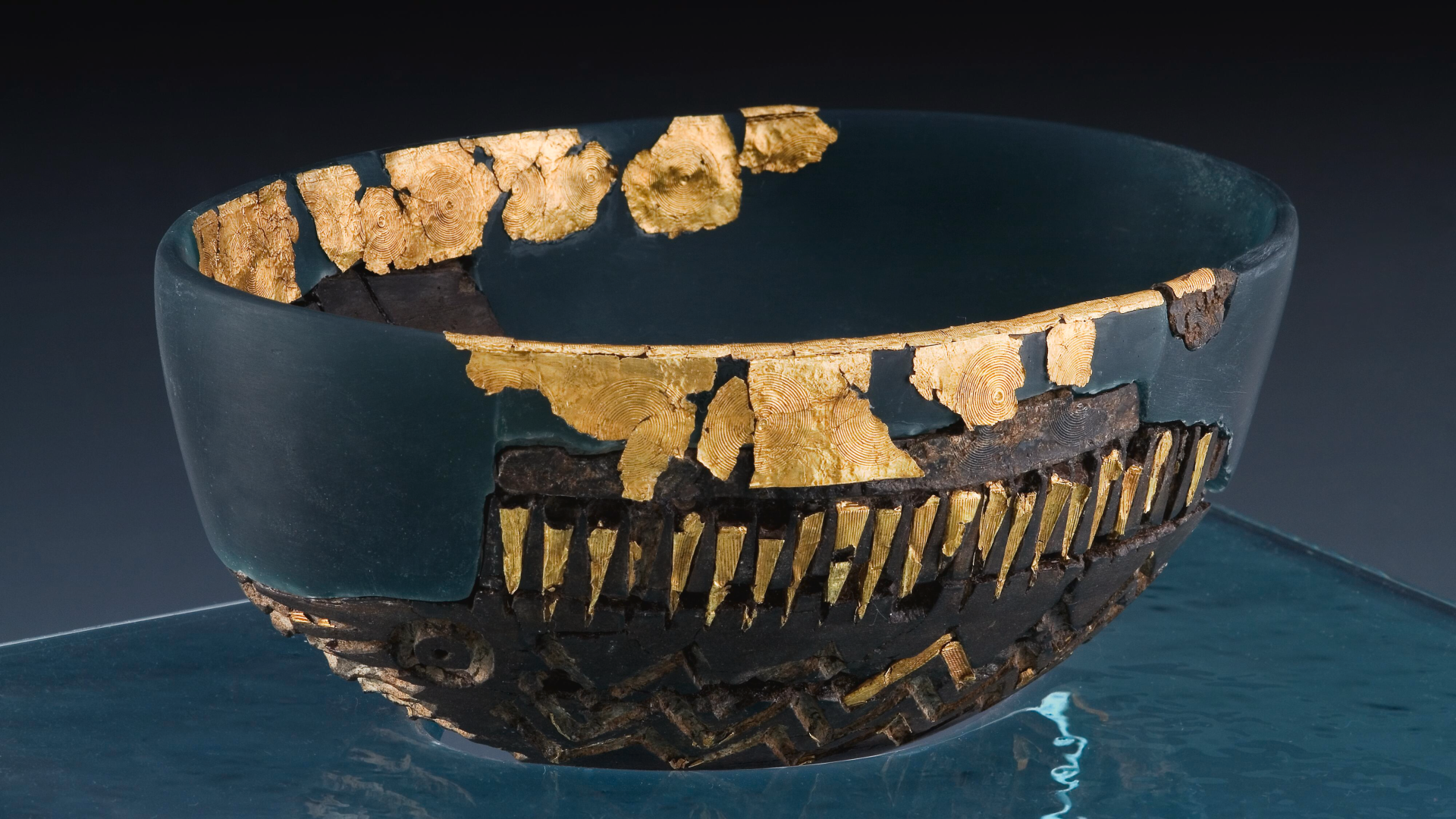 Caergwrle Bowl: A 3,300-year-old stone-and-tin bowl with gold oars and 'protective eyes'
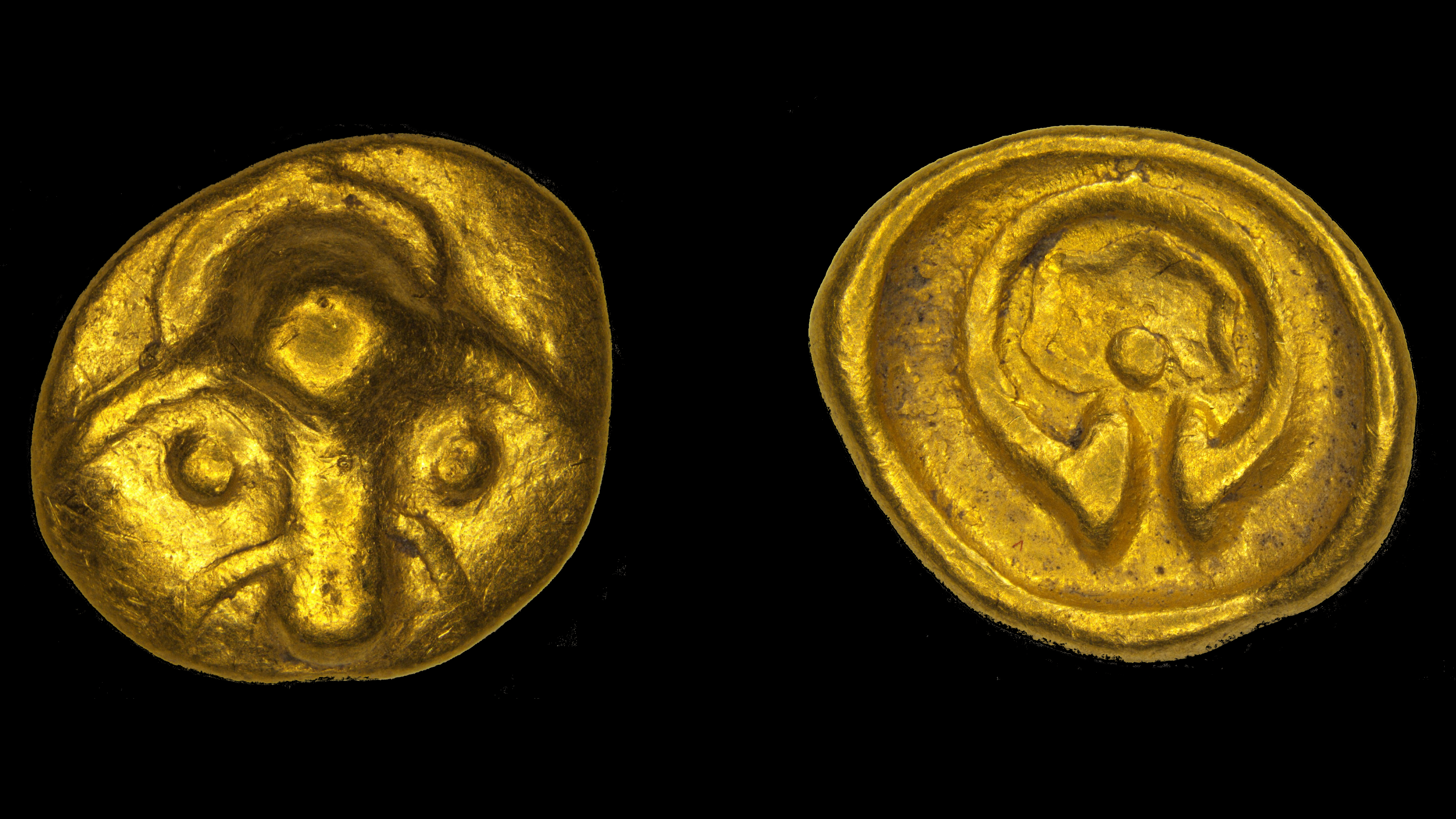
 2,300-year-old Celtic gold coins found in Swiss bog
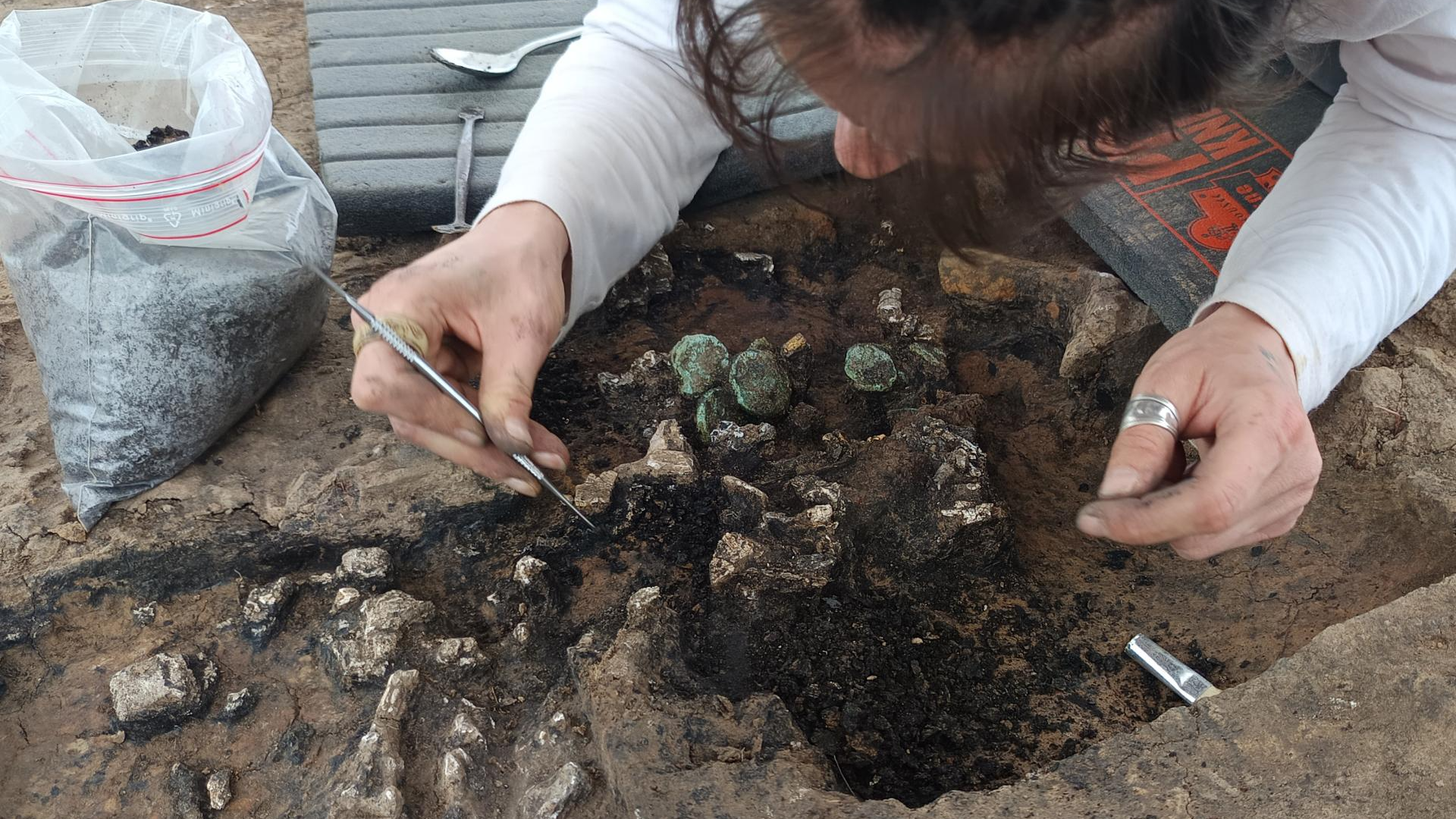 2,000-year-old gold ring holds clue about lavish cremation burial unearthed in France
Latest in Archaeology
2,000-year-old gold ring holds clue about lavish cremation burial unearthed in France
Latest in Archaeology
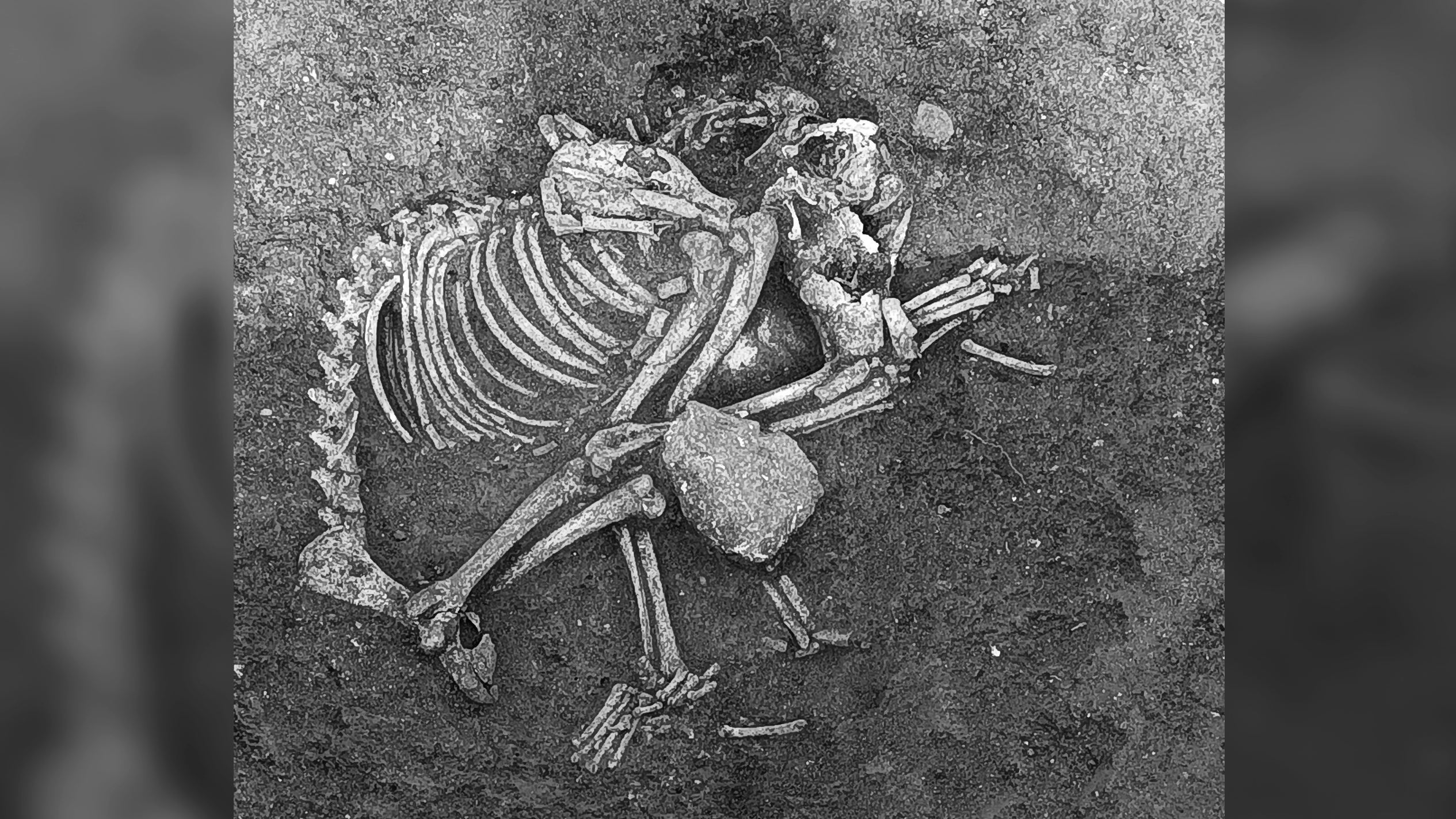 2,500 years ago, people in Bulgaria ate dog meat at feasts and as a delicacy, archaeological study finds
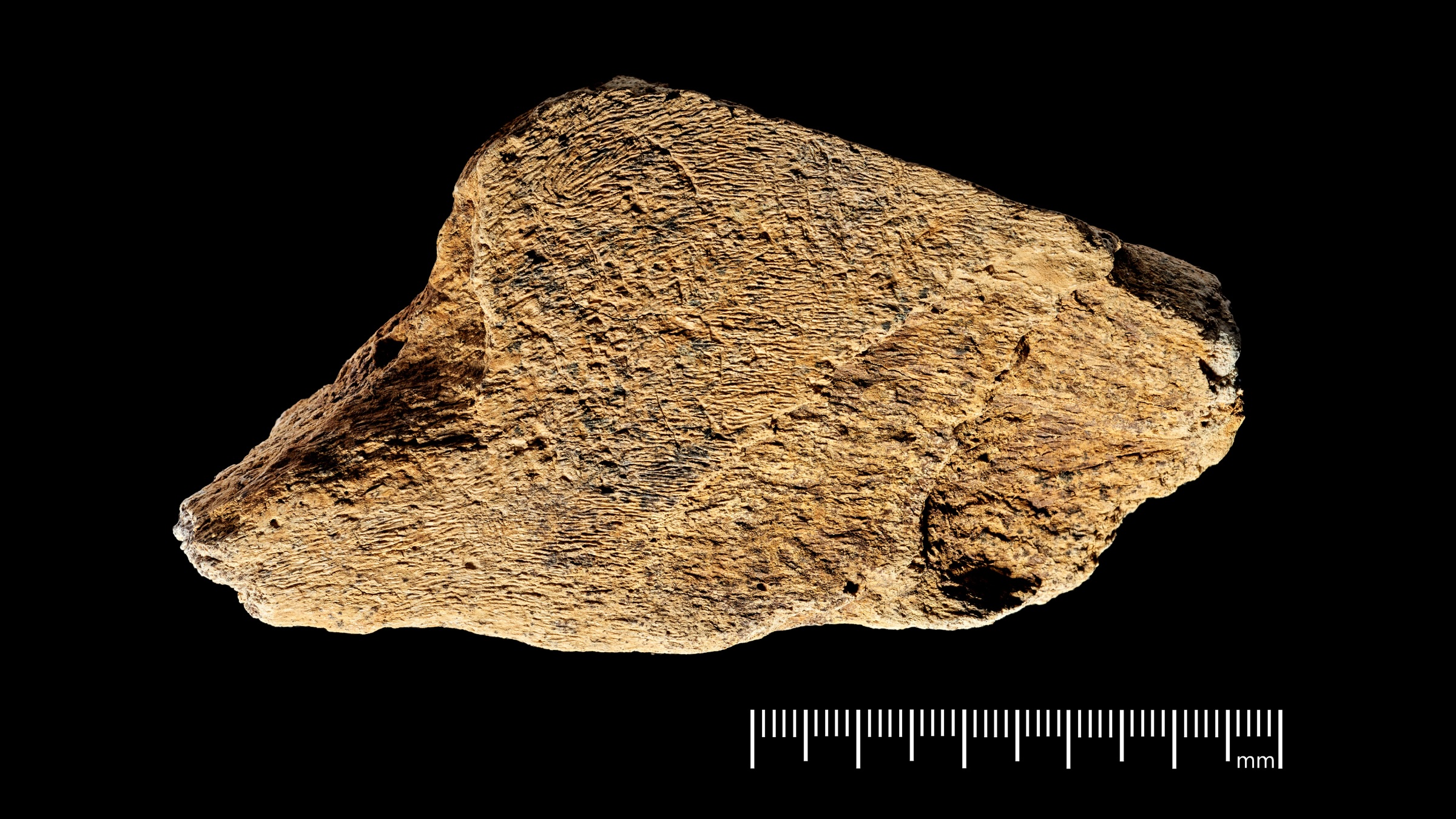 480,000-year-old ax sharpener is the oldest known elephant bone tool ever discovered in Europe
 People, not glaciers, transported rocks to Stonehenge, study confirms
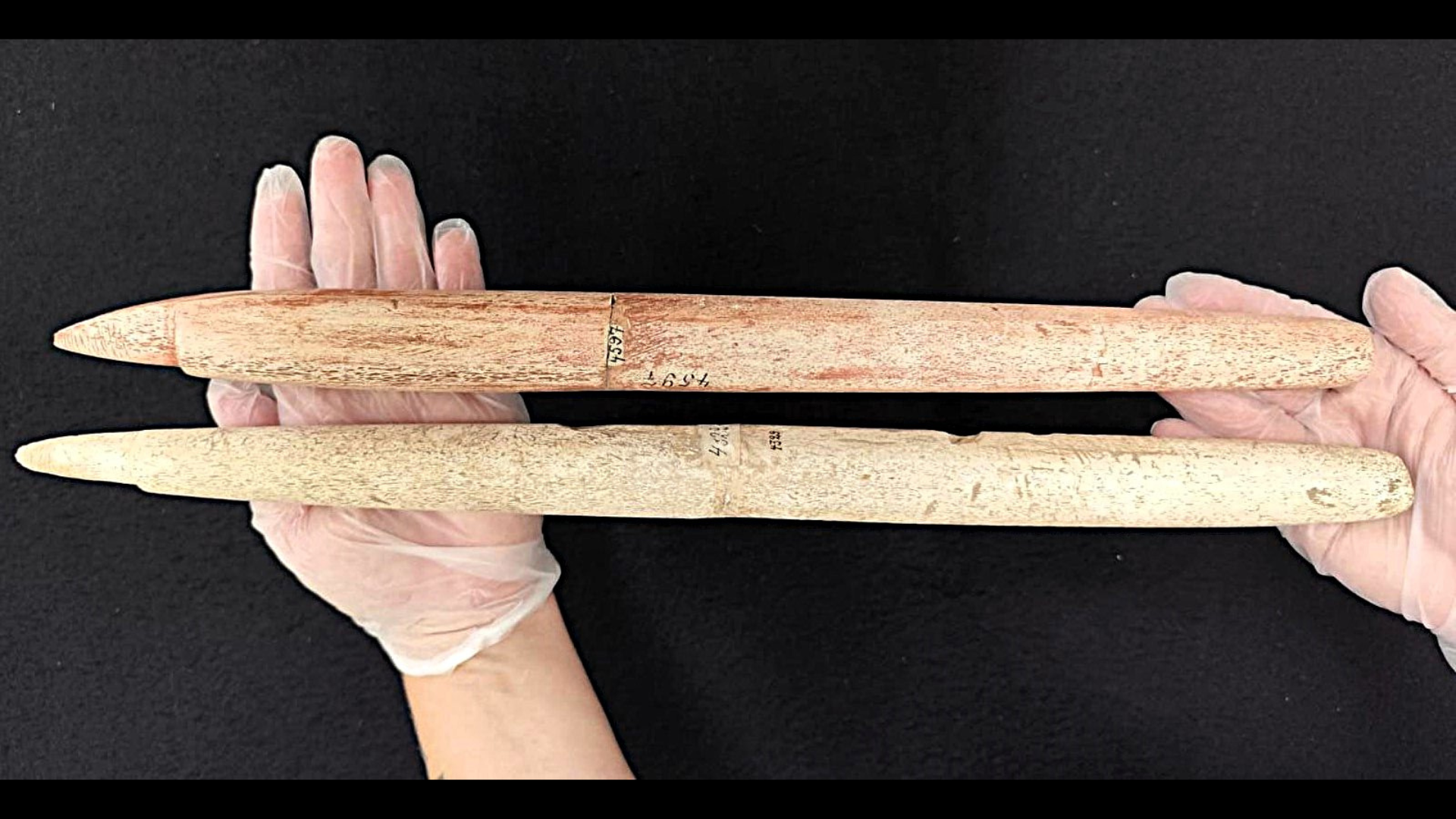 Some of the oldest harpoons ever found reveal Indigenous people in Brazil were hunting whales 5,000 years ago
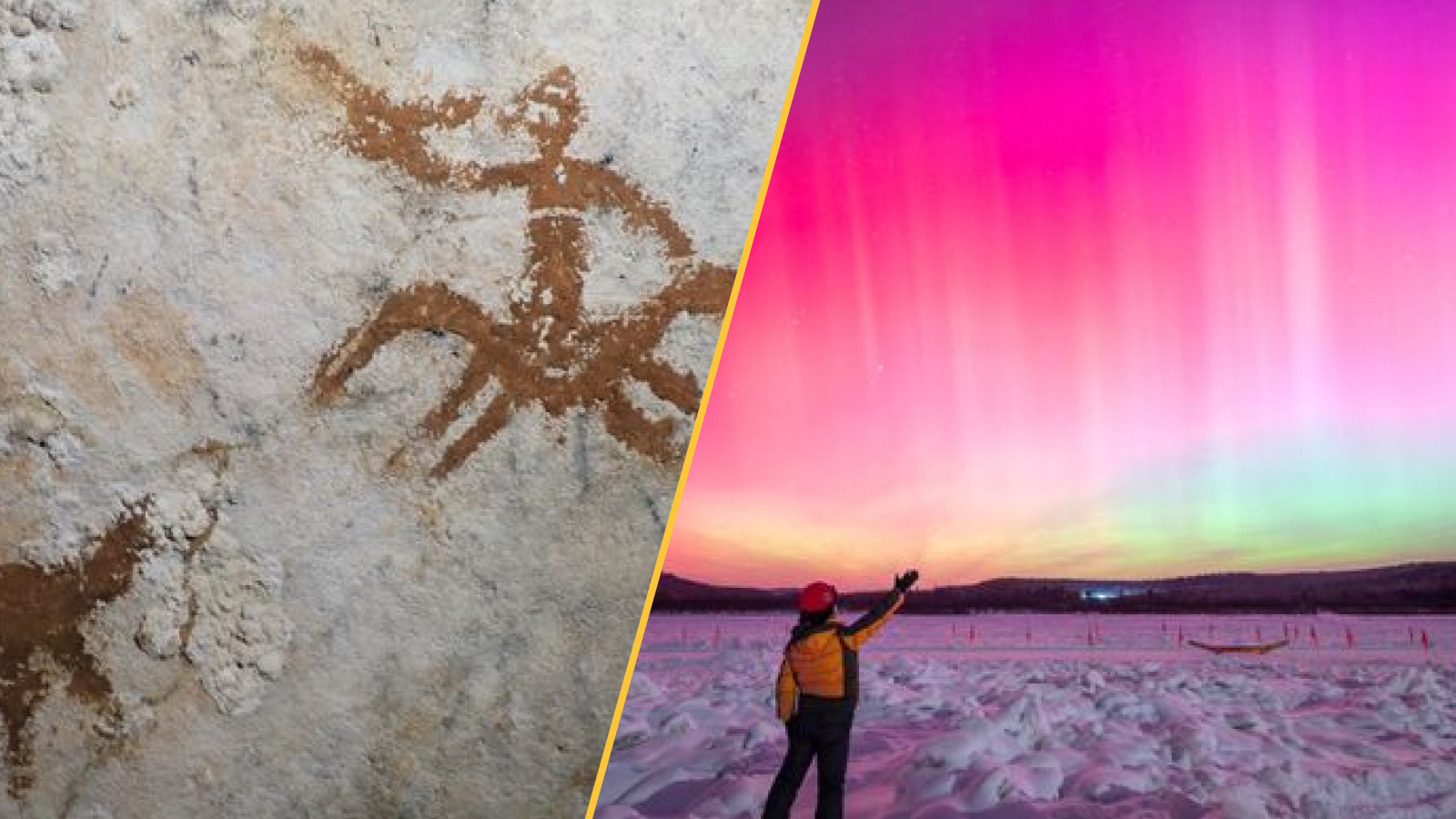 World's oldest rock art, giant reservoir found beneath the East Coast seafloor, black hole revelations, and a record solar radiation storm
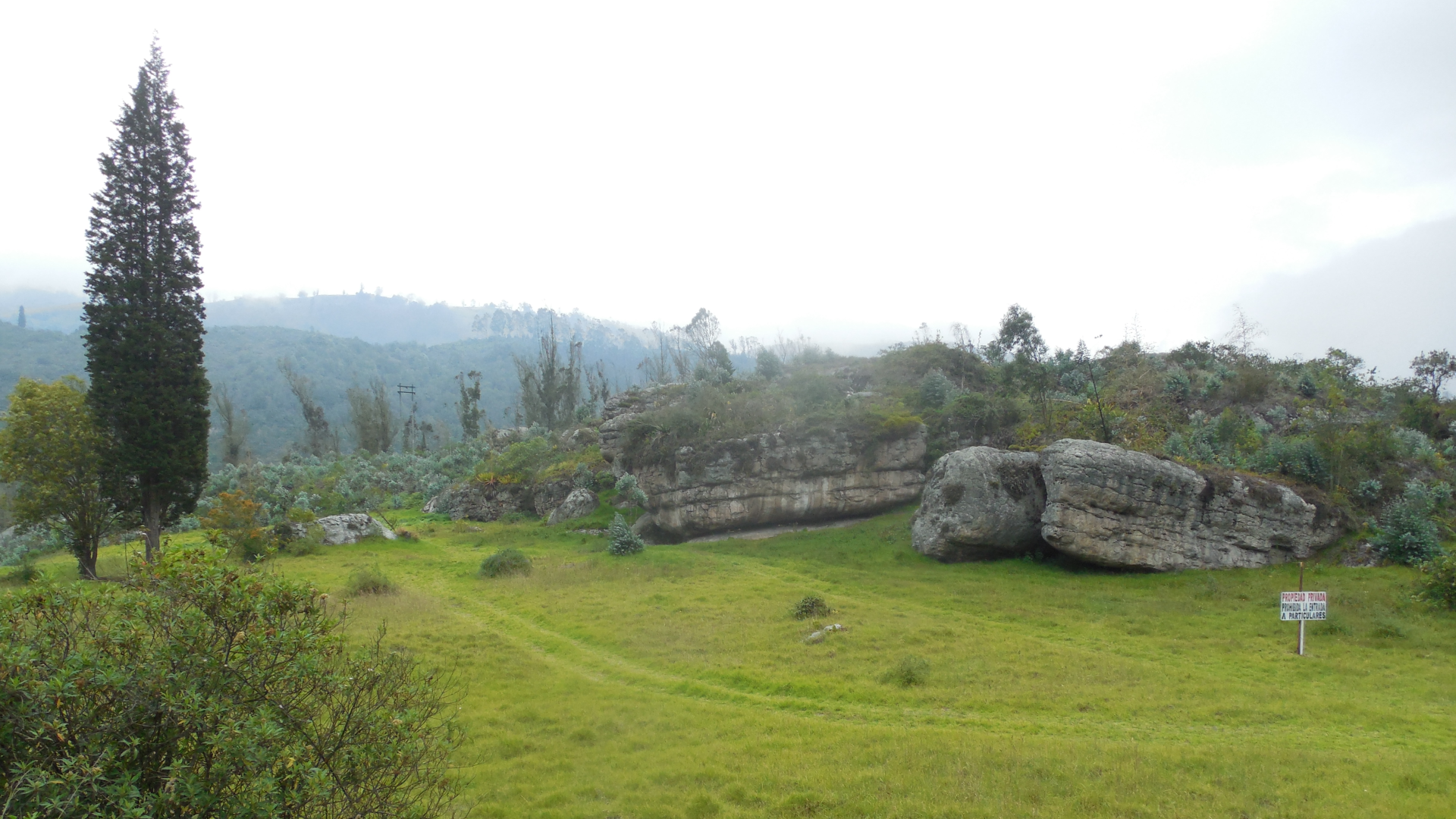 5,500-year-old human skeleton discovered in Colombia holds the oldest evidence yet that syphilis came from the Americas
Latest in Features
5,500-year-old human skeleton discovered in Colombia holds the oldest evidence yet that syphilis came from the Americas
Latest in Features
 Why does the moon look larger when it's on the horizon?
 Chocolate Hills: The color-changing mounds in the Philippines that inspired legends of mud-slinging giants
Varna Gold: Humanity's first gold jewelry was found in a cemetery with a gold 'penis sheath'
Chocolate Hills: The color-changing mounds in the Philippines that inspired legends of mud-slinging giants
Varna Gold: Humanity's first gold jewelry was found in a cemetery with a gold 'penis sheath'
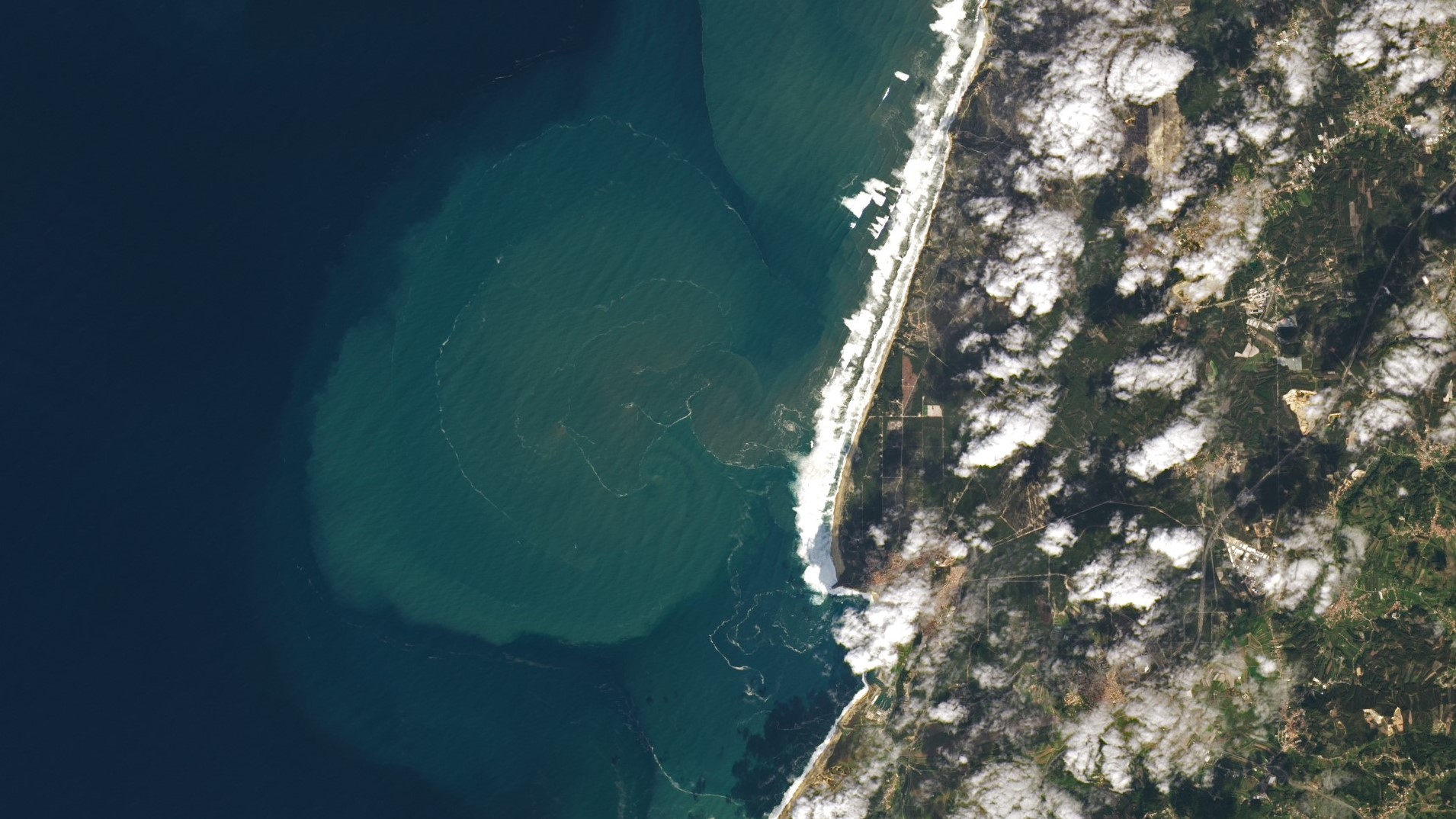 Giant underwater plumes triggered by 7-story waves at Nazaré captured off Portuguese coast
 Could there ever be a worldwide internet outage?
 Why don't you usually see your nose?
LATEST ARTICLES
Why don't you usually see your nose?
LATEST ARTICLES 1Antibiotic resistance is the 'silent pandemic' — here are four steps to stop it
- 2How to see 2 total solar eclipses in the next 2 years — including the 'eclipse of the century'
- 3 A drying climate is making East Africa pull apart faster
- 4Google Glass has found yet another lease of life — but is it too little too late for smart glasses?
- 5James Webb telescope peers into 'Eye of God' and finds clues to life's origins — Space photo of the week