 Luwa.mp4 – Pure Water/Paparazzi stillJanuary
28,
2026Music
/
Scene And SpottedMusic /
Scene And Spotted‘It’s a revolution’: Nigeria’s new-gen rappers are hitting the mainstream
Luwa.mp4 – Pure Water/Paparazzi stillJanuary
28,
2026Music
/
Scene And SpottedMusic /
Scene And Spotted‘It’s a revolution’: Nigeria’s new-gen rappers are hitting the mainstreamWhile Afrobeats continues to define Nigeria’s musical reputation abroad, bubbling beneath the surface is a new scene that captures life from the ground up
ShareLink copied ✔️January 28, 2026January 28, 2026TextTiléwa KazeemTextChibuzo EmmanuelNigeria’s global musical identity is currently defined by Afrobeats – polished, melodic and increasingly engineered for international consumption. Its stars soundtrack pleasure, wealth and success, often from a distance already achieved. Running alongside this mainstream, however, is the Nigerian underground rap scene forming outside Afrobeats’ gravitational pull: music made quickly, its frantic synths riding familiar trap bounces and 808s, precise and uncompromising, rooted in immediacy rather than aspiration.
This emerging wave – including Zaylevelten, Wave$tar, Artsalghul, Eggerton, Luwa.MP4 and Monochrome – draws heavily from the experimental rap boom of the mid-2010s, when artists like Playboi Carti, Lil Uzi Vert and XXXTENTACION reshaped hip-hop through distortion, emotional excess and internet-first distribution. Monochrome and Eggerton describe it as the “2016 rap swell,” the so-called SoundCloud era in which genre boundaries dissolved and rawness was prioritised over polish, and it is now being reinterpreted through distinctly Nigerian realities.
The result is music that is abrasive, digitally restless and emotionally unfiltered. Rage rap, trap, Opium, rock and cyberpunk textures collide with lyrics that foreground sex, drugs, fraud and boredom with a frankness rarely heard in Nigeria’s mainstream. Rather than smoothing over youth experience, the underground leans into its messier edges.
What binds these artists is not a shared sound but a shared condition. Raised online, their cultural references collapse distance: anime, Disney Channel television, American rap, Nigerian pop, drugs and internet slang circulate without hierarchy. This is Gen Z expression shaped by constant connectivity, where intimacy and irony, pleasure and despair, coexist in the same scroll. The underground’s frantic pace and unfiltered candour mirror that reality – music made not to signify arrival, but to capture life as it is being lived, in real time.
“I think most of the so-called ‘blown’ musicians aren’t tapped in,” Artsalghul tells Dazed of the currently dominant Afrobeats scene. “There’s no interest in what young people like, what they want to listen to, or what their reality is. That’s not really their fault – they weren’t born into this generation. We’re just making the music we want to hear. The people popping in my age group are popping because this is what they recognise. It’s a revolution of the youth, by the youth.”
The words of the Osun State-born, masked rapper capture a growing rupture within Nigerian music. These artists are speaking back not only to Afrobeats’ dominance as Nigeria’s global export, but to the distance mainstream pop has developed from the interior lives of young Nigerians. In a country where most of the population is under 30, the underground has become one of the clearest spaces where youth experience is articulated without translation – not to be seen, but to be understood.
In this sonic underworld, these rappers are not insulated from Nigeria’s mainstream so much as operating alongside it. Their unfiltered expression has already drawn the attention of established figures such as Blaqbonez, Odumodublvck and Grammy-nominated Bloody Civilian – not as a bid for crossover, but as an acknowledgement of cultural traction. Like the UK Ug scene that runs in parallel, the underground’s appeal lies in its refusal to assimilate: respected by the mainstream for its audience and energy, while remaining structurally and aesthetically independent.
But perhaps more telling is how many of these next-generation artists, unable to find producers who can realise the sounds in their heads, have taken production into their own hands. Self-producing in DIY home studios has become less a stylistic choice than a necessity, allowing them to work freely, quickly and without compromise.
Here are five artists at the centre of the rumble shaping Nigeria’s underground rap scene right now.
WAVE$TARMuch of the pleasure of listening to Wave$tar, one of the leading voices in Nigeria’s burgeoning underground music scene, lies in his gift for pointed storytelling and his distinctive, low-slung vocal presence. “My voice is distinct because I’ve trained it over time,” he tells Dazed over the phone. “Whatever genre you hear it in, you’re going to know it’s me.”
While rap remains his primary mode of expression, Wave$tar moves fluidly across styles. He slips easily into pop-adjacent territory on his verse on Mavo’s Escaladizzy, one of Nigeria’s biggest records last year, and on $traffiti’s Canacetamol, where he raps with bracing dexterity about sex, money and drugs. Like many artists within the underground, substance use appears frequently in his work. On Prada BBY, released last December, he paints a glib, sun-soaked scene of Lagos leisure: “I dey for Tarkwa Bay, I dey smoke Backwoods.”
For Wave$tar, these references are neither provocation nor posturing. They reflect proximity. “I couldn’t care less if people relate to it,” he says of cannabis use. “Personally, I make music based on real life experiences.” He also frames the tension between Nigeria’s mainstream and its underground less as rebellion than as self-assurance. “I don’t think there’s anything we’re pushing against,” he adds. “A lot of us are just comfortable in our sound, our style, our space.”
MONOCHROMEAt 24, Monochrome is one of the most compelling figures in Nigeria’s underground. He is among the few artists fusing Afro-inflected rhythms with rage rap, creating music that feels both familiar and forward-facing. Originally a producer, he transitioned into recording his own material in 2023, retaining granular control over his sound – from texture to tempo.
Like Artsalghul and Wave$tar, Monochrome cites the experimental rap boom on SoundCloud in 2016 as a formative influence, a period that reshaped his sense of what rap could be. And, like many of his underground peers, substance use features prominently in his music. For Monochrome, it is less indulgence than honesty. “I don’t always have to be high to create music but it’s us being real,” he tells Dazed. “A lot of the youth use drugs as an escape, so they relate to it.”
ARTSALGHULArtsalghul’s music unspools with the cinematic precision and debauched charge of a Sam Levinson film. He gravitates towards prurient subject matter with a bluntness that can leave even the most seasoned listeners startled. “My music is a way to channel my intrusive thoughts,” he says.
On sl1ck, one of the most striking tracks to emerge from Nigeria’s underground last year, Artsalghul sketches scenes of heat and excess over hypnotic trap production. His penchant for explicit lyricism is unmistakable – “She sucking my dick like a vampire” – but what gives the song its edge is how closely those scenes are tethered to everyday Nigerian life. He raps about squeezing into a Danfo – Lagos’ ubiquitous yellow-and-black buses – and about power cuts interrupting sex: “Now we dey sweat, the sex is lit,” anchoring indulgence in recognisable, almost mundane Nigerian realities.
That refusal to dilute his writing speaks to a wider generational fracture. Where Nigeria’s mainstream often feels removed from the textures of young life, Artsalghul’s music insists on proximity – on speaking from within, rather than performing youth from a distance.
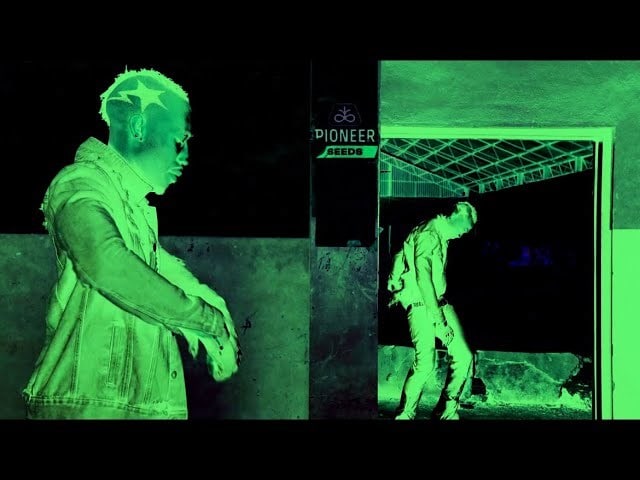
LUWA.MP4The magic of Luwa.mp4’s music lies in its ability to straddle polarities. Self-described as cyberpunk, his sound feels both nostalgic and futuristic – restless, propulsive and untethered from any single time or place. That elasticity stems from an unusually broad palette of influences, ranging from Disney Channel television to American hip-hop figures like Drake, Kanye West, Lil Uzi Vert and Trippie Redd, alongside veteran Nigerian pop architects such as D’banj and Don Jazzy.
For Luwa.mp4, this hybridity is not about imitation. While Nigeria’s underground shares surface-level affinities with Opium-era rap, he frames the scene less as a mirror of Western trends than a deliberate breaking of form – a space where creative boundaries are fractured and norms actively challenged.
EGERTTONRepresenting rage, chaos and subversion is Eggerton, who is increasingly becoming a key figure in the underground scene. It’s telling that Tellingly, his KARNAGE EP features a track titled ‘RAGE’, where he invokes the feeling of a mosh pit through dithering chants, skittering drums and serrated synths. “If you know me personally, you’d know I’m crazy. And this craziness, I interpret it in different ways,” he explains.
His musical influences span an eclectic range, including Michael Jackson, the Migos,tThe Weeknd, and, more recently, Opium-era rappers like Playboi Carti and Ken Carson. He speaks about the underground with fervent enthusiasm: “We’re hungry. We don’t see Nigeria as the finish line. We want to make this global.”
Escape the algorithm! Get The DropEmail address SIGN UPPrivacy policy
Thank you. You have been subscribed
Privacy policy ShareLink copied ✔️More on these topicsMusicScene And SpottedNigeriarapUK UgExpand your creative community and connect with 15,000 creatives from around the world.
READ MORE
Why are we so nostalgic for the music of 2016?
Listen to Oskie’s ‘perennially joyful’ Dazed mix
On
What went down at On and Dazed’s event for Paris-based creatives
Corridos tumbados: A guide to Mexico’s most controversial music genre
Sekou is the 21-year-old baritone making 70s soul cool again
Puma
fakemink, Skepta and Pa Salieu celebrate PUMA’s iconic Suede at PFW
Don’t Be Dumb: The top 5 features on A$AP Rocky’s new album
The rise of ‘Britainicana’: How Westside Cowboy are reshaping UK indie
R!R!Riot is Taiwan’s pluggnb princess
When did UK underground rap get so Christian?
Why listening parties are everywhere right now