- Space
- Astronomy
- The Moon
On the night of Feb. 2, skywatchers in eastern North America can see the moon occult Regulus — a rare event visible to the naked eye.
When you purchase through links on our site, we may earn an affiliate commission. Here’s how it works.
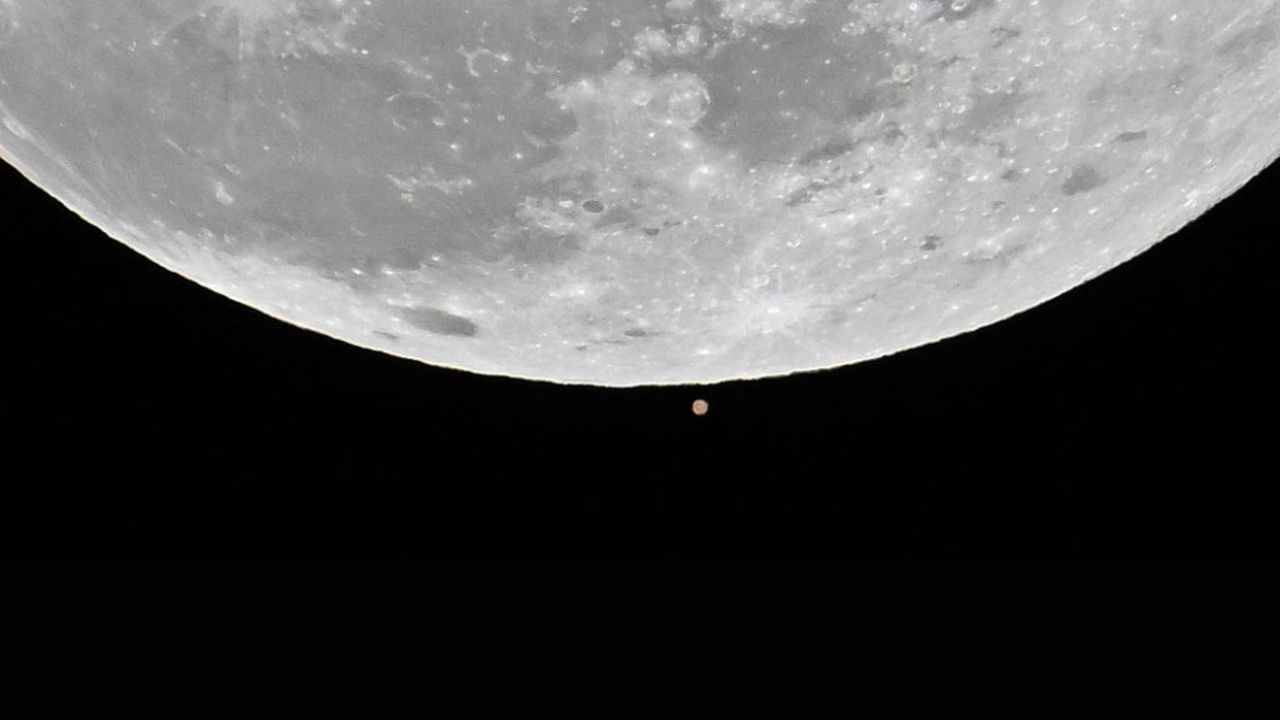
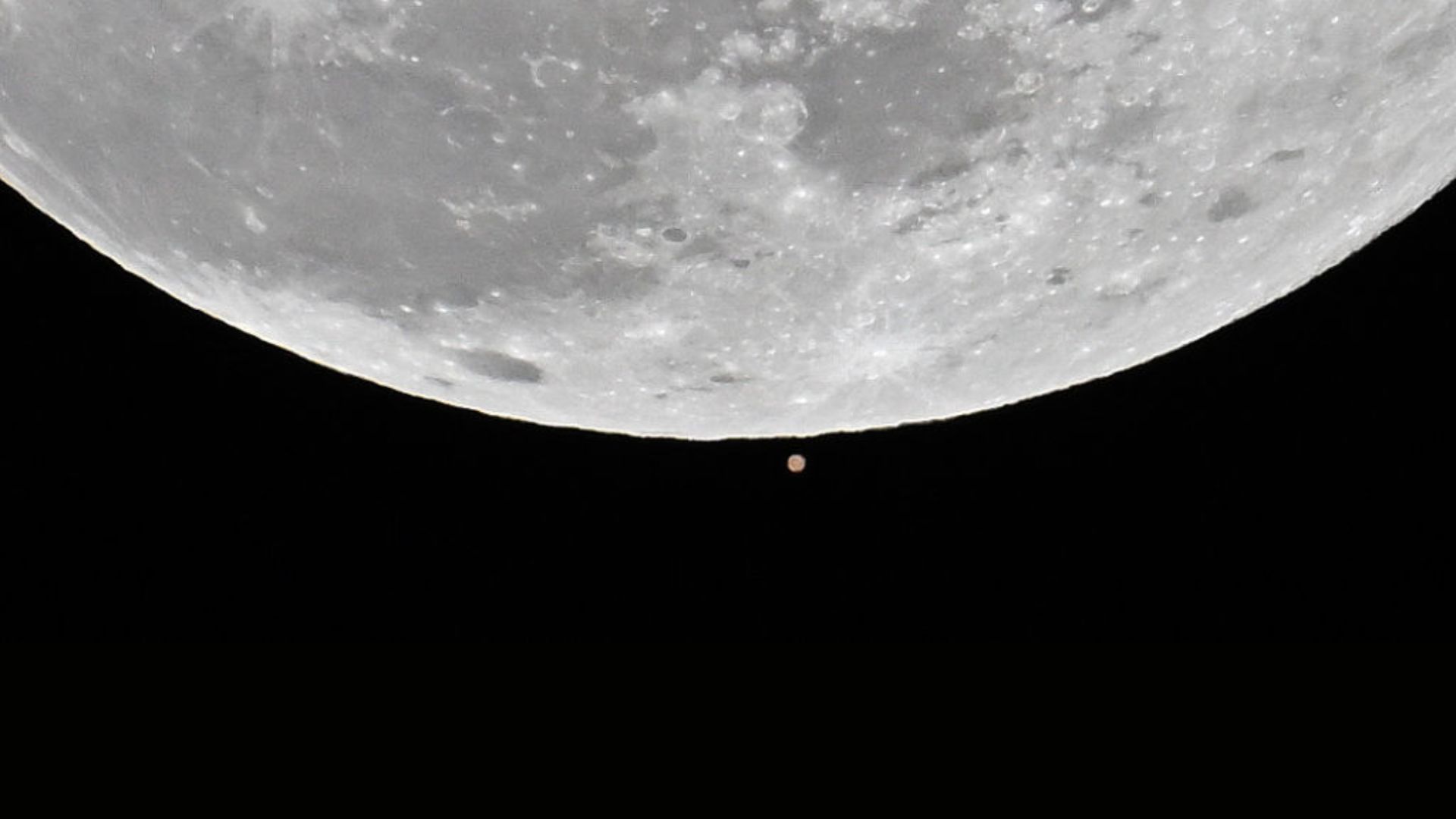 Mars being occulted by the moon. The bright star Regulus will be occulted by the full moon on Feb. 2
(Image credit: Getty Images)
Share
Share by:
Mars being occulted by the moon. The bright star Regulus will be occulted by the full moon on Feb. 2
(Image credit: Getty Images)
Share
Share by:
- Copy link
- X
Stargazers in eastern North America will see something truly rare in the night sky this weekend: a very bright star being occulted by the full "Snow Moon."
After turning full Sunday (Feb. 1), the bright moon will move across Regulus, the brightest star in the constellation Leo, briefly making it disappear from the night sky Monday night (Feb. 2). Skywatchers are in for a treat because this rare event, called a lunar occultation, will be visible to the naked eye from large portions of the U.S. and Canada.
It's the latest in a string of lunar occultations of Regulus that began last year and will continue through this year, but it's the first and only of these disappearing acts to be easily visible to observers in North America. The best views will be from the eastern half of North America — from the Midwest to the East Coast, including eastern Canada — a few hours after sunset, as well as from northwest and west Africa.
You may like-
 See February's full Snow Moon rise this weekend next to a glittering star cluster
-
 January 'Wolf Supermoon': How to see the full moon rise with Jupiter this weekend
-
 Quadrantid meteor shower peaks this week: How to see the first 'shooting' stars of the year
Observers will see Regulus — the 21st brightest star in the night sky — vanish behind the moon and reappear about an hour later, though your location will determine what you'll see, when, and for how long.
In cities like New York, Toronto and Boston, the event will occur between 8:40 and 10:05 p.m. EST. For example, in New York City, Regulus will disappear at 8:51 p.m. and reappear at 9:54 p.m. EST, according to In-The-Sky.org. The farther west you are, the lower the occultation will appear in the sky earlier in the evening, although this event will not be visible from the western half of North America.
Although this event can be seen with the naked eye, the key moments — the beginning and end of the occultation — will be more impactful with a little magnification, such as a pair of stargazing binoculars or a small telescope trained on the moon. One of the highlights is ingress, when Regulus will sit alongside the bright edge of the moon and be enveloped by it. After being hidden, it will emerge on the other side of the bright moon — a moment called egress.
The next major lunar occultation — an occultation of Venus on June 17 — will occur during daytime hours in North America, so will not be visible. Make sure to watch Regular disappear this weekend for a rare lunar treat.
Sign up for the Live Science daily newsletter nowContact me with news and offers from other Future brandsReceive email from us on behalf of our trusted partners or sponsorsBy submitting your information you agree to the Terms & Conditions and Privacy Policy and are aged 16 or over. Jamie CarterSocial Links NavigationLive Science contributor
Jamie Carter is a Cardiff, U.K.-based freelance science journalist and a regular contributor to Live Science. He is the author of A Stargazing Program For Beginners and co-author of The Eclipse Effect, and leads international stargazing and eclipse-chasing tours. His work appears regularly in Space.com, Forbes, New Scientist, BBC Sky at Night, Sky & Telescope, and other major science and astronomy publications. He is also the editor of WhenIsTheNextEclipse.com.
Show More CommentsYou must confirm your public display name before commenting
Please logout and then login again, you will then be prompted to enter your display name.
Logout Read more January 'Wolf Supermoon': How to see the full moon rise with Jupiter this weekend
 Quadrantid meteor shower peaks this week: How to see the first 'shooting' stars of the year
 Cold Moon 2025: See the last and highest full moon of the year
Full moons of 2026: When to see all 13 moons rise next year
Cold Moon 2025: See the last and highest full moon of the year
Full moons of 2026: When to see all 13 moons rise next year
 Jupiter will outshine every star in the sky this weekend — how to see the 'king of planets' at opposition
 February 2026 night sky: What to see and what you need
Latest in The Moon
February 2026 night sky: What to see and what you need
Latest in The Moon
 See February's full Snow Moon rise this weekend next to a glittering star cluster
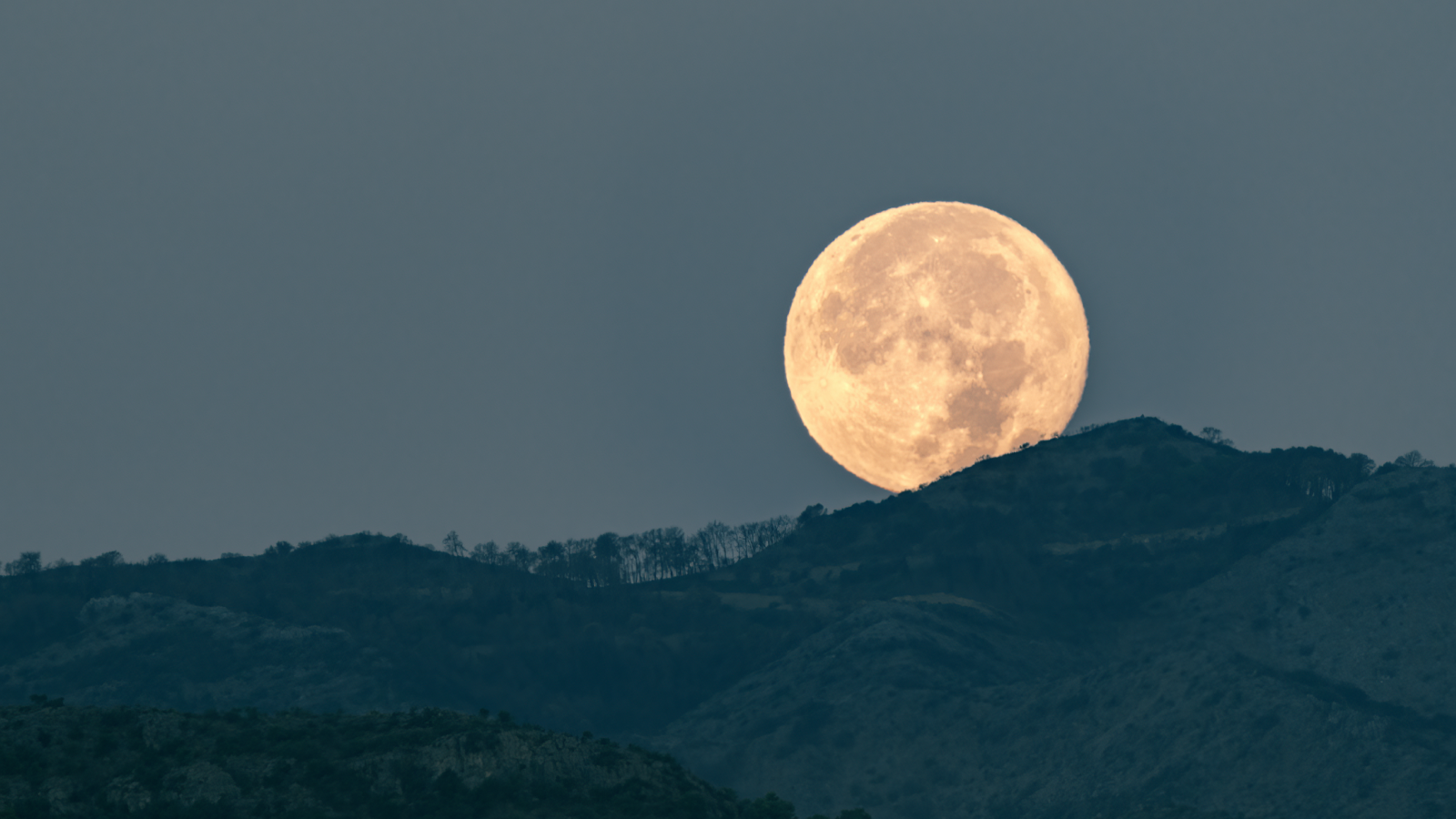 Why does the moon look larger when it's on the horizon?
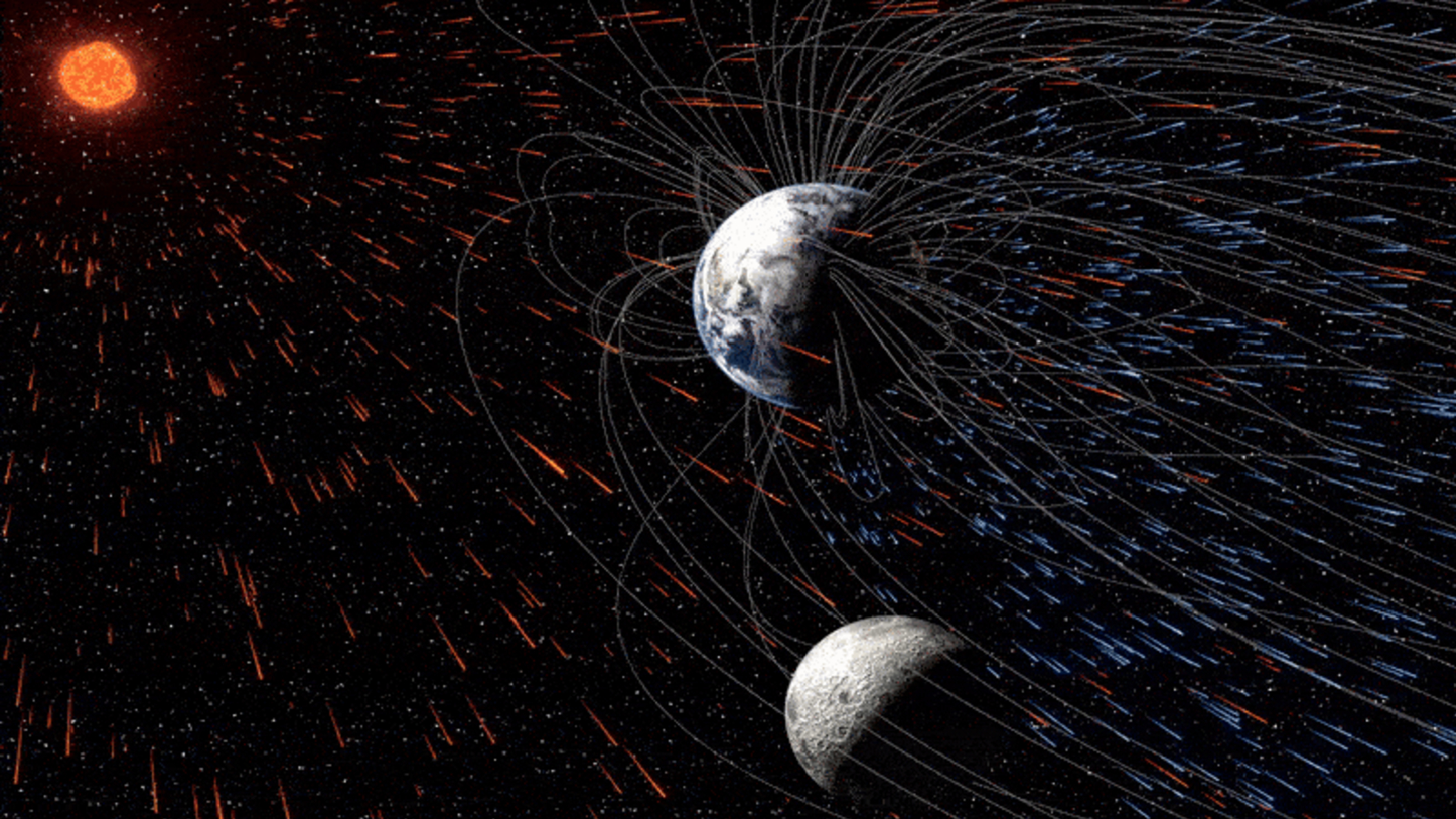 The moon has been secretly feasting on Earth's atmosphere for billions of years
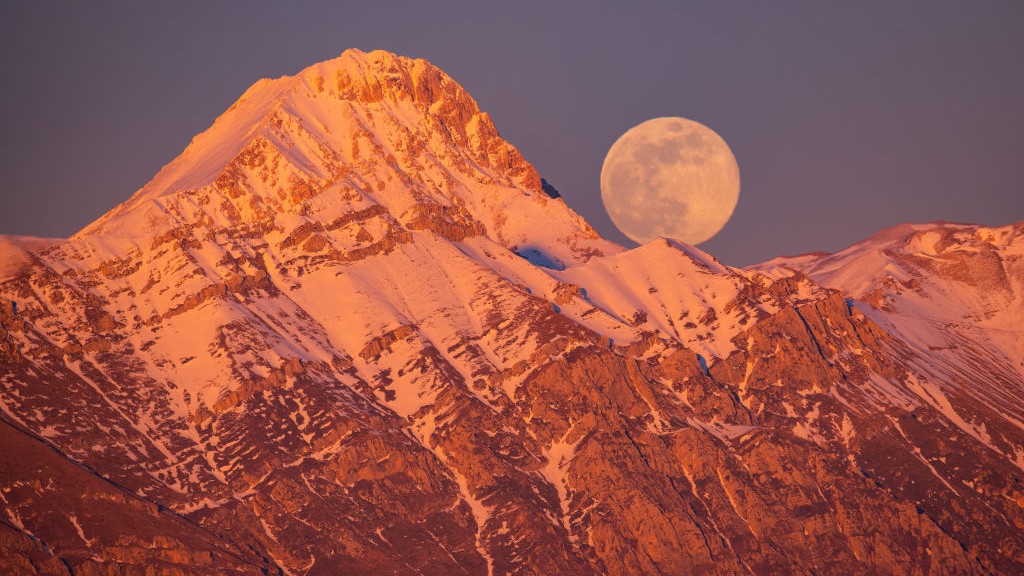 'Wolf Supermoon' gallery: See the first full moon of 2026 in pictures from across the world
Full moons of 2026: When to see all 13 moons rise next year
Cold Moon 2025: See the last and highest full moon of the year
Latest in News
'Wolf Supermoon' gallery: See the first full moon of 2026 in pictures from across the world
Full moons of 2026: When to see all 13 moons rise next year
Cold Moon 2025: See the last and highest full moon of the year
Latest in News
 New triple-drug treatment stops pancreatic cancer in its tracks, a mouse study finds
 'Part of the evolutionary fabric of our societies': Same-sex sexual behavior in primates may be a survival strategy, study finds
 More than 43,000 years ago, Neanderthals spent centuries collecting animal skulls in a cave; but archaeologists aren't sure why
 Halley wasn't the first to figure out the famous comet. An 11th-century monk did it first, new research suggests.
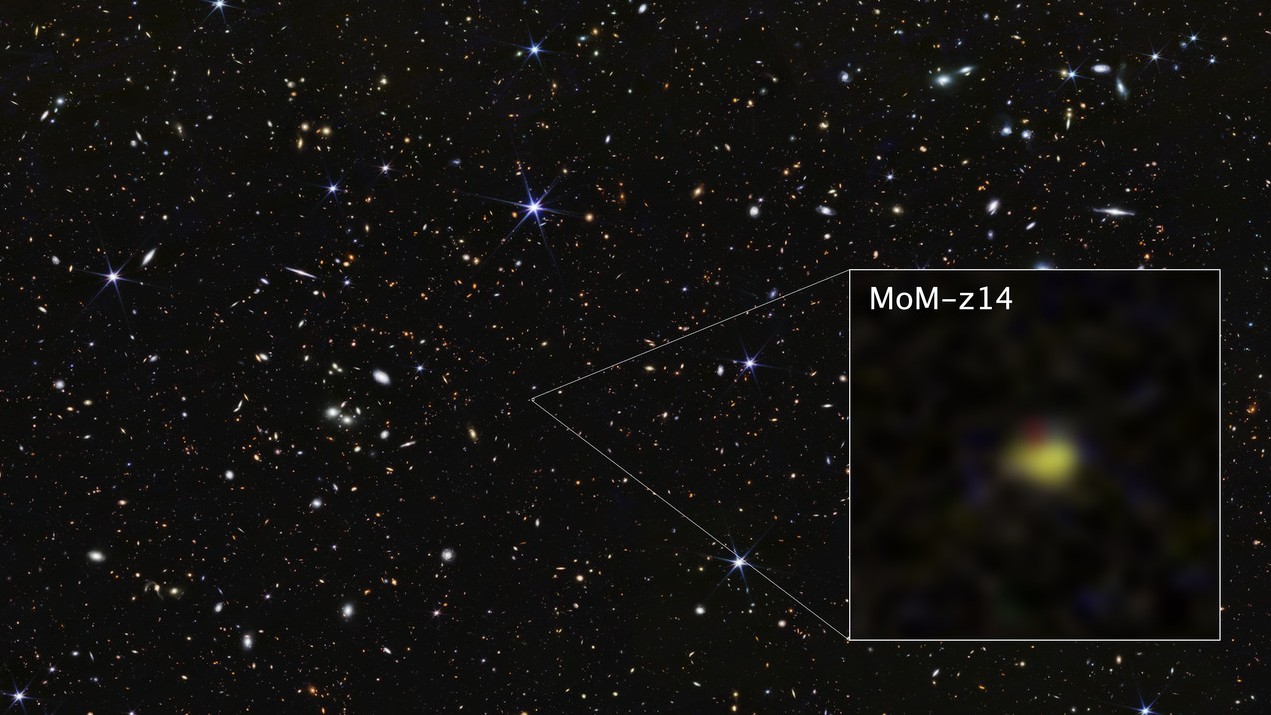 James Webb telescope breaks own record, discovering farthest known galaxy in the universe
 South Carolina's measles outbreak nears 790 cases — making it the biggest in decades
LATEST ARTICLES
South Carolina's measles outbreak nears 790 cases — making it the biggest in decades
LATEST ARTICLES 1Thousands of dams in the US are old, damaged and unable to cope with extreme weather. How bad is it?
- 2'Part of the evolutionary fabric of our societies': Same-sex sexual behavior in primates may be a survival strategy, study finds
- 3More than 43,000 years ago, Neanderthals spent centuries collecting animal skulls in a cave; but archaeologists aren't sure why
- 4Watch awkward Chinese humanoid robot lay it all down on the dance floor
- 5The Snow Moon will 'swallow' one of the brightest stars in the sky this weekend: Where and when to look