- Health
A new study reveals the dramatic decrease in lead exposure in the U.S. following the establishment of the Environmental Protection Agency 55 years ago.
When you purchase through links on our site, we may earn an affiliate commission. Here’s how it works.
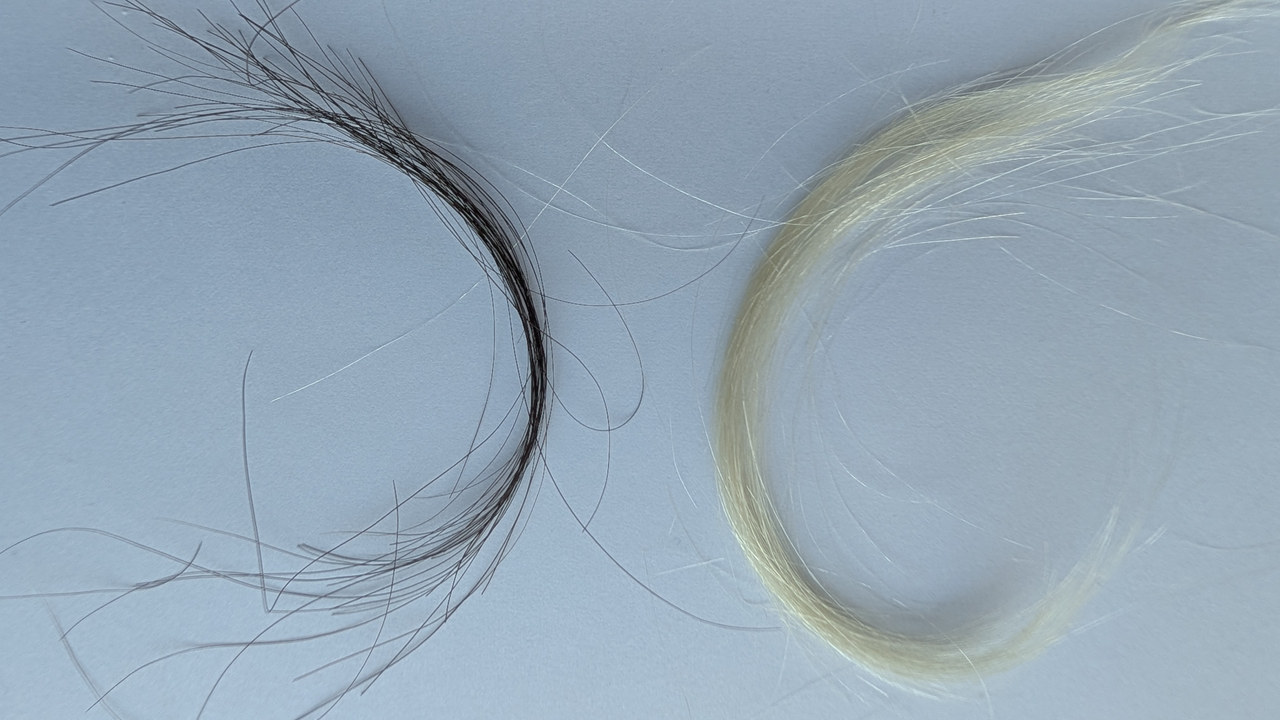
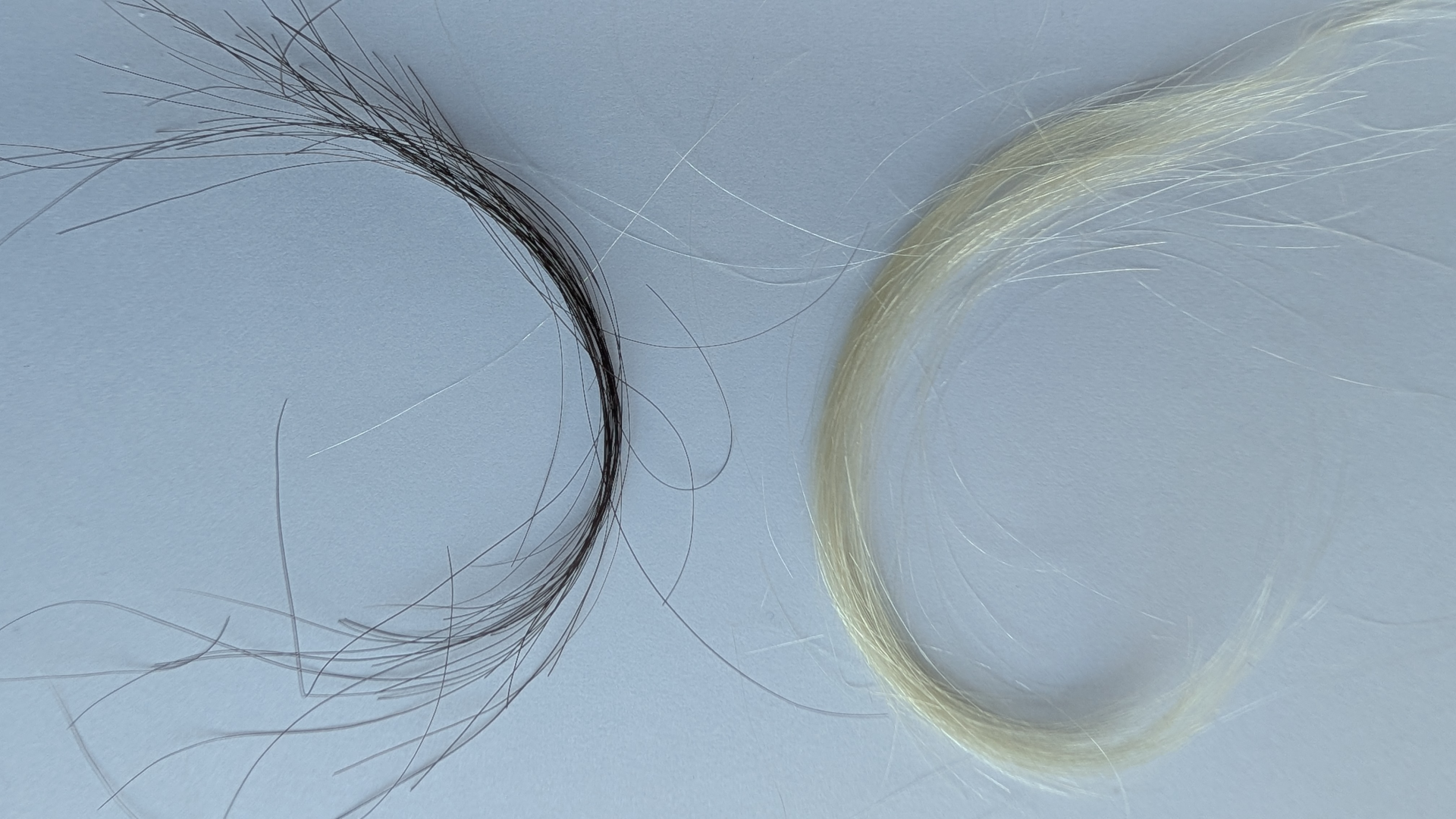 Scientists looked at archived hair samples, included these from a baby (right) and an adult (left), to see how much lead they contained.
(Image credit: Diego Fernandez)
Share by:
Scientists looked at archived hair samples, included these from a baby (right) and an adult (left), to see how much lead they contained.
(Image credit: Diego Fernandez)
Share by:
- Copy link
- X
Humans have found lead useful for thousands of years, but the metal's toxic effects didn't become well known until the 20th century. Now, using historical hair samples, researchers have shown that regulations targeting heavy-metal pollution were extremely effective at reducing the public's exposure to lead once its dangers were known.
"We have hair samples spanning about 100 years," study co-author Ken Smith, a demographer at the University of Utah, said in a statement. The study focused on people living in Utah.
You may like-
 Romans regularly soaked in filthy, lead-contaminated bath water, Pompeii study finds
-
 Gray hair may have evolved as a protection against cancer, study hints
-
 That was the week in science: CDC in turmoil | Moss survives space | Comet 3I/ATLAS images
In the new study, published Monday (Feb. 2) in the journal PNAS, the researchers detailed their analysis of hair samples from 47 people who lived in the Greater Salt Lake City region as children and as adults. The study participants provided locks of their baby hair that had been preserved in family scrapbooks, as well as a current hair sample. The researchers analyzed the hair for lead using mass spectrometry, a technique that identifies chemical compounds in a sample.
Lead exposure is detrimental to human health, causing damage to the nervous system that can lead to developmental delays, seizures and learning problems, while also raising the risk of fertility issues and high blood pressure. There is no known safe level of lead exposure, the researchers wrote in the study.
A major source of toxic lead exposure in the first half of the 20th century was leaded gasoline. In the 1920s, tetraethyl lead — a compound containing carbon and lead — was added to gasoline to reduce engine "knocking," the pinging sound caused by the premature ignition of fuel. Although the U.S. Public Health Service realized as early as 1925 that leaded gasoline was causing health issues, the fuel additive was not fully banned in the U.S. until 1996.
However, key regulations on lead were established before the 1990s. The U.S. Environmental Protection Agency (EPA), which was created by then-President Richard Nixon in 1970 to address multiple air and pollution problems, resulted in an immediate decline in lead exposure, the researchers found in the new study.
Sign up for the Live Science daily newsletter nowContact me with news and offers from other Future brandsReceive email from us on behalf of our trusted partners or sponsorsBy submitting your information you agree to the Terms & Conditions and Privacy Policy and are aged 16 or over.Concentrations of lead in human hair from the Salt Lake City region were extremely high from 1916 to 1969, in part due to a lack of EPA regulation and in part because of two active lead smelter sites in the area. But from the 1970s to the 1990s, after the EPA was established and the smelting plants were shuttered, the average values declined by two orders of magnitude.

"Current concentrations of lead in hair from this population average almost 100 times lower than before the establishment of the Environmental Protection Agency," the researchers wrote.
One caveat is that the values of lead in hair do not correspond exactly to levels in the blood, which is physicians' typical standard for identifying people who need treatment for lead toxicity.
You may like-
Romans regularly soaked in filthy, lead-contaminated bath water, Pompeii study finds
-
Gray hair may have evolved as a protection against cancer, study hints
-
That was the week in science: CDC in turmoil | Moss survives space | Comet 3I/ATLAS images
A hair sample "doesn't really record that internal blood concentration that your brain is seeing, but it tells you about that overall environmental exposure," study co-author Thure Cerling, a geologist at the University of Utah, said in the statement. So overall, the study showed that people were taking in a significantly larger amount of lead prior to 1970.
"It's just coming out of the tailpipe, goes up in the air and then it comes down," Cerling said. Lead lingers in the air for days and "it absorbs into your hair, you breathe it, and it goes into your lungs."
The researchers noted that, although their study demonstrates the effectiveness of environmental regulations in controlling toxic pollutants, such as lead, these regulations are now in danger of being rolled back.
RELATED STORIES—Heavy metals in Beethoven's hair may explain his deafness, study finds
—Ayurvedic infertility medicine sends woman to hospital with lead poisoning
—Number of kids diagnosed with lead poisoning could double with new CDC standard
Specifically, the researchers pointed to a March 12, 2025, announcement by the EPA and President Donald Trump that would deregulate many of the EPA's provisions that currently ensure U.S. residents have clean air, land and water. Although lead pollution is not specifically mentioned, experts have suggested that the announcement is a "roadmap" for rolling back regulations on air pollution in the manufacturing sector and wastewater from coal plants, among other things. At least one federal lawsuit has already been filed to overturn "presidential exemptions" to the EPA's Clean Air Act.
"We should not forget the lessons of history," Cerling said. "Those regulations have been very important," as evidenced by the EPA having "really, really positive effects" quite soon after it was established.
The historic hair study shows that the lax environmental standards of previous decades resulted in unhealthy lead levels but that these levels can be reined in with "science-based regulations," the researchers wrote.
Article SourcesCerling, T.E., Fernandez, D.P., & Smith, K.R. (2026). Lead in archived hair documents a decline in lead exposure to humans since the establishment of the US Environmental Protection Agency. PNAS, 123, e2525498123. https://doi.org/10.1073/pnas.2525498123
IN CONTEXT IN CONTEXTNicoletta LaneseHealth Channel Editor
Nowadays in the U.S., lead exposure tends to pose the biggest threat in low-income communities and in Northeast and Midwest cities with older housing — namely, housing built before 1978, the year lead-based paints were banned. Other common sources of exposure include soil contaminated by historical sources of lead, like mining; contaminated pipes and plumbing materials; contaminated jewelry, toys or candies; and lead dust tracked into the home from workplaces. Children under 6 are particularly susceptible to lead poisoning, as their growing bodies absorb the metal very efficiently.
Periodic table of elements quiz: How many elements can you name in 10 minutes?
TOPICS united states Kristina KillgroveSocial Links NavigationStaff writer
Kristina Killgrove is a staff writer at Live Science with a focus on archaeology and paleoanthropology news. Her articles have also appeared in venues such as Forbes, Smithsonian, and Mental Floss. Kristina holds a Ph.D. in biological anthropology and an M.A. in classical archaeology from the University of North Carolina, as well as a B.A. in Latin from the University of Virginia, and she was formerly a university professor and researcher. She has received awards from the Society for American Archaeology and the American Anthropological Association for her science writing.
View MoreYou must confirm your public display name before commenting
Please logout and then login again, you will then be prompted to enter your display name.
Logout Read more Romans regularly soaked in filthy, lead-contaminated bath water, Pompeii study finds
 Gray hair may have evolved as a protection against cancer, study hints
 That was the week in science: CDC in turmoil | Moss survives space | Comet 3I/ATLAS images
 We may finally understand stress-induced hair loss
 Trump 2.0 is dismantling American science. Here's what's at stake, according to researchers.
 Your AI-generated image of a cat riding a banana exists because of children clawing through the dirt for toxic elements. Is it really worth it?
Latest in Health
Your AI-generated image of a cat riding a banana exists because of children clawing through the dirt for toxic elements. Is it really worth it?
Latest in Health
 Lifespan may be 50% heritable, study suggests
 'Nose-in-a-dish' reveals why the common cold hits some people hard, while others recover easily
 New triple-drug treatment stops pancreatic cancer in its tracks, a mouse study finds
 South Carolina's measles outbreak nears 790 cases — making it the biggest in decades
 Can AI detect cognitive decline better than a doctor? New study reveals surprising accuracy
 IVF hormones could be delivered with painless 'microneedle' patch someday, early study hints
Latest in News
Preserved hair reveals just how bad lead exposure was in the 20th century
IVF hormones could be delivered with painless 'microneedle' patch someday, early study hints
Latest in News
Preserved hair reveals just how bad lead exposure was in the 20th century
 Sunspot launches 27 solar flares in 24 hours, including strongest in years
 What is Moltbook? A social network for AI threatens a 'total purge' of humanity — but some experts say it's a hoax
 Enormous 'mega-blob' under Hawaii is solid rock and iron, not gooey — and it may fuel a hotspot
 Artemis II simulated launch window opens tonight as NASA delays mission due to 'rare Arctic outbreak'
 Earth is 'missing' lighter elements. They may be hiding in its solid inner core.
LATEST ARTICLES
Earth is 'missing' lighter elements. They may be hiding in its solid inner core.
LATEST ARTICLES- 1Sunspot launches 27 solar flares in 24 hours, including strongest in years
- 2What is Moltbook? A social network for AI threatens a 'total purge' of humanity — but some experts say it's a hoax
- 3Enormous 'mega-blob' under Hawaii is solid rock and iron, not gooey — and it may fuel a hotspot
- 4Canon 15x50 IS All Weather binocular review
- 5The Colorado River's largest tributary flows 'uphill' for over 100 miles — and geologists may finally have an explanation for it