- Archaeology
- Romans
The helmet has been a powerful symbol of Roman Britain since it was discovered over 200 years ago.
When you purchase through links on our site, we may earn an affiliate commission. Here’s how it works.
 (Image credit: Getty Images)
Share by:
(Image credit: Getty Images)
Share by:
- Copy link
- X
Name: Ribchester Helmet
What it is: A bronze helmet with a face-mask visor
Where it is from: Ribchester, in northwest England
When it was made: Circa A.D. 100
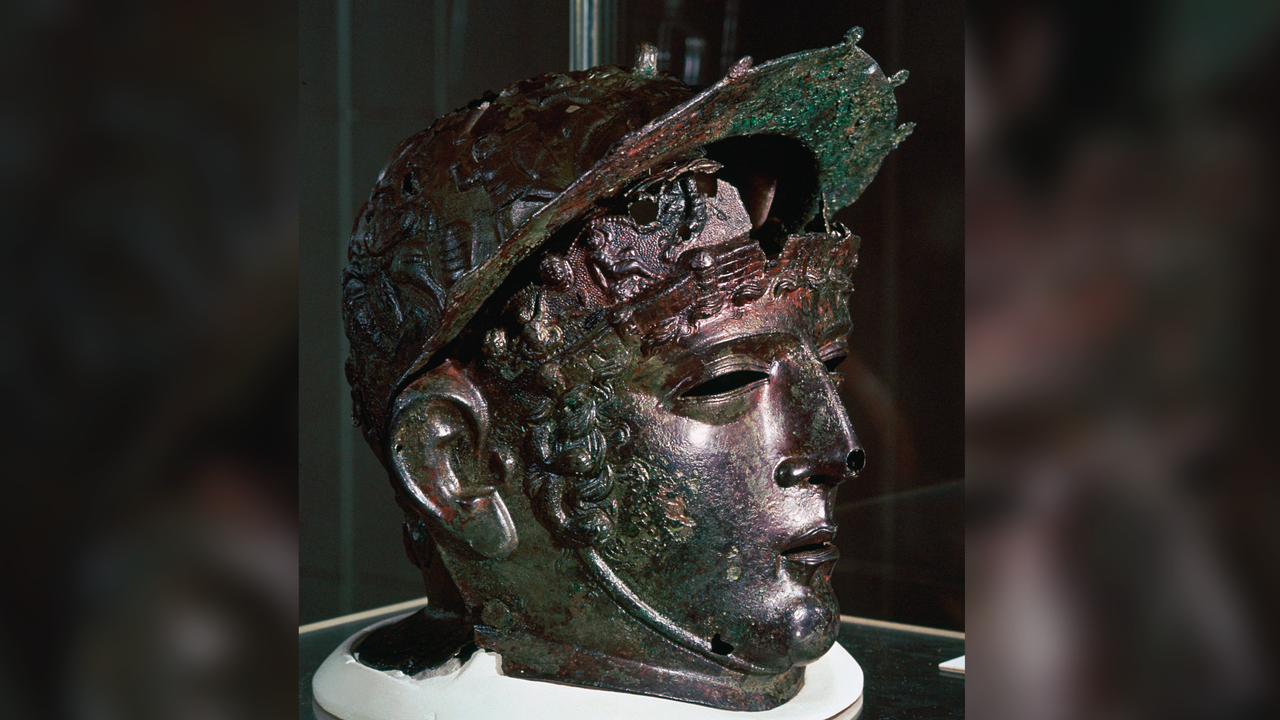
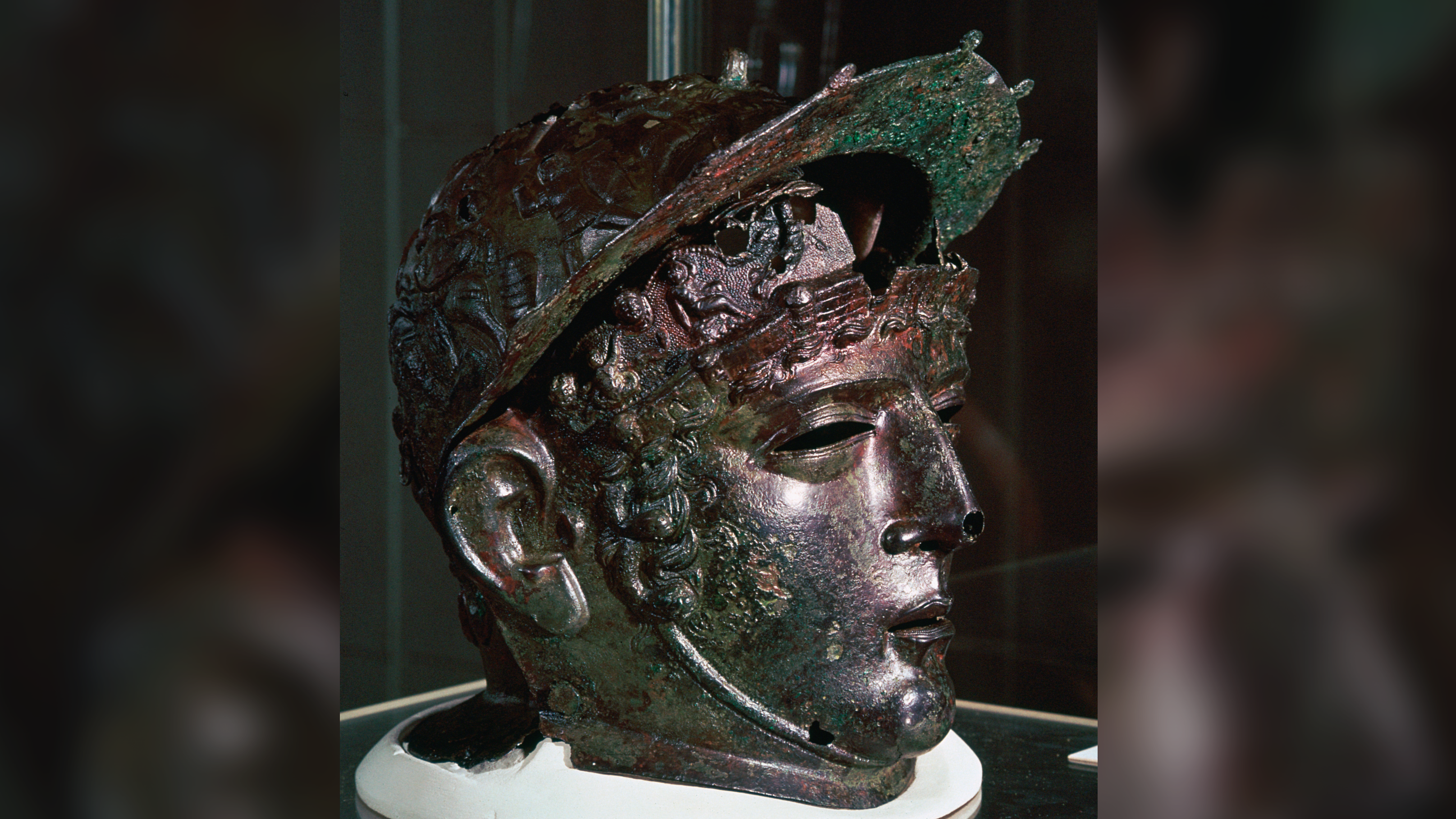
In 1796, while scampering through fields behind his house in Ribchester, England, a young boy stumbled upon a hoard of over 30 metal artifacts in a hollow. The most unique and impressive item in the hoard was a bronze helmet with a face mask dating to the early Roman Empire.
The helmet bowl has been highly decorated with a scene of apparent combat between six cavalry and 11 infantry soldiers. Although the cavalry troops are outnumbered, they seem to have the upper hand, as two infantrymen lie dead. Two palmettes symbolizing victory are also depicted on the helmet bowl, in addition to a shield and spears signifying armor captured from the enemy. Holes in the nape of the neck suggest streamers were once attached to the helmet.
You may like-
 Roman sun hat: A 'very rare' 1,600-year-old brimmed cap that may have protected a Roman soldier from Egyptian sandstorms
-
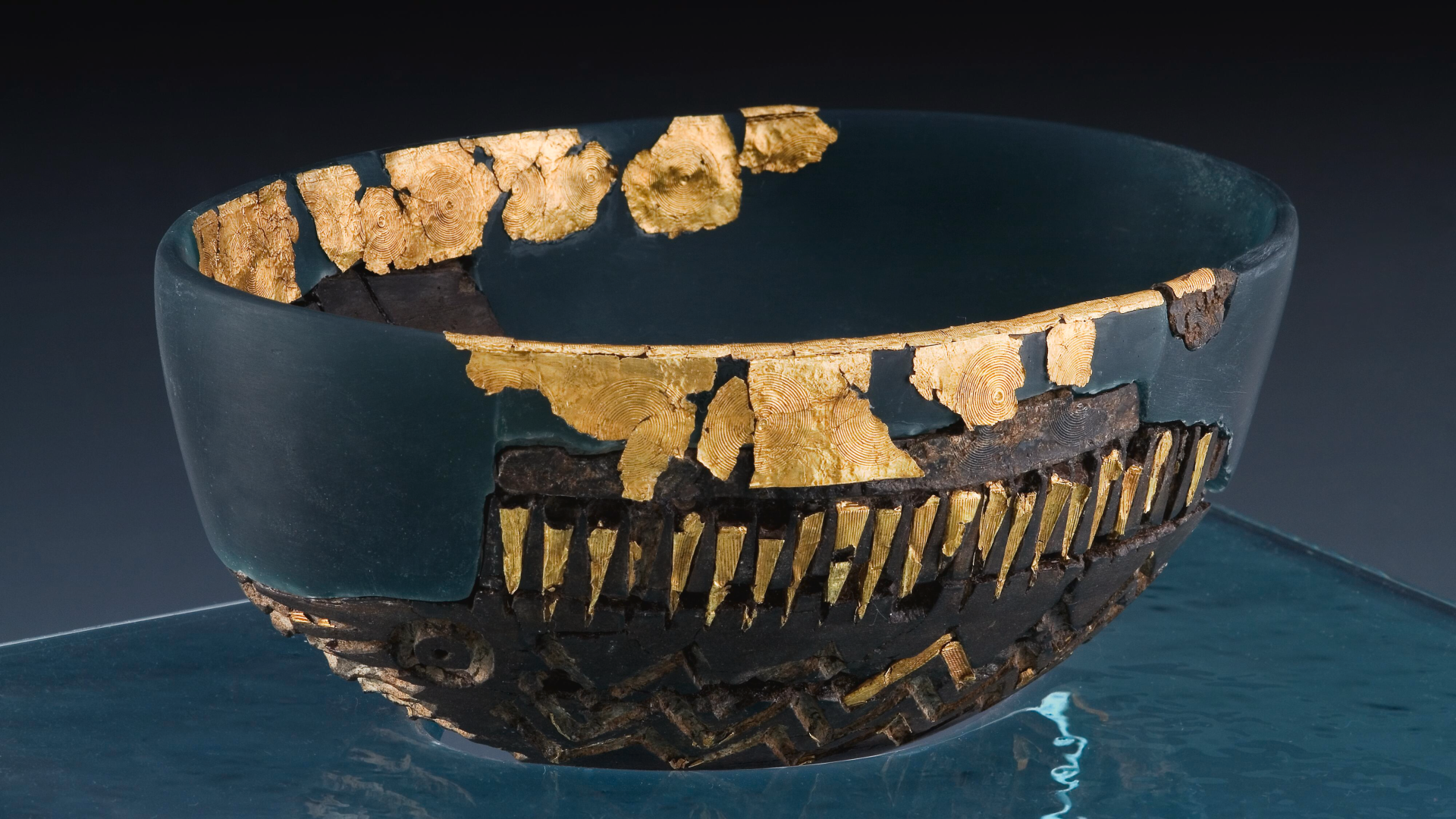
 Caergwrle Bowl: A 3,300-year-old stone-and-tin bowl with gold oars and 'protective eyes'
-
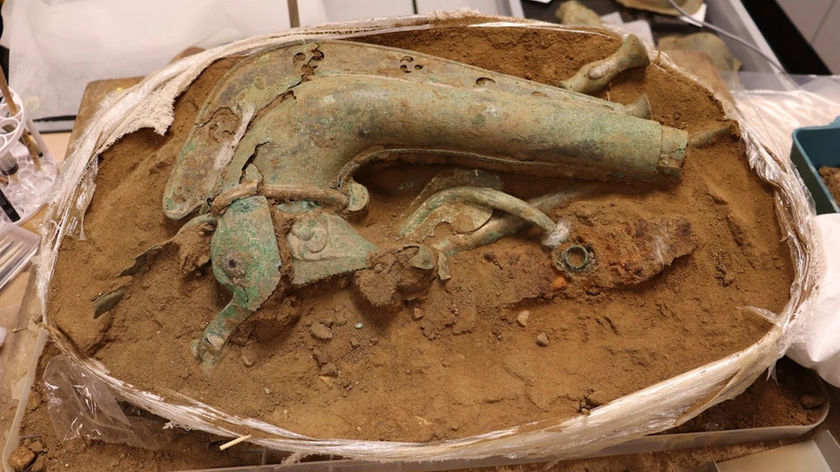 Rare 2,000-year-old war trumpet, possibly linked to Celtic queen Boudica, discovered in England
On the face mask, the young man has an expressionless and beardless visage. His hair curls turn into four serpents' heads — likely a visual reference to the myth of Medusa and the Gorgons, which has been found on other Roman military equipment. Atop the youth's hair rests a diadem in the form of the "corona muralis." This crown, shaped like a city wall, was one of the highest forms of Roman military decoration. But the mask has very small eye and nostril holes, making it impractical to wear in actual combat.
In a 2019 study published in the journal Arms & Armour, archaeologists Jamie Kaminski and David Sim explained the purpose of the Ribchester Helmet as special equipment worn during "hippika gymnasia" (cavalry tournaments), a type of military exercise that doubled as entertainment for troops and visiting dignitaries.
MORE ASTONISHING ARTIFACTS—Varna Gold: Humanity's first gold jewelry was found in a cemetery with a gold 'penis sheath'
—Nebra Sky Disc: The world's oldest depiction of astronomical phenomena — and it may depict the Pleiades
—Tumba Madžari Great Mother: A boxy goddess figurine from North Macedonia designed to protect Stone Age houses 7,800 years ago
"The events included mock battles between the élite riders of the unit, in which both men and horses were bedecked in flamboyant suites of equipment often in the guise of Greeks, Trojans and Amazons," Kaminski and Sim wrote.
The helmet was likely being stored in a box or chest, along with the rest of the military equipment, for future use or for scrap purposes near the Roman fort of Bremetennacum Veteranorum, which was once located in the present-day village of Ribchester. The fort was abandoned in the late second century, and the hoard was likely forgotten until a curious young boy dug it up 17 centuries later.
For more stunning archaeological discoveries, check out our Astonishing Artifacts archives.
TOPICS astonishing artifacts Kristina KillgroveSocial Links NavigationStaff writer
Kristina Killgrove is a staff writer at Live Science with a focus on archaeology and paleoanthropology news. Her articles have also appeared in venues such as Forbes, Smithsonian, and Mental Floss. Kristina holds a Ph.D. in biological anthropology and an M.A. in classical archaeology from the University of North Carolina, as well as a B.A. in Latin from the University of Virginia, and she was formerly a university professor and researcher. She has received awards from the Society for American Archaeology and the American Anthropological Association for her science writing.
View MoreYou must confirm your public display name before commenting
Please logout and then login again, you will then be prompted to enter your display name.
Logout Read more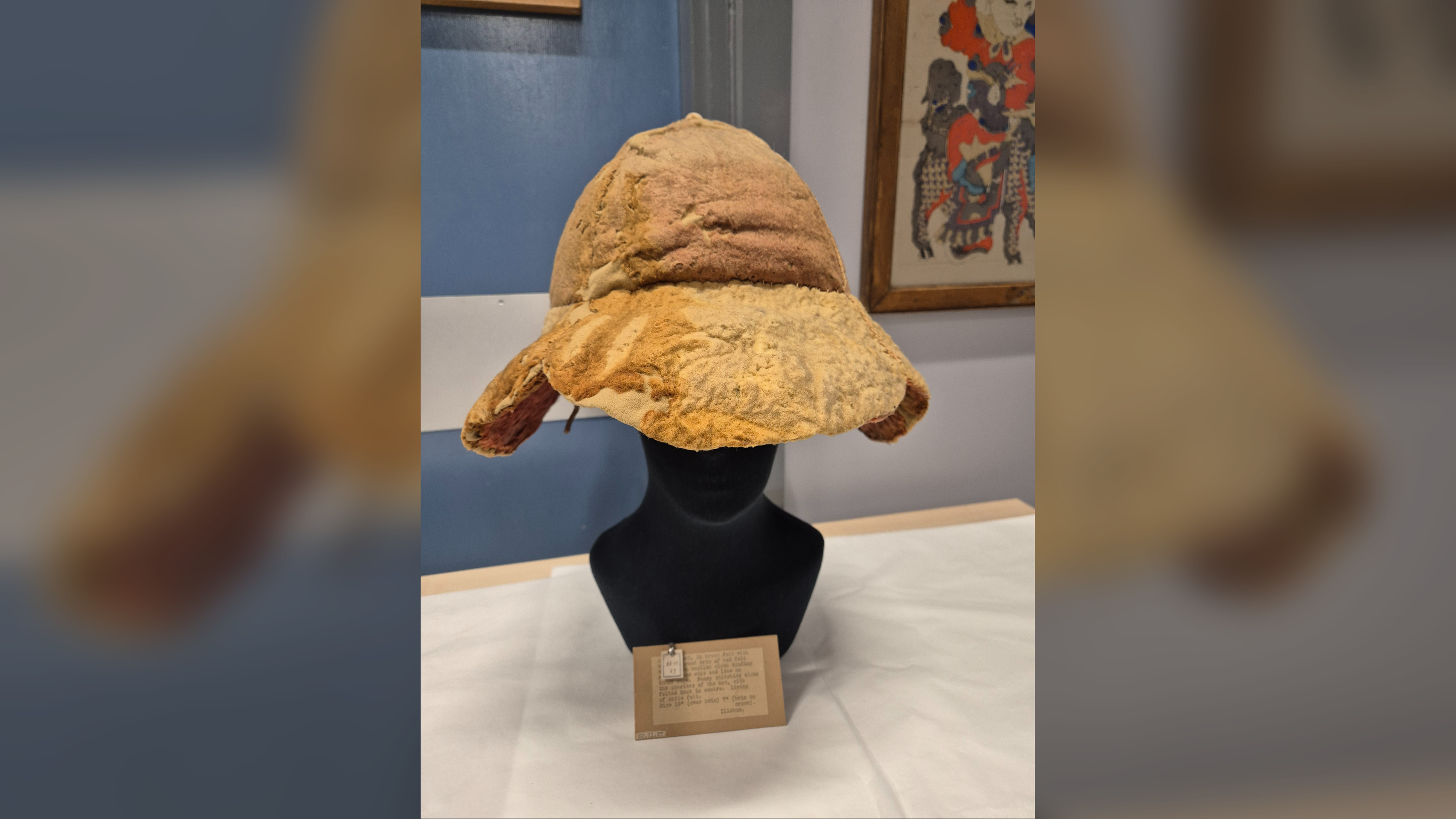 Roman sun hat: A 'very rare' 1,600-year-old brimmed cap that may have protected a Roman soldier from Egyptian sandstorms
 Caergwrle Bowl: A 3,300-year-old stone-and-tin bowl with gold oars and 'protective eyes'
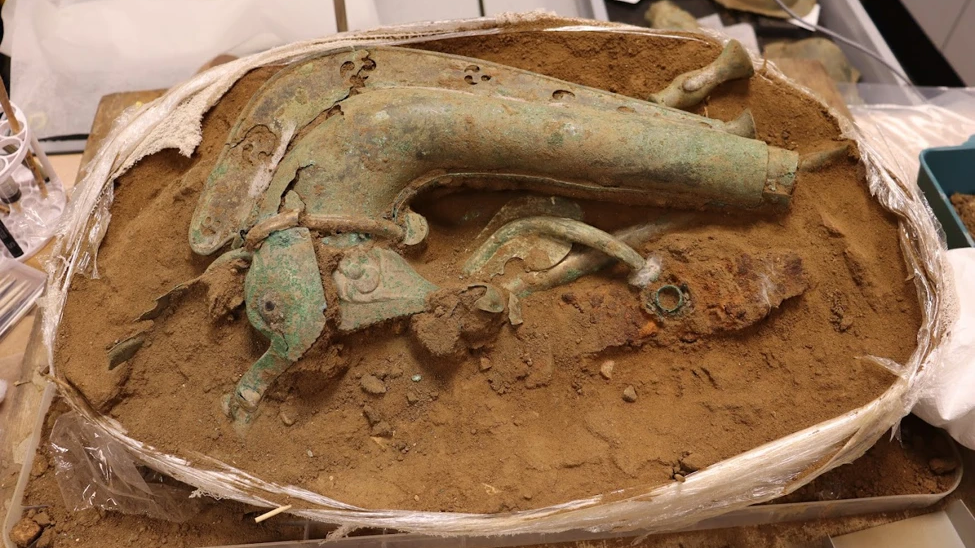 Rare 2,000-year-old war trumpet, possibly linked to Celtic queen Boudica, discovered in England
 Archaeologists discover decapitated head the Romans used as a warning to the Celts
 Archaeologists find 'unique' blood-red gemstone at Roman fort beyond Hadrian's Wall
 Pectoral with coins: 'One of the most intricate pieces of gold jewelry to survive from the mid-sixth century'
Latest in Romans
Pectoral with coins: 'One of the most intricate pieces of gold jewelry to survive from the mid-sixth century'
Latest in Romans
 Romans used human feces as medicine 1,900 years ago — and used thyme to mask the smell
 2,400-year-old Hercules shrine and elite tombs discovered outside ancient Rome's walls
 Romans regularly soaked in filthy, lead-contaminated bath water, Pompeii study finds
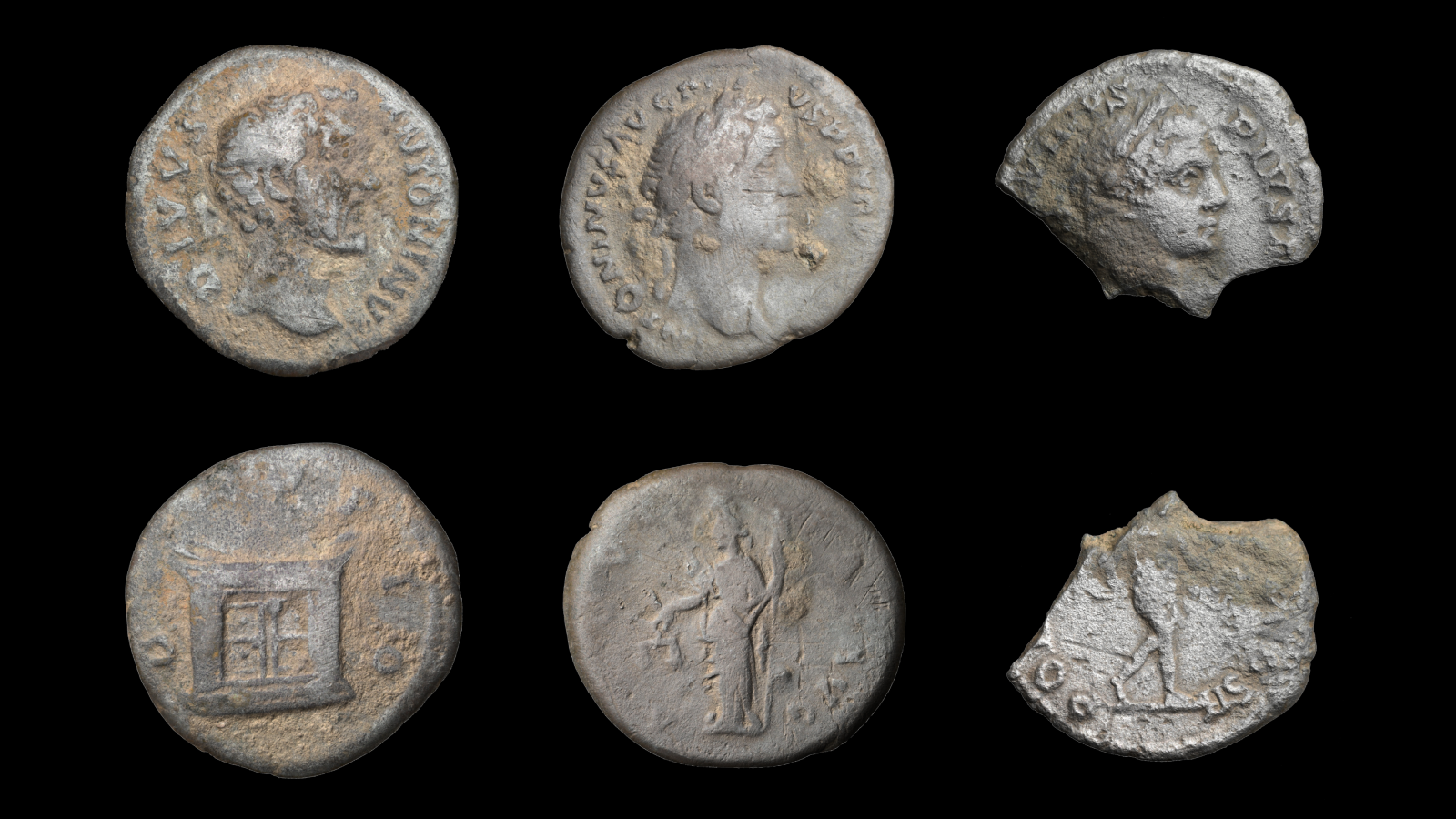 1,700-year-old Roman marching camps discovered in Germany — along with a multitude of artifacts like coins and the remnants of shoes
 Diarrhea and stomachaches plagued Roman soldiers stationed at Hadrian's Wall, discovery of microscopic parasites finds
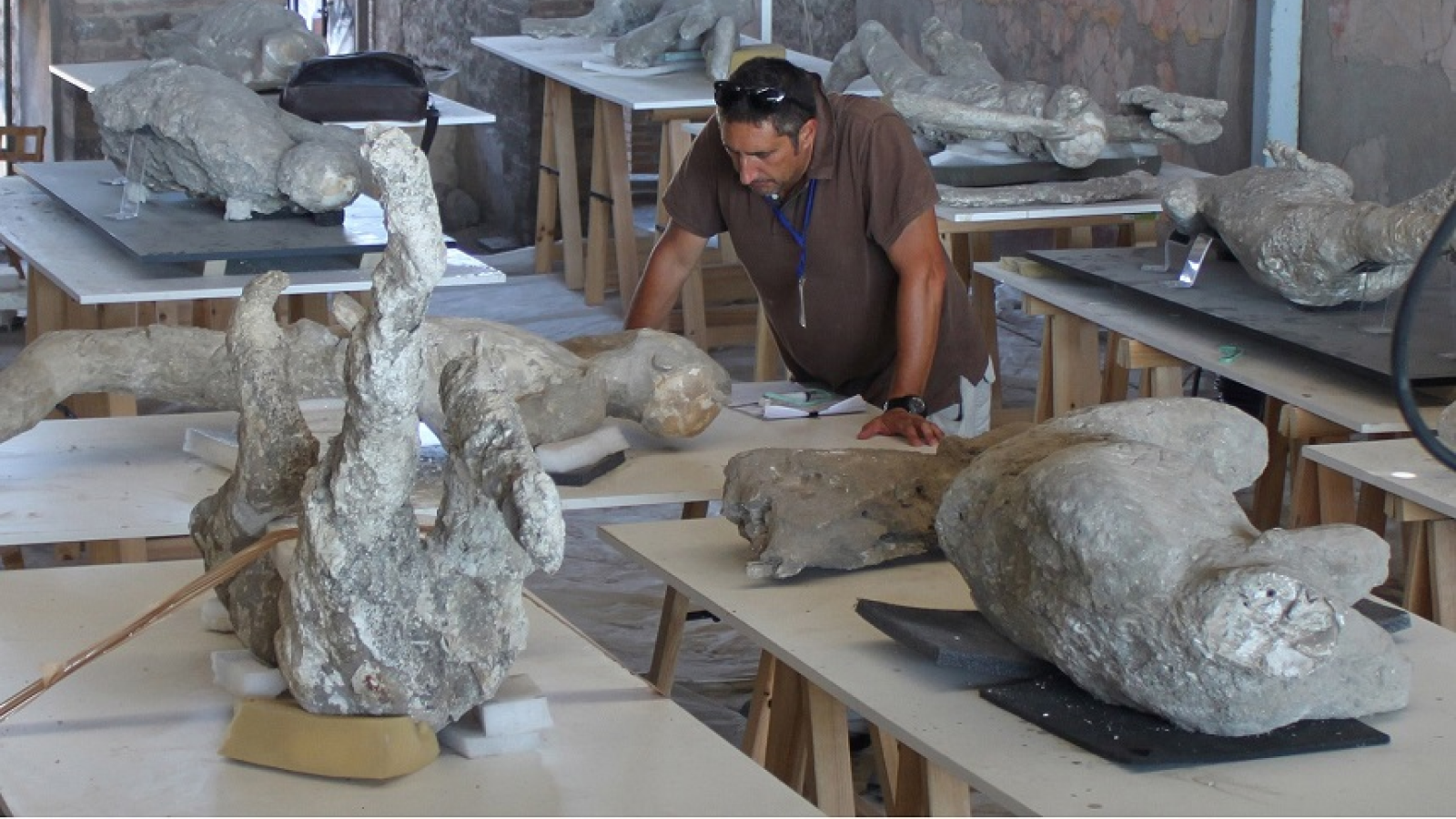 Pompeii victims were wearing woolen cloaks in August when they died — but experts are split on what that means
Latest in Features
Pompeii victims were wearing woolen cloaks in August when they died — but experts are split on what that means
Latest in Features
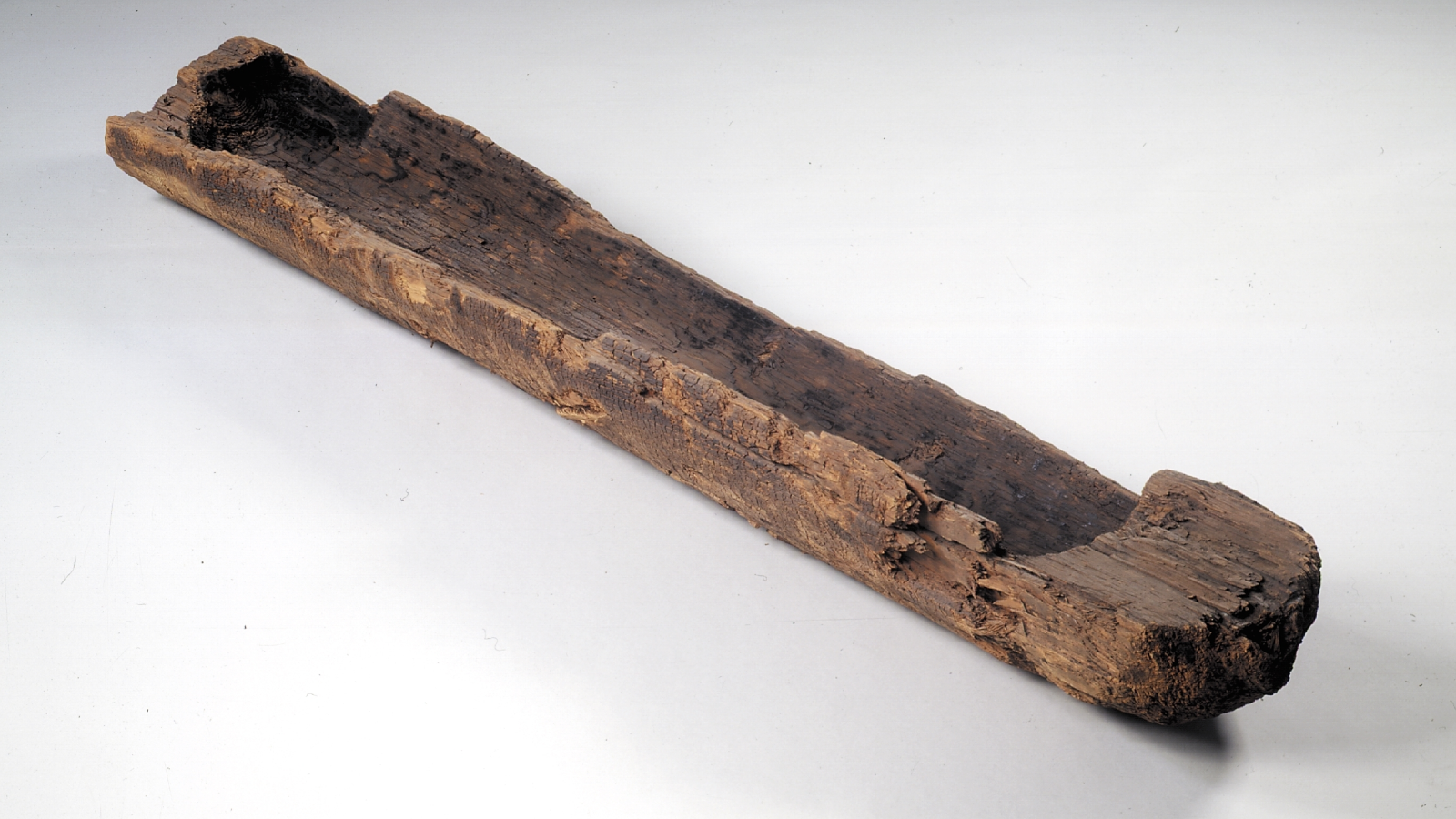 When were boats invented?
 Ancient lake full of crop circles lurks in the shadow of Saudi Arabia's 'camel-hump' mountain
Ribchester Helmet: A rare 'face mask' helmet worn by a Roman cavalry officer 1,900 years ago
Ancient lake full of crop circles lurks in the shadow of Saudi Arabia's 'camel-hump' mountain
Ribchester Helmet: A rare 'face mask' helmet worn by a Roman cavalry officer 1,900 years ago
 Why does the moon look larger when it's on the horizon?
 Chocolate Hills: The color-changing mounds in the Philippines that inspired legends of mud-slinging giants
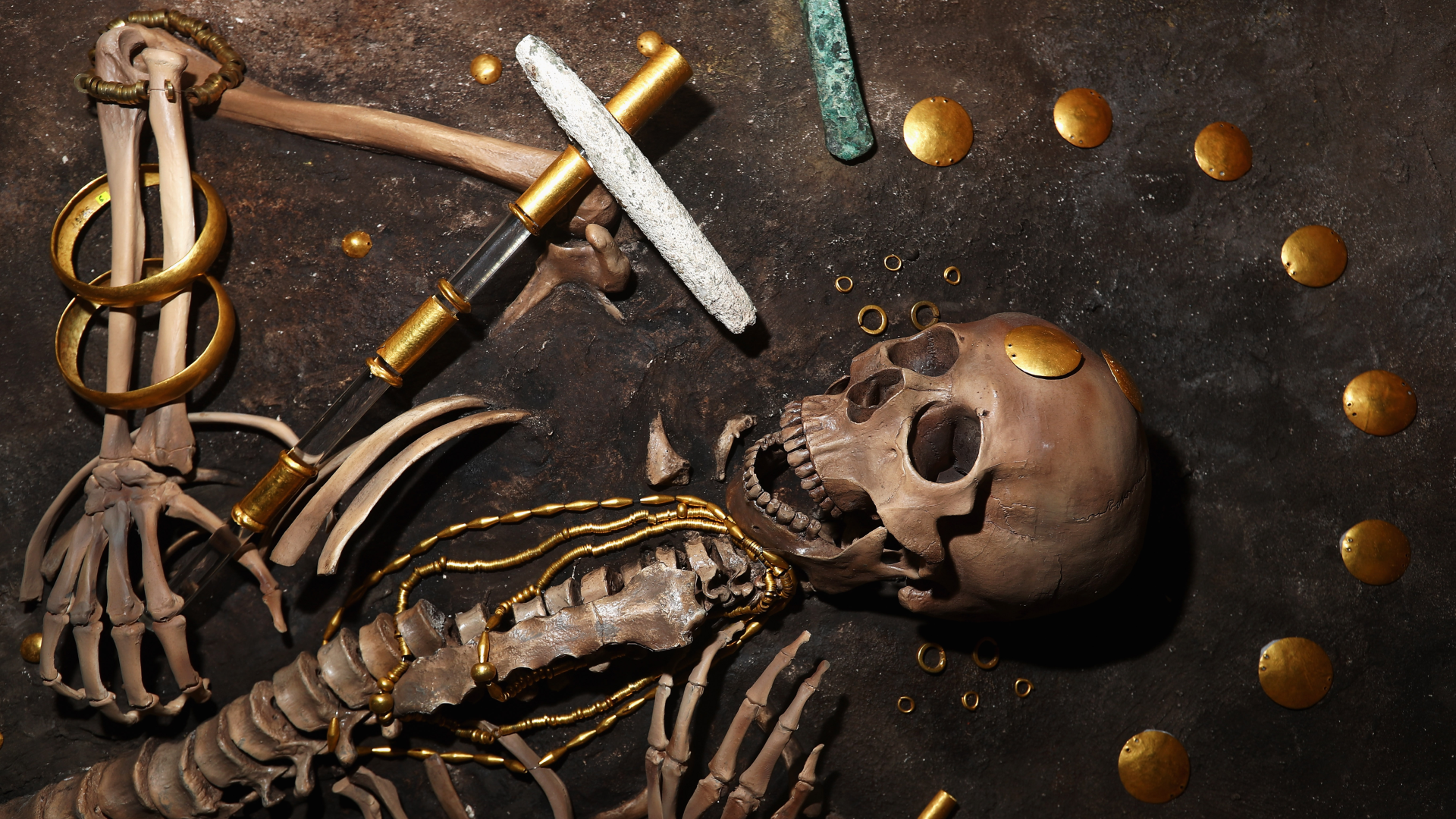 Varna Gold: Humanity's first gold jewelry was found in a cemetery with a gold 'penis sheath'
LATEST ARTICLES
Varna Gold: Humanity's first gold jewelry was found in a cemetery with a gold 'penis sheath'
LATEST ARTICLES 1Preserved hair reveals just how bad lead exposure was in the 20th century
- 2Sunspot launches 27 solar flares in 24 hours, including strongest in years
- 3What is Moltbook? A social network for AI threatens a 'total purge' of humanity — but some experts say it's a hoax
- 4Enormous 'mega-blob' under Hawaii is solid rock and iron, not gooey — and it may fuel a hotspot
- 5Canon 15x50 IS All Weather binocular review