- Space
- Astronomy
A new study suggests that the red supergiant WOH G64, also known as the "behemoth star," has not transitioned into a yellow hypergiant as previous research suggested. This means it is now unlikely to imminently explode in a colossal supernova.
When you purchase through links on our site, we may earn an affiliate commission. Here’s how it works.
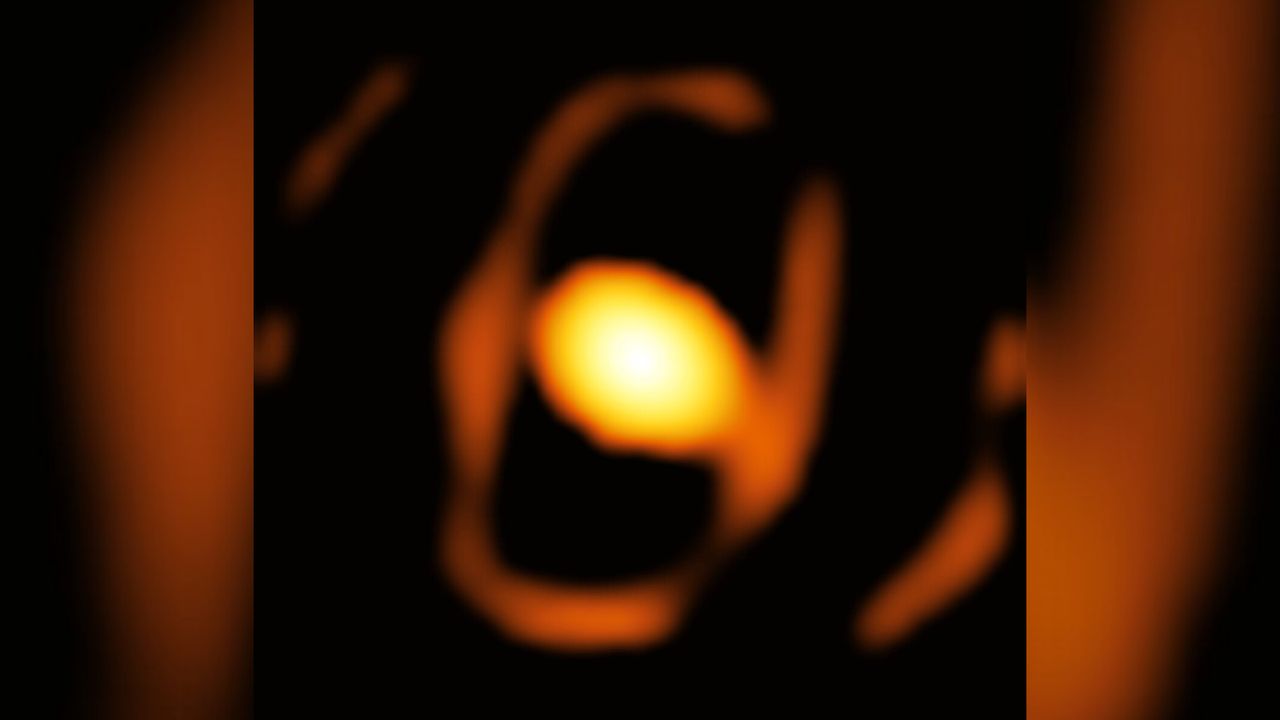
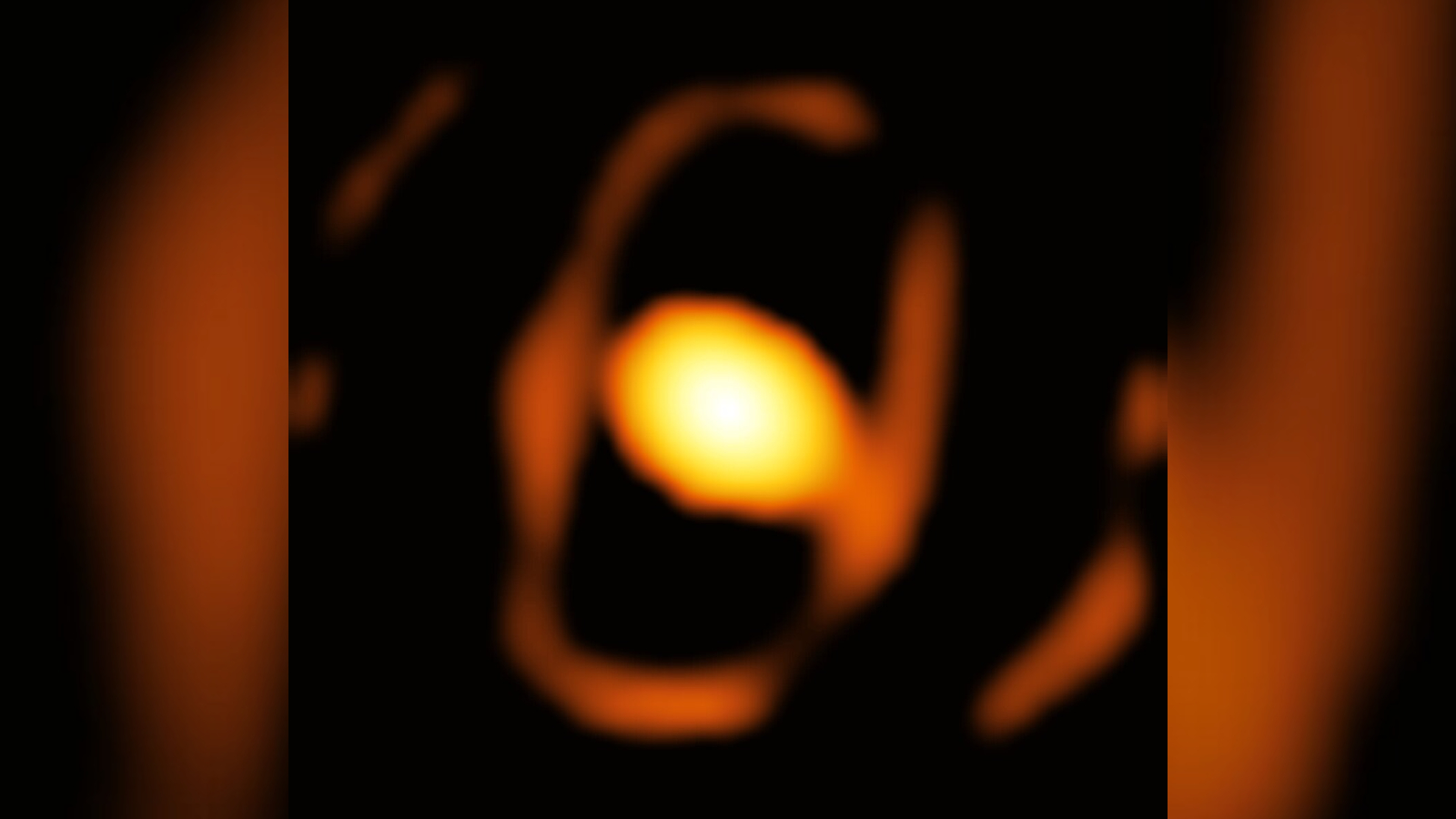 WOH G64, a.k.a. the "behemoth star," is a red supergiant that was previously predicted to imminently explode in a violent supernova, thanks to recent research that uncovered a cocoon of dust surrounding it.
(Image credit: ESO/K. Ohnaka et al.)
WOH G64, a.k.a. the "behemoth star," is a red supergiant that was previously predicted to imminently explode in a violent supernova, thanks to recent research that uncovered a cocoon of dust surrounding it.
(Image credit: ESO/K. Ohnaka et al.)
- Copy link
- X
Get the world’s most fascinating discoveries delivered straight to your inbox.
Become a Member in Seconds
Unlock instant access to exclusive member features.
Contact me with news and offers from other Future brands Receive email from us on behalf of our trusted partners or sponsors By submitting your information you agree to the Terms & Conditions and Privacy Policy and are aged 16 or over.You are now subscribed
Your newsletter sign-up was successful
Want to add more newsletters?

Delivered Daily
Daily Newsletter
Sign up for the latest discoveries, groundbreaking research and fascinating breakthroughs that impact you and the wider world direct to your inbox.
Signup +
Once a week
Life's Little Mysteries
Feed your curiosity with an exclusive mystery every week, solved with science and delivered direct to your inbox before it's seen anywhere else.
Signup +
Once a week
How It Works
Sign up to our free science & technology newsletter for your weekly fix of fascinating articles, quick quizzes, amazing images, and more
Signup +
Delivered daily
Space.com Newsletter
Breaking space news, the latest updates on rocket launches, skywatching events and more!
Signup +
Once a month
Watch This Space
Sign up to our monthly entertainment newsletter to keep up with all our coverage of the latest sci-fi and space movies, tv shows, games and books.
Signup +
Once a week
Night Sky This Week
Discover this week's must-see night sky events, moon phases, and stunning astrophotos. Sign up for our skywatching newsletter and explore the universe with us!
Signup +Join the club
Get full access to premium articles, exclusive features and a growing list of member rewards.
Explore An account already exists for this email address, please log in. Subscribe to our newsletterOne of the universe's largest stars, previously predicted to be in the throes of a violent supernova death, may not imminently explode after all, a new study suggests. The surprise finding also hints that the stellar "behemoth" is slowly being cannibalized by a smaller, hidden partner.
WOH G64, often dubbed the "behemoth star," is a red supergiant located around 163,000 light-years from Earth, in the Large Magellanic Cloud — a dwarf galaxy that closely orbits the Milky Way. The stellar giant is around 1,500 times wider than the sun, making it one of the largest stars ever discovered. It also shines up to 282,000 times brighter than our home star.
In recent years, WOH G64 had become significantly dimmer, suggesting that the gigantic star was transitioning into a smaller and hotter yellow hypergiant by shedding its outermost layers of gas. When this happens to a red supergiant, it is usually a sign that the star is about to go supernova. Given that the star is around 5 million years old — around the maximum lifespan for red supergiants, which burn up their fuel much more quickly than sunlike stars do — it seemed likely that this was happening.
You may like-
 First-ever 'superkilonova' double star explosion puzzles astronomers
-
 This bright star will soon die in a nuclear explosion — and could be visible in Earth's daytime skies
-
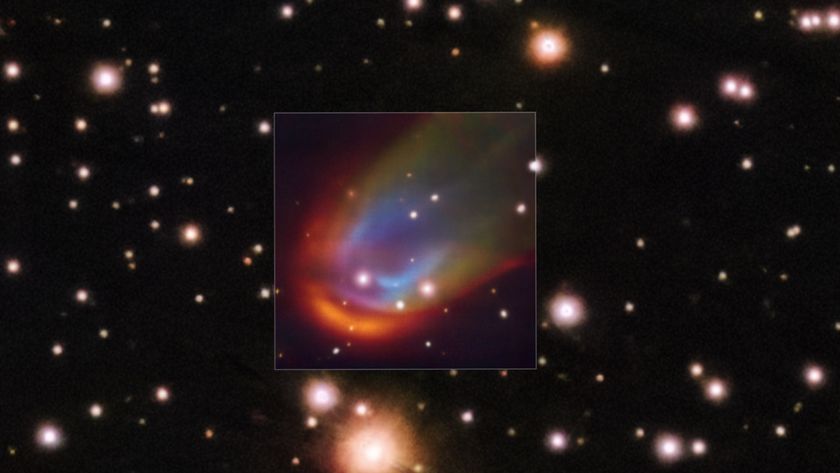 'One of those rare 'wow' moments': Zombie star near Earth has a rainbow shockwave that 'shouldn't be there'
Further proof of an imminent explosion came in November 2024, when researchers took a highly detailed photo of WOH G64 with the Very Large Telescope in Chile — the first image of its kind for an object outside our galaxy — and detected an "egg-shaped cocoon" of gas and dust around the star. This was proof that the star had shed its outer layers and become a yellow hypergiant, experts assumed.
But in the new study, published Jan. 7 in the journal Monthly Notices of the Royal Astronomical Society, researchers took another look at WOH G64, using the Southern African Large Telescope (SALT) — and they found a "smoking gun" that challenges the widely accepted supernova hypothesis.
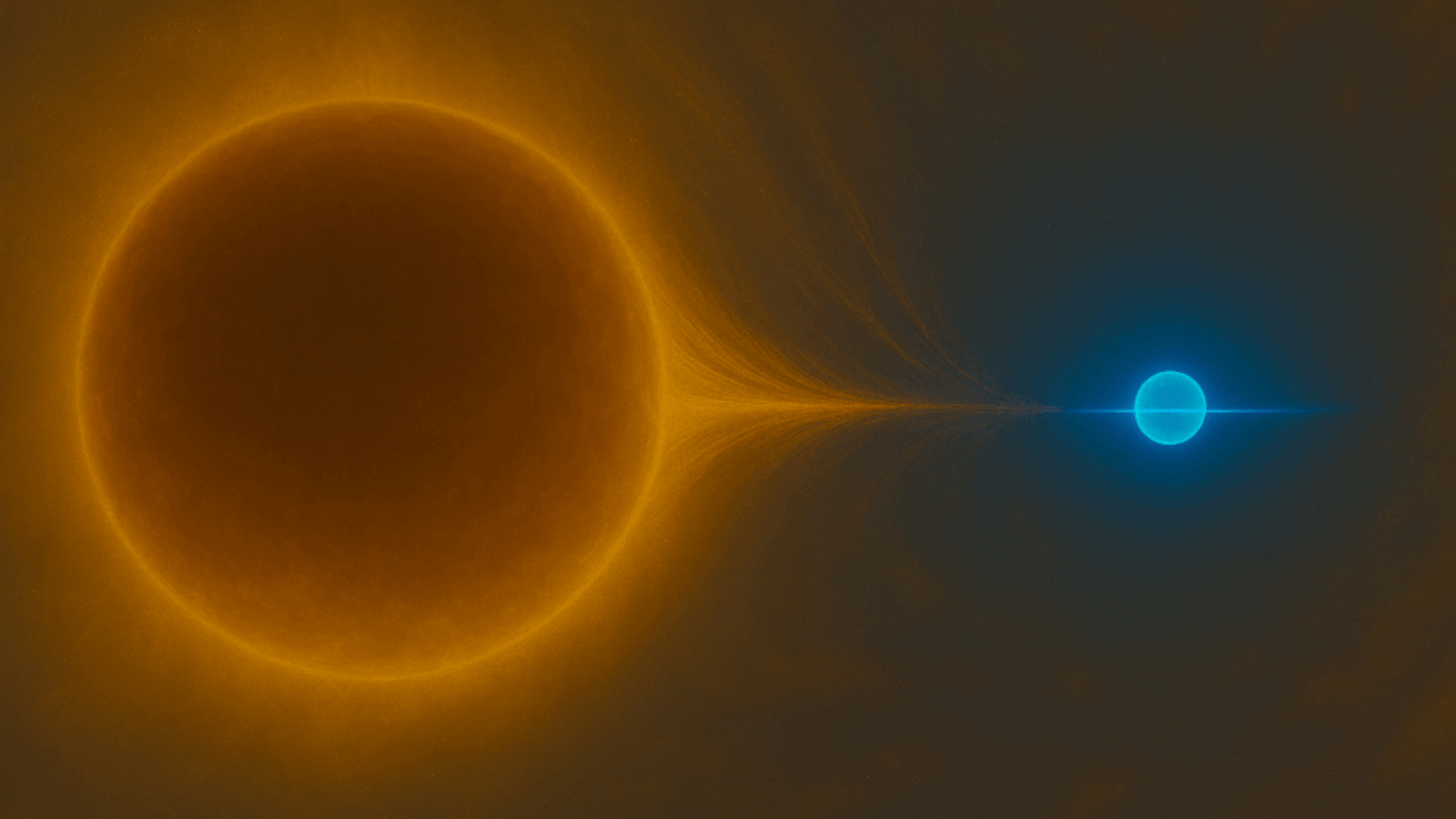
The team's data, collected by SALT's powerful spectroscope between November 2024 and December 2025, revealed titanium oxide — which is normally found only in red supergiants — within WOH G64's atmosphere.
"This implies that WOH G64 is currently a red supergiant and may never have ceased to be," study co-lead author Jacco van Loon, an astrophysicist at Keele University in England, said in a statement. "We are essentially witnessing a 'phoenix' rising from the ashes," he added.
Sign up for the Live Science daily newsletter nowContact me with news and offers from other Future brandsReceive email from us on behalf of our trusted partners or sponsorsBy submitting your information you agree to the Terms & Conditions and Privacy Policy and are aged 16 or over.But if WOH G64 isn't turning into a yellow hypergiant, why is it behaving so strangely?
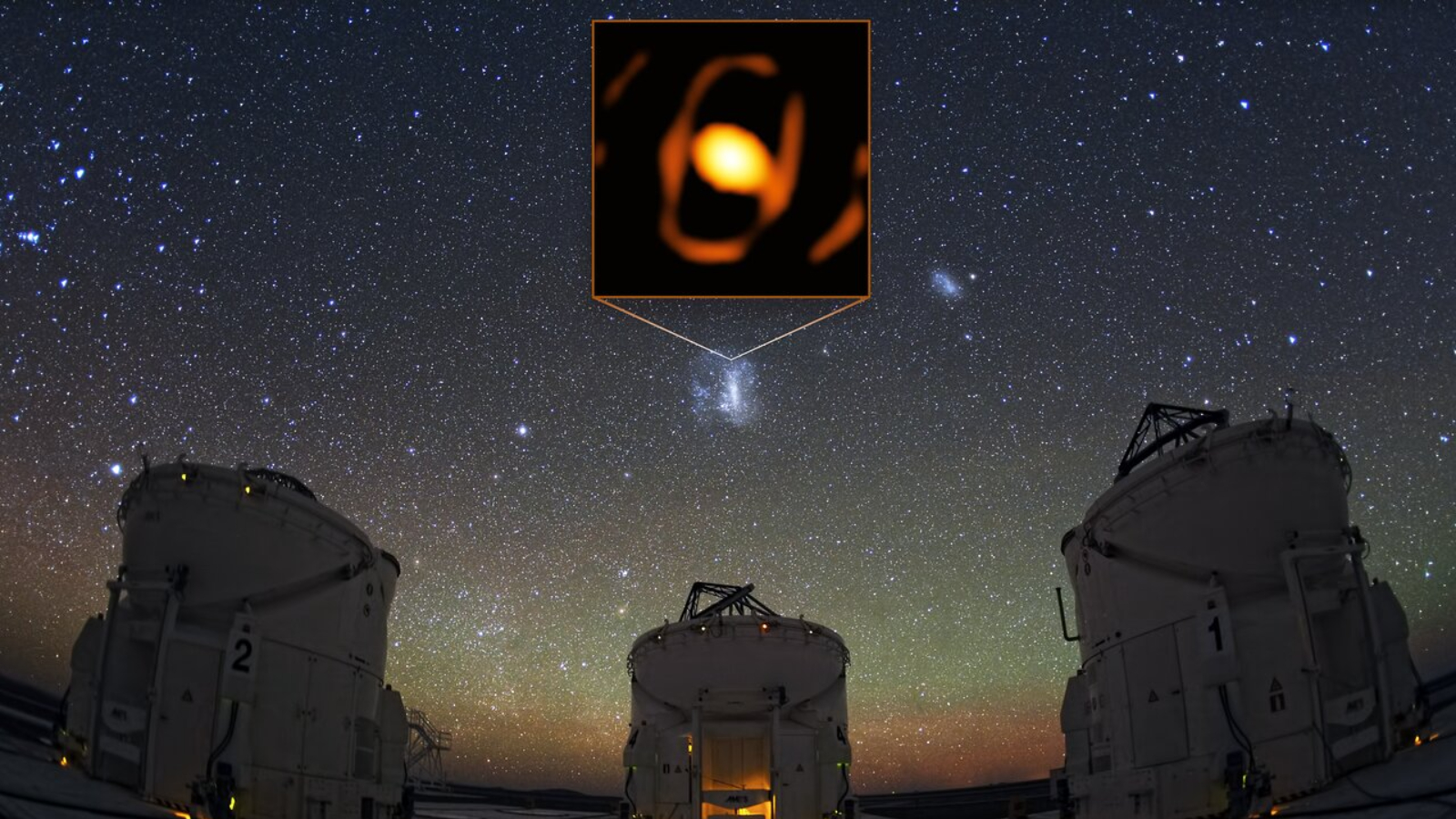
The research team suspects the giant star is part of a binary system that includes a smaller star. In this case, its diminutive partner, which likely shines blue, is probably pulling WOH G64's outer layers into a circumstellar disk.
RELATED STORIES—Rare quadruple supernova on our 'cosmic doorstep' will shine brighter than the moon when it blows up in 23 billion years
—Betelgeuse's mysterious spin could be a cosmic illusion caused by its enormous 'boiling' surface
—Supernova that lit up Earth's skies 843 years ago has a flowering 'zombie star' at its heart — and it's still exploding
"The atmosphere of the red supergiant is being stretched out by the approach of the companion star, but it has not been stripped altogether," van Loon said. "It persists."
This theory was also raised when the star's dusty cocoon was photographed in 2024, but it failed to gain traction.
All eyes are now on WOH G64 for more clues as to when the stellar behemoth will eventually blow its top.
Article SourcesVan Loon, J. T., & Ohnaka, K. (2026). A phoenix rises from the ashes: WOH G64 is still a red supergiant, for now. Monthly Notices of the Royal Astronomical Society, 546(2). https://doi.org/10.1093/mnras/stag012
 Harry BakerSocial Links NavigationSenior Staff Writer
Harry is a U.K.-based senior staff writer at Live Science. He studied marine biology at the University of Exeter before training to become a journalist. He covers a wide range of topics including space exploration, planetary science, space weather, climate change, animal behavior and paleontology. His recent work on the solar maximum won "best space submission" at the 2024 Aerospace Media Awards and was shortlisted in the "top scoop" category at the NCTJ Awards for Excellence in 2023. He also writes Live Science's weekly Earth from space series.
View MoreYou must confirm your public display name before commenting
Please logout and then login again, you will then be prompted to enter your display name.
Logout Read more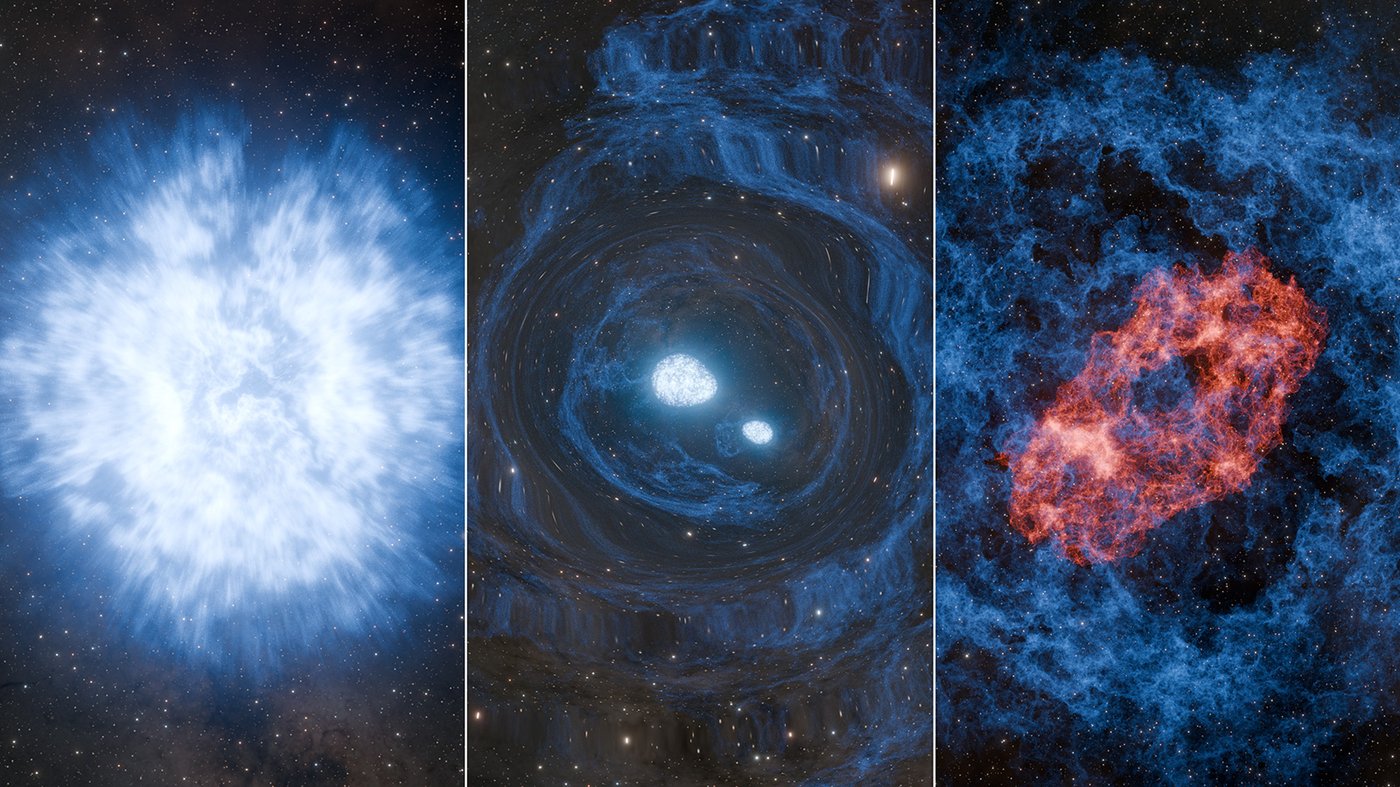 First-ever 'superkilonova' double star explosion puzzles astronomers
 This bright star will soon die in a nuclear explosion — and could be visible in Earth's daytime skies
 'One of those rare 'wow' moments': Zombie star near Earth has a rainbow shockwave that 'shouldn't be there'
 Giant 'metal cloud' in nearby star system could be hiding an undiscovered sun
 Scientists map the shape of a supernova for the first time ever: Space photo of the week
 Rarrr! James Webb telescope spots 'monster stars' leaking nitrogen in the early universe
Latest in Astronomy
Rarrr! James Webb telescope spots 'monster stars' leaking nitrogen in the early universe
Latest in Astronomy
 'Textbooks will need to be updated': Jupiter is smaller and flatter than we thought
 Asteroid 2024 YR4's collision with the moon could create a flash visible from Earth
 Auroras likely as most active sunspot in years turns toward Earth
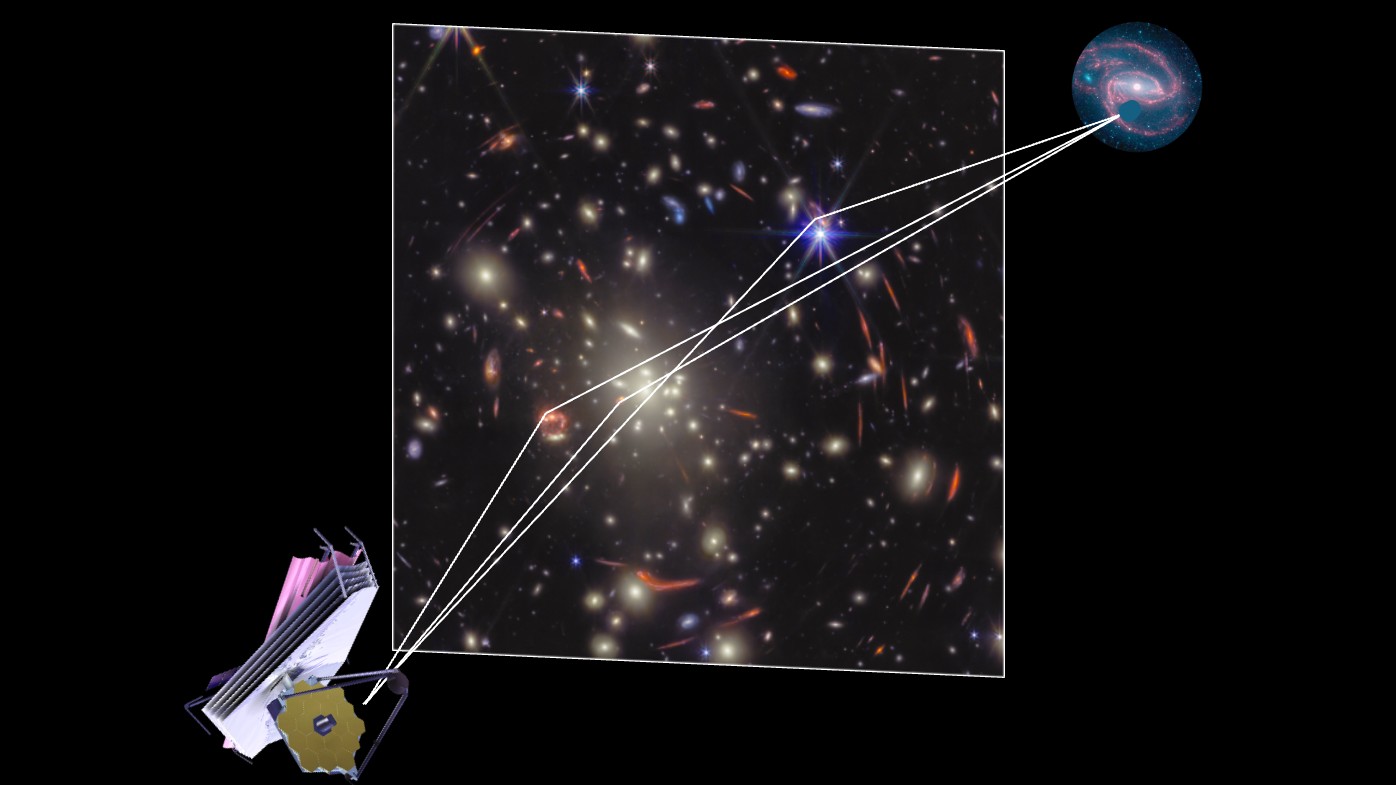 Astronomers spot 'time-warped' supernovas whose light both has and hasn't reached Earth
 James Webb telescope solves mystery of 'forever young' vampire stars from the dawn of time
 Stellar nursery bursts with newborn stars in hauntingly beautiful Hubble telescope image — Space photo of the week
Latest in News
Stellar nursery bursts with newborn stars in hauntingly beautiful Hubble telescope image — Space photo of the week
Latest in News
 New map shows weird magnetic anomaly lurking beneath Australia's Northern Territory
'Behemoth star,' previously thought to be dying, is 'rising from the ashes' like a pheonix
New map shows weird magnetic anomaly lurking beneath Australia's Northern Territory
'Behemoth star,' previously thought to be dying, is 'rising from the ashes' like a pheonix
 Men develop cardiovascular disease 7 years before women
 'Nitrogen fixing' trees could help tropical forests bounce back, research suggests
 Grim photo captures polar bear mom and cubs resting in mud in summer heat
 Hydrogen leak derails Artemis II wet rehearsal, pushing launch date back by weeks
LATEST ARTICLES
Hydrogen leak derails Artemis II wet rehearsal, pushing launch date back by weeks
LATEST ARTICLES- 1'Nitrogen fixing' trees could help tropical forests bounce back, research suggests
- 2Swarovski NL Pure 8x32 binoculars review
- 3Man's autopsy reveals unexpected 'boomerang-shaped' structure in his heart
- 4'Textbooks will need to be updated': Jupiter is smaller and flatter than we thought
- 5A deer carrying the rotting head of its vanquished foe and a playful lynx shortlisted for Wildlife Photographer of the Year Nuveen People's Choice Award