- Space
- Astronomy
- Planets
Jupiter is smaller and flatter than scientists previously thought, new measurements of the gas giant reveal.
When you purchase through links on our site, we may earn an affiliate commission. Here’s how it works.
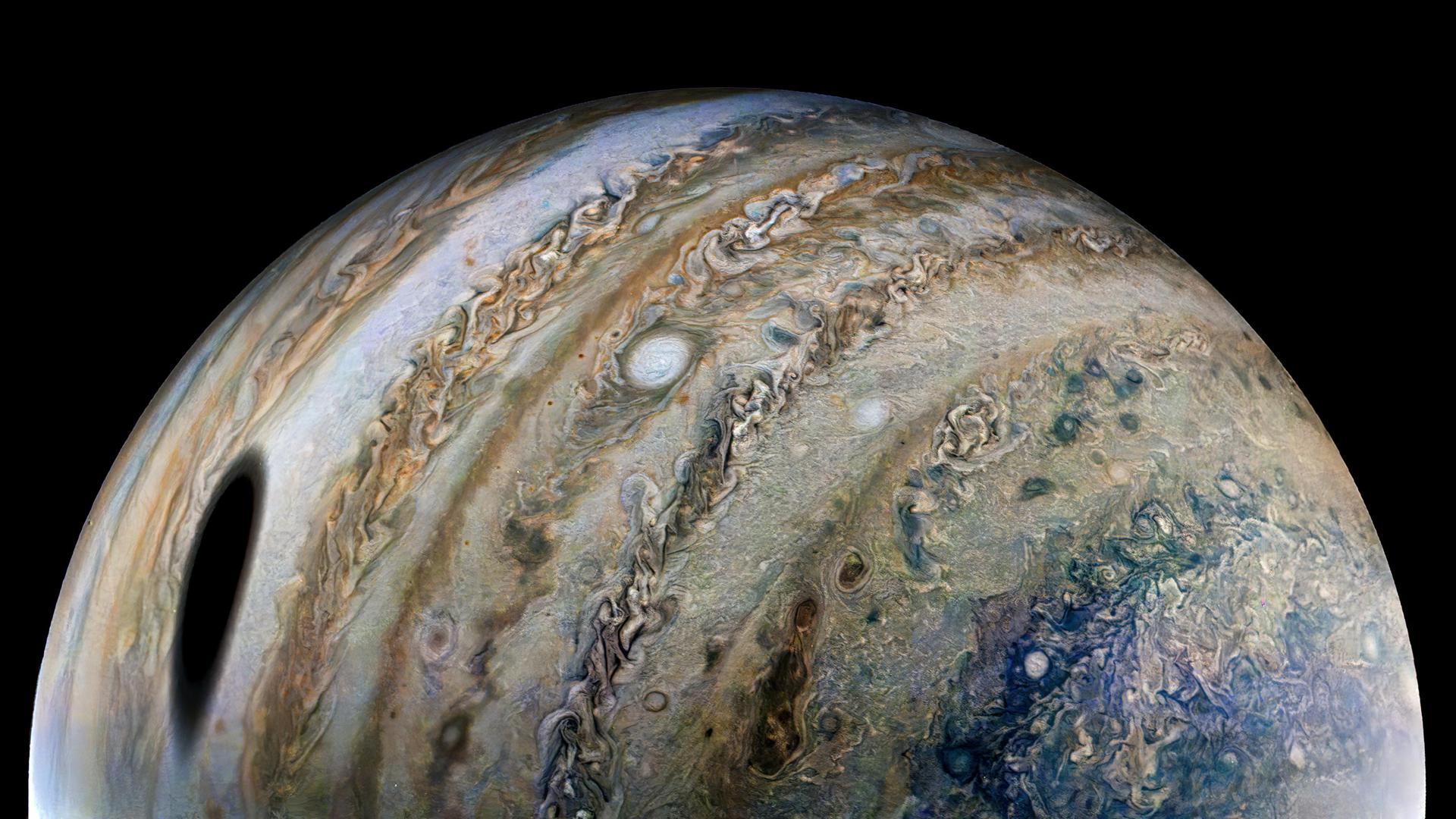 Jupiter imaged by the Juno spacecraft, with the shadow of the massive moon Ganymede to the left. Data from Juno suggests that Jupiter is flatter than previously thought, according to a new study.
(Image credit: Image data: NASA/JPL-Caltech/SwRI/MSSS Image processing by Thomas Thomopoulos © CC BY)
Jupiter imaged by the Juno spacecraft, with the shadow of the massive moon Ganymede to the left. Data from Juno suggests that Jupiter is flatter than previously thought, according to a new study.
(Image credit: Image data: NASA/JPL-Caltech/SwRI/MSSS Image processing by Thomas Thomopoulos © CC BY)
- Copy link
- X
Get the world’s most fascinating discoveries delivered straight to your inbox.
Become a Member in Seconds
Unlock instant access to exclusive member features.
Contact me with news and offers from other Future brands Receive email from us on behalf of our trusted partners or sponsors By submitting your information you agree to the Terms & Conditions and Privacy Policy and are aged 16 or over.You are now subscribed
Your newsletter sign-up was successful
Want to add more newsletters?

Delivered Daily
Daily Newsletter
Sign up for the latest discoveries, groundbreaking research and fascinating breakthroughs that impact you and the wider world direct to your inbox.
Signup +
Once a week
Life's Little Mysteries
Feed your curiosity with an exclusive mystery every week, solved with science and delivered direct to your inbox before it's seen anywhere else.
Signup +
Once a week
How It Works
Sign up to our free science & technology newsletter for your weekly fix of fascinating articles, quick quizzes, amazing images, and more
Signup +
Delivered daily
Space.com Newsletter
Breaking space news, the latest updates on rocket launches, skywatching events and more!
Signup +
Once a month
Watch This Space
Sign up to our monthly entertainment newsletter to keep up with all our coverage of the latest sci-fi and space movies, tv shows, games and books.
Signup +
Once a week
Night Sky This Week
Discover this week's must-see night sky events, moon phases, and stunning astrophotos. Sign up for our skywatching newsletter and explore the universe with us!
Signup +Join the club
Get full access to premium articles, exclusive features and a growing list of member rewards.
Explore An account already exists for this email address, please log in. Subscribe to our newsletterJupiter is slightly smaller and flatter than scientists thought for decades, a new study finds.
Researchers used radio data from the Juno spacecraft to refine measurements of the solar system's largest planet. Although the differences between the current and previous measurements are small, they are improving models of Jupiter's interior and of other gas giants like it outside the solar system, the team reported Feb. 2 in the journal Nature Astronomy.
You may like-
 Spiders on Jupiter? Scientists uncover secret origins of arachnid-like 'demon' lurking on gas giant's moon.
-
 Uranus and Neptune may be 'rock giants,' not 'ice giants,' new model of their cores suggests
-
 Strange discovery offers 'missing link' in planet formation
Until now, scientists' understanding of Jupiter's size and shape have been based on six measurements performed by the Voyager 1 and 2 and Pioneer 10 and 11 missions. Those measurements, which have since been adopted as standard, were performed around 50 years ago using radio beams, according to the statement.
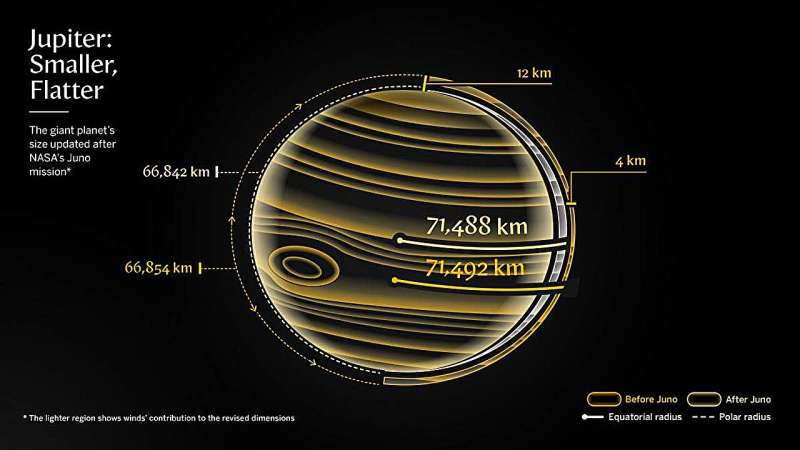
But the Juno mission, which has been gathering data on Jupiter and its moons since it arrived at the gas giant in 2016, has collected much more of this radio data in the past two years. With that additional data, researchers have now refined measurements of Jupiter's size down to about 1,300 feet (400 meters) in each direction.
"Just by knowing the distance to Jupiter and watching how it rotates, it's possible to figure out its size and shape," Kaspi said. "But making really accurate measurements calls for more sophisticated methods."
Bending light
In the new study, the scientists tracked how the radio signals from Juno back to Earth bent as they passed through Jupiter's atmosphere, before cutting out when the planet blocked the signal entirely. Those measurements allowed the team to account for Jupiter's winds, which slightly alter the shape of the gaseous planet. Then, they used that information to make precise calculations of the planet's shape and size.
Sign up for the Live Science daily newsletter nowContact me with news and offers from other Future brandsReceive email from us on behalf of our trusted partners or sponsorsBy submitting your information you agree to the Terms & Conditions and Privacy Policy and are aged 16 or over.With the new data, the team calculated that the planet's radius from its pole to its center is 41,534 miles (66,842 km) — 7.5 miles (12 km) smaller than previous measurements. The newly calculated radius at the equator is 44,421 miles (71,488 km) — 2.5 miles (4 km) smaller than previously thought.
"These few kilometers matter," study co-author Eli Galanti, an expert on gas giants at the Weizmann Institute of Science, said in the statement. "Shifting the radius by just a little lets our models of Jupiter's interior fit both the gravity data and atmospheric measurements much better."
related stories—Jupiter is shrinking and used to be twice as big, mind-boggling study reveals
—Spiders on Jupiter? Scientists uncover secret origins of arachnid-like 'demon' lurking on gas giant's moon
—Is Jupiter's Great Red Spot an impostor? Giant storm may not be the original one discovered 350 years ago
The updated measurements will improve our understanding of Jupiter's interior, as well as help scientists interpret data from gas giants beyond the solar system, the researchers wrote in the study.
"This research helps us understand how planets form and evolve," Kaspi said in the statement. "Jupiter was likely the first planet to form in the solar system, and by studying what's happening inside it, we get closer to understanding how the solar system, and planets like ours, came to be."
Article SourcesGalanti, E., Smirnova, M., Ziv, M., Fonsetti, M., Caruso, A., Buccino, D. R., Hubbard, W. B., Militzer, B., Bolton, S. J., Guillot, T., Helled, R., Levin, S. M., Parisi, M., Park, R. S., Steffes, P., Tortora, P., Withers, P., Zannoni, M., & Kaspi, Y. (2026). The size and shape of Jupiter. Nature. https://doi.org/10.1038/s41550-026-02777-x
 Skyler WareSocial Links NavigationLive Science Contributor
Skyler Ware is a freelance science journalist covering chemistry, biology, paleontology and Earth science. She was a 2023 AAAS Mass Media Science and Engineering Fellow at Science News. Her work has also appeared in Science News Explores, ZME Science and Chembites, among others. Skyler has a Ph.D. in chemistry from Caltech.
View MoreYou must confirm your public display name before commenting
Please logout and then login again, you will then be prompted to enter your display name.
Logout Read more Uranus and Neptune may be 'rock giants,' not 'ice giants,' new model of their cores suggests
 Strange discovery offers 'missing link' in planet formation
 Astronomers discover a gigantic, wobbling black hole jet that 'changes the way we think about the galaxy'
 JWST spots a planet chasing its own atmosphere through space
 James Webb telescope uncovers a new mystery: A broiling 'hell planet' with an atmosphere that shouldn't exist
 Some objects we thought were planets may actually be tiny black holes from the dawn of time
Latest in Planets
Some objects we thought were planets may actually be tiny black holes from the dawn of time
Latest in Planets
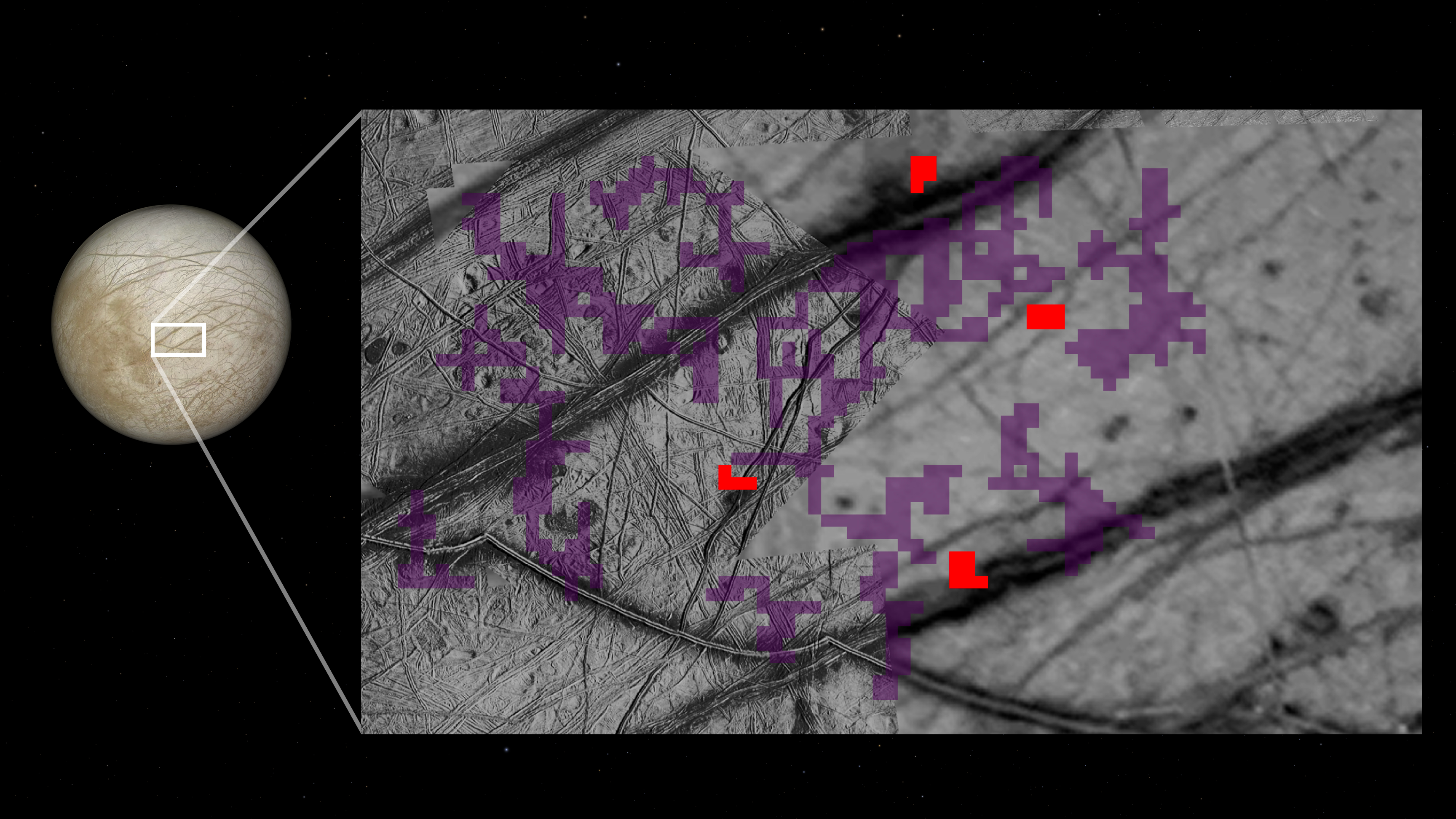 Life-friendly molecules are leaking out of Jupiter's giant moon Europa
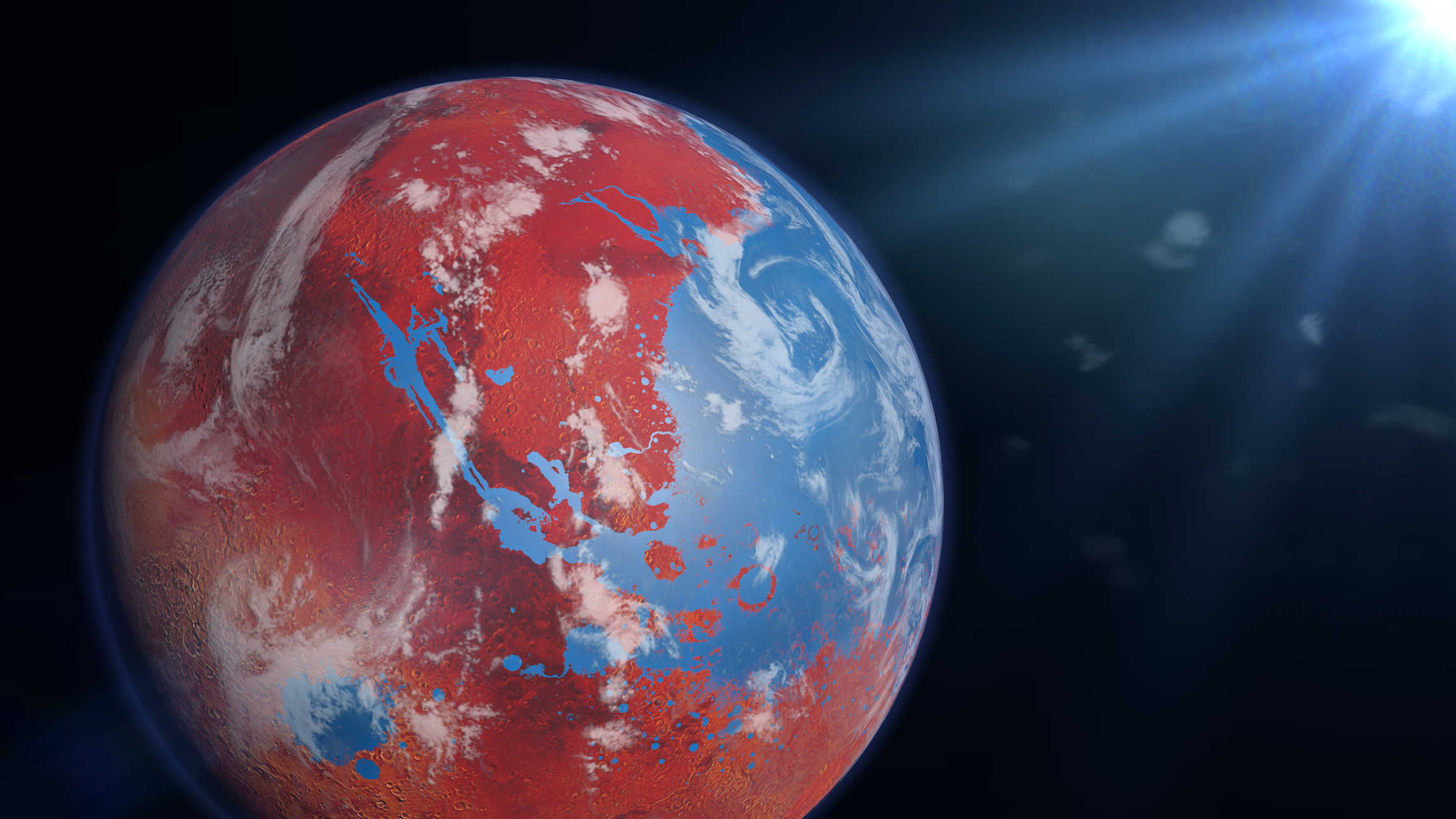 An ocean the size of the Arctic once covered half of Mars, new images hint
Strange discovery offers 'missing link' in planet formation
An ocean the size of the Arctic once covered half of Mars, new images hint
Strange discovery offers 'missing link' in planet formation
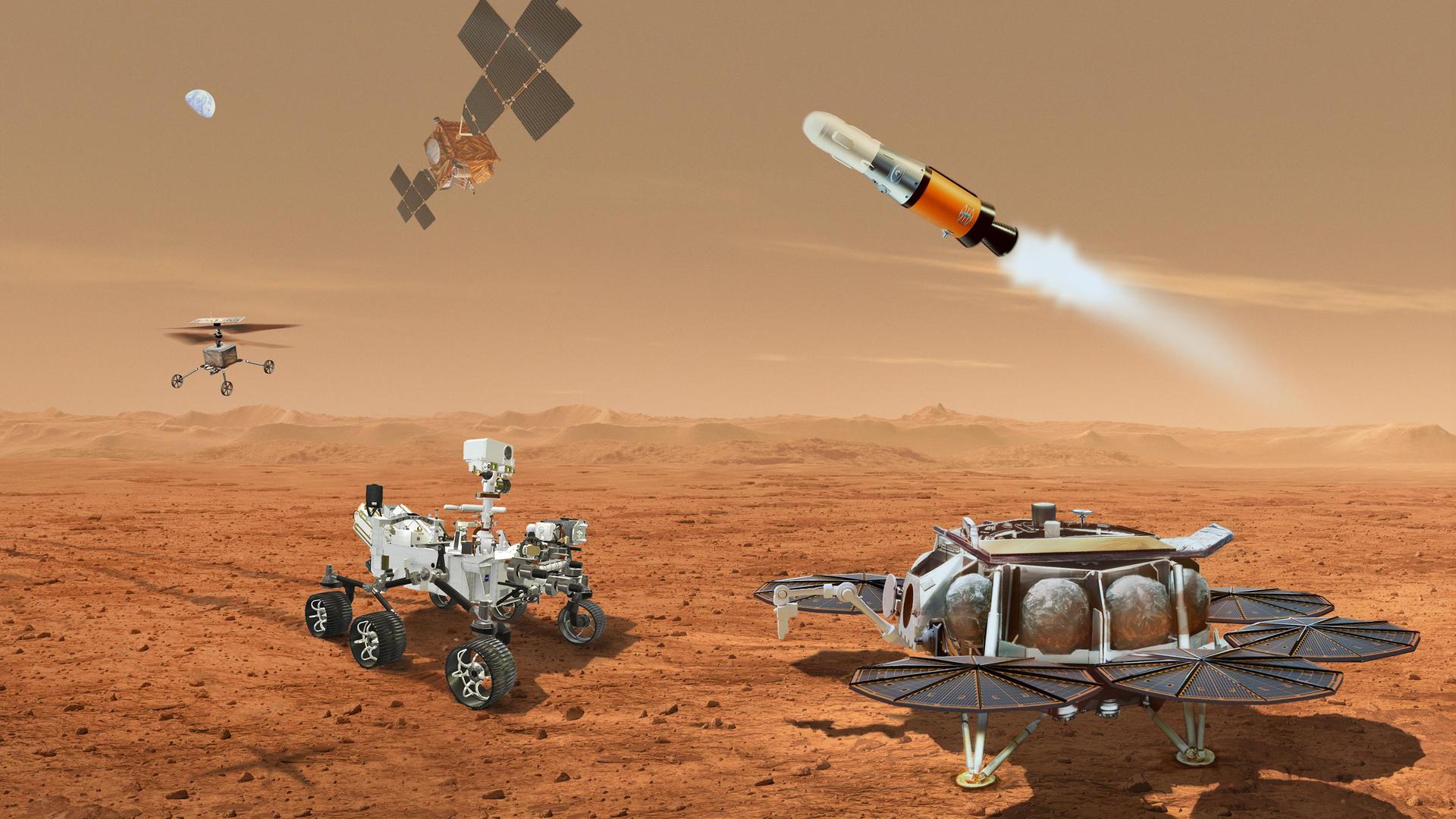 NASA's Mars Sample Return is dead, leaving China to retrieve signs of life from the Red Planet
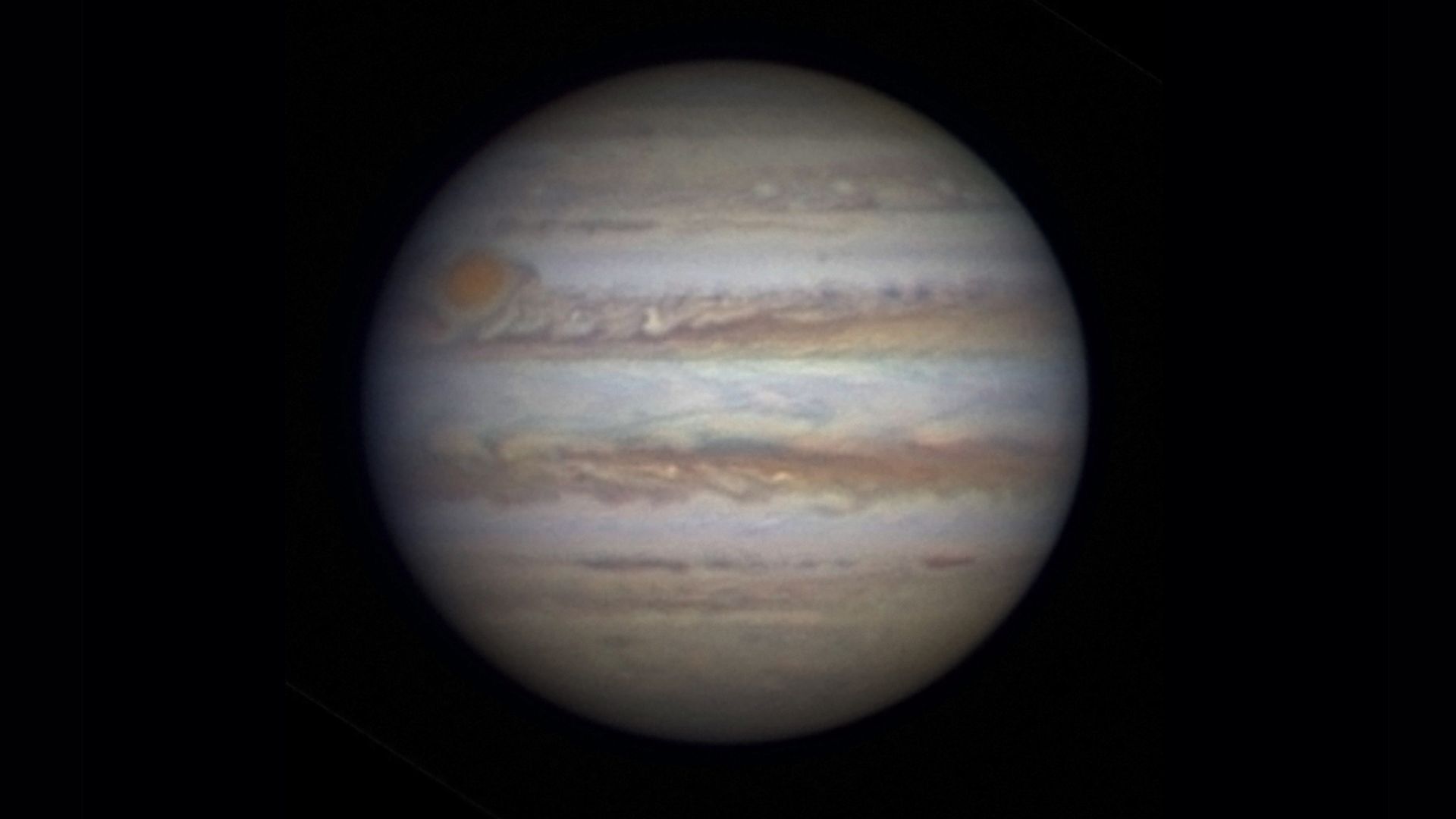 Jupiter will outshine every star in the sky this weekend — how to see the 'king of planets' at opposition
 NASA spacecraft takes milestone 100,000th image of Mars (photo)
Latest in News
NASA spacecraft takes milestone 100,000th image of Mars (photo)
Latest in News
 Remote region in Greece has one of the most genetically distinct populations in Europe
 New map shows weird magnetic anomaly lurking beneath Australia's Northern Territory
 'Behemoth star,' previously thought to be dying, is 'rising from the ashes' like a pheonix
'Textbooks will need to be updated': Jupiter is smaller and flatter than we thought
'Behemoth star,' previously thought to be dying, is 'rising from the ashes' like a pheonix
'Textbooks will need to be updated': Jupiter is smaller and flatter than we thought
 Men develop cardiovascular disease 7 years before women
 Asteroid 2024 YR4's collision with the moon could create a flash visible from Earth
LATEST ARTICLES
Asteroid 2024 YR4's collision with the moon could create a flash visible from Earth
LATEST ARTICLES- 1Remote region in Greece has one of the most genetically distinct populations in Europe
- 2Life-friendly molecules are leaking out of Jupiter's giant moon Europa, Galileo images hint
- 3'Behemoth star,' previously thought to be dying, is 'rising from the ashes' like a pheonix
- 4New map shows weird magnetic anomaly lurking beneath Australia's Northern Territory
- 5'Nitrogen fixing' trees could help tropical forests bounce back, research suggests