His experimental photo-sculptures and inventive portraits of artists like Judy Chicago and Ed Ruscha pushed the boundaries of photography.
 Matt Stromberg
February 11, 2026
— 4 min read
Matt Stromberg
February 11, 2026
— 4 min read
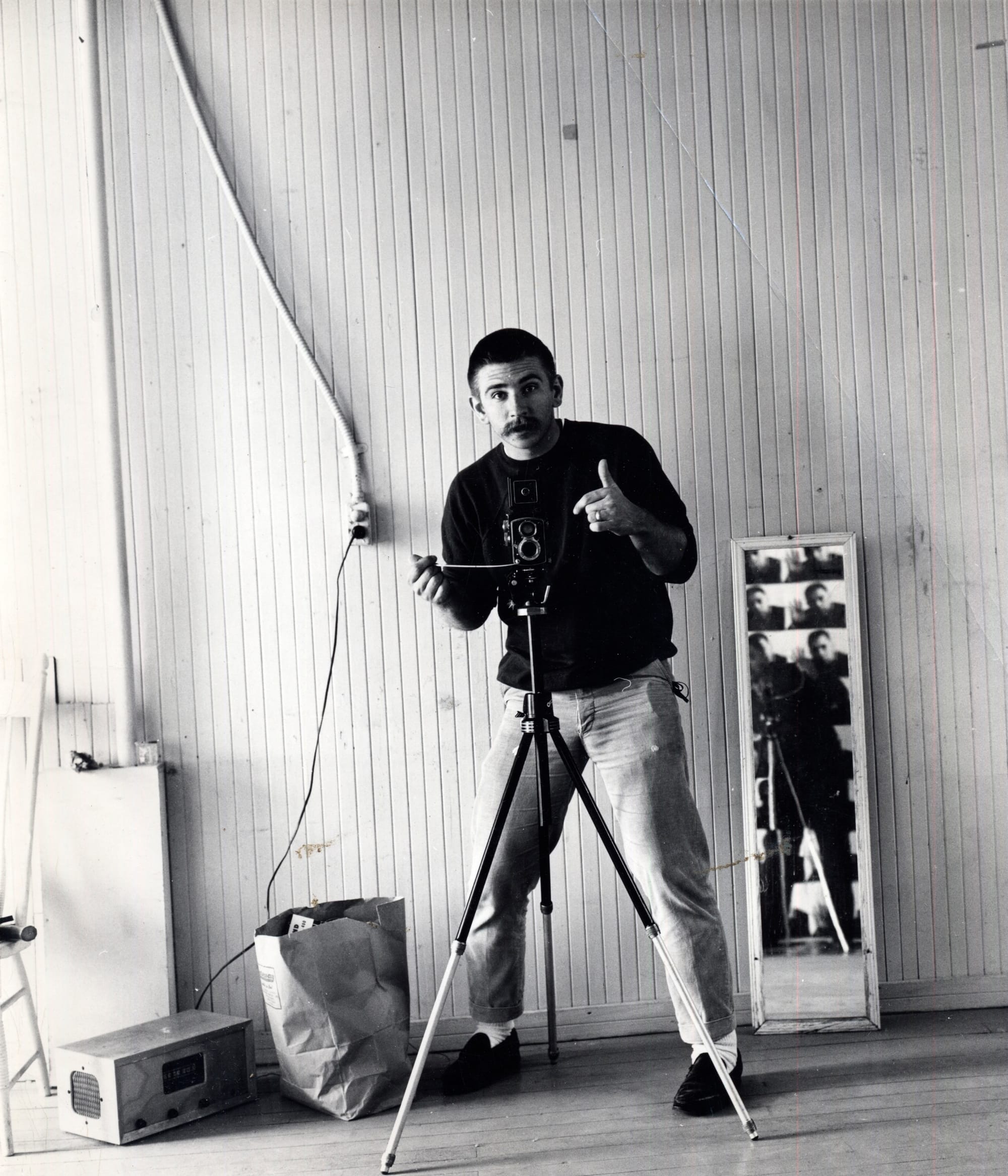
 Jerry McMillan, "Self-Portrait" (c. 1970) (all images courtesy Craig Krull Gallery)
Photographer Jerry McMillan, who played a key role in documenting the mid-century art scene in Los Angeles, died on Monday, February 9, at the age of 89. The cause was “old age and a broken heart,” according to his son. McMillan’s wife of more than six decades, Patricia Ella McMillan, had passed away a week earlier.
Born on December 7, 1936, McMillan grew up in Oklahoma City, where he was childhood friends with Ed Ruscha and Joe Goode. In 1957, he drove to Los Angeles to attend the Chouinard Art Institute (now the California Institute of the Arts), joining Ruscha, Goode, and fellow Okie transplants Patrick Blackwell and Mason Williams. The group lived together in Hollywood, then Los Feliz, and dubbed themselves the “Students Five.”
After graduating, McMillan emerged as one of the preeminent chroniclers of the emerging LA art world, photographing his friends and other artists, especially those in the orbit of seminal Ferus Gallery, including Ed Kienholz, Larry Bell, and Robert Irwin.
“So much of what we know about the LA art scene in that era is from Jerry’s photos,” Andrew Perchuck, interim director of the Getty Research Institute (GRI), which acquired McMillan’s photographic archives from the 1960s and ’70s in 2015, told Hyperallergic.
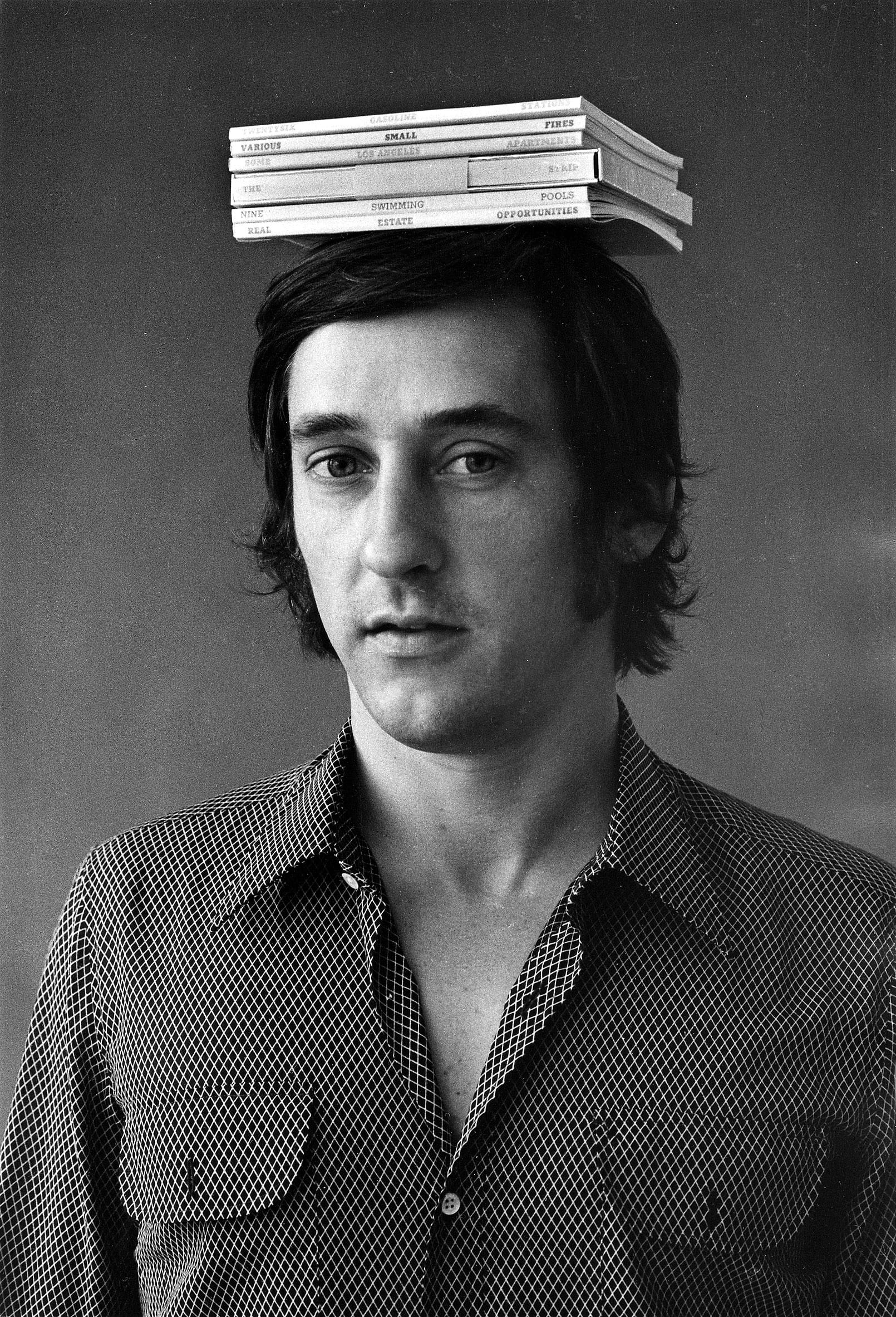 Jerry McMillan, "Ed Ruscha with Books" (1970)
Beyond simply documenting his era, McMillan was instrumental in shaping the public personas of artists, often capturing them in scenes of “whimsically staged role-playing” as the GRI notes. He photographed Ruscha as a sailor, cowboy, and a shirtless, flexing beefcake, cheekily playing up various facets of his hyper-masculine facade. In “Ed Ruscha Says Goodbye to College Joys” (1967), the artist-as-casanova appears in bed, sandwiched between two sleeping women. The image was used in the artist’s wedding announcement in Artforum.
“Because Joe and Ed were from Oklahoma, everyone assumed they were cowboys,” Perchuk told Hyperallergic, noting that McMillan leaned into the stereotype with his posed photos. “Jerry didn’t know how to ride a horse. They were urban kids from Oklahoma City.”
Besides portraying the all-male artists of Ferus Gallery’s “cool school,” McMillan took iconic photographs of women artists, including Barbara T. Smith and Judy Chicago. To announce Chicago’s name change in 1970 — she adopted her birth city as her last name — McMillan rented a boxing ring and captured her wearing a shirt bearing her new moniker and boxing gloves. Chicago stares back at the camera, stone-faced, a fighter who could hold her own in the male-dominated art world.
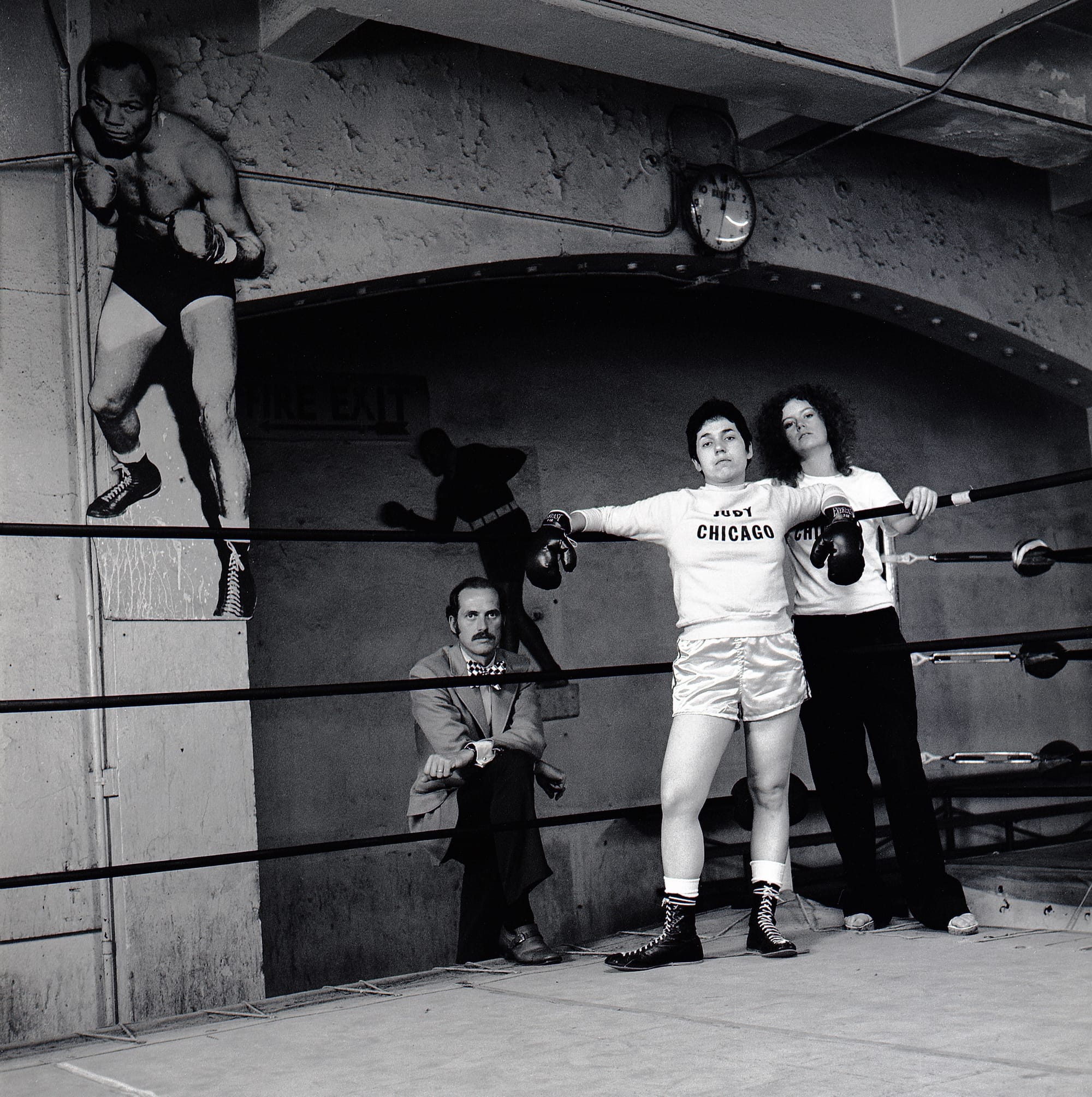 Jerry McMillan, "Judy Chicago" (1970)
McMillan was also responsible for the controversial image that accompanied the War Babies exhibition at LA’s Huysman Gallery in 1961, a notable early multi-racial exhibition. In McMillan’s photo, the four artists sit around a table draped with a United States flag, each eating a stereotypical food: African-American artist Ed Bereal with a watermelon, Catholic Joe Goode holding a mackerel, Ron Miyashiro (who is Hawaiian-Japanese American) posing with chopsticks and a bowl of rice, and Jewish artist Larry Bell with a bagel. A poster that featured the photo was widely disseminated, garnering attacks from the right for its supposed desecration of the flag, and from the left for its portrayal of ethnic stereotypes.
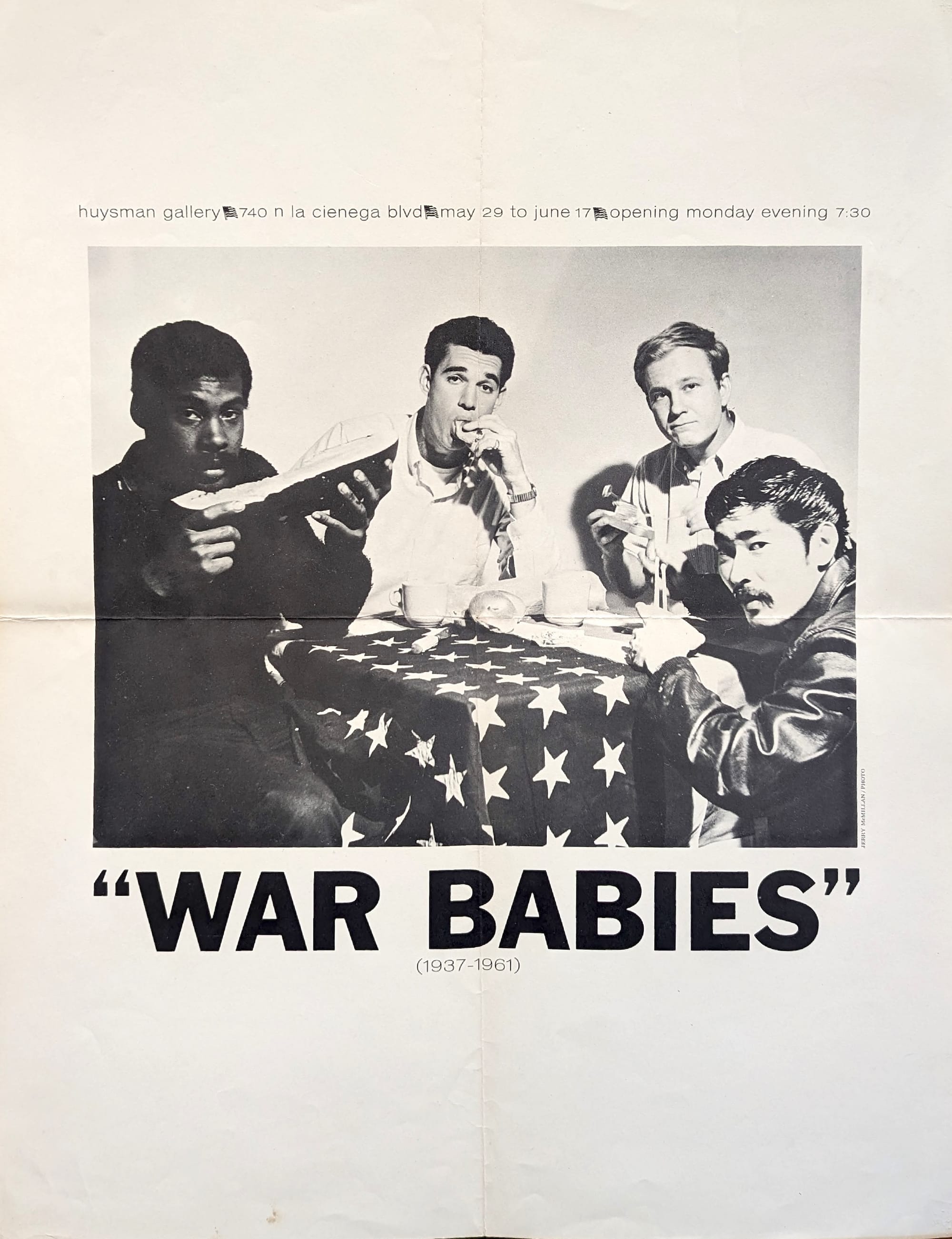 War Babies exhibition poster (1961)
At the same time that he was creating these photographs of fellow Angeleno artists, McMillan was pushing the boundaries of the medium with his pioneering photo-sculptures. “He really set out to philosophically examine what a photograph is and could be,” Craig Krull, McMillan’s gallerist, told Hyperallergic. “Does a photo have to be on paper? Does it have to be a picture of something?”
His first photo-sculpture was “Patty as Container” (1963), a box printed with images of his pregnant wife on all sides. He continued to innovate, printing photos on copper forms resembling paper bags, or etching the delicate forms of palm trees and cactuses onto sheets of metal.
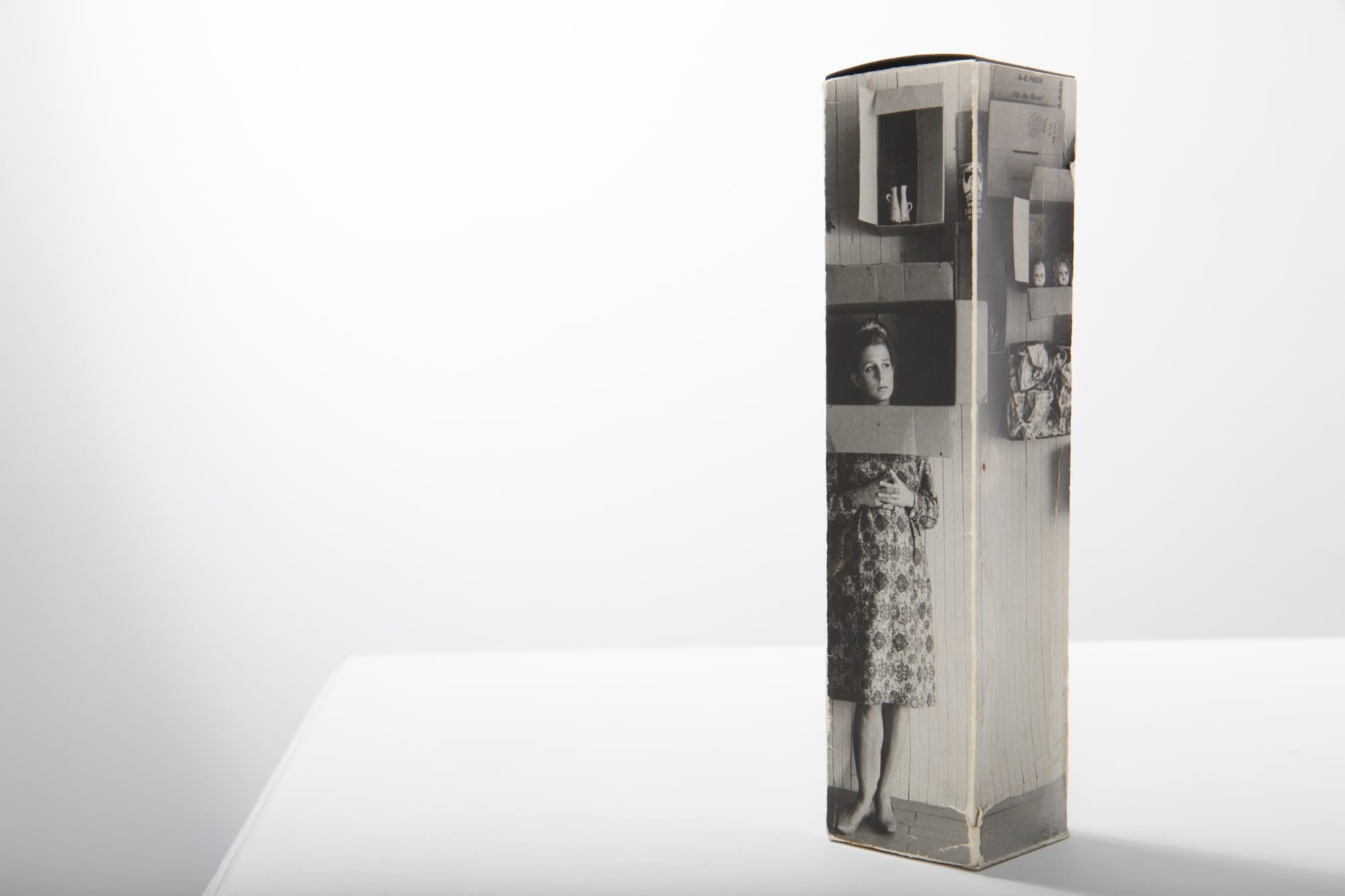 Jerry McMillan, "Patty as Container" (1963) (photo by Natalie Obermaier)
McMillan's three-dimensional photo works were included in a 1966 show at the Pasadena Art Museum curated by Walter Hopps, the institution’s first exhibition dedicated to a photographer, and in the groundbreaking 1970 exhibition Photography into Sculpture at the Museum of Modern Art in New York. His most recent show was held at Craig Krull Gallery last year.
Perchuk cites the artist's early photo-sculptural experiments as majorly influential works that helped to usher photography, once considered a second-class medium, into the realm of fine art, a development often associated with a later generation of artists, such as those of the Pictures Generation.
“Jerry was doing that move of turning photography into a fine art object a decade earlier,” Perchuk said.
McMillan is survived by his children Jerry Jr., Heather, and Jennifer, and several grandchildren and great-grandchildren.