- Space
- Astronomy
The first bubble of hot gas seen around another star has been spotted around the "Moth," just 117 light-years away.
When you purchase through links on our site, we may earn an affiliate commission. Here’s how it works.
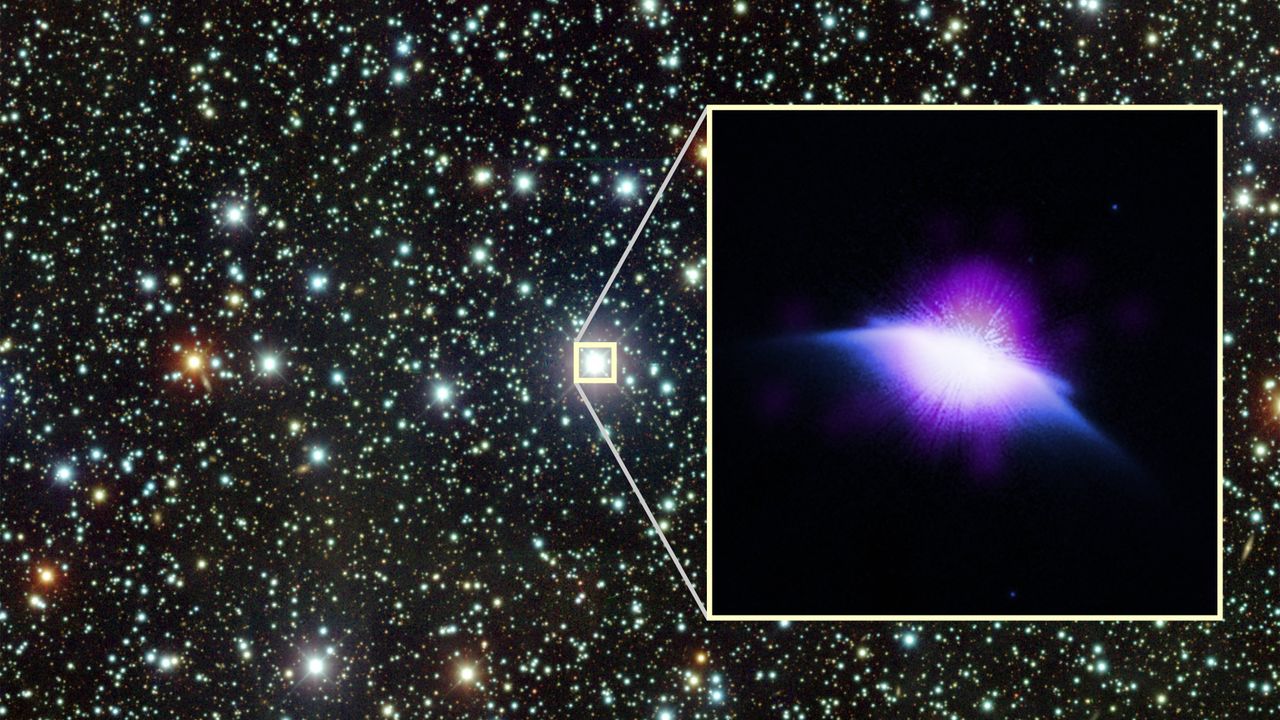
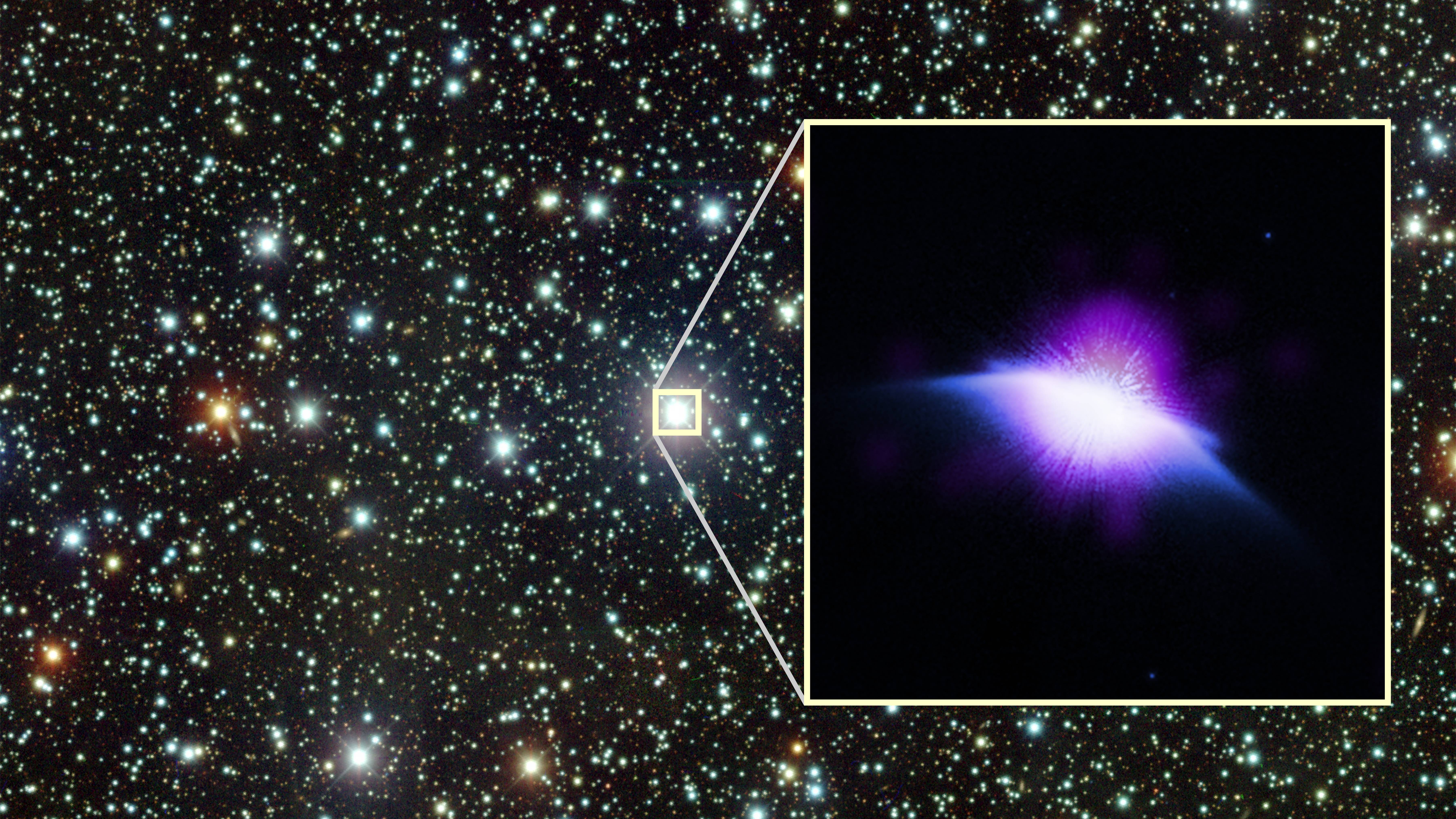 A young, sun-like star reveals its protective sheath, or 'astrosphere', for the first time in this Chandra image.
(Image credit: X-ray: NASA/CXC/Johns Hopkins Univ./C.M. Lisse et al.; Infrared: NASA/ESA/STIS; Optical: NSF/NoirLab/CTIO/DECaPS2)
A young, sun-like star reveals its protective sheath, or 'astrosphere', for the first time in this Chandra image.
(Image credit: X-ray: NASA/CXC/Johns Hopkins Univ./C.M. Lisse et al.; Infrared: NASA/ESA/STIS; Optical: NSF/NoirLab/CTIO/DECaPS2)
- Copy link
- X
Get the world’s most fascinating discoveries delivered straight to your inbox.
Become a Member in Seconds
Unlock instant access to exclusive member features.
Contact me with news and offers from other Future brands Receive email from us on behalf of our trusted partners or sponsors By submitting your information you agree to the Terms & Conditions and Privacy Policy and are aged 16 or over.You are now subscribed
Your newsletter sign-up was successful
Want to add more newsletters?

Delivered Daily
Daily Newsletter
Sign up for the latest discoveries, groundbreaking research and fascinating breakthroughs that impact you and the wider world direct to your inbox.
Signup +
Once a week
Life's Little Mysteries
Feed your curiosity with an exclusive mystery every week, solved with science and delivered direct to your inbox before it's seen anywhere else.
Signup +
Once a week
How It Works
Sign up to our free science & technology newsletter for your weekly fix of fascinating articles, quick quizzes, amazing images, and more
Signup +
Delivered daily
Space.com Newsletter
Breaking space news, the latest updates on rocket launches, skywatching events and more!
Signup +
Once a month
Watch This Space
Sign up to our monthly entertainment newsletter to keep up with all our coverage of the latest sci-fi and space movies, tv shows, games and books.
Signup +
Once a week
Night Sky This Week
Discover this week's must-see night sky events, moon phases, and stunning astrophotos. Sign up for our skywatching newsletter and explore the universe with us!
Signup +Join the club
Get full access to premium articles, exclusive features and a growing list of member rewards.
Explore An account already exists for this email address, please log in. Subscribe to our newsletter quick factsWhat it is: HD 61005, a sun-like star nicknamed the "Moth"
Where it is: About 117 light-years away in the constellation Puppis
When it was shared: Feb. 23, 2026
The sun orbits the center of the Milky Way wrapped in a protective bubble of its own making, dubbed the heliosphere. And for the first time, astronomers have spotted a similar protective bubble forming around an alien star.
A star called HD 61005 has just been confirmed to have its own heliosphere, or "astrosphere.” And since HD 61005 is much younger than the sun (about 100 million years compared to 4.6 billion years), the discovery also offers astronomers a rare glimpse into what our home star may have looked like in its infancy.
You may like-
 Giant 'metal cloud' in nearby star system could be hiding an undiscovered sun
-
 Mysterious, irradiated 'scar' in our galaxy may finally have an explanation
-
 James Webb telescope peers into 'Eye of God' and finds clues to life's origins — Space photo of the week
This groundbreaking image uses X-ray data from NASA’s Chandra X-ray Observatory (purple and white in the image) alongside infrared (blue and white) and optical (red, green and blue) observations from other telescopes, including the Hubble Space Telescope and the Cerro Tololo Inter-American Observatory in Chile. Combining the data has enabled astronomers to capture a striking portrait of a stellar wind bubble in action.
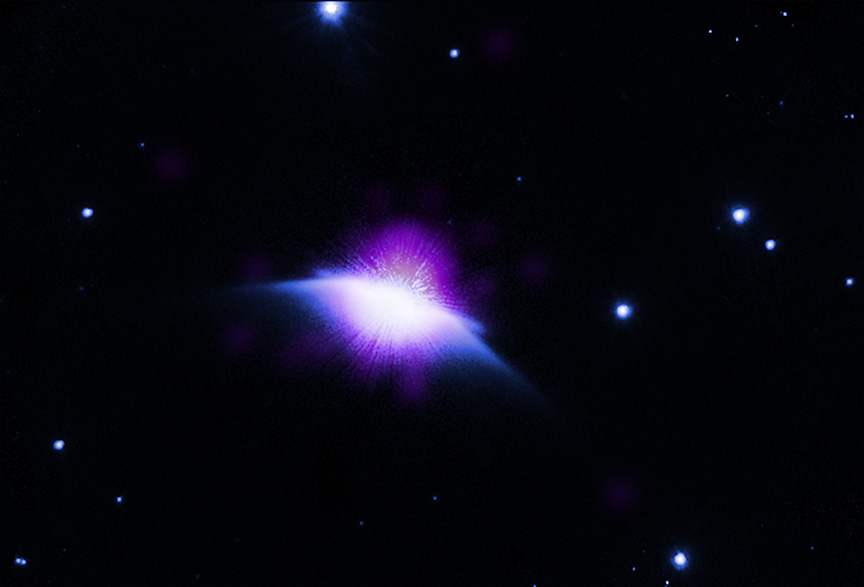
At the center of the image, there's a brilliant white X-ray core. Surrounding it is a neon-purple glow marking the astrosphere itself.
One of HD 61005’s most distinctive features is a wedge-shaped dust tail trailing behind it that looks like a pair of wings. This debris, left over from the star’s formation, has been swept backward as the star speeds through space, and its unusual shape has earned HD 61005 the nickname the "Moth.”
"There’s a saying about a moth being drawn to a flame," Brad Snios, a physicist formerly from the Harvard & Smithsonian Center for Astrophysics, said in a statement. “In the case of HD 61005, the ‘Moth’ can’t easily escape from the flame because it was born around it.”
Sign up for the Live Science daily newsletter nowContact me with news and offers from other Future brandsReceive email from us on behalf of our trusted partners or sponsorsBy submitting your information you agree to the Terms & Conditions and Privacy Policy and are aged 16 or over.Though similar in mass and temperature to the sun, HD 61005 is far younger and more active. Its stellar winds are estimated to be about three times faster and 25 times denser than those currently emitted by the sun. If it replaced the sun in the solar system, then our heliosphere would be up to 10 times wider, according to NASA.
Capturing the first alien astrosphere has been an ongoing mission since the 1990s. The breakthrough was made possible because HD 61005’s powerful wind collides with an unusually dense region of interstellar material, generating X-rays detectable by Chandra.
It's the first clue to what may have surrounded the early solar system billions of years ago — and perhaps how young planetary systems evolve in their cosmic neighborhoods.
See more Space Photos of the Week
 Hubble sees Egg Nebula 'hatch'
The closest baby nebula to Earth was caught spitting up its stardust.
 Hidden structure in 1st Vera Rubin image
First-light images from the Vera C. Rubin Observatory reveal a 163,000-light-year stream of stars emanating from a nearby galaxy.
JWST peeps the 'Eye of God'
A spectacular James Webb telescope image reveals intricate structures inside the Helix Nebula.
TOPICS space photo of the week Jamie CarterSocial Links NavigationLive Science contributor
Jamie Carter is a Cardiff, U.K.-based freelance science journalist and a regular contributor to Live Science. He is the author of A Stargazing Program For Beginners and co-author of The Eclipse Effect, and leads international stargazing and eclipse-chasing tours. His work appears regularly in Space.com, Forbes, New Scientist, BBC Sky at Night, Sky & Telescope, and other major science and astronomy publications. He is also the editor of WhenIsTheNextEclipse.com.
View MoreYou must confirm your public display name before commenting
Please logout and then login again, you will then be prompted to enter your display name.
Logout Read more
Giant 'metal cloud' in nearby star system could be hiding an undiscovered sun
Mysterious, irradiated 'scar' in our galaxy may finally have an explanation
James Webb telescope peers into 'Eye of God' and finds clues to life's origins — Space photo of the week
Closest baby nebula to Earth 'hatches' in strange new Hubble image – Space photo of the week
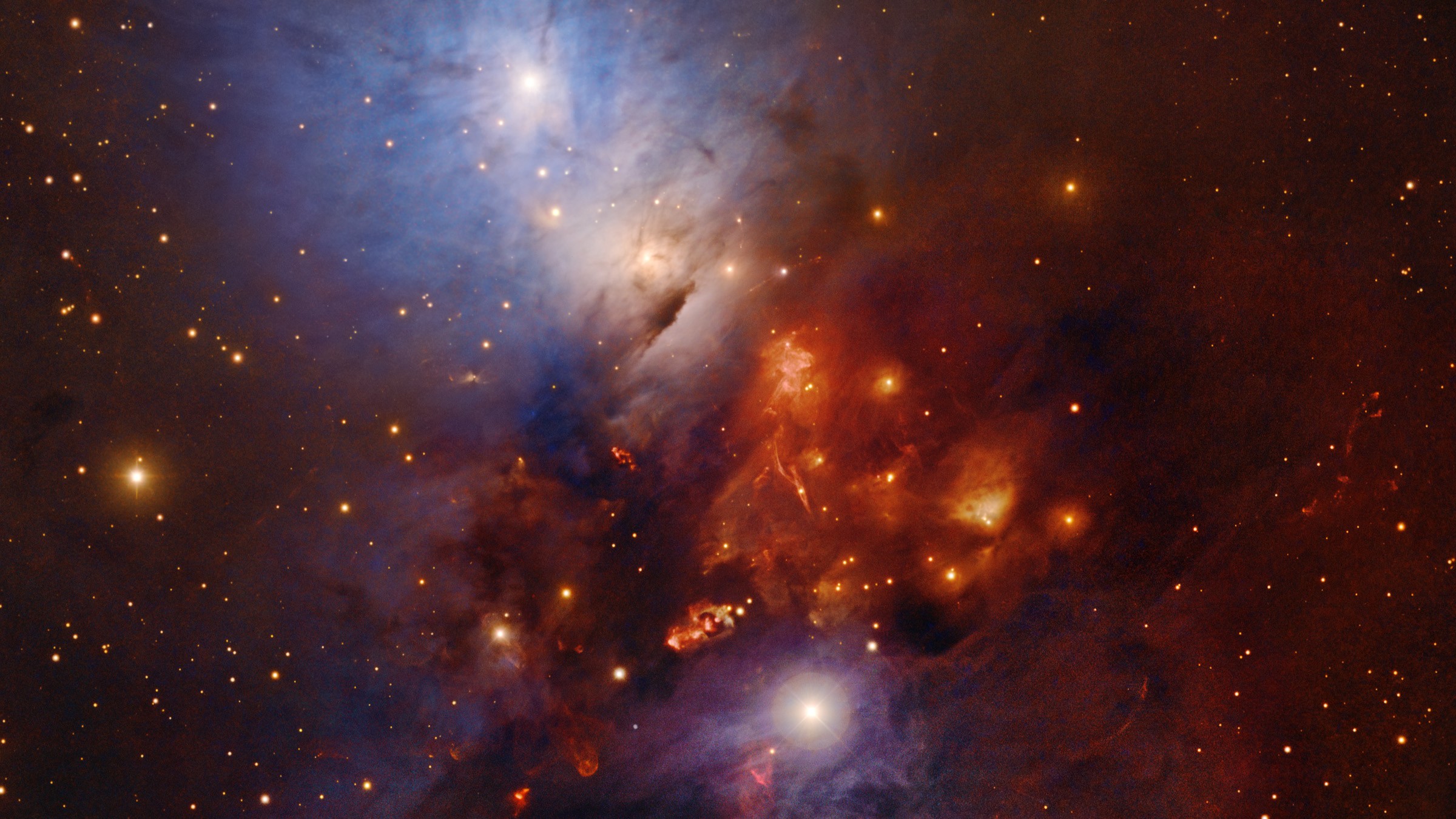 Stunning array of 400 rings in a 'reflection' nebula solves a 30-year-old star-formation mystery — Space photo of the week
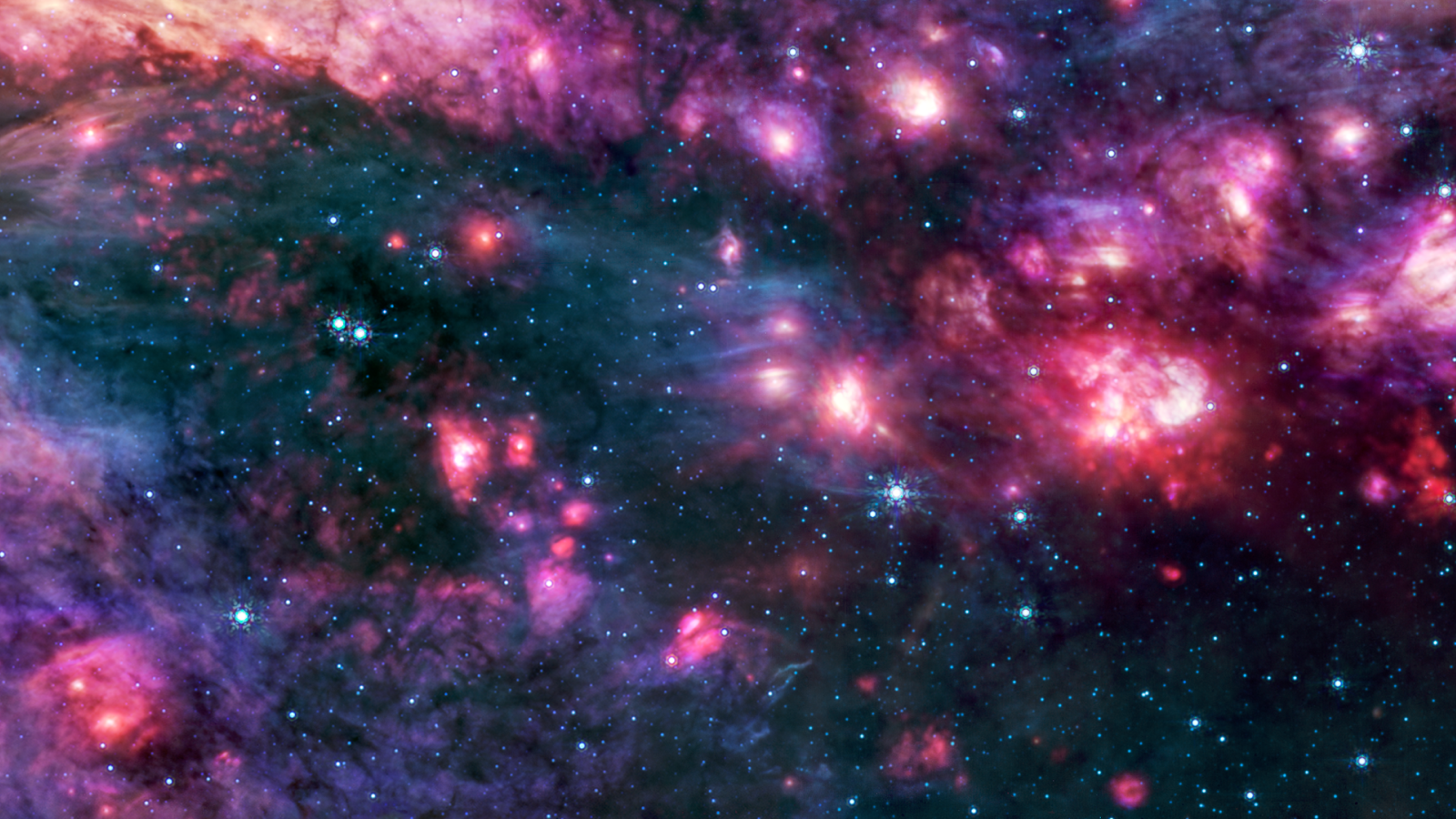 James Webb telescope spies a monstrous molecular cloud shrouded in mystery — Space photo of the week
Latest in Astronomy
James Webb telescope spies a monstrous molecular cloud shrouded in mystery — Space photo of the week
Latest in Astronomy
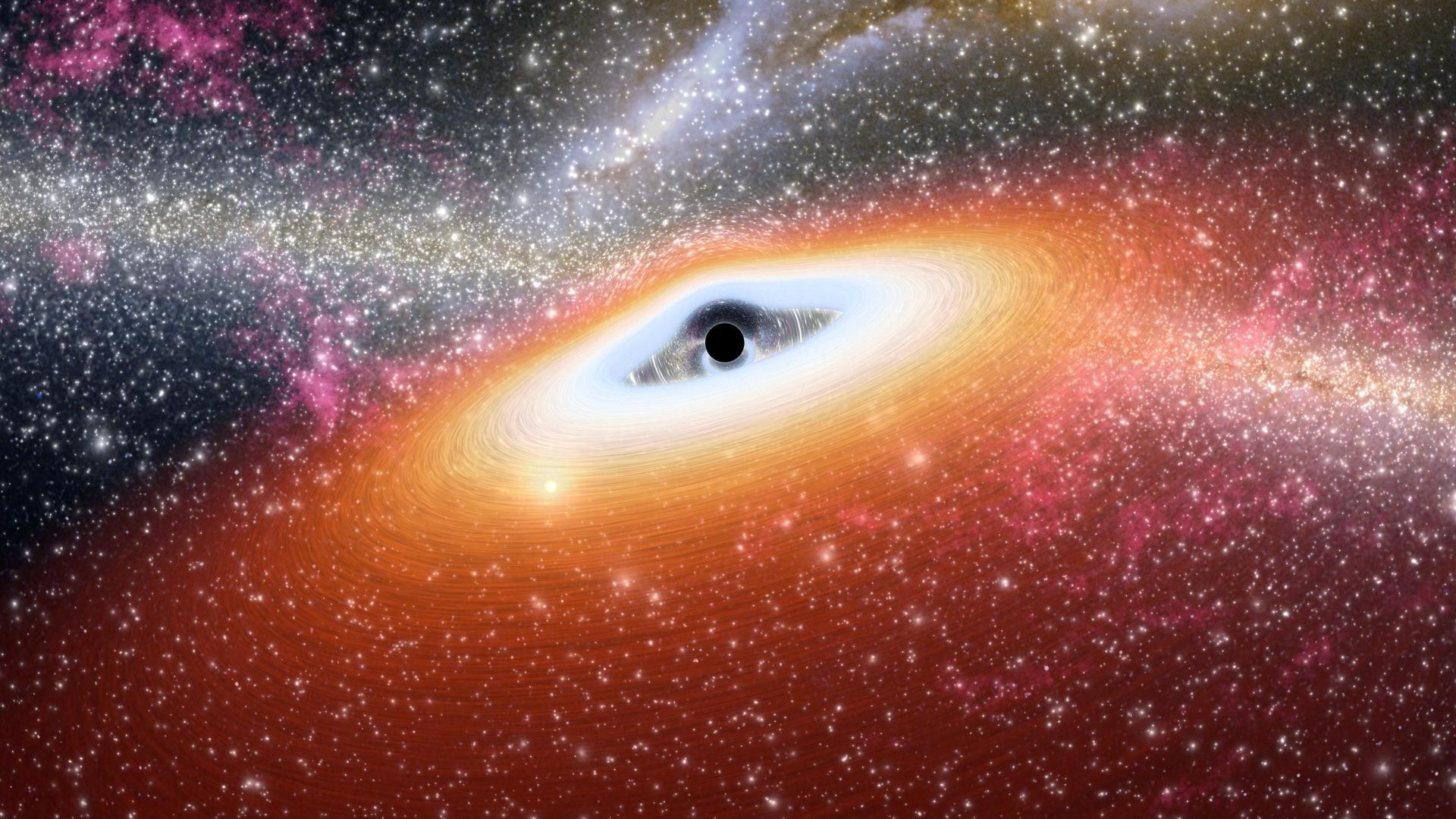 Science history: Stephen Hawking writes a tiny paper — and turns our understanding of black holes inside out — March 1, 1974
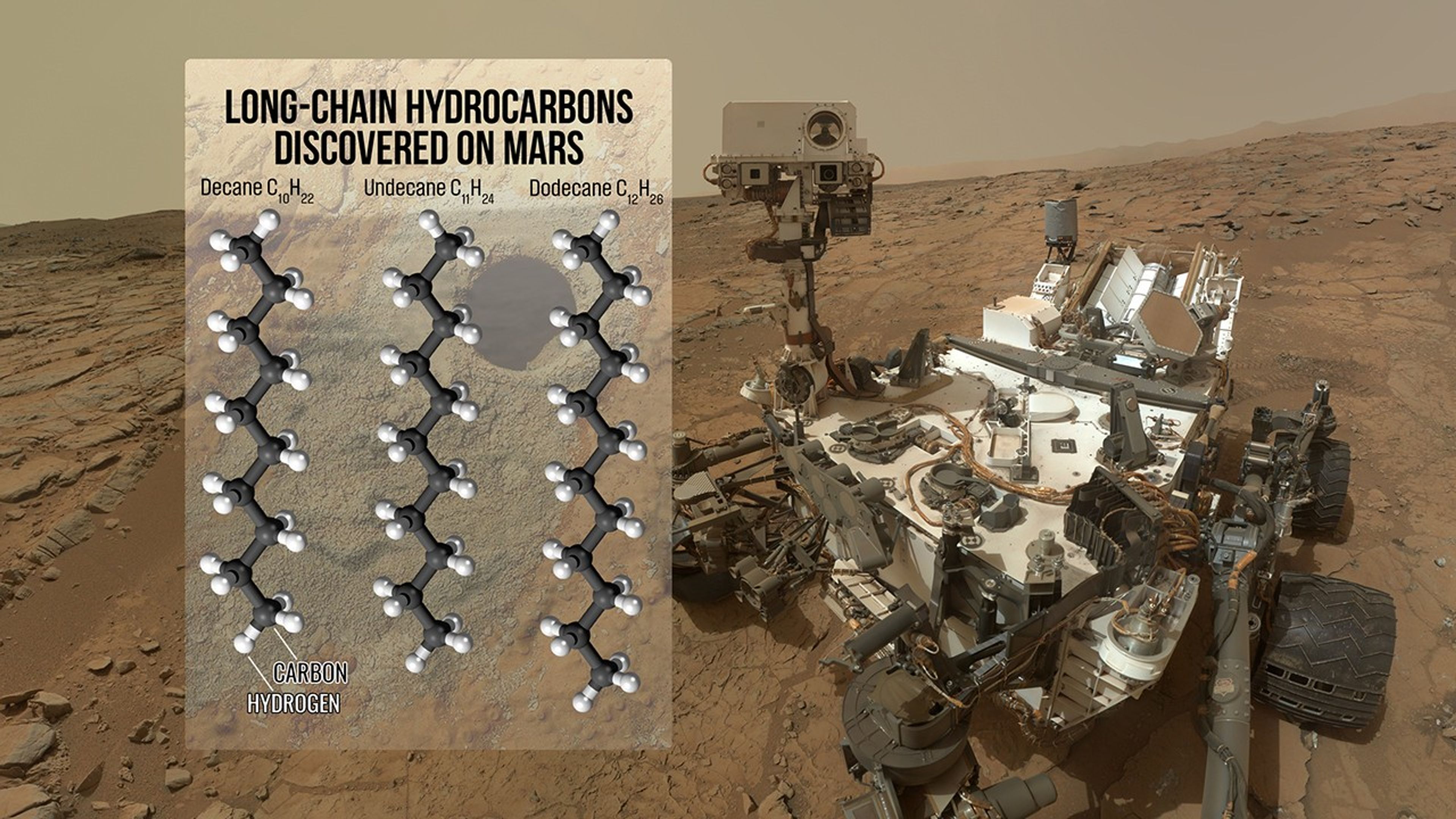 Giant string of organic molecules on Mars may be one of the best signs of life yet
 The sun just experienced its first 'spotless days' in 4 years — but we're not in the clear yet
 March could be the best month for the northern lights for nearly a decade
 Rubin Observatory alerts scientists to 800,000 changes in the sky in one night
 Giant 'spiderwebs' on Mars contain tiny egg-like structures that scientists 'can't quite explain,' NASA rover reveals
Latest in Features
NASA telescope spots first alien 'astrosphere' around a sun-like star: Space photo of the week
Giant 'spiderwebs' on Mars contain tiny egg-like structures that scientists 'can't quite explain,' NASA rover reveals
Latest in Features
NASA telescope spots first alien 'astrosphere' around a sun-like star: Space photo of the week
 'We're starting to find a lot more weirdness': These strange animals can control their body heat
 Do you weigh more when an elevator goes up or when it comes down?
 Did the Vikings reach Maine?
 Lady of Elche: A 2,400-year-old bust of a mysterious 'highborn' woman from pre-Roman Spain
 Science history: Carbon-14 is discovered, opening a window into past civilizations — Feb. 27, 1940
LATEST ARTICLES
Science history: Carbon-14 is discovered, opening a window into past civilizations — Feb. 27, 1940
LATEST ARTICLES- 1Lady of Elche: A 2,400-year-old bust of a mysterious 'highborn' woman from pre-Roman Spain
- 2Pain lasts longer in women, and immune cells may the culprit
- 3The 'sweet spot' of overconfidence — project a bit to be perceived as competent, but don't be 'too seduced,' a cognitive neuroscientist explains in a Q&A
- 4Ancient Greek mystery cult priestesses may have chemically tweaked fungus to induce psychedelic hallucinations
- 5March could be the best month for the northern lights for nearly a decade