- Archaeology
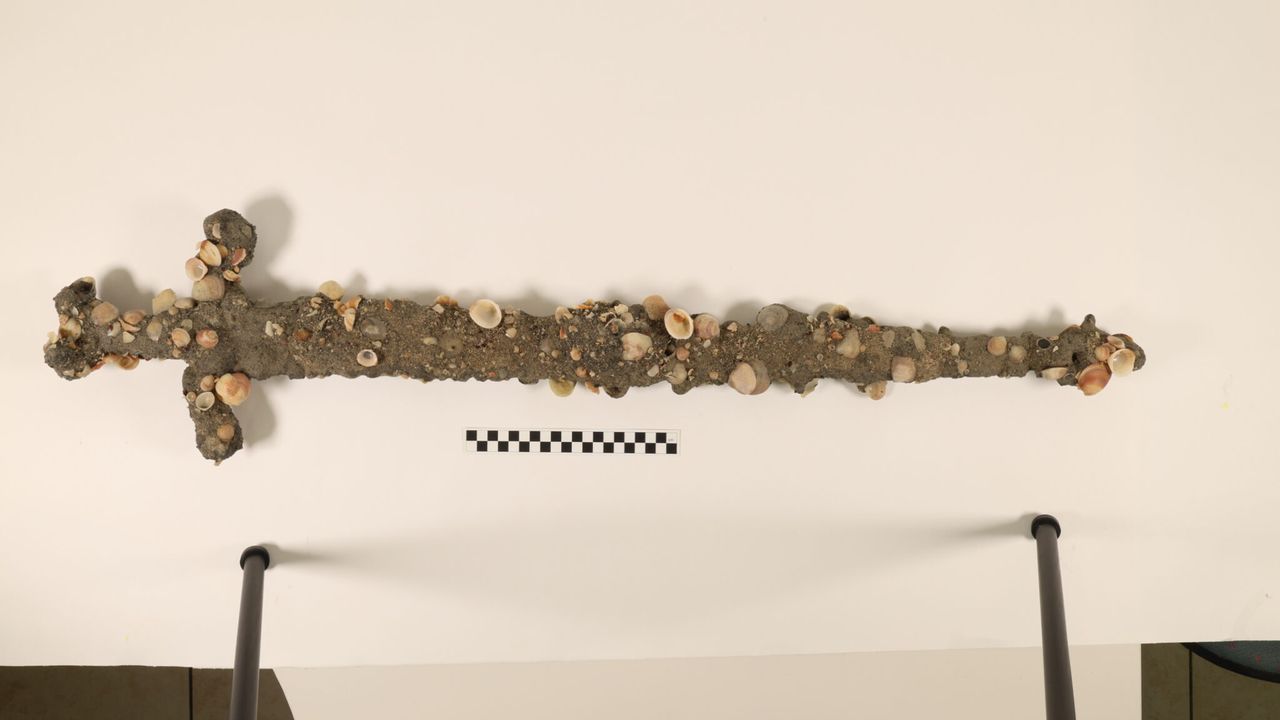
A 12th-century sword spotted jutting out of the seabed in Israel was designed for one-handed combat during the Crusades.
When you purchase through links on our site, we may earn an affiliate commission. Here’s how it works.
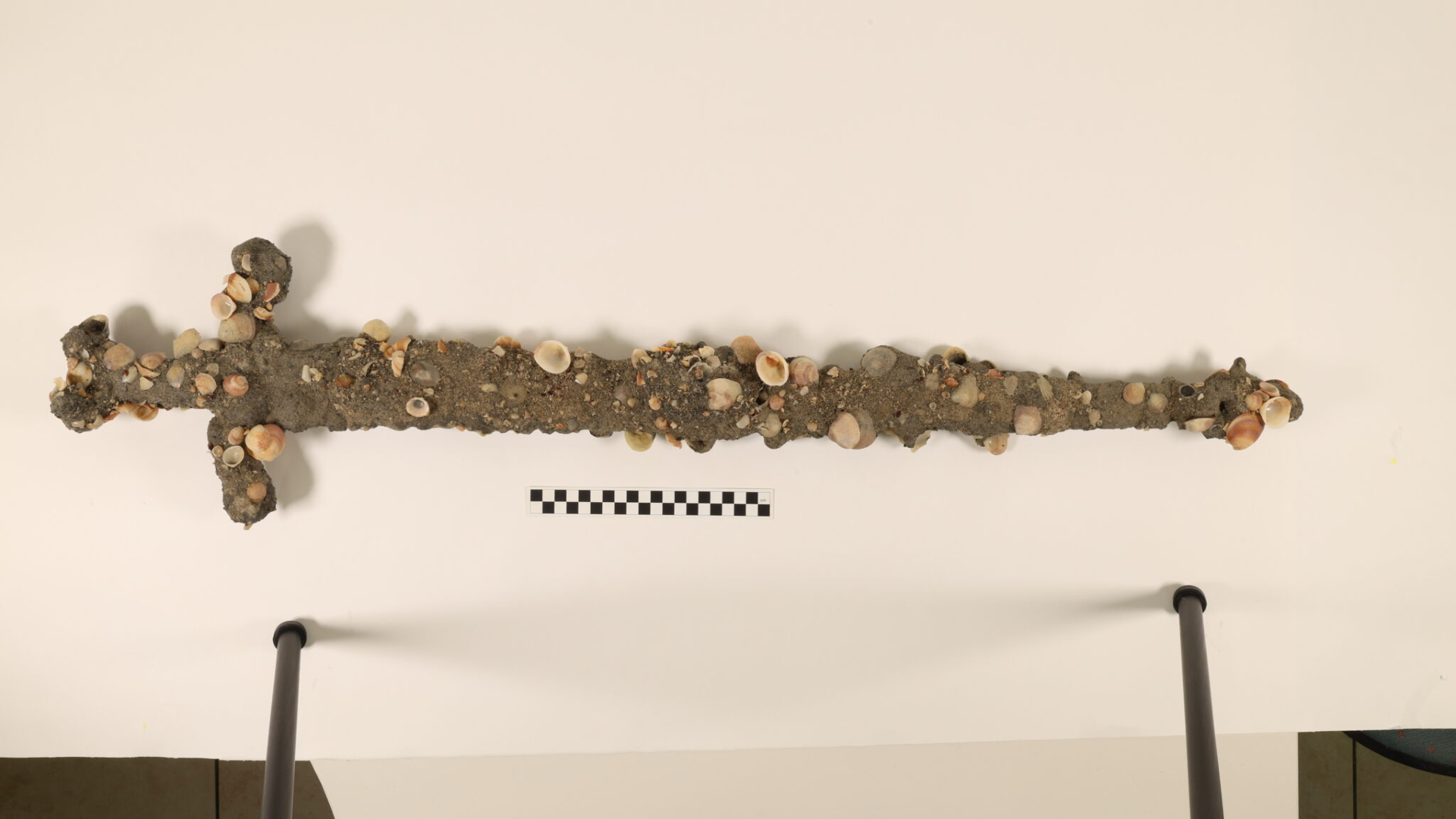 This 12th-century sword was found by a graduate student and studied via a hospital CT scan.
(Image credit: Yoav Bornstein, University of Haifa)
This 12th-century sword was found by a graduate student and studied via a hospital CT scan.
(Image credit: Yoav Bornstein, University of Haifa)
- Copy link
- X
Get the world’s most fascinating discoveries delivered straight to your inbox.
Become a Member in Seconds
Unlock instant access to exclusive member features.
Contact me with news and offers from other Future brands Receive email from us on behalf of our trusted partners or sponsors By submitting your information you agree to the Terms & Conditions and Privacy Policy and are aged 16 or over.You are now subscribed
Your newsletter sign-up was successful
Want to add more newsletters?

Delivered Daily
Daily Newsletter
Sign up for the latest discoveries, groundbreaking research and fascinating breakthroughs that impact you and the wider world direct to your inbox.
Signup +
Once a week
Life's Little Mysteries
Feed your curiosity with an exclusive mystery every week, solved with science and delivered direct to your inbox before it's seen anywhere else.
Signup +
Once a week
How It Works
Sign up to our free science & technology newsletter for your weekly fix of fascinating articles, quick quizzes, amazing images, and more
Signup +
Delivered daily
Space.com Newsletter
Breaking space news, the latest updates on rocket launches, skywatching events and more!
Signup +
Once a month
Watch This Space
Sign up to our monthly entertainment newsletter to keep up with all our coverage of the latest sci-fi and space movies, tv shows, games and books.
Signup +
Once a week
Night Sky This Week
Discover this week's must-see night sky events, moon phases, and stunning astrophotos. Sign up for our skywatching newsletter and explore the universe with us!
Signup +Join the club
Get full access to premium articles, exclusive features and a growing list of member rewards.
Explore An account already exists for this email address, please log in. Subscribe to our newsletterA sword dating to the Crusades spent centuries entombed in sand and barnacles off the Mediterranean coast of Israel, until a university student spotted its hilt jutting from the seabed.
Shlomi Katzin, a graduate student in the Department of Maritime Civilizations at the University of Haifa, saw a group of divers with metal detectors while swimming and worried that they could be antiquity thieves, according to a translated statement from the university. After driving the group away, Katzin noticed the sword's hilt in the sand.
You may like-
 Medieval 'super ship' found wrecked off Denmark is largest vessel of its kind
-
 2,400-year-old fingerprint from mysterious sea raider found preserved on Scandinavia's oldest plank boat
-
 Anglo-Saxon children discovered buried with warrior gear in UK — perhaps as a nod to 'the men these children might have become'
"This is an extremely rare find that sheds light on the Crusader presence on the coasts of the country," Cvikel said in the statement. She noted that "only a handful of similar swords from the Crusader period" (A.D. 1095 to 1291) are known in the country, and that this "discovery contributes greatly to our understanding of the use of maritime anchorages and the lives of warriors during this period."
During the Crusades, Christians from Western Europe led a series of religious wars against Muslims, in large part to take control of the Holy Land. These religious wars were led by European knights sanctioned by the Catholic Pope. Artifacts like swords and shields reveal just how grisly the fighting was during this time.
The newfound 12th-century weapon is now giving archaeologists a rare look at the movements of medieval warriors along the Mediterranean coast. Researchers used a hospital CT scan to noninvasively see inside the sword without having to scrape away any of the marine buildup that had encrusted on its iron core.
RELATED STORIES—Mass grave of slaughtered Crusaders discovered in Lebanon
—Mysterious ceramic jars may actually be 900-year-old Crusader hand grenades
—Man digs up 1,000-year-old sword from Swedish Crusades in his yard in Finland
The scan revealed how hard the sea can be on ancient artifacts, as the blade appeared to be fractured and only a small portion of the original iron core remained. However, it did show that the sword was designed for one-handed combat and its build indicated that it likely belonged to a Crusader, possibly one who was Frankish.
Sign up for the Live Science daily newsletter nowContact me with news and offers from other Future brandsReceive email from us on behalf of our trusted partners or sponsorsBy submitting your information you agree to the Terms & Conditions and Privacy Policy and are aged 16 or over."In the Middle Ages, the sword became a symbol of The knights and knighthoods, as well as a symbol of the Christian faith," Sára Lantos, a researcher in the Department of Maritime Civilizations at the School of Archaeology and Maritime Civilizations at the University of Haifa, said in the statement. "The discovery and study of such a symbolic and personal object are rare, and enrich our knowledge of the material culture of the Crusader period. In addition, they give us a unique opportunity to learn about the lives of the Frankish knights in the Holy Land."
Research into the sword is ongoing. The previous sword unearthed by Katzin in 2021 also dated to the Crusades. Typically, swords were not discarded during that period because their metal was valuable and could be recycled. So it's likely that these swords' owners lost them at sea, which would have likely been a hardship or even fatal.
 Kenna Hughes-CastleberryContent Manager, Live Science
Kenna Hughes-Castleberry is the Content Manager at Live Science. Formerly, she was the Content Manager at Space.com and before that the Science Communicator at JILA, a physics research institute. Kenna is also a book author, with her upcoming book 'Octopus X' scheduled for release in spring of 2027. Her beats include physics, health, environmental science, technology, AI, animal intelligence, corvids, and cephalopods.
View MoreYou must confirm your public display name before commenting
Please logout and then login again, you will then be prompted to enter your display name.
Logout Read more
Medieval 'super ship' found wrecked off Denmark is largest vessel of its kind
2,400-year-old fingerprint from mysterious sea raider found preserved on Scandinavia's oldest plank boat
Anglo-Saxon children discovered buried with warrior gear in UK — perhaps as a nod to 'the men these children might have become'
 Medieval gold ring with dazzling blue gemstone discovered in Norway is a 'fantastically beautiful and rare specimen'
 1,100-year-old burials of elite warriors and their ornate weapons discovered in Hungary
 Detectorists find Anglo-Saxon treasure hoard that may have been part of a 'ritual killing'
Latest in Archaeology
Detectorists find Anglo-Saxon treasure hoard that may have been part of a 'ritual killing'
Latest in Archaeology
 Climate disasters caused societal upheaval 3,000 years ago in China, study of 'oracle bones' hints
 Stone Age woman was buried like a man, revealing flexible gender roles 7,000 years ago in Hungary
 9 ways people have modified their bodies since the dawn of time, from foot binding to castration
 Ancient 'alien-like' skulls have been found on every continent but Antarctica. Anthropologists are starting to figure out why.
 Gold coin discovered by a metal detectorist in the UK may have been dropped by a Viking invader from the Great Heathen Army
 Stone Age boy in Sweden was buried in deerskin and a woodpecker headdress, archaeologists discover
Latest in News
Stone Age boy in Sweden was buried in deerskin and a woodpecker headdress, archaeologists discover
Latest in News
 Planting trees in the sea could act as a huge carbon sink and save millions of dollars in storm damage every year. What is stopping us from doing it?
 Scientists find 2 marsupial species, thought to have gone extinct 6,000 years ago, living in the forests of New Guinea
 'Striking' footage captures the moment a red fox preys on a wolf pup — a behavior never seen on film before
 'City killer' asteroid will narrowly miss the moon, James Webb Telescope reveals
 Groundbreaking new drug shows promise for treating children with a devastating form of epilepsy
 Scientists taught robots to swim through mazes using Einstein's relativity
LATEST ARTICLES
Scientists taught robots to swim through mazes using Einstein's relativity
LATEST ARTICLES 1One of the most accurate smart scales we have tested is now at its lowest-ever price
 - 2Scientists find 2 marsupial species, thought to have gone extinct 6,000 years ago, living in the forests of New Guinea
- 3'Striking' footage captures the moment a red fox preys on a wolf pup — a behavior never seen on film before
- 4Could gut microbes hold the secret to aging well? A researcher unpacks the emerging science
- 5China puts a sodium-ion battery into an EV for the first time — it can drive 248 miles on a single charge