Live Science Verdict
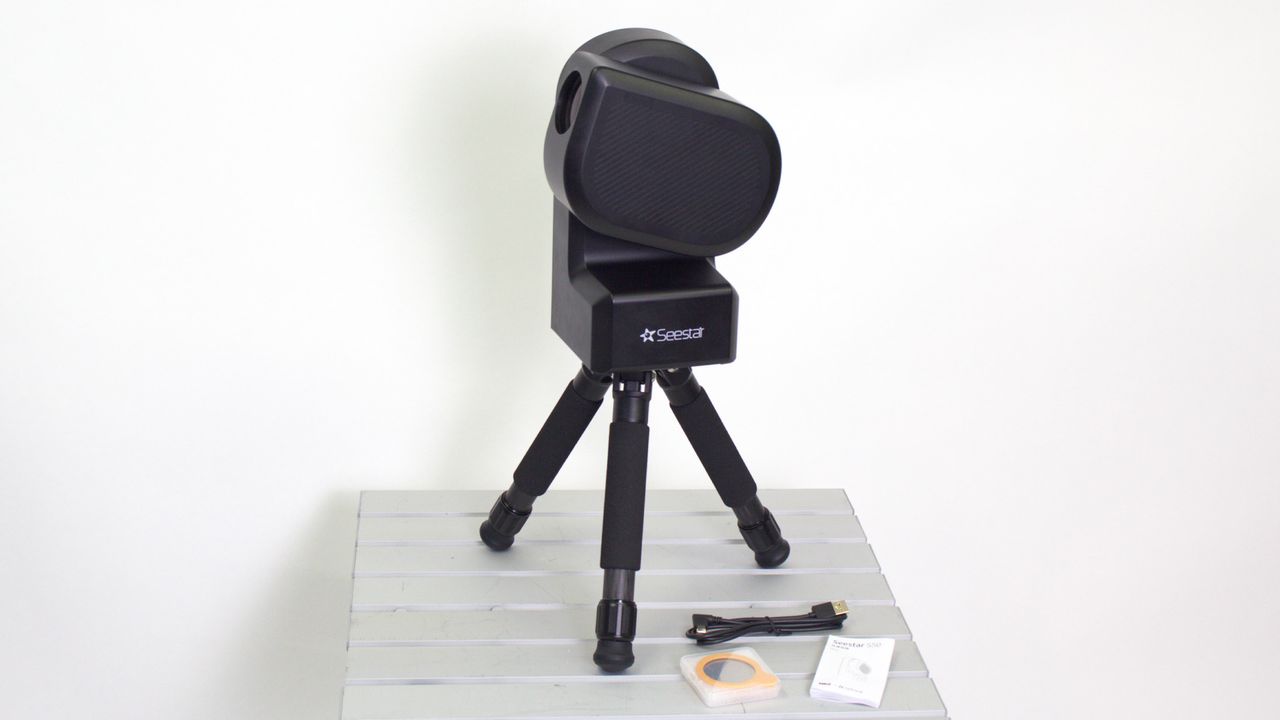
The SeeStar S50 is a small, inexpensive smart telescope that can take images of deep sky objects that rival those of much larger instruments.
Check Amazon Check Walmart Pros- +
Excellent for deep-sky imaging
- +
Compact and lightweight package
- +
App has step-by-step instructions and tutorials
- +
Has a built-in light pollution filter
- -
Regular app updates mean frequent relearning
- -
EQ mode requires purchasing additional gear
- -
Not best suited for lunar or planetary imaging
- Best smart telescopes in 2026 to photograph the lunar eclipse
- Best beginner telescopes 2026: Start your stargazing journey
- Best small telescopes 2026: See the total lunar eclipse
Why you can trust Live Science Our expert reviewers spend hours testing and comparing products and services so you can choose the best ones for you. Find out more about how we test.
Jump to:- Design
- Performance
- Functionality
- Verdict
- Related products
Most amateur astronomers, and even people with only a casual interest in stargazing, have heard of smart telescopes or “smartscopes” — small-aperture robotic telescopes that take images of sky objects with little human intervention. Smartscope users view the astrophotos they capture on smart devices, phones or tablets; there is no eyepiece for visual observing.
SpecificationsAperture: 50 mmFocal length: 250 mmFocal ratio: f/5Sensor: 2.1-megapixel Sony IMX462 CMOS sensor (color)Resolution: 1920 x 1080 pixelsBattery: Lithium, rechargeable with USB-C chargerBattery capacity: 5AhBattery life: 3.5 – 5 hoursConnectivity: Wi-fi (Bluetooth used in initial setup)Weight: 5.51 lbs / 2.5 kg
ZWO SeeStar S50 review
ZWO SeeStar S50: Design
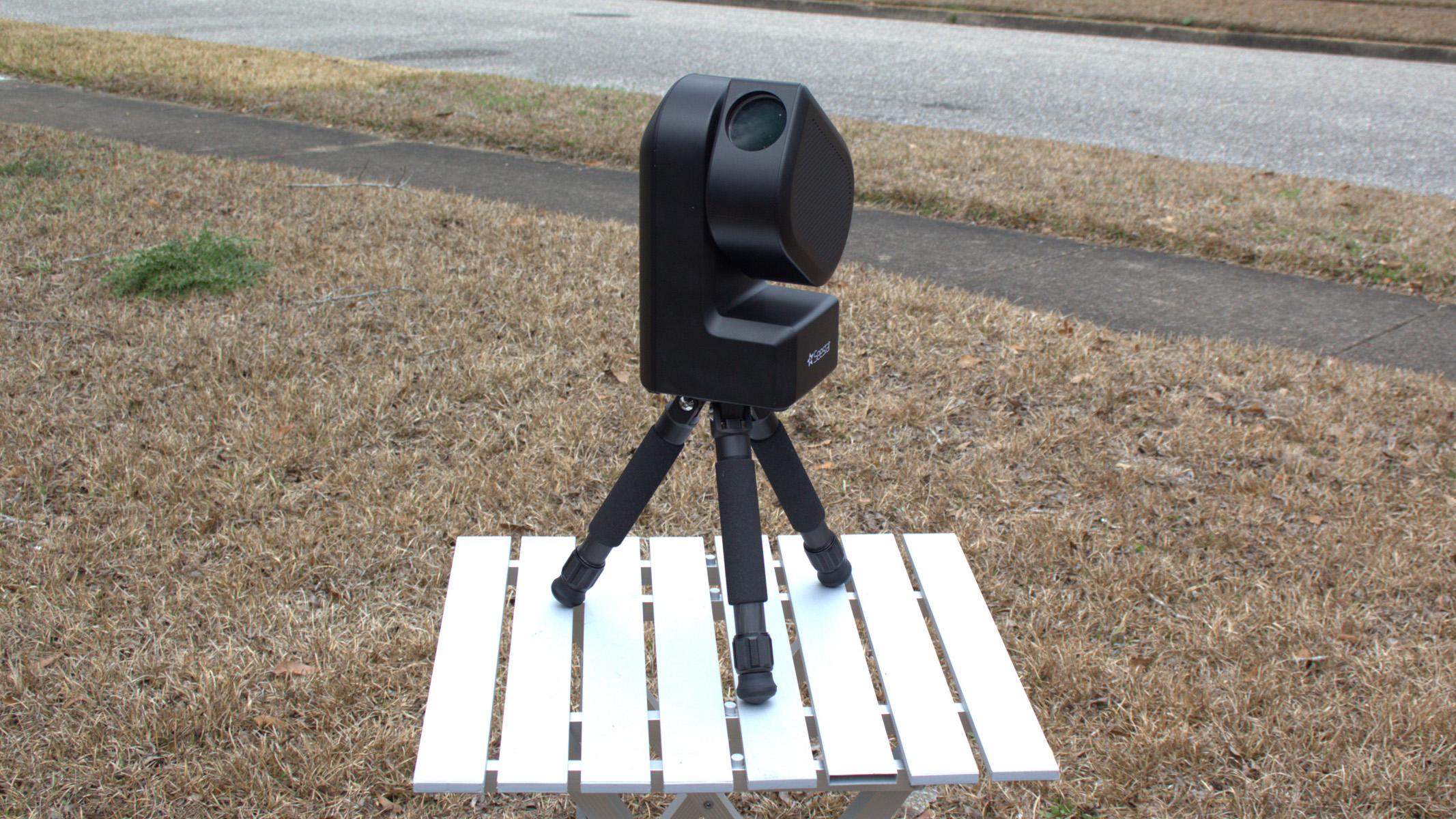
- A compact and lightweight package is ideal for travel
- Works in either alt-azimuth or equatorial mode
- Everything is controlled via the accompanying app
The SeeStar S50 smartscope is an apochromatic (color-free) refractor with an aperture of 50 mm and a focal length of 250 mm. The heart of the S50 is its built-in camera, which features a Sony IMX462 2.1-megapixel, 1920 x 1080 color sensor that is well-matched to the SeeStar’s 0.73 x 1.3-degree field of view. There is 64GB of internal memory for storing astrophotos. Like other smartscopes, the S50 takes multiple short exposures and stacks them into finished astrophotos.
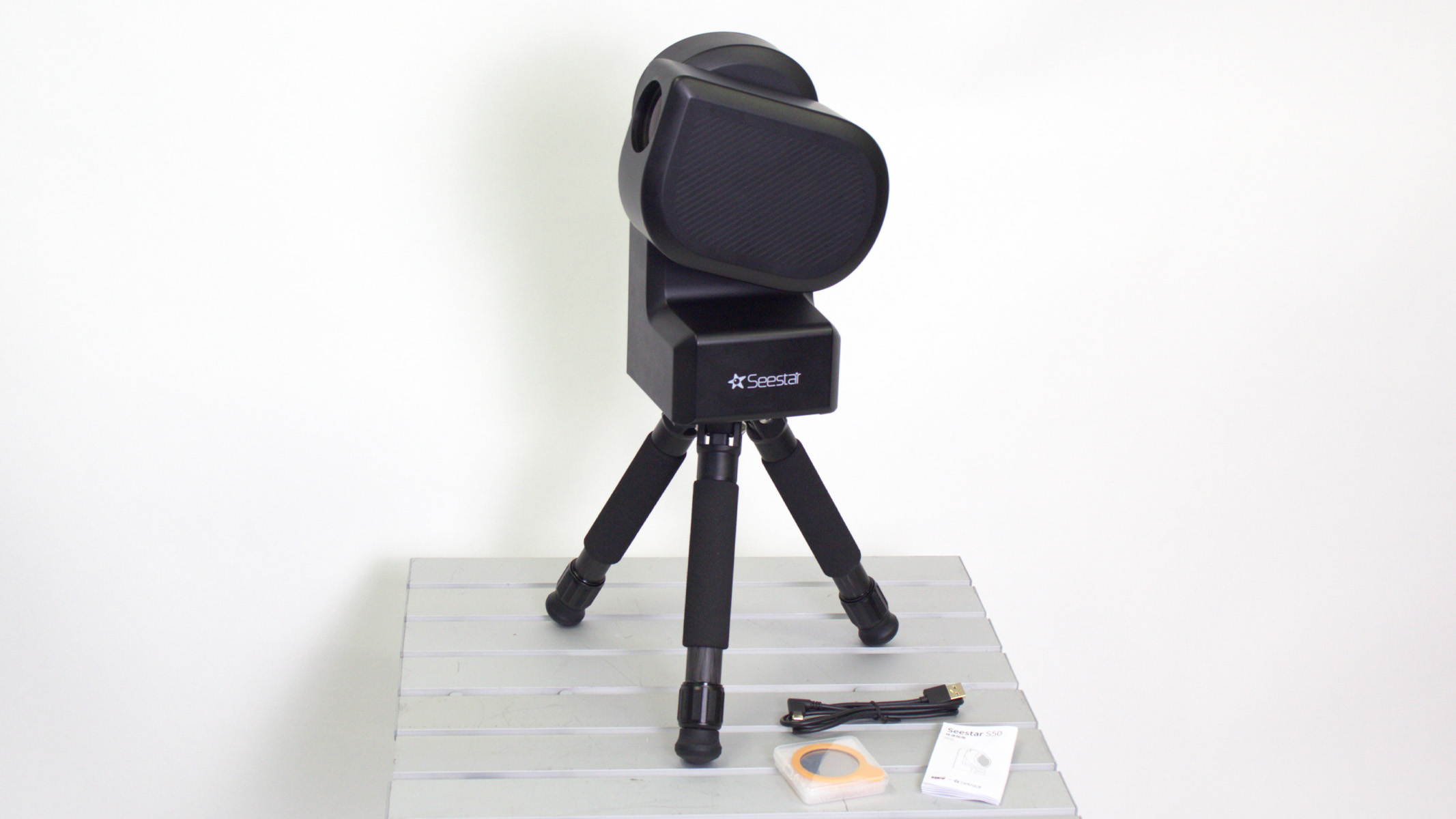
The S50’s features include GoTo and tracking motors that can work in either altazimuth or equatorial mode, and Wi-Fi and Bluetooth support. It has a built-in light pollution reduction (LPR) filter for imaging from light-polluted locations. There’s even an internal dew heater to keep the optics clear on damp nights. All this comes in a compact, lightweight package weighing 5.5 pounds (2.5 kilograms) and measuring 5.6 x 5.1 x 10.1 inches (142.5 x 130 x 257 millimeters).
When a new owner opens the SeeStar box, the first item they'll encounter is a carrying case. Though it’s made of a Styrofoam-like material, it holds up well. Inside is the black, plastic-bodied S50, which looks more like a coffee maker than a telescope. Also in the case is a carbon fiber tabletop tripod. It only raises the telescope 14 inches (355 mm) off the ground, but is usable. Finally, there’s a USB charging cable, a press-in solar filter and a brief instruction pamphlet.
Unlike conventional computerized telescopes, the S50 has no hand control. Everything is done from a phone or tablet, so the first step in getting it ready to take astrophotos is downloading the free SeeStar app from the Google Play Store or the Apple App Store. There is no PC version, but the app will run on newer Apple computers with M-type processors.
ZWO SeeStar S50: Performance

- App has easy-to-follow instructions
- "Tonight's Best" offers a simple way to locate objects
- Bright objects like M42 are easy to see with brief exposures
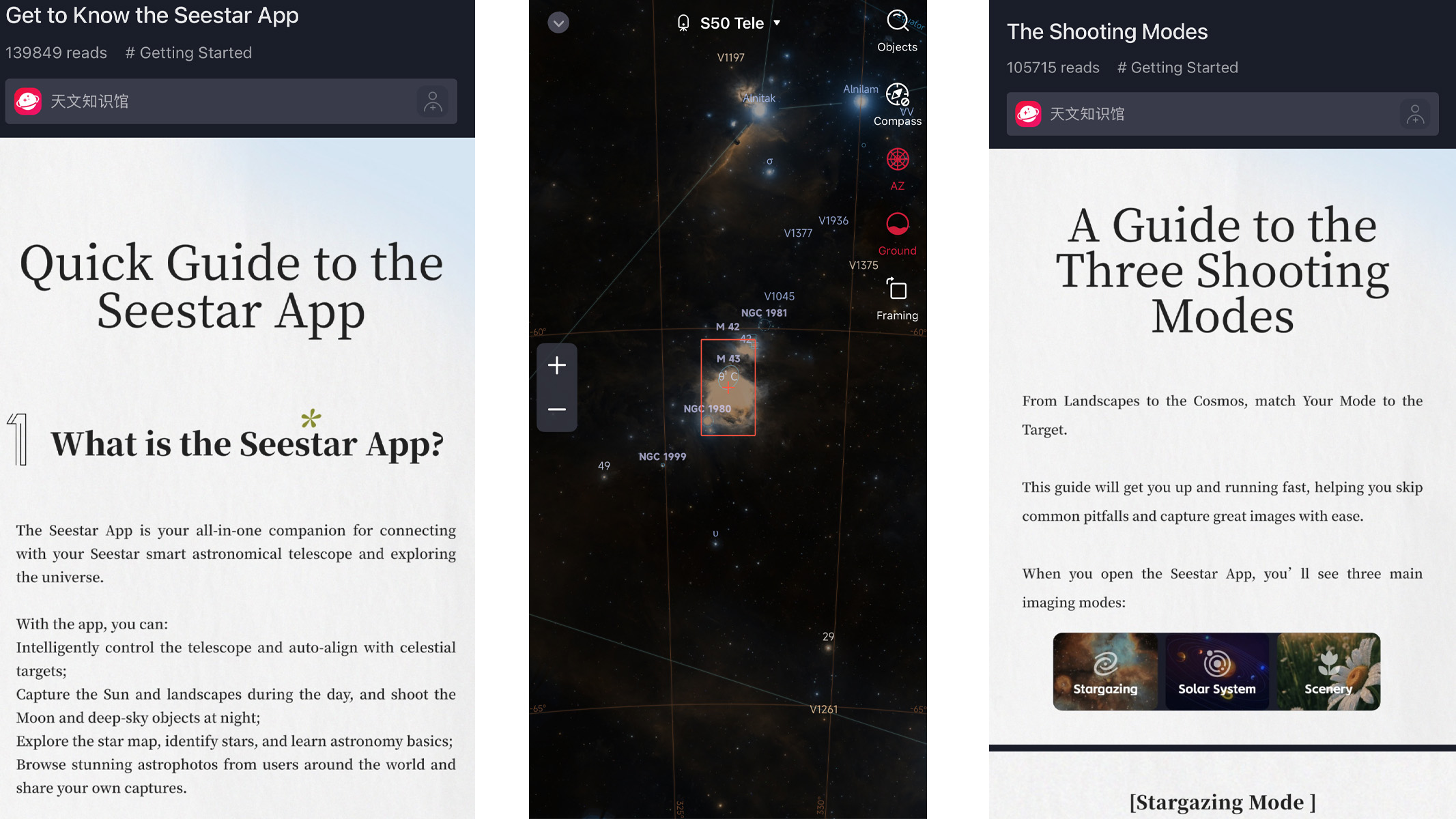
The S50 doesn’t need much in the way of a manual, because the app has step-by-step instructions and tutorials. Turn on the SeeStar by holding down the power button until the scope beeps twice, then release the button. When this talking scope announces, “Power on, ready to connect,” open the app and follow its instructions.
Sign up for the Live Science daily newsletter nowContact me with news and offers from other Future brandsReceive email from us on behalf of our trusted partners or sponsorsBy submitting your information you agree to the Terms & Conditions and Privacy Policy and are aged 16 or over.The SeeStar app offers several ways to select targets, including by selecting from a list of Tonight’s Best. An easy way to locate other objects is by using the built-in and comprehensive star atlas, which is accessed by tapping the SkyAtlas icon at the bottom of the home screen. To image the Orion Nebula, M42, for example, select “Object” and enter “M42” in the atlas search field.
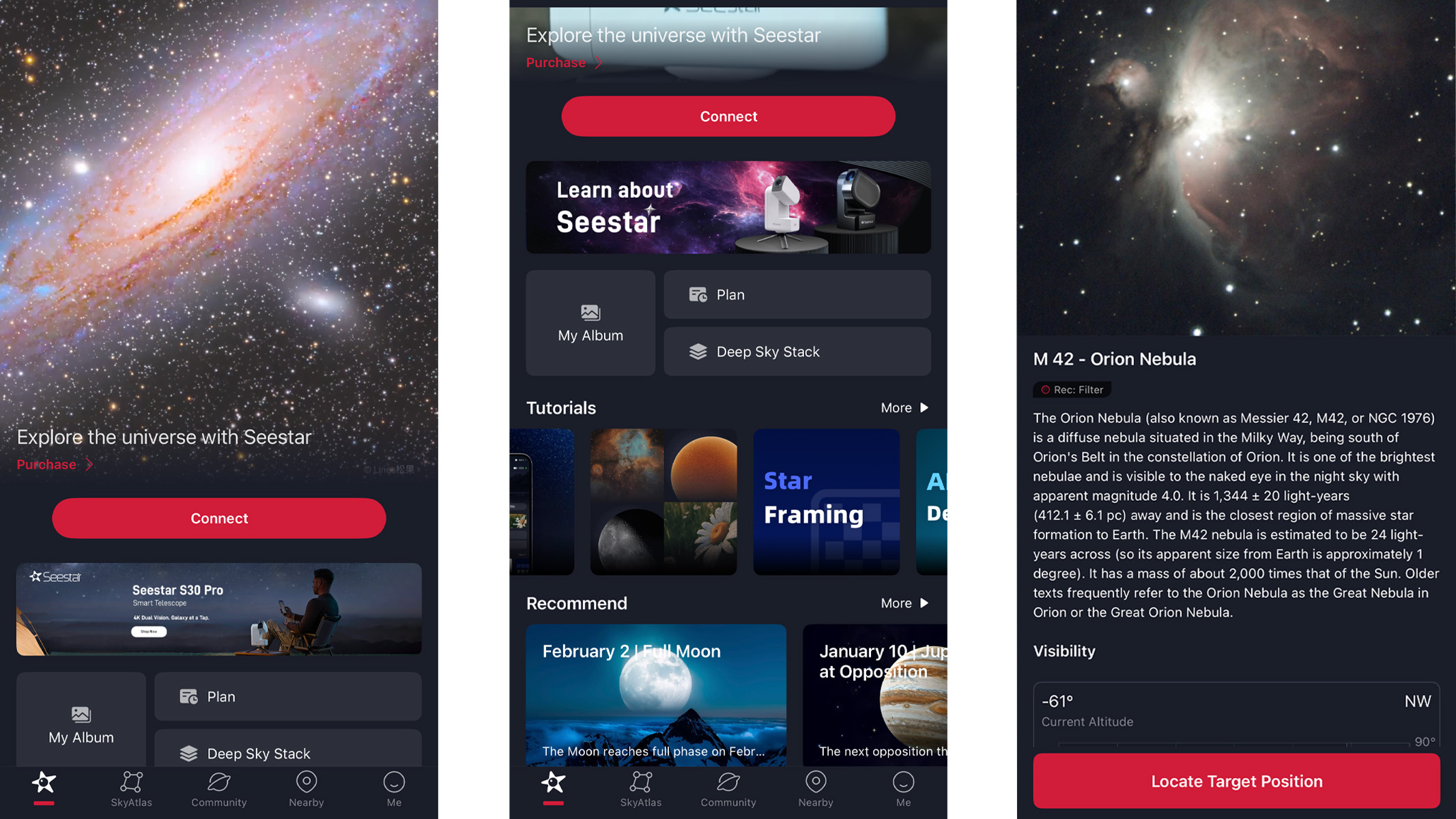
After the nebula is on the atlas screen, pressing “go-to” sends the SeeStar to M42. When the telescope arrives at its destination, it takes images of the star field and compares them to charts in its memory (“plate-solving”) to ensure it’s on the correct spot. It is quite accurate.
Next, the app shifts to a “live” camera display and autofocuses. A bright object like M42 is easy to see in the brief exposures. After the telescope has focused, tapping the red “shutter” button at the bottom of the screen starts it taking 10-second exposures (the default). The target object will begin to “develop” as exposures are added together.
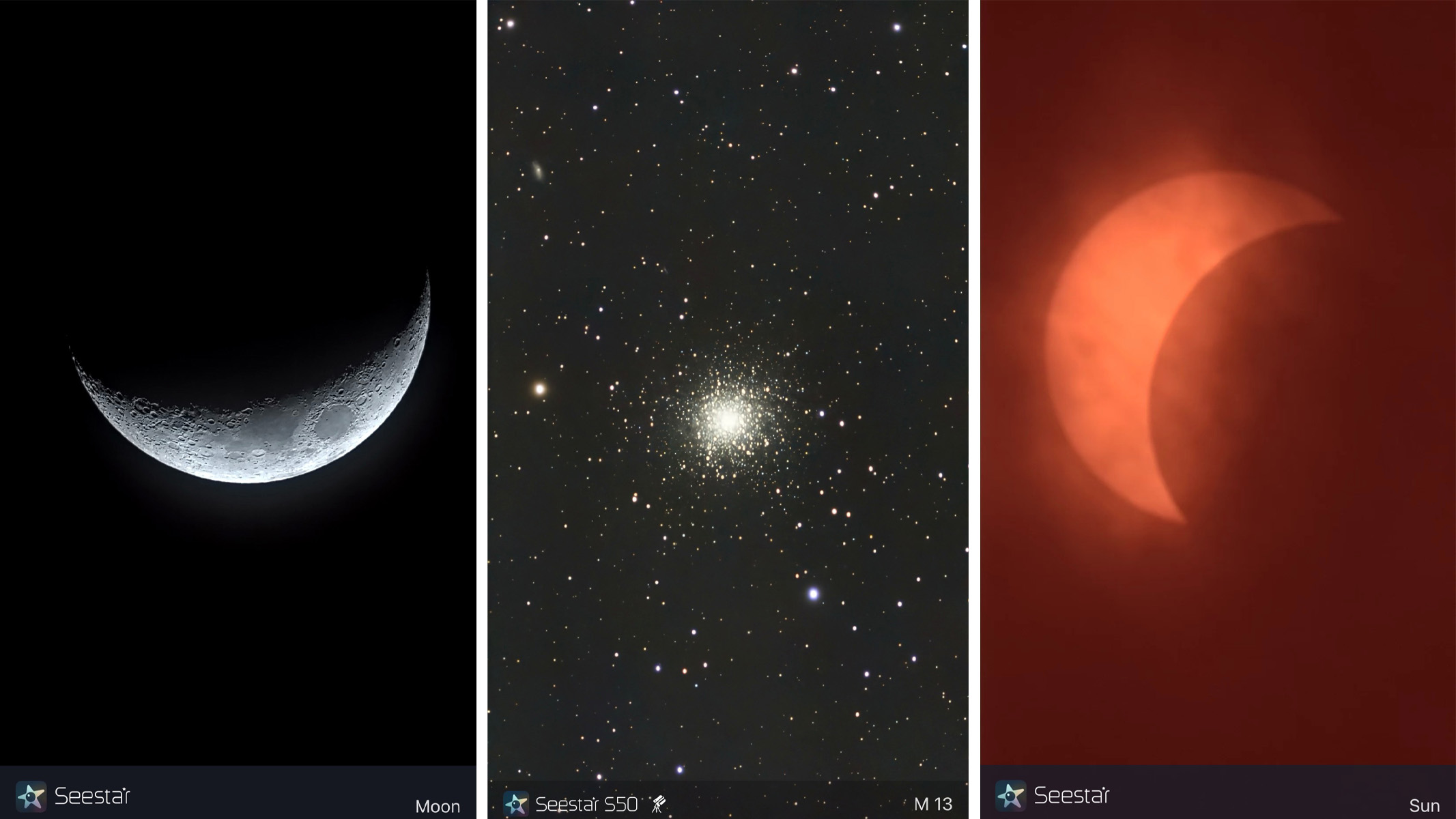
In less than a minute, the SeeStar can produce a color image of the Orion Nebula that shows far more detail than can be seen visually in large telescopes.
ZWO SeeStar S50: Functionality
- Connection via Bluetooth and WiFi
- App can feel overwhelming at first, but you soon learn the ropes
- Can be connected to your home network
The first time the S50 is used, it must be paired to your smart device with Bluetooth. Once Bluetooth is active, the scope will connect directly to the phone or tablet with Wi-Fi. The next time the SeeStar is used, Bluetooth will not be required.
At first, the SeeStar app seems overwhelming, with many selections and options in unintuitive places. However, with a little experience, the process of taking astrophotos becomes easier. It would help if ZWO didn’t keep changing the app to the point where it frequently needs to be relearned. However, the telescope’s outstanding pictures are worth a little practice. The SeeStar itself is remarkably problem-free for such a relatively inexpensive instrument.
This direct Wi-Fi connection works well and is handy for use at dark sites. At home, however, it’s best to use “Station Mode.” That allows the telescope to connect to a home network instead of directly to a phone or tablet. In Station Mode, your smart device can be used as normal and doesn’t need to remain close to the scope.
Should you buy the ZWO SeeStar S50?
Is ZWO’s SeeStar S50 perfect? Of course not, no telescope is; there are a few problems. The major one is that ZWO updates the SeeStar app so frequently. While adding new features is great, bugs — sometimes serious ones — are often introduced as well.
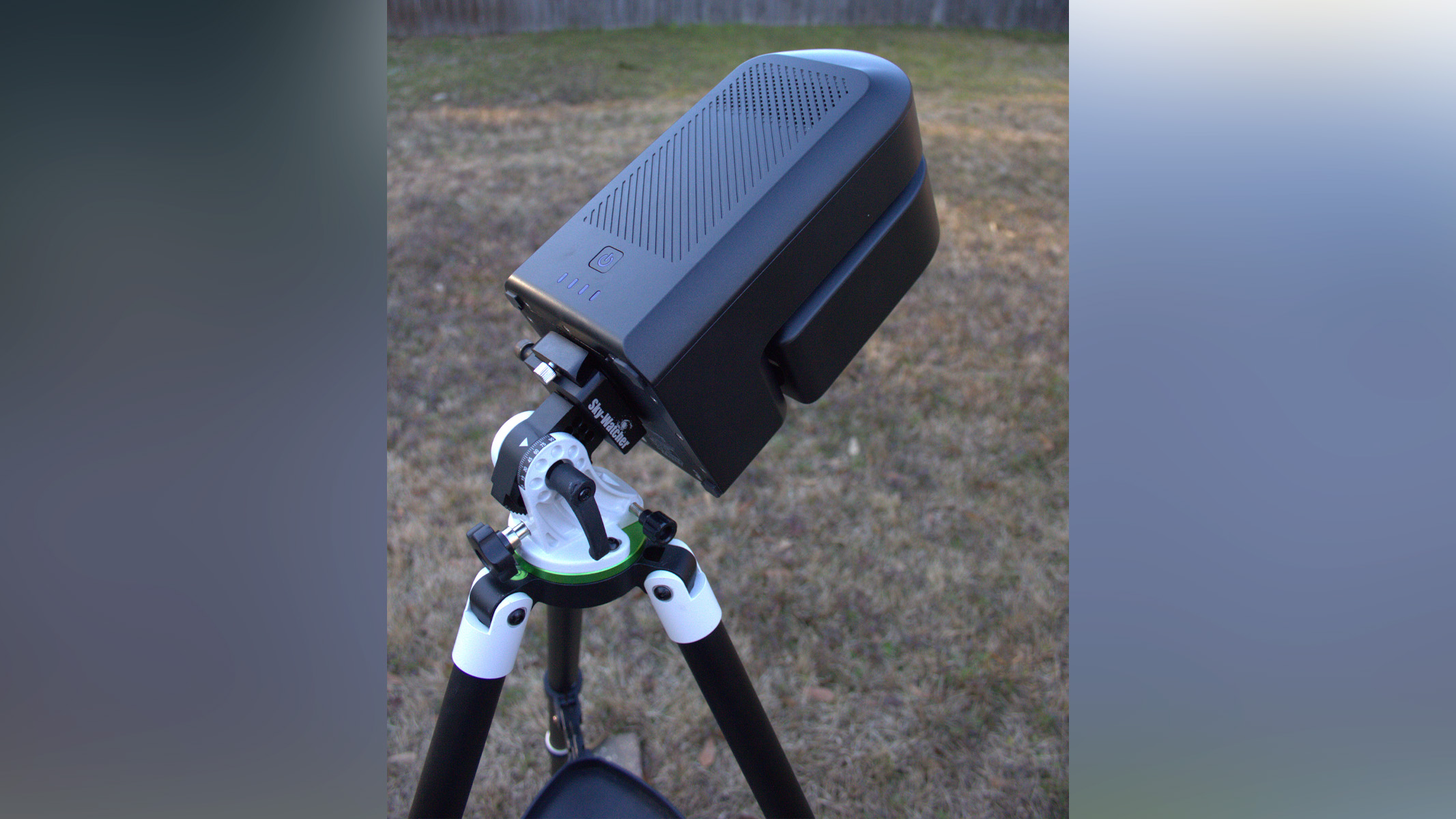
The SeeStar produces impressive out-of-the-box results in altazimuth mode, but 10-second exposures (the scope can expose for as long as 60 seconds) are practically mandatory. Going to 20 seconds, which produces less noisy pictures, results in dropped frames and trailed stars. There is a solution, however: equatorial or “EQ” mode.
Related articlesBest smart telescopesBest telescopesBest astrophotography camerasBest beginner astrophotography camerasBest small telescopesBest beginner telescopesBest telescopes for kidsBest astrophotography lensesBest telephoto zoom lenses
In EQ mode, the SeeStar is tilted over so its body points roughly at the north (or south) celestial pole. The app includes a built-in routine that allows the S50 to be precisely polar-aligned. Using EQ mode requires the purchase of additional gear, however: either a full-sized camera tripod with a tiltable head, or one of the equatorial wedges sold for the SeeStar. Under most conditions, EQ mode produces markedly superior pictures.
Who is the SeeStar specifically not for? Those who are most interested in the moon and planets. While it can produce nice whole-disk images of the sun (with the included solar filter) and the moon, planets will look very small with only 250 mm of telescope focal length.
If this product isn't for you
 If you prefer an observational telescope
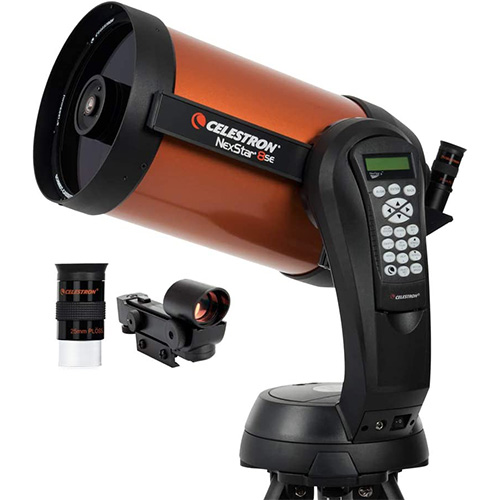
If you'd rather see the cosmos with your own eyes than on your screen, you can't go wrong with the well-loved Celestron NexStar 8SE — known as the world's most beloved telescope.
Read our full Celestron NexStar 8SE review
 If you want the best smart telescope
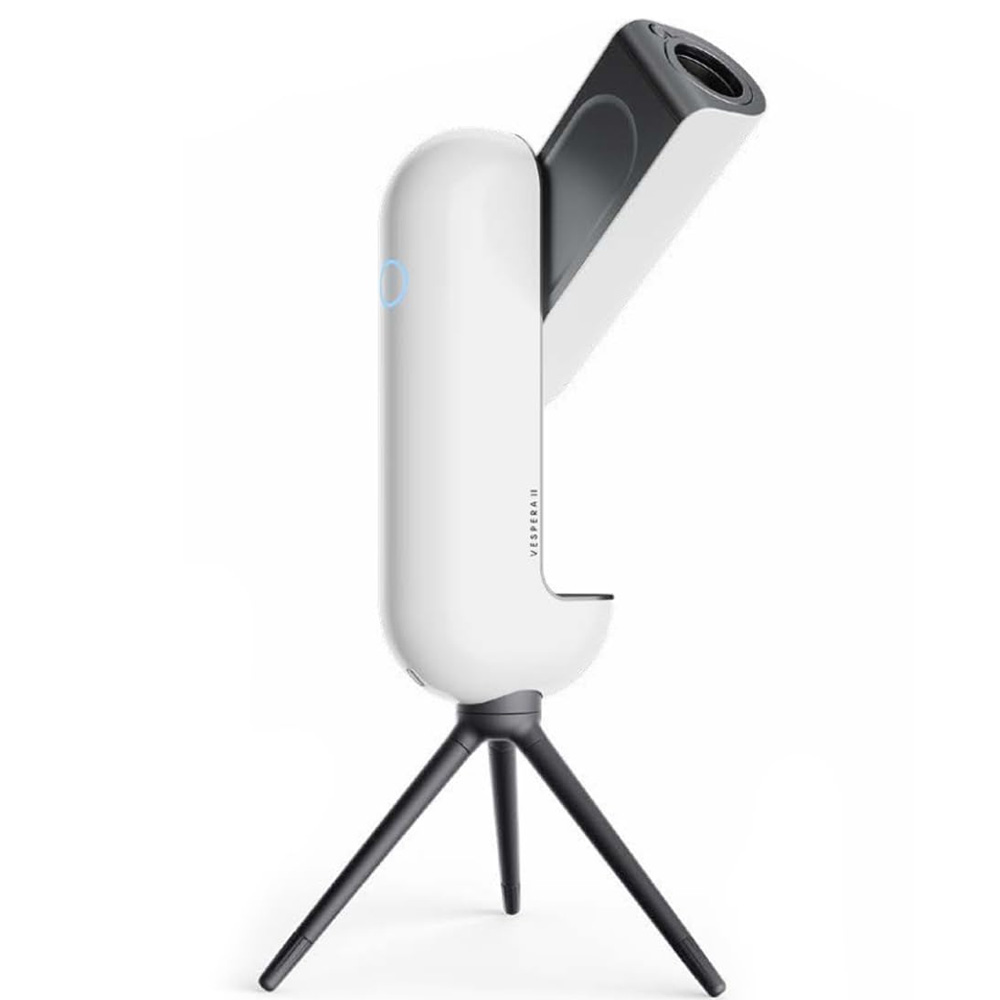
If you'd rather invest more into one of the best value for money telescopes you can buy, we'd recommend the Vaonis Vespera II. The images are stunning and it's a very reasonable price compared to some of its competitors.
Read our full Vaonis Vespera II review
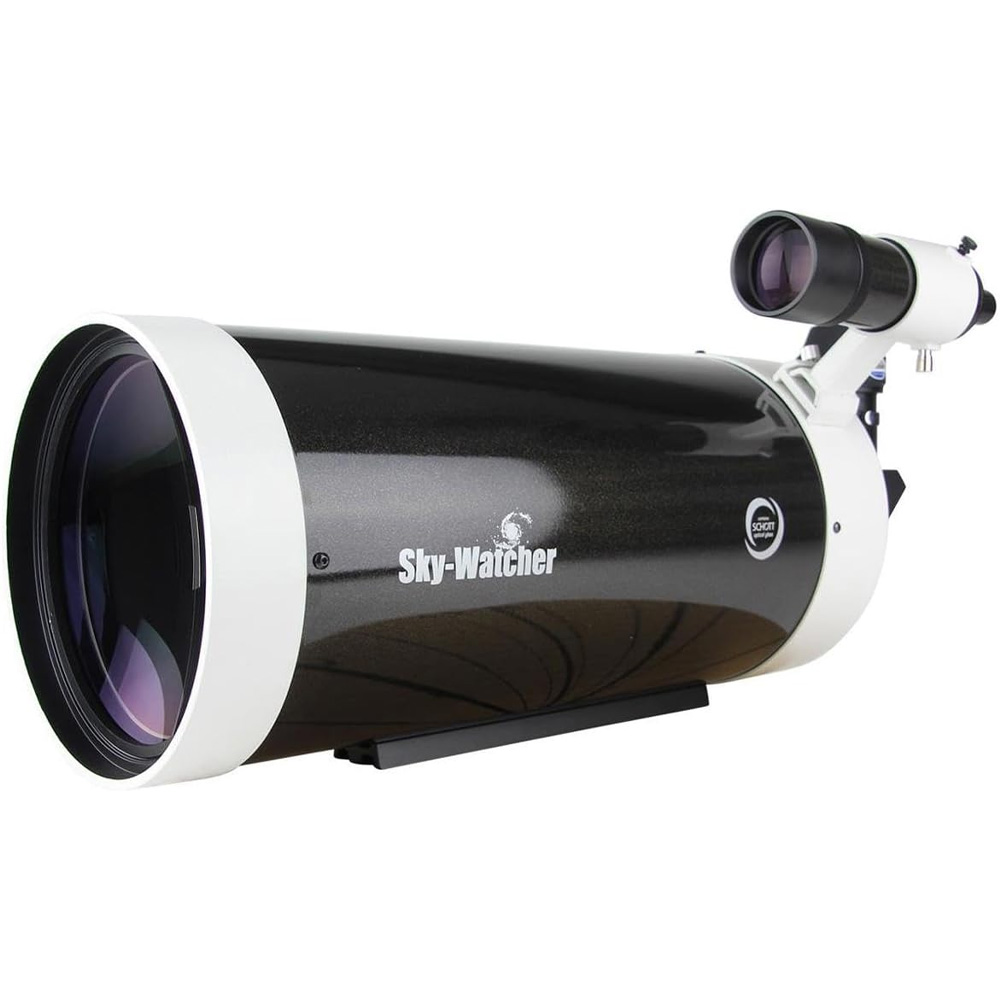 If you want to see planets
Smart telescopes are typically designed for deep-sky objects, so you'll want an observational telescope with a good aperture to resolve detail in the planets — something like the Sky-Watcher SkyMax 180 Pro.
S50: Price Comparison
 No price informationCheck Amazon
 No price informationCheck WalmartWe check over 250 million products every day for the best pricespowered by
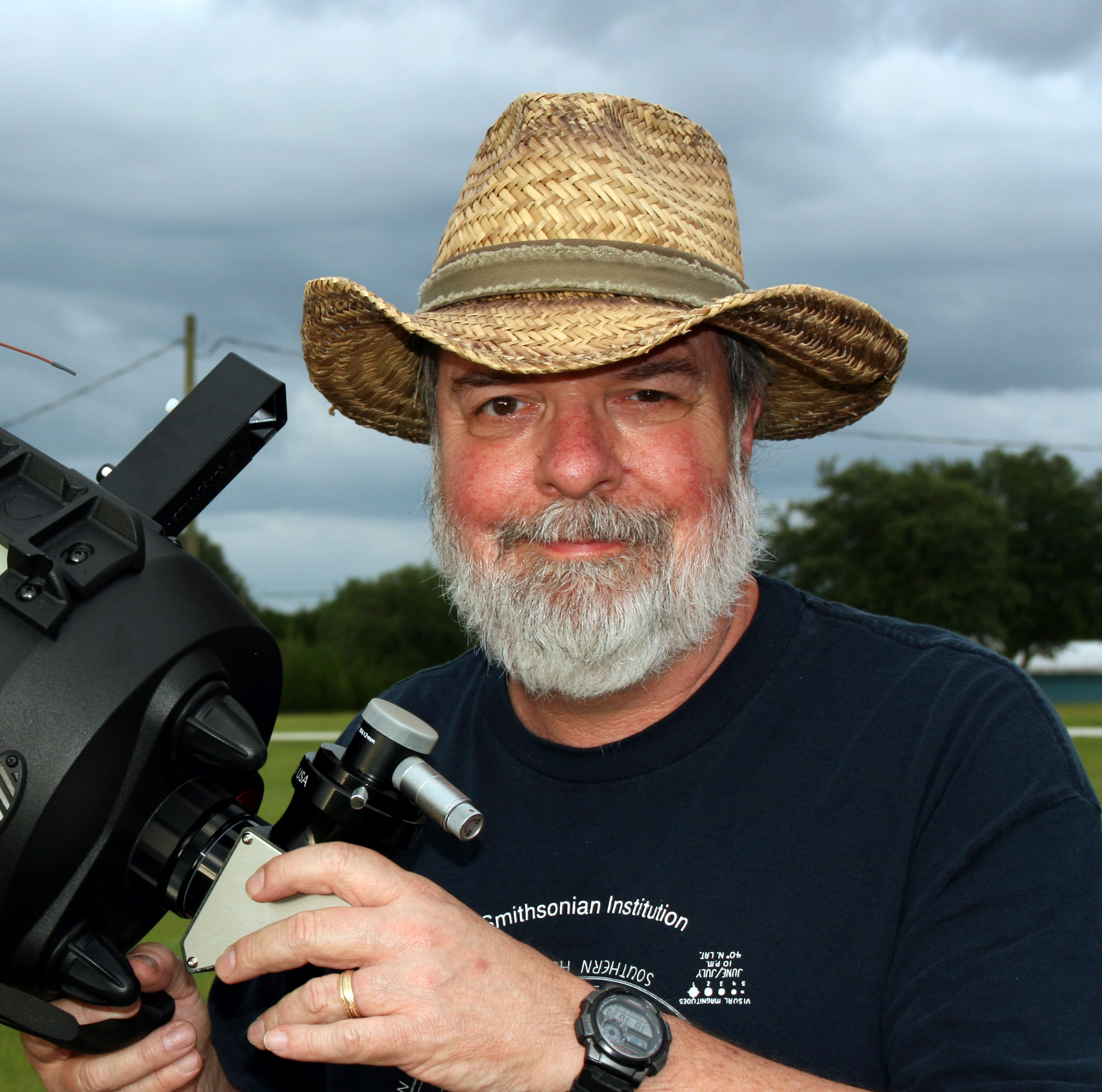 Rod MolliseSocial Links Navigation
Rod Mollise is familiar to amateur astronomers as the author of numerous books and magazine articles on every aspect of astronomy, amateur and professional. He is most well known, however, for his books on Schmidt Cassegrain Telescopes, SCTs, and especially Choosing and Using a New CAT (Springer), which has become the standard reference for these instruments.
Rod, a retired engineer, stays busy teaching astronomy to undergraduates at the University of South Alabama. He has been enthusiastically observing the night sky since he received his first telescope as a Christmas present in 1965.
With contributions from View MoreYou must confirm your public display name before commenting
Please logout and then login again, you will then be prompted to enter your display name.
Logout Back To Top Read more Best binoculars for stargazing 2026: See the blood moon eclipse
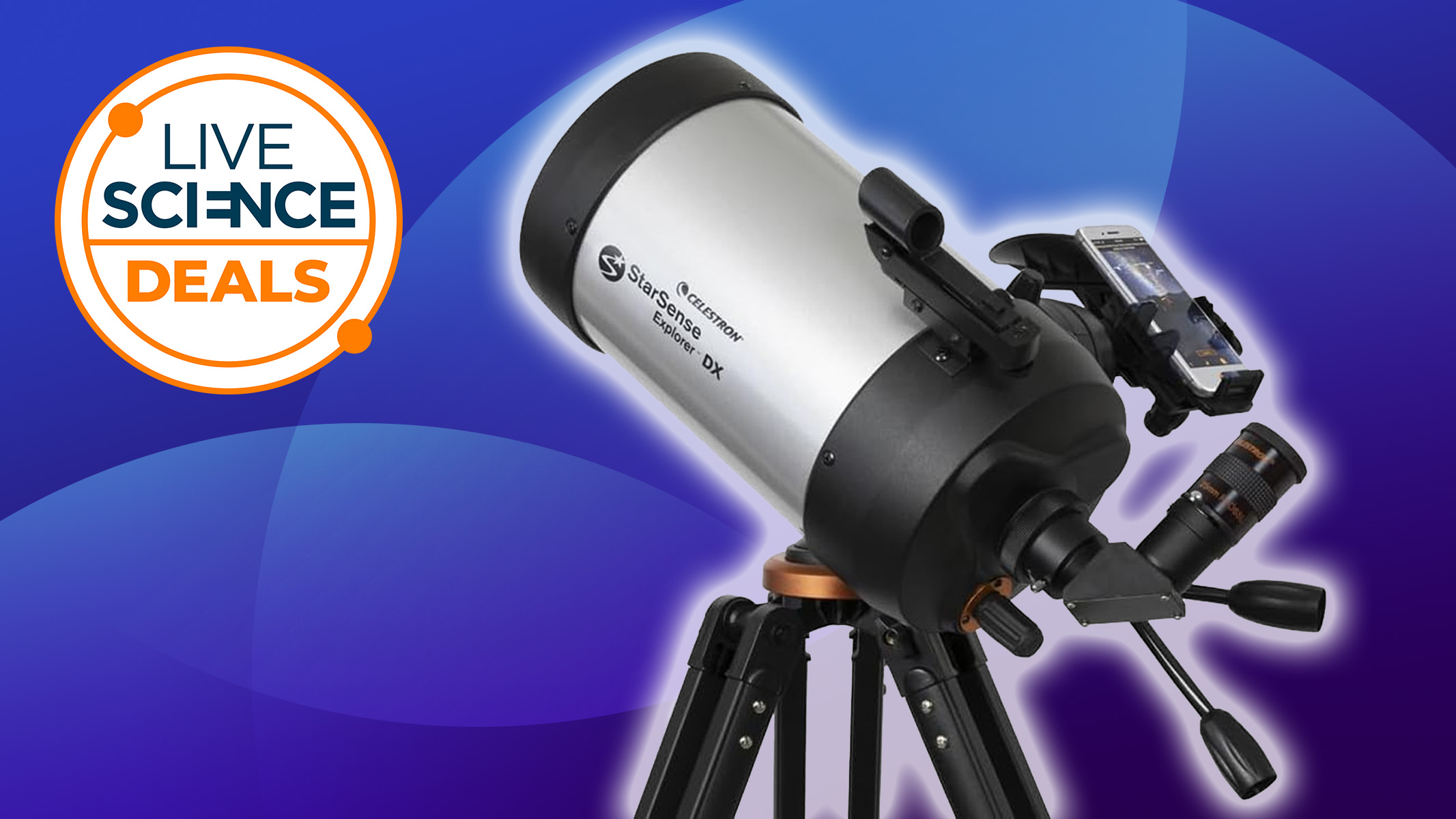 Just in time for the total lunar eclipse, this beginner-friendly telescope is now $100 off at Amazon
 Best spotting scopes in 2025: Detailed bird-watching and wildlife observation
 5 common mistakes beginner telescope users make — and how to avoid them
 Best binoculars 2026: Our picks for stargazing, bird-watching and observing wildlife
 Best beginner cameras 2026
Latest in Optics
Just in time for the total lunar eclipse, this beginner-friendly telescope is now $100 off at Amazon
Best beginner cameras 2026
Latest in Optics
Just in time for the total lunar eclipse, this beginner-friendly telescope is now $100 off at Amazon
 Hawke Endurance ED 8x25 binocular review
 March 2026 night sky — what to see and what you need
 We used AI as our photography assistant for a week — what worked and what did not
 Should you buy a new or used camera for astrophotography?
 Best beginner cameras for wildlife photography 2025: Nature photography for newbies
Latest in Reviews
Best beginner cameras for wildlife photography 2025: Nature photography for newbies
Latest in Reviews
 ZWO SeeStar S50 smart telescope review
 Coros Pace 4 smartwatch review: A capable and affordable fitness tracker
 We tested the 'first wooden, sustainable air purifier' and it's a thing of beauty
 Renpho Morphoscan Nova smart scale review: Deep-dive body analysis
 Swarovski NL Pure 8x32 binoculars review
 Hawke Frontier ED X 8x42 review
LATEST ARTICLES
Hawke Frontier ED X 8x42 review
LATEST ARTICLES 1Chinese EV maker claims it's engineered the world’s first semi-solid-state EV battery with huge 620-mile range
- 2Climate disasters caused societal upheaval 3,000 years ago in China, study of 'oracle bones' hints
- 3Can you tie a knot in four dimensions? A mathematician explains.
- 4'Truly extraordinary': Mega-laser shooting at us from halfway across the universe is the brightest 'cosmic beacon' we've ever seen
- 5Chewed-up orca fins on Russian beach point to cannibalism, and scientists say it may explain why some pods are so tight-knit