- Space
- Astronomy
New James Webb telescope observations of the 'super-puff' planet WASP-107b show that the exoplanet's runaway atmosphere is frantically escaping into space.
5 Comments Join the conversationWhen you purchase through links on our site, we may earn an affiliate commission. Here’s how it works.
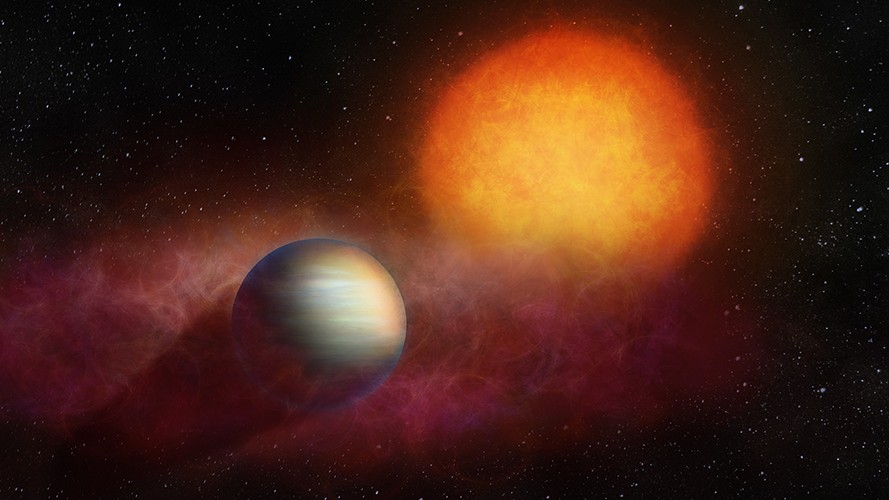 An illustration of exoplanet WASP-107b. The planet's escaping hydrogen atmosphere measures five time the radius of the planet itself, new JWST observations hint.
(Image credit: University of Geneva/NCCR PlanetS/Thibaut Roger)
An illustration of exoplanet WASP-107b. The planet's escaping hydrogen atmosphere measures five time the radius of the planet itself, new JWST observations hint.
(Image credit: University of Geneva/NCCR PlanetS/Thibaut Roger)
A "super-puff" exoplanet is leaking a lot of helium into space, new observations show — and may be in the process of losing a lot of its atmosphere.
A large plume of helium gas was spotted evaporating from the giant planet, known as WASP-107b, according to research based on observations from the James Webb Space Telescope (JWST).
You may like-
 JWST finds planet with all-carbon atmosphere orbiting 'black widow' star
-
 Astronomers discover bizarre 'runaway' planet that's acting like a star, eating 6 billion tons per second
-
 James Webb telescope makes first 3D map of an alien planet's atmosphere
Planet puff-ball
WASP-107b was discovered in 2017 near a star about 210 light-years from Earth. (For comparison, the closest planets to us are about 4 light-years away.) WASP-107b is almost the same size as Jupiter, at 94% of the gas giant's diameter, but its mass is just 12% that of Jupiter. This extremely low density and large size place WASP-107b in the "super-puff" category of exoplanets.
Aside from its unusual density, WASP-107b is in an interesting spot: It is seven times closer to its star than Mercury is to the sun. In Earth's neighborhood, by contrast, rocky planets are closer to the sun and gas giants like Jupiter are farther away. That means scientists must come up with models to explain that difference.
Sign up for the Live Science daily newsletter nowContact me with news and offers from other Future brandsReceive email from us on behalf of our trusted partners or sponsorsBy submitting your information you agree to the Terms & Conditions and Privacy Policy and are aged 16 or over.They think WASP-107b, like Jupiter and Saturn, formed much farther from its star but something in the system — possibly another planet — forced WASP-107b to migrate closer to its star over time.
"WASP-107c, much farther out than WASP-107b, could have played a role in this migration," study co-author Caroline Piaulet-Ghorayeb, an exoplanet researcher now at the University of Chicago who completed her Ph.D. at the University of Montreal in 2024, said in the statement.
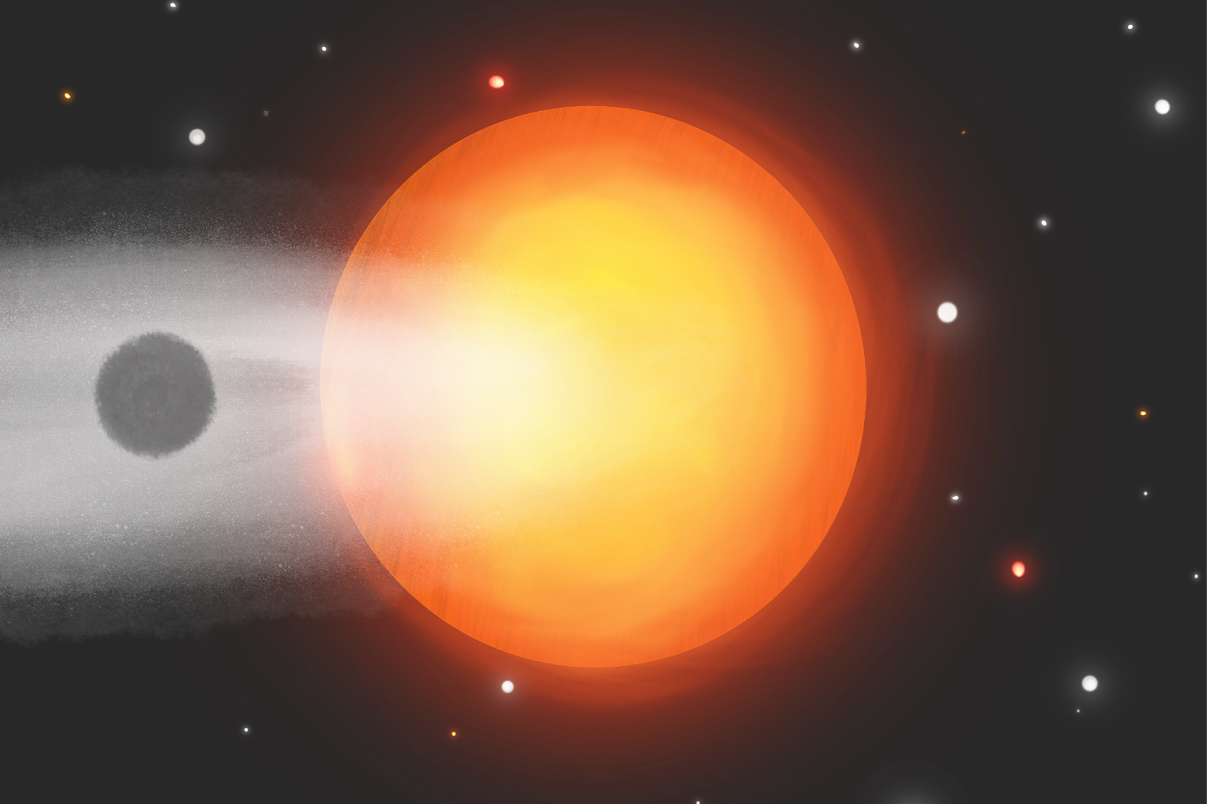
Once the planet got close enough to its star, the extreme heat of its new orbit began gutting the exoplanet's gassy atmosphere, the researchers explained. The new JWST observations confirmed the extent of the damage: The powerful telescope spotted the helium cloud of the exoplanet's atmosphere passing in front of the system's parent star about 1.5 hours before WASP-107b itself.
You may like-
JWST finds planet with all-carbon atmosphere orbiting 'black widow' star
-
Astronomers discover bizarre 'runaway' planet that's acting like a star, eating 6 billion tons per second
-
James Webb telescope makes first 3D map of an alien planet's atmosphere
The researchers spotted several elements in WASP-107b's atmosphere that reveal more clues about the planet's complicated history. For example, there was more oxygen in the planet's atmosphere than would be predicted if it had formed close to its star, which provides more evidence that its migration was relatively recent.
related stories—James Webb telescope detects 'fluffy' alien planet that rains sand
—Mysterious 'puffy' planet may finally be explained by James Webb Space Telescope
—32 alien planets that really exist
JWST also found water in the planet's atmosphere — confirming previous observations from the Hubble Space Telescope — alongside traces of carbon monoxide, carbon dioxide and ammonia. But methane, which was predicted to be part of the planet's atmosphere due to its chemistry, was curiously absent.
Because JWST's instruments are sensitive enough to detect methane from afar, the researchers suggest other gases poor in methane must have instead been drawn up from deep in the planet's atmosphere due to "vigorous vertical mixing" driven by the heat of the star, Piaulet-Ghorayeb added.
While planets like Earth also have some atmospheric loss, it is not this extreme. Studying worlds like WASP-107b could help us understand how atmospheric escape works on planets like Venus, which lost water over the eons, the research team said in a statement from the University of Geneva.
TOPICS James Webb Space Telescope Elizabeth HowellLive Science Contributor
Elizabeth Howell was staff reporter at Space.com between 2022 and 2024 and a regular contributor to Live Science and Space.com between 2012 and 2022. Elizabeth's reporting includes multiple exclusives with the White House, speaking several times with the International Space Station, witnessing five human spaceflight launches on two continents, flying parabolic, working inside a spacesuit, and participating in a simulated Mars mission. Her latest book, "Why Am I Taller?" (ECW Press, 2022) is co-written with astronaut Dave Williams.
You must confirm your public display name before commenting
Please logout and then login again, you will then be prompted to enter your display name.
Logout Read more JWST finds planet with all-carbon atmosphere orbiting 'black widow' star
 Astronomers discover bizarre 'runaway' planet that's acting like a star, eating 6 billion tons per second
 James Webb telescope makes first 3D map of an alien planet's atmosphere
 James Webb telescope spies a 'farting' dwarf planet with fluorescent gas in the outer solar system
 TRAPPIST-1e might have an atmosphere, JWST hints
 Hidden 'doomed' star revealed by James Webb Space Telescope could solve decades-old mystery
Latest in Astronomy
Hidden 'doomed' star revealed by James Webb Space Telescope could solve decades-old mystery
Latest in Astronomy
 New 3I/ATLAS images show the comet getting active ahead of close encounter with Earth
 Ethereal structure in the sky rivals 'Pillars of Creation' — Space photo of the week
 Strangely bleached rocks on Mars hint that the Red Planet was once a tropical oasis
 Giant sunspot on par with the one that birthed the Carrington Event has appeared on the sun — and it's pointed right at Earth
 Geminids 2025: The year's best meteor shower is coming, with a second shower hot on its tail
 Giant rotating string of galaxies is 'probably the largest spinning object' in the known universe
Latest in News
Giant rotating string of galaxies is 'probably the largest spinning object' in the known universe
Latest in News
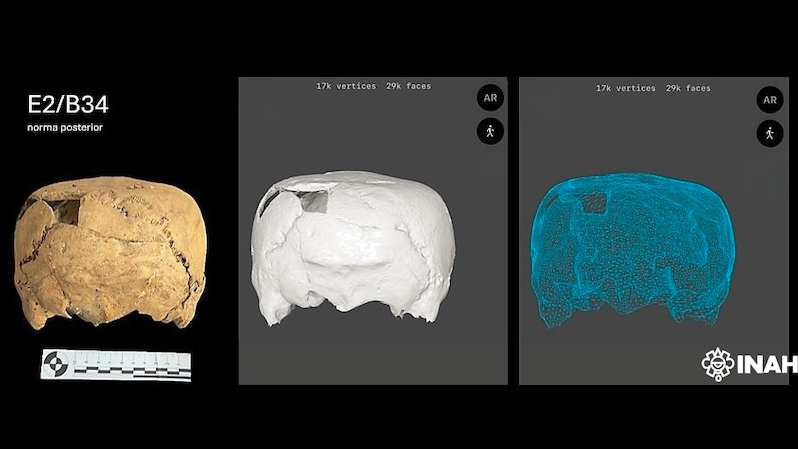 Unusual, 1,400-year-old cube-shaped human skull unearthed in Mexico
 Lost Indigenous settlements described by Jamestown colonist John Smith finally found
 2,400-year-old 'sacrificial complex' uncovered in Russia is the richest site of its kind ever discovered
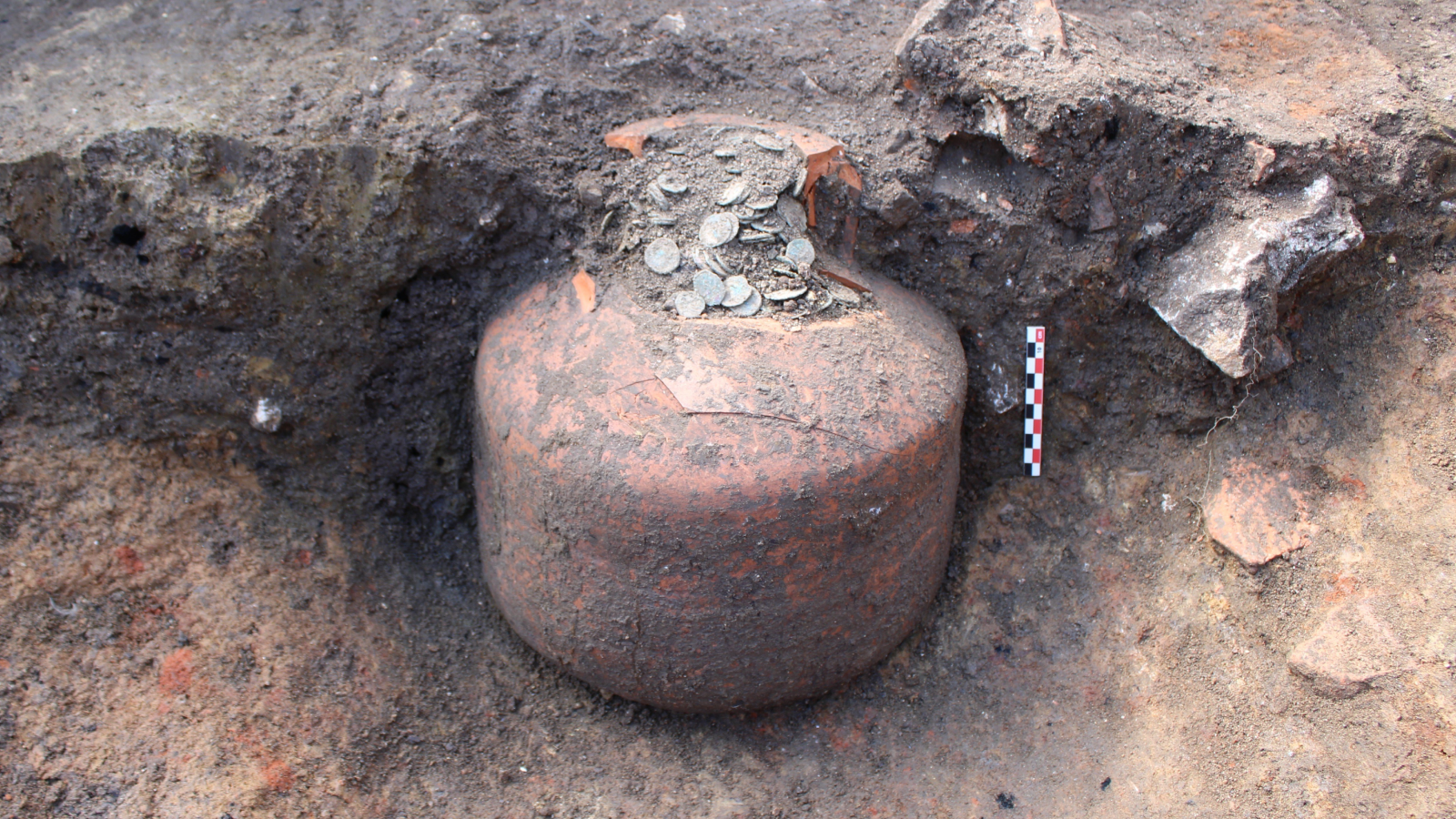 1,800-year-old 'piggy banks' full of Roman-era coins unearthed in French village
 CDC panel, stuffed with vaccine skeptics, votes to end recommendation for universal newborn hepatitis B vaccination
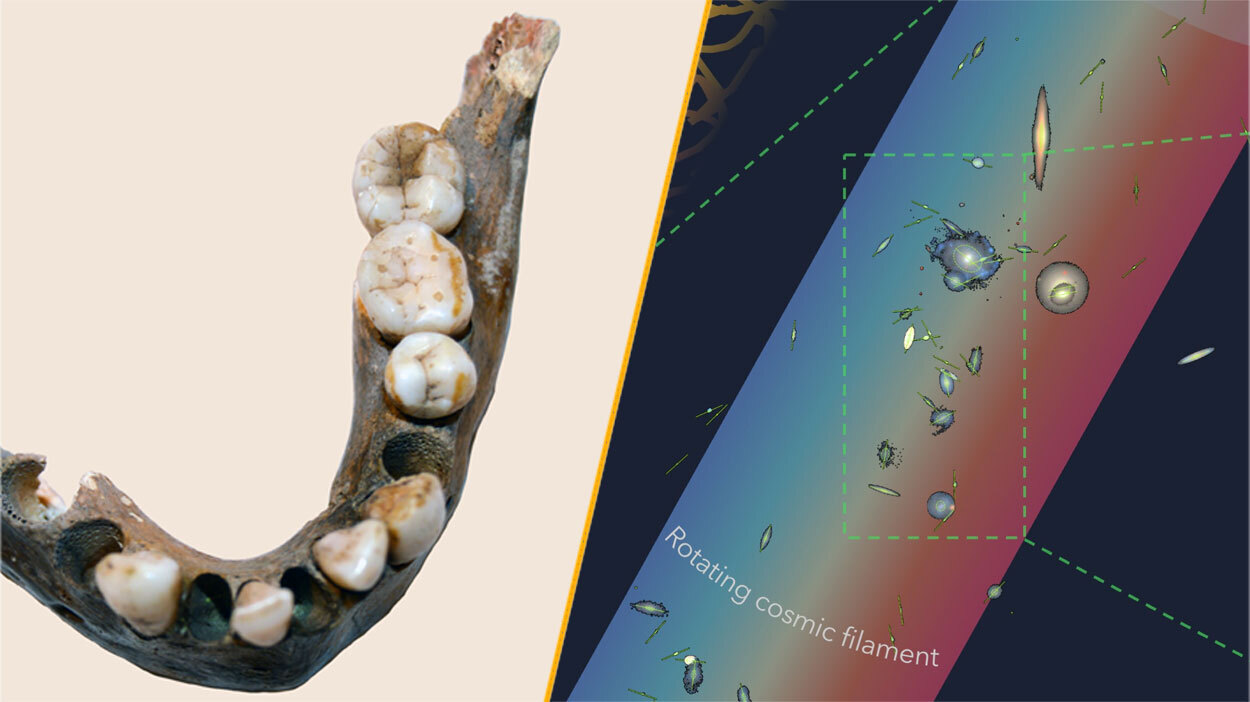 Science news this week: A human population isolated for 100,000 years, the biggest spinning structure in the universe, and a pit full of skulls
LATEST ARTICLES
Science news this week: A human population isolated for 100,000 years, the biggest spinning structure in the universe, and a pit full of skulls
LATEST ARTICLES- 1Lost Indigenous settlements described by Jamestown colonist John Smith finally found
- 2Strangely bleached rocks on Mars hint that the Red Planet was once a tropical oasis
- 32,400-year-old 'sacrificial complex' uncovered in Russia is the richest site of its kind ever discovered
- 4Ethereal structure in the sky rivals 'Pillars of Creation' — Space photo of the week
- 5What was the loudest sound ever recorded?