- Health
- Viruses, Infections & Disease
In an unusual case, a woman developed a parasitic infection in her lungs, when more typically, the parasite stays just under the skin.
5 Comments Join the conversationWhen you purchase through links on our site, we may earn an affiliate commission. Here’s how it works.
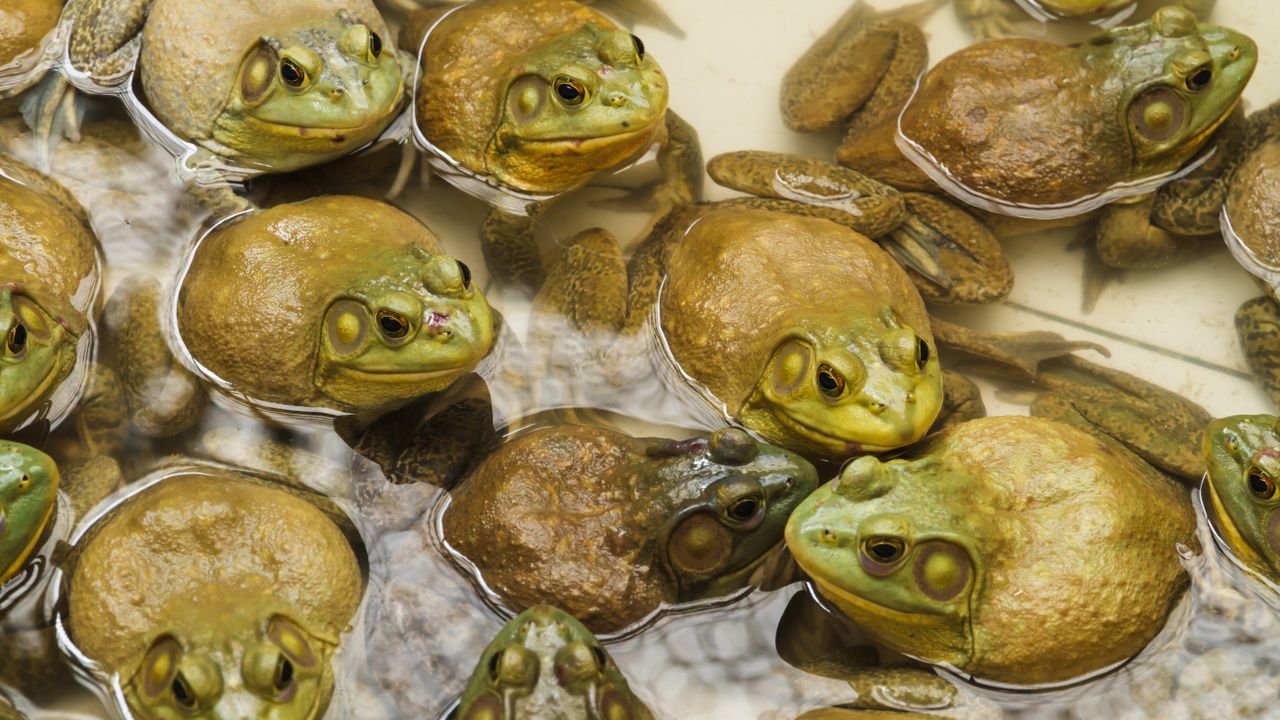
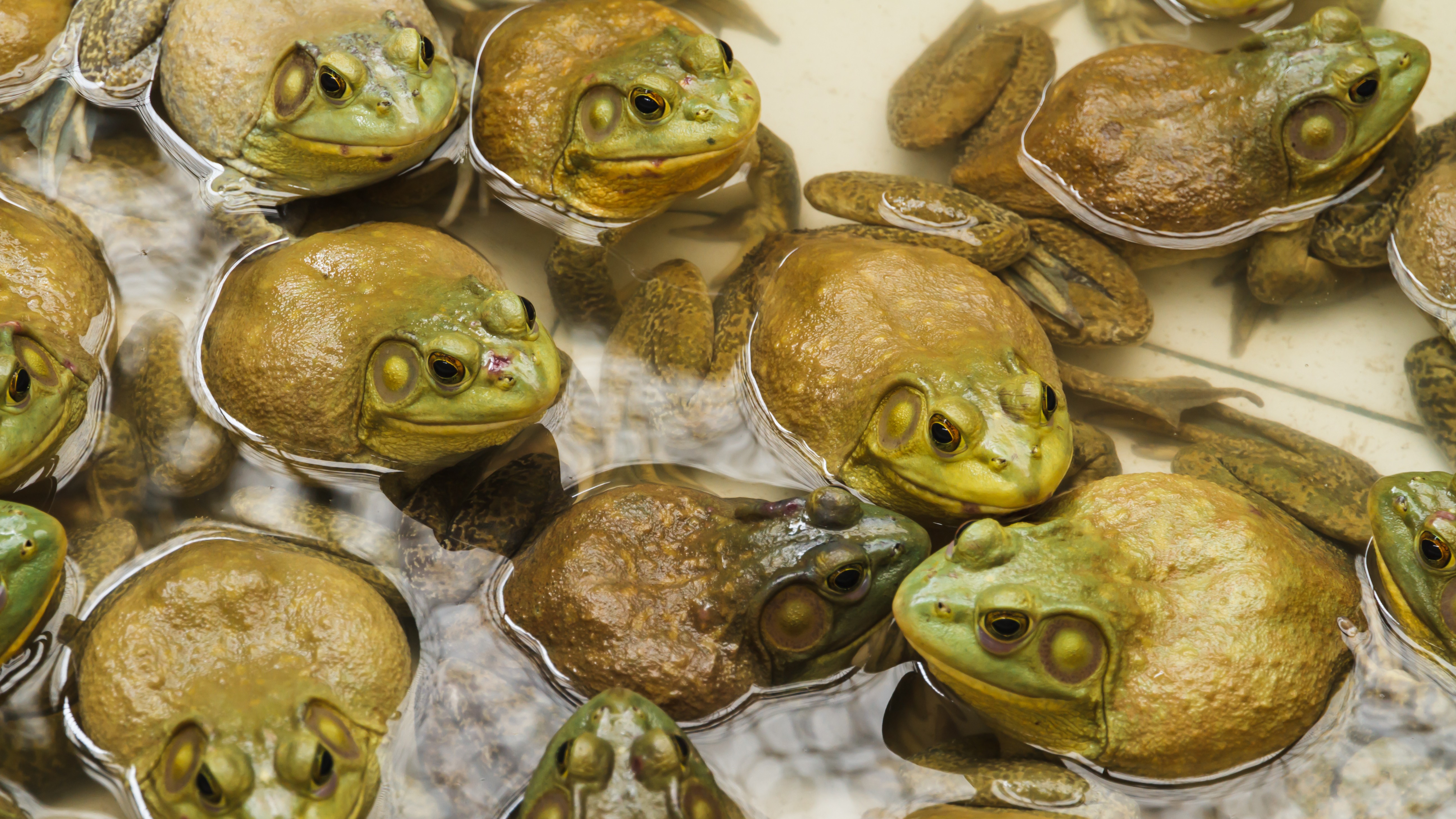 Undercooked or raw frog meat can sometimes carry parasites capable of infecting people who consume the meat.
(Image credit: ampols via Getty Images)
Undercooked or raw frog meat can sometimes carry parasites capable of infecting people who consume the meat.
(Image credit: ampols via Getty Images)
The patient: A 32-year-old woman in Shanghai
The symptoms: The woman went to the hospital with a persistent cough accompanied by occasional bloody phlegm, which she would cough up two to three times per day. She said the coughing began four months prior to her hospital visit. And about a month before the coughing started, she had a fever that lasted several weeks and reached up to 100.8 degrees Fahrenheit (38.3 degrees Celsius).
You may like-
 A woman kept tasting bleach — and doctors found a hidden cause in her blood
-
 A woman's homemade juice led to life-threatening 'toxic squash syndrome'
-
 A toddler accidently ate gonorrhea bacteria from a lab dish
The patient's doctors gave her steroids to reduce the inflammation in her lung tissue. However, her cough persisted even after two months of this treatment. A CT scan of her lungs revealed recurring lesions, or tissue injuries, and she was then sent to a different hospital for further examination.
The diagnosis: When doctors at the second hospital reviewed the woman's medical history, they noted that her diet often included raw seafood, and she also reported "a preference for raw frogs and bullfrogs," the physicians wrote in a report describing her case. The team conducted a blood test to see if her blood contained antibodies to any parasites, and they found antibodies for the larvae of Spirometra mansoni, a type of tapeworm.
The larvae, or spargana, of S. mansoni cause a parasitic infection called sparganosis. This infection is most common in eastern Asia, and people often acquire the parasites by eating raw or undercooked snakes or frogs that are infected with the larvae, evidence suggests. After S. mansoni larvae are swallowed, they migrate into various body tissues and organs. In the woman's case, they accumulated in her lungs — a very rare destination for the parasite.
When the patient provided doctors with a frog from her region of Shanghai, they dissected it and found that it was carrying S. mansoni.
Sign up for the Live Science daily newsletter nowContact me with news and offers from other Future brandsReceive email from us on behalf of our trusted partners or sponsorsBy submitting your information you agree to the Terms & Conditions and Privacy Policy and are aged 16 or over.Because the woman's symptoms and the results of her CT scans closely resembled signs of eosinophilic pneumonia, the physicians who examined her during her first hospital visit misdiagnosed her, according to the report.
The treatment: Doctors treated the woman with praziquantel tablets, a drug that works against various types of parasitic worms. After the woman had taken the tablets for five days, her coughing subsided.
CT scans performed 20 days after her admission to the second hospital showed that the shadowy areas previously seen in her lungs — a sign of infection or physical trauma — were shrinking. At a follow-up visit one month later, her coughing was completely gone. However, the patient's blood tests showed that she was still producing antibodies against the parasite, hinting that the infection persisted.
You may like-
A woman kept tasting bleach — and doctors found a hidden cause in her blood
-
A woman's homemade juice led to life-threatening 'toxic squash syndrome'
-
A toddler accidently ate gonorrhea bacteria from a lab dish
Doctors prescribed another five-day course of praziquantel and conducted a follow-up examination five months after that. Traces of antibodies remained in the patient's blood, but only in extremely low quantities. Her white blood cell count was normal, and the doctors determined that no further treatment was required.
OTHER DILEMMAS—A scientist caught plague from bacteria thought to be 'noninfectious'
—A man's deadly infection was triggered by a probiotic supplement
—Teen's improbable pregnancy occurred after oral sex
What makes the case unique: Sparganosis infections typically appear in tissues located just under the skin, near the surface of the body. They rarely migrate to the internal organs. This is the first case to be documented in Shanghai of sparganosis in the lungs, the case report authors wrote.
Eating raw animal flesh is a long-standing cultural tradition in parts of Asia, and sometimes, small animals may be consumed while they are still alive. Living frogs are occasionally eaten as a folklore remedy for a variety of ailments; an 82-year-old woman in Hangzhou was hospitalized with a parasitic infection after she swallowed eight small, live frogs in an attempt to relieve her chronic back pain.
For more intriguing medical cases, check out our Diagnostic Dilemma archives.
DisclaimerThis article is for informational purposes only and is not meant to offer medical advice.
TOPICS parasites Diagnostic dilemma Mindy WeisbergerSocial Links NavigationLive Science Contributor
Mindy Weisberger is a science journalist and author of "Rise of the Zombie Bugs: The Surprising Science of Parasitic Mind-Control" (Hopkins Press). She formerly edited for Scholastic and was a channel editor and senior writer for Live Science. She has reported on general science, covering climate change, paleontology, biology and space. Mindy studied film at Columbia University; prior to LS, she produced, wrote and directed media for the American Museum of Natural History in NYC. Her videos about dinosaurs, astrophysics, biodiversity and evolution appear in museums and science centers worldwide, earning awards such as the CINE Golden Eagle and the Communicator Award of Excellence. Her writing has also appeared in Scientific American, The Washington Post, How It Works Magazine and CNN.
You must confirm your public display name before commenting
Please logout and then login again, you will then be prompted to enter your display name.
Logout Read more A woman kept tasting bleach — and doctors found a hidden cause in her blood
 A woman's homemade juice led to life-threatening 'toxic squash syndrome'
 A toddler accidently ate gonorrhea bacteria from a lab dish
 A knife broke off in a man's chest, and he didn't notice it for 8 years
 A baby suddenly started to smell of rotting fish
 A woman's nausea was triggered by a huge mass in her stomach — which doctors dissolved with diet soda
Latest in Viruses, Infections & Disease
A woman's nausea was triggered by a huge mass in her stomach — which doctors dissolved with diet soda
Latest in Viruses, Infections & Disease
 Science history: Female chemist initially barred from research helps helps develop drug for remarkable-but-short-lived recovery in children with leukemia — Dec. 6, 1954
 CDC panel, stuffed with vaccine skeptics, votes to end recommendation for universal newborn hepatitis B vaccination
 A 'functional cure' for HIV may be in reach, early trials suggest
 US could lose its measles elimination status within months, experts say
 The US is on track to lose its measles elimination status in months. RFK needs to go.
 High-fiber diet may 'rejuvenate' immune cells that fight cancer, study finds
Latest in Features
High-fiber diet may 'rejuvenate' immune cells that fight cancer, study finds
Latest in Features
 What if Antony and Cleopatra had defeated Octavian?
 What was the loudest sound ever recorded?
A woman got a rare parasitic lung infection after eating raw frogs
What was the loudest sound ever recorded?
A woman got a rare parasitic lung infection after eating raw frogs
 Science history: Computer scientist lays out 'Moore's law,' guiding chip design for a half century — Dec. 2, 1964
 'Intelligence comes at a price, and for many species, the benefits just aren't worth it': A neuroscientist's take on how human intellect evolved
 Scientists map the shape of a supernova for the first time ever: Space photo of the week
LATEST ARTICLES
Scientists map the shape of a supernova for the first time ever: Space photo of the week
LATEST ARTICLES 1Lost Indigenous settlements described by Jamestown colonist John Smith finally found
- 2Strangely bleached rocks on Mars hint that the Red Planet was once a tropical oasis
- 32,400-year-old 'sacrificial complex' uncovered in Russia is the richest site of its kind ever discovered
- 4Ethereal structure in the sky rivals 'Pillars of Creation' — Space photo of the week
- 5What was the loudest sound ever recorded?