- Archaeology
- Romans
A study of limescale buildup in an early bathing facility at Pompeii has revealed that the water was replaced only once per day.
When you purchase through links on our site, we may earn an affiliate commission. Here’s how it works.
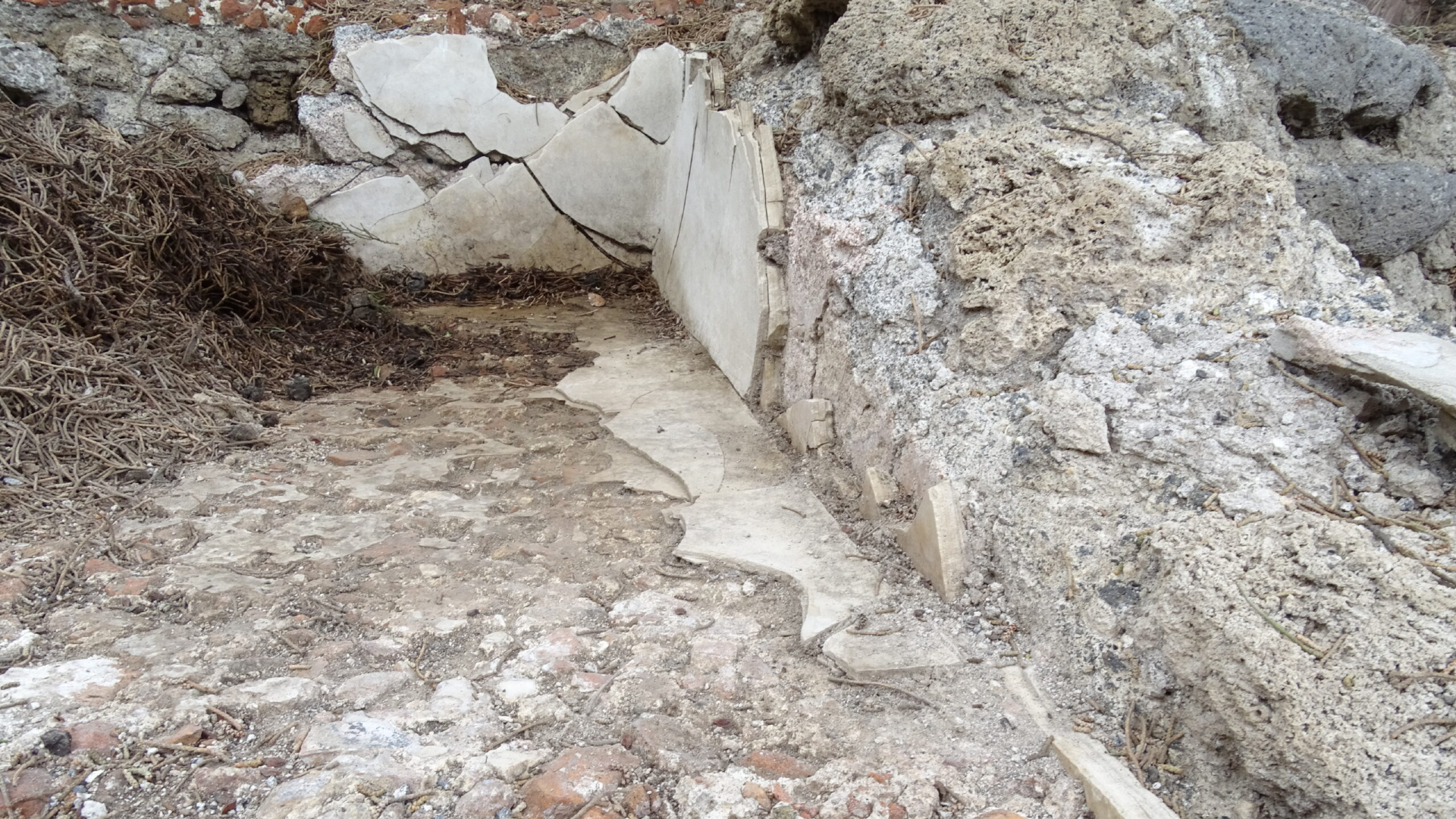 Remains of a pool in the oldest public bath structure in Pompeii.
(Image credit: Cees Passchier)
Share
Share by:
Remains of a pool in the oldest public bath structure in Pompeii.
(Image credit: Cees Passchier)
Share
Share by:
- Copy link
- X
The ancient Romans are well known for their advanced water supply systems and hygienic facilities, including public baths and toilets. But the first baths built in Pompeii may not have been particularly pleasant, due to dirty, contaminated water that was replaced only once per day, according to a new study.
"It is very likely that the bathing experience in this small bathing facility was maybe not hygienic and hence not very inviting," study lead author Gül Sürmelihindi, a geoarchaeologist at the Johannes Gutenberg University of Mainz in Germany, told Live Science in an email.
Sürmelihindi and colleagues analyzed the chemical compound calcium carbonate preserved in incrustations in the Republican Baths at Pompeii to investigate the composition of the water supply. Their study was published Monday (Jan. 12) in the journal PNAS.
You may like-
 Diarrhea and stomachaches plagued Roman soldiers stationed at Hadrian's Wall, discovery of microscopic parasites finds
-
 1,300-year-old poop reveals pathogens plagued prehistoric people in Mexico's 'Cave of the Dead Children'
-
 'They had not been seen ever before': Romans made liquid gypsum paste and smeared it over the dead before burial, leaving fingerprints behind, new research finds
Public baths were a key part of Roman culture, the researchers wrote in the study, and as the Roman Empire expanded, bathing culture also evolved. At the height of the Roman Empire, the Romans "built long-distance aqueducts in order to have their daily bathing and cleansing experience," Sürmelihindi said.
But in the earliest baths built at Pompeii, which were in use between about 130 and 30 B.C. during the Roman Republic, the situation was different. Before the city constructed an aqueduct, bathing facilities were filled with water from wells and cisterns via a single water-lifting machine that was operated by enslaved people.
"The water could not be replenished more than once a day," Sürmelihindi said. "In this setting, I would expect water to be less clean, especially before the bathing water was refreshed again."
To investigate the composition of the bath water during this time, the researchers studied samples of calcium carbonate, a mineral form of calcium. Calcium carbonate is produced when calcium ions in hard water react with carbonate ions, leading to limescale — a hard, chalky deposit that builds up in kettles, boilers and pipes.
Sign up for the Live Science daily newsletter nowContact me with news and offers from other Future brandsReceive email from us on behalf of our trusted partners or sponsorsBy submitting your information you agree to the Terms & Conditions and Privacy Policy and are aged 16 or over.The researchers found that the carbonate in the Republican Baths showed a strong decrease in carbon isotopes (variations of the element with different numbers of neutrons) between the well that supplied the water and the heated pools where people bathed. The lowest carbon isotope values were found in areas where the water drained, meaning the main cause was likely "the introduction of organic carbon from microbial activity and human waste (e.g., sweat, sebum, urine, bathing oil)," the researchers wrote.
"These baths were an experience we do not have nowadays," study co-author Cees Passchier, a geoarchaeologist at the Johannes Gutenberg University of Mainz, told Live Science in an email. "People would not use soap, but olive oil to rub in and scrape the dirt off, and some of that oil would land in the water."
The water in the heated pools of the Republican Baths shows "high contamination by human waste," suggesting that it was not replenished regularly and that it offered "poor hygienic conditions for the Pompeiian bathers," the researchers wrote.
RELATED STORIES—What did ancient Rome smell like? BO, rotting corpses and raw sewage for starters ...
—After Mount Vesuvius erupted, Romans returned to Pompeii and stayed for 400 years — but it was likely anarchy
—2,000-year-old bed barricade unearthed in Pompeii house — likely a family's last attempt to escape Vesuvius' eruption
The researchers also investigated heavy-metal contamination in the baths by analyzing traces of elements left there. In the Republican Baths, the team identified elevated levels of lead, a toxic element that was likely introduced through the lead-pipe system in the bathing complex. Over time, though, the gradual incrustation of the pipes with calcium carbonate would have reduced the water's lead level.
It's unclear whether the murky water would have kept people away.
"Everyone mixed in the baths, regardless of social class, and the price was low," Passchier said. But if the water was really gross and smelly, he said, the baths would not have had customers. "People probably did not spend much time in the warm pools, which were small, but mostly spent time sitting around in the warm air of the hot bath having a conversation," he said.
Pompeii quiz: How much do you know about the Roman town destroyed by Mount Vesuvius?
TOPICS water Kristina KillgroveSocial Links NavigationStaff writer
Kristina Killgrove is a staff writer at Live Science with a focus on archaeology and paleoanthropology news. Her articles have also appeared in venues such as Forbes, Smithsonian, and Mental Floss. Kristina holds a Ph.D. in biological anthropology and an M.A. in classical archaeology from the University of North Carolina, as well as a B.A. in Latin from the University of Virginia, and she was formerly a university professor and researcher. She has received awards from the Society for American Archaeology and the American Anthropological Association for her science writing.
Show More CommentsYou must confirm your public display name before commenting
Please logout and then login again, you will then be prompted to enter your display name.
Logout Read more Diarrhea and stomachaches plagued Roman soldiers stationed at Hadrian's Wall, discovery of microscopic parasites finds
 1,300-year-old poop reveals pathogens plagued prehistoric people in Mexico's 'Cave of the Dead Children'
 'They had not been seen ever before': Romans made liquid gypsum paste and smeared it over the dead before burial, leaving fingerprints behind, new research finds
 'This has re-written our understanding of Roman concrete manufacture': Abandoned Pompeii worksite reveal how self-healing concrete was made
 New discoveries at Hadrian's Wall are changing the picture of what life was like on the border of the Roman Empire
 French archaeologists uncover 'vast Roman burial area' with cremation graves 'fed' by liquid offerings
Latest in Romans
Diarrhea and stomachaches plagued Roman soldiers stationed at Hadrian's Wall, discovery of microscopic parasites finds
French archaeologists uncover 'vast Roman burial area' with cremation graves 'fed' by liquid offerings
Latest in Romans
Diarrhea and stomachaches plagued Roman soldiers stationed at Hadrian's Wall, discovery of microscopic parasites finds
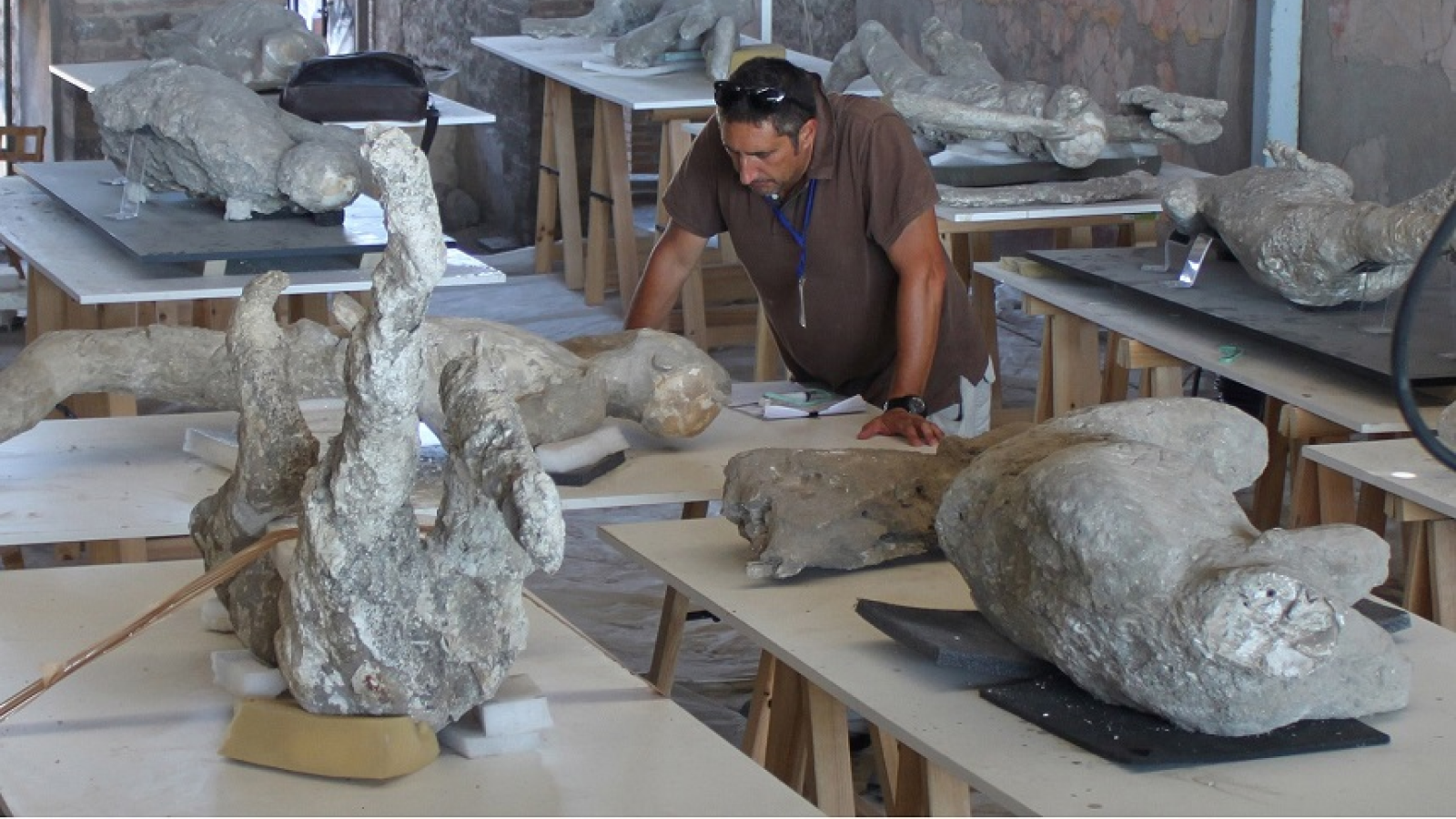 Pompeii victims were wearing woolen cloaks in August when they died — but experts are split on what that means
'This has re-written our understanding of Roman concrete manufacture': Abandoned Pompeii worksite reveal how self-healing concrete was made
'They had not been seen ever before': Romans made liquid gypsum paste and smeared it over the dead before burial, leaving fingerprints behind, new research finds
Pompeii victims were wearing woolen cloaks in August when they died — but experts are split on what that means
'This has re-written our understanding of Roman concrete manufacture': Abandoned Pompeii worksite reveal how self-healing concrete was made
'They had not been seen ever before': Romans made liquid gypsum paste and smeared it over the dead before burial, leaving fingerprints behind, new research finds
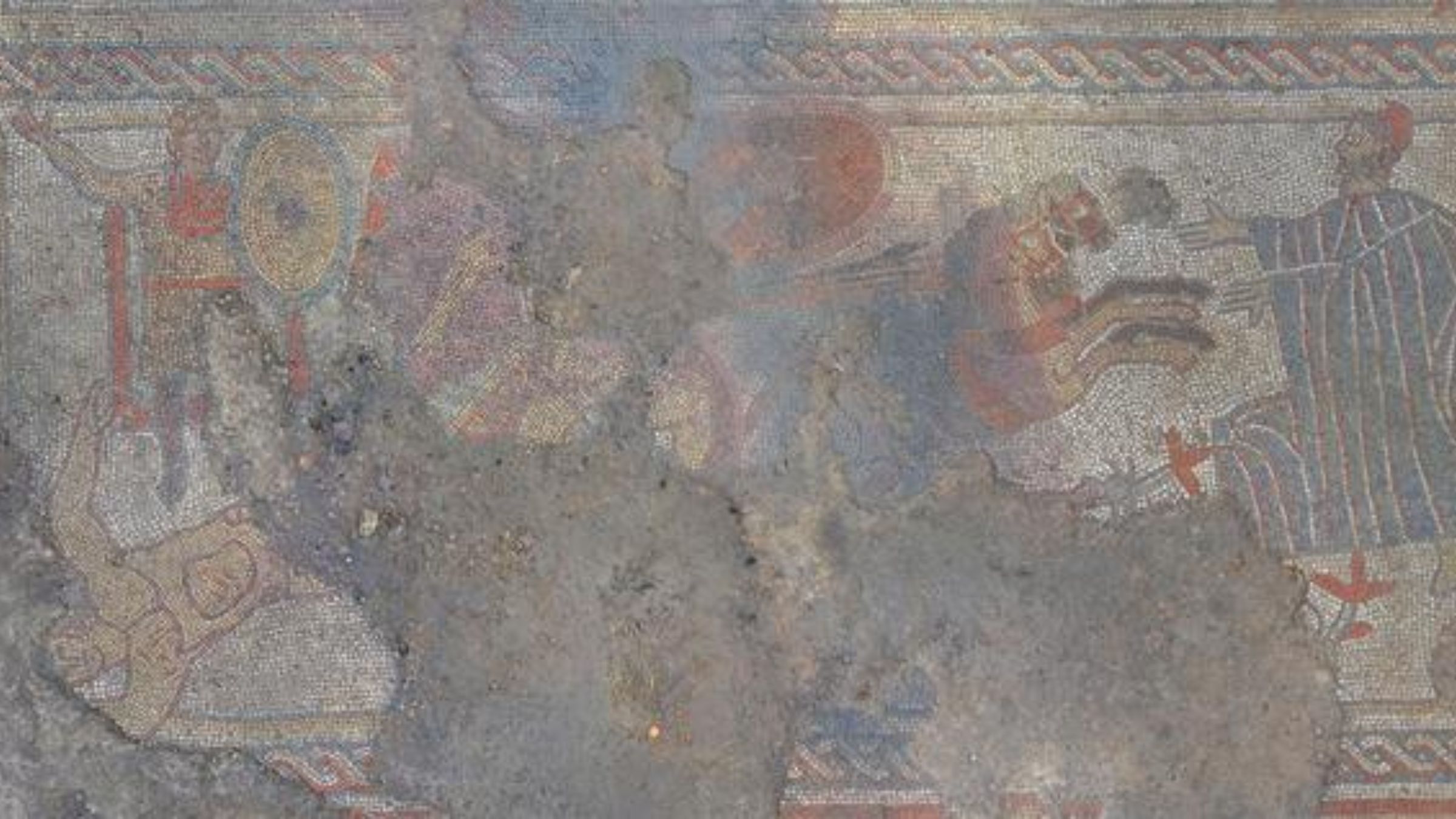 Stunningly preserved Roman-era mosaic in UK depicts Trojan War stories — but not the ones told by Homer
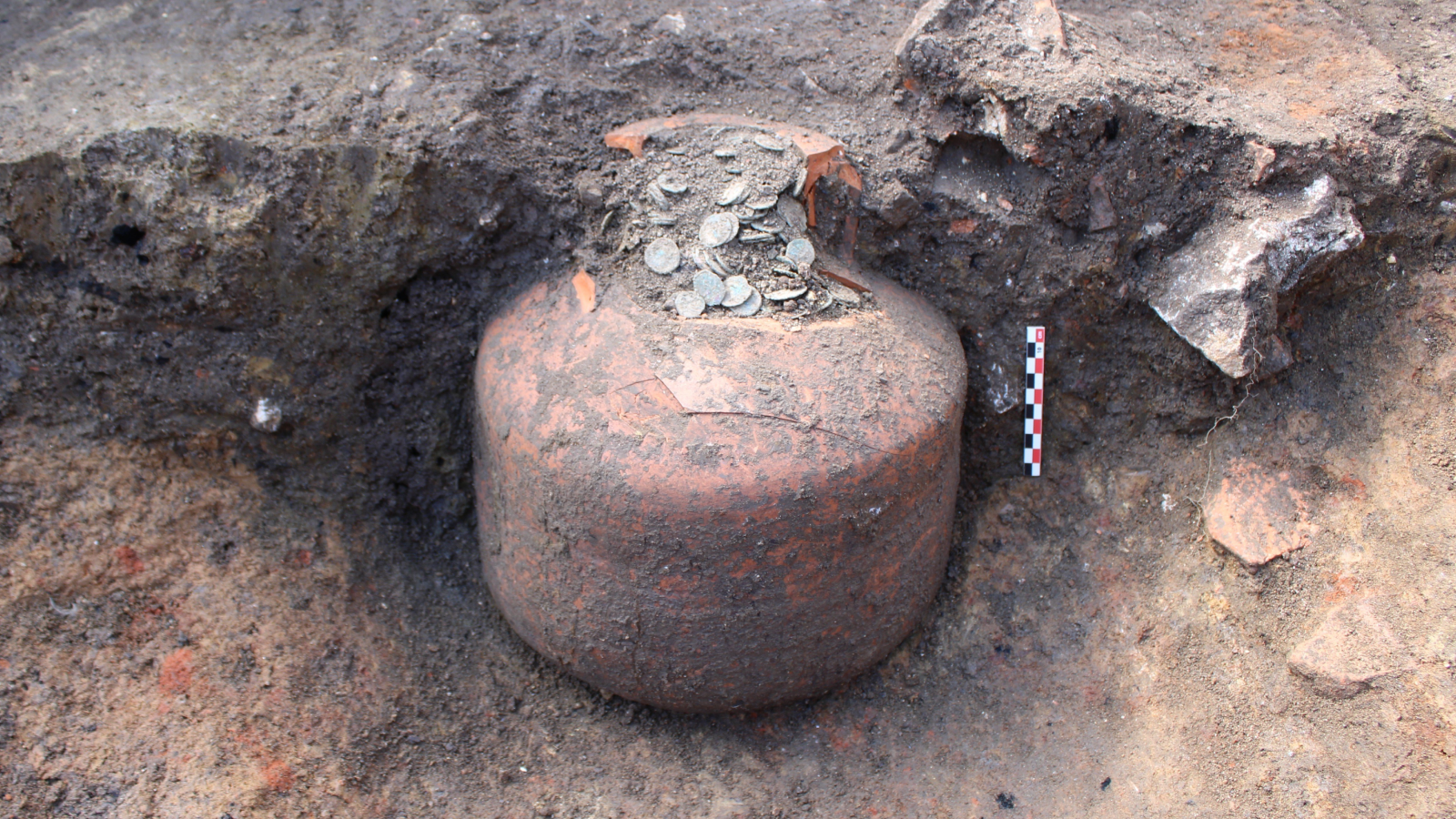 1,800-year-old 'piggy banks' full of Roman-era coins unearthed in French village
Latest in News
1,800-year-old 'piggy banks' full of Roman-era coins unearthed in French village
Latest in News
 James Webb telescope reveals sharpest-ever look at the edge of a supermassive black hole
 Why is flu season so bad this year?
 Strange discovery offers 'missing link' in planet formation
Romans regularly soaked in filthy, lead-contaminated bath water, Pompeii study finds
Strange discovery offers 'missing link' in planet formation
Romans regularly soaked in filthy, lead-contaminated bath water, Pompeii study finds
 Watch NASA roll its historic Artemis II moon rocket to the launch pad this weekend
 Astronomers confirm earliest Milky Way-like galaxy in the universe, just 2 billion years after the Big Bang
LATEST ARTICLES
Astronomers confirm earliest Milky Way-like galaxy in the universe, just 2 billion years after the Big Bang
LATEST ARTICLES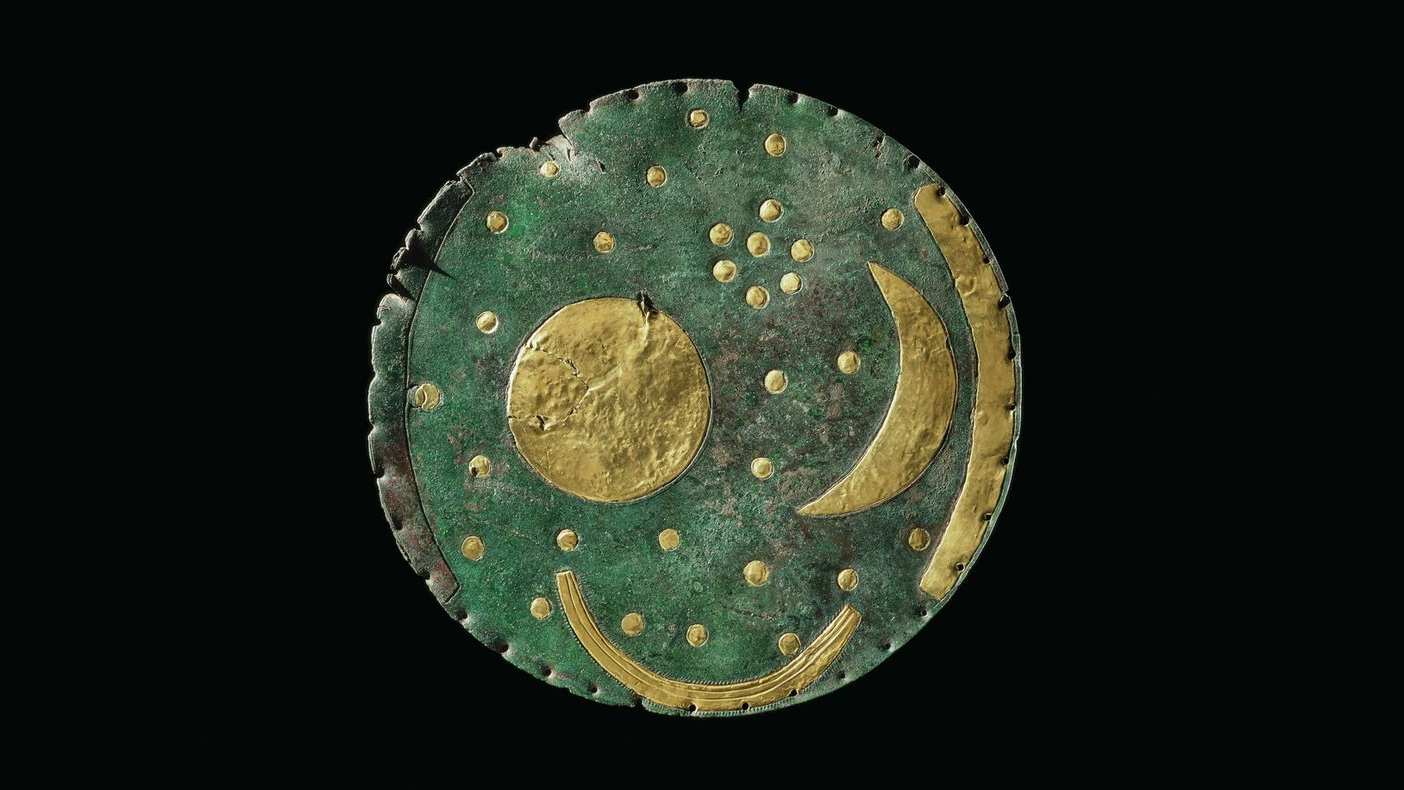 1Nebra Sky Disc: The world's oldest depiction of astronomical phenomena — and it may depict the Pleiades
- 2James Webb telescope reveals sharpest-ever look at the edge of a black hole — and it could solve a major galactic mystery
- 3Astronomers confirm earliest Milky Way-like galaxy in the universe, just 2 billion years after the Big Bang
- 4Viruses that evolved on the space station and were sent back to Earth were more effective at killing bacteria
- 5Why is flu season so bad this year?