- Space
- Astronomy
- The Sun
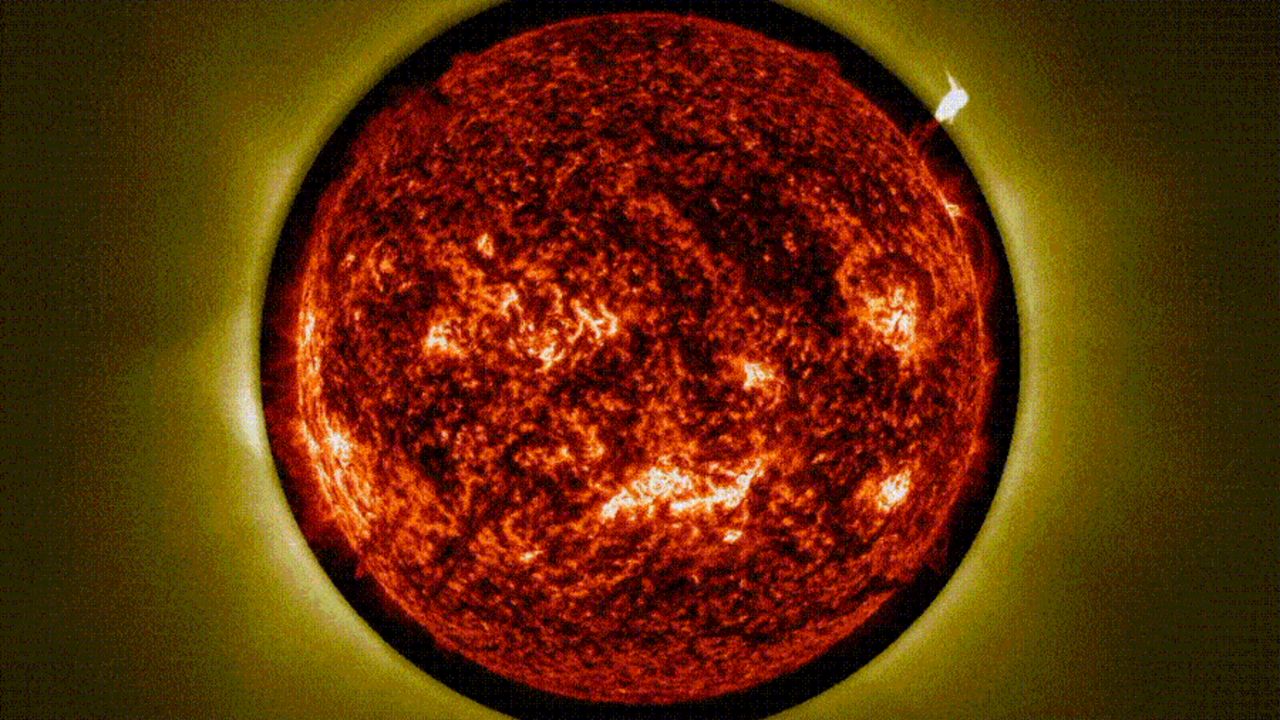
ESA's Proba-3 mission, made up of twin spacecraft capable of aligning to create artificial eclipses, has captured "rare" footage of three solar prominences erupting from the sun's mysteriously hot atmosphere.
When you purchase through links on our site, we may earn an affiliate commission. Here’s how it works.
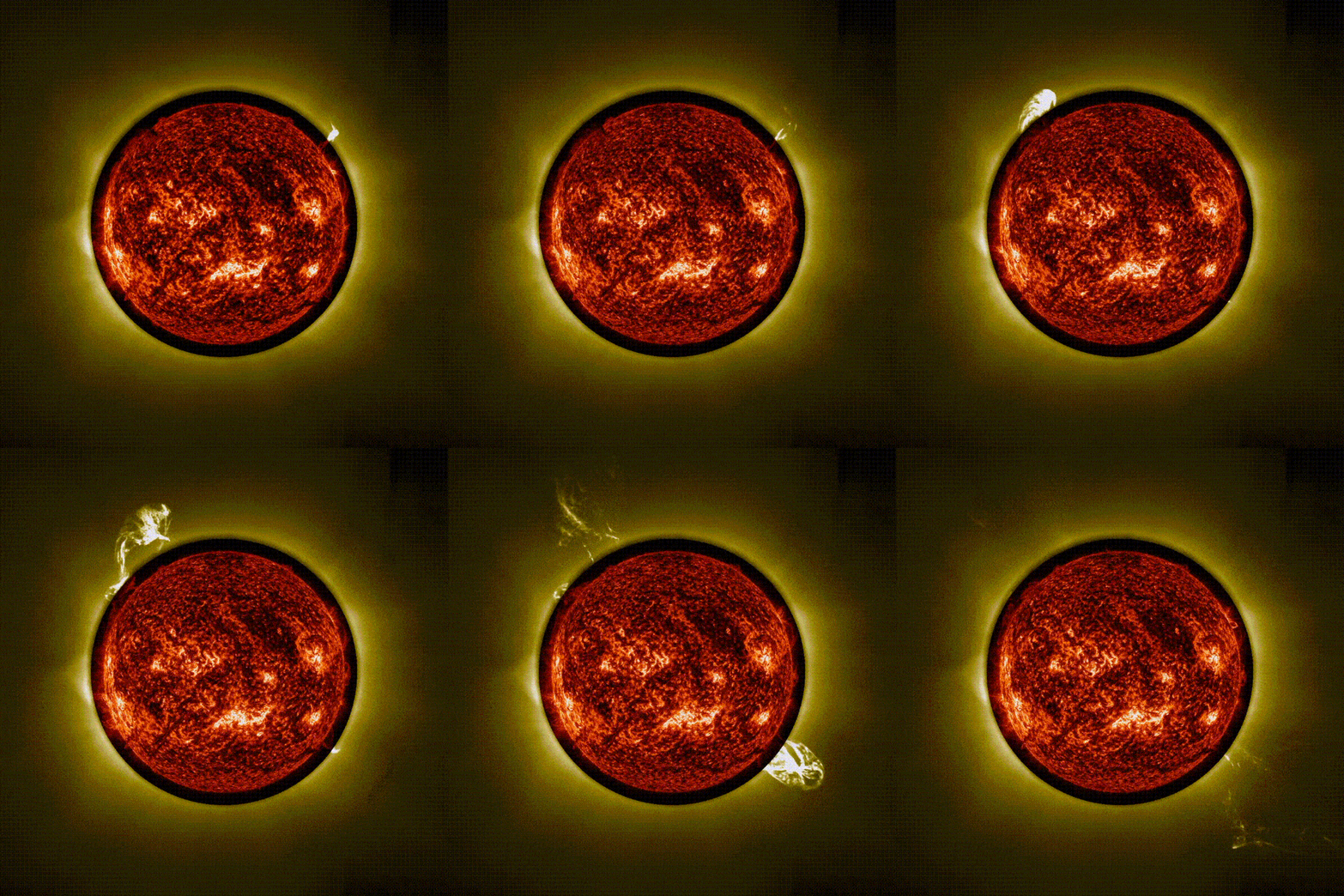 ESA's Proba-3 mission has captured a trio of solar prominences erupting from the sun, hurling plumes of plasma through the corona.
(Image credit: ESA/Proba-3/ASPIICS, NASA/SDO/AIA)
Share
Share by:
ESA's Proba-3 mission has captured a trio of solar prominences erupting from the sun, hurling plumes of plasma through the corona.
(Image credit: ESA/Proba-3/ASPIICS, NASA/SDO/AIA)
Share
Share by:
- Copy link
- X
The European Space Agency (ESA) has released a stunning time-lapse of a trio of solar eruptions exploding into space from the sun during an "artificial eclipse." The unique footage, captured by the newly operational Proba-3 mission, could help scientists unravel one of the biggest mysteries surrounding our home star, researchers say.
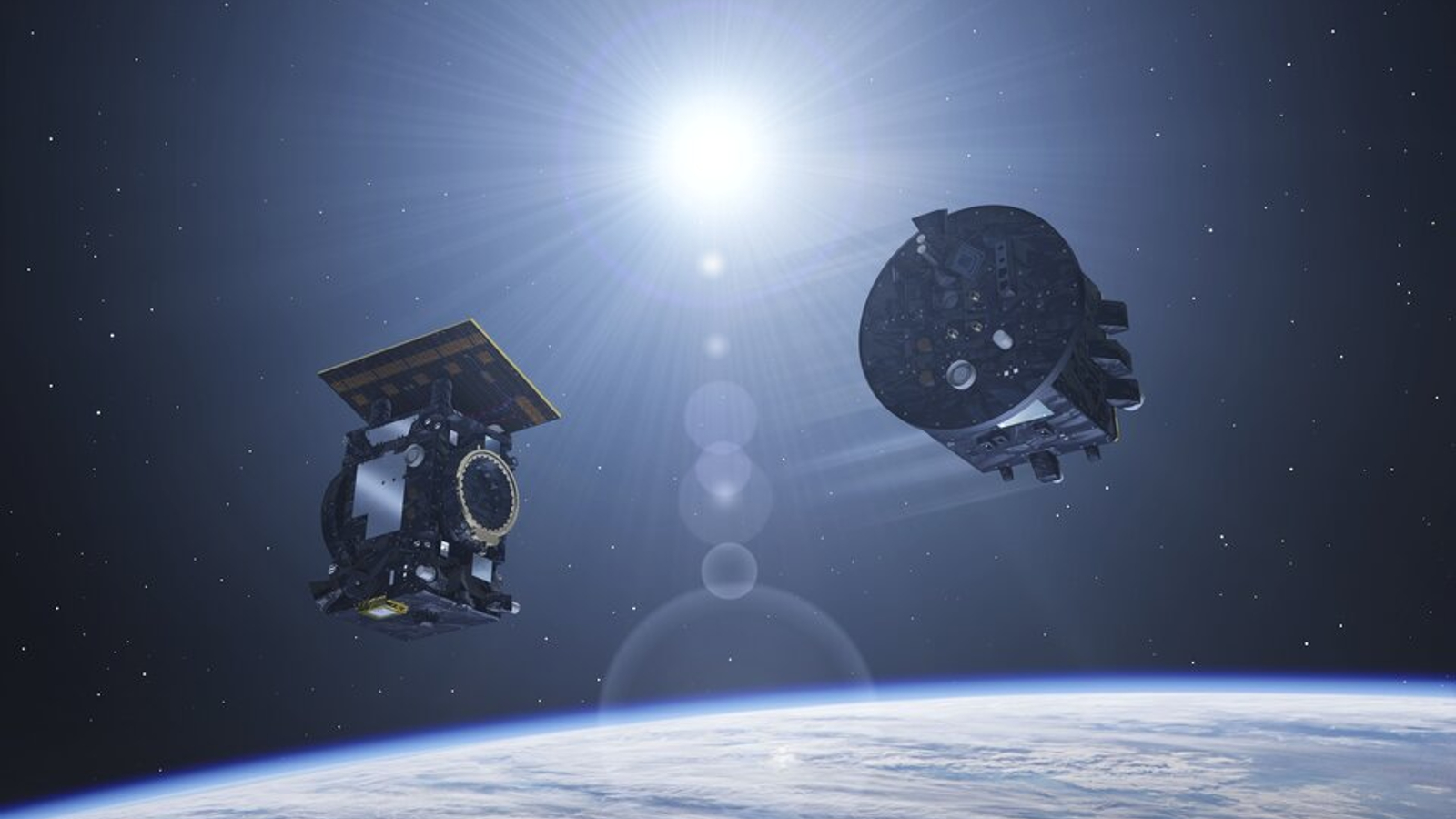
The Proba-3 mission consists of two probes, dubbed the coronagraph and the occulter, which were launched into a highly elliptical orbit around Earth in December 2024. By perfectly aligning the coronograph behind the occulter, scientists can view the sun with its bright center fully obscured, just like we see from the planet's surface during a solar eclipse — but more frequently and over longer periods of time. This allows researchers to study the hidden subtleties of the sun's faint atmosphere, or corona, like never before.
You may like-
 NASA's Parker Solar Probe mapped an unseen part of the sun at its most active moment
-
 Giant sunspot that triggered recent solar 'superstorm' shot out nearly 1,000 flares and a secret X-rated explosion, record-breaking study reveals
-
 Mystery of the sun's mind-bogglingly hot atmosphere may finally be solved
Three major plasma plumes shoot out of the sun during the video. At first glance, these look like solar flares — the massive explosions that can hurl solar storms toward Earth. However, when you look closely at the solar disk, there are no bright flashes, which are the telltale signs of a flare. Instead, what we are seeing are what researchers refer to as prominences, which are towering loops of plasma on the sun's surface that overextend and snap, flinging their ionized gas into space.
While they are less powerful than flares, prominences are equally valuable to researchers because they are usually harder to spot, Andrei Zhukov, a researcher at the Royal Observatory of Belgium and principal investigator of Proba-3's coronograph, explained in a statement. "Seeing so many prominence eruptions in such a short timeframe is rare, so I'm very happy we managed to capture them so clearly during our observation window."
The bright light emitted by the prominence eruptions suggests they are significantly hotter than the surrounding corona. But in reality, their plasma is much cooler — only "around 10,000 degrees" compared to the million-degree corona, Zhokov said.
The extremely high temperature of the corona, which is "around 200 times hotter than the sun's surface," is one of the sun's biggest remaining mysteries, Zhukov said. To date, scientists have struggled to explain why the corona is so much hotter than the rest of the sun, and footage like this could be the key to figuring it out, he added.
Sign up for the Live Science daily newsletter nowContact me with news and offers from other Future brandsReceive email from us on behalf of our trusted partners or sponsorsBy submitting your information you agree to the Terms & Conditions and Privacy Policy and are aged 16 or over.All eyes on the sun
Proba-3 has now observed at least 50 different artificial eclipses since beginning operations around seven months ago, and will hopefully collect hundreds more in the coming years, according to ESA. But it is not the only new technology that is making waves in the solar physics community.
For example, in June 2025, NASA's CODEX telescope, affixed to the exterior of the International Space Station, collected its first images of the sun, revealing never-before-seen perturbations in the corona linked to solar wind.
RELATED STORIES—We are fast approaching the sun's 'battle zone' — and it could be even worse than solar maximum, experts warn
—'The sun is slowly waking up': NASA warns that there may be more extreme space weather for decades to come
—Giant sunspot that triggered recent solar 'superstorm' shot out nearly 1,000 flares and a secret X-rated explosion, record-breaking study reveals
Last year, the Daniel K. Inouye Solar Telescope in Hawaii and ESA's Solar Orbiter — both of which came online in 2021 — also captured the most detailed photo of the sun's surface and the first-ever image of the sun's south pole, respectively.
NASA's Parker Solar Probe, which has been repeatedly swooping closer to the sun than any spacecraft before it, has also captured some stunning photos of our home star that could help unravel multiple solar secrets.
All of these achievements have occurred while the sun was in its most active phase, or solar maximum, meaning they could provide clues to how powerful solar storms could impact our planet in the future.
 Harry BakerSocial Links NavigationSenior Staff Writer
Harry is a U.K.-based senior staff writer at Live Science. He studied marine biology at the University of Exeter before training to become a journalist. He covers a wide range of topics including space exploration, planetary science, space weather, climate change, animal behavior and paleontology. His recent work on the solar maximum won "best space submission" at the 2024 Aerospace Media Awards and was shortlisted in the "top scoop" category at the NCTJ Awards for Excellence in 2023. He also writes Live Science's weekly Earth from space series.
Show More CommentsYou must confirm your public display name before commenting
Please logout and then login again, you will then be prompted to enter your display name.
Logout Read more NASA's Parker Solar Probe mapped an unseen part of the sun at its most active moment
 Giant sunspot on par with the one that birthed the Carrington Event has appeared on the sun — and it's pointed right at Earth
 NASA spacecraft reveal interstellar comet 3I/ATLAS brightened rapidly as it swooped behind the sun
 New 3I/ATLAS images show the comet getting active ahead of close encounter with Earth
 'Severe' solar storm brings auroras as far south as Florida — and more are on the way tonight
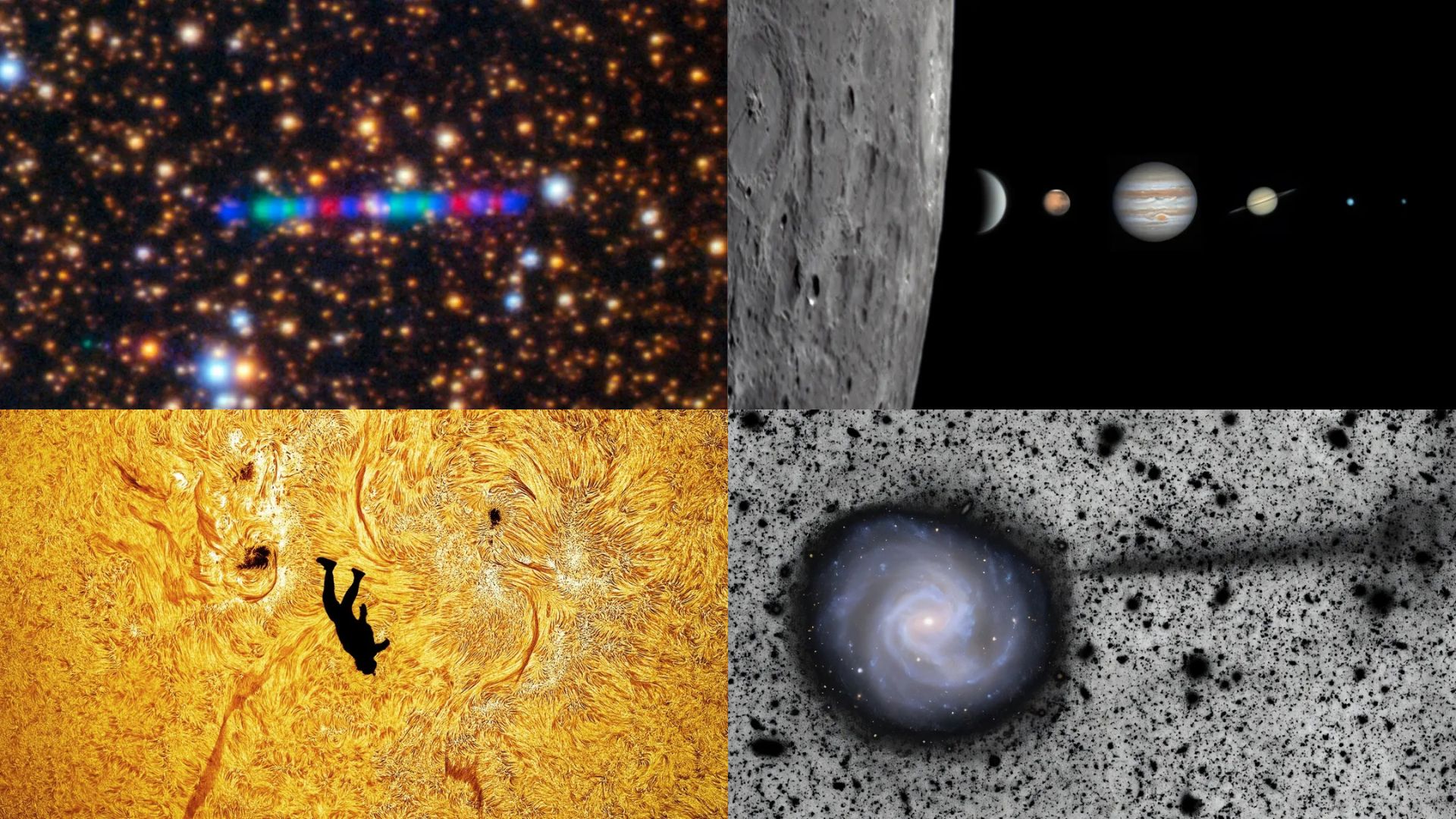 Best space photos of 2025
Latest in The Sun
Best space photos of 2025
Latest in The Sun
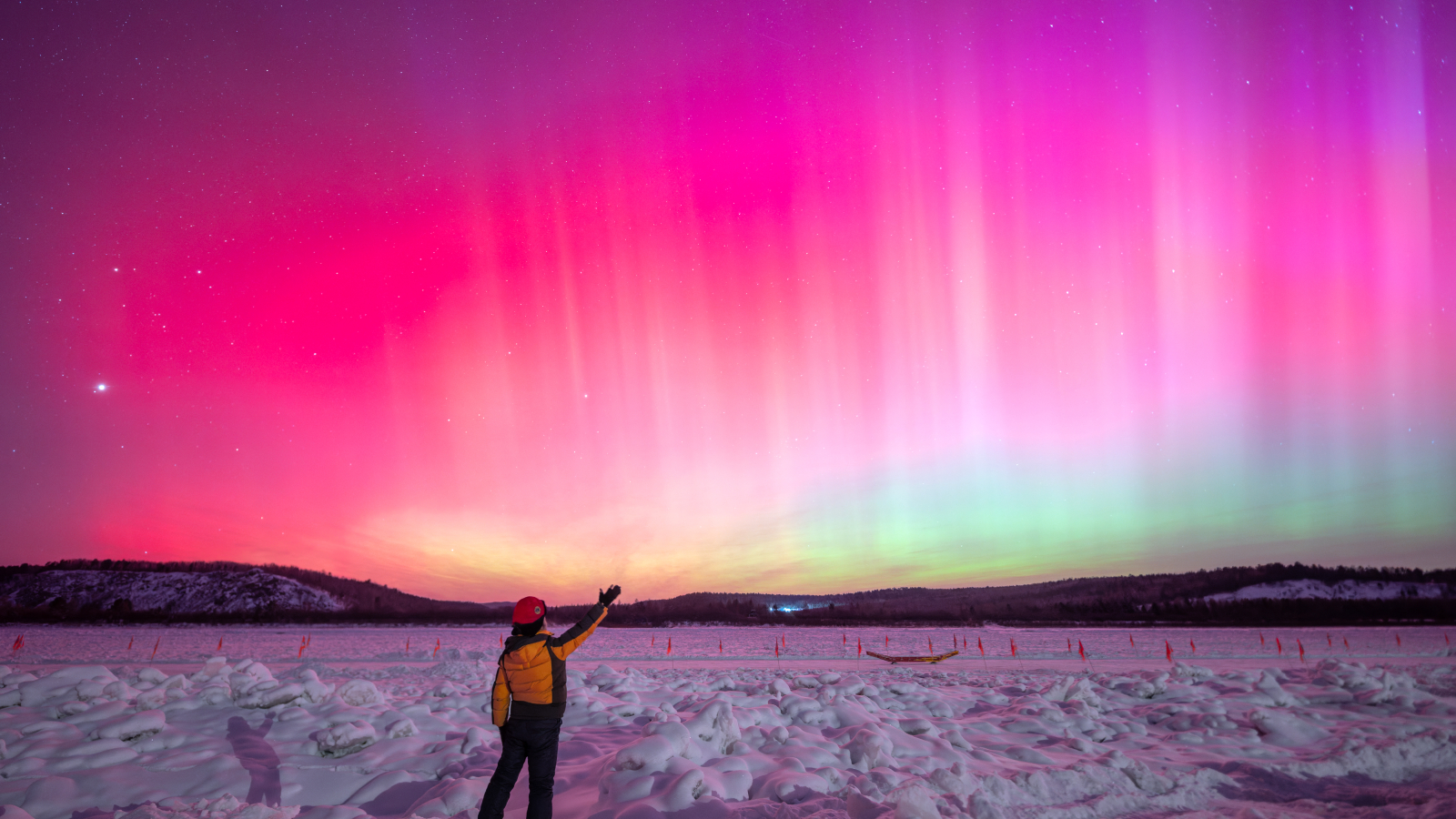 Earth hit by biggest 'solar radiation storm' in 23 years, triggering Northern Lights as far as Southern California
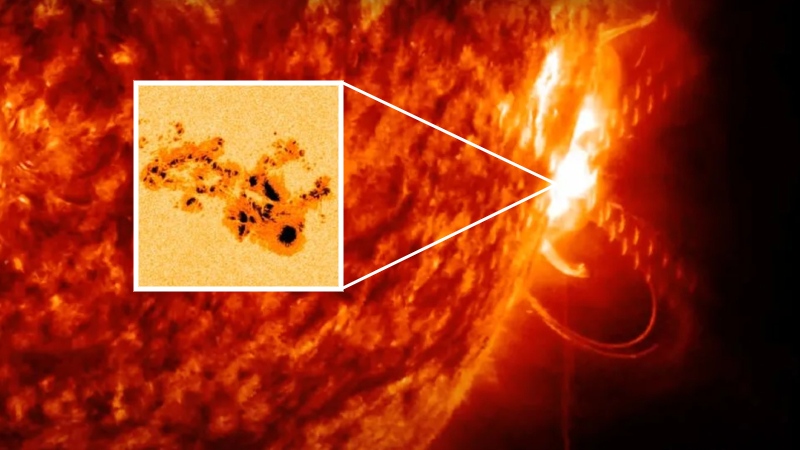 Giant sunspot that triggered recent solar 'superstorm' shot out nearly 1,000 flares and a secret X-rated explosion, record-breaking study reveals
 Is the sun really a dwarf star?
Giant sunspot on par with the one that birthed the Carrington Event has appeared on the sun — and it's pointed right at Earth
Is the sun really a dwarf star?
Giant sunspot on par with the one that birthed the Carrington Event has appeared on the sun — and it's pointed right at Earth
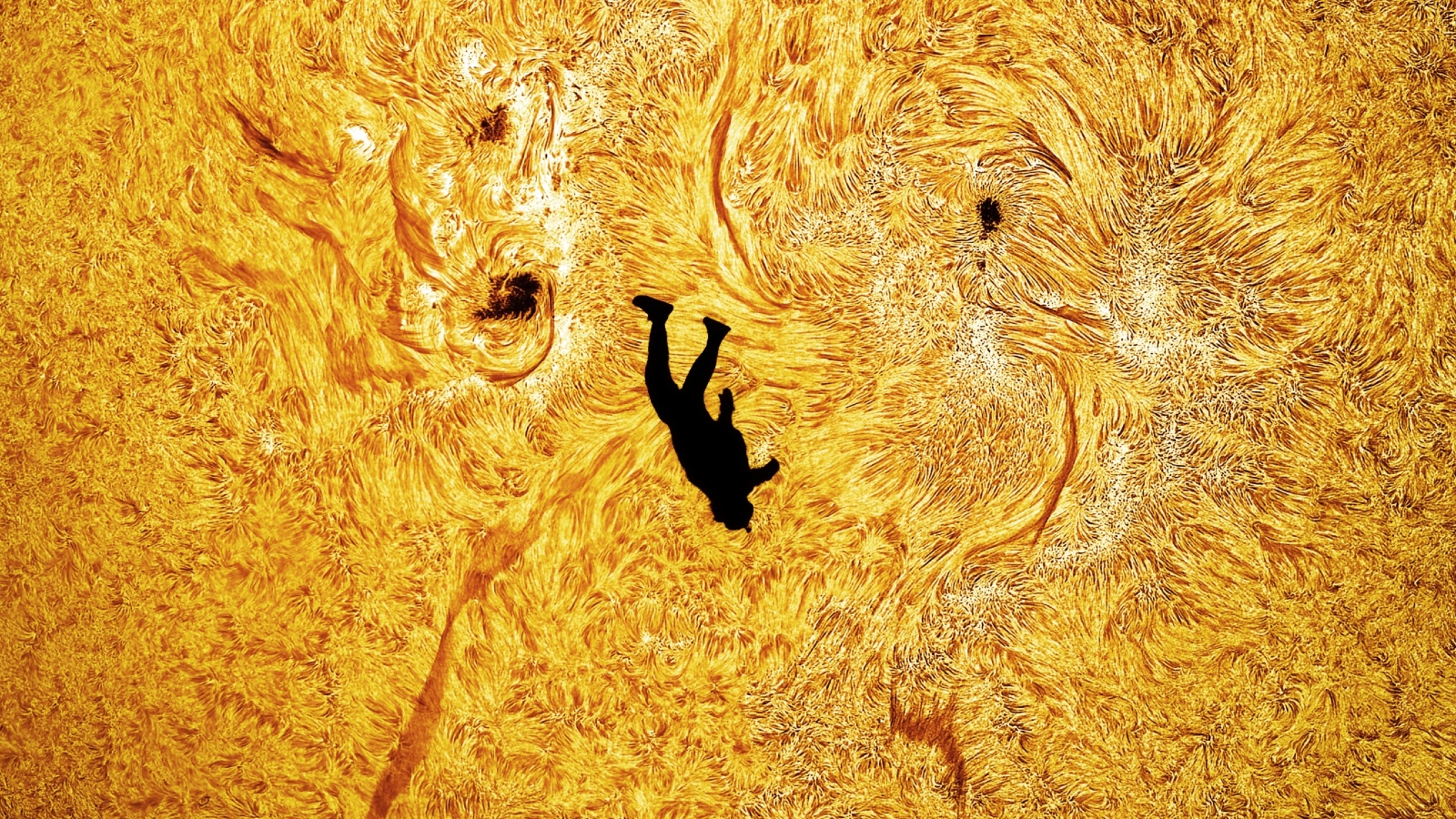 Astrophotographer snaps 'absolutely preposterous' photo of skydiver 'falling' past the sun's surface
'Severe' solar storm brings auroras as far south as Florida — and more are on the way tonight
Latest in News
Astrophotographer snaps 'absolutely preposterous' photo of skydiver 'falling' past the sun's surface
'Severe' solar storm brings auroras as far south as Florida — and more are on the way tonight
Latest in News
 Enormous freshwater reservoir discovered off the East Coast may be 20,000 years old and big enough to supply NYC for 800 years
 2.6 million-year-old jaw from extinct 'Nutcracker Man' is found where we didn't expect it
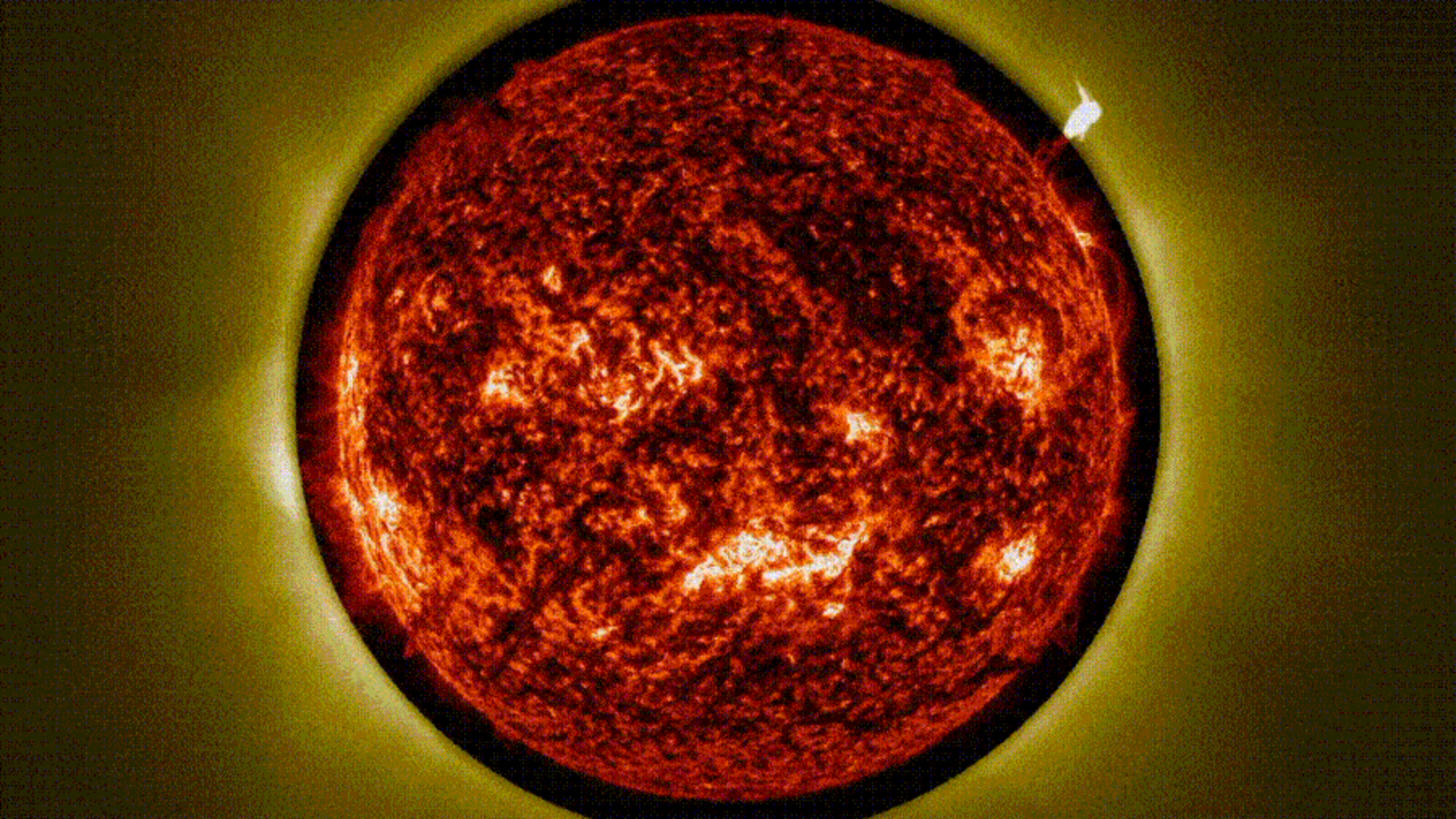 Stunning time-lapse video captured using 'artificial eclipse' shows 3 massive eruptions on the sun
 Early research hints at why women experience more severe gut pain than men do
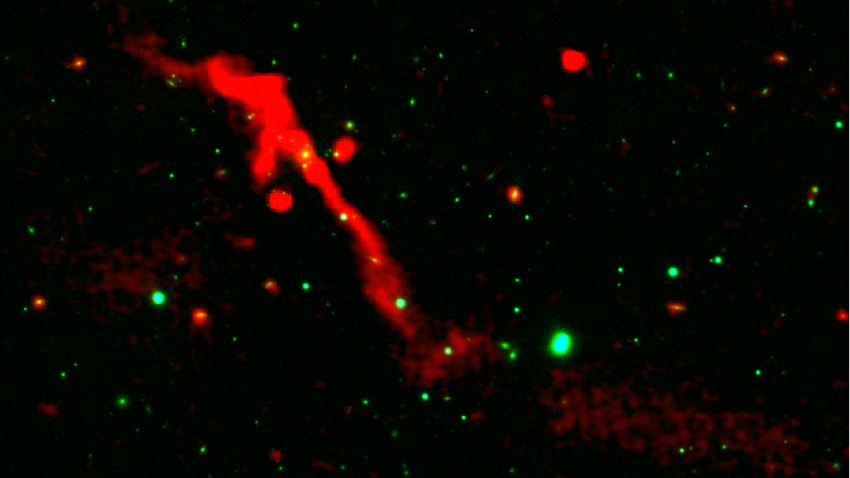 Scientists see monster black hole 'reborn' after 100 million years of rest
 Tiny improvements in sleep, nutrition and exercise could significantly extend lifespan, study suggests
LATEST ARTICLES
Tiny improvements in sleep, nutrition and exercise could significantly extend lifespan, study suggests
LATEST ARTICLES- 12.6 million-year-old jaw from extinct 'Nutcracker Man' is found where we didn't expect it
- 2World's oldest known rock art predates modern humans' entrance into Europe — and it was found in an Indonesian cave
- 3Bring the Northern Lights indoors with this Amazon deal on one of our top-rated star projectors
- 4Save $99 on the 2024 edition of Apple's impressive AirPods Max headphones
- 5Hommkiety Galaxy star projector review — a budget best buy