- Space
- Astronomy
The James Webb Space Telescope snapped its sharpest image of the area around a black hole, solving a long-standing galactic mystery.
When you purchase through links on our site, we may earn an affiliate commission. Here’s how it works.
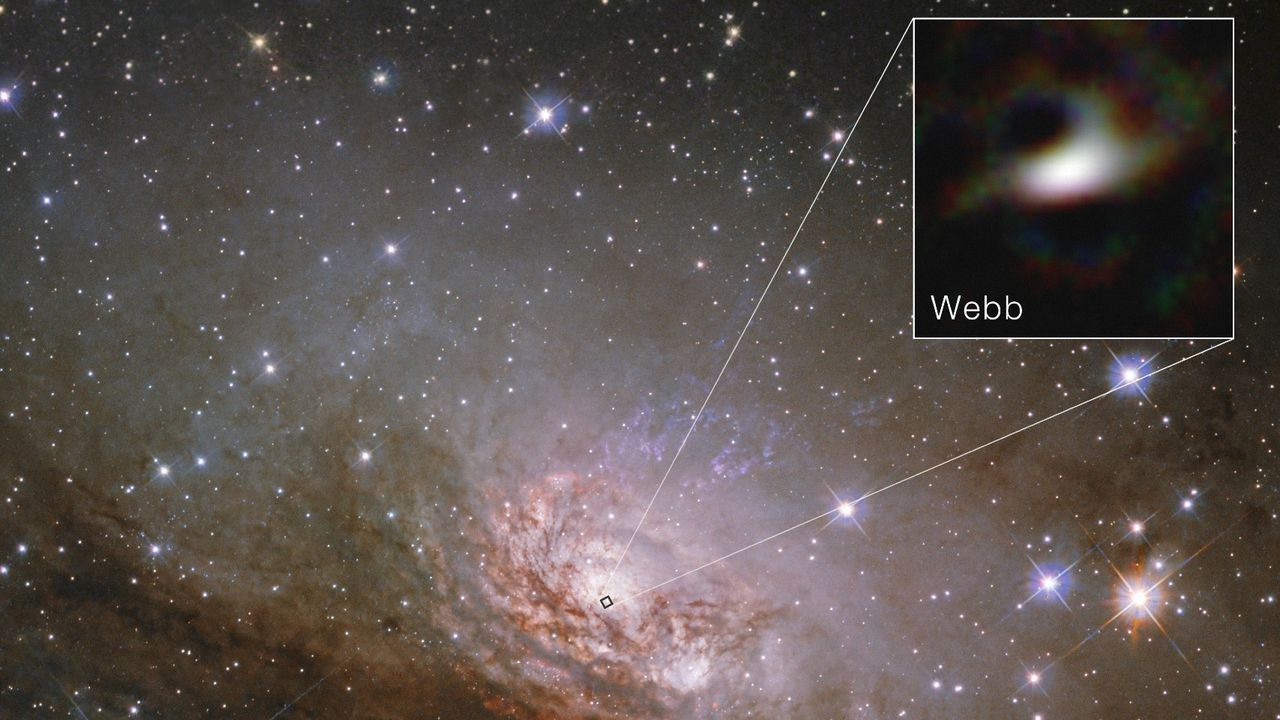
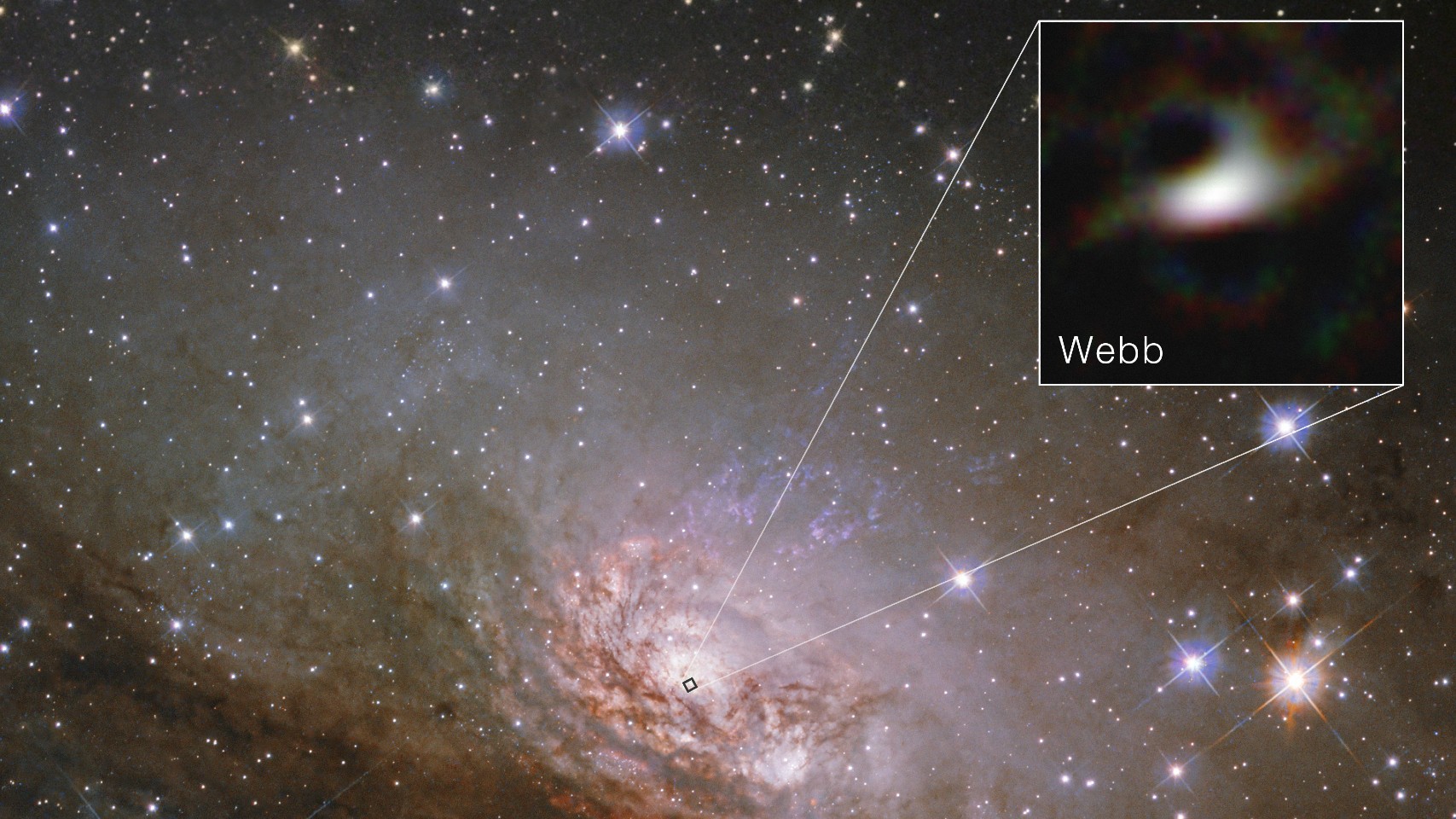 The James Webb telescope has zoomed in on the structures surrounding a supermassive black hole (inset) in unprecedented detail. A Hubble telesscope image (background) shows the cosmic context.
(Image credit: NASA, ESA, CSA, Enrique Lopez-Rodriguez (University of South Carolina), Deepashri Thatte (STScI); Image Processing: Alyssa Pagan (STScI); Acknowledgment: NSF's NOIRLab, CTIO)
Share
Share by:
The James Webb telescope has zoomed in on the structures surrounding a supermassive black hole (inset) in unprecedented detail. A Hubble telesscope image (background) shows the cosmic context.
(Image credit: NASA, ESA, CSA, Enrique Lopez-Rodriguez (University of South Carolina), Deepashri Thatte (STScI); Image Processing: Alyssa Pagan (STScI); Acknowledgment: NSF's NOIRLab, CTIO)
Share
Share by:
- Copy link
- X
Astronomers have revealed the James Webb Space Telescope's (JWST) sharpest-ever image of the area around a black hole. The spectacular view could help solve a decades-long mystery while reversing a long-held belief about space's most extreme objects.
Since the 1990s, astronomers have observed a curious brightness in infrared wavelengths surrounding the active supermassive black holes (SMBHs) at the centers of some galaxies. Previously, they attributed these excess infrared emissions to the outflows — superheated streams of matter blasted from black holes.
You may like-
 James Webb telescope may have discovered the earliest, most distant black hole ever seen
-
 James Webb telescope finds supermassive black hole hidden inside 'Jekyll and Hyde' galaxy
-
 'Not so exotic anymore': The James Webb telescope is unraveling the truth about the universe's first black holes
The data from JWST, paired with numerous ground-based observations, reveal that the infrared excess is coming from the disk of dusty material that's falling into the Circinus galaxy's central SMBH, rather than from material flowing away from it.
This galactic revelation can help astronomers better understand the growth and evolution of SMBHs, as well as these massive dark monsters' influence on their host galaxies.
Of doughnuts and disks
Active black holes like those at the centers of galaxies are fed by a giant ring of infalling gas and dust. As a black hole draws material from the inner wall of this "doughnut," known as a torus, the material forms a thinner accretion disk that spirals into the black hole like water spiraling into a drain.
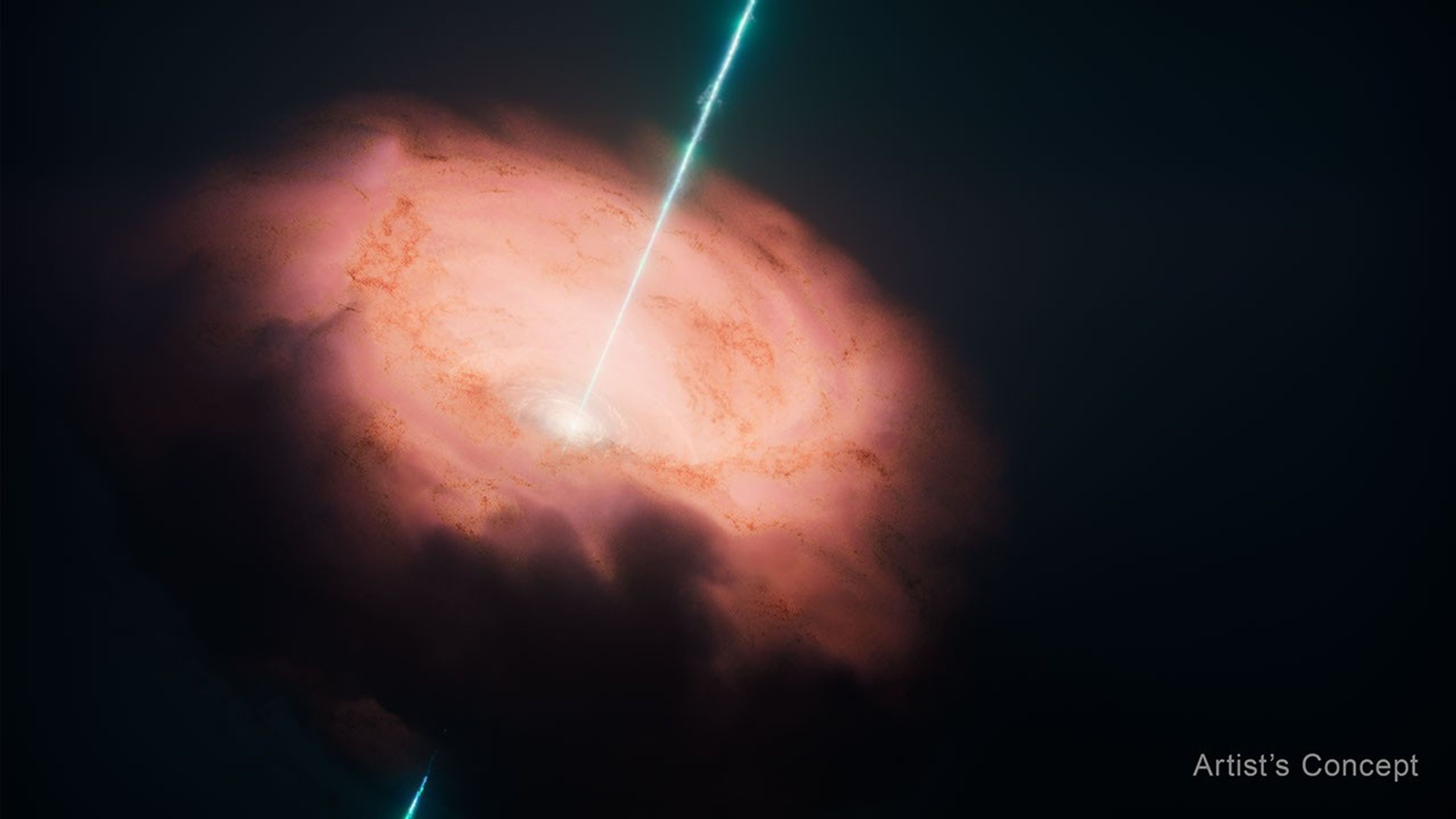
The black hole's tidal forces accelerate the infalling matter to great speeds. The resulting friction within the disk causes the swirling matter to emit light that glows so brightly that it obscures astronomers' view of the inner region around the black hole.
Sign up for the Live Science daily newsletter nowContact me with news and offers from other Future brandsReceive email from us on behalf of our trusted partners or sponsorsBy submitting your information you agree to the Terms & Conditions and Privacy Policy and are aged 16 or over.Yet black holes are not vacuum cleaners, and even they have a feeding limit. So they blast some of the swirling material back into space, in the form of jets or "winds." Therefore, an understanding of the nature of a black hole's torus, accretion disk and outflows is key to knowing how black holes of various sizes accrete and expel matter to potentially shape their host galaxies by quenching or enhancing star formation across galactic scales.
Resolving a long-standing mystery
The dense gas and bright starlight in Circinus previously prevented astronomers from viewing the galaxy's central region and SMBH in detail.
"In order to study the supermassive black hole, despite being unable to resolve it, they had to obtain the total intensity of the inner region of the galaxy over a large wavelength range and then feed that data into models," lead study author Enrique Lopez-Rodriguez, a galaxy evolution researcher at the University of South Carolina, said in a NASA statement.
You may like-
James Webb telescope may have discovered the earliest, most distant black hole ever seen
-
'Not so exotic anymore': The James Webb telescope is unraveling the truth about the universe's first black holes
-
 James Webb telescope confirms a supermassive black hole running away from its host galaxy at 2 million mph, researchers say
Earlier models separately fit the observed spectra of the torus, accretion disk and outflows, but they couldn't resolve the region in its entirety. As a result, astronomers could not explain which part of the SMBH's surroundings caused the excess emissions in infrared light.
JWST's advanced capabilities allowed astronomers to peer through the dust and starlight of Circinus so they could get a sharper view of the SMBH's environment. To do so, they used an imaging technique known as interferometry.
Ground-based interferometry generally requires an array of telescopes or mirrors that work together to gather and combine light from a celestial object over a large area. By combining light from multiple sources, this method causes the electromagnetic waves that form that light to create interference patterns that astronomers can analyze to reveal the sizes, shapes and other characteristics of those objects.
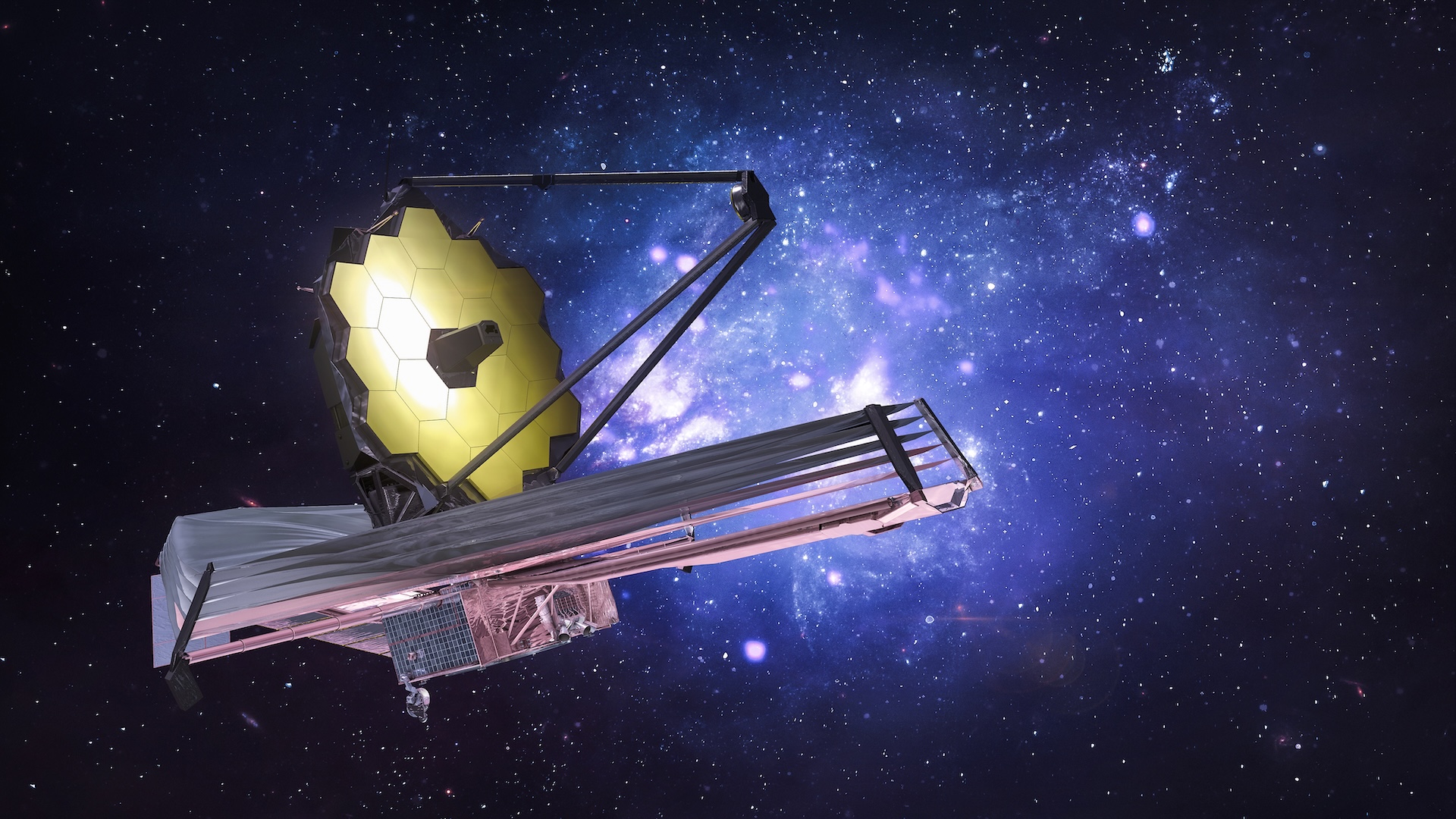
Unlike these terrestrial facilities, however, the space-based JWST can operate as its own interferometer array via its aperture masking interferometer (AMI), a component of the telescope's Near-Infrared Imager and Slitless Spectrograph (NIRISS) instrument. Like a camera aperture, AMI is an opaque physical mask with seven small, hexagonal holes that control the amount and direction of light entering JWST's detectors.
Overall, AMI effectively doubles JWST's resolution. "This allows us to see images twice as sharp," Joel Sanchez-Bermudez, an astrophysicist at the National University of Mexico and co-author of the study, said in the statement. "Instead of Webb's 6.5-meter [21 feet] diameter, it's like we are observing this region with a 13-meter space telescope."
By doubling its resolution, JWST captured its sharpest-ever view of a 33-light-year-wide area at the center of Circinus. This unprecedented image allowed researchers to calculate that the majority — around 87% — of the excess infrared emissions come from the dusty disk that's actively feeding the central black hole; "the inner surface of the hole of the doughnut," Lopez-Rodriguez said via email. Whereas previous research had suggested that the excess may have come from hot dusty winds, or even the galaxy’s residual starlight, the team found that less than 1% of these emissions come from the energetic outflows streaming away from the SMBH.
The accretion may be extinguishing star formation in the center of Circinus, but confirming this will require a different type of JWST-based observation, Lopez-Rodriguez said.
An invaluable perspective
In addition to revealing previously hidden SMBH mechanics, this research highlights the potential of JWST-based interferometry for studying various celestial objects, including other active SMBHs at the cores of nearby galaxies. By increasing the sample size, astronomers hope to determine whether the infrared emissions from other SMBHs are due to their dusty disks or to their hot outflows.
related stories— James Webb telescope spots earliest black hole in the known universe, looking 'as far back as you can practically go'
— James Webb telescope finds supermassive black hole hidden inside 'Jekyll and Hyde' galaxy
— James Webb telescope finds something 'very exciting' shooting out of first black hole ever imaged
"AMI has to be used — in order to get precious JWST time — on targets which cannot be done from the ground, or at wavelengths that are blocked by the Earth's atmosphere," study co-author Julien Girard, a senior research scientist at the Space Telescope Science Institute, told Live Science via email.
AMI-based observations can better illuminate our own solar system; they recently offered a detailed look at the volcanoes on Jupiter's hellish moon Io, Girard added. So AMI can observe diverse cosmic objects of varying shapes and sizes, from moons oozing with lava to black holes obscured by dust. In the future, it could help astronomers detect moons around prominent asteroids or reveal the orbits and masses of multistar systems, Girard added.
Ivan FarkasLive Science ContributorIvan is a long-time writer who loves learning about technology, history, culture, and just about every major “ology” from “anthro” to “zoo.” Ivan also dabbles in internet comedy, marketing materials, and industry insight articles. An exercise science major, when Ivan isn’t staring at a book or screen he’s probably out in nature or lifting progressively heftier things off the ground. Ivan was born in sunny Romania and now resides in even-sunnier California.
Show More CommentsYou must confirm your public display name before commenting
Please logout and then login again, you will then be prompted to enter your display name.
Logout Read more James Webb telescope may have discovered the earliest, most distant black hole ever seen
 'Not so exotic anymore': The James Webb telescope is unraveling the truth about the universe's first black holes
 James Webb telescope confirms a supermassive black hole running away from its host galaxy at 2 million mph, researchers say
 James Webb telescope saw black holes emerging from 'cocoons' near the dawn of time
 Rarrr! James Webb telescope spots 'monster stars' leaking nitrogen in the early universe
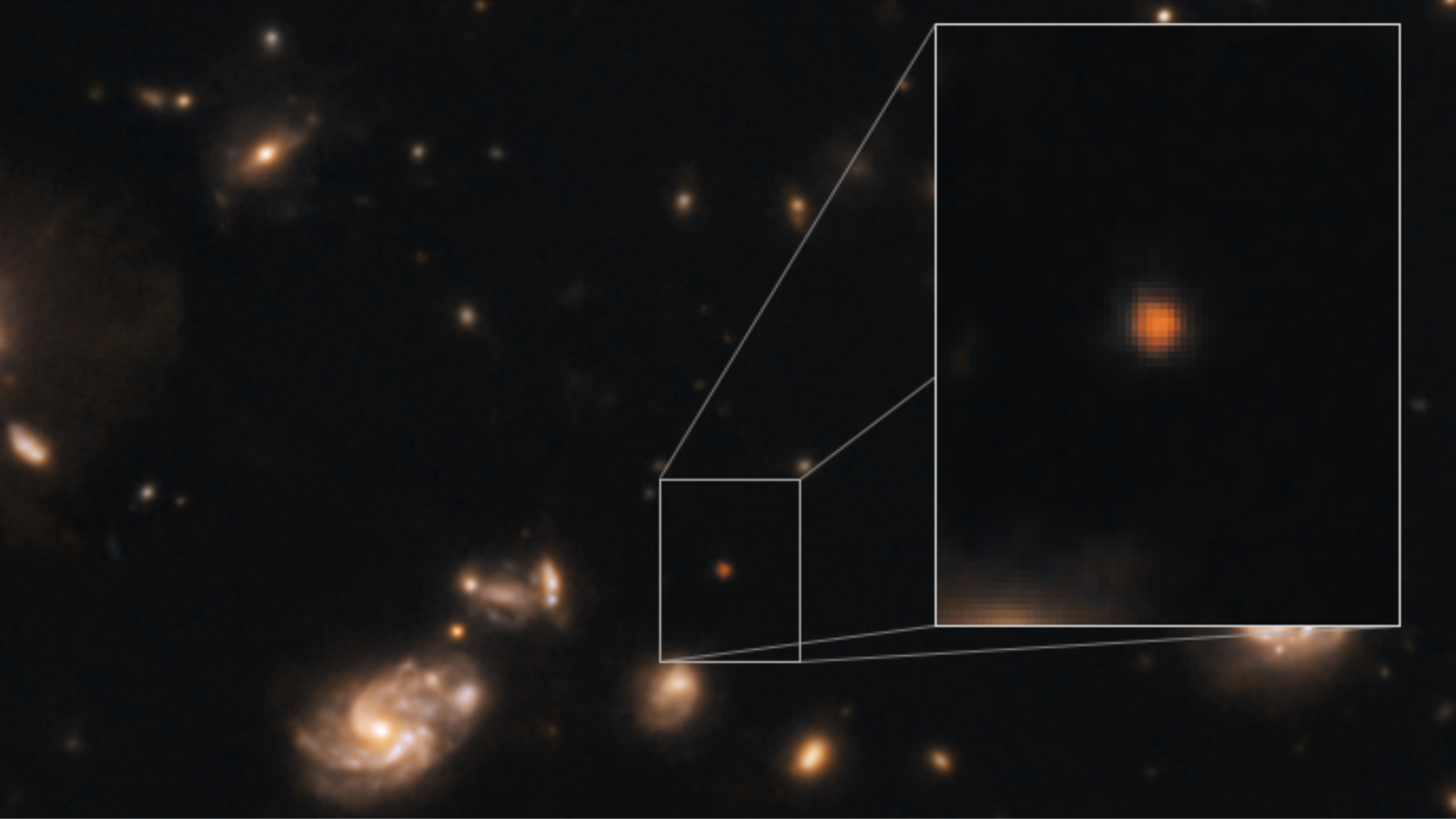 'Puzzling' object discovered by James Webb telescope may be the earliest known galaxy in the universe
Latest in Astronomy
'Puzzling' object discovered by James Webb telescope may be the earliest known galaxy in the universe
Latest in Astronomy
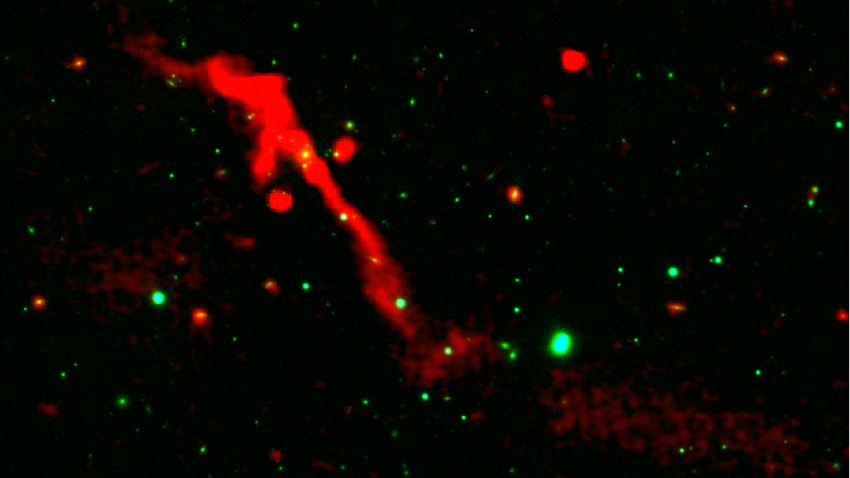 Scientists see monster black hole 'reborn' after 100 million years of rest
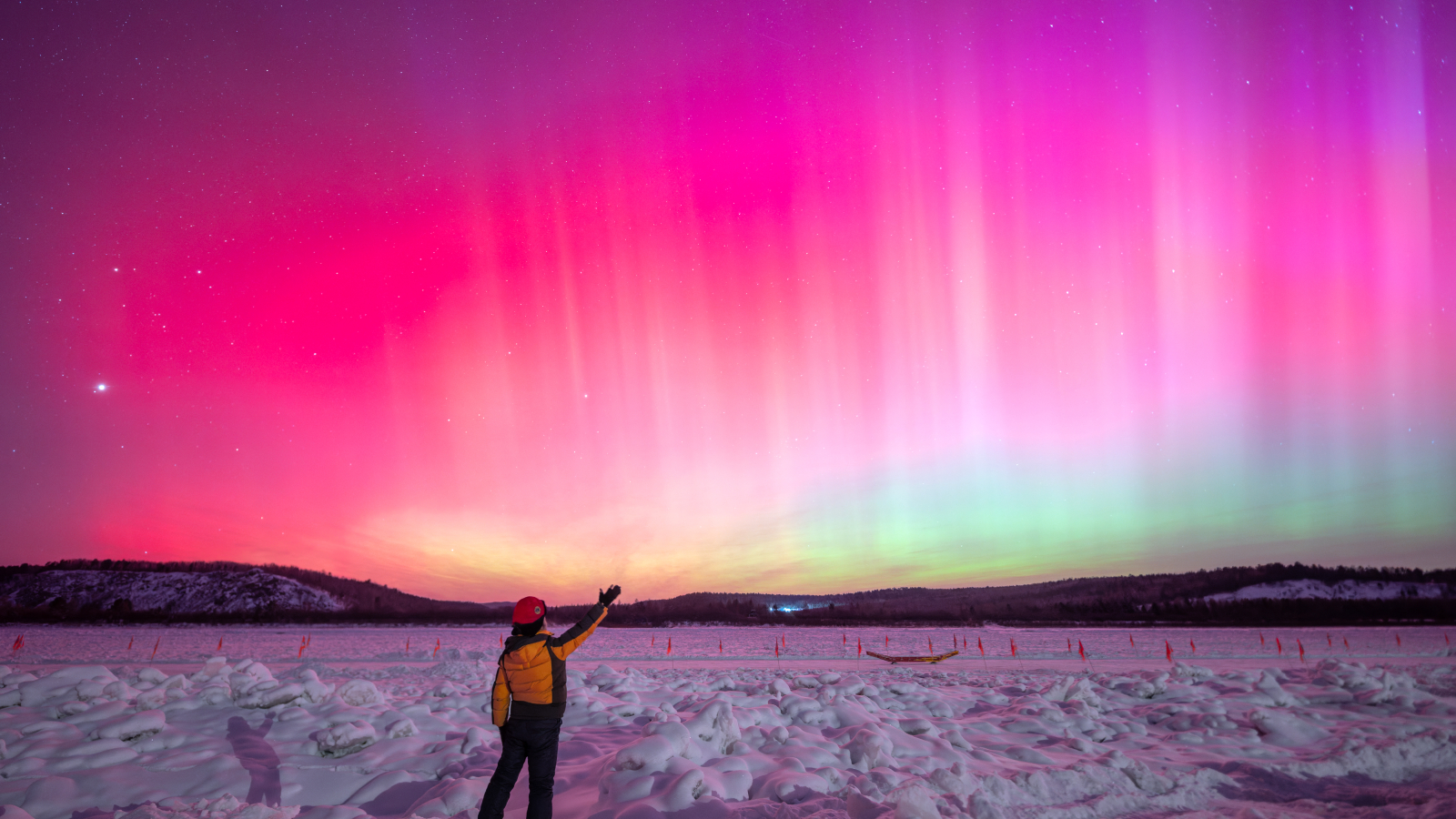 Earth hit by biggest 'solar radiation storm' in 23 years, triggering Northern Lights as far as Southern California
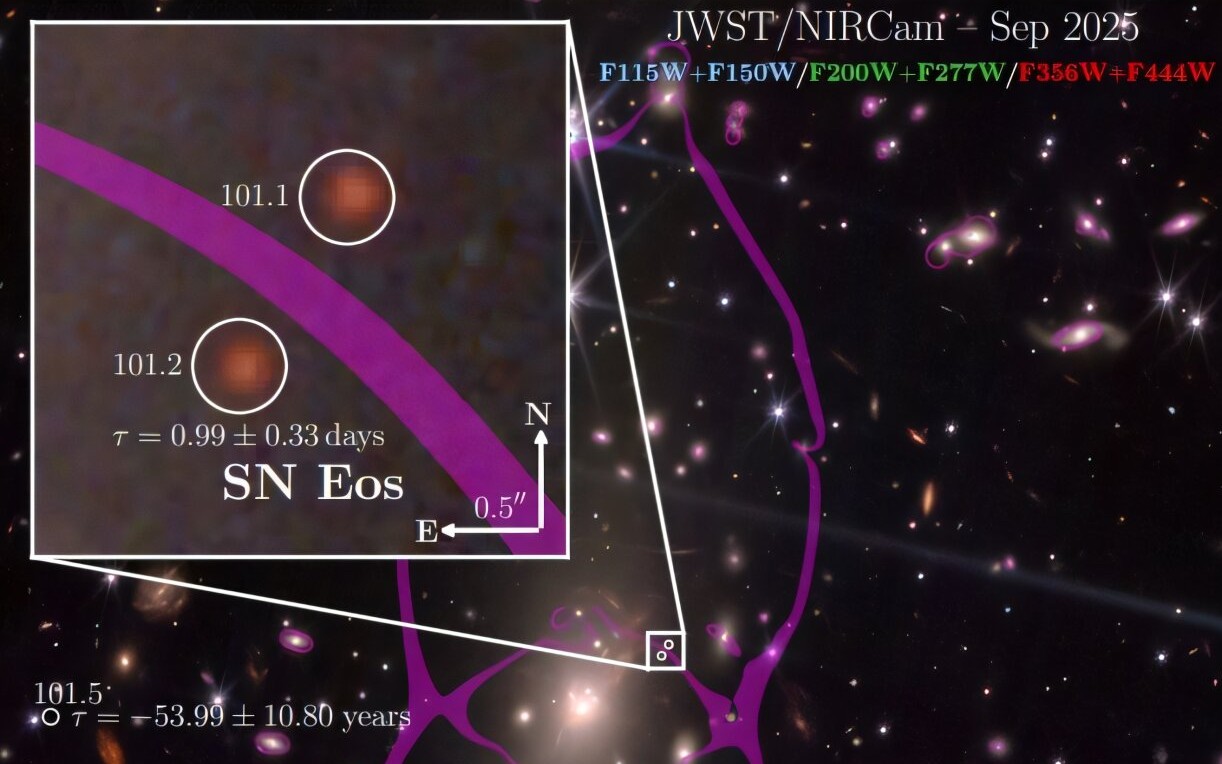 James Webb telescope discovers earliest Type II supernova in the known universe
 Strange discovery offers 'missing link' in planet formation
 Astronomers confirm earliest Milky Way-like galaxy in the universe, just 2 billion years after the Big Bang
 James Webb telescope spots 'failed stars' in a breathtaking cluster near Earth — Space photo of the week
Latest in News
James Webb telescope spots 'failed stars' in a breathtaking cluster near Earth — Space photo of the week
Latest in News
 Early research hints at why women experience more severe gut pain than men do
 Tiny improvements in sleep, nutrition and exercise could significantly extend lifespan, study suggests
 Color blindness linked to lower bladder cancer survival, early study hints
 Medieval 'super ship' found wrecked off Denmark is largest vessel of its kind
 Ever watched a pet cow pick up a broom and scratch herself with it? You have now
James Webb telescope reveals sharpest-ever look at the edge of a supermassive black hole
LATEST ARTICLES
Ever watched a pet cow pick up a broom and scratch herself with it? You have now
James Webb telescope reveals sharpest-ever look at the edge of a supermassive black hole
LATEST ARTICLES- 1Early research hints at why women experience more severe gut pain than men do
- 2Scientists see monster black hole 'reborn' after 100 million years of rest
- 3Tiny improvements in sleep, nutrition and exercise could significantly extend lifespan, study suggests
- 4James Webb telescope discovers earliest Type II supernova in the known universe
- 5Earth hit by biggest 'solar radiation storm' in 23 years, triggering Northern Lights as far as Southern California