 Video Capture
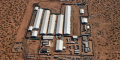
The landing and takeoff of helicopters at Fort Tiuna, the compound in which Venezuela's authoritarian President Nicolas Maduro was captured, was the most dangerous phase of the raid, according to a new report.
CNN reconstructed the raid based on eyewitness accounts and videos, as well as the mapping of helicopter flight paths.
The aircraft landed right at Maduro's compound to execute the planned raid. Before, radars, communications and air defense infrastructure were disabled through different attacks. Retired U.S. Air Force master sergeant and former special operations tactical air controller Wes Bryant said the strategy to conduct preemptive strikes in the area before helicopters landed were "organized chaos."
Two helicopters then landed at the compound, allowing troops to hit the ground and leaving afterwards. A mission leader flying a helicopter was shot in the leg three times but managed to keep the aircraft stable before leaving. Troops then searched the compound and captured Maduro, boarding fresh helicopters before taking him and his wife, Cilia Flores, to the USS Iwo Jima.
President Donald Trump has highlighted the success of the operation, even acknowledging the use of a "sonic weapon" during the raid.
Speaking to NewsNation this week, Trump was asked if people in the U.S. should be concerned about the "sonic weapons that took out many of the Cuban bodyguards used to defend Maduro."
"Nobody else has it. We have weapons no one knows about. It's probably good not to talk about them but we have some incredible weapons. That was an incredible attack. Don't forget that house was in the middle of a fortress and military base," Trump noted. Overall, 32 Cuban soldiers were killed in the operation.
The White House had already appeared to acknowledge the use of such a weapon when White House press secretary Karoline Leavitt shared an account of the attack describing its use.
It involves a Venezuelan guard who said that there was no chance to stage a counter-attack because "at one point, they launched something—I don't know how to describe it... it was like a very intense sound wave."
"Suddenly I felt like my head was exploding from the inside. We all started bleeding from the nose. Some were vomiting blood. We fell to the ground, unable to move," the guard noted."
The guard went on to say that only a "small number" of ground forces arrived in the premises, but they were "technologically very advanced" and "didn't look like anything we've fought against before."
The guard then noted that Venezuelan forces attempted to fight, but the confrontation was a "massacre." "We were hundreds, but we had no chance. They were shooting with such precision and speed... it seemed like each soldier was firing 300 rounds per minute. We couldn't do anything," he added.
Related-
U.S. Warns Haitian Politicians Against 'Destabilizing' The Country And Threatens With 'Appropriate Measures'

-
Autopsy Supports Claim That Migrant Who Died In Detention Camp Was Choked
© 2025 Latin Times. All rights reserved. Do not reproduce without permission.
Tags: Venezuela, Nicolas Maduro, United States

