- Archaeology
The origins of whaling are highly debated. Now, some of the earliest signs of active whale hunting have appeared somewhere unexpected: southern Brazil.
When you purchase through links on our site, we may earn an affiliate commission. Here’s how it works.
 (Image credit: Museu Arqueologico de Sambaquis de Joinville)
Share
Share by:
(Image credit: Museu Arqueologico de Sambaquis de Joinville)
Share
Share by:
- Copy link
- X
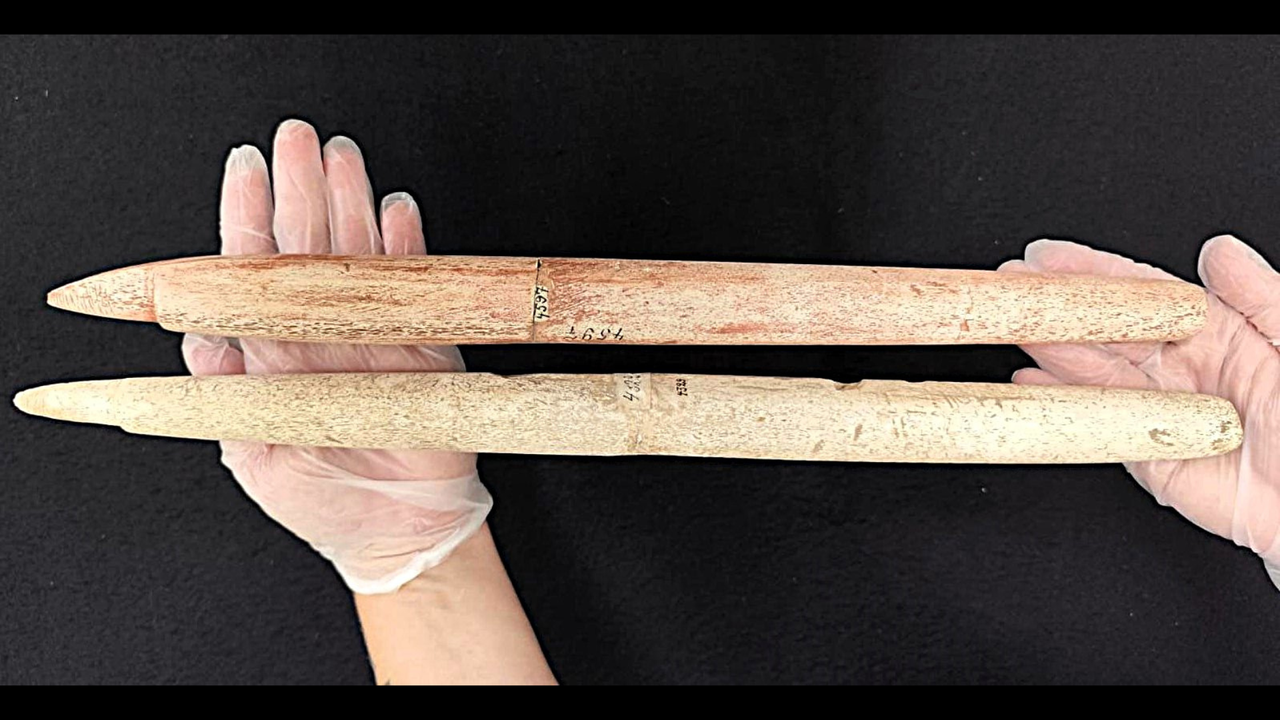
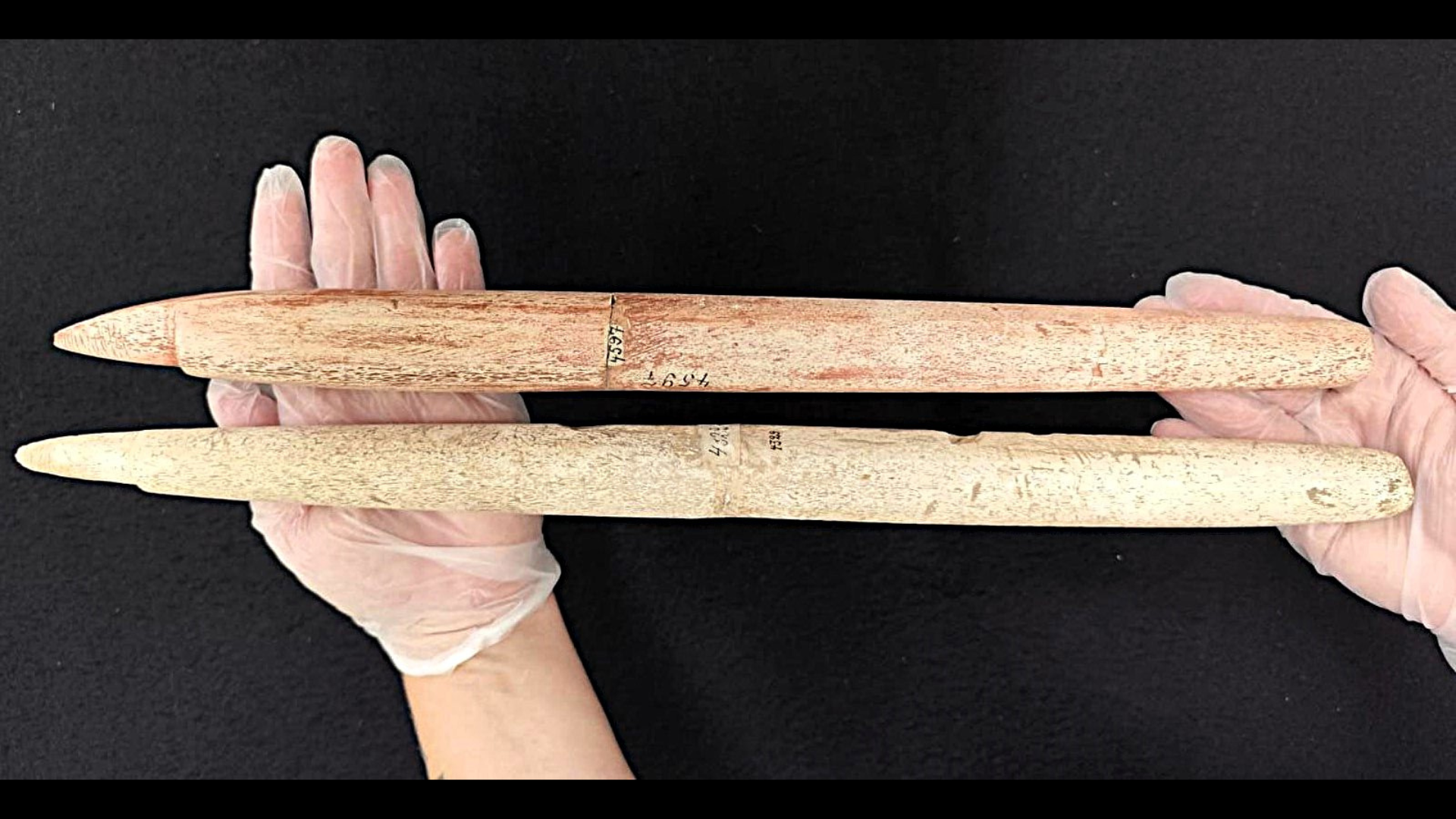
Harpoons crafted from the bones of humpback and southern right whales show Indigenous groups in what is now Brazil were hunting whales 5,000 years ago.
The discovery, which included 118 whale bones and crafted artifacts, reveal that prehistoric whaling was not confined to people in temperate and polar climates in the Northern Hemisphere, according to a study published Jan. 9 in the journal Nature Communications.
"Whaling has always been enigmatic," because it's difficult to distinguish bone tools made from actively hunted and stranded animals in the archaeological record, study co-author André Carlo Colonese, a research director at the Autonomous University of Barcelona, told Live Science.
You may like-
 Scientists find rare tusked whale alive at sea for the first time — and shoot it with a crossbow
-
 60,000-year-old poison arrows from South Africa are the oldest poison weapons ever discovered
-
 2,400-year-old fingerprint from mysterious sea raider found preserved on Scandinavia's oldest plank boat
So the new tools are significant because their discovery alongside multiple bone remains from members of the same species represents some of the oldest evidence of active whale hunting in the world, the authors wrote in the study.
Prehistoric whaling
For prehistoric people, whales provided huge feasts, oil for warmth, and bones for tools and cultural ornaments and accessories. Although coastal communities have opportunistically salvaged these resources from beached whales for at least 20,000 years, the evidence of active hunting is much younger. For example, people hunted large whales with deer bone harpoons 6,000 years ago in what is now South Korea, and harpoons from around 3,500 to 2,500 years ago have been uncovered in the Arctic and sub-Arctic.
Colonese and his team did not originally set out to investigate early whaling. Instead, they were trying to document the marine species that were used by Indigenous Sambaqui populations in southern Brazil. To do so, they analyzed the molecular signature of precolonial cetacean (whale, dolphin and porpoise) bones at the Joinville Sambaqui Archaeological Museum in Brazil. Of the 118 bone remains with an identifiable cetacean species, most were from southern right whales, but many bones were from humpback whales. Only 37 had been crafted into items such as pendants.
It was "completely random" that one of the museum's curators brought out a box of what were believed to be sticks, Colonese said. But based on their design, such as hollow centers for a wooden shaft and carved tips, he immediately recognized them as harpoons. The team identified 15 harpoon elements, including heads and shaft components, made from either southern right whale or humpback whale rib bones.
Sign up for the Live Science daily newsletter nowContact me with news and offers from other Future brandsReceive email from us on behalf of our trusted partners or sponsorsBy submitting your information you agree to the Terms & Conditions and Privacy Policy and are aged 16 or over.The researchers took tiny samples from two harpoon foreshafts to determine their age, which revealed that the tools were between 4,710 and 4,970 years old. Colonese said he jumped for joy when he saw the results because these are some of the oldest harpoons found anywhere in the world — over 1,000 years older than the Arctic and sub-Arctic examples.
Image 1 of 2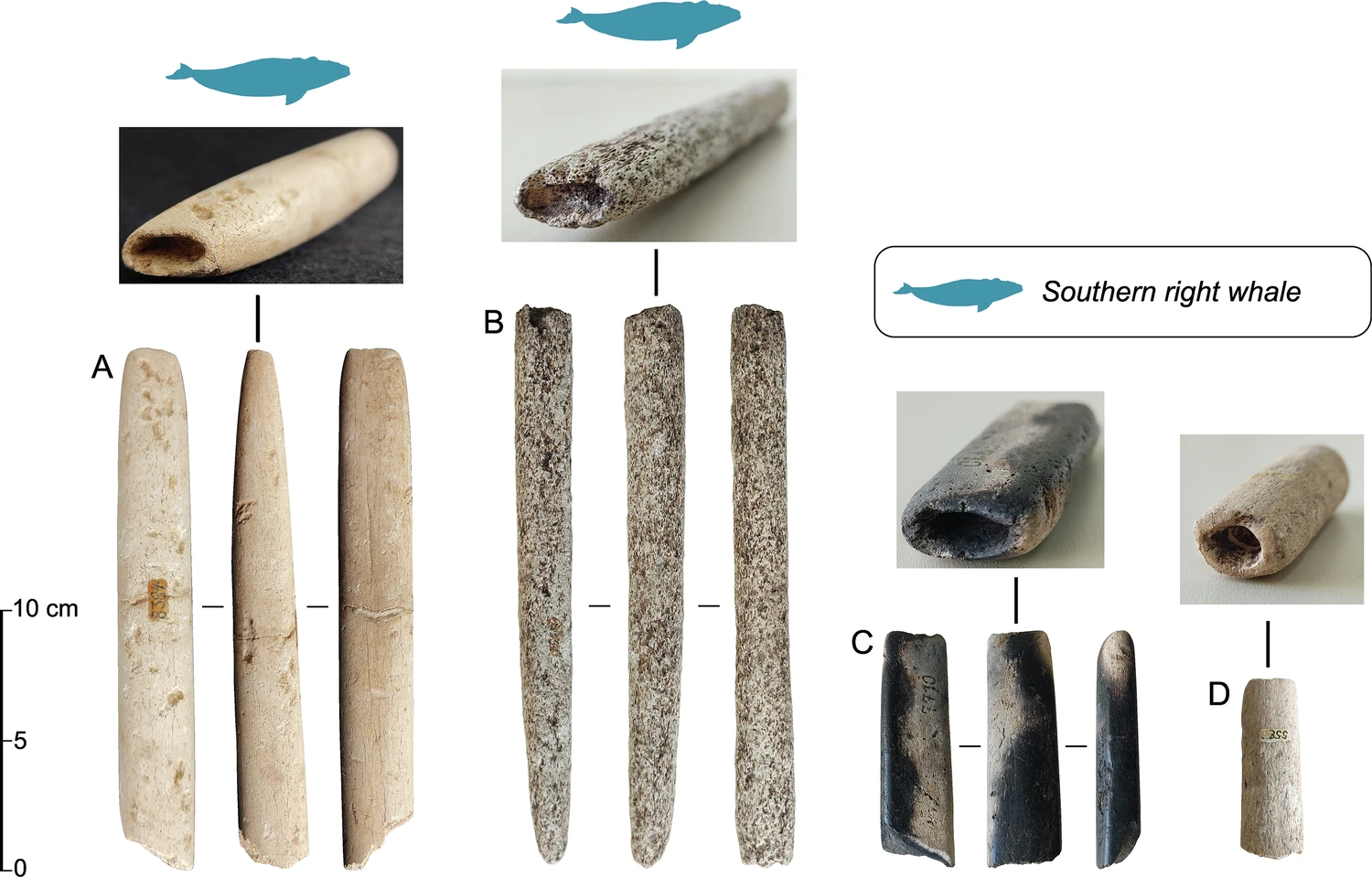 (Image credit: McGrath et al, Nature Communications (2026) CC-BY-NC-ND 4.0 )
Harpoon socket pieces crafted from southern right whale bones.
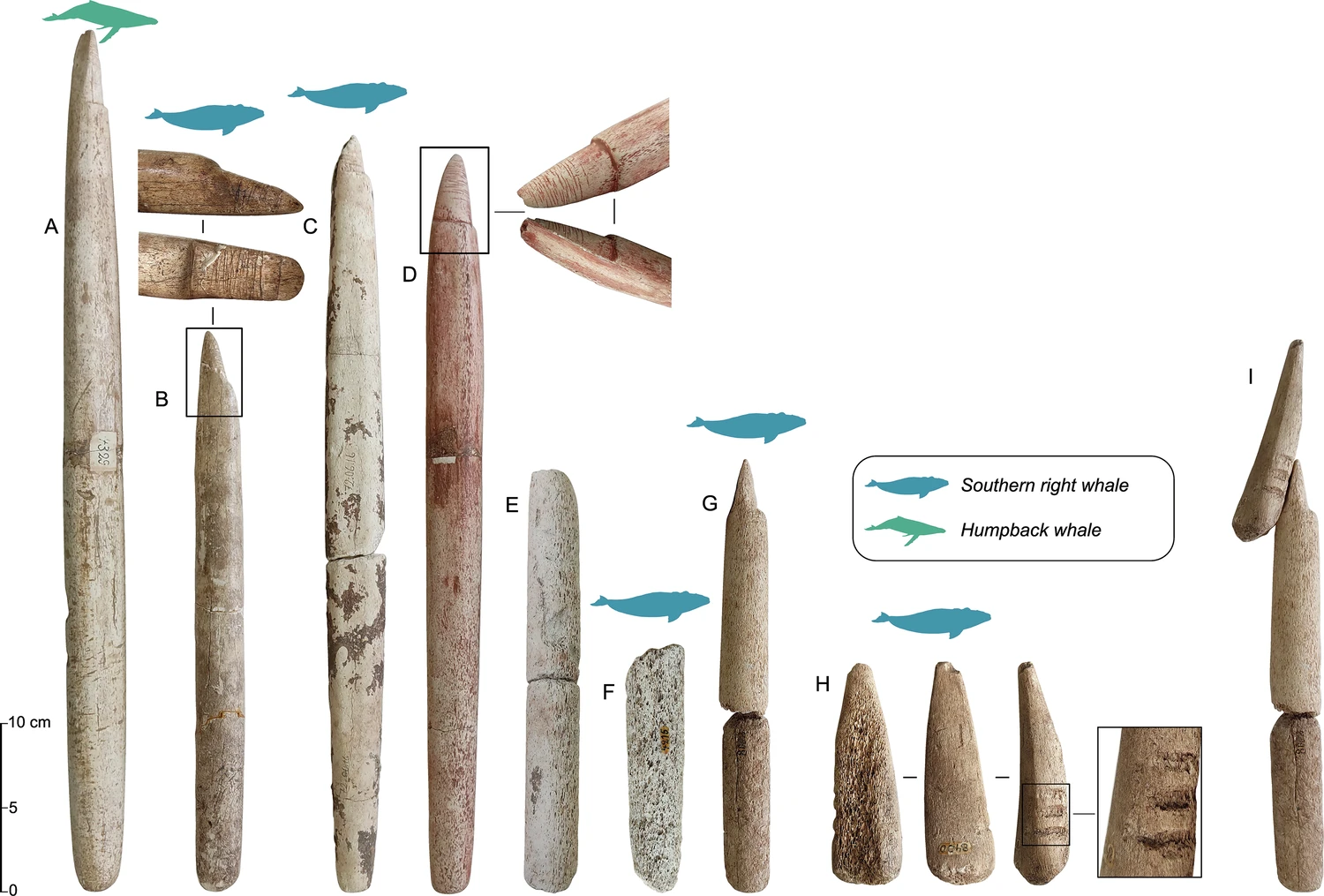 (Image credit: McGrath et al, Nature Communications (2026) CC-BY-NC-ND 4.0)
Harpoon shaft components crafted from southern right whale and humpback whale bones.
The discovery also showed that these Indigenous populations in Brazil were not simply gathering mollusks and catching fish. "The conventional idea was that the Sambaquis didn't have the technology" for whaling, Colonese said. "This is telling us that they were actually hunting."
RELATED STORIES—'Richly decorated' antler from Stone Age Sweden was used as battle ax and fishing harpoon
—2,700-year-old petroglyphs depicting people, ships and animals discovered in Sweden
—10,000-year-old burials from unknown hunter-gatherer group discovered in Brazil
"It's a very spectacular, informative discovery," Jean-Marc Pétillon, an archaeologist at the University of Toulouse in France who was not involved in the research, told Live Science.
Although it's not clear that these particular harpoons were used to hunt whales — as opposed to other marine animals, such as seals — this new evidence helps to contradict the assumption that whaling was practiced only in the Northern Hemisphere, according to Pétillon.
"Having these people living in southern Brazil in tropical conditions that also did whaling is also a way to change our perspective on these maritime exploitation systems," he said.
Article SourcesMcGrath, K., Montes, T.A.K.d.S., Fossile, T. et al. Molecular and zooarchaeological identification of 5000 year old whale-bone harpoons in coastal Brazil. Nat Commun 17, 48 (2026). https://doi.org/10.1038/s41467-025-67530-w
 Sophie BerdugoSocial Links NavigationStaff writer
Sophie is a U.K.-based staff writer at Live Science. She covers a wide range of topics, having previously reported on research spanning from bonobo communication to the first water in the universe. Her work has also appeared in outlets including New Scientist, The Observer and BBC Wildlife, and she was shortlisted for the Association of British Science Writers' 2025 "Newcomer of the Year" award for her freelance work at New Scientist. Before becoming a science journalist, she completed a doctorate in evolutionary anthropology from the University of Oxford, where she spent four years looking at why some chimps are better at using tools than others.
Show More CommentsYou must confirm your public display name before commenting
Please logout and then login again, you will then be prompted to enter your display name.
Logout Read more Scientists find rare tusked whale alive at sea for the first time — and shoot it with a crossbow
 60,000-year-old poison arrows from South Africa are the oldest poison weapons ever discovered
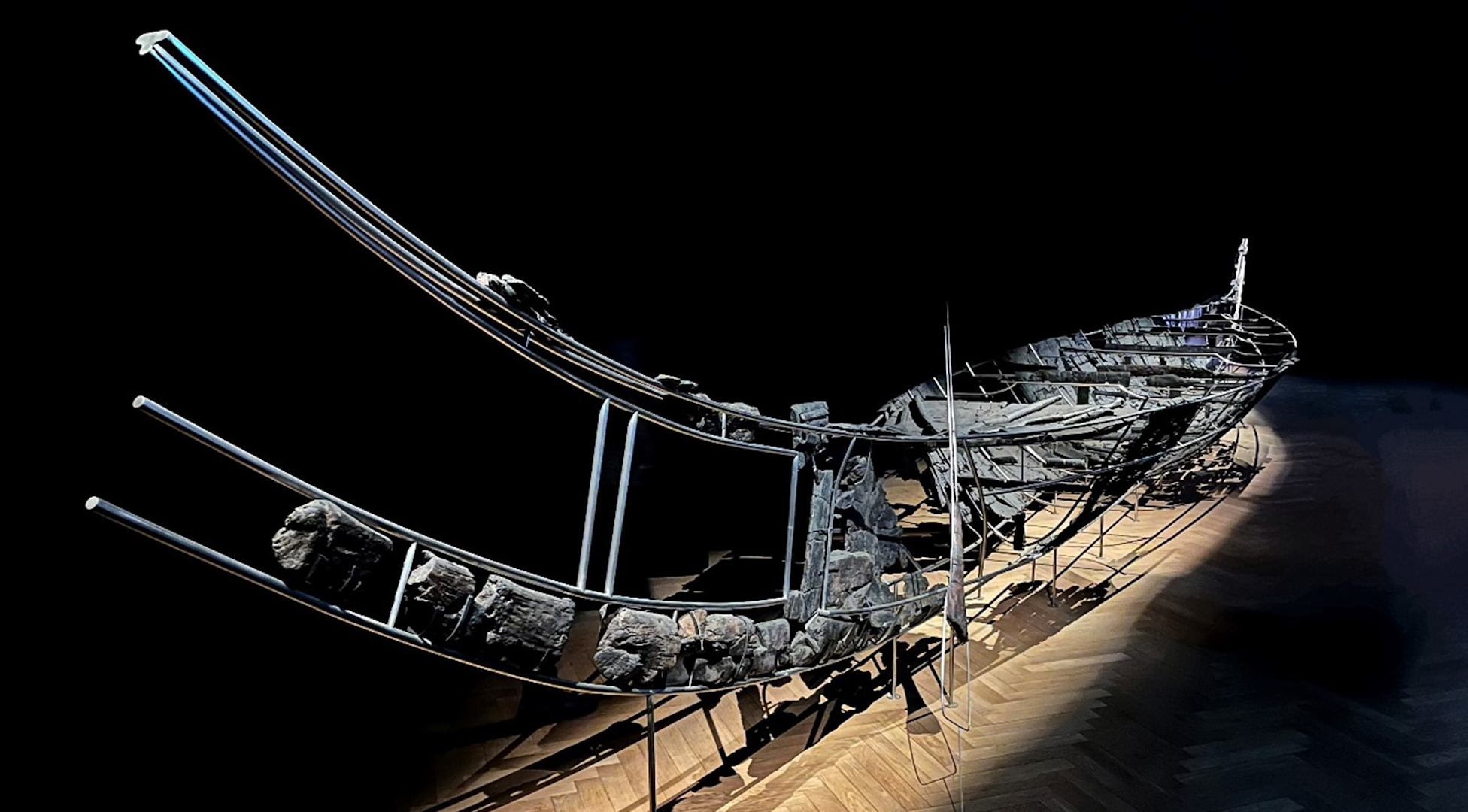 2,400-year-old fingerprint from mysterious sea raider found preserved on Scandinavia's oldest plank boat
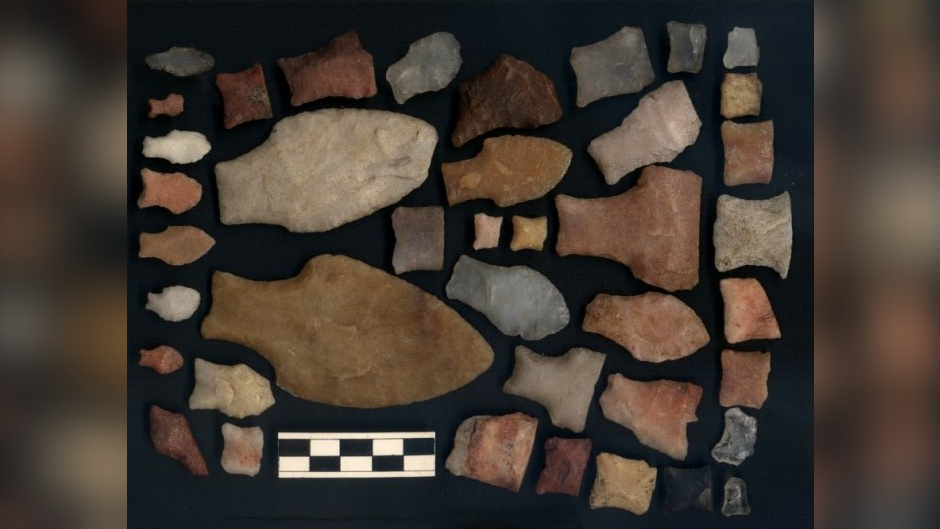 Ancient DNA reveals mysterious Indigenous lineage that lived in Argentina for nearly 8,500 years — but rarely interacted with others
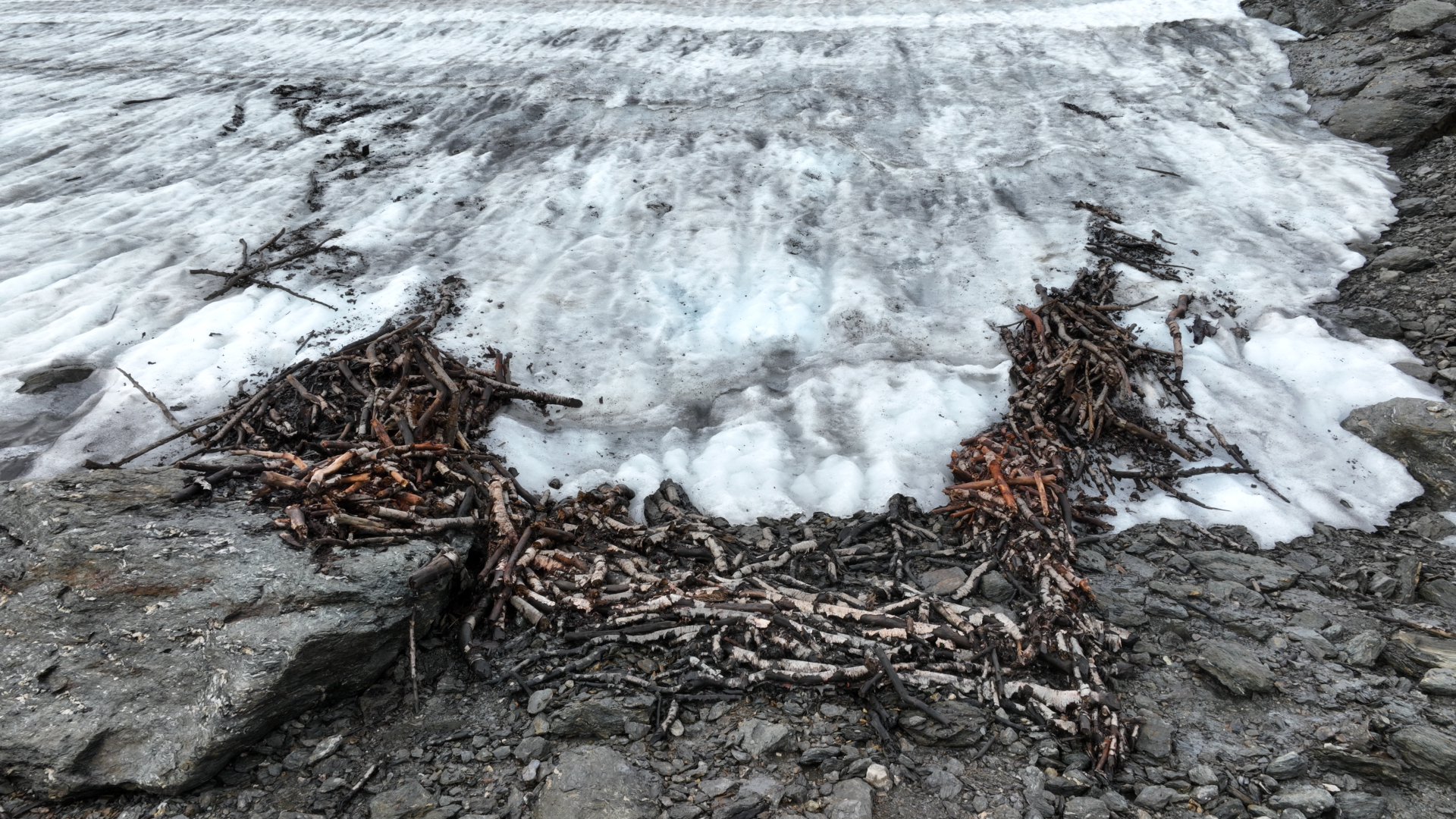 Archaeologists discover 1,500-year-old reindeer trap and other artifacts 'melting out of the ice' in Norway's mountains
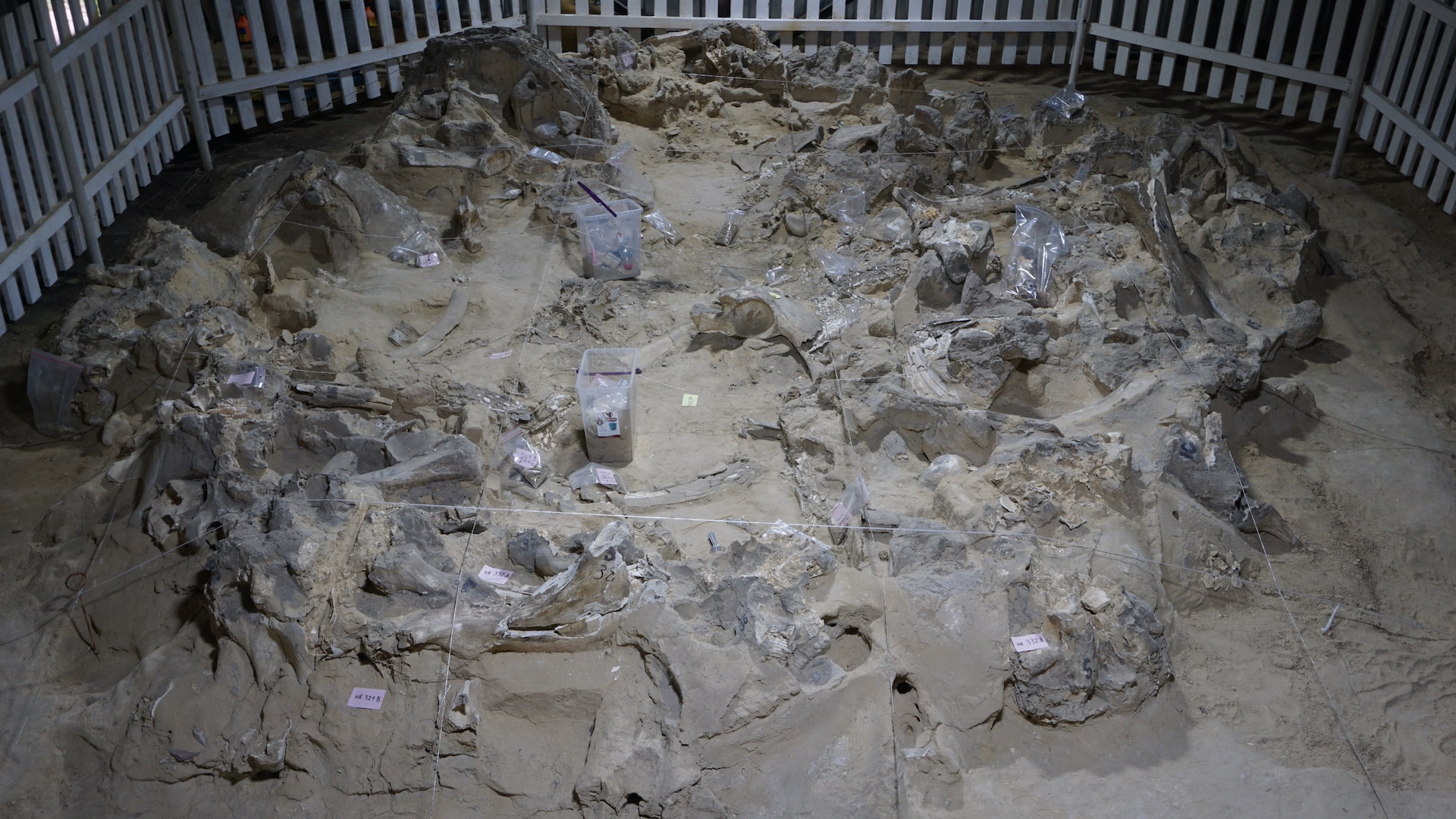 18,000 years ago, ice age humans built dwellings out of mammoth bones in Ukraine
Latest in Archaeology
18,000 years ago, ice age humans built dwellings out of mammoth bones in Ukraine
Latest in Archaeology
 5,500-year-old human skeleton discovered in Colombia holds the oldest evidence yet that syphilis came from the Americas
 2.6 million-year-old jaw from extinct 'Nutcracker Man' is found where we didn't expect it
 2,400-year-old Hercules shrine and elite tombs discovered outside ancient Rome's walls
 World's oldest known rock art predates modern humans' entrance into Europe — and it was found in an Indonesian cave
 Medieval 'super ship' found wrecked off Denmark is largest vessel of its kind
 Remnants of spills on Renaissance-era textbook reveal recipes for 'curing' ailments with lizard heads and human feces
Latest in News
Some of the oldest harpoons ever found reveal Indigenous people in Brazil were hunting whales 5,000 years ago
Remnants of spills on Renaissance-era textbook reveal recipes for 'curing' ailments with lizard heads and human feces
Latest in News
Some of the oldest harpoons ever found reveal Indigenous people in Brazil were hunting whales 5,000 years ago
 'Pain sponge' derived from stem cells could soak up pain signals before they reach the brain
 An ocean the size of the Arctic once covered half of Mars, new images hint
 Arctic blast probably won't cause trees to explode in the cold — but here's what happens if and when they do go boom
 Wegovy now comes in pill form — here's how it works
 'Earthquake on a chip' uses 'phonon' lasers to make mobile devices more efficient
LATEST ARTICLES
'Earthquake on a chip' uses 'phonon' lasers to make mobile devices more efficient
LATEST ARTICLES- 1'Earthquake on a chip' uses 'phonon' lasers to make mobile devices more efficient
- 2Chocolate Hills: The color-changing mounds in the Philippines that inspired legends of mud-slinging giants
- 3How to choose the best dehumidifier for your home this season
- 4Stream Will Smith's Pole to Pole and many more nature and science documentaries with a 33% saving in this limited-time Disney+ deal
- 5An ocean the size of the Arctic once covered half of Mars, new images hint