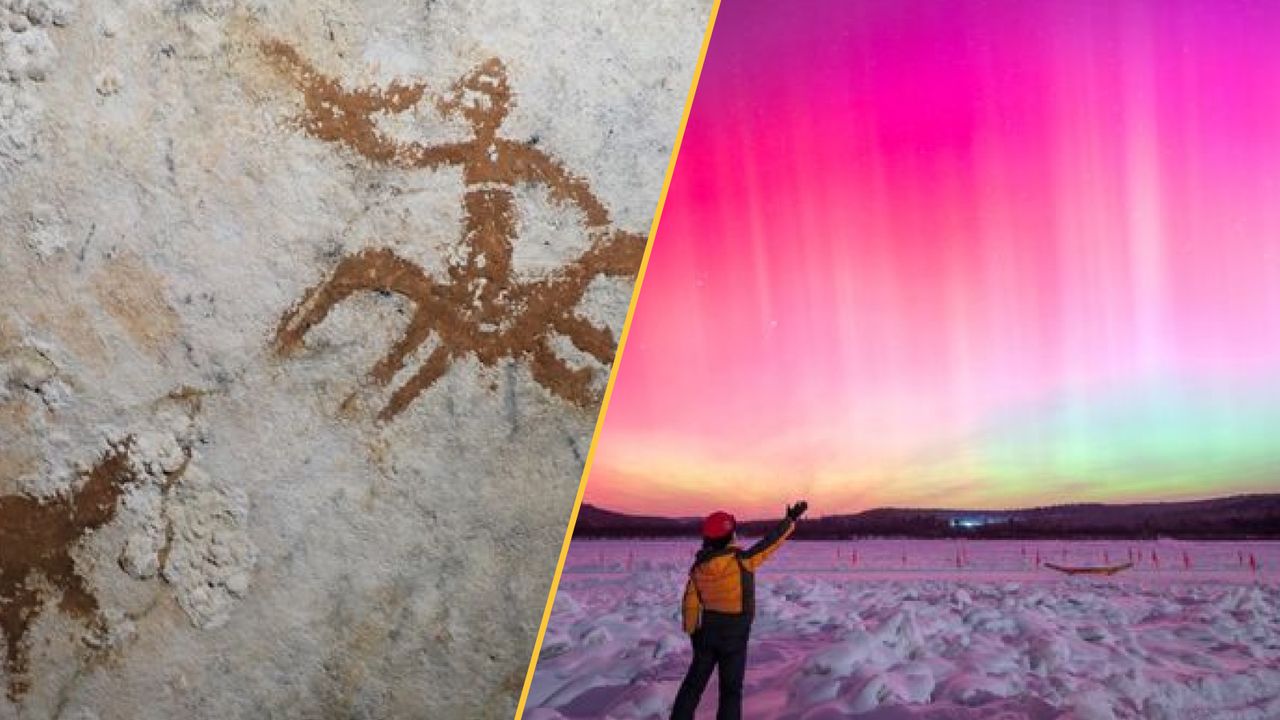
Jan. 24, 2026: Our weekly roundup of the latest science in the news, as well as a few fascinating articles to keep you entertained over the weekend.
When you purchase through links on our site, we may earn an affiliate commission. Here’s how it works.
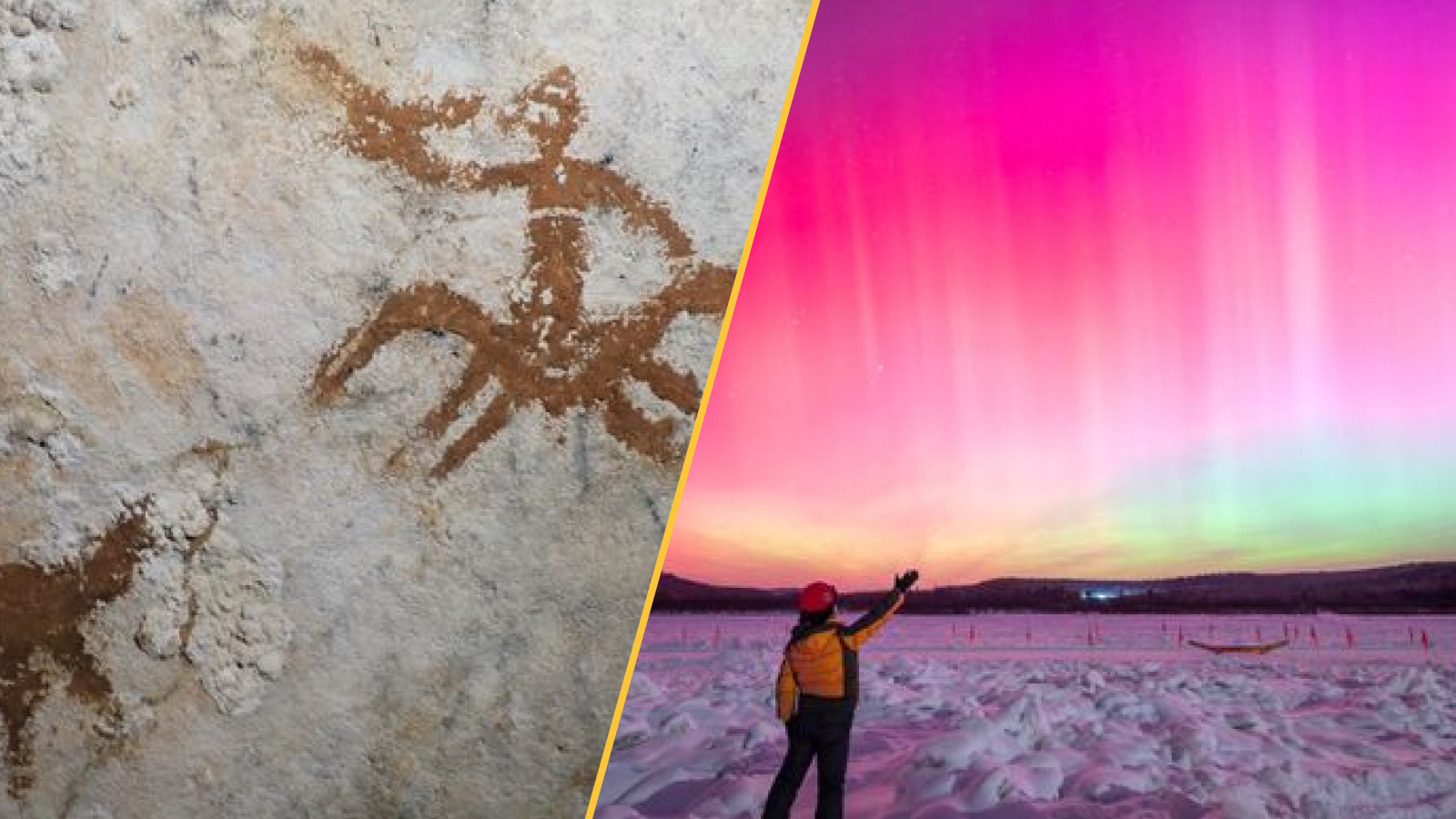 In this week's science news, we covered the world's oldest rock art, a gigantic reservoir found beneath the East Coast seafloor, a record solar radiation storm, and how the JWST's black hole discoveries are upending cosmology as we know it.
(Image credit: Maxime Aubert | Chi Shiyong/VCG via Getty Images)
Jump to:
In this week's science news, we covered the world's oldest rock art, a gigantic reservoir found beneath the East Coast seafloor, a record solar radiation storm, and how the JWST's black hole discoveries are upending cosmology as we know it.
(Image credit: Maxime Aubert | Chi Shiyong/VCG via Getty Images)
Jump to:
- Giant freshwater reservoir beneath East Coast seafloor
- Life's Little Mysteries
- The biggest solar radiation storm in decades
- Also in science news this week
- Science Spotlight
- Something for the weekend
- Science in motion
- Follow Live Science on social media
- Copy link
- X
This week's science news was filled with discoveries once thought lost to time — notably, the world's oldest known rock art was discovered in Indonesia.
The roughly 70,000-year-old stencil of a human hand, found in a cave in Sulawesi, promises to fill a major gap in scientists' understanding of humanity's migration across the islands of Southeast Asia to Australia, and was likely left by an ancestor of Indigenous Australians.
Giant freshwater reservoir beneath East Coast seafloor
Enormous freshwater reservoir discovered off the East Coast may be 20,000 years old and big enough to supply NYC for 800 years
An expedition off the coast of Massachusetts confirmed this week the existence of a giant sub-seafloor reservoir that could supply a city the size of New York City with fresh water for around 800 years.
The freshwater reservoir stretches from offshore New Jersey as far north as Maine and possibly formed 20,000 years ago during the last ice age, when rainwater became trapped underground before sea levels rose.
More definitive results about how and when the reservoir took shape, alongside its bacterial and mineral contents, are expected soon. The scientists who found it say the information could prove vital to those who may want to tap into it in the future.
Sign up for the Live Science daily newsletter nowContact me with news and offers from other Future brandsReceive email from us on behalf of our trusted partners or sponsorsBy submitting your information you agree to the Terms & Conditions and Privacy Policy and are aged 16 or over.Discover more planet Earth stories
—Arctic blast probably won't cause trees to explode in the cold — but here's what happens if and when they do go boom
—Californians have been using far less water than suppliers estimated — what does this mean for the state?
—'The scientific cost would be severe': A Trump Greenland takeover would put climate research at risk
Life's Little Mysteries
Why don't you usually see your nose?

It's a truism that we often miss what's right under our noses, but what about our noses themselves? How is it that we go through life ignoring the fleshy prows perched right on our faces, only seeing them with a conscious effort? The answer isn't because they're out of our sight but instead because of an ingenious neurovisual sleight of hand that may be key to our survival.
—If you enjoyed this, sign up for our Life's Little Mysteries newsletter
The biggest solar radiation storm in decades
Earth hit by biggest 'solar radiation storm' in 23 years, triggering Northern Lights as far as Southern California
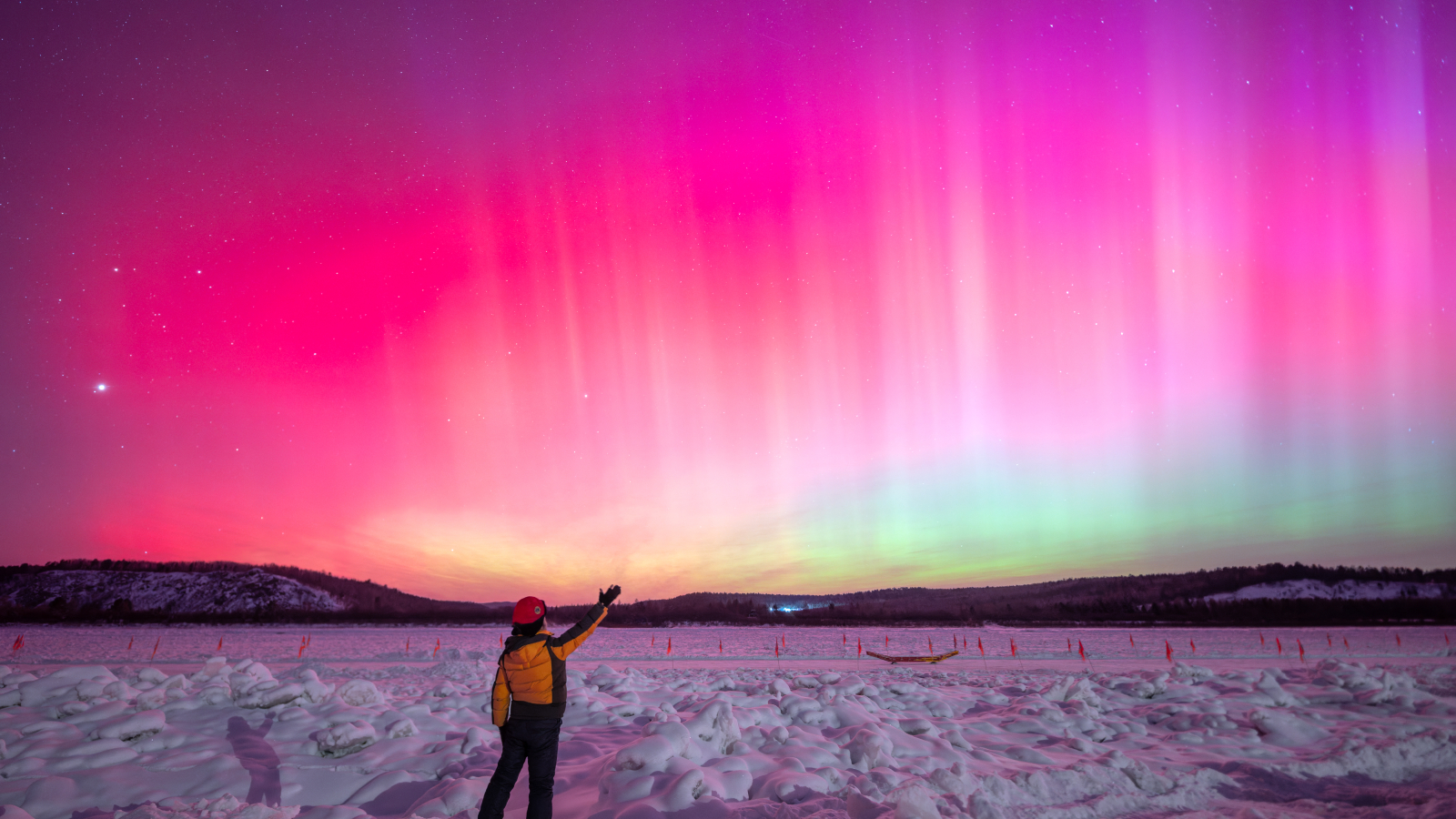
Earth's most powerful solar radiation storm in more than two decades hit Monday (Jan. 19), sending curtains of auroras across night skies as far south as Southern California, Arizona and New Mexico.
While some publications reported that the storm was the largest geomagnetic storm since 2003, that was a slight exaggeration; 2024's "Mother's Day storm" was more powerful. However, the latest storm was one of the most powerful solar radiation storms on record — meaning the sheer quantity of radiation hurled at Earth was extraordinary.
Discover more space stories
—'Like watching a cosmic volcano erupt': Scientists see monster black hole 'reborn' after 100 million years
—An ocean the size of the Arctic once covered half of Mars, new images hint
—'Goddess of dawn': James Webb telescope spies one of the oldest supernovas in the early universe
Also in science news this week
—Scientists may be approaching a 'fundamental breakthrough in cosmology and particle physics' — if dark matter and 'ghost particles' can interact
—Coyote scrambles onto Alcatraz Island after perilous, never-before-seen swim
—Diagnostic dilemma: A woman experienced delusions of communicating with her dead brother after late-night chatbot sessions
—People, not glaciers, transported rocks to Stonehenge, study confirms
Science Spotlight
'A real revolution': The James Webb telescope is upending our understanding of the biggest, oldest black holes in the universe
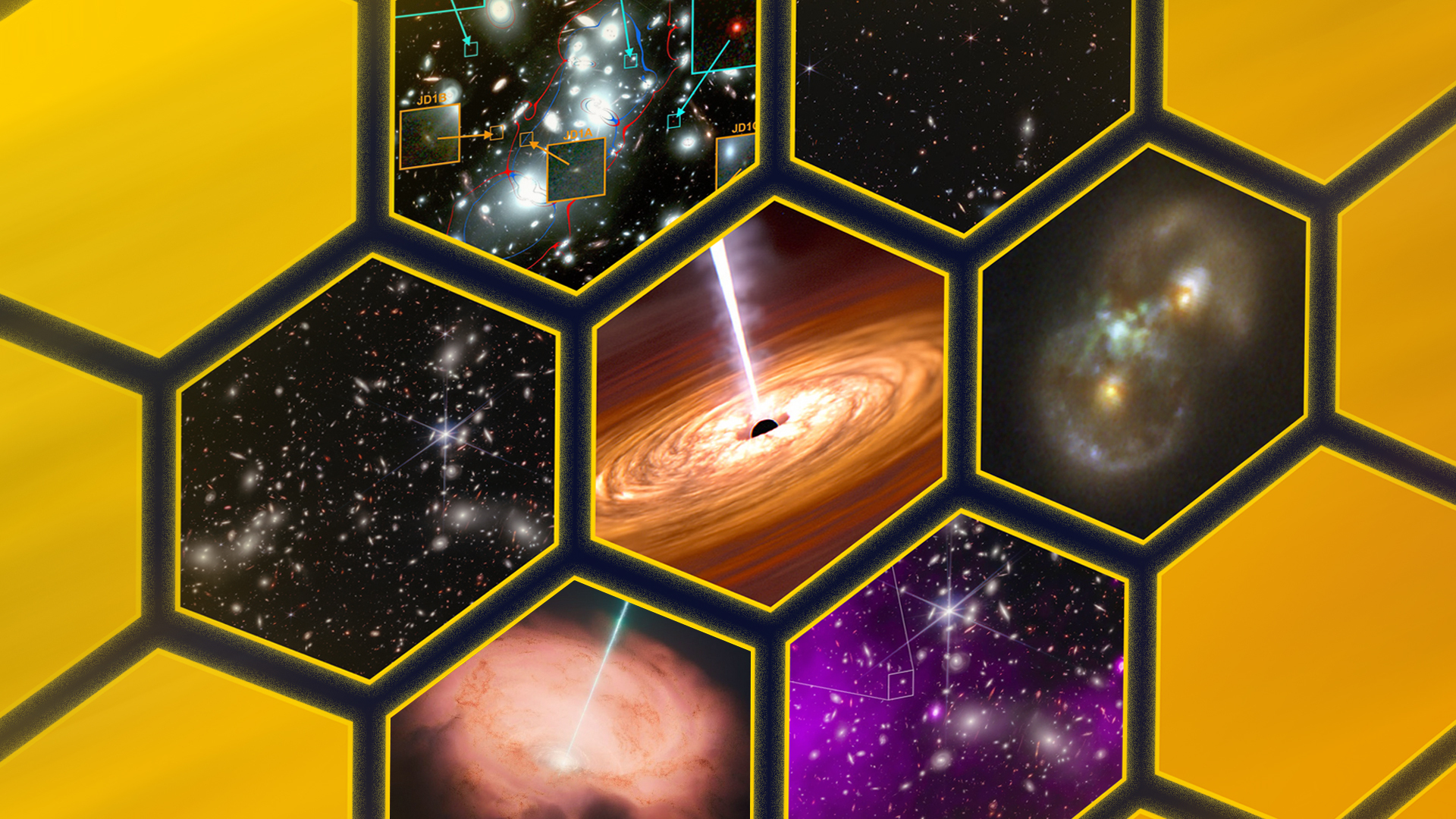
Not long ago, astronomers thought they knew the story of how gigantic supermassive black holes formed. They believed it happened the same way regular black holes are born: by collapsing from large stars and slowly merging until they grow to billions of times the sun's mass.
But the James Webb Space Telescope appears to have upended that story by finding enormous black holes in the earliest epochs of our universe that shouldn't have had the time to grow by merging or devouring matter.
So how did these behemoths get so enormous? Live Science investigated the explanations — and all of their revolutionary potential — in this fascinating Science Spotlight.
Something for the weekend
If you're looking for something a little longer to read over the weekend, here are some of the analyses, crosswords and opinion stories published this week.
—Lab mice that 'touch grass' are less anxious — and that highlights a big problem in rodent research [Analysis]
—Live Science crossword puzzle #26: Nothing can travel faster than this — 12 across [Crossword]
—Indigenous TikTok star 'Bush Legend' is actually AI-generated, leading to accusations of 'digital blackface' [Opinion]
Science in motion
Stunning time-lapse video captured using 'artificial eclipse' shows 3 massive eruptions on the sun
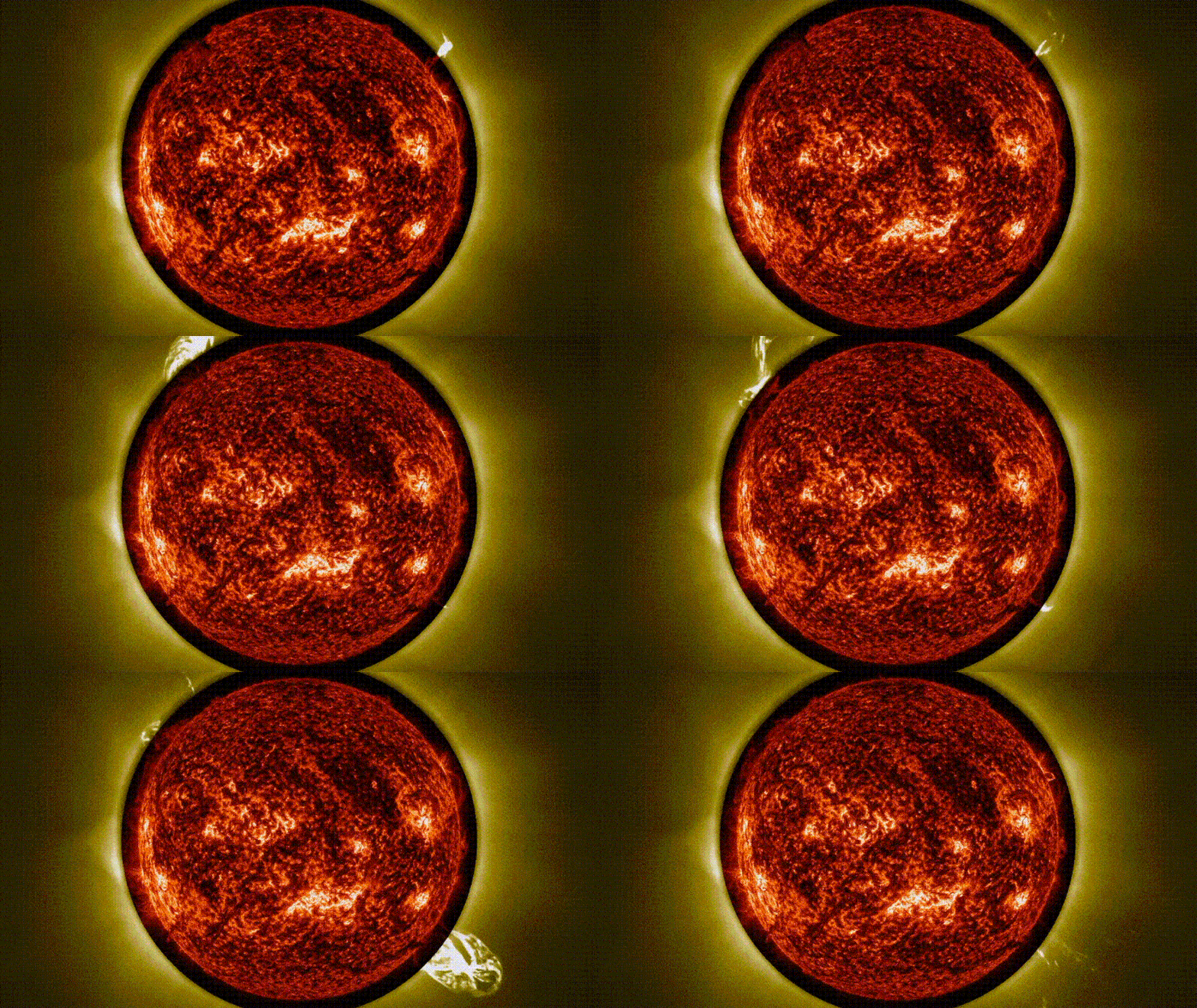
This week saw the release of a stunning time lapse of the sun that could help unravel one of the most enduring mysteries concerning our home star.
The footage, taken by the European Space Agency's Proba-3 mission, captures three major plumes of plasma jetting out of the sun's surface. By studying it further, astronomers want to learn why the sun's faint atmosphere, or corona, is hundreds of times hotter than its surface.
A better understanding of the warp and weft of the sun's magnetic-field lines could help researchers make better predictions of when these lines will snap to unleash solar flares, some of which can have devastating consequences for Earth.
Follow Live Science on social media
Want more science news? Follow our Live Science WhatsApp Channel for the latest discoveries as they happen. It's the best way to get our expert reporting on the go, but if you don't use WhatsApp we're also on Facebook, X (formerly Twitter), Flipboard, Instagram, TikTok, Bluesky and LinkedIn.
TOPICS Science news this week Ben TurnerSocial Links NavigationActing Trending News Editor
Ben Turner is a U.K. based writer and editor at Live Science. He covers physics and astronomy, tech and climate change. He graduated from University College London with a degree in particle physics before training as a journalist. When he's not writing, Ben enjoys reading literature, playing the guitar and embarrassing himself with chess.
Show More CommentsYou must confirm your public display name before commenting
Please logout and then login again, you will then be prompted to enter your display name.
Logout Back To Top LATEST ARTICLES 1Why the rise of humanoid robots could make us less comfortable with each other
- 2Why don't you usually see your nose?
- 3People, not glaciers, transported rocks to Stonehenge, study confirms
- 4Astronomers discover a gigantic, wobbling black hole jet that 'changes the way we think about the galaxy'
- 5Some of the oldest harpoons ever found reveal Indigenous people in Brazil were hunting whales 5,000 years ago

