- Health
- Heart & Circulation
A mouse study shows that beige fat, previously known for its heating function, may also lower blood pressure by keeping blood vessels relaxed. The same may go for brown fat in humans.
When you purchase through links on our site, we may earn an affiliate commission. Here’s how it works.
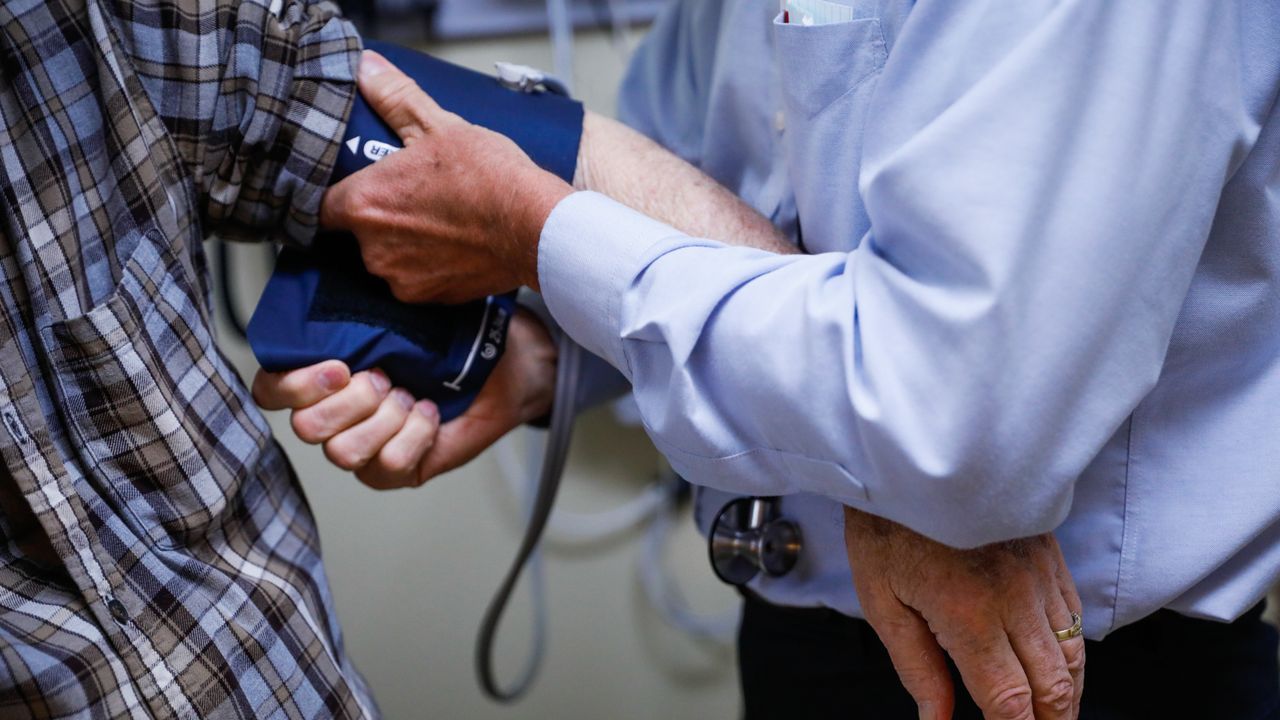
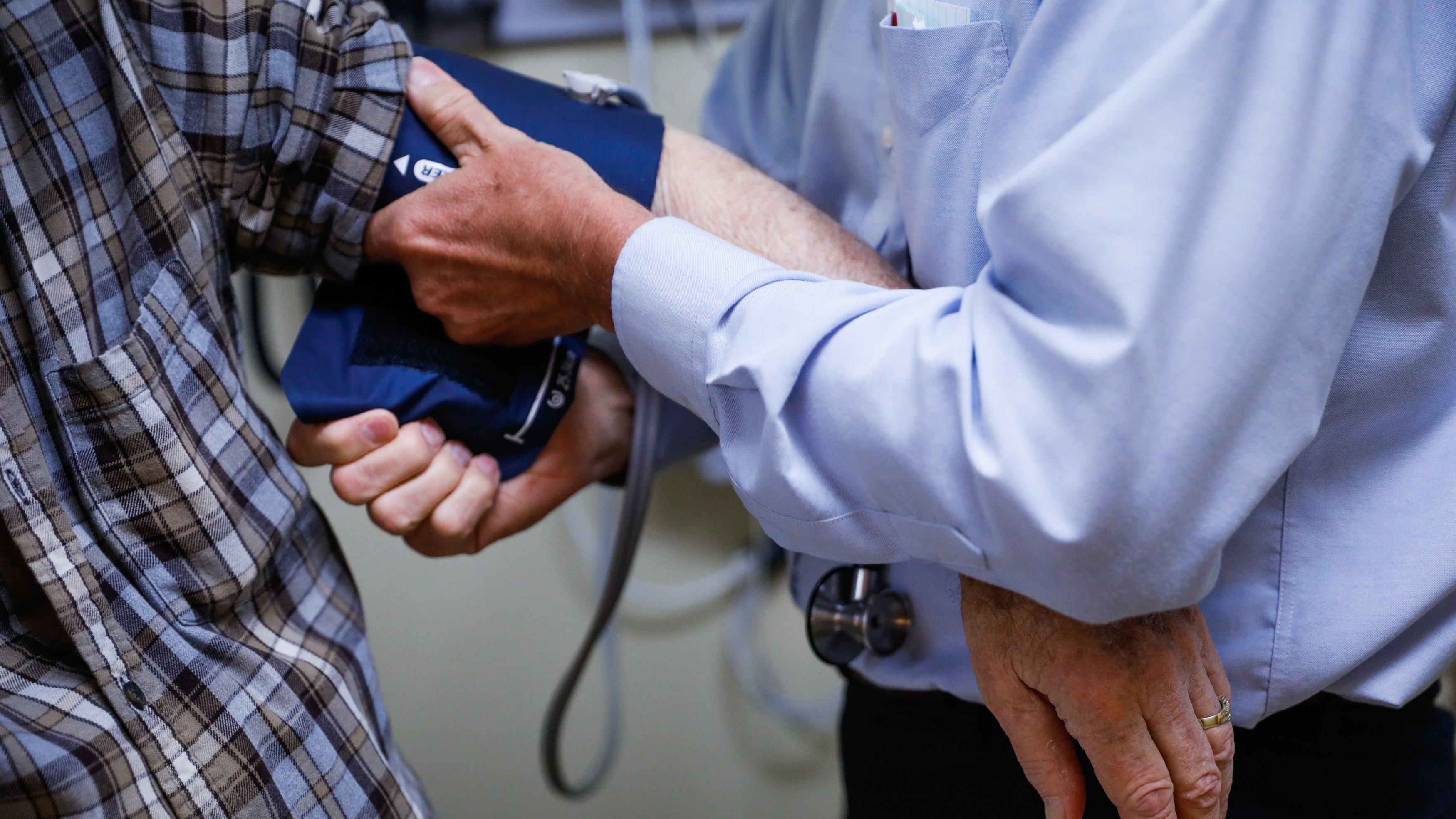 "Brown fat" in the body may help to keep blood pressure in check by offsetting the effects of a specific enzyme, a study suggests.
(Image credit: San Francisco Chronicle / Hearst Newspapers / Contributor via Getty Images)
Share
Share by:
"Brown fat" in the body may help to keep blood pressure in check by offsetting the effects of a specific enzyme, a study suggests.
(Image credit: San Francisco Chronicle / Hearst Newspapers / Contributor via Getty Images)
Share
Share by:
- Copy link
- X
Not all fat is created equal — while one type of fat in the body raises blood pressure, another helps keep it in check, a study in mice suggests.
In people, excess body fat has long been tied to high blood pressure, or hypertension, and a number of other cardiovascular problems. But the body carries two types of fat: "brown" fat, which burns energy and helps keep the body warm, and "white" fat, which stores excess calories.
You may like-
 Slaying 'zombie cells' in blood vessels could be key to treating diabetes, early study finds
-
 Heart attacks are less harmful at night. And that might be key to treating them.
-
 This 'marker' may be more predictive than cholesterol for heart disease
"We wanted to better understand how brown fat might do this," Cohen told Live Science.
Now, in a new study published Jan. 15 in the journal Science, Cohen and his team showed that eliminating the gene that makes "beige" fat — the mouse equivalent of adult human brown fat — converted all the beige fat around blood vessels into white fat. This, in turn, caused mice to develop high blood pressure.
The team traced the effect to an enzyme released by fat cells. Normally kept in check by beige fat cells, the enzyme's levels spiked when beige fat was converted into white fat, the study showed. This triggered excessive tightening of blood vessels and higher blood pressure.
This is an important study that, for the first time, establishes how beige fat directly affects cardiovascular health, said Lawrence Kazak, an associate professor at McGill University who studies the energy expenditure of brown fat and was not involved in the work.
Sign up for the Live Science daily newsletter nowContact me with news and offers from other Future brandsReceive email from us on behalf of our trusted partners or sponsorsBy submitting your information you agree to the Terms & Conditions and Privacy Policy and are aged 16 or over.It's well documented that obesity influences blood pressure and cardiometabolic health on a system level, Kazak told Live Science. But this work highlights a "niche role" for beige fat and the mechanism behind its "local effects" on the blood vessels, he said.
How fat controls blood pressure
Cohen's team began their study by deleting the Prdm16 gene from the fat cells of lab mice, turning the beige fat around their blood vessels white. This gene is known to be highly active in beige fat, acting as a master regulator that helps them maintain an energy-burning function rather than becoming white fat.
This change was visible just by looking at the tissue, said first study author Mascha Koenen, a postdoctoral fellow at Cohen's lab. Beige-fat-laden tissue, which normally looks dusky and speckled with tiny droplets, turned pale, resembling ordinary white fat.
You may like-
Slaying 'zombie cells' in blood vessels could be key to treating diabetes, early study finds
-
Heart attacks are less harmful at night. And that might be key to treating them.
-
This 'marker' may be more predictive than cholesterol for heart disease
The researchers observed that the animals that lacked beige fat also developed higher blood pressure, and their blood vessels became stiffer and accumulated more fibrous tissue, making it harder for them to relax as the blood surged through them.
The team then treated the mice's blood vessels with a hormone called angiotensin II, which is known to raise blood pressure by tightening arteries, similar to how pinching a hose restricts the flow of water. Blood vessels from mice lacking beige fat constricted more strongly in response to the hormone, compared with vessels from normal mice.
To identify the mechanism behind this, the team sifted through molecular signals released by fat cells near the blood vessels and identified an enzyme called QSOX1. This enzyme stiffens the connective tissue around blood vessels and makes it harder for them to relax.
Normally, the protein encoded by the Prdm16 gene keeps the production of this enzyme in check. But without beige fat, the levels of QSOX1 surge, leading to stiff blood vessels and high blood pressure, the team concluded.
Importantly, the researchers found that deleting both beige fat and QSOX1 from mice prevented this chain reaction, and those mice did not develop high blood pressure, suggesting that QSOX1 is essential for driving this mechanism, they concluded.
Beige fat in mice and brown fat in humans are known for their heat production; they contain high numbers of mitochondria, which are the cells' energy factories and impart the tissue its brown color. However, Koenen noted that this heat-producing function is not related to the QSOX1 mechanism they identified. Their study instead highlights an additional role of beige fat as "secretory" cells, which release important proteins into the blood.
RELATED STORIES—Scientists describe new type of fat in human bellies
—What is normal blood pressure?
—Fat cells have a 'memory' of obesity, study finds
Even if the beige fat cells are small, "they can have this huge impact on whole body physiology," Koenen told Live Science. And the study could point to new ways of treating high blood pressure.
"You can imagine that molecules that can inhibit QSOX1 could be potentially therapeutically beneficial," Kazak suggested.
Cohen also believes that targeting QSOX1 could help scientists develop precision therapies for hypertension in the future. This would require them to first learn more about this mechanism in order to counter it, he noted. Nonetheless, the research points to a "pathway forward" for studying the effects of QSOX1 inhibitors in humans.
Article SourcesKoenen, M., Becher, T., Pagano, G., Del Gaudio, I., Barrero, J. A., Montezano, A. C., Ruiz Ortiz, J., Lin, Z., Gómez-Banoy, N., Amblard, R., Schriever, D., Kars, M. E., Rubinelli, L., Halix, S. J., Huang Cao, Z. F., Zeng, X., Butler, S. D., Itan, Y., Touyz, R. M., … Cohen, P. (2026). Ablation of Prdm16 and beige fat identity causes vascular remodeling and elevated blood pressure. Science, 391(6782), 306–313. https://doi.org/10.1126/science.ady8644
 Zunnash KhanLive Science Contributor
Zunnash Khan is a mechatronics engineer and a science journalist from Pakistan. She has written for Science, The Scientist and Brainfacts.org, among other outlets.
Show More CommentsYou must confirm your public display name before commenting
Please logout and then login again, you will then be prompted to enter your display name.
Logout Read more Slaying 'zombie cells' in blood vessels could be key to treating diabetes, early study finds
 Heart attacks are less harmful at night. And that might be key to treating them.
 This 'marker' may be more predictive than cholesterol for heart disease
 New drug could prevent diabetes complications not fixed with blood sugar control, study hints
 We may finally understand stress-induced hair loss
 'Mitochondrial transfer' into nerves could relieve chronic pain, early study hints
Latest in Heart & Circulation
This 'marker' may be more predictive than cholesterol for heart disease
'Mitochondrial transfer' into nerves could relieve chronic pain, early study hints
Latest in Heart & Circulation
This 'marker' may be more predictive than cholesterol for heart disease
 Scientists are developing a 'self-driving' device that helps patients recover from heart attacks
Heart attacks are less harmful at night. And that might be key to treating them.
Scientists are developing a 'self-driving' device that helps patients recover from heart attacks
Heart attacks are less harmful at night. And that might be key to treating them.
 Heart quiz: What do you know about the body's hardest-working muscle?
 Gum disease treatment slows the thickening of arteries, clinical trial shows
 A rare genetic disease stained a woman's heart black
Latest in News
People with more 'brown fat' have healthier cardiovascular systems. A new study in mice may explain why.
A rare genetic disease stained a woman's heart black
Latest in News
People with more 'brown fat' have healthier cardiovascular systems. A new study in mice may explain why.
 Microsoft says its newest AI chip Maia 200 is 3 times more powerful than Google's TPU and Amazon's Trainium processor
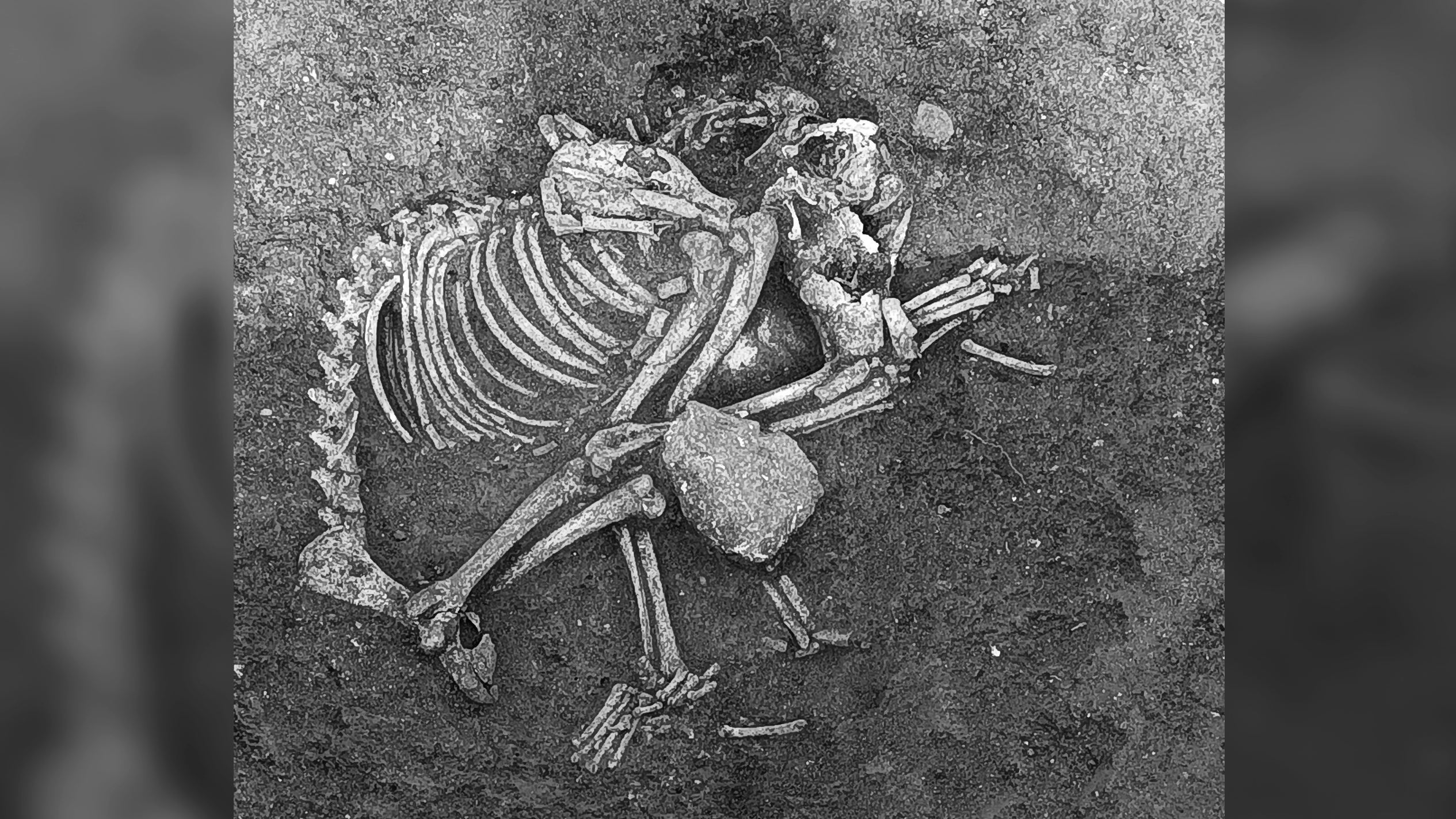 2,500 years ago, people in Bulgaria ate dog meat at feasts and as a delicacy, archaeological study finds
 How to see 2 total solar eclipses in the next 2 years — including the 'eclipse of the century'
 A drying climate is making East Africa pull apart faster
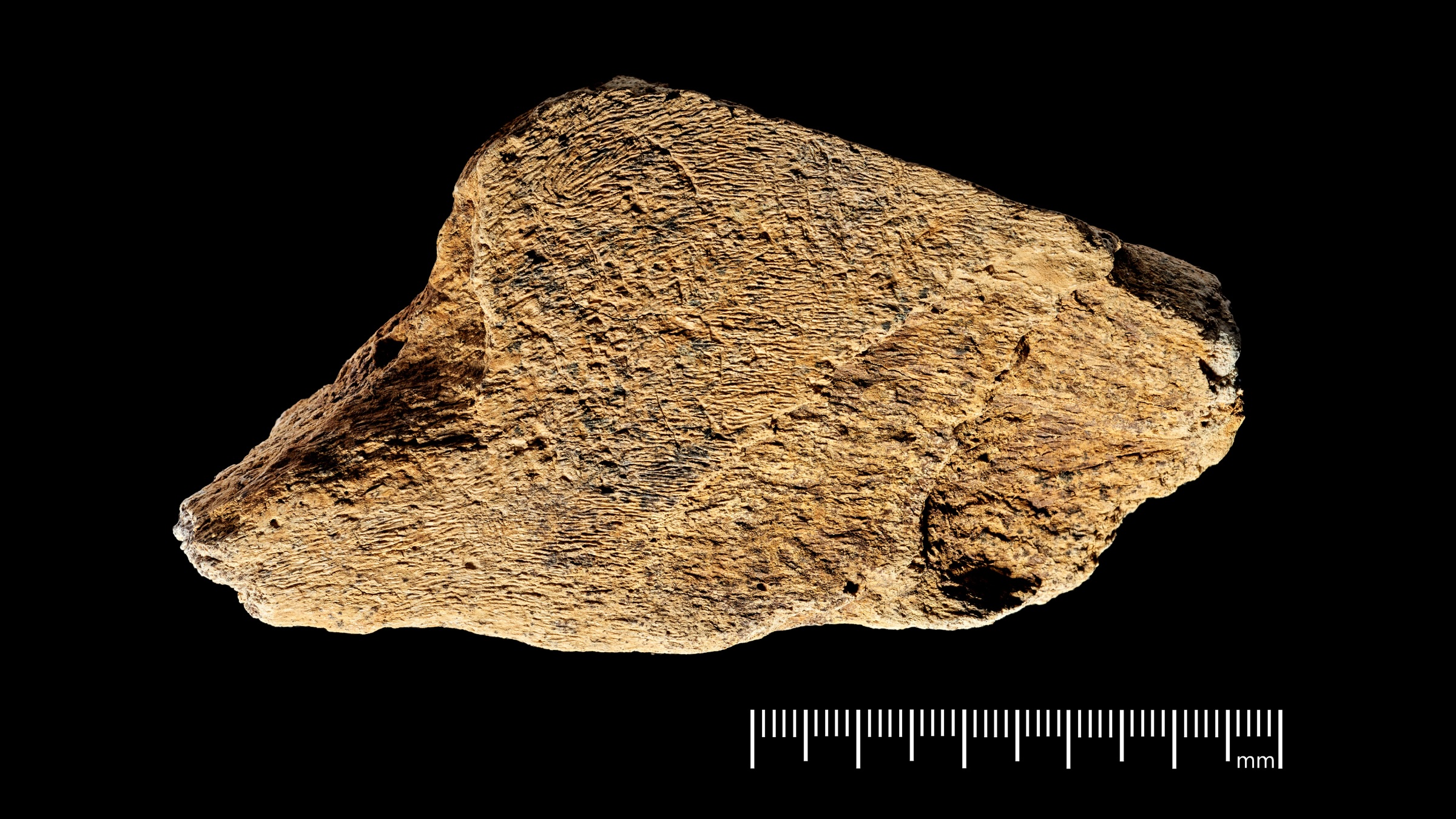 480,000-year-old ax sharpener is the oldest known elephant bone tool ever discovered in Europe
LATEST ARTICLES
480,000-year-old ax sharpener is the oldest known elephant bone tool ever discovered in Europe
LATEST ARTICLES- 1Microsoft says its newest AI chip Maia 200 is 3 times more powerful than Google's TPU and Amazon's Trainium processor
- 2Canon 18x50 IS UD all-weather binoculars review
- 3Varna Gold: Humanity's first gold jewelry was found in a cemetery with a gold 'penis sheath'
- 4Antibiotic resistance is the 'silent pandemic' — here are four steps to stop it
- 5How to see 2 total solar eclipses in the next 2 years — including the 'eclipse of the century'