- Technology
- Artificial Intelligence
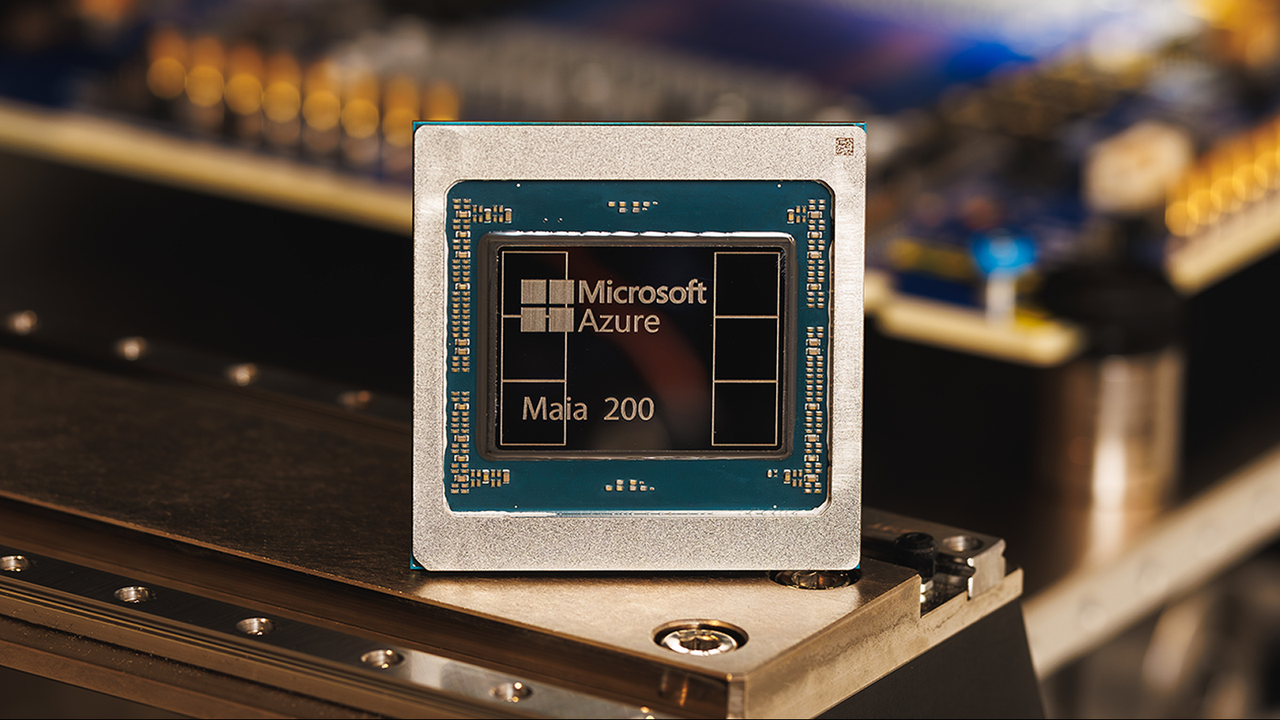
The Maia 200 AI chip is described as an inference powerhouse — meaning it could lead AI models to apply their knowledge to real-world situations much faster and more efficiently.
When you purchase through links on our site, we may earn an affiliate commission. Here’s how it works.
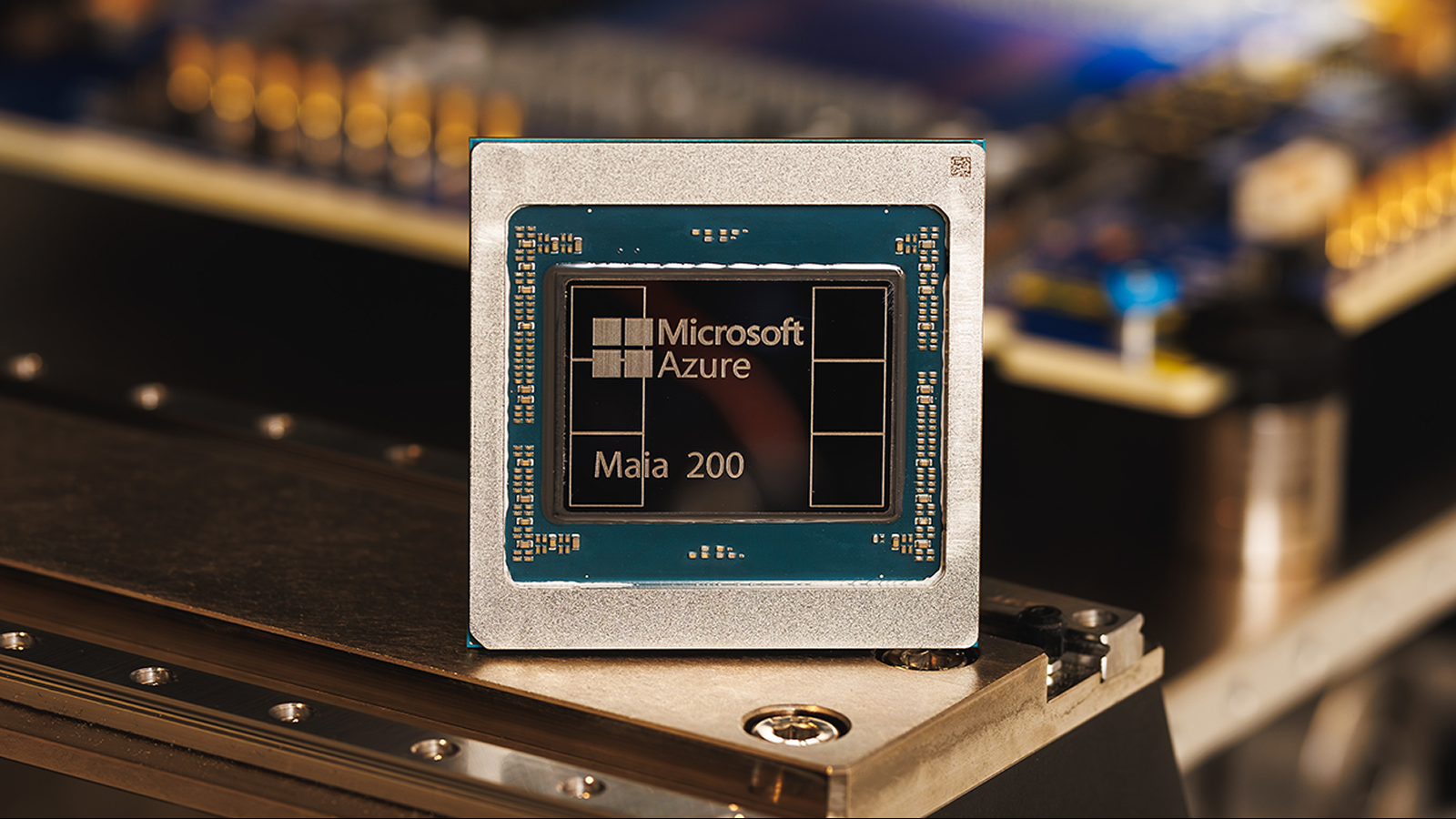 Microsoft’s Maia 200 chip is being integrated into its Azure cloud infrastructure
(Image credit: Microsoft)
Share
Share by:
Microsoft’s Maia 200 chip is being integrated into its Azure cloud infrastructure
(Image credit: Microsoft)
Share
Share by:
- Copy link
- X
Microsoft has revealed its new Maia 200 accelerator chip for artificial intelligence (AI) that is three times more powerful than hardware from rivals like Google and Amazon, company representatives say.
This newest chip will be used in AI inference rather than training, powering systems and agents used to make predictions, provide answers to queries and generate outputs based on new data that's fed to them.
You may like-
 China solves 'century-old problem' with new analog chip that is 1,000 times faster than high-end Nvidia GPUs
-
 Scientists say they've eliminated a major AI bottleneck — now they can process calculations 'at the speed of light'
-
 Scientists create world's first microwave-powered computer chip — it's much faster and consumes less power than conventional CPUs
The new chip delivers performance of more than 10 petaflops (1015 floating point operations per second), Scott Guthrie, cloud and AI executive vice president at Microsoft, said in a blog post. This is a measure of performance in supercomputing, where the most powerful supercomputers in the world can reach more than 1,000 petaflops of power.
The new chip achieved this performance level in a data representation category known as "4-bit precision (FP4)" — a highly compressed model designed to accelerate AI performance. Maia 200 also delivers 5 PFLOPS of performance in 8-bit precision (FP8). The difference between the two is that FP4 is far more energy efficient but less accurate.
"In practical terms, one Maia 200 node can effortlessly run today’s largest models, with plenty of headroom for even bigger models in the future," Guthrie said in the blog post. "This means Maia 200 delivers 3 times the FP4 performance of the third generation Amazon Trainium, and FP8 performance above Google’s seventh generation TPU."
Chips ahoy
Maia 200 could potentially be used for specialist AI workloads, such as running larger LLMs in the future. So far, Microsoft's Maia chips have only been used in the Azure cloud infrastructure to run large-scale workloads for Microsoft’s own AI services, notably Copilot. However, Guthrie noted there would be "wider customer availability in the future," signaling other organizations could tap into Maia 200 via the Azure cloud, or the chips could potentially one day be deployed in standalone data centers or server stacks.
Sign up for the Live Science daily newsletter nowContact me with news and offers from other Future brandsReceive email from us on behalf of our trusted partners or sponsorsBy submitting your information you agree to the Terms & Conditions and Privacy Policy and are aged 16 or over.Guthrie said that Microsoft boasts 30% better performance per dollar over existing systems thanks to the use of the 3-nanometer process made by the Taiwan Semiconductor Manufacturing Company (TSMC), the most important fabricator in the world, allowing for 100 billion transistors per chip. This essentially means that Maia 200 could be more cost-effective and efficient for the most demanding AI workloads than existing chips.
Maia 200 has a few other features alongside better performance and efficiency. It includes a memory system, for instance, which can help keep an AI model’s weights and data local, meaning you would need less hardware to run a model. It's also designed to be quickly integrated into existing data centers.
Maia 200 should enable AI models to run faster and more efficiently. This means Azure OpenAI users, such as scientists, developers and corporations, could see better throughput and speeds when developing AI applications and using the likes of GPT-4 in their operations.
RELATED STORIES—'It won’t be so much a ghost town as a zombie apocalypse': How AI might forever change how we use the internet
— GPT-4 has passed the Turing test, researchers claim
—The more advanced AI models get, the better they are at deceiving us — they even know when they're being tested
This next-generation AI hardware is unlikely to disrupt everyday AI and chatbot use for most people in the short term, as Maia 200 is designed for data centers rather than consumer-grade hardware. However, end users could see the impact of Maia 200 in the form of faster response times and potentially more advanced features from Copilot and other AI tools built into Windows and Microsoft products.
Maia 200 could also provide a performance boost to developers and scientists who use AI inference via Microsoft’s platforms. This, in turn, could lead to improvements in AI deployment on large-scale research projects and elements like advanced weather modeling, biological or chemical systems and compositions.
 Roland Moore-ColyerSocial Links Navigation
Roland Moore-Colyer is a freelance writer for Live Science and managing editor at consumer tech publication TechRadar, running the Mobile Computing vertical. At TechRadar, one of the U.K. and U.S.’ largest consumer technology websites, he focuses on smartphones and tablets. But beyond that, he taps into more than a decade of writing experience to bring people stories that cover electric vehicles (EVs), the evolution and practical use of artificial intelligence (AI), mixed reality products and use cases, and the evolution of computing both on a macro level and from a consumer angle.
Show More CommentsYou must confirm your public display name before commenting
Please logout and then login again, you will then be prompted to enter your display name.
Logout Read more China solves 'century-old problem' with new analog chip that is 1,000 times faster than high-end Nvidia GPUs
 Scientists say they've eliminated a major AI bottleneck — now they can process calculations 'at the speed of light'
 Scientists create world's first microwave-powered computer chip — it's much faster and consumes less power than conventional CPUs
 Tapping into new 'probabilistic computing' paradigm can make AI chips use much less power, scientists say
 MIT's chip stacking breakthrough could cut energy use in power-hungry AI processes
 'Putting the servers in orbit is a stupid idea': Could data centers in space help avoid an AI energy crisis? Experts are torn.
Latest in Artificial Intelligence
'Putting the servers in orbit is a stupid idea': Could data centers in space help avoid an AI energy crisis? Experts are torn.
Latest in Artificial Intelligence
 AI can develop 'personality' spontaneously with minimal prompting, research shows. What does that mean for how we use it?
 Indigenous TikTok star 'Bush Legend' is actually AI-generated, leading to accusations of 'digital blackface'
 Even AI has trouble figuring out if text was written by AI — here's why
 Do you think you can tell an AI-generated face from a real one?
 Will AI ever be more creative than humans?
'Putting the servers in orbit is a stupid idea': Could data centers in space help avoid an AI energy crisis? Experts are torn.
Latest in News
Microsoft says its newest AI chip Maia 200 is 3 times more powerful than Google's TPU and Amazon's Trainium processor
Will AI ever be more creative than humans?
'Putting the servers in orbit is a stupid idea': Could data centers in space help avoid an AI energy crisis? Experts are torn.
Latest in News
Microsoft says its newest AI chip Maia 200 is 3 times more powerful than Google's TPU and Amazon's Trainium processor
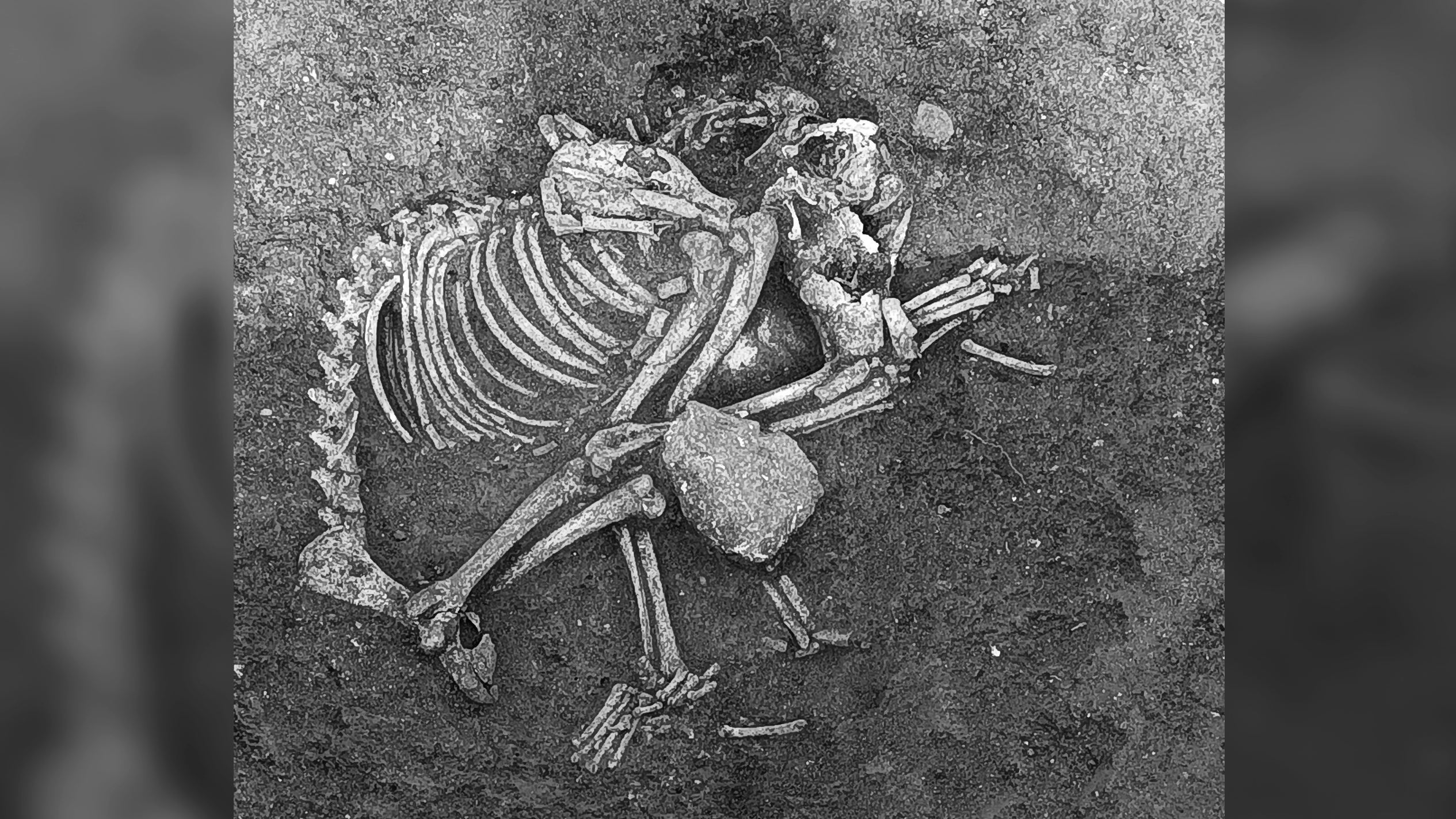 2,500 years ago, people in Bulgaria ate dog meat at feasts and as a delicacy, archaeological study finds
 How to see 2 total solar eclipses in the next 2 years — including the 'eclipse of the century'
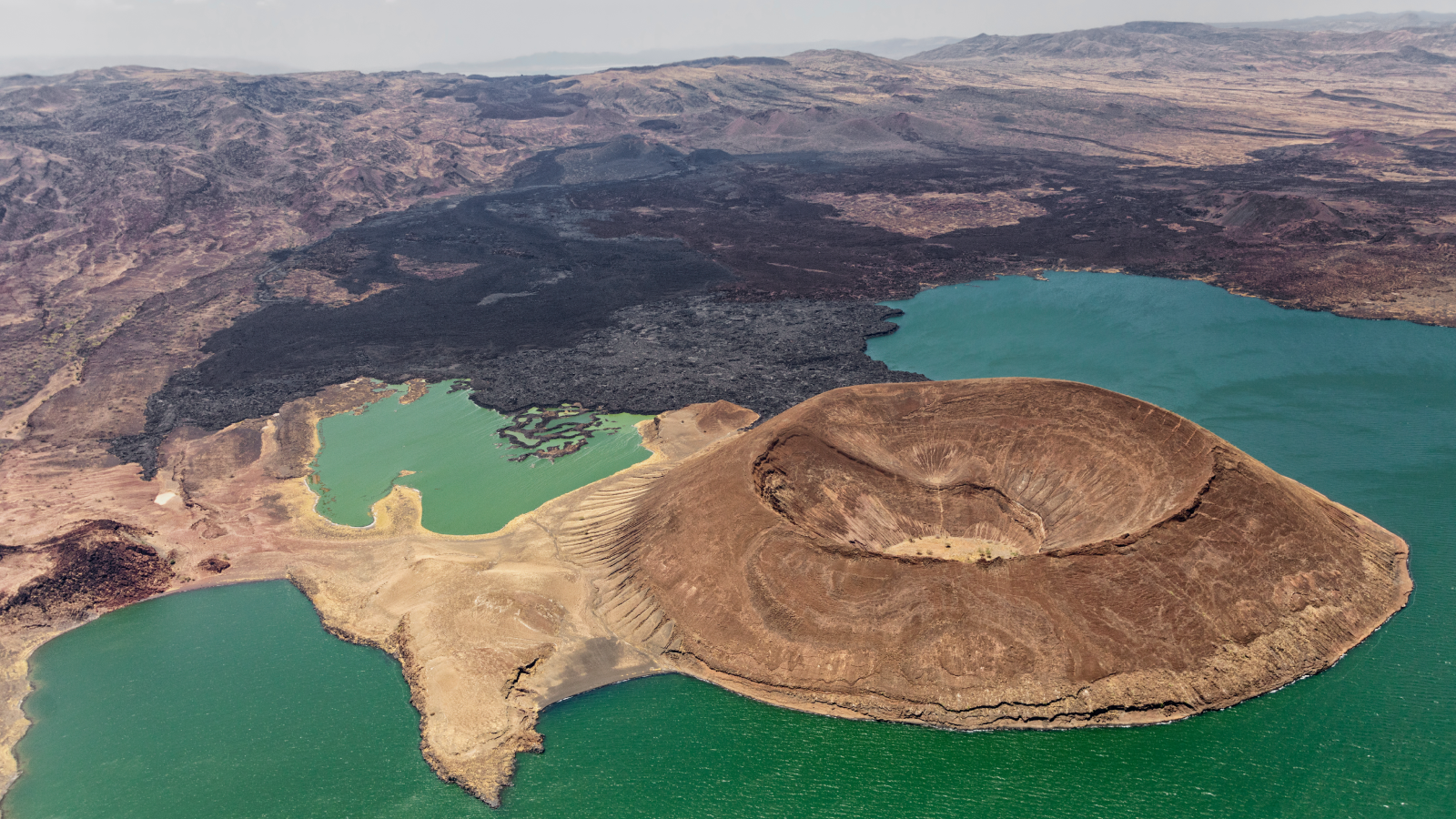 A drying climate is making East Africa pull apart faster
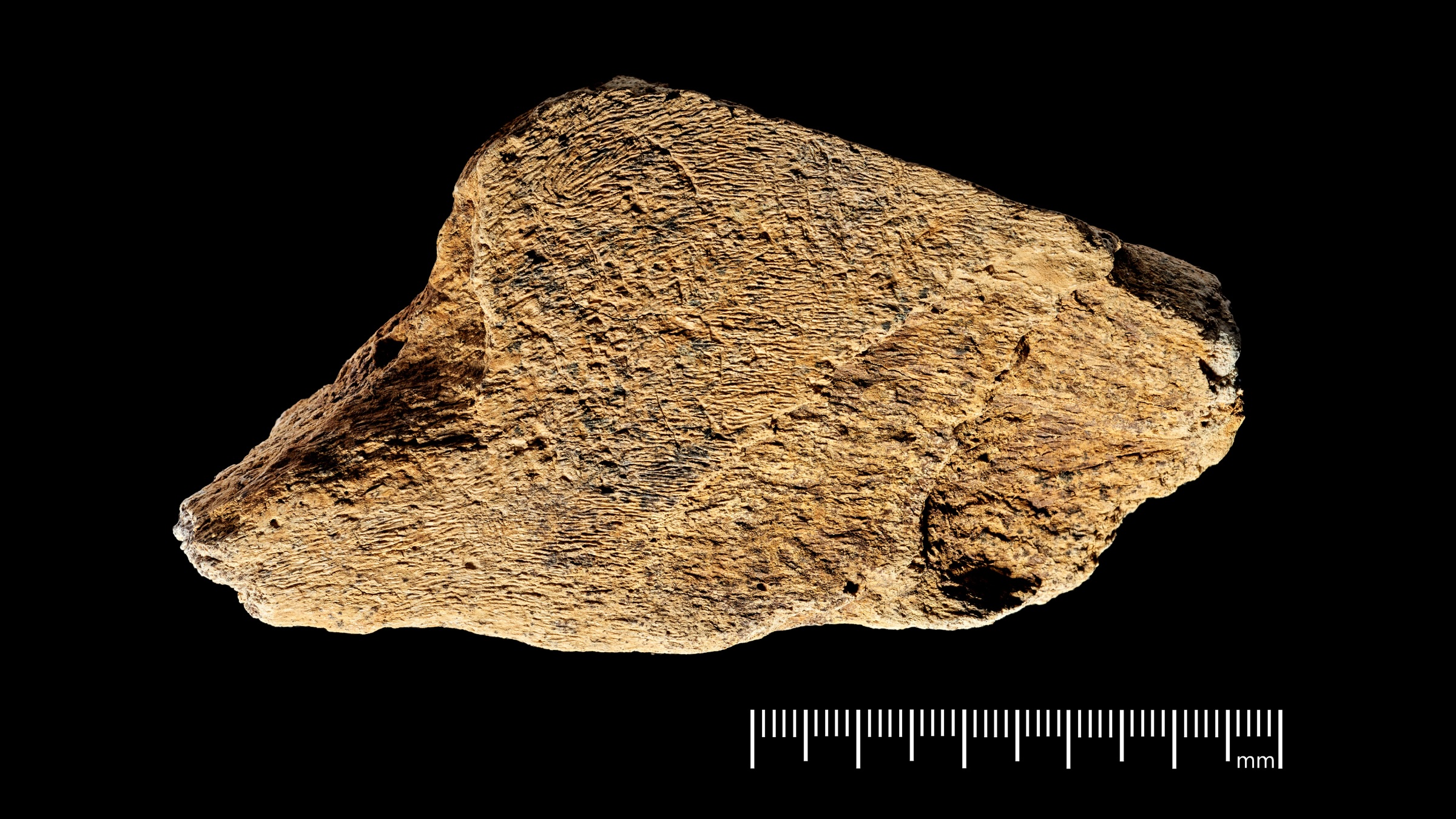 480,000-year-old ax sharpener is the oldest known elephant bone tool ever discovered in Europe
 People, not glaciers, transported rocks to Stonehenge, study confirms
LATEST ARTICLES
People, not glaciers, transported rocks to Stonehenge, study confirms
LATEST ARTICLES 1Canon 18x50 IS UD all-weather binoculars review
- 2Varna Gold: Humanity's first gold jewelry was found in a cemetery with a gold 'penis sheath'
- 3Antibiotic resistance is the 'silent pandemic' — here are four steps to stop it
- 4How to see 2 total solar eclipses in the next 2 years — including the 'eclipse of the century'
- 5 A drying climate is making East Africa pull apart faster