- Animals
- Extinct species
Scientists say grooves on a rock face overlooking the Adriatic Sea may have been made by sea turtles fleeing an earthquake.
When you purchase through links on our site, we may earn an affiliate commission. Here’s how it works.
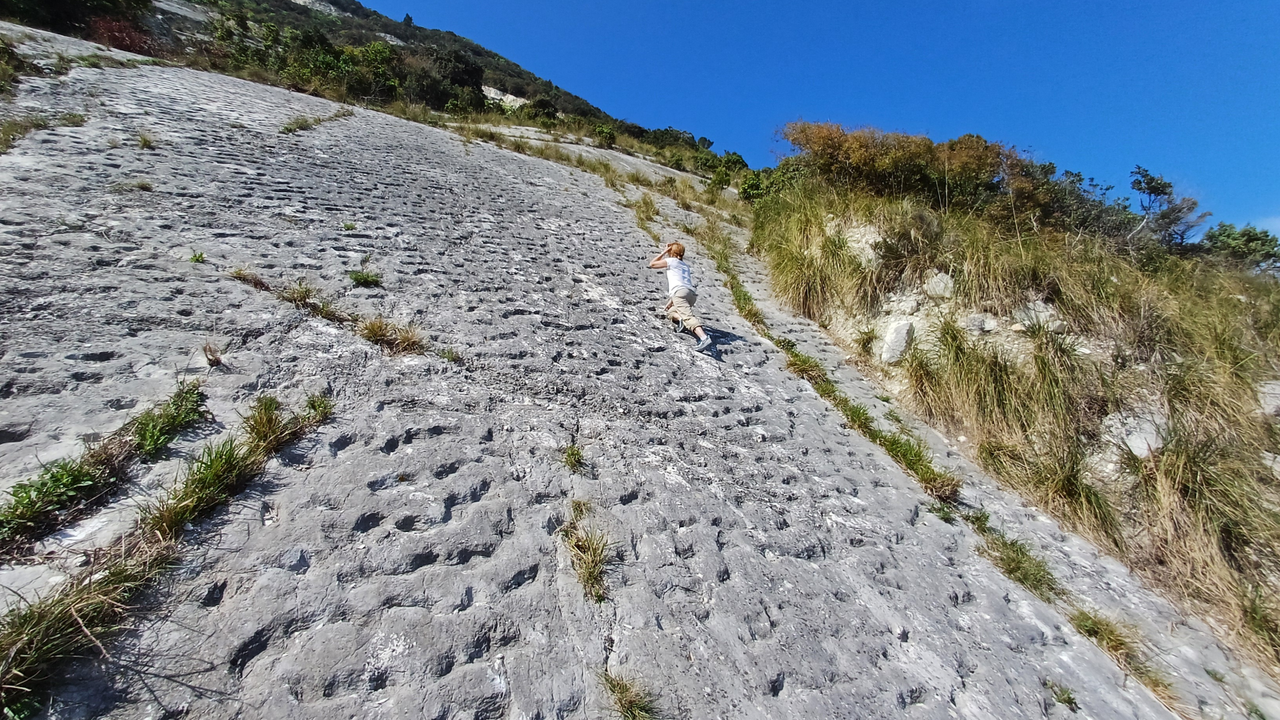
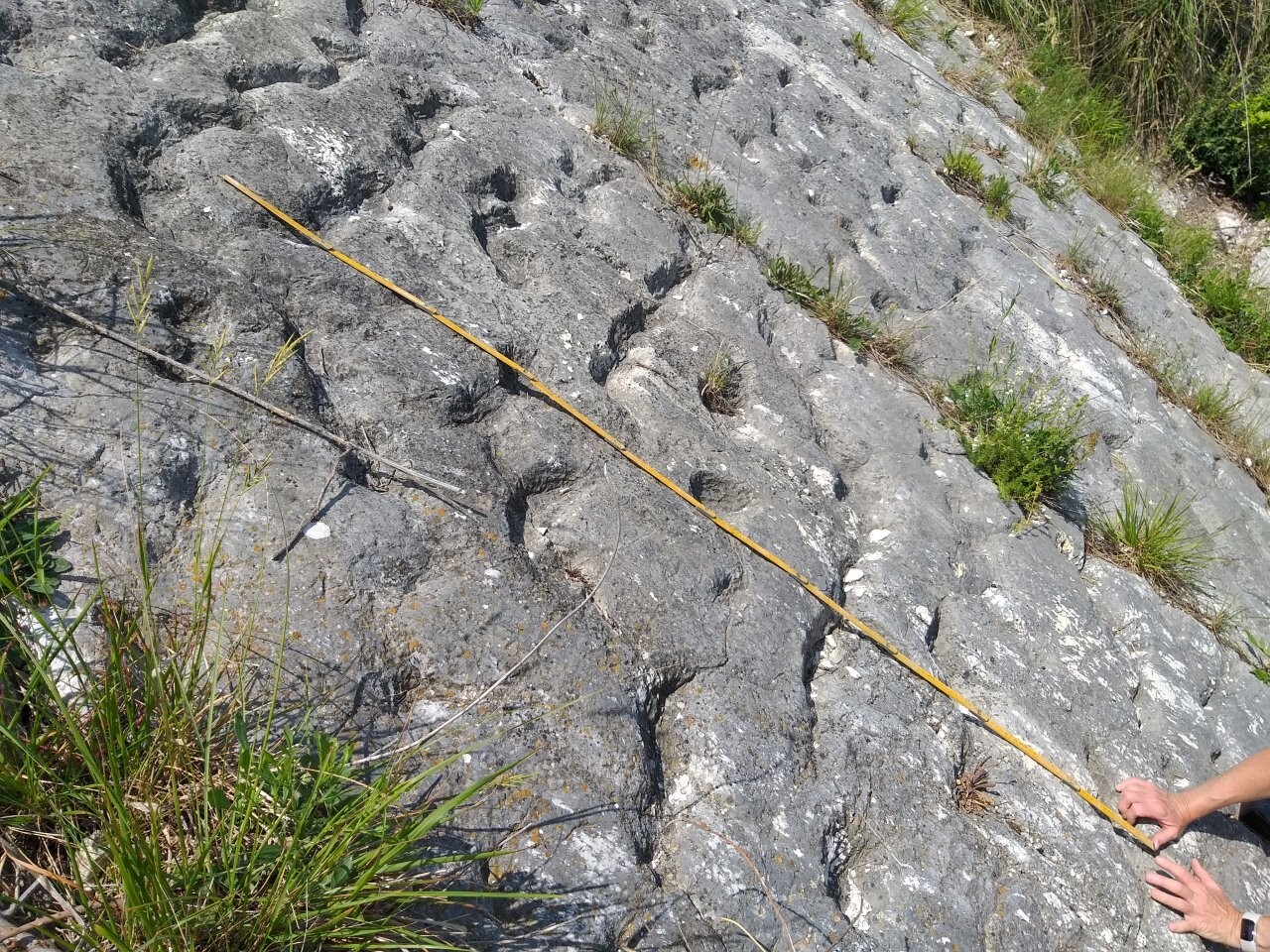
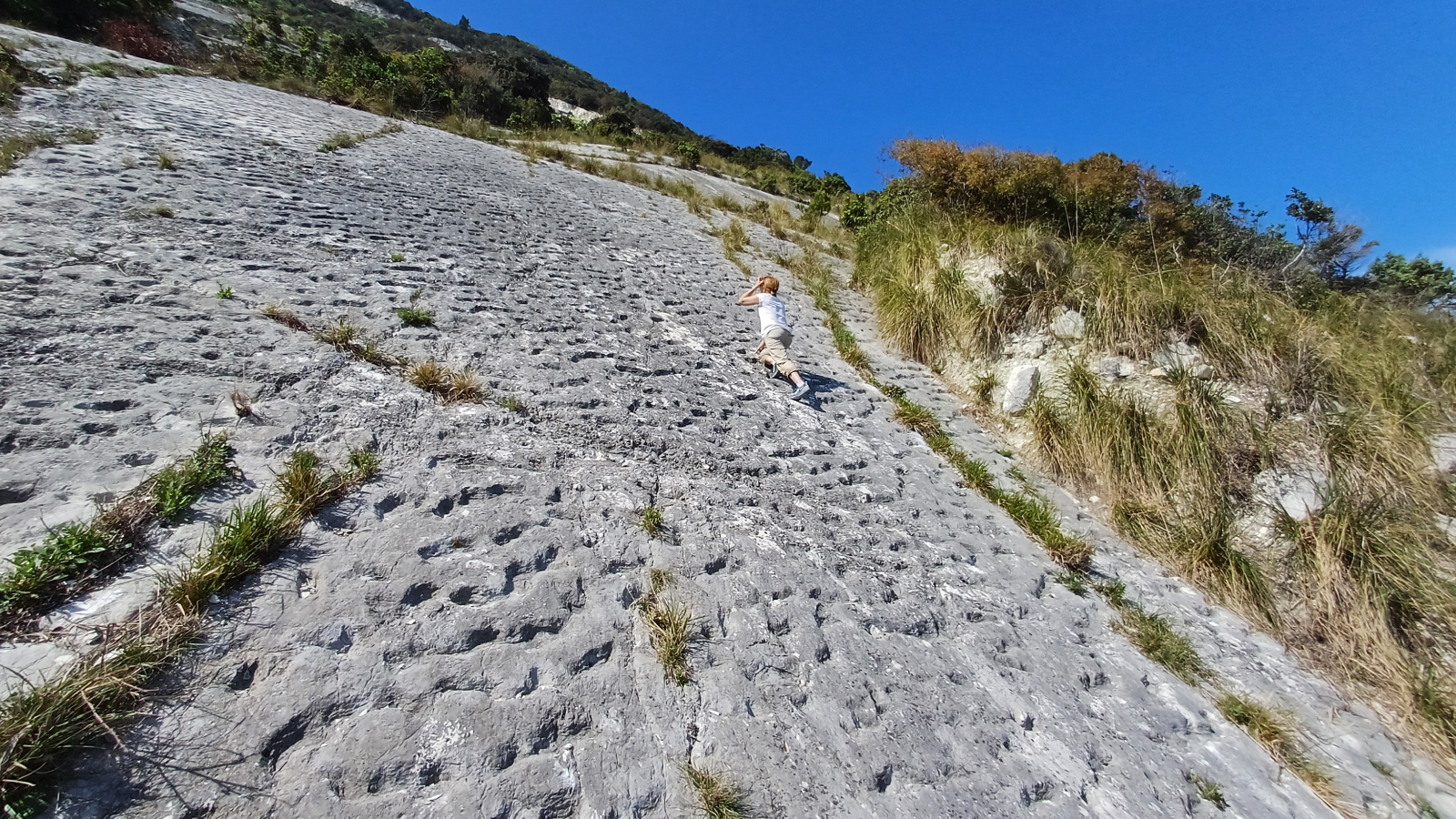 The grooves that may be evidence of a sea turtle stampede were found on a rock face in Italy by climbers.
(Image credit: Paolo Sandroni)
Share
Share by:
The grooves that may be evidence of a sea turtle stampede were found on a rock face in Italy by climbers.
(Image credit: Paolo Sandroni)
Share
Share by:
- Copy link
- X
Rock climbers in Italy stumbled across evidence of what appears to be a sea turtle stampede that took place nearly 80 million years ago. Now, new research suggests these ancient marine reptiles were fleeing an earthquake.
The climbers recognized the significance of their find because the grooves in the rock face on Monte Cònero overlooking the Adriatic Sea reminded them of others that had made headlines earlier that year. Those grooves had been found in another part of the same regional park and were attributed to a Cretaceous marine reptile pressing its paddles into the seafloor. They consulted with fellow-climber and geologist, Paolo Sandroni, who got in touch with Alessandro Montanari, director of the Coldigioco Geological Observatory (OGC).
You may like-
 18,000 dinosaur tracks discovered along ancient Bolivian coastline — and they set a new record
-
 First of its kind 'butt drag fossil' discovered in South Africa — and it was left by a fuzzy elephant relative 126,000 years ago
-
 Scars from ancient 'megaquakes' at Cascadia subduction zone discovered in deep-sea landslides
Sandroni and another member of the team climbed back to the area to collect rock samples and document the site using a drone.
Hundreds of these tracks are located on a layer of the Scaglia Rossa limestone in Cònero Regional Park, a formation that has been extensively studied for decades and preserves millions of years of deep sea sedimentation, study co-author Montanari told Live Science.
What is now part of a mountain was once a deep seabed folded over and thrust upward by tectonic forces millions of years ago, he said. Rock samples collected immediately above the tracks and analyzed by the team reveal important clues about the tracks’ location and the story behind them. For example, they suggest the sea turtles lived around 79 million years ago during the Late Cretaceous Period and indicate that the limestone was part of an underwater avalanche of mud triggered by an earthquake.
Abundant seismic activity in this formation is also supported by decades of collective study. Thin sections slides of the rock samples reveal microfossils of organisms that live along the seafloor, suggesting a hundreds-of-meters deep seafloor environment.
Sign up for the Live Science daily newsletter nowContact me with news and offers from other Future brandsReceive email from us on behalf of our trusted partners or sponsorsBy submitting your information you agree to the Terms & Conditions and Privacy Policy and are aged 16 or over.
Normally, any traces left by animals would be erased by currents at the sea bottom and "worms, clams and [other] benthic organisms," Montanari said. "They basically garden the seafloor," he noted. But an earthquake caused an underwater avalanche within minutes of the tracks being made, preserving them, he said.
The only vertebrates big enough to make these tracks in the Late Cretaceous were marine reptiles such as sea turtles, plesiosaurs and mosasaurs. The latter two are believed to have been largely solitary, but, if ancient sea turtle behavior mirrored that of some of today's species, the researchers said, then it is possible they may have foraged near shore or left the water to lay their eggs. Whatever brought them together, an earthquake caused them all to flee at once, the team suggested in the study, forcing some of the turtles to swim in the water above toward the open sea, and others to scurry away closer to the deeper seafloor. The impending underwater avalanche propelled them even further out of the way.
RELATED STORIES—Titanic 12-foot turtle cruised the ocean 80 million years ago, newfound fossils show
—Giant 'cow of the Cretaceous' discovered almost 100 years ago identified as new duck-billed dinosaur
—Ancient mummified cheetahs discovered in Saudi Arabia contain preserved DNA from the long-lost population
Michael Benton, professor of vertebrate palaeontology at the University of Bristol in the U.K., who was not involved in the research, said the study clearly shows the geological context, but he questioned which animal made the tracks.
"The tracks are unusual because they seem to show underwater punting, where the two forelimbs enter the sediment together and the animal pushes forward," he told Live Science. Most vertebrates tend to “walk or swim with the limbs out of sequence” rather than putting two limbs down at the same time, he said. "Marine turtles generally have a very efficient swimming mode," he said, “a bit like underwater flying, where the front paddles swing round” similar to a figure eight pattern, which doesn’t appear to match the tracks found. He also questions why they wouldn't simply "leave the sea bed and swim" away.
Montanari said that while the prints would benefit from further research, it is clear, geologically, that there was an underwater avalanche triggered by an earthquake. He said he hopes their work will prompt fossil experts to further study the site.
Jeanne TimmonsLive Science ContributorJeanne Timmons rediscovered her passion for paleontology later in life and eagerly started writing about it. Her work can be found in Gizmodo, Ars Technica, The New York Times and Scientific American.
Show More CommentsYou must confirm your public display name before commenting
Please logout and then login again, you will then be prompted to enter your display name.
Logout Read more 18,000 dinosaur tracks discovered along ancient Bolivian coastline — and they set a new record
 First of its kind 'butt drag fossil' discovered in South Africa — and it was left by a fuzzy elephant relative 126,000 years ago
 Scars from ancient 'megaquakes' at Cascadia subduction zone discovered in deep-sea landslides
 Large, bone-crushing dogs stalked 'Rhino Pompeii' after Yellowstone eruption 12 million years ago, ancient footprints reveal
 240 million-year-old 'warrior' crocodile ancestor from Pangaea had plated armor — and it looked just like a dinosaur
 Can a turtle tuck its head all the way inside its shell?
Latest in Extinct species
Can a turtle tuck its head all the way inside its shell?
Latest in Extinct species
 Spinosaurus relative longer than a pickup truck stalked Thailand's rivers 125 million years ago
 Giant 'cow of the Cretaceous' discovered almost 100 years ago identified as new duck-billed dinosaur
 T. rex quiz: How much do you really know about the king of the dinosaurs?
18,000 dinosaur tracks discovered along ancient Bolivian coastline — and they set a new record
Large, bone-crushing dogs stalked 'Rhino Pompeii' after Yellowstone eruption 12 million years ago, ancient footprints reveal
T. rex quiz: How much do you really know about the king of the dinosaurs?
18,000 dinosaur tracks discovered along ancient Bolivian coastline — and they set a new record
Large, bone-crushing dogs stalked 'Rhino Pompeii' after Yellowstone eruption 12 million years ago, ancient footprints reveal
 A new Apple TV series brings to life iconic animals of the last ice age.
Latest in News
A new Apple TV series brings to life iconic animals of the last ice age.
Latest in News
 Shark attacks in Hawaii spike in October, and scientists think they know why
Rock climbers in Italy accidentally discovered evidence of an 80 million-year-old sea turtle stampede
Shark attacks in Hawaii spike in October, and scientists think they know why
Rock climbers in Italy accidentally discovered evidence of an 80 million-year-old sea turtle stampede
 IVF hormones could be delivered with painless 'microneedle' patch someday, early study hints
 1,400-year-old Zapotec tomb discovered in Mexico features enormous owl sculpture symbolizing death
 The UK has lost its measles elimination status — again
 People with more 'brown fat' have healthier cardiovascular systems. A new study in mice may explain why.
LATEST ARTICLES
People with more 'brown fat' have healthier cardiovascular systems. A new study in mice may explain why.
LATEST ARTICLES- 1Rock climbers in Italy accidentally discovered evidence of an 80-million-year-old sea turtle stampede
- 2Ancient lake full of crop circles lurks in the shadow of Saudi Arabia's 'camel-hump' mountain
- 3Shark attacks in Hawaii spike in October, and scientists think they know why
- 4IVF hormones could be delivered with painless 'microneedle' patch someday, early study hints
- 5AI may accelerate scientific progress — but here's why it can't replace human scientists