- Space
- Astronomy
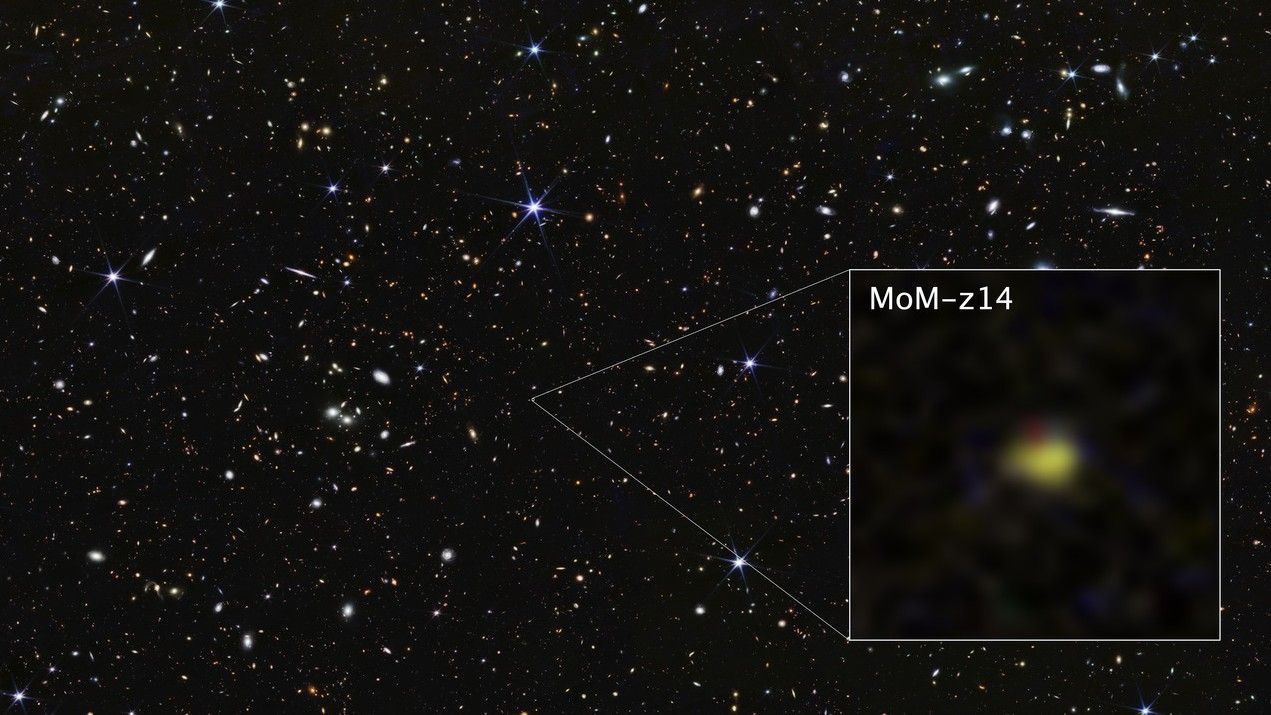
The James Webb Space Telescope has confirmed the most distant, early galaxy in the known universe. The new contender, MoM-z14, is visible just 280 million years after the Big Bang.
When you purchase through links on our site, we may earn an affiliate commission. Here’s how it works.
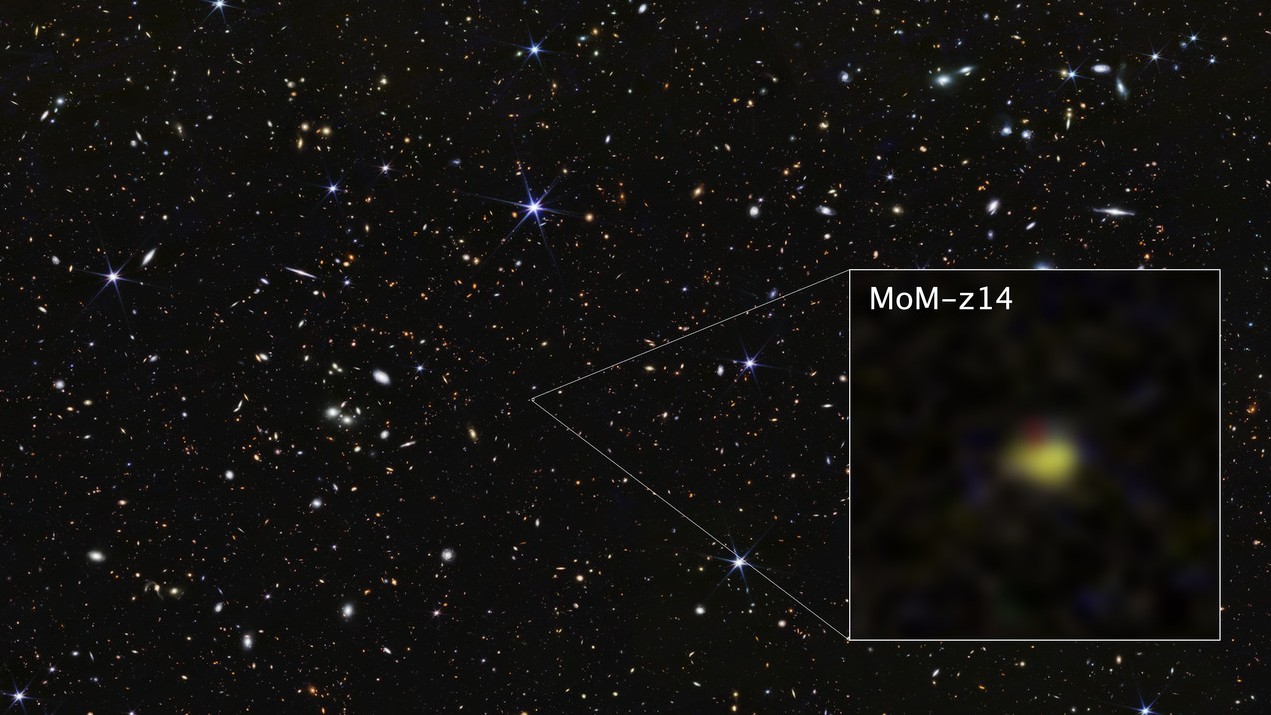 JWST has spotted the ancient object MoM-z14, the earliest and most distant galaxy confirmed to date.
(Image credit: ASA, ESA, CSA, STScI, Rohan Naidu (MIT); Image Processing: Joseph DePasquale (STScI))
Share
Share by:
JWST has spotted the ancient object MoM-z14, the earliest and most distant galaxy confirmed to date.
(Image credit: ASA, ESA, CSA, STScI, Rohan Naidu (MIT); Image Processing: Joseph DePasquale (STScI))
Share
Share by:
- Copy link
- X
Editor's note: This article was updated on Jan. 29, 2026. It was originally published in May, 2025, when the related study was released as a preprint. The study has now been peer-reviewed and accepted in the Open Journal of Astrophysics, according to NASA. Quotes from a NASA statement have also been added.The James Webb Space Telescope (JWST) has spotted the most distant galaxy observed to date — breaking its own record yet again.
The galaxy, dubbed MoM-z14, is "the most distant spectroscopically confirmed source to date, extending the observational frontier to a mere 280 million years after the Big Bang," researchers wrote in a new study, which appeared May 23, 2025 on the preprint server arXiv and was accepted into the Open Journal of Astrophysics in January, 2026.
You may like-
 James Webb telescope may have spotted the earliest supernova in the universe
-
 James Webb telescope may have discovered the earliest, most distant black hole ever seen
-
 James Webb telescope discovers earliest Type II supernova in the known universe
"With Webb, we are able to see farther than humans ever have before, and it looks nothing like what we predicted, which is both challenging and exciting," lead study author Rohan Naidu, of the Massachusetts Institute of Technology's Kavli Institute for Astrophysics and Space Research, said in a Jan. 28 statement from NASA.
Searching for cosmic dawn
Since beginning operation in 2022, JWST has spotted more bright, ancient galaxies than scientists expected, challenging previous theories about the universe's infancy. "This unexpected population has electrified the community and raised fundamental questions about galaxy formation in the first 500 [million years after the Big Bang]," the authors wrote in the study.
As more examples trickle in, scientists are working to confirm whether these luminous objects really are ancient galaxies. Naidu and colleagues combed through existing JWST images for potential early galaxies to check. After identifying MoM-z14 as a possible target, they turned the telescope toward the peculiar object in April 2025.
One way scientists can measure an astronomical object's age is by measuring its redshift. As the universe expands, it stretches the light emitted by distant objects to longer, "redder" wavelengths. The farther and longer the light has traveled, the larger its redshift.
Sign up for the Live Science daily newsletter nowContact me with news and offers from other Future brandsReceive email from us on behalf of our trusted partners or sponsorsBy submitting your information you agree to the Terms & Conditions and Privacy Policy and are aged 16 or over.In the new study, which has not yet been peer-reviewed, the team confirmed MoM-z14's redshift as 14.44 — larger than that of the previous record holder for farthest observed galaxy, JADES-GS-z14-0, at 14.18.
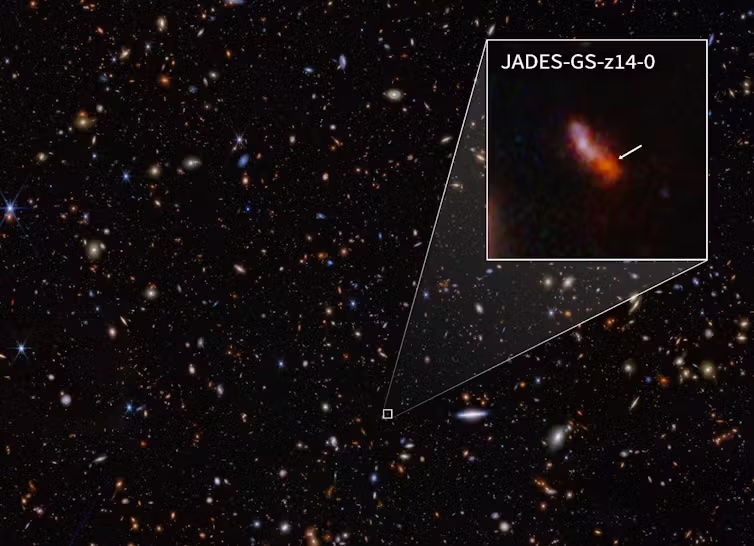
MoM-z14 is fairly compact for the amount of light it emits. It's about 240 light-years across, some 400 times smaller than our own galaxy. And it contains about as much mass as the Small Magellanic Cloud, a dwarf galaxy that orbits the Milky Way.
The researchers observed MoM-z14 during a burst of rapid star formation. It's also rich in nitrogen relative to carbon, much like globular clusters observed in the Milky Way.
You may like-
James Webb telescope may have spotted the earliest supernova in the universe
-
James Webb telescope may have discovered the earliest, most distant black hole ever seen
-
James Webb telescope discovers earliest Type II supernova in the known universe
—James Webb telescope spots Milky Way's long-lost 'twin' — and it is 'fundamentally changing our view of the early universe'
—'I was astonished': Ancient galaxy discovered by James Webb telescope contains the oldest oxygen scientists have ever seen
—'Totally unexpected' galaxy discovered by James Webb telescope defies our understanding of the early universe
These ancient, tightly-bound groups of thousands to millions of stars are thought to have formed in the first few billion years of the universe, making them the oldest known stars in the nearby cosmos. That MoM-z14 appears similar could suggest that stars formed in comparable ways even at this very early stage in the universe's development.
Though scientists still aim to confirm more high redshift galaxies, researchers expect to find even more candidates with the Nancy Grace Roman Space Telescope, an infrared telescope designed to observe a large swath of the sky, which could launch as soon as late 2026.
But JWST may break its own record again before then.
"JWST itself appears poised to drive a series of great expansions of the cosmic frontier," the authors wrote. "Previously unimaginable redshifts, approaching the era of the very first stars, no longer seem far away."
Article SourcesNaidu, R. P., Oesch, P. A., Brammer, G., Weibel, A., Li, Y., Matthee, J., Chisholm, J., Pollock, C. L., Heintz, K. E., Johnson, B. D., Shen, X., Hviding, R. E., Leja, J., Tacchella, S., Ganguly, A., Witten, C., Atek, H., Belli, S., Bose, S., . . . Whitaker, K. E. (2025, May 16). A Cosmic Miracle: A Remarkably Luminous Galaxy at z=14.44 Confirmed with JWST. arXiv.org. https://arxiv.org/abs/2505.11263
 Skyler WareSocial Links NavigationLive Science Contributor
Skyler Ware is a freelance science journalist covering chemistry, biology, paleontology and Earth science. She was a 2023 AAAS Mass Media Science and Engineering Fellow at Science News. Her work has also appeared in Science News Explores, ZME Science and Chembites, among others. Skyler has a Ph.D. in chemistry from Caltech.
Show More CommentsYou must confirm your public display name before commenting
Please logout and then login again, you will then be prompted to enter your display name.
Logout Read more James Webb telescope may have spotted the earliest supernova in the universe
 James Webb telescope may have discovered the earliest, most distant black hole ever seen
 James Webb telescope discovers earliest Type II supernova in the known universe
 Science history: James Webb Space Telescope launches — and promptly cracks our view of the universe — Dec. 25, 2021
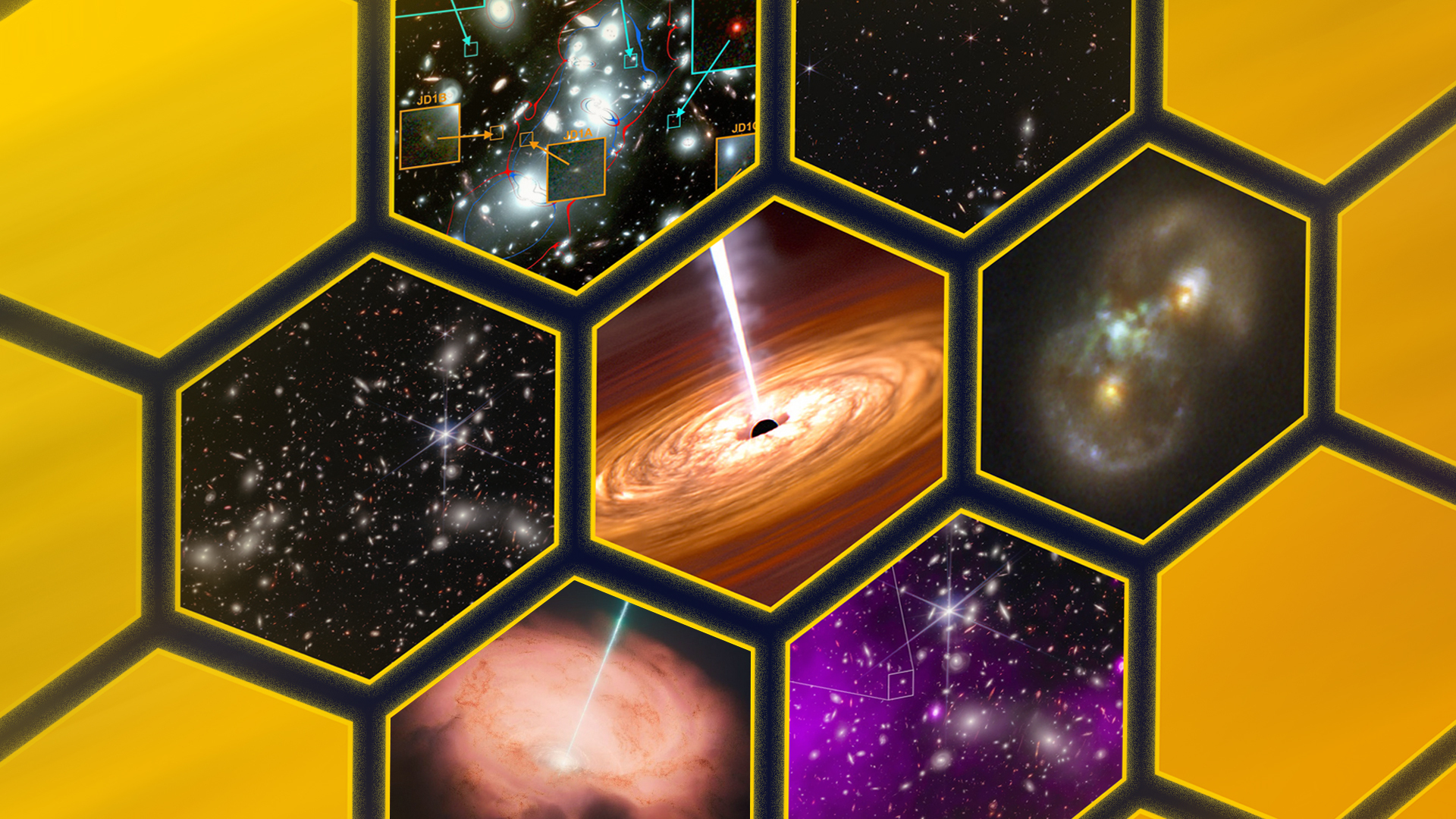 'A real revolution': The James Webb telescope is upending our understanding of the biggest, oldest black holes in the universe
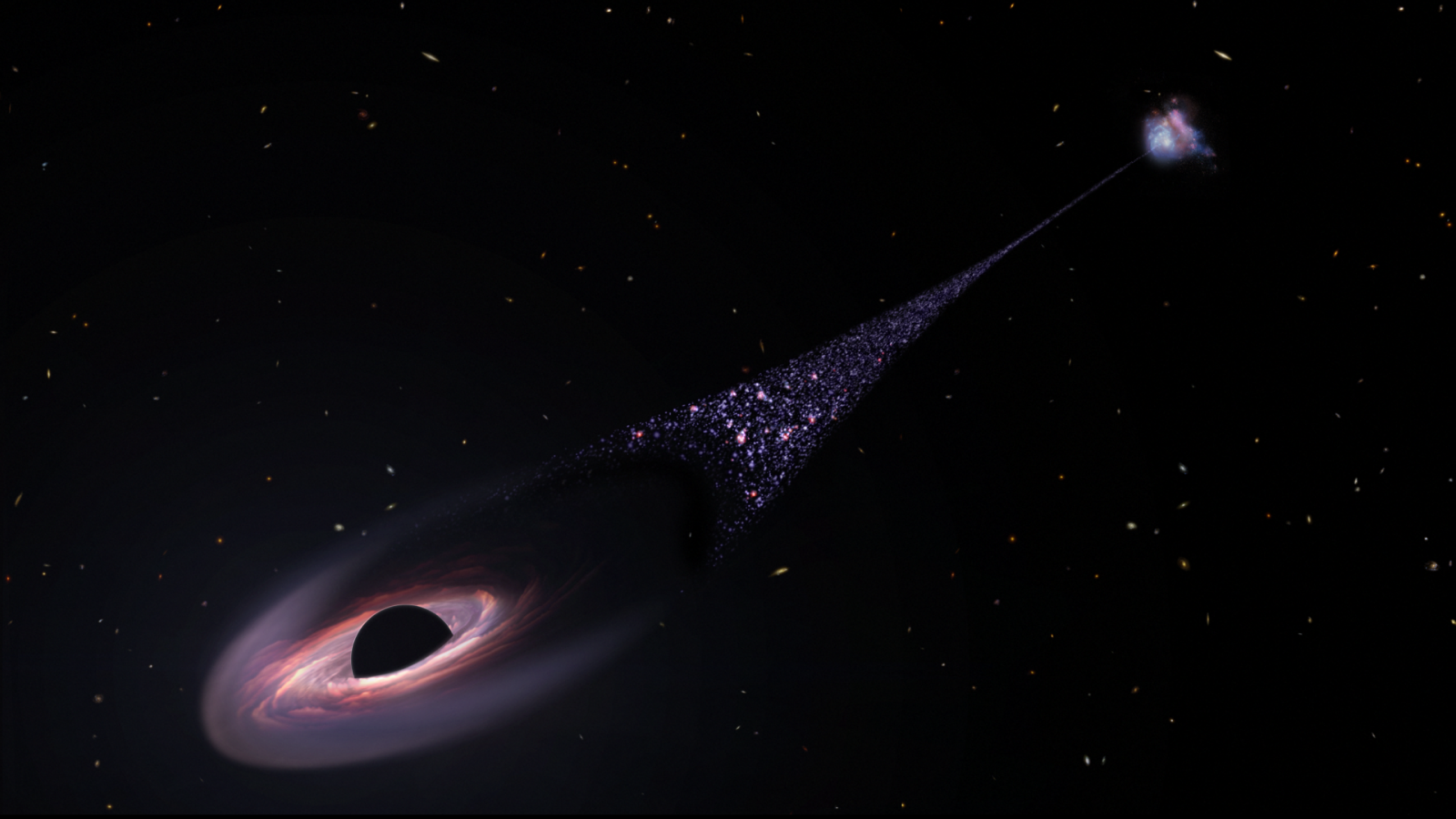 James Webb telescope confirms a supermassive black hole running away from its host galaxy at 2 million mph, researchers say
Latest in Astronomy
James Webb telescope confirms a supermassive black hole running away from its host galaxy at 2 million mph, researchers say
Latest in Astronomy
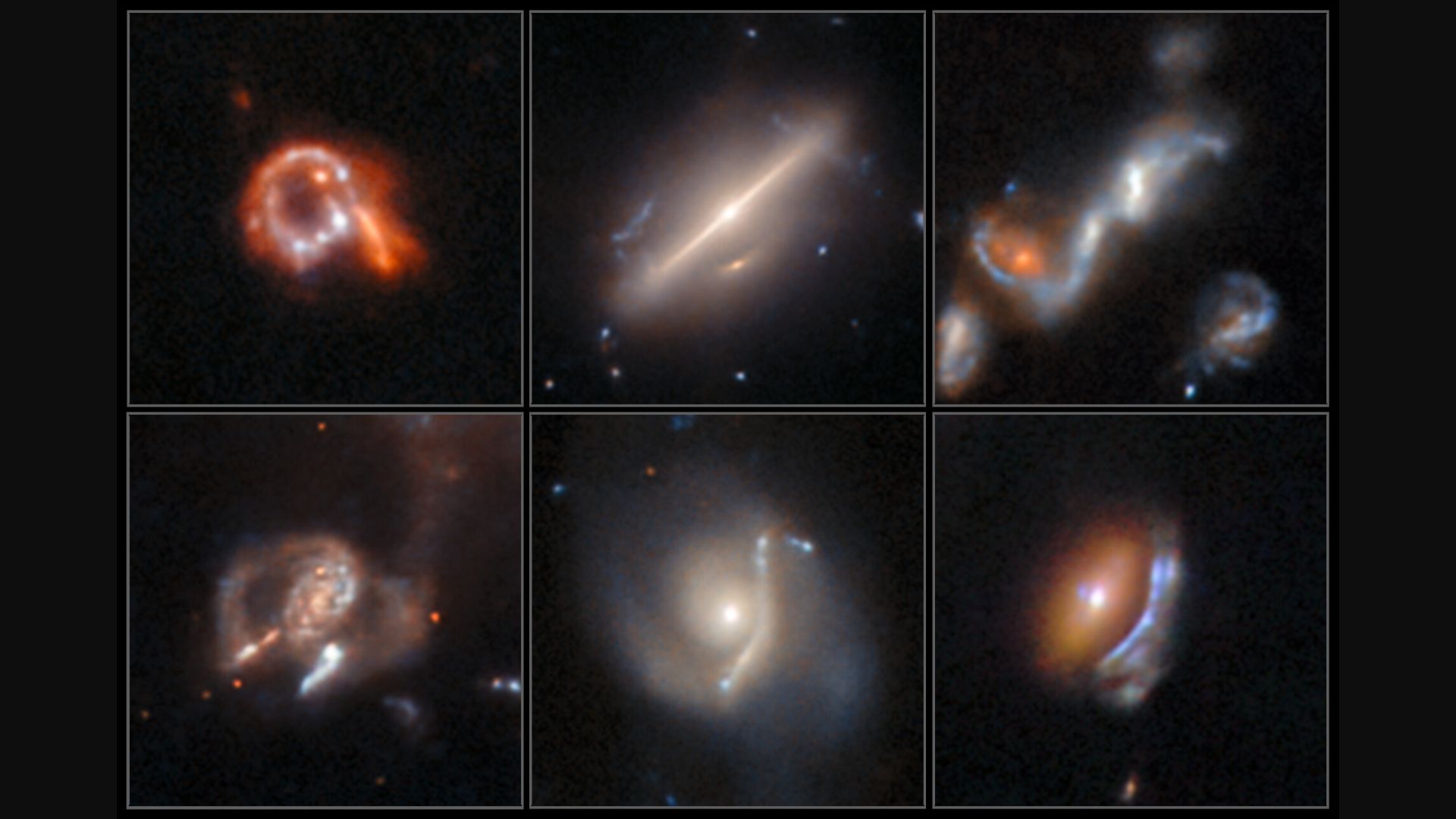 AI spots 'jellyfish,' 'hamburgers' and other unexplainable objects in Hubble telescope data
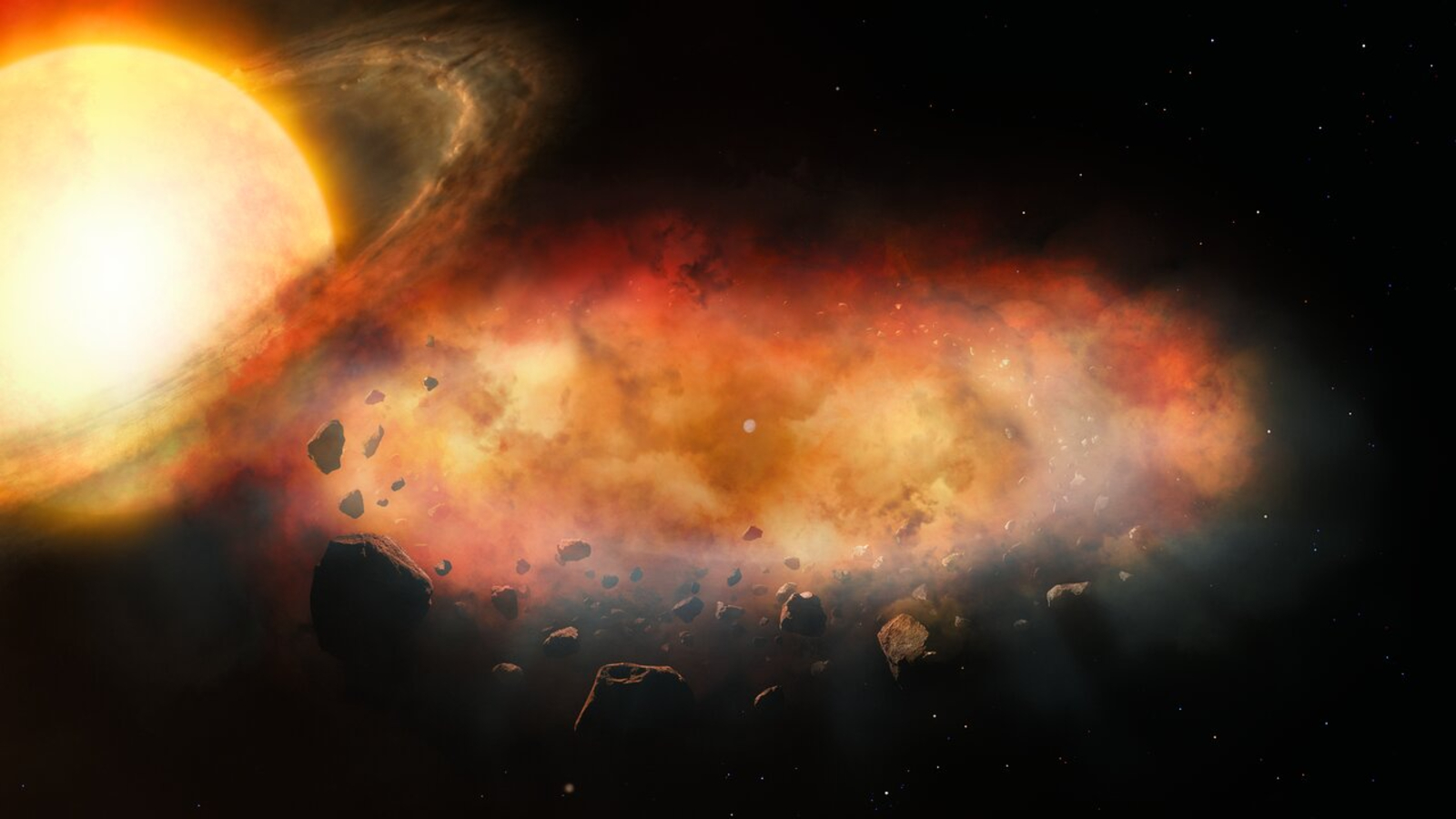 Giant 'metal cloud' in nearby star system could be hiding an undiscovered sun
 See February's full Snow Moon rise this weekend next to a glittering star cluster
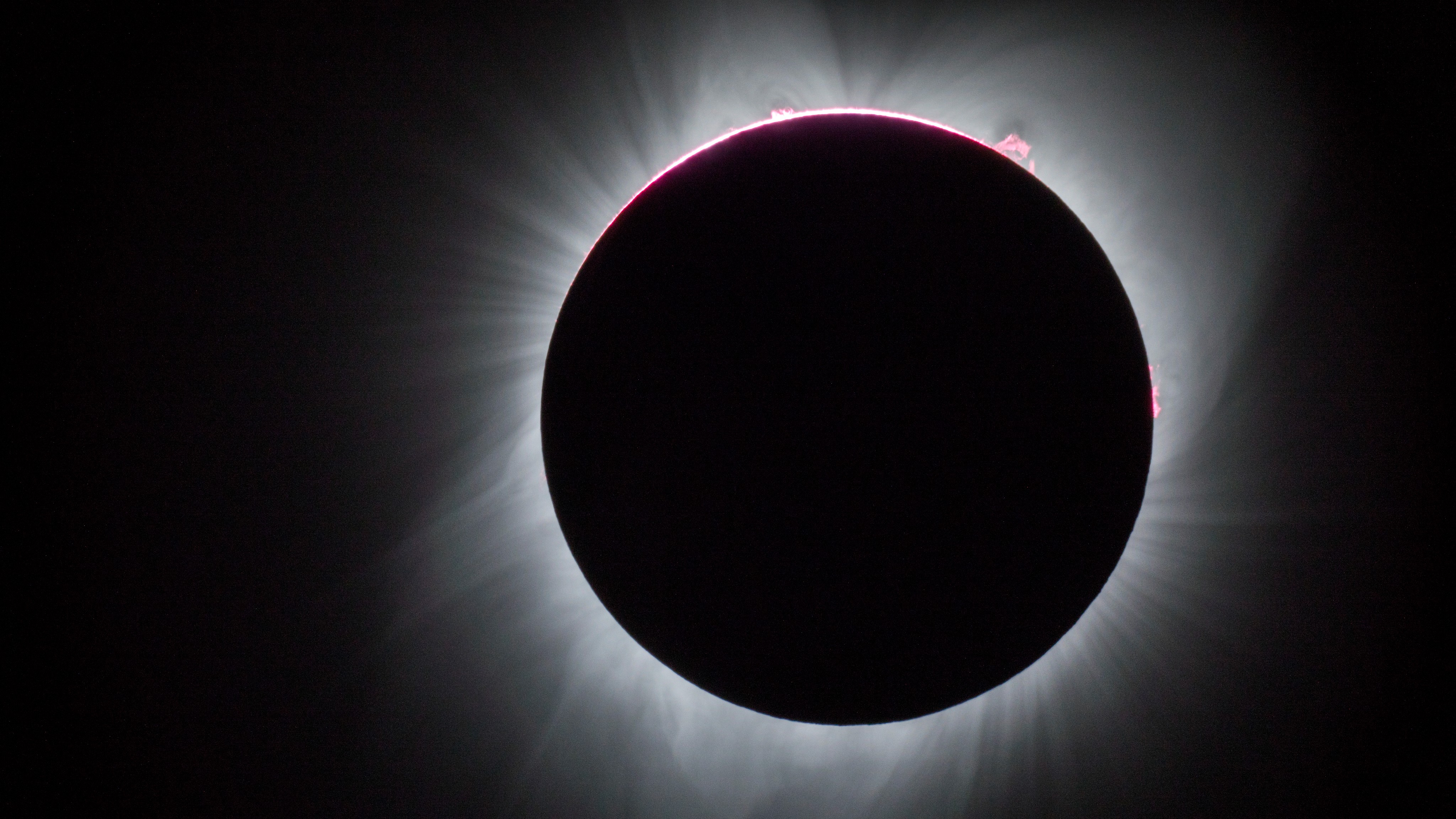 How to see 2 total solar eclipses in the next 2 years — including the 'eclipse of the century'
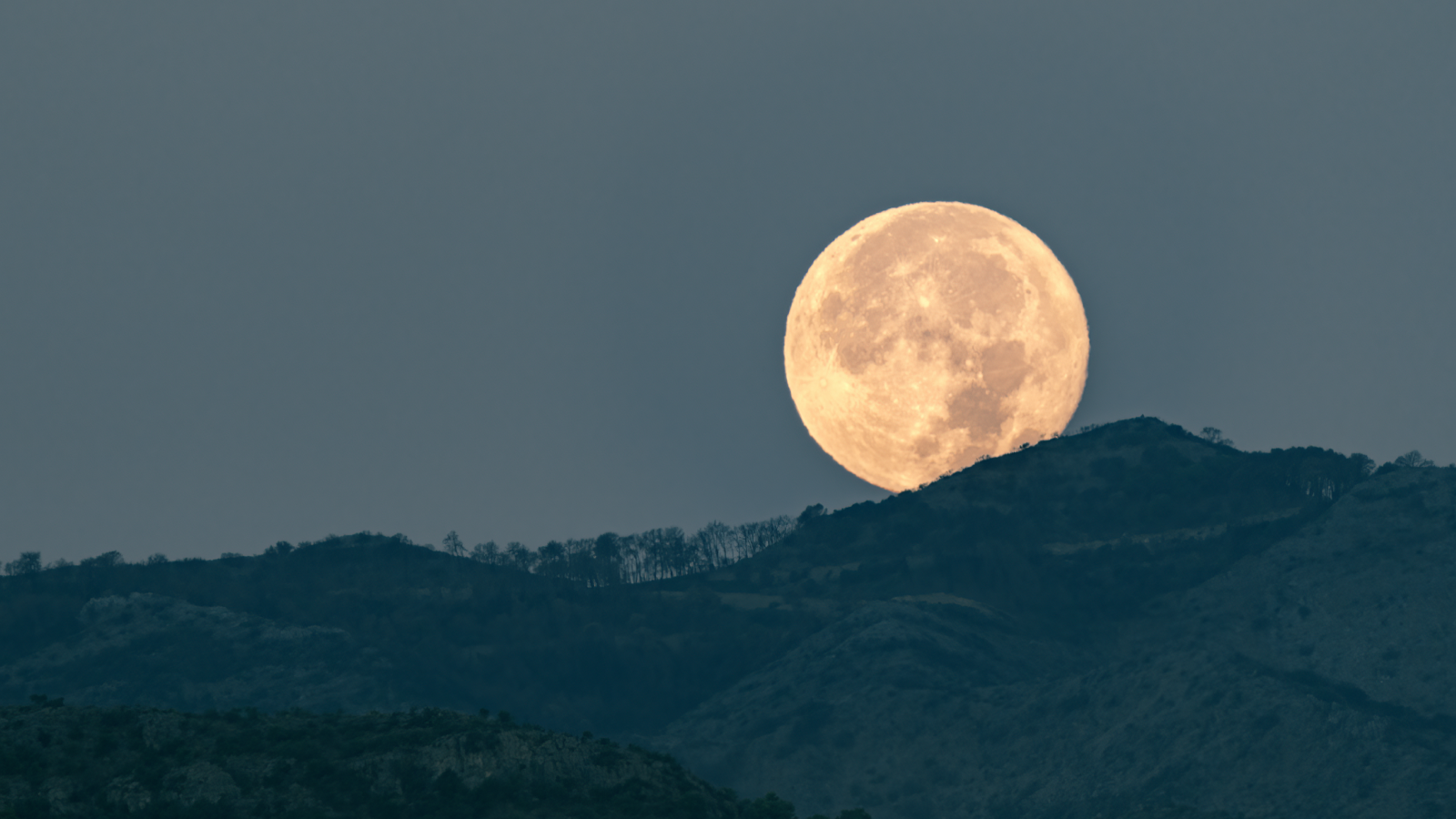 Why does the moon look larger when it's on the horizon?
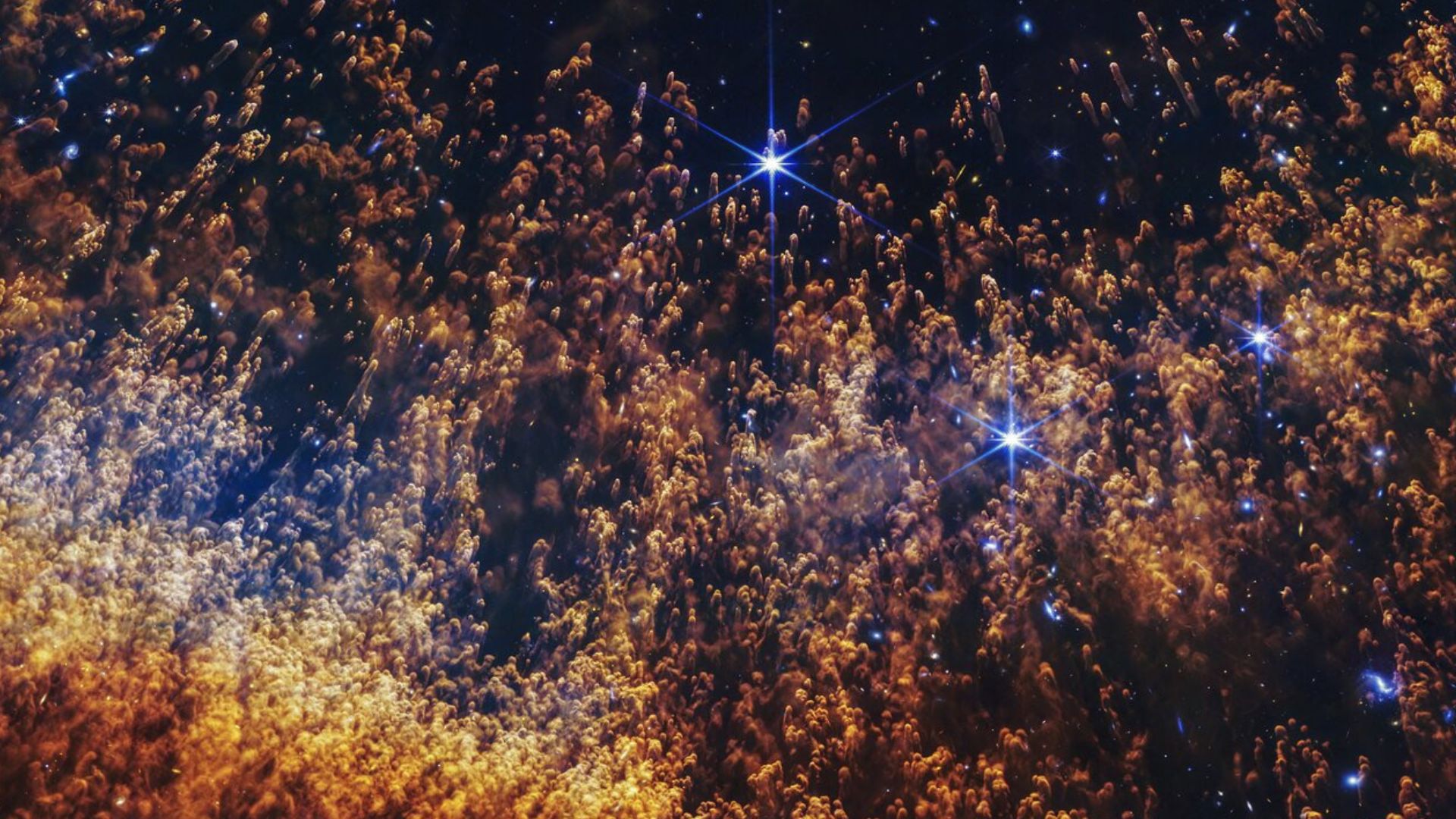 James Webb telescope peers into 'Eye of God' and finds clues to life's origins — Space photo of the week
Latest in News
James Webb telescope breaks own record, discovering farthest known galaxy in the universe
James Webb telescope peers into 'Eye of God' and finds clues to life's origins — Space photo of the week
Latest in News
James Webb telescope breaks own record, discovering farthest known galaxy in the universe
 South Carolina's measles outbreak nears 790 cases — making it the biggest in decades
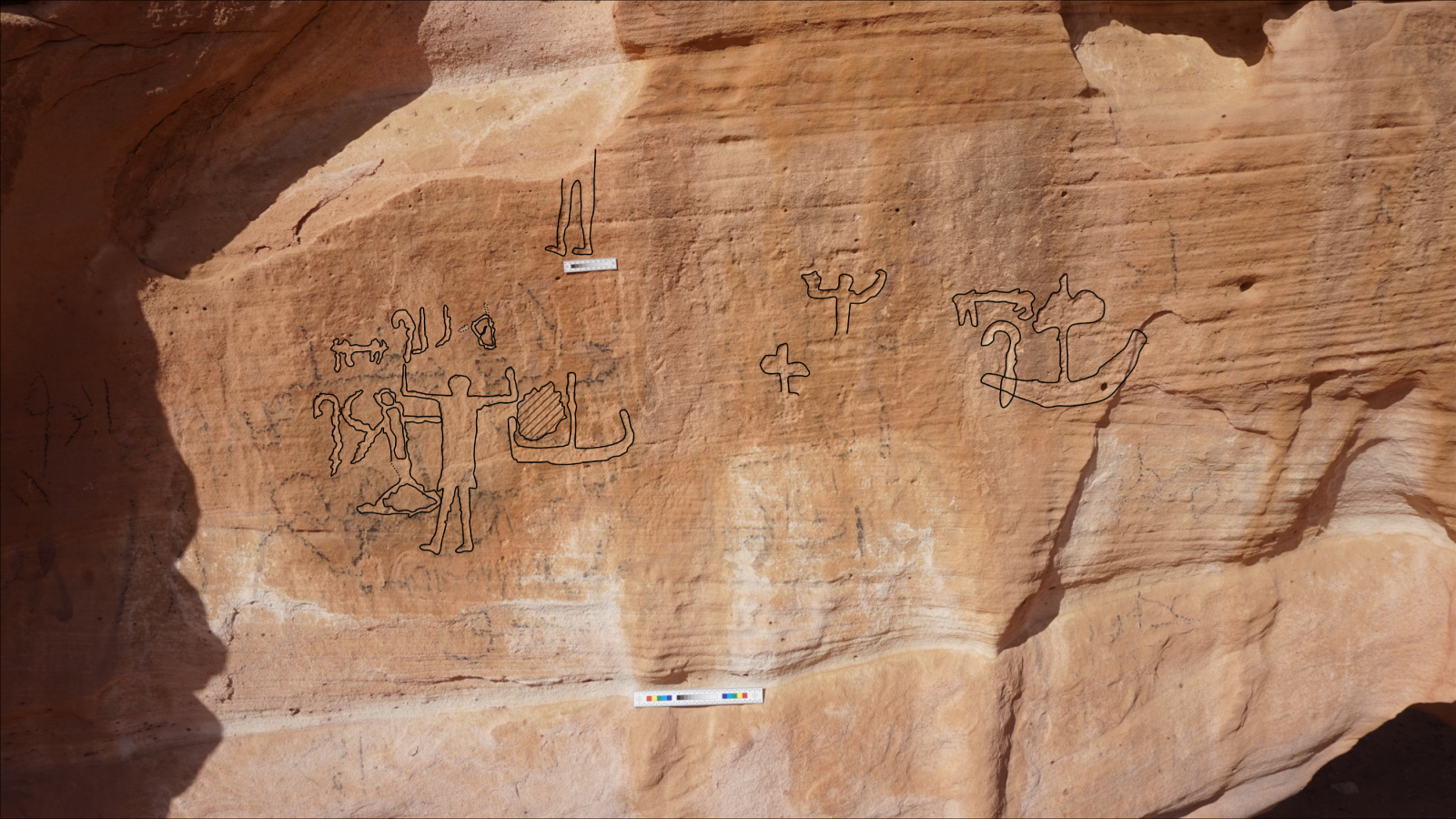 5,000-year-old rock art from ancient Egypt depicts 'terrifying' conquest of the Sinai Peninsula
 Stone Age teenager was mauled by a bear 28,000 years ago, skeletal analysis confirms
 NASA jet crashes in flames on Texas runway — taking it out of the Artemis II mission
 Critical moment when El Niño started to erode Russia's Arctic sea ice discovered
LATEST ARTICLES
Critical moment when El Niño started to erode Russia's Arctic sea ice discovered
LATEST ARTICLES- 150-year-old NASA jet crashes in flames on Texas runway — taking it out of the Artemis II mission
- 25,000-year-old rock art from ancient Egypt depicts 'terrifying' conquest of the Sinai Peninsula
- 3Stone Age teenager was mauled by a bear 28,000 years ago, skeletal analysis confirms
- 4February 2026 night sky: What to see and what you need
- 5Drones could achieve 'infinite flight' after engineers create laser-based wireless power system that charges them from the ground