- Archaeology
The mystery of a Stone Age teenager's death has been solved — 80 years after he was found in an ancient burial ground in Italy.
When you purchase through links on our site, we may earn an affiliate commission. Here’s how it works.
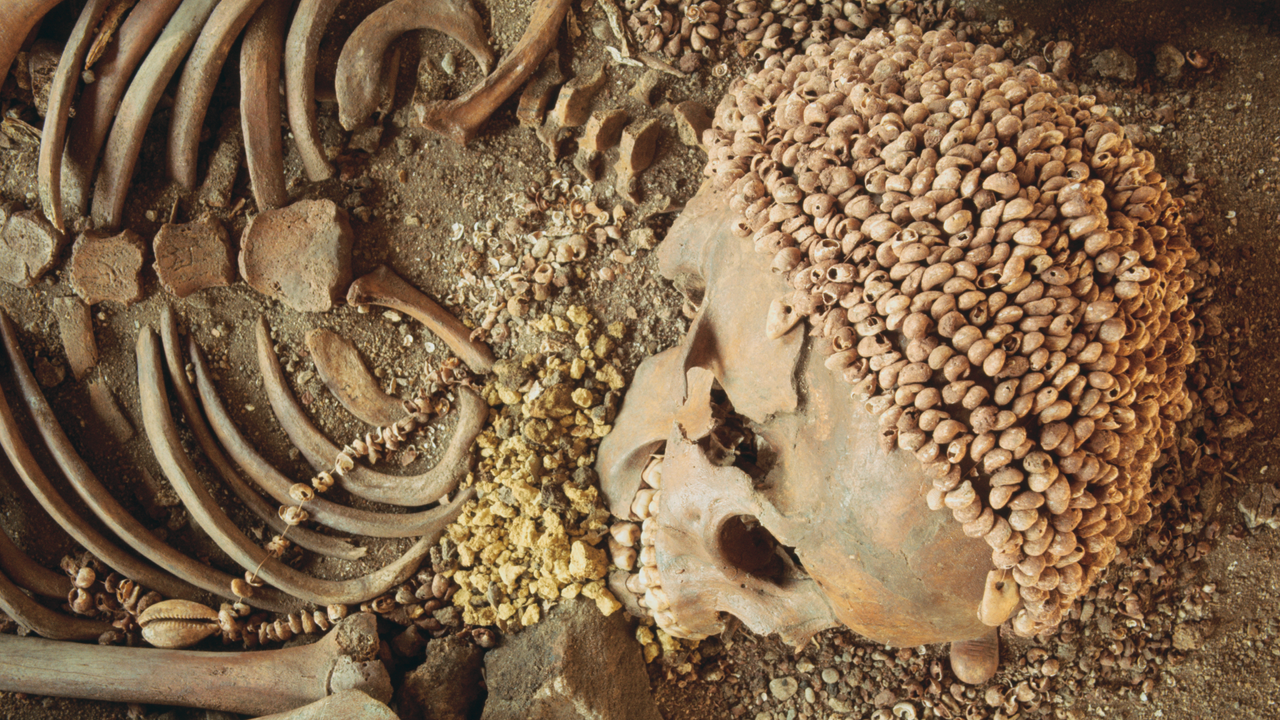
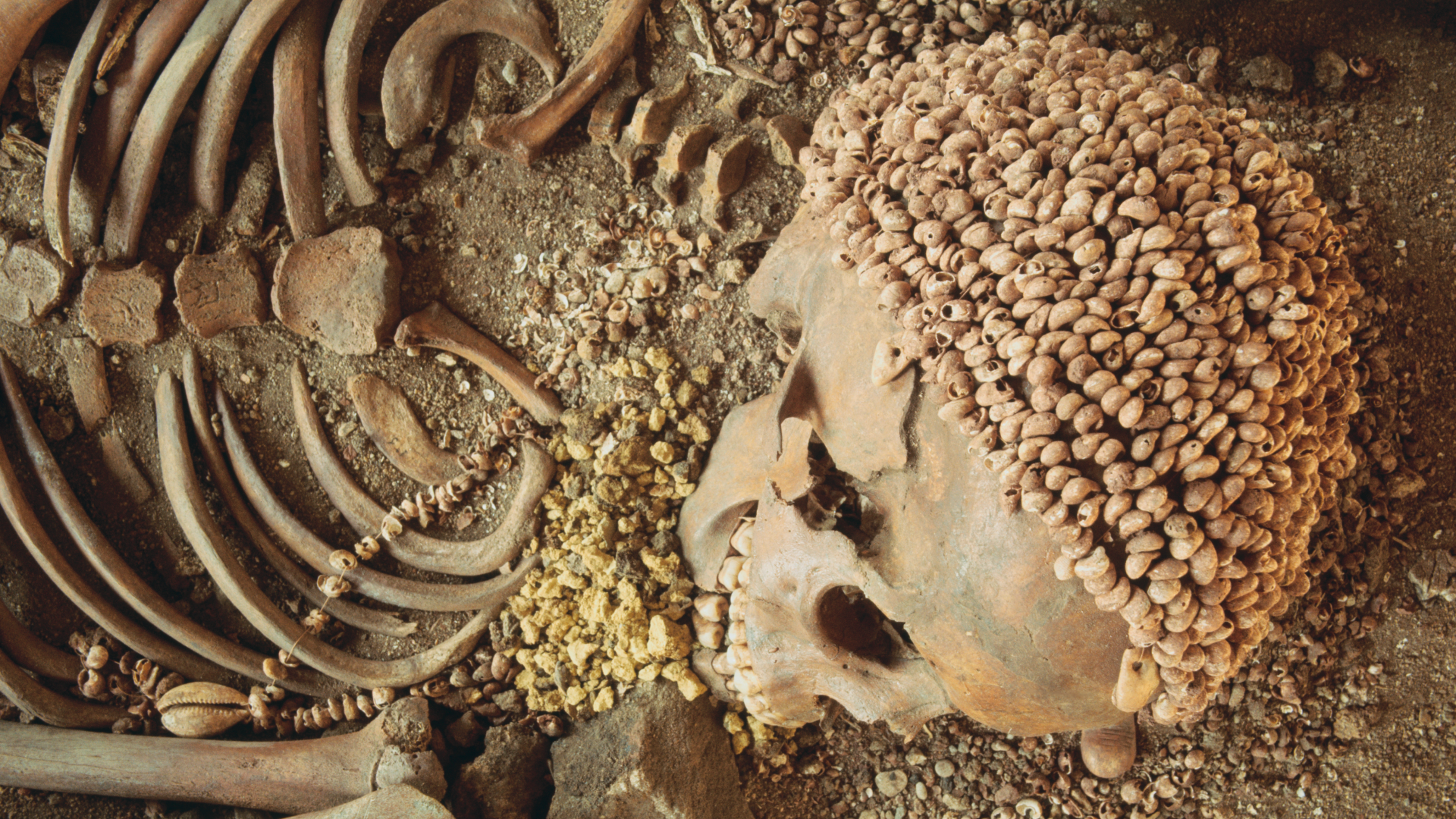 Reconstruction of the burial of "Il Principe," a hunter-gatherer teenager who likely died after being mauled by a bear nearly 28,000 years ago.
(Image credit: Getty Images)
Share
Share by:
Reconstruction of the burial of "Il Principe," a hunter-gatherer teenager who likely died after being mauled by a bear nearly 28,000 years ago.
(Image credit: Getty Images)
Share
Share by:
- Copy link
- X
Nearly 28,000 years ago, a teenage boy was buried with care in a cave in what is now northern Italy, a spectacular shell cap covering his head and a flint blade grasped in his right hand. Archaeologists have now determined his cause of death: a bear attack.
"He probably lost consciousness during the event and never regained it," Vitale Sparacello, a bioarchaeologist at the University of Cagliari in Sardinia, told Live Science in an email. "We know that these people hunted bears and that bears tend to avoid humans whenever they can, but a fortuitous encounter is still possible."
To solve a mystery straight out of CSI: Stone Age, Sparacello and colleagues examined the skeletal remains of the boy — originally excavated from the Arene Candide cave in Liguria in 1942 and nicknamed "Il Principe" (the Prince) — for microscopic clues to his untimely demise. They published their findings in the Journal of Anthropological Sciences in December.
You may like-
 Brutal lion attack 6,200 years ago severely injured teenager — but somehow he survived, skeleton found in Bulgaria reveals
-
 Medieval Hungarian duke was murdered in a brutal and coordinated attack, forensic analysis reveals
-
 Neanderthals cannibalized 'outsider' women and children 45,000 years ago at cave in Belgium
When the Prince was found more than 80 years ago, excavators immediately suspected he had suffered a significant traumatic event around the time of his death because of widespread damage to the bones of his left shoulder area, neck and lower jaw. But no official analysis of the skeleton was ever published, and the Prince's body was reassembled, glued together and put on display in the Ligurian Archaeological Museum shortly after World War II.
Recently, the researchers obtained permission from the museum to remove bones from the display one at a time so that they could look at them under magnification. They also took photographs and made 3D surface models of some of the bones.
After carefully analyzing the images, the researchers concluded that the young teenage forager had suffered massive shoulder and facial trauma around the time of his death, just as the original excavators had suggested. But their analysis also revealed damage that pointed to a bear attack.
One linear mark on the left side of the boy's skull, found underneath the cap of shells, measured 0.4 inches (10 millimeters) long. It occurred around the time of his death, and its shape is consistent with a claw swipe. And on the boy's right ankle, the researchers found a teardrop-shaped depression that also occurred around the time of his death and was made by a cone-shaped object such as a tooth.
Sign up for the Live Science daily newsletter nowContact me with news and offers from other Future brandsReceive email from us on behalf of our trusted partners or sponsorsBy submitting your information you agree to the Terms & Conditions and Privacy Policy and are aged 16 or over.
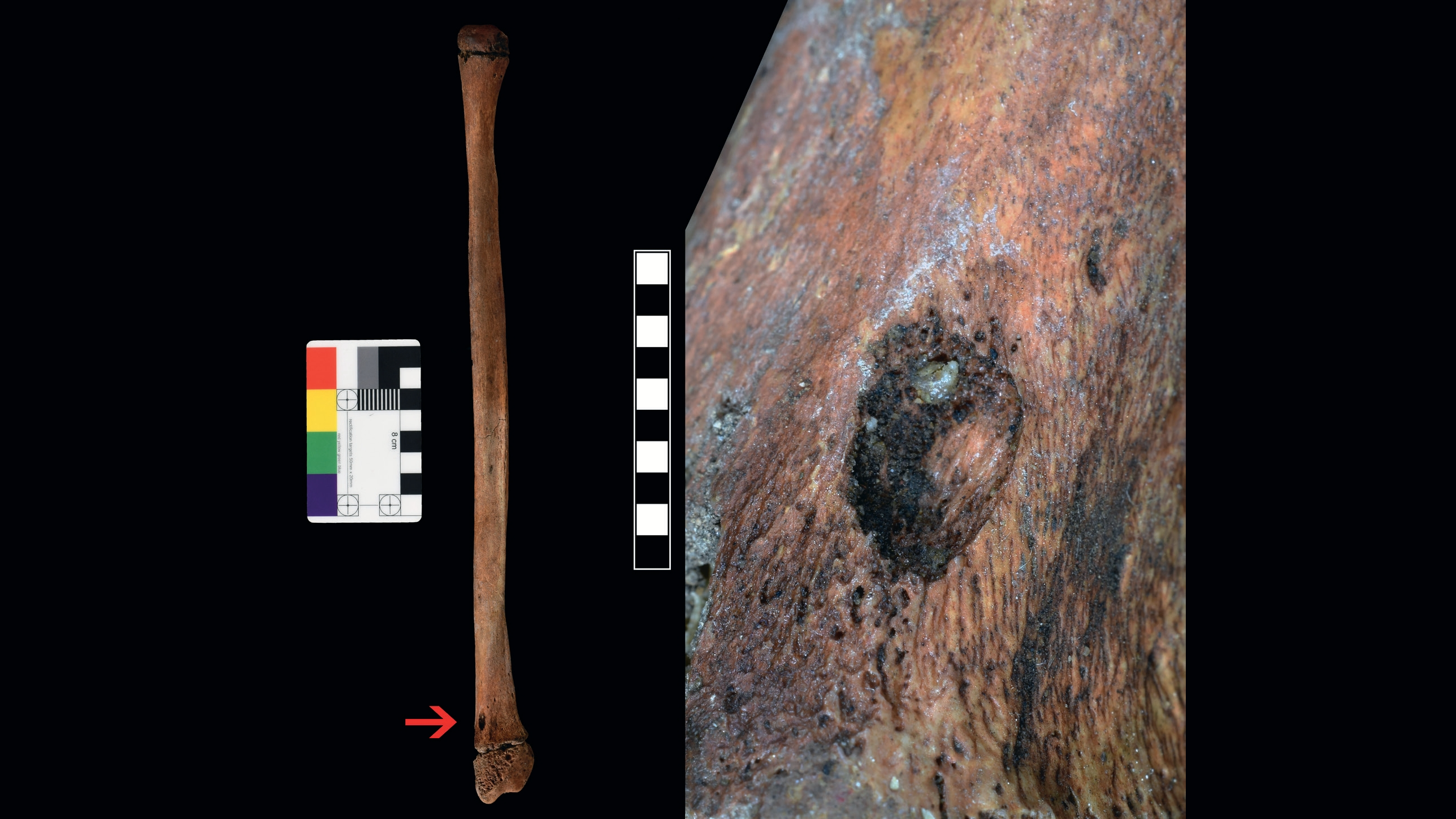
"Overall, when considering the nature and pattern of the most obvious lesions, they depict a realistic scenario of fatal mauling by a large carnivore," the researchers wrote in the study. Given the animals commonly found in Late Pleistocene archaeological sites in Italy and the pattern of injuries, the Prince was likely attacked by either a brown bear (Ursus arctos) or the now-extinct cave bear (Ursus spelaeus).
Microscopic evidence of bone healing revealed that the Prince actually survived the initial attack for up to three days. "Given the extent of the bone injuries, it is surprising that this adolescent forager survived even for this brief time," the researchers wrote. The bite or paw smack that smashed his bones "must have fortuitously spared major blood vessels," they wrote, and his "death may have occurred due to secondary brain injury, internal hemorrhage, or multiple organ failure."
Since the boy didn't immediately perish, "most likely the adolescent was not alone because he was cared for immediately," Sparcello said. But we can only speculate about what the group was doing, he said. "It is impossible to say whether they were out hunting or collecting plants."
RELATED STORIES—'Oddly shaped head' left in Italian cave 12,500 years ago is Europe's oldest known case of cranial modification, study finds
—Rare skeletons up to 30,000 years old reveal when ancient humans went through puberty
—Unknown lineage of ice age Europeans discovered in genetic study
The Prince is the oldest burial found in the Arene Candide cave. He died around 28,000 to 27,400 years ago and was between 14 and 17 years old. His compatriots buried him on a bed of red ocher with a headdress made from hundreds of perforated shells and deer teeth, along with several ivory pendants and a blade made of flint imported from southern France. A large lump of yellow ocher was placed in the area between his damaged shoulder, neck and jaw.
Although ancient hunter-gatherers were undoubtedly aware of potentially dangerous animals, the Prince's prolonged agony after the violent attack may have rocked his small community. "The rich formal burial accorded to the Principe may reflect a need to ritually sanction an exceptionally negative event," the researchers wrote.
The team hopes to continue its research on the Prince. "It is possible that in the future we will do an amelogenin test on the dental enamel [to determine biological sex] or a full genetic study, but destructive analysis has to be done sparingly on these exceptional remains," Sparcello said.
Article SourcesSparacello, V.S., Dori, I., Radi, N. et al. (2025). New signs of skeletal trauma in the Upper Paleolithic “Principe” from Arene Candide Cave (Liguria, Italy) bear novel insights into the circumstances of his death. Journal of Anthropological Sciences Reports, 103, 113-139. doi 10.4436/JASS.10303
Stone Age quiz: What do you know about the Paleolithic, Mesolithic and Neolithic?
 Kristina KillgroveSocial Links NavigationStaff writer
Kristina Killgrove is a staff writer at Live Science with a focus on archaeology and paleoanthropology news. Her articles have also appeared in venues such as Forbes, Smithsonian, and Mental Floss. Kristina holds a Ph.D. in biological anthropology and an M.A. in classical archaeology from the University of North Carolina, as well as a B.A. in Latin from the University of Virginia, and she was formerly a university professor and researcher. She has received awards from the Society for American Archaeology and the American Anthropological Association for her science writing.
Show More CommentsYou must confirm your public display name before commenting
Please logout and then login again, you will then be prompted to enter your display name.
Logout Read more Brutal lion attack 6,200 years ago severely injured teenager — but somehow he survived, skeleton found in Bulgaria reveals
 Medieval Hungarian duke was murdered in a brutal and coordinated attack, forensic analysis reveals
 Neanderthals cannibalized 'outsider' women and children 45,000 years ago at cave in Belgium
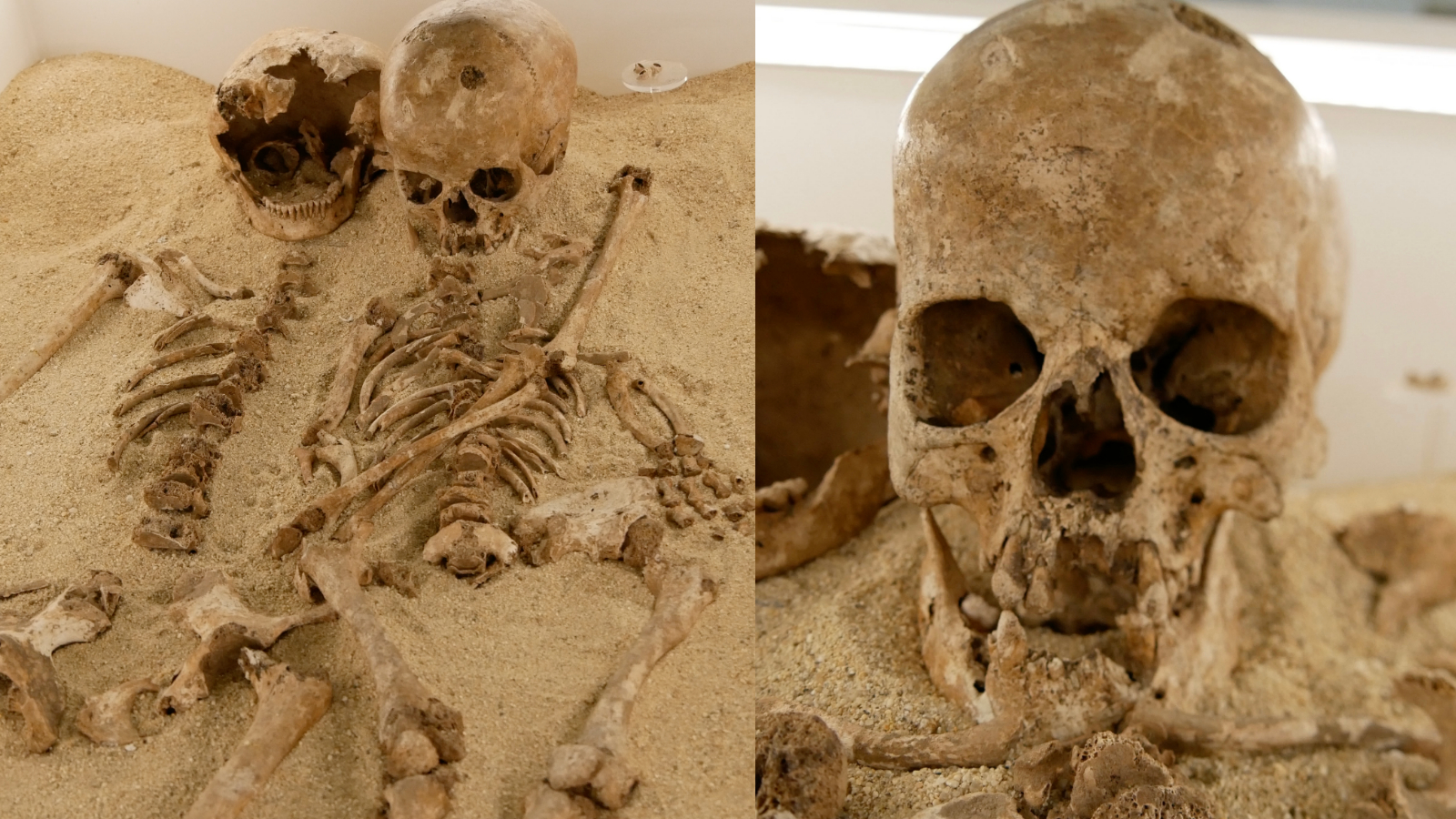 Teenage girl who lived in Italy 12,000 years ago had a rare form of dwarfism, DNA study shows
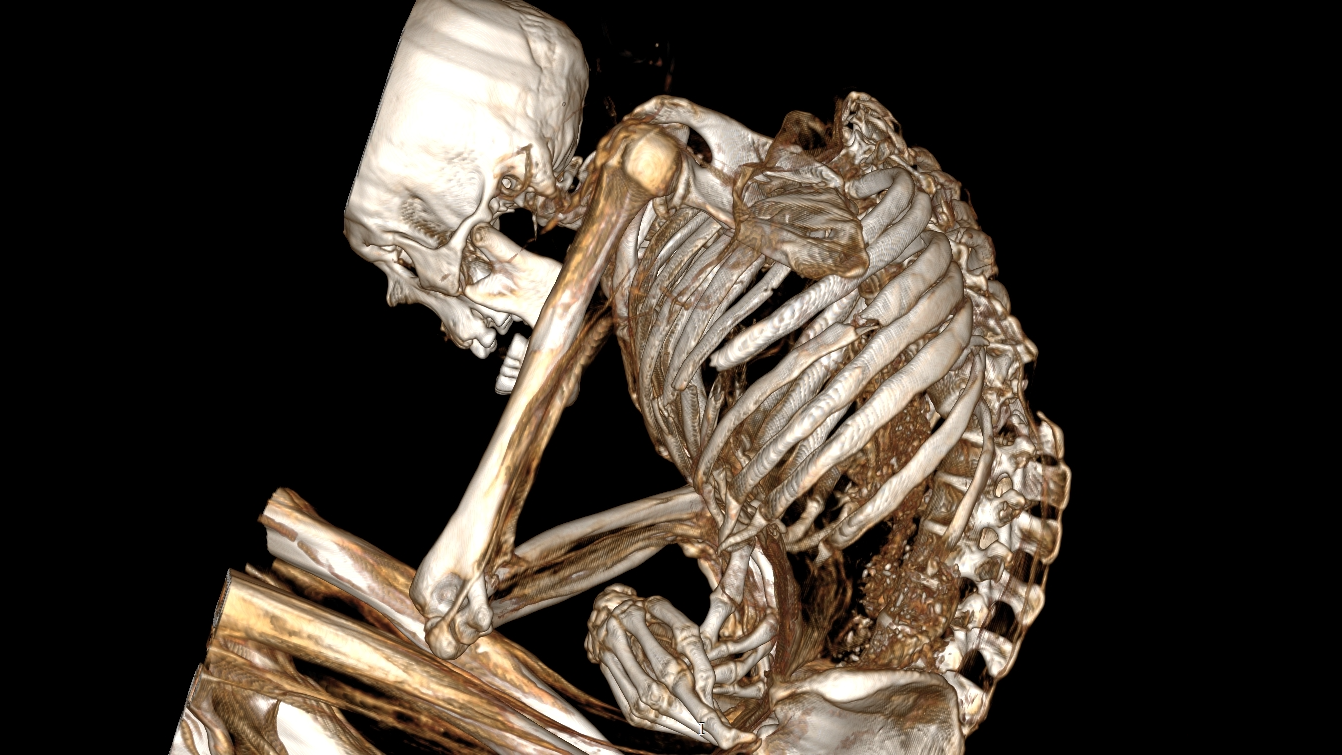 1,100-year-old mummy found in Chile died of extensive injuries when a turquoise mine caved in, CT scans reveal
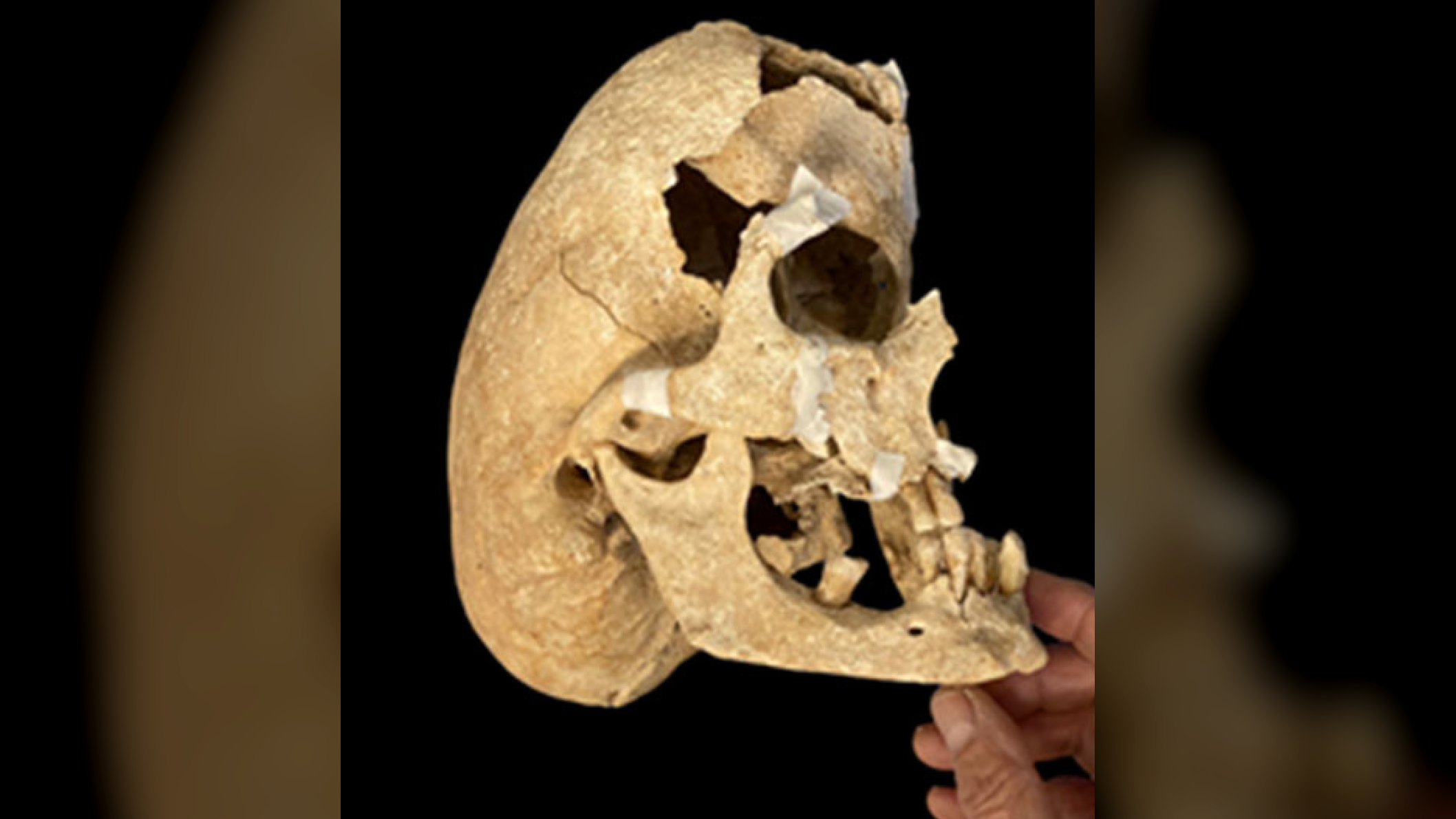 'I had never seen a skull like this before': Medieval Spanish knight who died in battle had a rare genetic condition, study finds
Latest in Archaeology
'I had never seen a skull like this before': Medieval Spanish knight who died in battle had a rare genetic condition, study finds
Latest in Archaeology
 Romans used human feces as medicine 1,900 years ago — and used thyme to mask the smell
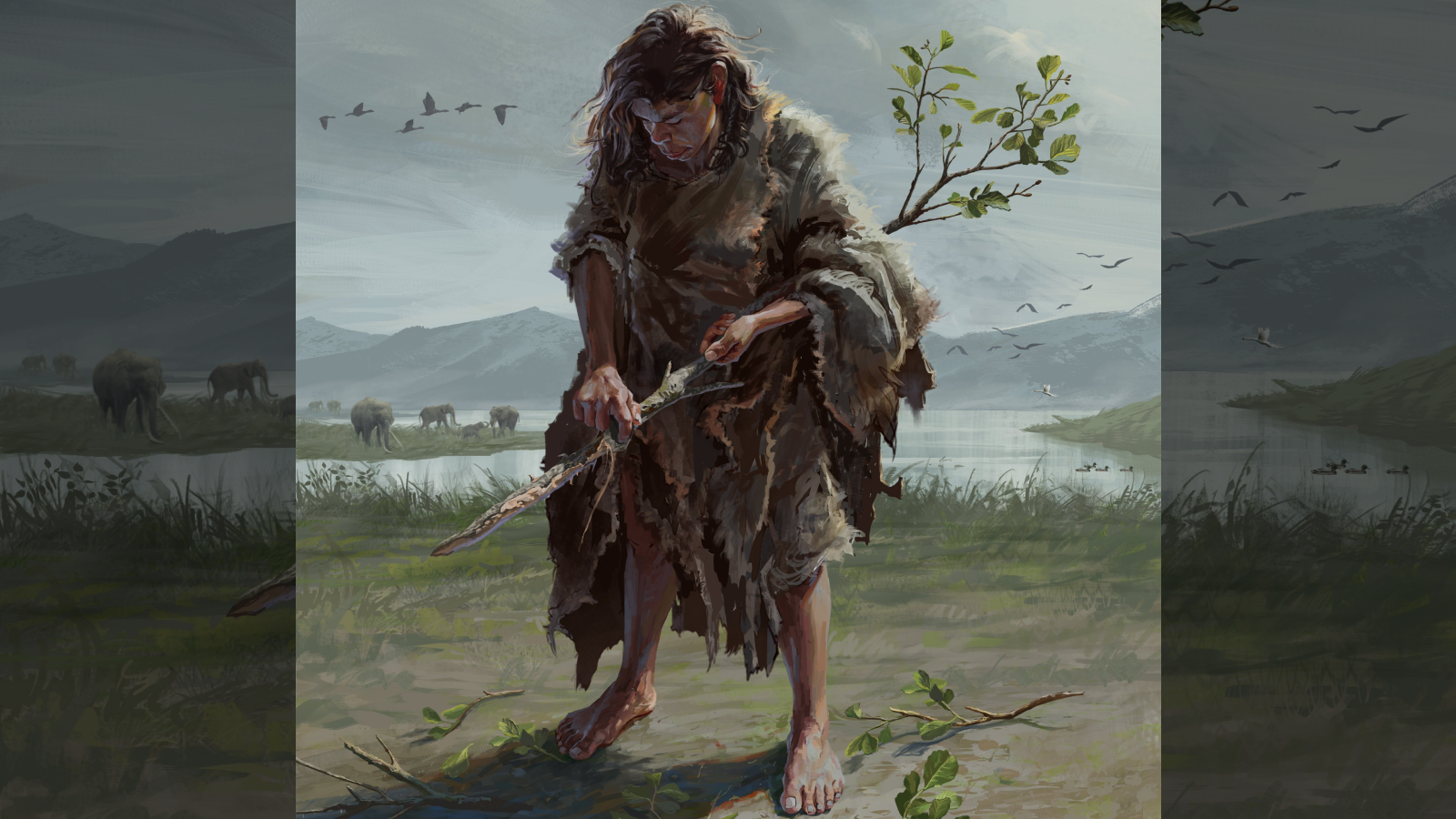 430,000-year-old wooden handheld tools from Greece are the oldest on record — and they predate modern humans
Teenage girl who lived in Italy 12,000 years ago had a rare form of dwarfism, DNA study shows
430,000-year-old wooden handheld tools from Greece are the oldest on record — and they predate modern humans
Teenage girl who lived in Italy 12,000 years ago had a rare form of dwarfism, DNA study shows
 1,400-year-old Zapotec tomb discovered in Mexico features enormous owl sculpture symbolizing death
 160,000-year-old sophisticated stone tools discovered in China may not have been made by Homo sapiens
 2,500 years ago, people in Bulgaria ate dog meat at feasts and as a delicacy, archaeological study finds
Latest in News
Stone Age teenager was mauled by a bear 28,000 years ago, skeletal analysis confirms
2,500 years ago, people in Bulgaria ate dog meat at feasts and as a delicacy, archaeological study finds
Latest in News
Stone Age teenager was mauled by a bear 28,000 years ago, skeletal analysis confirms
 Critical moment when El Niño started to erode Russia's Arctic sea ice discovered
 AI spots 'jellyfish,' 'hamburgers' and other unexplainable objects in Hubble telescope data
 New study of chemical reactions in space 'could impact the origin of life in ways we hadn't thought of'
 Can AI detect cognitive decline better than a doctor? New study reveals surprising accuracy
 Next-generation AI 'swarms' will invade social media by mimicking human behavior and harassing real users, researchers warn
LATEST ARTICLES
Next-generation AI 'swarms' will invade social media by mimicking human behavior and harassing real users, researchers warn
LATEST ARTICLES 1February 2026 night sky: What to see and what you need
- 2Drones could achieve 'infinite flight' after engineers create laser-based wireless power system that charges them from the ground
- 3Critical moment when El Niño started to erode Russia's Arctic sea ice discovered
- 4Romans used human feces as medicine 1,900 years ago — and used thyme to mask the smell
- 5AI spots 'jellyfish,' 'hamburgers' and other unexplainable objects in Hubble telescope data