- Technology
- Robotics
A new system will enable operators to use laser beams to top off batteries while drones are in midflight.
When you purchase through links on our site, we may earn an affiliate commission. Here’s how it works.
Share Share by:- Copy link
- X
 Watch On
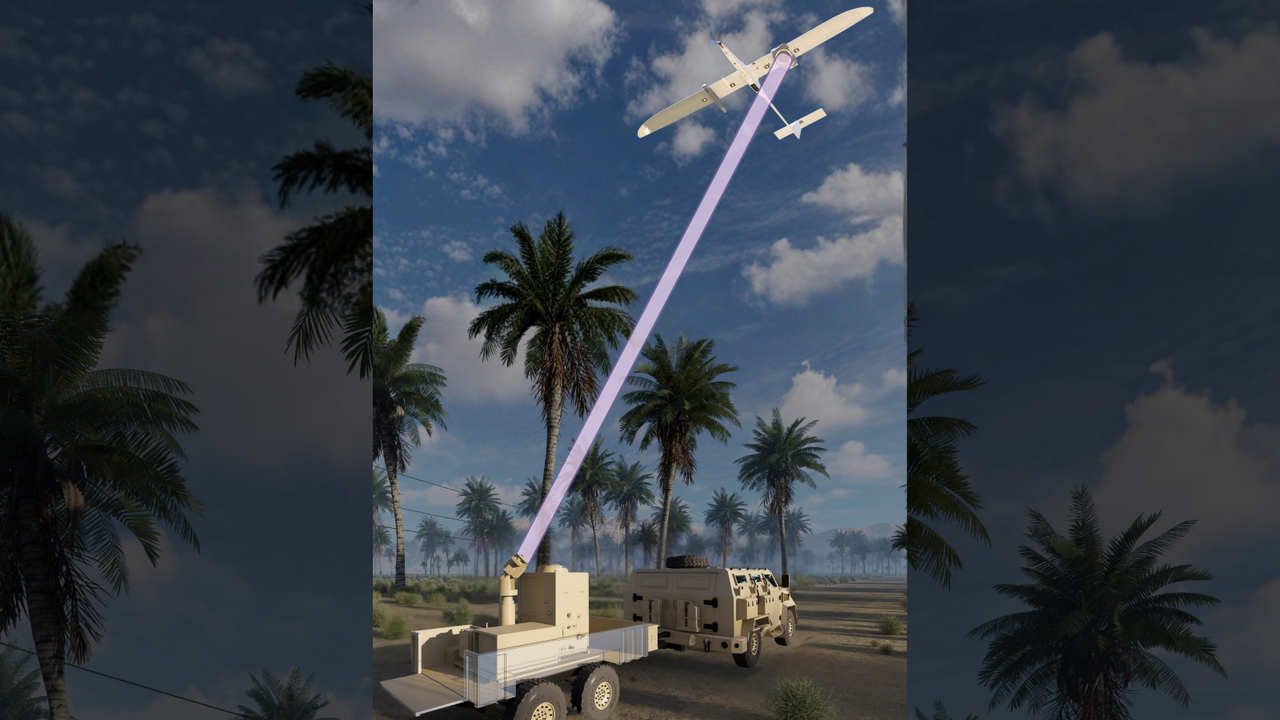
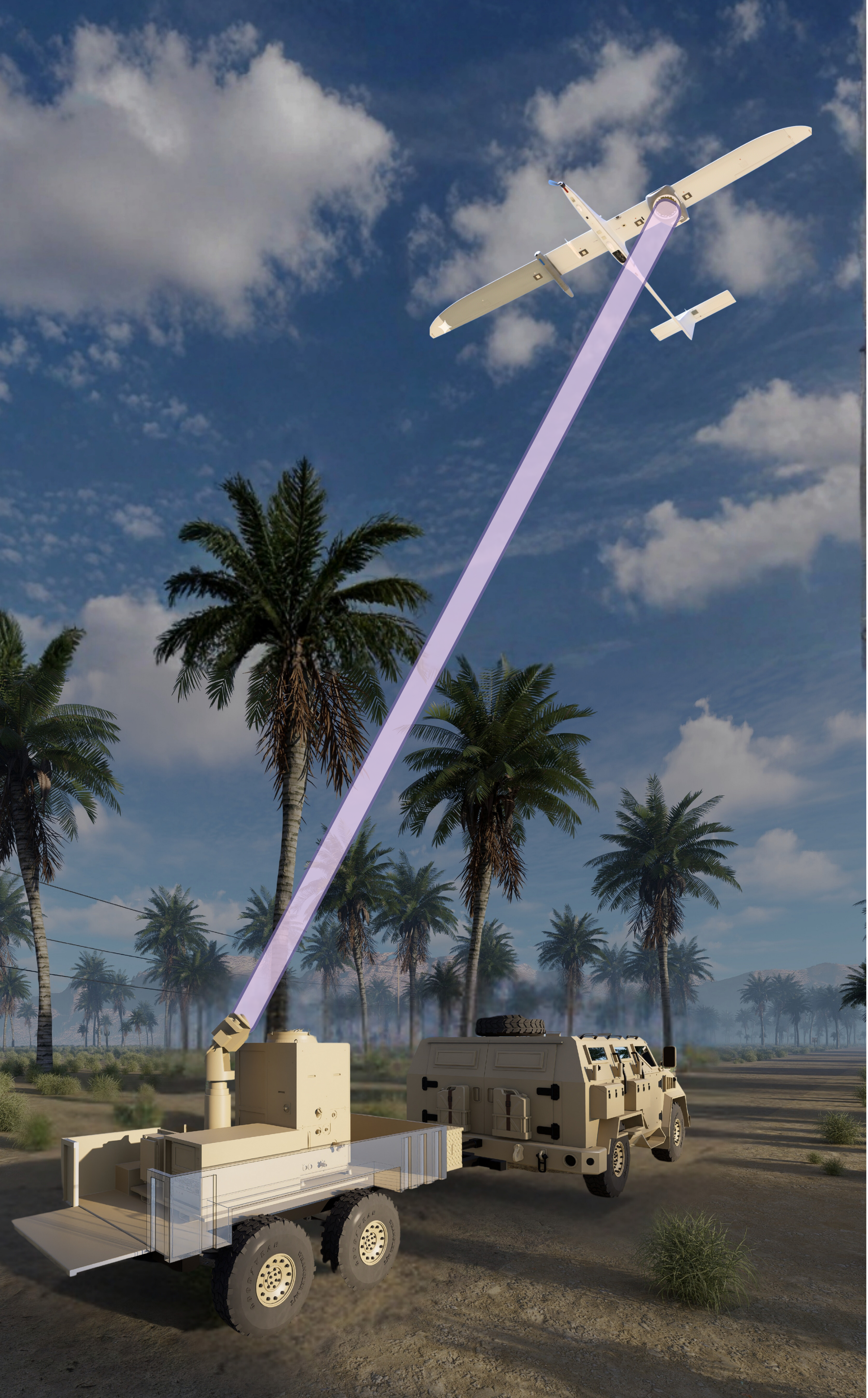
A new technology shoots laser beams at drones to charge them in midair, thus unlocking the possibility of "infinite flight."
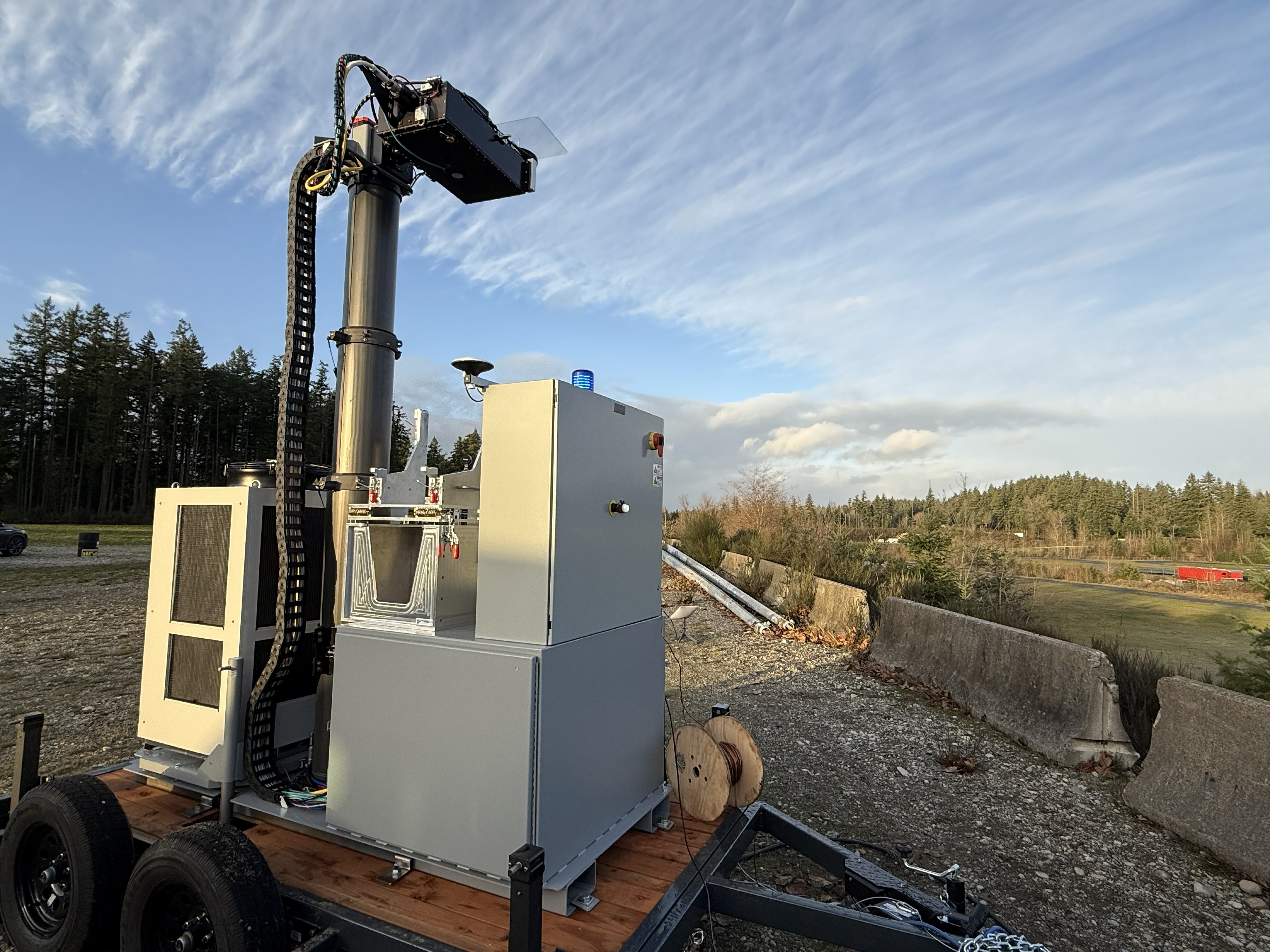
Representatives from PowerLight Technologies say the system works by pairing a ground-based transmitter with a receiver on the drone, also known as an unmanned aerial system (UAS). The transmitter combines advanced software designed to provide precise control of the laser beam with hardware that can sustain power transmission on a scale of kilowatts — or thousands of watts — according to the company. For comparison, typical lab lasers operate on a scale of milliwatts, or thousandths of watts.
You may like-
 Japan trials 100-kilowatt laser weapon — it can cut through metal and drones mid-flight
-
 New 'Transformer' humanoid robot can launch a shapeshifting drone off its back — watch it in action
-
 Tractor beams inspired by sci-fi are real, and could solve the looming space junk problem
For context, the operational altitude of the Raven RQ-11B — a hand-launched intelligence, surveillance and reconnaissance drone developed for the U.S. military — is between 150 and 1,000 feet (46 and 305 meters) above ground level, and 10,500 feet (3,200 meters) above sea level. Larger drones can reach altitudes as high as 60,000 feet (18,288 m).
Integrated control software can also link up with software on the UAS to provide telemetry monitoring and control. This interoperability means that data and commands can be exchanged between PowerLight’s tracking and beam control system, and the drone’s onboard avionics and telemetry system. This could be used to send battery charge information to operators on the ground, who could dynamically alter power delivery, and ensure that it's being delivered efficiently while the laser is on always on target.
"We are building an intelligent mesh energy network capability," said Tom Nugent, chief technology officer and co-founder of PowerLight, in a statement. "Our transmitter communicates with the UAS, tracks its velocity and vector, and delivers energy exactly where it's needed. We have now successfully tested the power transmission and tracking algorithms."
Endless flight
A receiver is built into the drone itself. This receiver, which weighs only 6 pounds (2.7 kilograms), captures the laser energy from the ground-based transmitter and uses a laser power converter to turn it into battery power.
Sign up for the Live Science daily newsletter nowContact me with news and offers from other Future brandsReceive email from us on behalf of our trusted partners or sponsorsBy submitting your information you agree to the Terms & Conditions and Privacy Policy and are aged 16 or over.Photovoltaic laser power converters operate similarly to solar cells, capturing light and transforming it into an electrical current. However, they are optimized for monochromatic, high-intensity laser light rather than broad-spectrum sunlight.
The receiver also includes an embedded control module. This module continuously gathers real-time telemetry about the drone's position and operation and relays that information to operators on the ground. It's also capable of establishing a two-way light-based communication link that allows it to both send and receive information using optical signals.
—Physicists built an 'anti-laser' to charge your phone from across a room
—US Air Force wants to develop smarter mini-drones powered by brain-inspired AI chips
—Japanese power breakthrough could be 'step toward a fully wireless society'
The system was developed in conjunction with the U.S. Department of Defense (DoD). It will be integrated into the K1000ULE, a long-range, high-endurance drone developed by Kraus Hamdani Aerospace. The K1000ULE is fully electric and engineered for persistent, long‑range missions in support of the U.S. Navy and Army.
Previous testing has shown the potential for wireless power transfer through lasers. For example, the Defense Advanced Research Projects Agency demonstrated a power transfer of more than 800 watts delivered from a laser 5.3 miles (8.6 kilometers) away).
However, the PowerLight system is a step toward real-world deployment in mobile platforms. Recent testing has proved the viability of the transmitter and receiver, but PowerLight has yet to conduct flight tests, which are scheduled for early this year.
 Alan BradleyFreelance contributor
Alan is a freelance tech and entertainment journalist who specializes in computers, laptops, and video games. He's previously written for sites like PC Gamer, GamesRadar, and Rolling Stone. If you need advice on tech, or help finding the best tech deals, Alan is your man.
Show More CommentsYou must confirm your public display name before commenting
Please logout and then login again, you will then be prompted to enter your display name.
Logout Read more Japan trials 100-kilowatt laser weapon — it can cut through metal and drones mid-flight
 New 'Transformer' humanoid robot can launch a shapeshifting drone off its back — watch it in action
 Tractor beams inspired by sci-fi are real, and could solve the looming space junk problem
 'Earthquake on a chip' uses 'phonon' lasers to make mobile devices more efficient
 Watch four flying cars go toe-to-toe in new 'Formula One of the skies'
 'Putting the servers in orbit is a stupid idea': Could data centers in space help avoid an AI energy crisis? Experts are torn.
Latest in Robotics
'Putting the servers in orbit is a stupid idea': Could data centers in space help avoid an AI energy crisis? Experts are torn.
Latest in Robotics
 Creepy humanoid robot face learned to move its lips more accurately by staring at itself in the mirror, then watching YouTube
 Why the rise of humanoid robots could make us less comfortable with each other
 Creepy robotic hand detaches at the wrist before scurrying away to collect objects
New 'Transformer' humanoid robot can launch a shapeshifting drone off its back — watch it in action
Creepy robotic hand detaches at the wrist before scurrying away to collect objects
New 'Transformer' humanoid robot can launch a shapeshifting drone off its back — watch it in action
 Watch: Chinese company's new humanoid robot moves so smoothly, they had to cut it open to prove a person wasn't hiding inside
 Bizarre robotic chair concept looks like a crab and can carry you around the house — it can even help you into your car
Latest in News
Bizarre robotic chair concept looks like a crab and can carry you around the house — it can even help you into your car
Latest in News
 Critical moment when El Niño started to erode Russia's Arctic sea ice discovered
 AI spots 'jellyfish,' 'hamburgers' and other unexplainable objects in Hubble telescope data
 Romans used human feces as medicine 1,900 years ago — and used thyme to mask the smell
 Complex building blocks of life can form on space dust — offering new clues to the origins of life
 Can AI detect cognitive decline better than a doctor? New study reveals surprising accuracy
 430,000-year-old wooden handheld tools from Greece are the oldest on record — and they predate modern humans
LATEST ARTICLES
430,000-year-old wooden handheld tools from Greece are the oldest on record — and they predate modern humans
LATEST ARTICLES- 1Critical moment when El Niño started to erode Russia's Arctic sea ice discovered
- 2Romans used human feces as medicine 1,900 years ago — and used thyme to mask the smell
- 3AI spots 'jellyfish,' 'hamburgers' and other unexplainable objects in Hubble telescope data
- 4Teenage girl who lived in Italy 12,000 years ago had a rare form of dwarfism, DNA study shows
- 5Complex building blocks of life can form on space dust — offering new clues to the origins of life