
- Archaeology
- Human Evolution
Archaeologists have found the oldest-known surviving examples of handheld wooden tools.
When you purchase through links on our site, we may earn an affiliate commission. Here’s how it works.
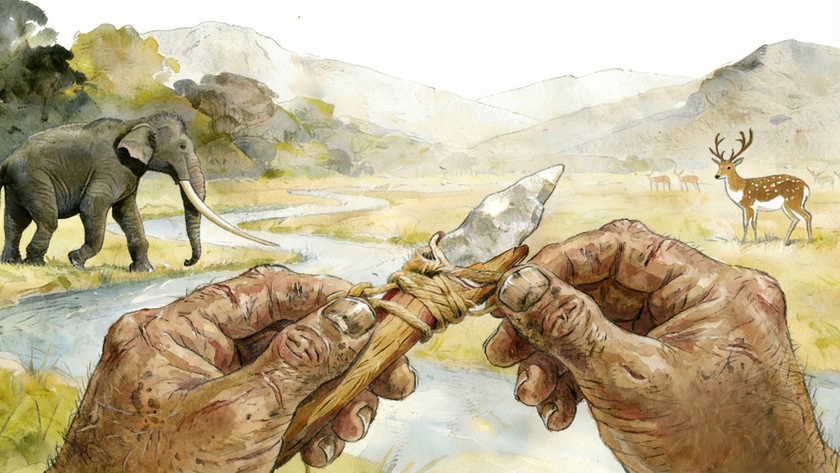
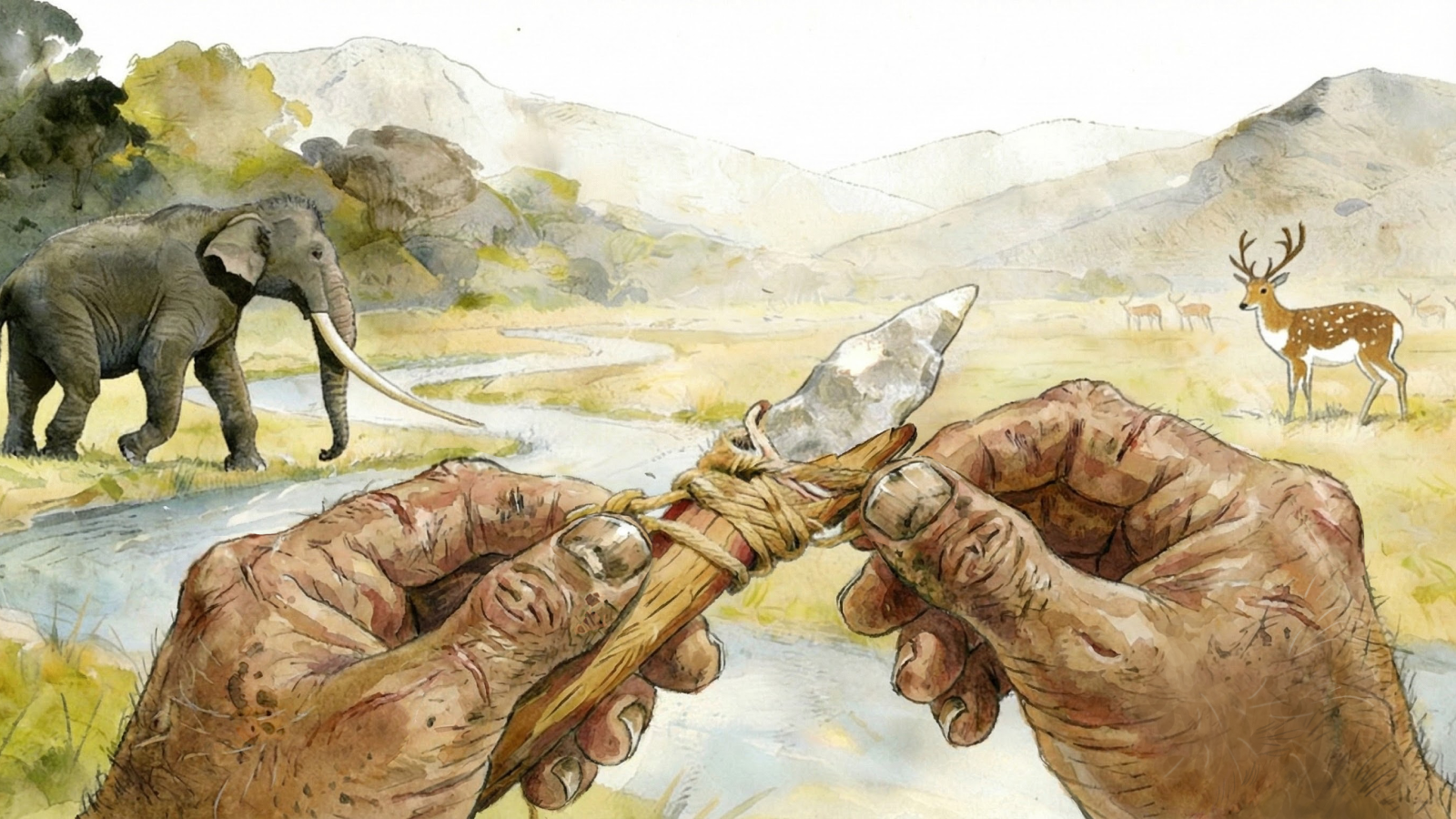
 An illustration of a Stone Age hunter-gatherer who is making the oldest known wooden handheld tool.
(Image credit: Original art by G. Prieto, copyright K. Harvati.)
Share
Share by:
An illustration of a Stone Age hunter-gatherer who is making the oldest known wooden handheld tool.
(Image credit: Original art by G. Prieto, copyright K. Harvati.)
Share
Share by:
- Copy link
- X
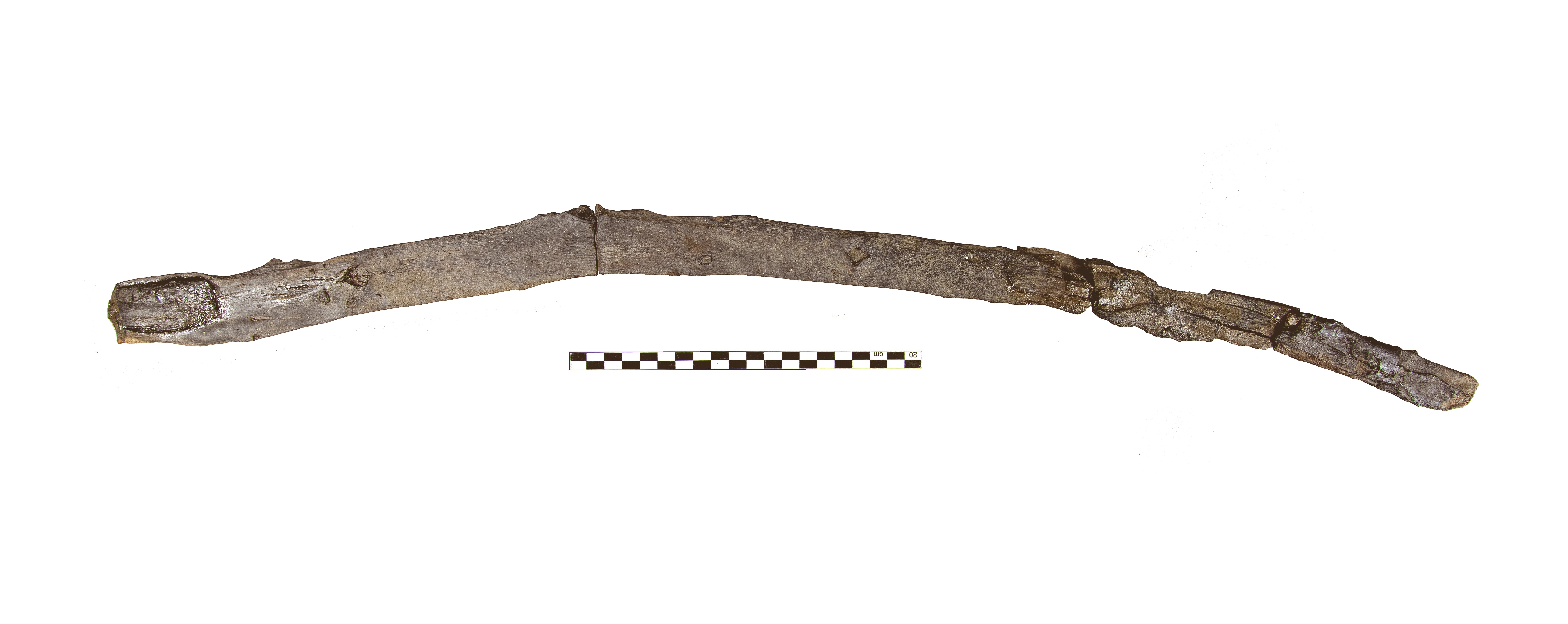
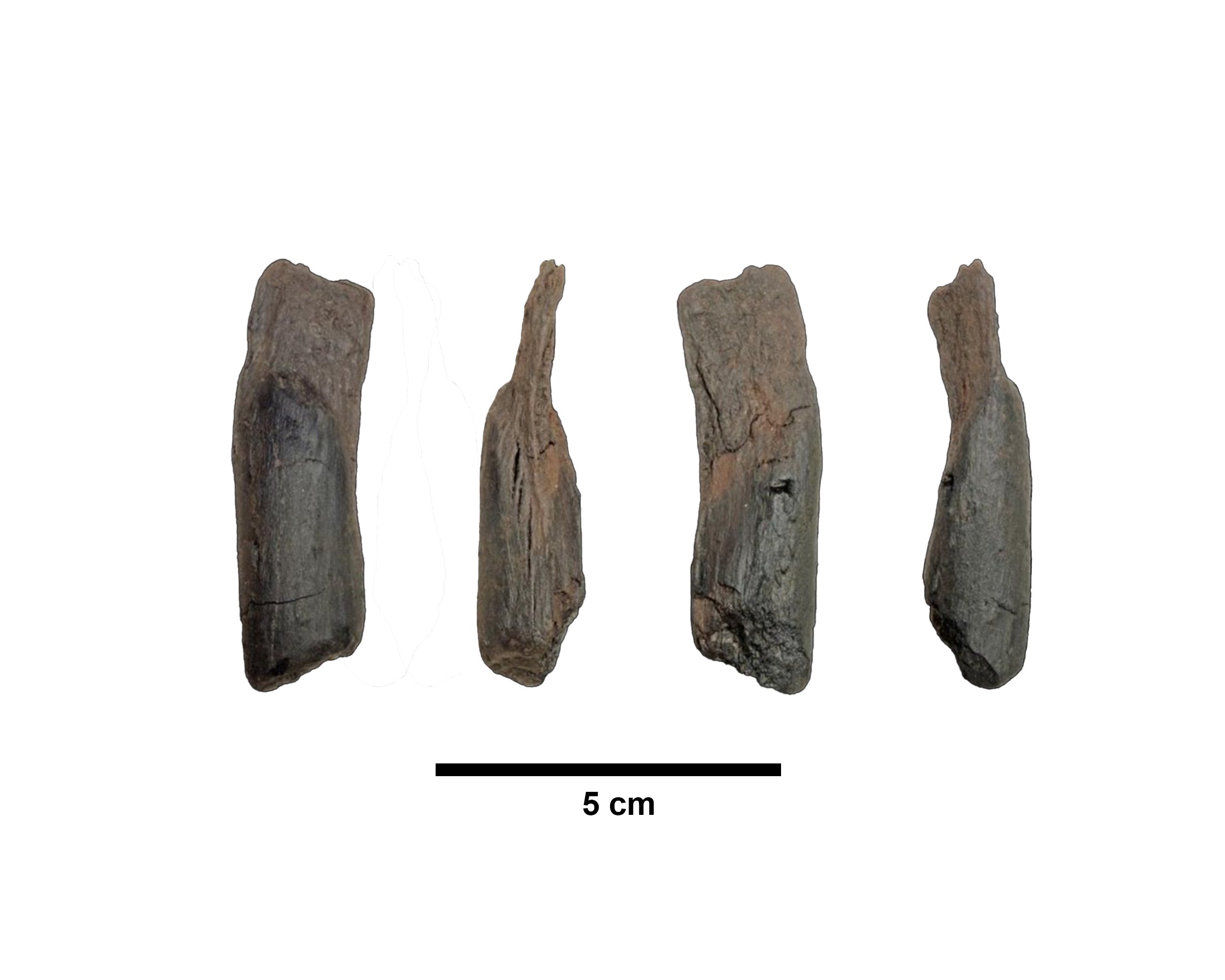
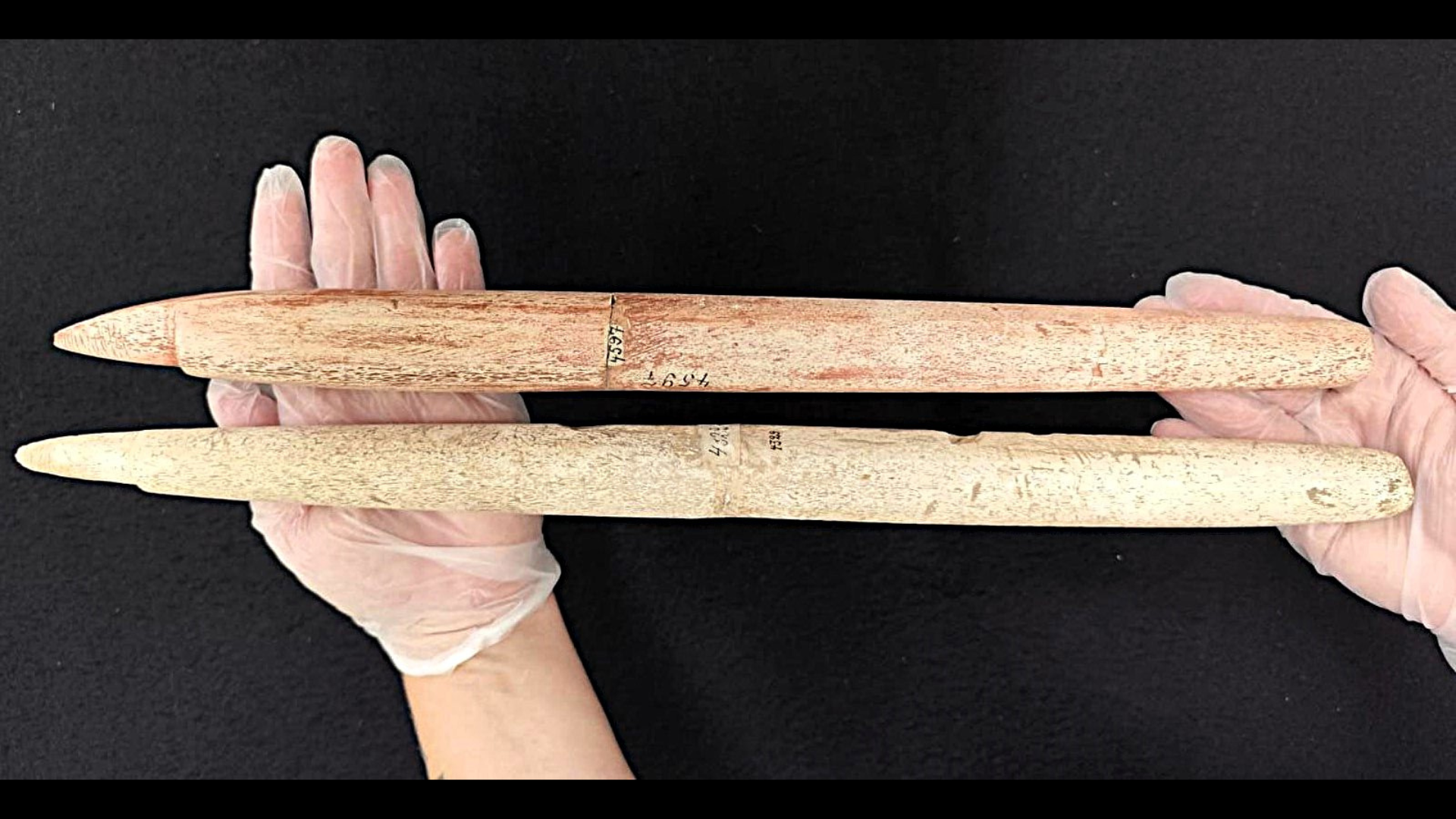
Archaeologists in Greece have discovered 430,000-year-old handheld wooden tools, the oldest surviving examples of their kind in the world, a new study finds. The two tools, found on the Peloponnese peninsula in southern Greece, were created by an unidentified hominin species that predates modern humans.
"The objects represent the oldest hand-held wooden tools ever found, pushing back evidence of this type of tool use by at least 40,000 years," the researchers wrote in a statement.
You may like-
 160,000-year-old sophisticated stone tools discovered in China may not have been made by Homo sapiens
-
 480,000-year-old ax sharpener is the oldest known elephant bone tool ever discovered in Europe
-
 60,000-year-old poison arrows from South Africa are the oldest poison weapons ever discovered
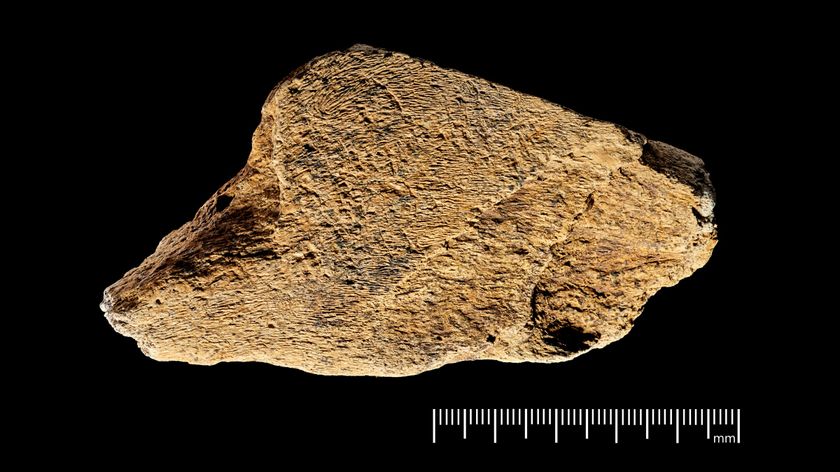
The other wooden tool is 2.2 inches (5.7 cm) long and has been completely debarked, with rounding and pitting at one end. It's not clear what it was used for, but it's possible that it may have been used to help craft stone tools, the researchers wrote.
The artifacts appear to have become buried in wet soil, the researchers wrote in the study. This allowed the wooden tools, and other organic remains, to be preserved in a low-oxygen environment.
The scientists also excavated the remains of animals and plants from the site, which enabled them to reconstruct what the landscape would have looked like around the time the tools were made.
"The fauna comprises both terrestrial and semiaquatic mammals, as well as freshwater mollusks, turtles, and birds indicating a rich lakeshore environment," the team wrote in the paper. The finds also include the remains of elephants, hippopotamuses, deer and wild boar.
Sign up for the Live Science daily newsletter nowContact me with news and offers from other Future brandsReceive email from us on behalf of our trusted partners or sponsorsBy submitting your information you agree to the Terms & Conditions and Privacy Policy and are aged 16 or over.At the time the wooden tools were used, the climate in Europe was experiencing "an extremely cold glacial period," but this lakeshore environment would have been a place of relative comfort, study first author Annemieke Milks, an archaeologist at the University of Reading in the U.K., told Live Science in an email.
Early humans
The tools date to around 430,000 years ago — around 130,000 years before Homo sapiens existed — and it's not clear which hominin made them. "There aren't human remains from [Marathousa] and for this period there is a bit of ambiguity at the moment about hominin species. It could have been Homo heidelbergensis, or possibly very early Neanderthals," Milks said.
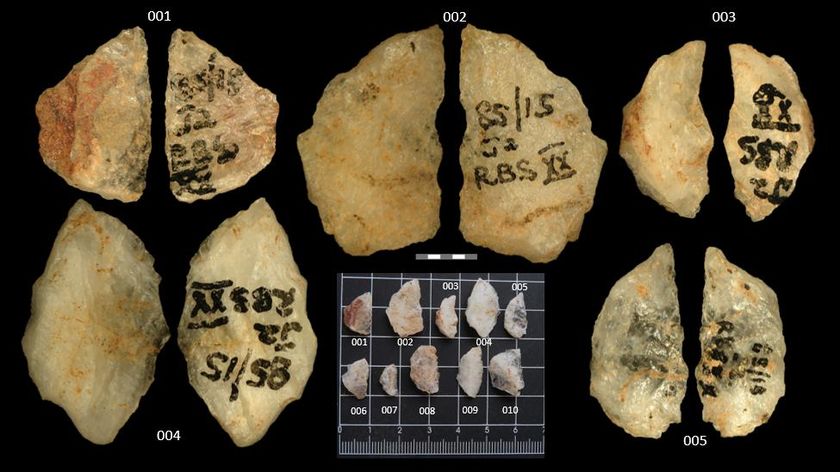
Tools made of stone and bones have previously been identified at the site, and the new discovery of wooden tools means that early humans were using a variety of materials, Milks noted. For instance, the oldest known wooden structure in the world, which was found in Zambia, is even older and from 476,000 years ago.
We "understand that these hominins had an understanding of these different materials and their properties, and used different tools presumably for different tasks," Milks said. "I think it really helps us understand how humans in the deep past were making use of so many different materials and resources in their surroundings."
—160,000-year-old sophisticated stone tools discovered in China may not have been made by Homo sapiens
—480,000-year-old ax sharpener is the oldest known elephant bone tool ever discovered in Europe
—1.5 million-year-old stone tools from mystery human relative discovered in Indonesia — they reached the region before our species even existed
Study co-author Katerina Harvati, a paleoanthropology professor at the University of Tübingen in Germany, told Live Science in an email that these "tools provide a rare glimpse into a component of their technology that we know very little about, that which was based on [perishable] plant derived materials rather than stones." They "highlight the behavioral adaptability and flexibility of the Marathousa hominins," she added.
Excavations at the site were carried out between 2013 to 2019. The digging stick was found in 2015, and the wooden tools whose purpose is uncertain was discovered in 2018.
Article SourcesMilks et al. "Evidence for the earliest hominin use of wooden handheld tools found at Marathousa 1 (Greece)." (2026). PNAS, 123(6), e2515479123. https://doi.org/10.1073/pnas.2515479123
 Owen JarusSocial Links NavigationLive Science Contributor
Owen Jarus is a regular contributor to Live Science who writes about archaeology and humans' past. He has also written for The Independent (UK), The Canadian Press (CP) and The Associated Press (AP), among others. Owen has a bachelor of arts degree from the University of Toronto and a journalism degree from Ryerson University.
Show More CommentsYou must confirm your public display name before commenting
Please logout and then login again, you will then be prompted to enter your display name.
Logout Read more 60,000-year-old poison arrows from South Africa are the oldest poison weapons ever discovered
 'It is the most exciting discovery in my 40-year career': Archaeologists uncover evidence that Neanderthals made fire 400,000 years ago in England
 World's oldest known rock art predates modern humans' entrance into Europe — and it was found in an Indonesian cave
 Most complete Homo habilis skeleton ever found dates to more than 2 million years ago and retains 'Lucy'-like features
 Some of the oldest harpoons ever found reveal Indigenous people in Brazil were hunting whales 5,000 years ago
 Homo erectus wasn't the first human species to leave Africa 1.8 million years ago, fossils suggest
Latest in Human Evolution
Homo erectus wasn't the first human species to leave Africa 1.8 million years ago, fossils suggest
Latest in Human Evolution
 160,000-year-old sophisticated stone tools discovered in China may not have been made by Homo sapiens
 2.6 million-year-old jaw from extinct 'Nutcracker Man' is found where we didn't expect it
Most complete Homo habilis skeleton ever found dates to more than 2 million years ago and retains 'Lucy'-like features
2.6 million-year-old jaw from extinct 'Nutcracker Man' is found where we didn't expect it
Most complete Homo habilis skeleton ever found dates to more than 2 million years ago and retains 'Lucy'-like features
 Human origins quiz: How well do you know the story of humanity?
Homo erectus wasn't the first human species to leave Africa 1.8 million years ago, fossils suggest
Human origins quiz: How well do you know the story of humanity?
Homo erectus wasn't the first human species to leave Africa 1.8 million years ago, fossils suggest
 Tiny bump on 7 million-year-old fossil suggests ancient ape walked upright — and might even be a human ancestor
Latest in News
Tiny bump on 7 million-year-old fossil suggests ancient ape walked upright — and might even be a human ancestor
Latest in News
 Halley wasn't the first to figure out the famous comet. An 11th-century monk did it first, new research suggests.
 James Webb telescope breaks own record, discovering farthest known galaxy in the universe
 South Carolina's measles outbreak nears 790 cases — making it the biggest in decades
 5,000-year-old rock art from ancient Egypt depicts 'terrifying' conquest of the Sinai Peninsula
 Stone Age teenager was mauled by a bear 28,000 years ago, skeletal analysis confirms
 NASA jet crashes in flames on Texas runway — taking it out of the Artemis II mission
LATEST ARTICLES
NASA jet crashes in flames on Texas runway — taking it out of the Artemis II mission
LATEST ARTICLES- 1Halley wasn't the first to figure out the famous comet. An 11th-century monk did it first, new research suggests.
- 2'Previously unimaginable': James Webb telescope breaks own record again, discovering farthest known galaxy in the universe
- 3South Carolina's measles outbreak nears 790 cases — making it the biggest in decades
- 450-year-old NASA jet crashes in flames on Texas runway — taking it out of the Artemis II mission
- 55,000-year-old rock art from ancient Egypt depicts 'terrifying' conquest of the Sinai Peninsula