- Space
- Astronomy
- Comets
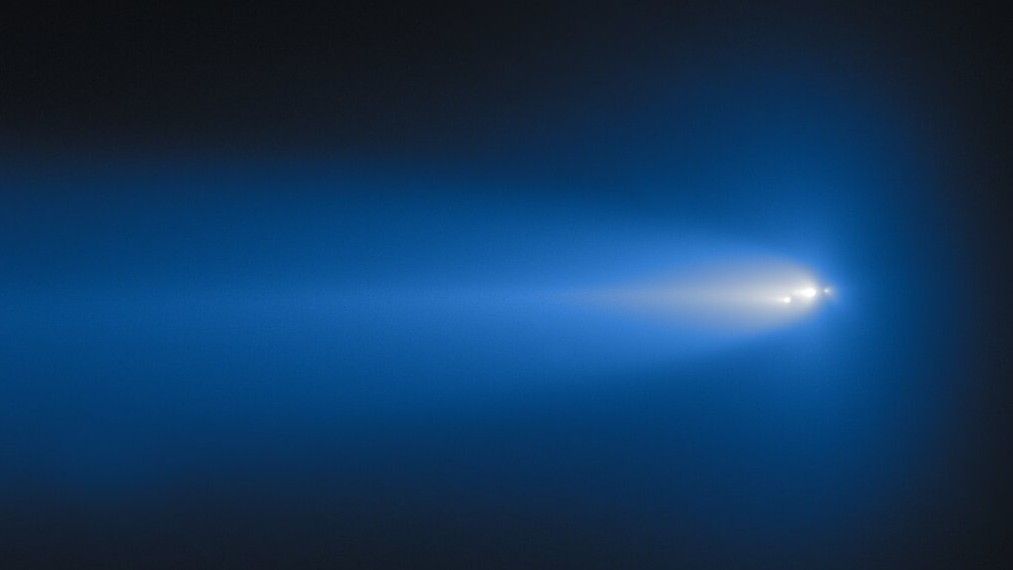
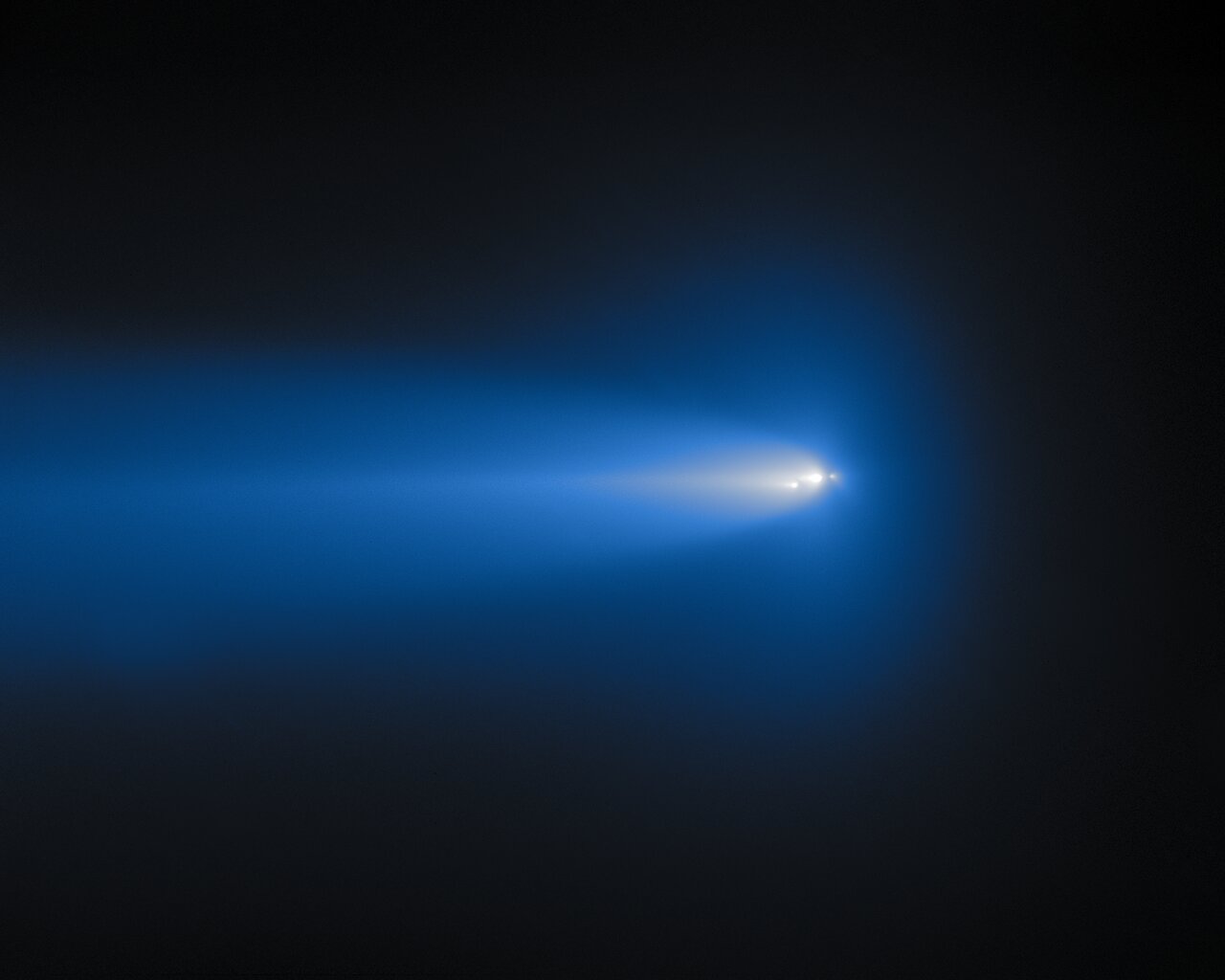
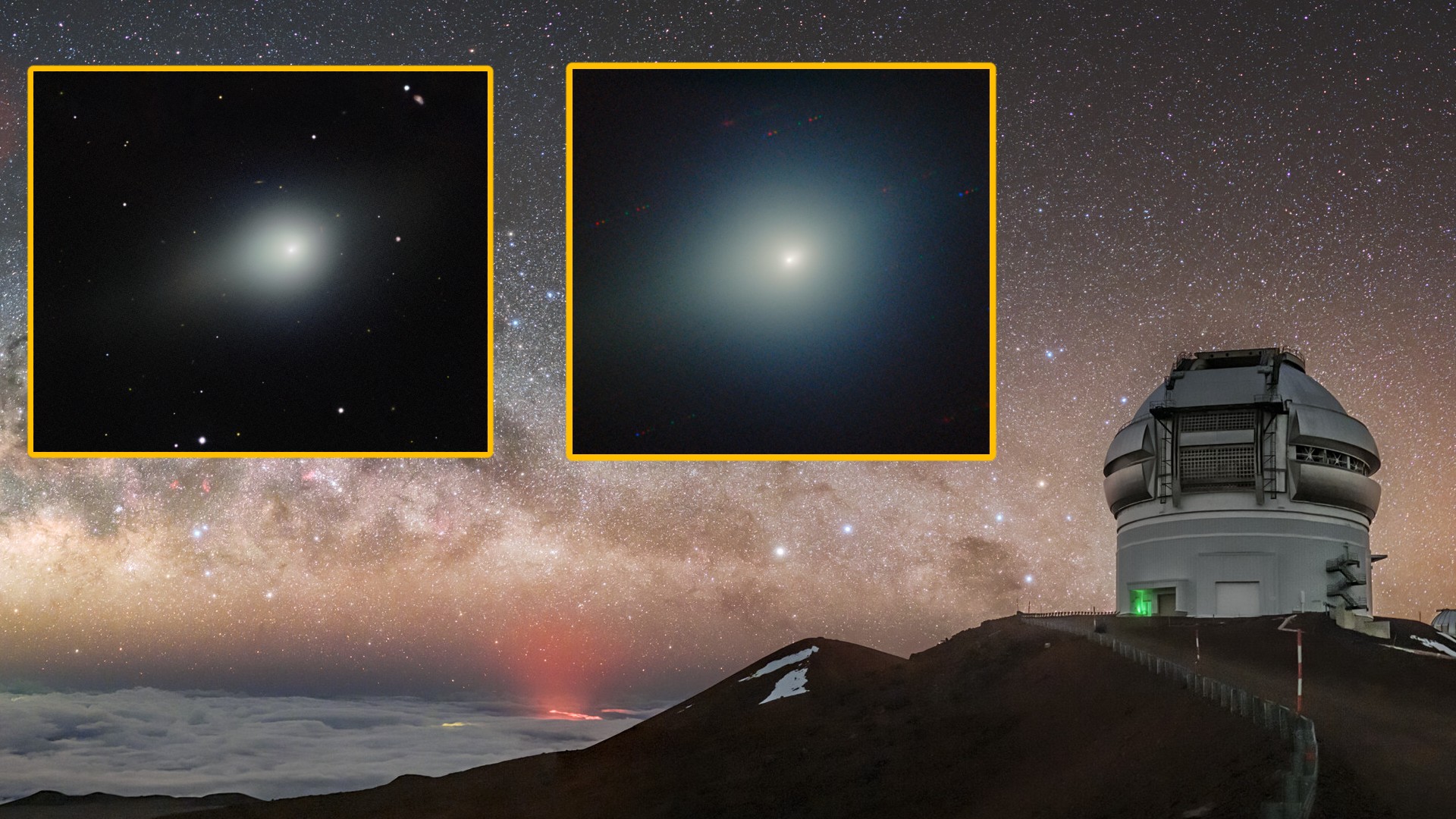
The Gemini North telescope snapped a spectacular view of Comet C/2025 K1 (ATLAS) breaking apart as it emerged from the other side of the sun in October.
When you purchase through links on our site, we may earn an affiliate commission. Here’s how it works.
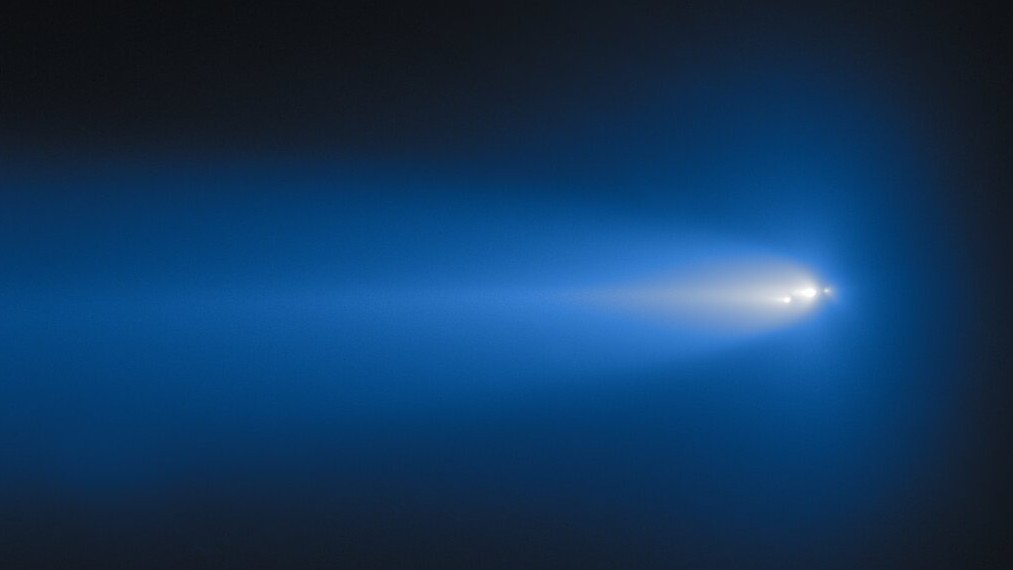 Comet C/2025 K1 (ATLAS) on Nov. 11 and Dec. 6, 2025 as it began to break up, as seen by the Gemini North telescope.
(Image credit: International Gemini Observatory/NOIRLab/NSF/AURA/B. Bolin. Image Processing: J. Miller & M. Rodriguez (International Gemini Observatory/NSF NOIRLab), T.A. Rector (University of Alaska Anchorage/NSF NOIRLab), M. Zamani (NSF NOIRLab))
Comet C/2025 K1 (ATLAS) on Nov. 11 and Dec. 6, 2025 as it began to break up, as seen by the Gemini North telescope.
(Image credit: International Gemini Observatory/NOIRLab/NSF/AURA/B. Bolin. Image Processing: J. Miller & M. Rodriguez (International Gemini Observatory/NSF NOIRLab), T.A. Rector (University of Alaska Anchorage/NSF NOIRLab), M. Zamani (NSF NOIRLab))
- Copy link
- X
Get the world’s most fascinating discoveries delivered straight to your inbox.
Become a Member in Seconds
Unlock instant access to exclusive member features.
Contact me with news and offers from other Future brands Receive email from us on behalf of our trusted partners or sponsors By submitting your information you agree to the Terms & Conditions and Privacy Policy and are aged 16 or over.You are now subscribed
Your newsletter sign-up was successful
Want to add more newsletters?

Delivered Daily
Daily Newsletter
Sign up for the latest discoveries, groundbreaking research and fascinating breakthroughs that impact you and the wider world direct to your inbox.
Signup +
Once a week
Life's Little Mysteries
Feed your curiosity with an exclusive mystery every week, solved with science and delivered direct to your inbox before it's seen anywhere else.
Signup +
Once a week
How It Works
Sign up to our free science & technology newsletter for your weekly fix of fascinating articles, quick quizzes, amazing images, and more
Signup +
Delivered daily
Space.com Newsletter
Breaking space news, the latest updates on rocket launches, skywatching events and more!
Signup +
Once a month
Watch This Space
Sign up to our monthly entertainment newsletter to keep up with all our coverage of the latest sci-fi and space movies, tv shows, games and books.
Signup +
Once a week
Night Sky This Week
Discover this week's must-see night sky events, moon phases, and stunning astrophotos. Sign up for our skywatching newsletter and explore the universe with us!
Signup +Join the club
Get full access to premium articles, exclusive features and a growing list of member rewards.
Explore An account already exists for this email address, please log in. Subscribe to our newsletter QUICK FACTSWhat it is: Comet C/2025 K1 (ATLAS)
Where it is: 220 million miles away, in the constellation Pisces
When it was shared: Jan. 28, 2026
Just as the mythological Icarus melted his feathers and wax wings when he flew too close to the sun, comets often suffer the consequences of orbiting too close to our star. That was definitely the case for Comet C/2025 K1 (ATLAS), which was caught breaking apart by the Gemini North telescope on Mauna Kea, Hawaii, late last year.
As it approached its closest point to the sun on Oct. 8, 2025, at just 31 million miles (50 million kilometers), hopes were not high for the ball of ice and dust to survive; comets that endure a close approach to the sun often brighten significantly afterward, as their component ices sublimate into gas. Surprisingly, Comet K1 emerged from behind the sun intact, but it never brightened enough to be seen with the naked eye.
You may like-
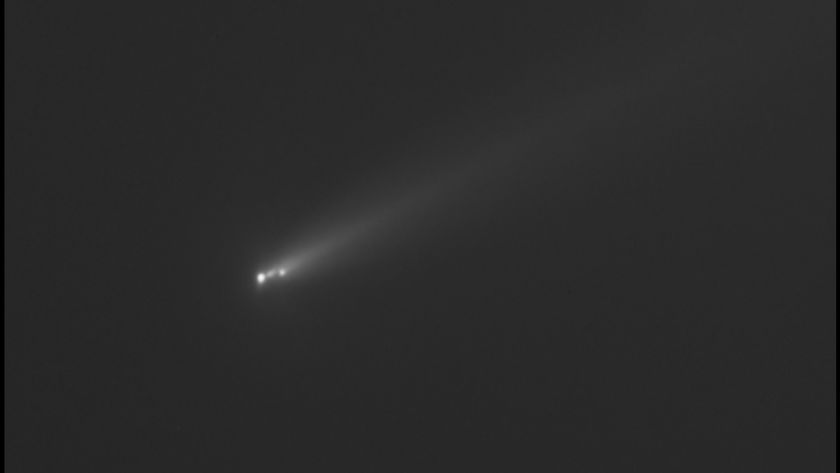 New image of 'other comet ATLAS' reveals it's breaking apart ahead of close approach to Earth
-
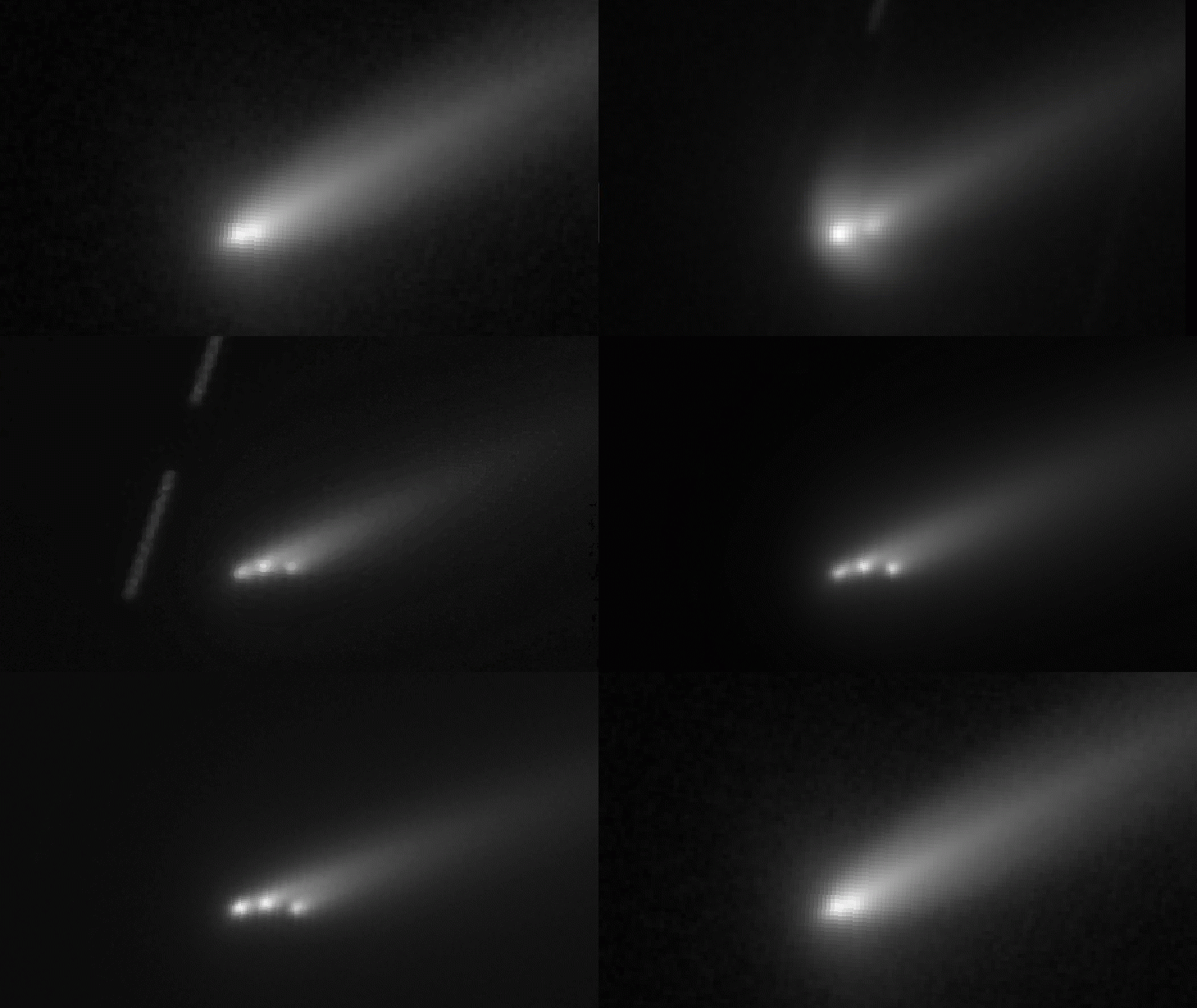 RIP 'other ATLAS': Watch the doomed comet explode into pieces in incredible new images
-
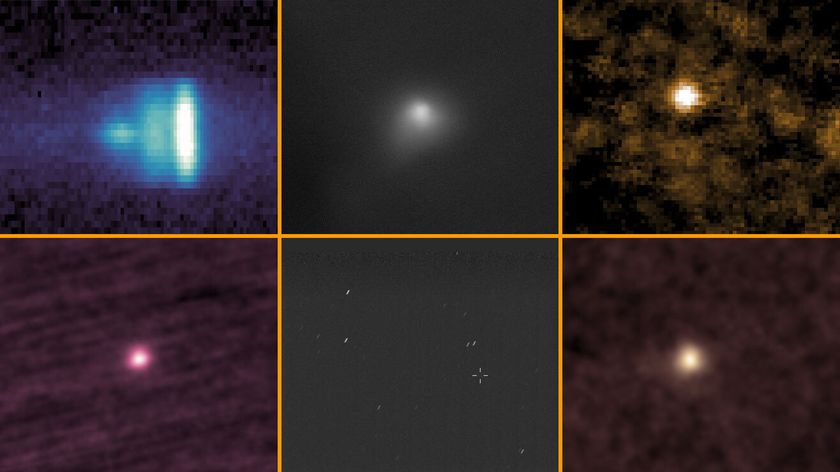 Comet 3I/ATLAS gallery: See NASA's long-awaited images of interstellar visitor
In early November, the comet's nucleus began to break up. This is not unusual for comets; extreme solar heating causes the nucleus to release jets of gas and dust — called outgassing — which combines with gravitational forces from the sun to weaken the comet's structure. Most comets either survive or never emerge from behind the sun, but Comet K1 did — and in just the right place for telescopes across the world to image its spectacular breakup.
A zoomable version of Gemini North"s image clearly shows three fragments.
—Astronomers detect first 'radio signal' from interstellar comet 3I/ATLAS — but it wasn't aliens
—'Miracle' photo captures Comet Lemmon and meteor seemingly entwined over Earth
—RIP 'other ATLAS': Watch the doomed comet explode into pieces in incredible new images
Another high-stakes encounter with the sun may soon follow the dramatic disintegration of Comet K1. Comet C/2026 A1 (MAPS), a "Kreutz sungrazer comet" discovered Jan. 13, is now hurtling toward the sun and will make a perilously close pass on April 4, when it gets within 465,000 miles (748,000 kilometers) of the sun's surface.
If it survives that dangerous encounter, some astronomers predict the comet could reach magnitude -4, about the same brightness as Venus. That would be a spectacular sight, but like Comet K1, Comet A1 will have to face searing heat and intense gravity and could either blaze brilliantly or succumb to the sun's fury.
Sign up for the Live Science daily newsletter nowContact me with news and offers from other Future brandsReceive email from us on behalf of our trusted partners or sponsorsBy submitting your information you agree to the Terms & Conditions and Privacy Policy and are aged 16 or over.For more sublime space images, check out our Space Photo of the Week archives.
TOPICS space photo of the week Jamie CarterSocial Links NavigationLive Science contributor
Jamie Carter is a Cardiff, U.K.-based freelance science journalist and a regular contributor to Live Science. He is the author of A Stargazing Program For Beginners and co-author of The Eclipse Effect, and leads international stargazing and eclipse-chasing tours. His work appears regularly in Space.com, Forbes, New Scientist, BBC Sky at Night, Sky & Telescope, and other major science and astronomy publications. He is also the editor of WhenIsTheNextEclipse.com.
View MoreYou must confirm your public display name before commenting
Please logout and then login again, you will then be prompted to enter your display name.
Logout Read more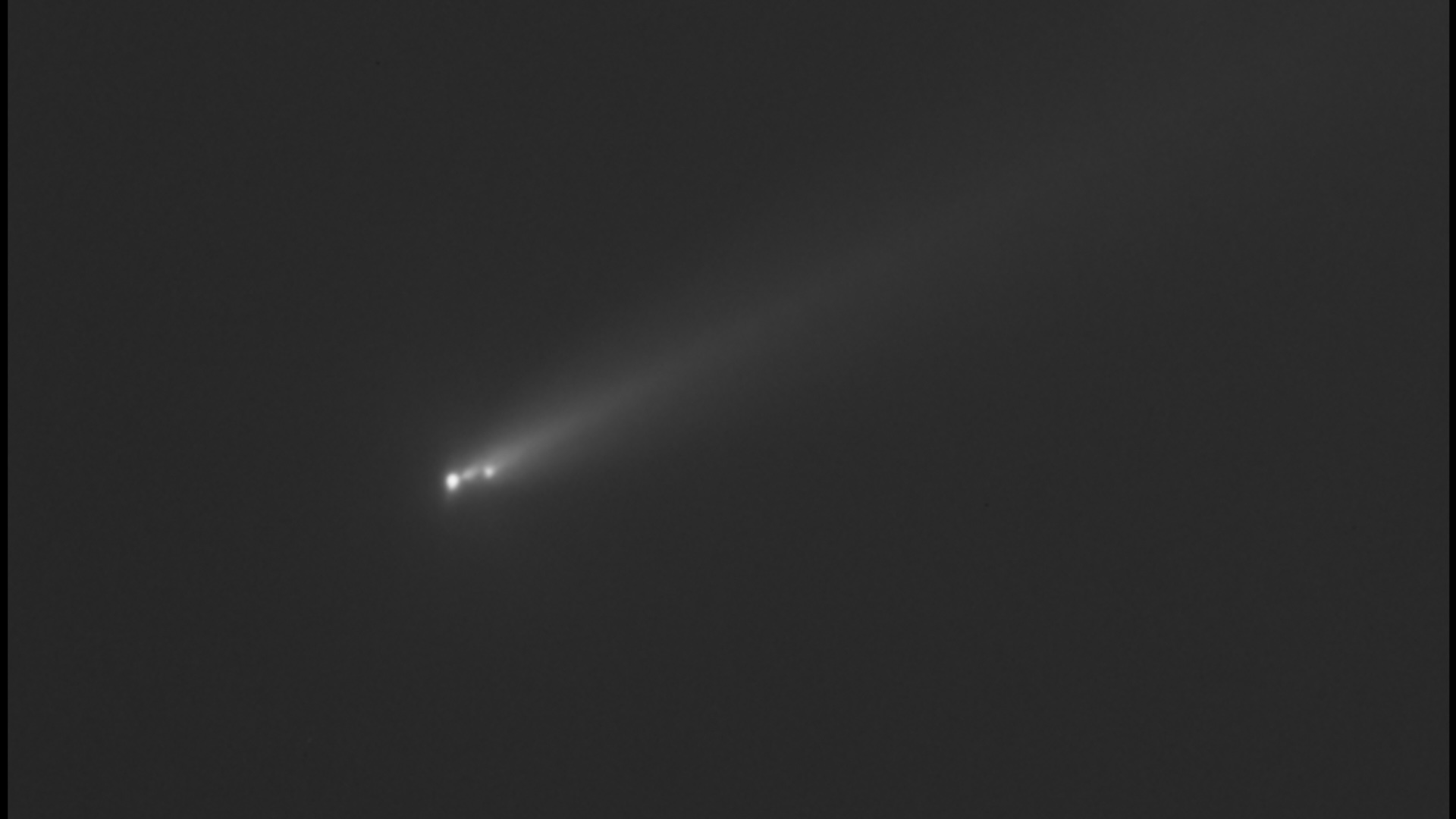 New image of 'other comet ATLAS' reveals it's breaking apart ahead of close approach to Earth
 Comet 3I/ATLAS gallery: See NASA's long-awaited images of interstellar visitor
 New 3I/ATLAS images show the comet getting active ahead of close encounter with Earth
 NASA eyes 3I/ATLAS with alien-hunting Clipper spacecraft in new image
 'From another world': 3I/ATLAS photobombs a galaxy and shows off its multiple tails in stunning new image
Interstellar comet 3I/ATLAS makes closest pass of Earth. Where's it heading next?
Latest in Comets
'From another world': 3I/ATLAS photobombs a galaxy and shows off its multiple tails in stunning new image
Interstellar comet 3I/ATLAS makes closest pass of Earth. Where's it heading next?
Latest in Comets
 Astronomers may have already spotted the 'Great Comet of 2026' — and it could soon be visible to the naked eye
Interstellar comet 3I/ATLAS makes closest pass of Earth. Where's it heading next?
Astronomers may have already spotted the 'Great Comet of 2026' — and it could soon be visible to the naked eye
Interstellar comet 3I/ATLAS makes closest pass of Earth. Where's it heading next?
 Comet 3I/ATLAS reaches its closest point to Earth tonight: How to see it
NASA eyes 3I/ATLAS with alien-hunting Clipper spacecraft in new image
Comet 3I/ATLAS reaches its closest point to Earth tonight: How to see it
NASA eyes 3I/ATLAS with alien-hunting Clipper spacecraft in new image
 The UN's International Asteroid Warning Network is closely watching comet 3I/ATLAS. Here's why.
 Comet 3I/ATLAS is getting greener and brighter as it approaches Earth
Latest in News
Comet 3I/ATLAS is getting greener and brighter as it approaches Earth
Latest in News
 'There's no reason to ban us from playing': Analysis debunks notion that transgender women have inherent physical advantages in sports
 'Invisible scaffolding of the universe' revealed in ambitious new James Webb telescope images
Dramatic death of Comet C/2025 K1 (ATLAS) caught on camera — Space photo of the week
'Invisible scaffolding of the universe' revealed in ambitious new James Webb telescope images
Dramatic death of Comet C/2025 K1 (ATLAS) caught on camera — Space photo of the week
 AI-supported breast cancer screening spots more cancers earlier, landmark trial finds
 Extraordinary photo captures first appearance of Siberian peregrine falcon in Australia's arid center
 Scientist accidentally stumbles across bizarre ancient ‘wrinkle structures’ in Morocco that shouldn't be there
LATEST ARTICLES
Scientist accidentally stumbles across bizarre ancient ‘wrinkle structures’ in Morocco that shouldn't be there
LATEST ARTICLES 1Did ancient Greeks let women compete in the Olympics?
- 2'Maybe they're waiting for something that only happens thousands of years later': The hidden life 'sleeping' deep beneath Earth for millions of years
- 3Science history: 'Father of modern genetics' describes his experiments with pea plants — and proves that heredity is transmitted in discrete units — Feb. 8, 1865
- 4Anglo-Saxon children discovered buried with warrior gear in UK — perhaps as a nod to 'the men these children might have become'
- 5'A second set of eyes': AI-supported breast cancer screening spots more cancers earlier, landmark trial finds


