- Archaeology
 Did ancient Greeks let women compete in the Olympics?
Features
By
Owen Jarus
published
8 February 2026
Did ancient Greeks let women compete in the Olympics?
Features
By
Owen Jarus
published
8 February 2026
The ancient Olympic games were crowded with male athletes, but were there opportunities for females to compete in sports?
When you purchase through links on our site, we may earn an affiliate commission. Here’s how it works.
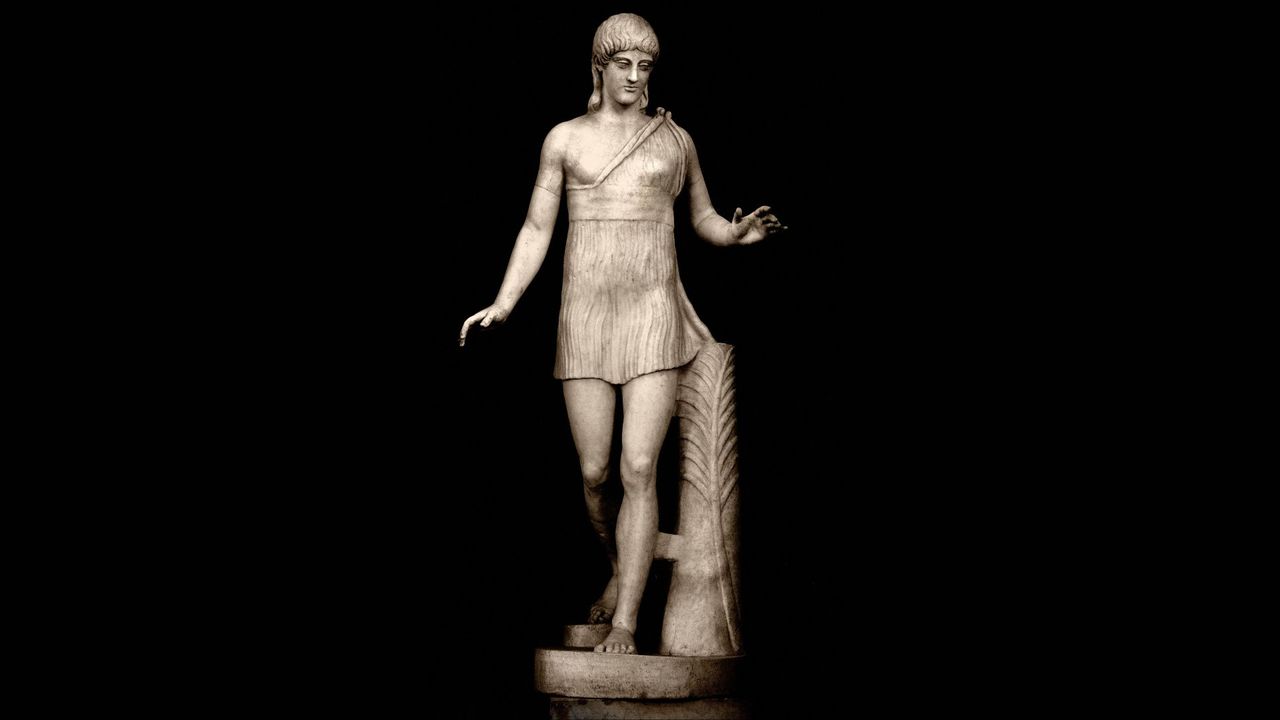
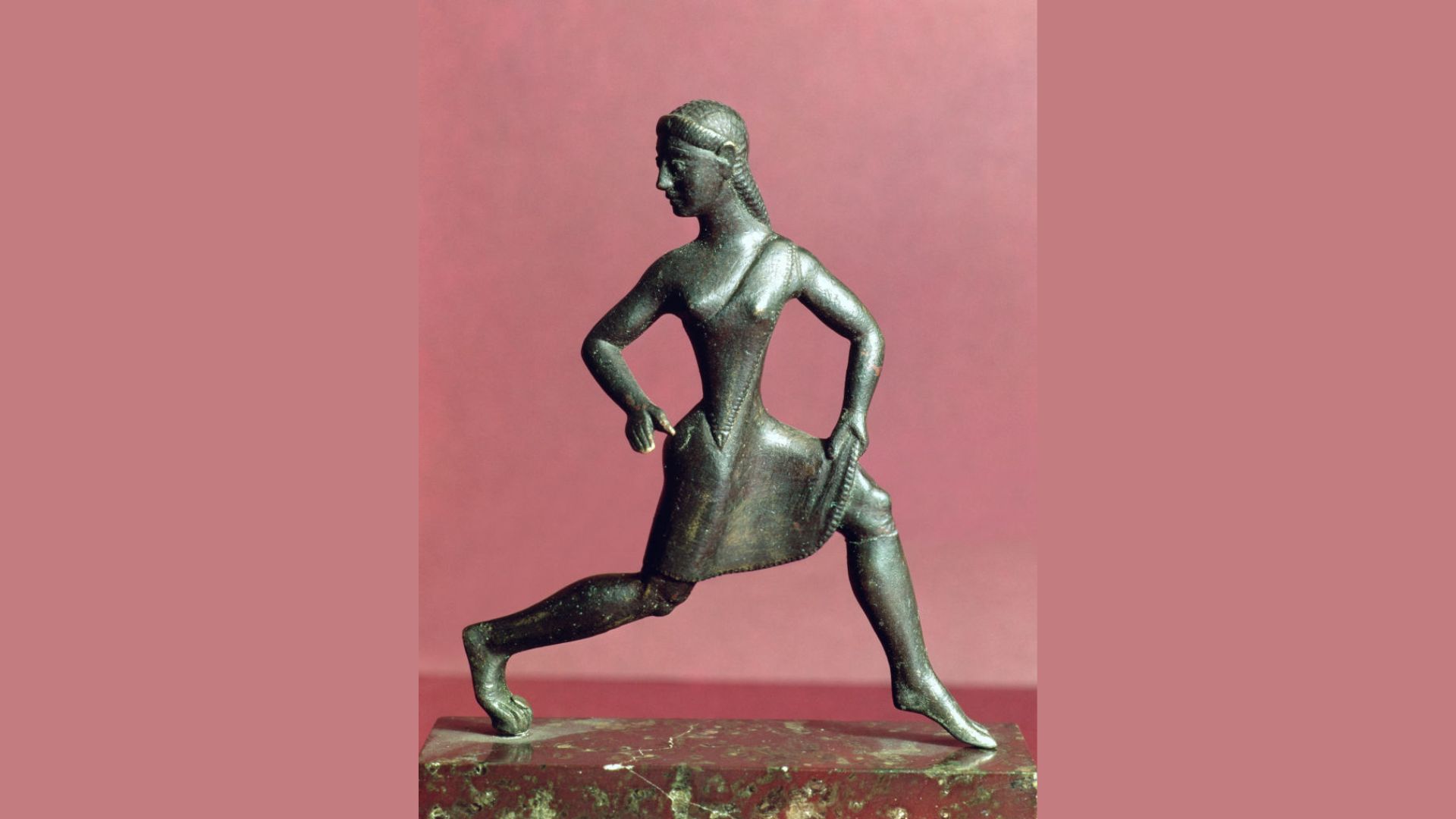
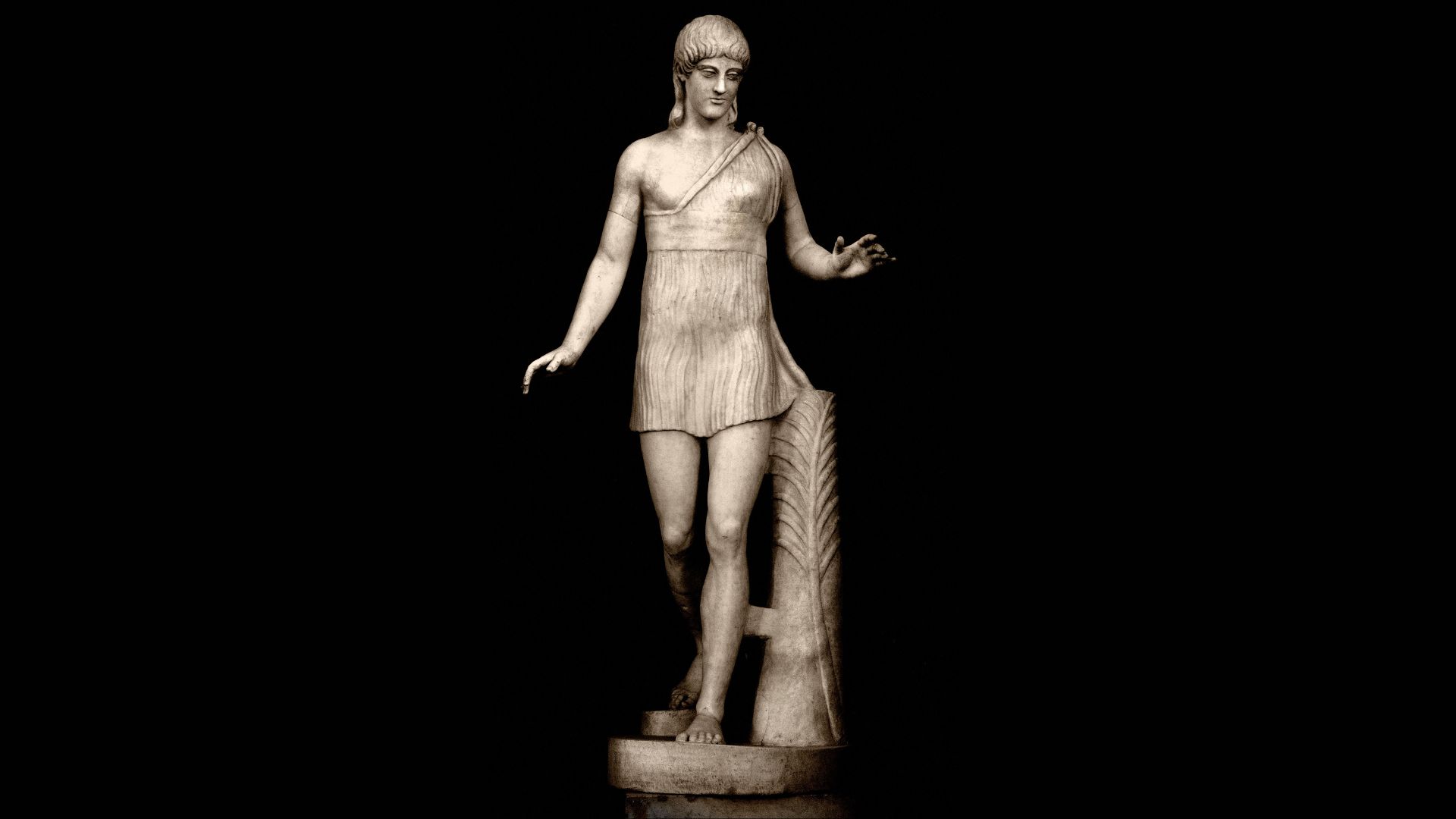 The "Vatican runner" or "Atalanta Barberini" depicts a Greek female wearing a chiton (a short dress) who appears to be running. It dates back around 2,000 years.
(Image credit: Peter Horree/Alamy)
The "Vatican runner" or "Atalanta Barberini" depicts a Greek female wearing a chiton (a short dress) who appears to be running. It dates back around 2,000 years.
(Image credit: Peter Horree/Alamy)
- Copy link
- X
Get the world’s most fascinating discoveries delivered straight to your inbox.
Become a Member in Seconds
Unlock instant access to exclusive member features.
Contact me with news and offers from other Future brands Receive email from us on behalf of our trusted partners or sponsors By submitting your information you agree to the Terms & Conditions and Privacy Policy and are aged 16 or over.You are now subscribed
Your newsletter sign-up was successful
Want to add more newsletters?

Delivered Daily
Daily Newsletter
Sign up for the latest discoveries, groundbreaking research and fascinating breakthroughs that impact you and the wider world direct to your inbox.
Signup +
Once a week
Life's Little Mysteries
Feed your curiosity with an exclusive mystery every week, solved with science and delivered direct to your inbox before it's seen anywhere else.
Signup +
Once a week
How It Works
Sign up to our free science & technology newsletter for your weekly fix of fascinating articles, quick quizzes, amazing images, and more
Signup +
Delivered daily
Space.com Newsletter
Breaking space news, the latest updates on rocket launches, skywatching events and more!
Signup +
Once a month
Watch This Space
Sign up to our monthly entertainment newsletter to keep up with all our coverage of the latest sci-fi and space movies, tv shows, games and books.
Signup +
Once a week
Night Sky This Week
Discover this week's must-see night sky events, moon phases, and stunning astrophotos. Sign up for our skywatching newsletter and explore the universe with us!
Signup +Join the club
Get full access to premium articles, exclusive features and a growing list of member rewards.
Explore An account already exists for this email address, please log in. Subscribe to our newsletterAncient Olympians were renowned for their strength and agility, but were any of these athletes women? And were there other sporting opportunities in which women in ancient Greece could compete?
The ancient Olympics involved people from all over Greece and sometimes beyond and lasted from about 776 B.C. to A.D. 393. For much of this time, the restrictions against women appeared strict, wrote the writer Pausanias, who lived during the second century A.D. He noted there was a law to throw any "women who are caught present at the Olympic games" off a cliff (translation by William Jones and Henry Ormerod).
While the ancient Olympic games were largely off limits to women, there were other athletic competitions that women could compete in — particularly those involving running. There was even a series of footraces, called the Heraea (also spelled Heraia), held in honor of the goddess Hera, that took place at Olympia on the Peloponesian Peninsula, where the games were held.
You may like-
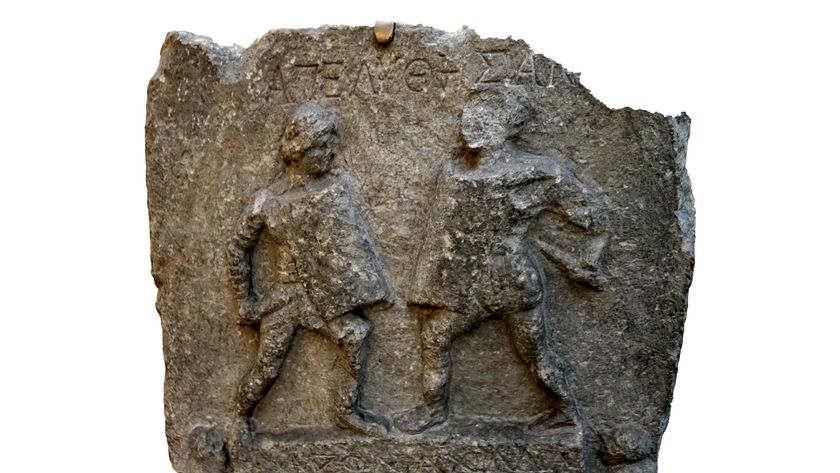 Were there female gladiators in ancient Rome?
-
 'There's no reason to ban us from playing': Analysis debunks notion that transgender women have inherent physical advantages in sports
-
 Stunningly preserved Roman-era mosaic in UK depicts Trojan War stories — but not the ones told by Homer
Sign up for our weekly Life's Little Mysteries newsletter to get the latest mysteries before they appear online.
Pausanias wrote that "the contest is a running event for unmarried girls," with three different age categories (translation by Waldo Sweet), and that it was held every four years at Olympia.
"Here is their method of running. They let down their hair, let the tunic hang down a little above the knee, and uncover the right shoulder as far as the breast," Pausanias wrote. Depictions of females dressed like this and engaged in athletic activity have been found on ancient Greek artifacts.
"To the victors they give crowns of olive leaves and a share of the cow which they sacrifice to Hera," Pausanias wrote, noting that the winners may also "set up statues with their names inscribed." Footrace competitions among females were also held at other ancient Greek sites.
Women also entered chariot teams (consisting of a driver and four horses) into ancient competitions — including the Olympics — but they didn't necessarily drive the chariots. Nor were they allowed to watch the Olympic games, although there were rare exceptions.
However, as the owner of a chariot team, they could claim victory. Kyniska, a sister of a king of Sparta, became the first-known female victor of the Olympic games when her chariot team won in 396 B.C. Kyniska owned and bred the winning horses, and an inscription from a statue base says that she was the "only woman in all Greece" to win the Olympics (translation by Donald Kyle).
Ancient texts and archaeological remains indicate that females also took part in other sports, such as wrestling. Evidence of formal female competitions is limited, but that doesn't mean they didn't occur.
"There is literary evidence that, especially in Sparta, females engaged in things like wrestling for educational purposes," Heather Reid, professor emeritus at Morningside University in Iowa, told Live Science in an email.
You may like-
'There's no reason to ban us from playing': Analysis debunks notion that transgender women have inherent physical advantages in sports
-
Stunningly preserved Roman-era mosaic in UK depicts Trojan War stories — but not the ones told by Homer
-
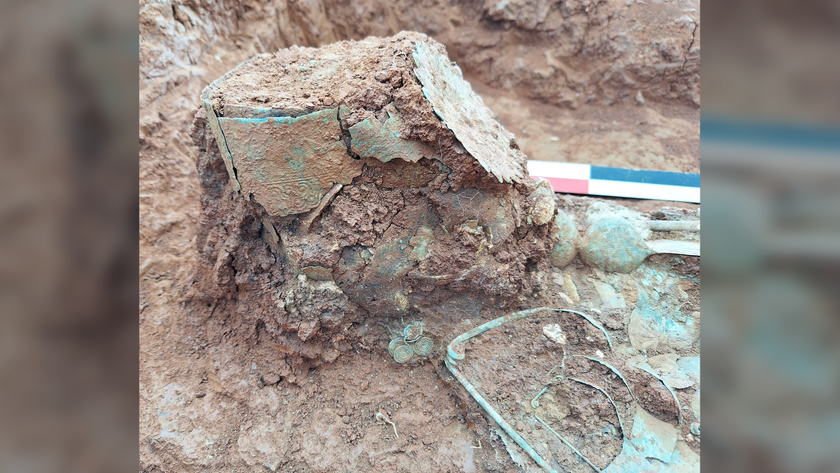 Elaborate 2,700-year-old tomb in Greece contains burial of a woman with an upside-down crown
In Sparta, there was actually a requirement that young females practice wrestling, among other sports, in order to build and maintain muscle. The ancient poet Propertius, who lived during the first century B.C., wrote that he was "impressed that a naked girl may take part in games in the midst of men wrestlers without incurring criticism" (translation by Waldo Sweet). He also wrote that females in Sparta practiced pankration, an ancient form of mixed martial arts.
After marriage
The number of athletic competitions available to women after they were married seems to have been limited. Reid said that "women's athletics, like men's athletics, seems to have arisen out of rites of passage. In the case of females the ritual involved the transition from child to Parthenos … woman eligible for marriage." Reid noted that married women who owned chariot racing teams could still claim victory as their owner.
Georgia Tsouvala, a history professor at Illinois State University, said that married women in Sparta might have been able to compete in some competitions.
"I imagine that might have been possible, if the competition was local," Tsouvala told Live Science in an email. "For example, we know that Spartan women continued to use the gymnasium and palaestra [wrestling school] even after they got married and got pregnant."
Roman-controlled Greece
During the time of Roman rule over Greece, which started in the second century B.C., there appears to have been an increase in the number of female athletic competitions, with more records mentioning female footraces.
Onno van Nijf, an ancient history professor at the University of Groningen in the Netherlands, said that it's not clear why the number of female competitions increased in Roman times. The "Romans had an ambivalent attitude to Greek athletics, and a real explanation of the phenomenon has yet to be established," he told Live Science in an email.
There are a number of artifacts dating to Roman times that mention female athletes in Greece. One inscription describes a woman named Hedea who lived during the first century A.D. and won multiple competitions in foot racing and chariot racing and was awarded Athenian citizenship for her victories.
Another inscription dating to the late first century A.D., from the island of Kos, lists the members of a wrestling school on the island. All the names are men, except for a woman named Hetereia Prokilla. She and the other wrestlers are listed as "presbyteroi," a name that "can refer to a mature individual but also to important members of the city," Tsouvala said.
related mysteries—Did the Amazon female warriors from Greek mythology really exist?
—Were there female gladiators in ancient Rome?
—Where is Queen Boudica buried?
Whether she competed against men on the island is not clear, and we know little about her. From "the inscription we can assume that she was a member of the elite and a Roman citizen," Tsouvala said.
One of the best-known surviving artifacts that appears to depict an ancient Greek female athlete is the "Vatican runner" (also known as the "Running girl" or "Atalanta Barberini"). Dating back around 2,000 years, it shows a young woman wearing a chiton, a type of dress, similar to that described by Pausanias, and she appears to be running a race. It is now in the Vatican Museums.
TOPICS Life's Little Mysteries women running Owen JarusSocial Links NavigationLive Science Contributor
Owen Jarus is a regular contributor to Live Science who writes about archaeology and humans' past. He has also written for The Independent (UK), The Canadian Press (CP) and The Associated Press (AP), among others. Owen has a bachelor of arts degree from the University of Toronto and a journalism degree from Ryerson University.
View MoreYou must confirm your public display name before commenting
Please logout and then login again, you will then be prompted to enter your display name.
Logout Read more 'There's no reason to ban us from playing': Analysis debunks notion that transgender women have inherent physical advantages in sports
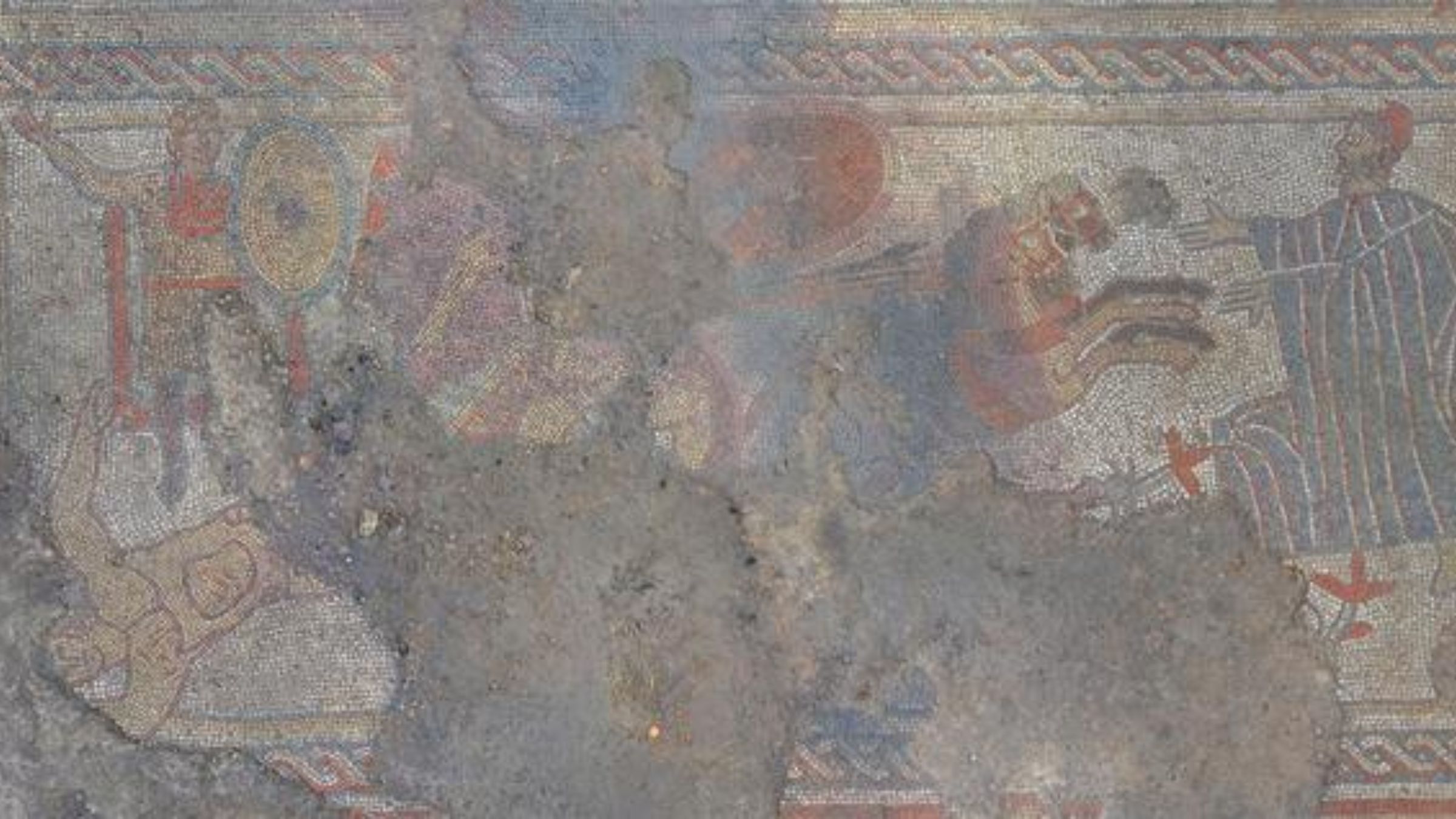 Stunningly preserved Roman-era mosaic in UK depicts Trojan War stories — but not the ones told by Homer
 Elaborate 2,700-year-old tomb in Greece contains burial of a woman with an upside-down crown
 Gender ambiguity was a tool of power 4,500 years ago in Mesopotamia
 12,000-year-old figurine of goose mating with naked woman discovered in Israel
 New discoveries at Hadrian's Wall are changing the picture of what life was like on the border of the Roman Empire
Latest in Archaeology
New discoveries at Hadrian's Wall are changing the picture of what life was like on the border of the Roman Empire
Latest in Archaeology
 7,500-year-old deer skull headdress discovered in Germany indicates hunter-gatherers shared sacred items and ideas with region's first farmers
 Remote region in Greece has one of the most genetically distinct populations in Europe
 Anglo-Saxon children discovered buried with warrior gear in UK — perhaps as a nod to 'the men these children might have become'
 'Landmark' elephant bone finding in Spain may be from time of Hannibal's war against Rome
 Rare medieval seal discovered in UK is inscribed with 'Richard's secret' and bears a Roman-period gemstone
 'It's similar to how Google can map your home without your consent': Why using aerial lasers to map an archaeology site should have Indigenous partnership
Latest in Features
'It's similar to how Google can map your home without your consent': Why using aerial lasers to map an archaeology site should have Indigenous partnership
Latest in Features
 Science history: 'Father of modern genetics' describes his experiments with pea plants — and proves that heredity is transmitted in discrete units — Feb. 8, 1865
 'Maybe they're waiting for something that only happens thousands of years later': The hidden life 'sleeping' deep beneath Earth for millions of years
 Bandera Volcano Ice Cave: The weird lava tube in New Mexico whose temperature is always below freezing
 Psychedelics may rewire the brain to treat PTSD. Scientists are finally beginning to understand how.
Did ancient Greeks let women compete in the Olympics?
Psychedelics may rewire the brain to treat PTSD. Scientists are finally beginning to understand how.
Did ancient Greeks let women compete in the Olympics?
 Why do kids eat their boogers?
LATEST ARTICLES
Why do kids eat their boogers?
LATEST ARTICLES- 1'Maybe they're waiting for something that only happens thousands of years later': The hidden life 'sleeping' deep beneath Earth for millions of years
- 2Science history: 'Father of modern genetics' describes his experiments with pea plants — and proves that heredity is transmitted in discrete units — Feb. 8, 1865
- 3Anglo-Saxon children discovered buried with warrior gear in UK — perhaps as a nod to 'the men these children might have become'
- 4'A second set of eyes': AI-supported breast cancer screening spots more cancers earlier, landmark trial finds
- 5'There's no reason to ban us from playing': Analysis debunks notion that transgender women have inherent physical advantages in sports


