- Chemistry
 Why is mercury a liquid?
Features
By
Victoria Atkinson
published
7 March 2026
Why is mercury a liquid?
Features
By
Victoria Atkinson
published
7 March 2026
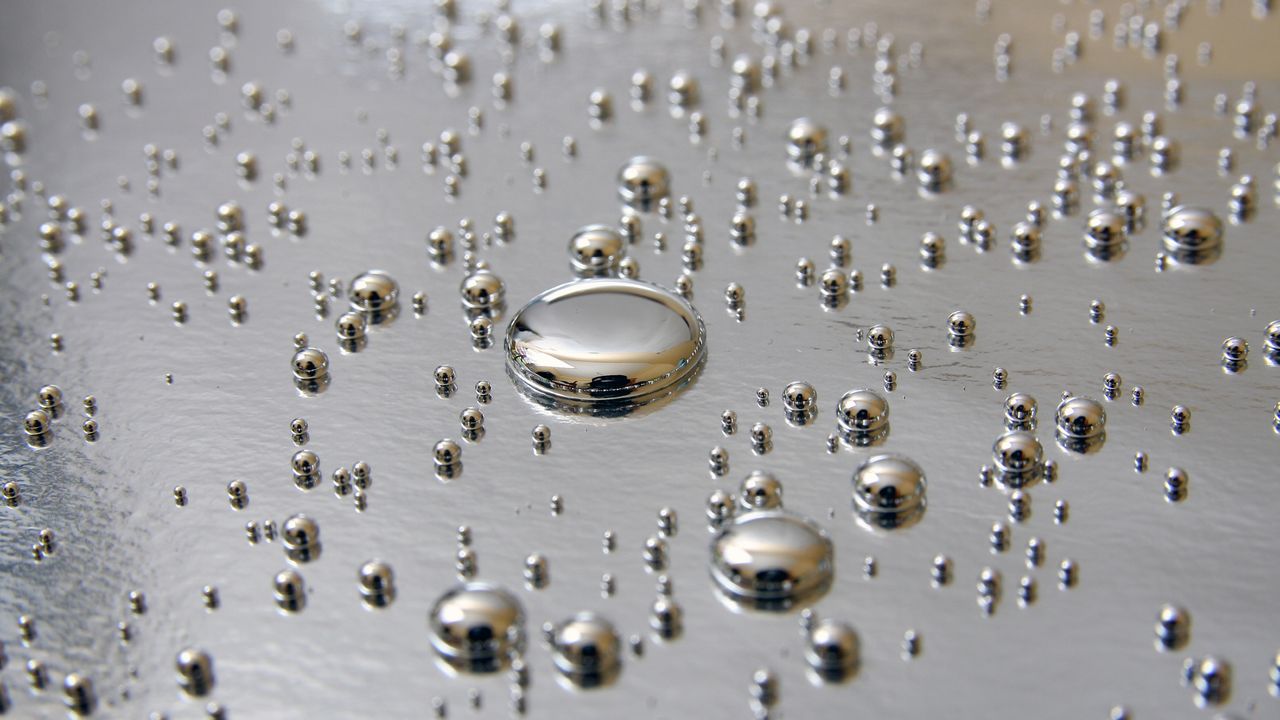
Mercury is a metal, yet it has some weird physical properties, including being a liquid at room temperature.
When you purchase through links on our site, we may earn an affiliate commission. Here’s how it works.
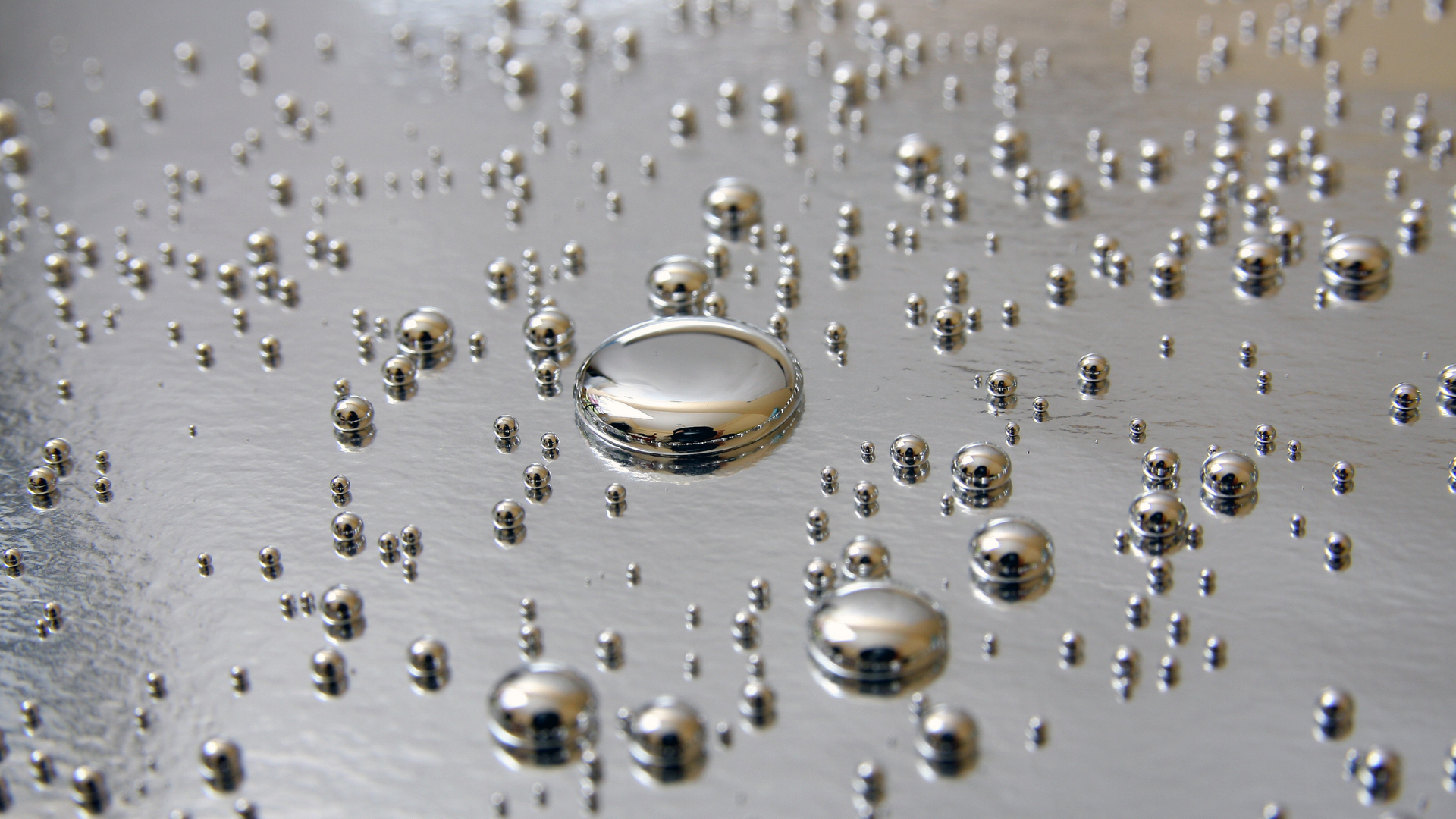 A few things set mercury apart from other metals, enabling it to be a liquid at room temperature.
(Image credit: videophoto via Getty Images)
A few things set mercury apart from other metals, enabling it to be a liquid at room temperature.
(Image credit: videophoto via Getty Images)
- Copy link
- X
Get the world’s most fascinating discoveries delivered straight to your inbox.
Become a Member in Seconds
Unlock instant access to exclusive member features.
Contact me with news and offers from other Future brands Receive email from us on behalf of our trusted partners or sponsors By submitting your information you agree to the Terms & Conditions and Privacy Policy and are aged 16 or over.You are now subscribed
Your newsletter sign-up was successful
Want to add more newsletters?

Delivered Daily
Daily Newsletter
Sign up for the latest discoveries, groundbreaking research and fascinating breakthroughs that impact you and the wider world direct to your inbox.
Signup +
Once a week
Life's Little Mysteries
Feed your curiosity with an exclusive mystery every week, solved with science and delivered direct to your inbox before it's seen anywhere else.
Signup +
Once a week
How It Works
Sign up to our free science & technology newsletter for your weekly fix of fascinating articles, quick quizzes, amazing images, and more
Signup +
Delivered daily
Space.com Newsletter
Breaking space news, the latest updates on rocket launches, skywatching events and more!
Signup +
Once a month
Watch This Space
Sign up to our monthly entertainment newsletter to keep up with all our coverage of the latest sci-fi and space movies, tv shows, games and books.
Signup +
Once a week
Night Sky This Week
Discover this week's must-see night sky events, moon phases, and stunning astrophotos. Sign up for our skywatching newsletter and explore the universe with us!
Signup +Join the club
Get full access to premium articles, exclusive features and a growing list of member rewards.
Explore An account already exists for this email address, please log in. Subscribe to our newsletterWe tend to think of metals as hard, strong and resistant to high temperatures — just look at iron, aluminum and steel. While this is generally true, there's one key exception: mercury. With a melting point of minus 37.9 degrees Fahrenheit (minus 38.8 degrees Celsius), mercury is one of only two elements that are liquid at room temperature. (The other is bromine, which is not a metal.)
But why is mercury so different from its fellow metals?
You may like-
 Earth is 'missing' lighter elements. They may be hiding in its solid inner core.
-
 Physicists push quantum boundaries by turning a superfluid into a supersolid — and back — for the first time
-
 Why is Venus so bright?

Sign up for our weekly Life's Little Mysteries newsletter to get the latest mysteries before they appear online.
Melting point is directly correlated with bond strength — "the stronger the bonds, the more energy, in the form of heat, is required to break them," Zoe Ashbridge, a senior lecturer in chemistry for the U.K. Ministry of Defence, told Live Science.
Atoms of mercury, like atoms of all other metals, bind together through metallic bonding — a lattice of positively charged metal particles known as ions, is surrounded by a sea of delocalized (freed) electrons, and electrostatic attraction between these oppositely charged particles acts as the glue that holds the metal together. This structure explains many of the other signature properties of metals, such as electrical conductivity, as the electrons can move freely through the material, and mouldability, as the layers of positive particles can slide over one another to adopt a new shape, lubricated by the free electrons. But it is specifically the strength of the electrostatic attraction that governs the melting point.
The availability of outer electrons to create this delocalized sea is therefore a key factor. "The more positive the metal center is and the more delocalized valence electrons on the outside, the greater the attraction is, and generally this tracks from left to right in the periodic table," Ashbridge explained.
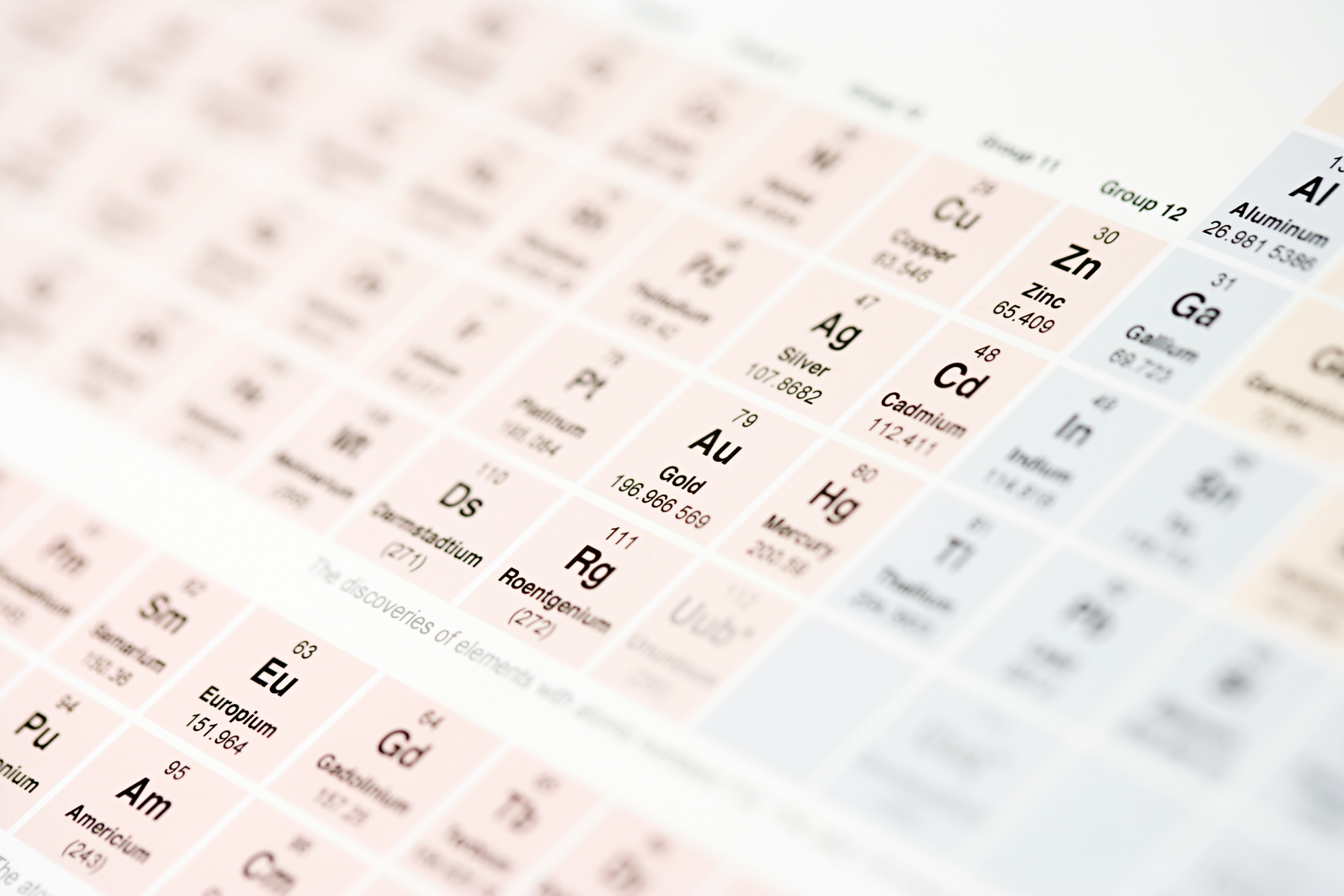
As a group 12 metal, mercury theoretically has 12 outer electrons it could contribute to metallic bonding. "However, all of those electrons are in "filled subshells," she added. "When they are full, that makes them more stable and less likely to delocalize, and this makes mercury particularly reluctant to share its electrons, even with other mercury atoms."
Yet this filled-subshell effect isn't big enough to explain mercury's unusually low melting point. The strength of metallic bonding — and, therefore, the melting point — also decreases from the top to the bottom of the periodic table, as the atoms get larger. But extrapolating from these established trends, mercury should still have a melting point of around 266 F (130 C), which would make it solid at room temperature.
So what causes this giant disparity?
Mercury's liquid state results almost entirely from relativistic effects, said Peter Schwerdtfeger, a quantum physicist at Massey University in New Zealand. Toward the bottom of the periodic table, the electrons in the heaviest elements experience such strong attraction to the atomic nucleus that they move close to the speed of light. At this point, they no longer obey the laws of classical physics, and the resulting quantum phenomena — known as relativistic effects — lead to surprising physical properties. How these manifest depends on the element.
What to read next-
 The largest reservoir of hydrogen on Earth may be hiding in its core
-
 James Webb telescope uncovers a new mystery: A broiling 'hell planet' with an atmosphere that shouldn't exist
-
 Giant structure discovered deep beneath Bermuda is unlike anything else on Earth
"Relativistic effects become extremely important for the group 11 and group 12 elements, where gold and mercury are," he told Live Science. Consequently, the weird physical properties arising from these quantum effects are most observable in these elements. Gold has an extremely unusual yellowish hue and mercury is a liquid at room temperature.
"They show us a so-called maximum of relativistic effects, and the outer shell of these atoms contract as a result. It's enormous. For mercury, it's about 20%," Schwerdtfeger said. In chemistry terms, this relativity-induced contraction is most easily explained by once again considering mercury's electron configuration.
The full 4f subshell, which contains the electrons associated with the rare earth, or lanthanide elements, is extremely poor at shielding the other electrons from the nuclear charge. This means the outermost electrons are held much closer to the nucleus than usual — a phenomenon called lanthanide contraction. These contracted electrons move close to the speed of light and therefore experience relativistic effects.
"This increases their mass, and when they have an increased mass due to this high speed, it pulls those electrons even closer to the nucleus," Ashbridge said. Consequently, the relativistic effects reduce the availability of the electrons to contribute to metallic bonding, thus lowering the melting point of the metal below room temperature.
At a quantum mechanical level, though, this qualitative explanation is extremely challenging to back up with calculations.
RELATED MYSTERIES—Can other metals be turned into gold?
—Why doesn't stainless steel rust?
—Why does copper turn green?
"The Schrödinger equation" — which usually describes the possible positions of particles such as electrons — "doesn't fulfill the relativity principle of Albert Einstein," Schwerdtfeger explained. As a result, this equation doesn't work for high-speed particles such as the electrons in mercury. Scientists must instead turn to the significantly more complicated Dirac equation, making any simulations extremely computationally demanding.
Eventually, though, advances in computing enabled Schwerdtfeger to devise a model that could accurately simulate mercury melting and provide a quantum theoretical explanation for the anomalous melting point.
"Using what we call density functional theory, we were able to establish that the melting point is lowered by over 200 degrees Celsius [360 F] by the relativistic effects," he said. These quantum contributions dominate, so while periodic trends predict a low melting point for mercury, the relativistic effects make the element a liquid at room temperature.
Periodic table of elements quiz: How many elements can you name in 10 minutes?
TOPICS Life's Little Mysteries Victoria AtkinsonSocial Links NavigationLive Science Contributor
Victoria Atkinson is a freelance science journalist, specializing in chemistry and its interface with the natural and human-made worlds. Currently based in York (UK), she formerly worked as a science content developer at the University of Oxford, and later as a member of the Chemistry World editorial team. Since becoming a freelancer, Victoria has expanded her focus to explore topics from across the sciences and has also worked with Chemistry Review, Neon Squid Publishing and the Open University, amongst others. She has a DPhil in organic chemistry from the University of Oxford.
View MoreYou must confirm your public display name before commenting
Please logout and then login again, you will then be prompted to enter your display name.
Logout Read more
Earth is 'missing' lighter elements. They may be hiding in its solid inner core.
Physicists push quantum boundaries by turning a superfluid into a supersolid — and back — for the first time
Why is Venus so bright?
The largest reservoir of hydrogen on Earth may be hiding in its core
James Webb telescope uncovers a new mystery: A broiling 'hell planet' with an atmosphere that shouldn't exist
Giant structure discovered deep beneath Bermuda is unlike anything else on Earth
Latest in Chemistry
 Science history: Carbon-14 is discovered, opening a window into past civilizations — Feb. 27, 1940
 New study of chemical reactions in space 'could impact the origin of life in ways we hadn't thought of'
 New electrochemical method splits water with electricity to produce hydrogen fuel — and cuts energy costs in the process
 Glue strong enough to tow a car made from used cooking oil
 Science history: Chemists discover buckyballs — the most perfect molecules in existence — Nov. 14, 1985
 Why does boiling water have bubbles, except in a microwave?
Latest in Features
Why is mercury a liquid?
Why does boiling water have bubbles, except in a microwave?
Latest in Features
Why is mercury a liquid?
 Ancient 'alien-like' skulls have been found on every continent but Antarctica. Anthropologists are starting to figure out why.
 3 rivers merge into striking half-and-half waterway in Guyana
 NASA telescope spots first alien 'astrosphere' around a sun-like star: Space photo of the week
 Science history: Stephen Hawking writes a tiny paper — and turns our understanding of black holes inside out — March 1, 1974
 'We're starting to find a lot more weirdness': These strange animals can control their body heat
LATEST ARTICLES
'We're starting to find a lot more weirdness': These strange animals can control their body heat
LATEST ARTICLES 1'Cikai Korran came here and saw': Visitors from India graffitied dozens of Egyptian tombs 2,000 years ago
- 2Ancient 'alien-like' skulls have been found on every continent but Antarctica. Anthropologists are starting to figure out why.
- 3Planting trees in the sea could act as a huge carbon sink and save millions of dollars in storm damage every year. What is stopping us from doing it?
- 4One of the most accurate smart scales we have tested is now at its lowest-ever price
- 5Scientists find 2 marsupial species, thought to have gone extinct 6,000 years ago, living in the forests of New Guinea