- Space
- Astronomy
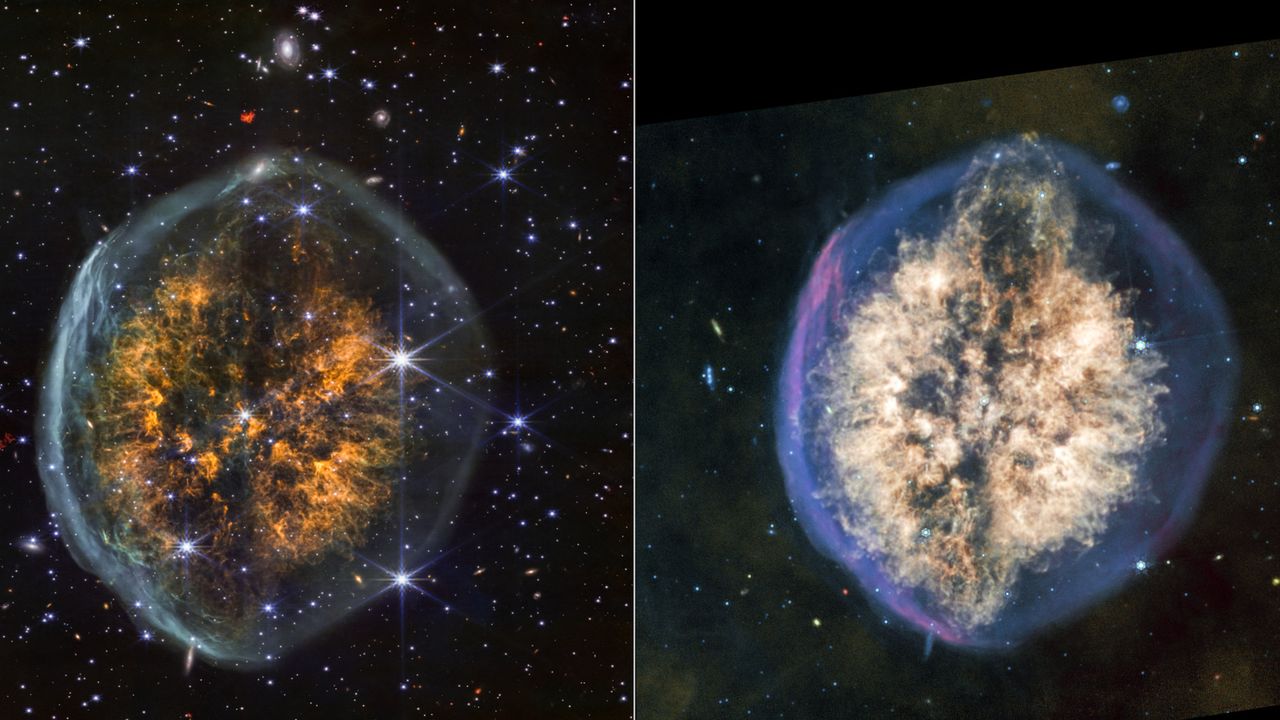
NASA's James Webb Space Telescope reveals new infrared images of the brain-shaped "Exposed Cranium" nebula, the final stages of a dying star.
When you purchase through links on our site, we may earn an affiliate commission. Here’s how it works.
 The PMR 1 "Exposed Cranium" nebula as seen by Webb's NIRCam (left) and MIRI (right) instruments.
(Image credit: NASA, ESA, CSA, STScI, Image Processing: Joseph DePasquale (STScI))
The PMR 1 "Exposed Cranium" nebula as seen by Webb's NIRCam (left) and MIRI (right) instruments.
(Image credit: NASA, ESA, CSA, STScI, Image Processing: Joseph DePasquale (STScI))
- Copy link
- X
Get the world’s most fascinating discoveries delivered straight to your inbox.
Become a Member in Seconds
Unlock instant access to exclusive member features.
Contact me with news and offers from other Future brands Receive email from us on behalf of our trusted partners or sponsors By submitting your information you agree to the Terms & Conditions and Privacy Policy and are aged 16 or over.You are now subscribed
Your newsletter sign-up was successful
Want to add more newsletters?

Delivered Daily
Daily Newsletter
Sign up for the latest discoveries, groundbreaking research and fascinating breakthroughs that impact you and the wider world direct to your inbox.
Signup +
Once a week
Life's Little Mysteries
Feed your curiosity with an exclusive mystery every week, solved with science and delivered direct to your inbox before it's seen anywhere else.
Signup +
Once a week
How It Works
Sign up to our free science & technology newsletter for your weekly fix of fascinating articles, quick quizzes, amazing images, and more
Signup +
Delivered daily
Space.com Newsletter
Breaking space news, the latest updates on rocket launches, skywatching events and more!
Signup +
Once a month
Watch This Space
Sign up to our monthly entertainment newsletter to keep up with all our coverage of the latest sci-fi and space movies, tv shows, games and books.
Signup +
Once a week
Night Sky This Week
Discover this week's must-see night sky events, moon phases, and stunning astrophotos. Sign up for our skywatching newsletter and explore the universe with us!
Signup +Join the club
Get full access to premium articles, exclusive features and a growing list of member rewards.
Explore An account already exists for this email address, please log in. Subscribe to our newsletter QUICK FACTSWhat it is: Nebula PMR 1, also known as the "Exposed Cranium"
Where it is: 5,000 light-years away in the constellation Vela
When it was shared: Feb. 25, 2026.
The powerful James Webb Space Telescope (JWST) has revealed never-before-seen details of a cosmic "cranium" made of the glowing remains of a dying star.
This brainy object, named PMR 1, is a planetary nebula — an expanding shell of ionized gas and dust expelled by a star in the final stages of its evolution, when the nuclear fuel within its core is depleted. It was first spotted in 2014 by the Spitzer Space Telescope (a predecessor to JWST) but has been little studied until now.
The colorful cloud is said to resemble a brain encased within a transparent skull, which has led to it being dubbed the "Exposed Cranium" nebula.
You may like-
 James Webb telescope peers into 'Eye of God' and finds clues to life's origins — Space photo of the week
-
 James Webb telescope spots 'failed stars' in a breathtaking cluster near Earth — Space photo of the week
-
 Glittering new James Webb telescope image shows an 'intricate web of chaos' — Space photo of the week
The new image comes in two parts, captured by different instruments: the Near-Infrared Camera (NIRCam) on the left and the Mid-Infrared Instrument (MIRI) on the right. By observing the object at different wavelengths, JWST can reveal intricate details that were previously invisible, according to NASA.
In the NIRCam image, the nebula's outer bubble appears with a bright white edge, while the inner clouds glow orange. It highlights a distinctive dark lane that cuts vertically through the center, creating the illusion of two hemispheres, like a brain. Stars and distant background galaxies are also visible through the nebula's outer shell in near-infrared light.
Things look different in the MIRI image, where mid-infrared light shows an outer bubble that appears bluish with a touch of purple. The glowing clouds within the nebula look thicker and more complex, while the central dark lane is less visible because it's partially obscured by dust and gas.
That dark lane is a great example of why Webb's ability to see the universe in multiple wavelengths of light is so valuable to astronomers. While the dark streak is much easier to see in the NIRCam image, it appears to be more closely connected to twin eruptions of gas at the top and bottom of the nebula as seen in the MIRI image. Together, the two images paint a more complete picture of exactly what is happening in this cosmic cranium.
Sign up for the Live Science daily newsletter nowContact me with news and offers from other Future brandsReceive email from us on behalf of our trusted partners or sponsorsBy submitting your information you agree to the Terms & Conditions and Privacy Policy and are aged 16 or over.The images also provide an insight into multiple stages of the star's evolution, with an outer shell of hydrogen gas expelled earlier in the star's life and inner clouds of a mixture of gases and dust expelled more recently.
What will eventually happen to the star at the center of PMR 1 depends on its mass: it will either explode as a supernova or continue to shed layers, leaving behind a dense, shriveled core known as a white dwarf star.
See more Space Photos of the Week
 Hubble sees Egg Nebula 'hatch'
The closest baby nebula to Earth was caught spitting up its stardust.
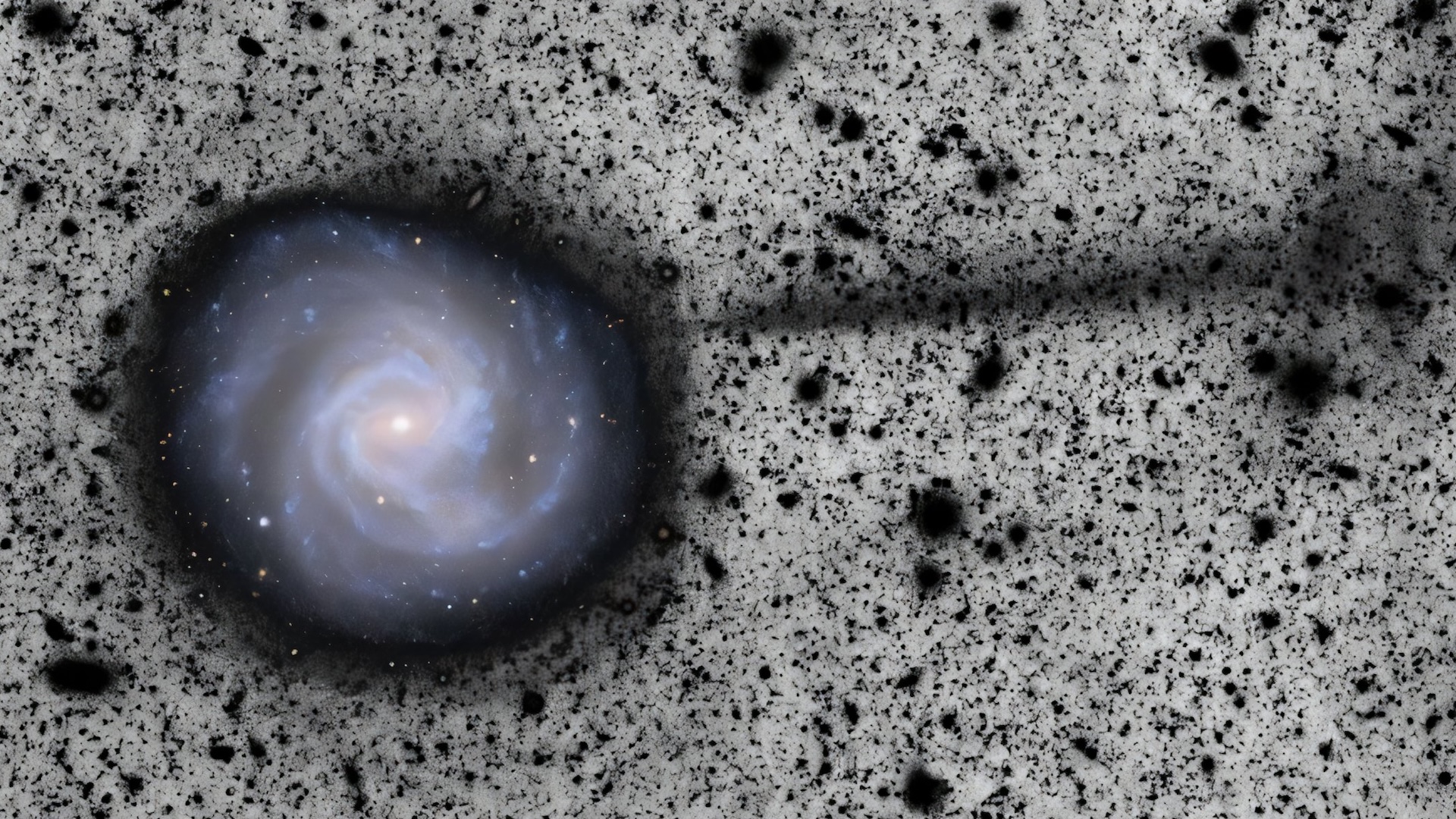 Hidden structure in 1st Vera Rubin image
First-light images from the Vera C. Rubin Observatory reveal a 163,000-light-year stream of stars emanating from a nearby galaxy.
JWST peeps the 'Eye of God'
A spectacular James Webb telescope image reveals intricate structures inside the Helix Nebula.
TOPICS space photo of the week James Webb Space Telescope Jamie CarterSocial Links NavigationLive Science contributor
Jamie Carter is a Cardiff, U.K.-based freelance science journalist and a regular contributor to Live Science. He is the author of A Stargazing Program For Beginners and co-author of The Eclipse Effect, and leads international stargazing and eclipse-chasing tours. His work appears regularly in Space.com, Forbes, New Scientist, BBC Sky at Night, Sky & Telescope, and other major science and astronomy publications. He is also the editor of WhenIsTheNextEclipse.com.
View MoreYou must confirm your public display name before commenting
Please logout and then login again, you will then be prompted to enter your display name.
Logout Read more
James Webb telescope peers into 'Eye of God' and finds clues to life's origins — Space photo of the week
James Webb telescope spots 'failed stars' in a breathtaking cluster near Earth — Space photo of the week
Glittering new James Webb telescope image shows an 'intricate web of chaos' — Space photo of the week
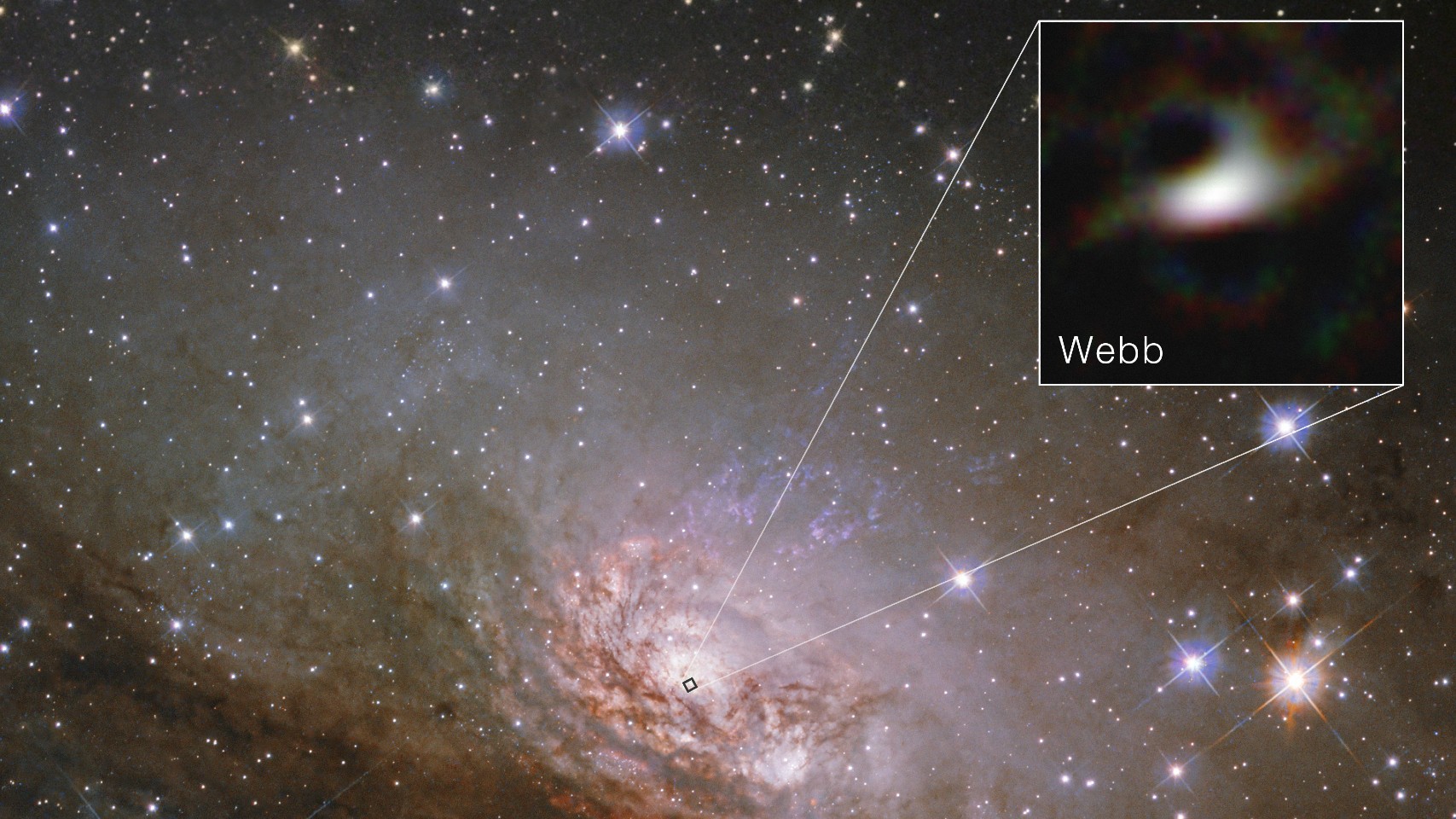 James Webb telescope reveals sharpest-ever look at the edge of a supermassive black hole
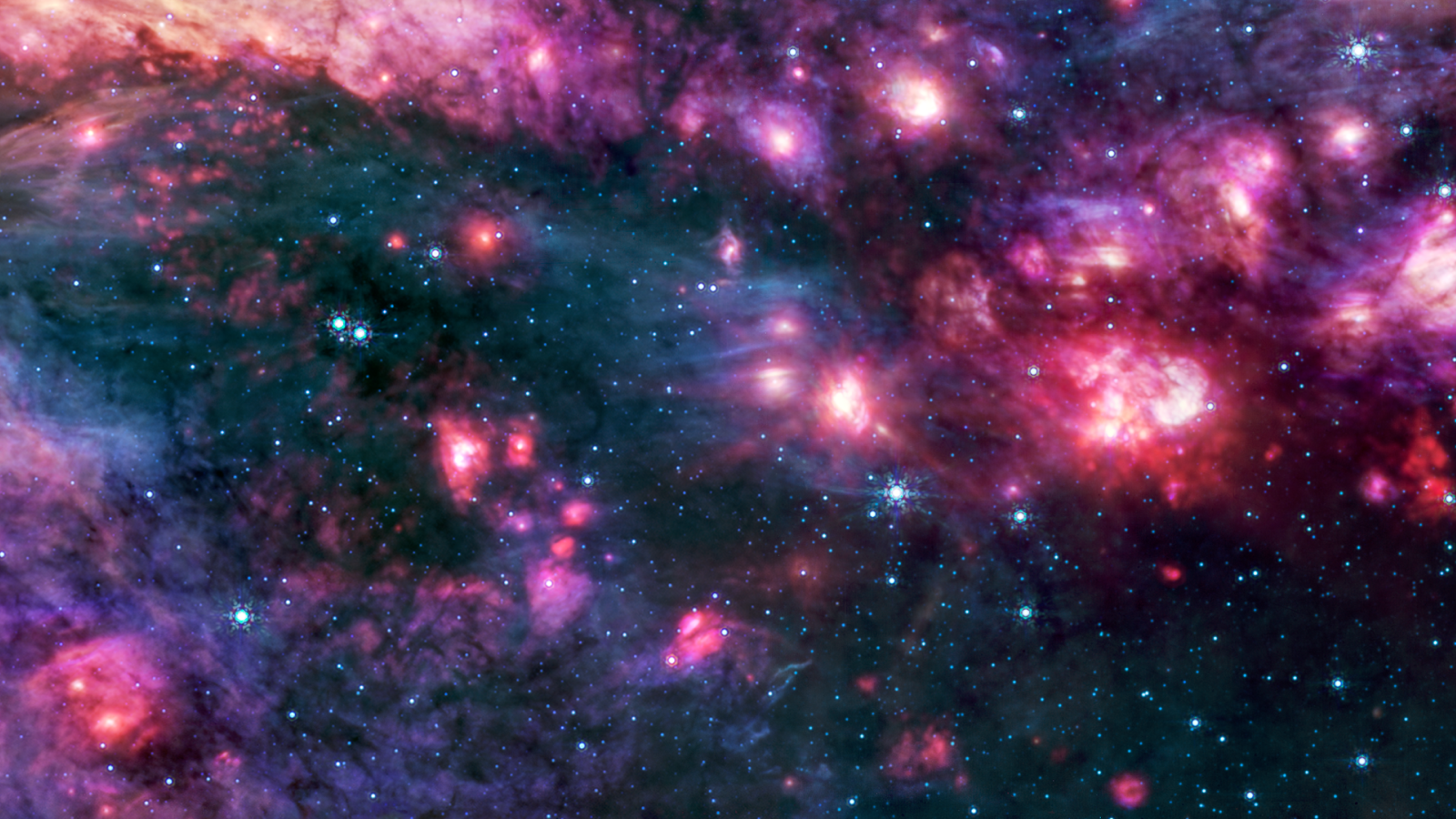 James Webb telescope spies a monstrous molecular cloud shrouded in mystery — Space photo of the week
Closest baby nebula to Earth 'hatches' in strange new Hubble image – Space photo of the week
Latest in Astronomy
James Webb telescope spies a monstrous molecular cloud shrouded in mystery — Space photo of the week
Closest baby nebula to Earth 'hatches' in strange new Hubble image – Space photo of the week
Latest in Astronomy
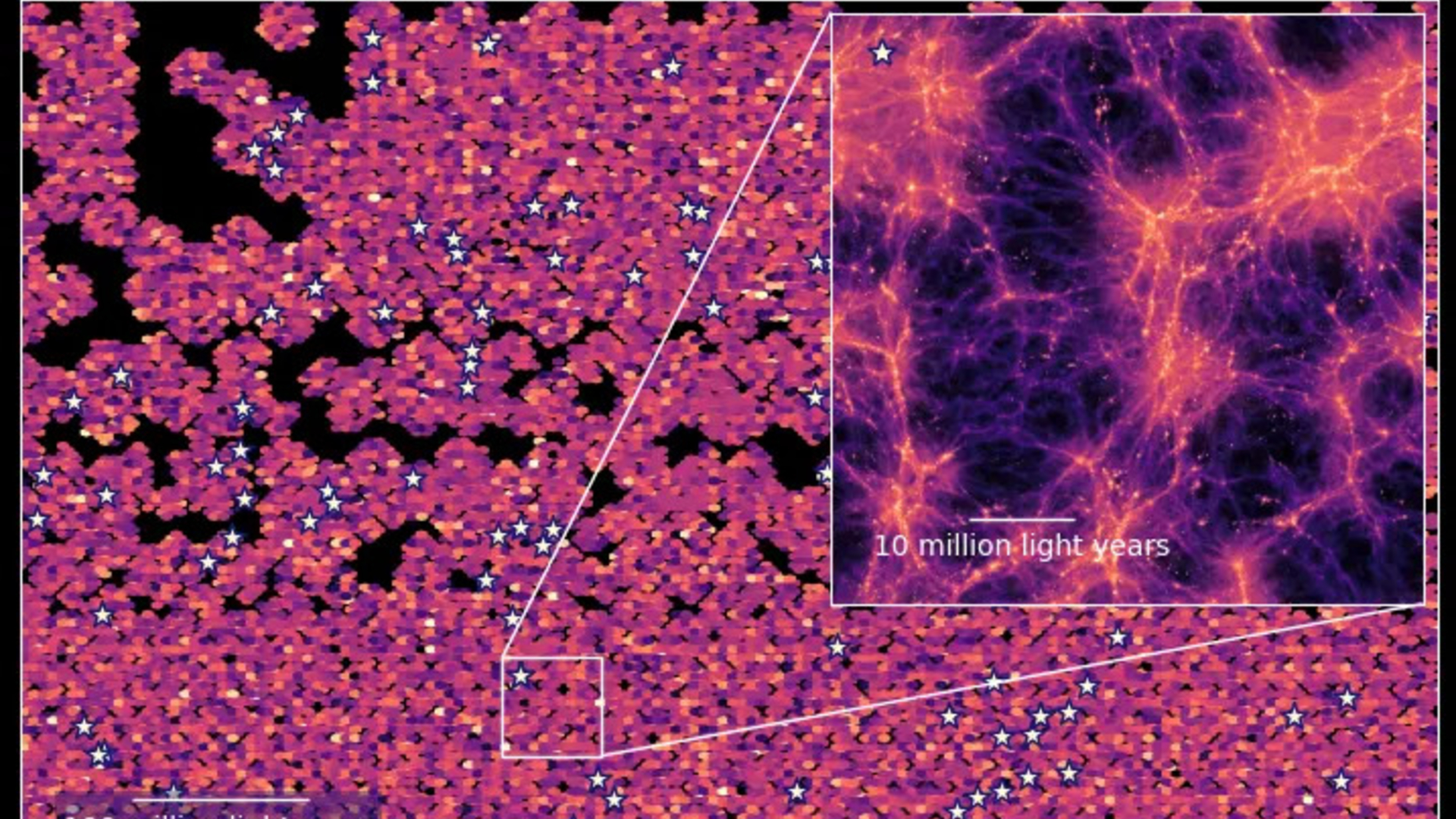 Enormous 3D map of the universe shows brilliant 'sea of light' near the cosmic dawn
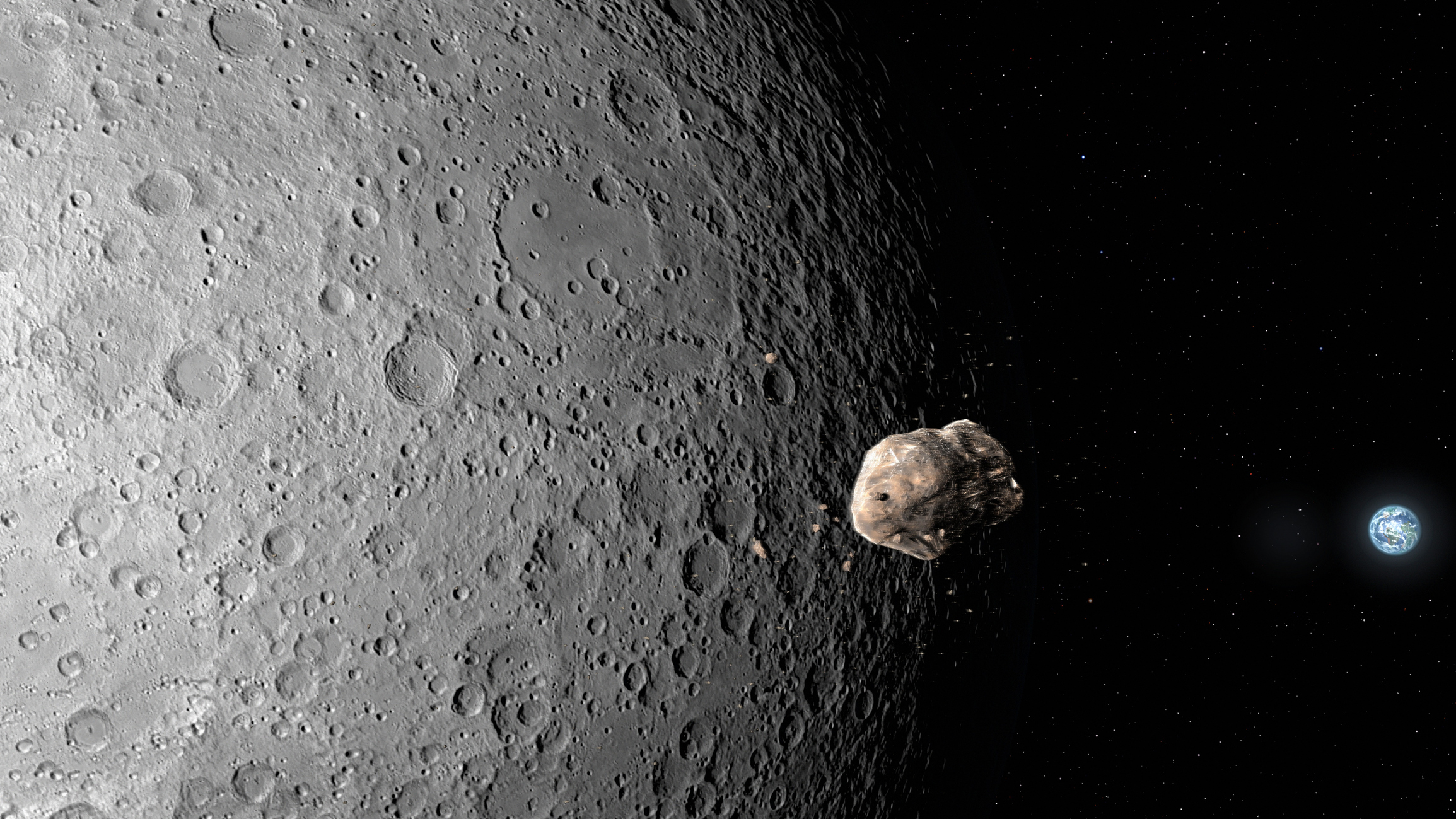 'City killer' asteroid will narrowly miss the moon, James Webb Telescope reveals
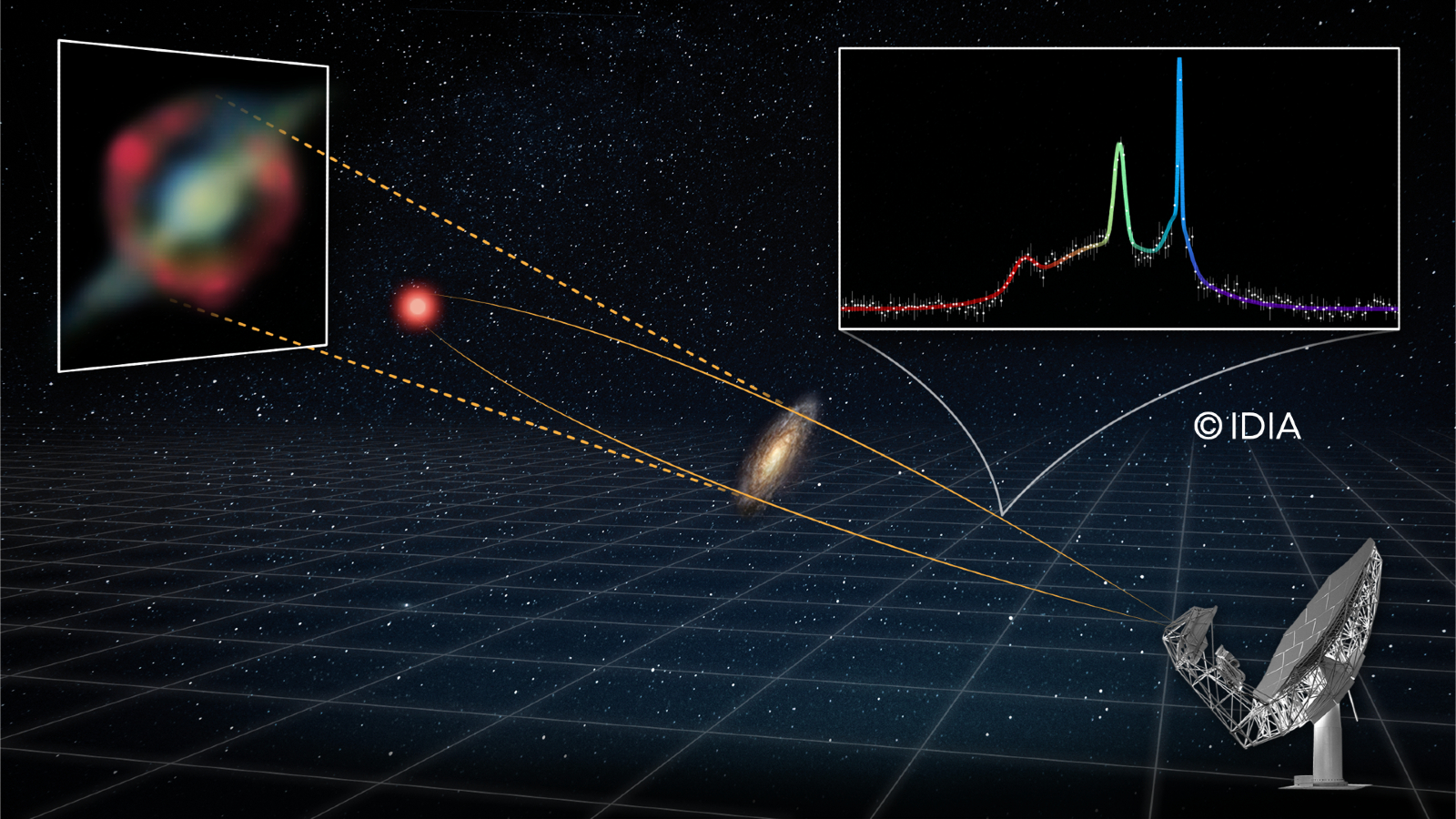 'Truly extraordinary': Mega-laser shooting at us from halfway across the universe is the brightest 'cosmic beacon' we've ever seen
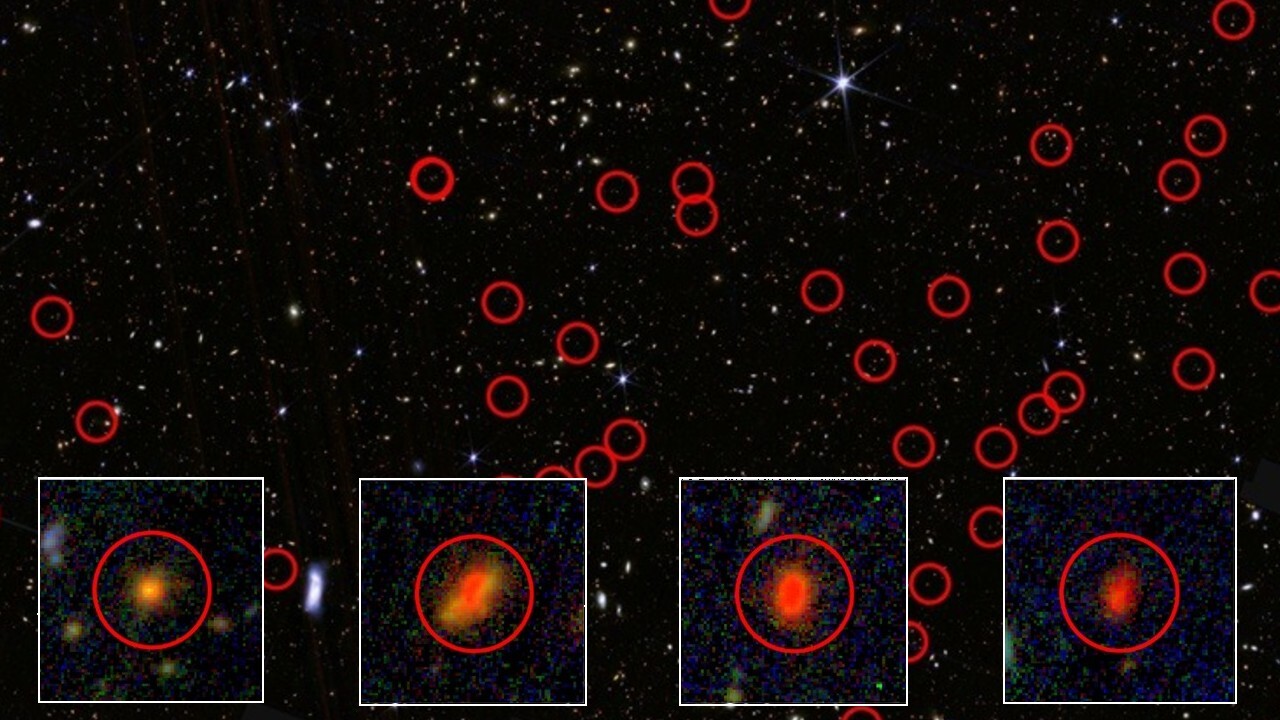 Mysterious 'dots' discovered by Webb telescope may be the first stars in the universe on the verge of collapse
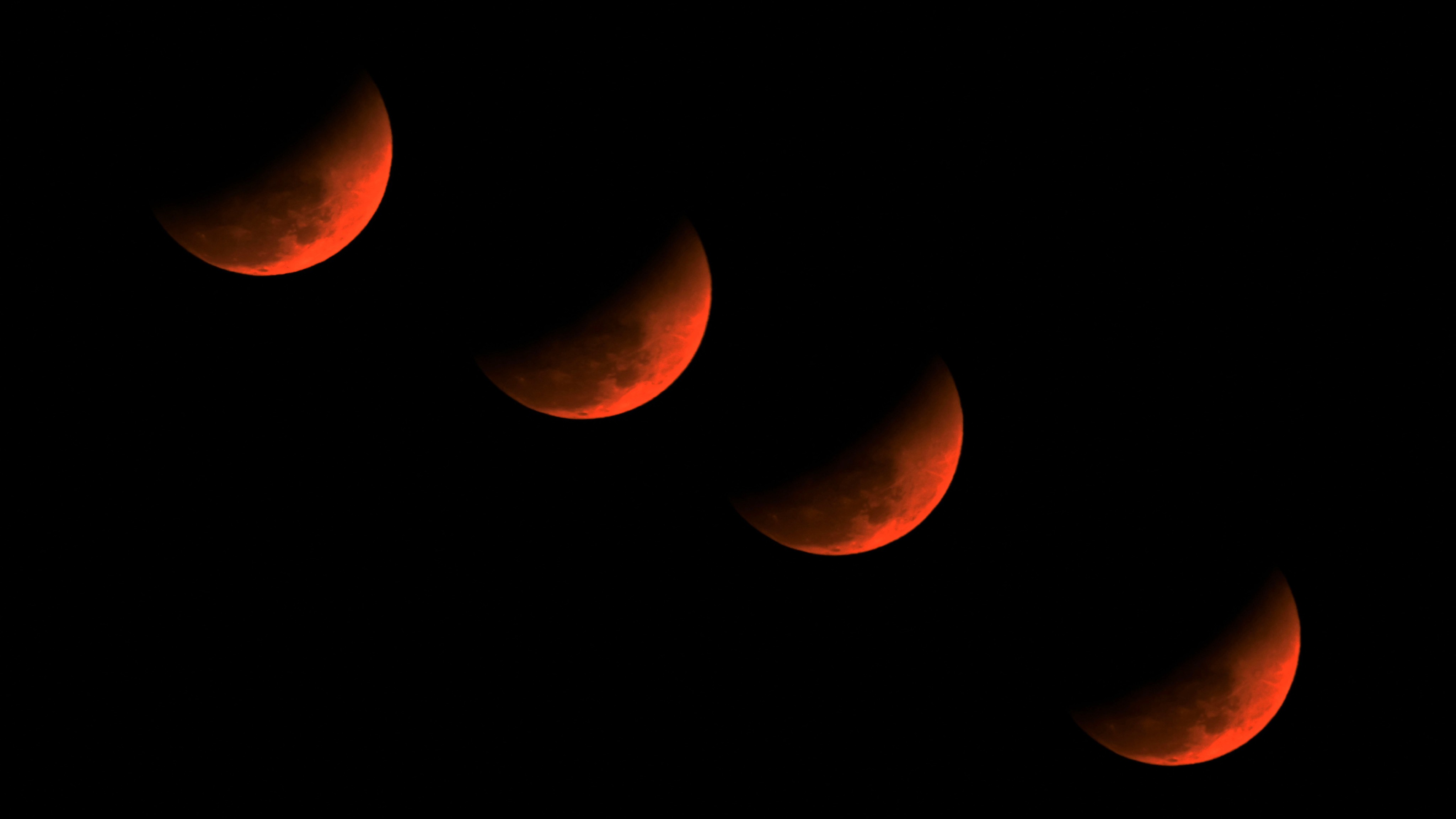 'Blood moon' total eclipse dazzles millions around the world (photos)
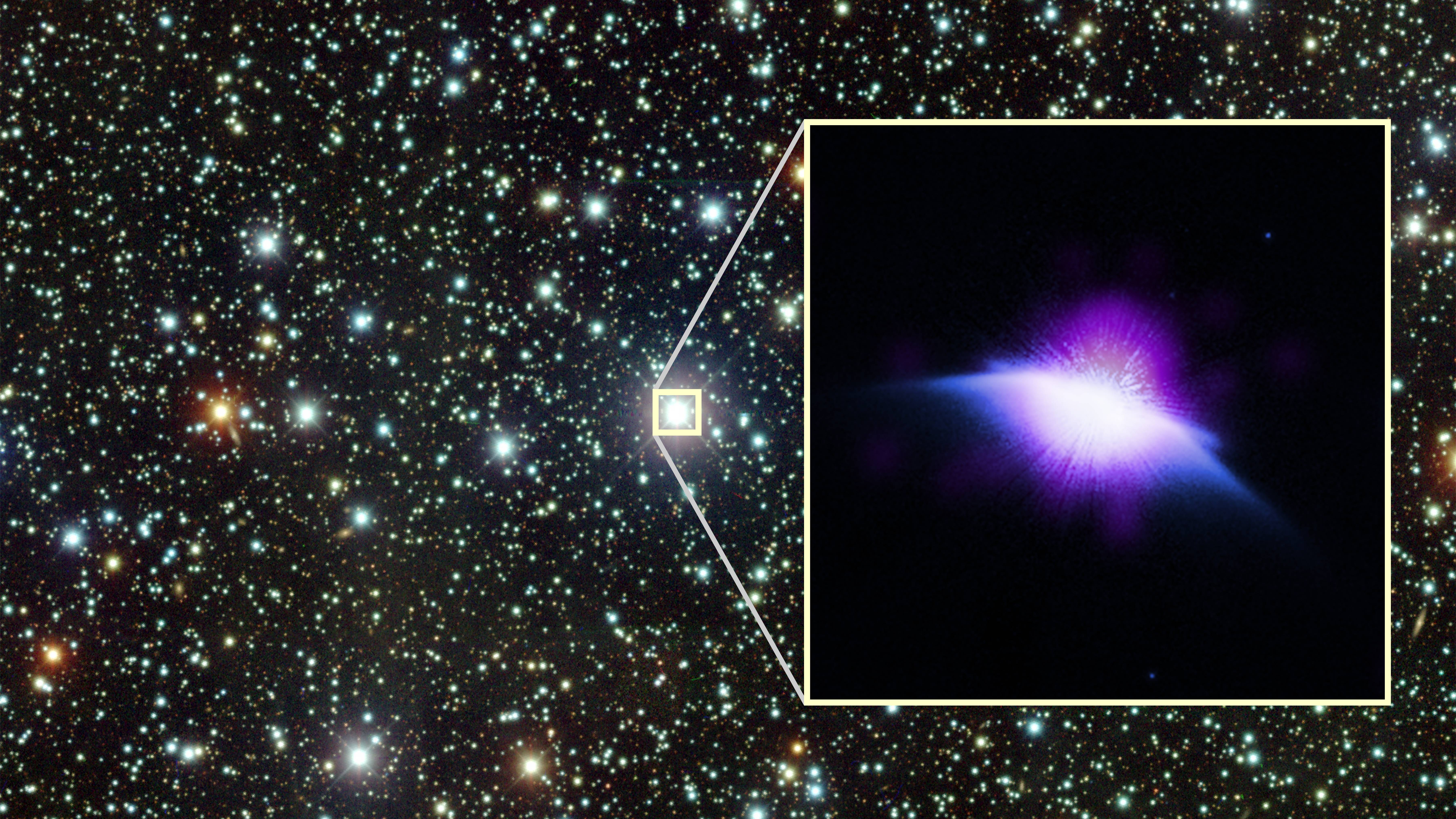 NASA telescope spots first alien 'astrosphere' around a sun-like star: Space photo of the week
Latest in Features
'Exposed Cranium' leaks its gory secrets in new James Webb telescope images: Space photo of the week
NASA telescope spots first alien 'astrosphere' around a sun-like star: Space photo of the week
Latest in Features
'Exposed Cranium' leaks its gory secrets in new James Webb telescope images: Space photo of the week
 Why is mercury a liquid?
 Ancient 'alien-like' skulls have been found on every continent but Antarctica. Anthropologists are starting to figure out why.
 Why aren't mammals as colorful as reptiles, birds or fish?
 3 rivers merge into striking half-and-half waterway in Guyana
 'We're starting to find a lot more weirdness': These strange animals can control their body heat
LATEST ARTICLES
'We're starting to find a lot more weirdness': These strange animals can control their body heat
LATEST ARTICLES- 1Why aren't mammals as colorful as reptiles, birds or fish?
- 2Enormous 3D map of the universe shows brilliant 'sea of light' near the cosmic dawn
- 3'It could revolutionize, completely, the way we treat depression': Researchers are exploring promising immune therapy for treating psychiatric symptoms
- 4'The warming trend nearly doubled after 2014': The rate of global warming has accelerated more in the past decade than ever before
- 5Anthropic collides with the Pentagon over AI safety — here's everything you need to know