- Space
- Astronomy
A new study suggests that "little red dots" spied by the James Webb Space Telescope could be the universe's short-lived first generation of gigantic stars, challenging an existing theory.
When you purchase through links on our site, we may earn an affiliate commission. Here’s how it works.
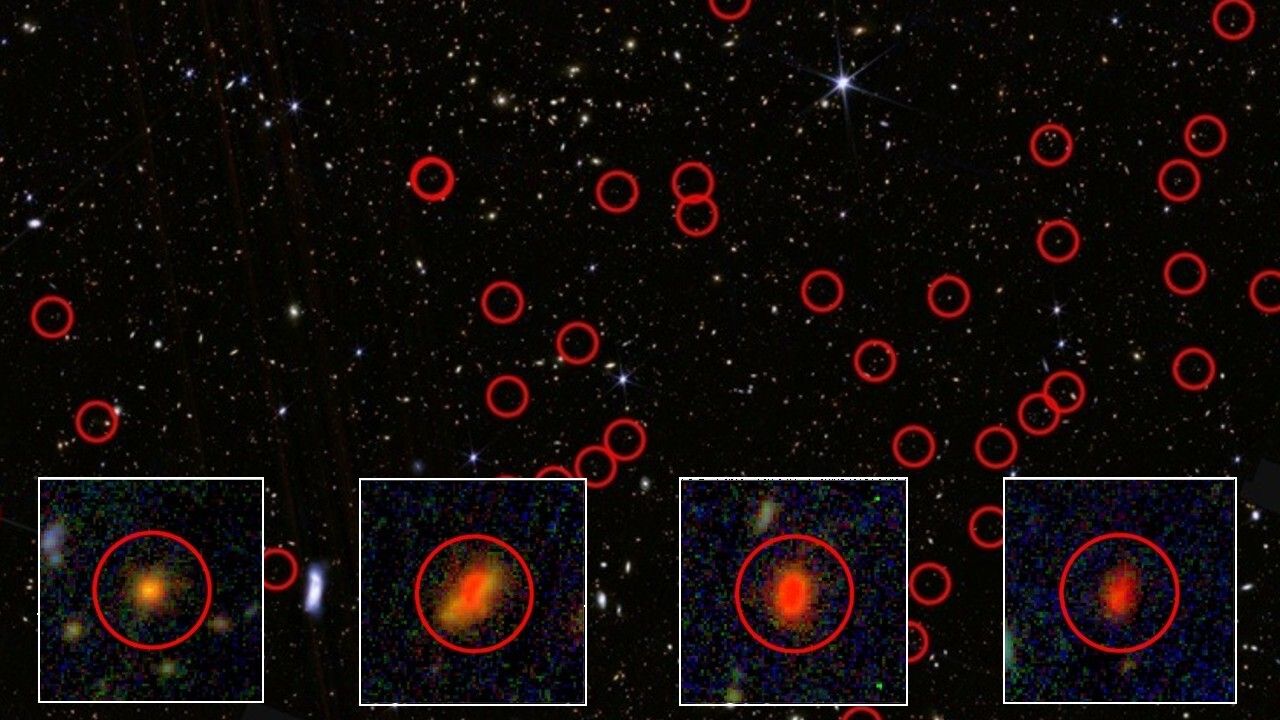
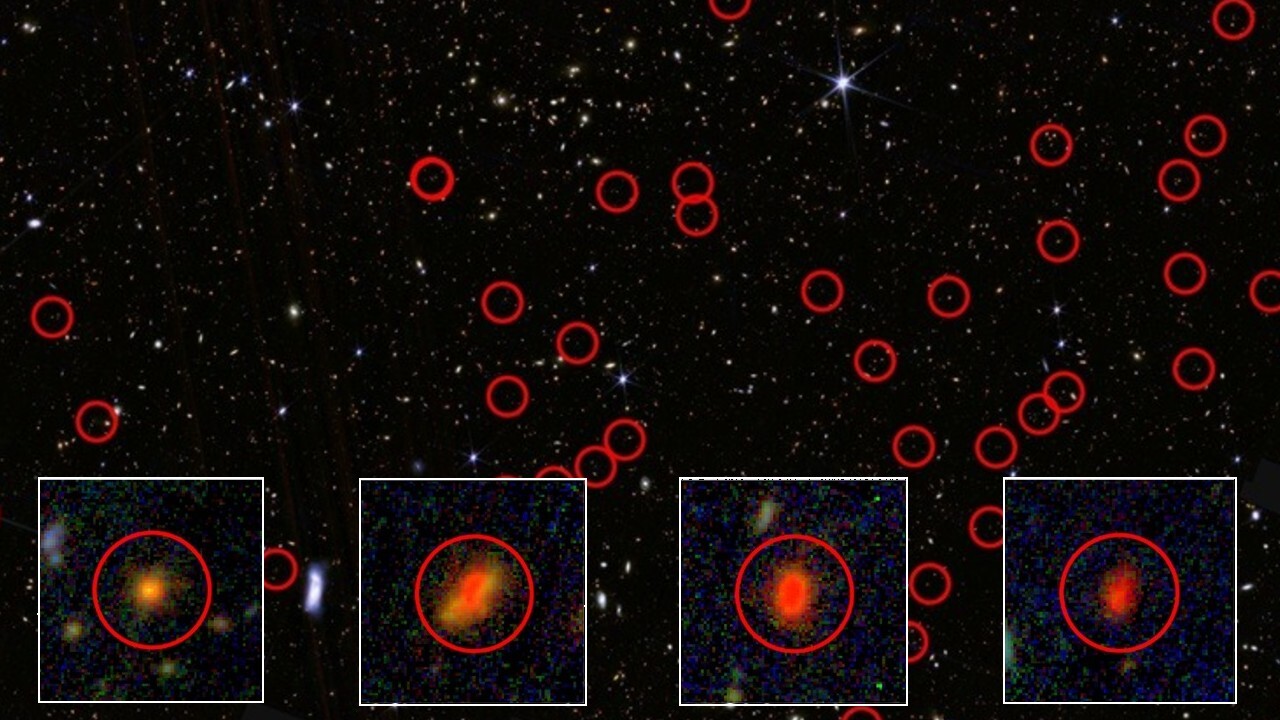 A sampling of "little red dots" (circled) spotted in James Webb Space Telescope surveys.
(Image credit: Bangzheng "Tom" Sun)
A sampling of "little red dots" (circled) spotted in James Webb Space Telescope surveys.
(Image credit: Bangzheng "Tom" Sun)
- Copy link
- X
Get the world’s most fascinating discoveries delivered straight to your inbox.
Become a Member in Seconds
Unlock instant access to exclusive member features.
Contact me with news and offers from other Future brands Receive email from us on behalf of our trusted partners or sponsors By submitting your information you agree to the Terms & Conditions and Privacy Policy and are aged 16 or over.You are now subscribed
Your newsletter sign-up was successful
Want to add more newsletters?

Delivered Daily
Daily Newsletter
Sign up for the latest discoveries, groundbreaking research and fascinating breakthroughs that impact you and the wider world direct to your inbox.
Signup +
Once a week
Life's Little Mysteries
Feed your curiosity with an exclusive mystery every week, solved with science and delivered direct to your inbox before it's seen anywhere else.
Signup +
Once a week
How It Works
Sign up to our free science & technology newsletter for your weekly fix of fascinating articles, quick quizzes, amazing images, and more
Signup +
Delivered daily
Space.com Newsletter
Breaking space news, the latest updates on rocket launches, skywatching events and more!
Signup +
Once a month
Watch This Space
Sign up to our monthly entertainment newsletter to keep up with all our coverage of the latest sci-fi and space movies, tv shows, games and books.
Signup +
Once a week
Night Sky This Week
Discover this week's must-see night sky events, moon phases, and stunning astrophotos. Sign up for our skywatching newsletter and explore the universe with us!
Signup +Join the club
Get full access to premium articles, exclusive features and a growing list of member rewards.
Explore An account already exists for this email address, please log in. Subscribe to our newsletterAstronomers may have found evidence that some of the mysterious "little red dots" discovered by the James Webb Space Telescope (JWST) are not black holes, as previously proposed, but rather gigantic stars from the beginning of the universe.
The team made the discovery by developing a simplified model of supermassive ancient stars — the potential "parents" of the first supermassive black holes in the universe.
You may like-
 James Webb telescope saw black holes emerging from 'cocoons' near the dawn of time
-
 Rarrr! James Webb telescope spots 'monster stars' leaking nitrogen in the early universe
-
 James Webb telescope may have spotted the earliest supernova in the universe
But the evidence has not been straightforward. The objects are extremely tiny — smaller than expected for typical galaxies. And so far, they show no clear X-ray emission, which is the primary signature of actively feeding black holes. Their spectra also lack strong metal emission lines beyond hydrogen and helium, hinting that the surrounding gas may be chemically primitive, unlike the metal-rich regions typically seen around actively feeding black holes.
This motivated Devesh Nandal and Avi Loeb of the Harvard and Smithsonian Center for Astrophysics (CfA) to explore a different possibility: What if these compact objects are actually supermassive stars caught just before they collapsed into black holes?
"If these little red dots now have no X-rays, they don't show any of these other metal lines, and if supermassive stars can form and exist, then we have shown that such stars will naturally produce the features of these little red dots," Nandal, a postdoctoral researcher at CfA and lead author of the study, told Live Science. "For the very first time, we think we're not looking at some dead signature of a star."
The team's research was published Feb. 5 in The Astrophysical Journal.
Sign up for the Live Science daily newsletter nowContact me with news and offers from other Future brandsReceive email from us on behalf of our trusted partners or sponsorsBy submitting your information you agree to the Terms & Conditions and Privacy Policy and are aged 16 or over.Monster ancestors
Supermassive stars — which Nandal and colleagues have previously called “monster stars” — are extremely massive stars formed mainly from primordial gas, mostly helium and hydrogen, in the early universe. They are classified as the first generation of stars, or Population III stars. Some models suggest these early stars could grow to thousands to a million times the mass of the sun. When these stars die, they transform into supermassive black holes.
To explain the extreme brightness of the little red dots, astronomers developed a detailed model of a metal-free supermassive star with close to a million solar masses. The team compared their simulations with the features of two little red dots, dubbed MoM-BH*-1 and The Cliff, found around 650 million years and 1.8 billion years after the Big Bang, respectively. The supermassive star model matched not only their extreme brightness but also some important features in their spectra (the different wavelengths of light they emit).
One unique feature of the little red dots is a distinctive "V-shaped" dip in their spectra. Some interpretations suggest this shape occurs because dust absorbs light, which gives the object a reddish appearance.
You may like-
James Webb telescope may have spotted the earliest supernova in the universe
-
 'A real revolution': The James Webb telescope is upending our understanding of the biggest, oldest black holes in the universe
-
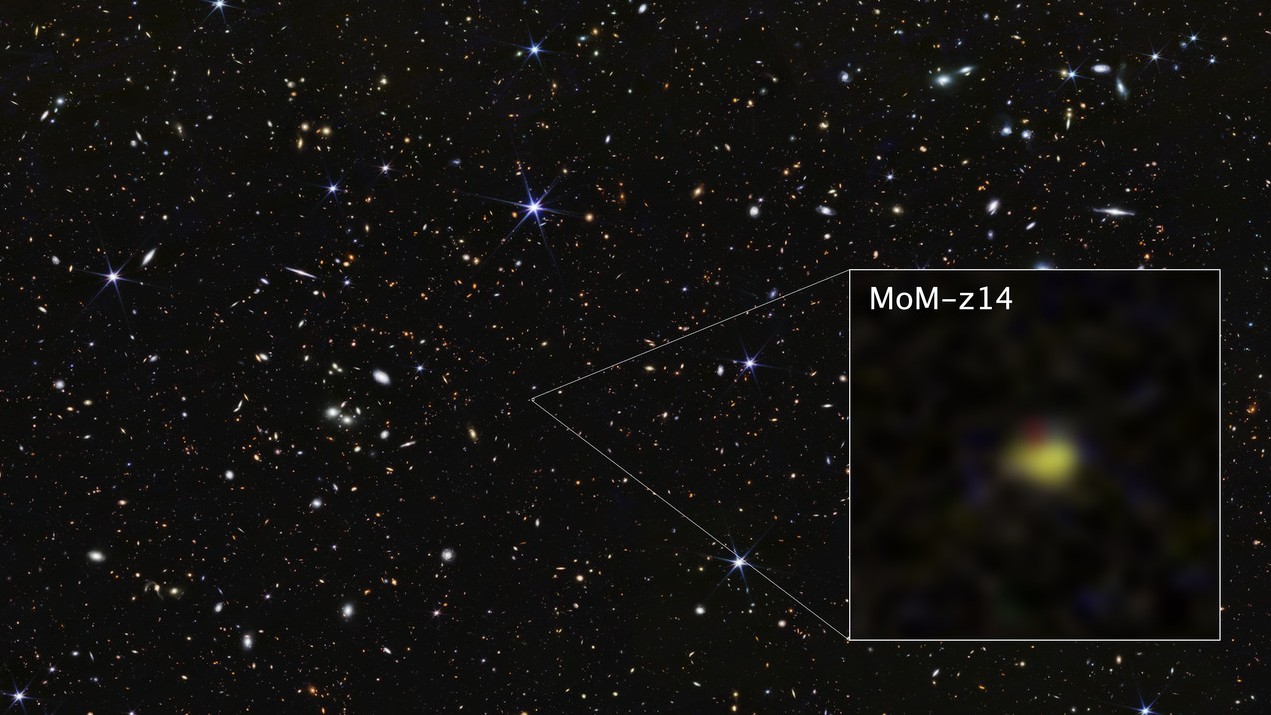 James Webb telescope breaks own record, discovering farthest known galaxy in the universe
According to the new model, this shape is produced by a star's atmosphere, or outer layer. So, instead of dust altering the light, the star's own atmosphere creates the effect.
"If supermassive stars are real, which we think they are because Population III stars should be real, then a little red dot would be the perfect place for them to hide," Nandal said.
He suggested the V-shaped dip and the reddish appearance could also be linked to the star's mass loss, somewhat analogous to coronal mass ejections from the sun. But in this scenario, material expelled from the star forms a compact, shell-like structure around it. The mechanism of this mass loss is not fully understood. The team is working to improve the models of stars' outer atmospheres. They are also testing if pulsations — rhythmic expansions and contractions — could lift material off the stars' surfaces, creating a detached shell of gas that cools and reddens the emitted light.
"The study works well as a theoretical exercise," Daniel Whalen, a senior lecturer at the University of Portsmouth Institute of Cosmology and Gravitation who wasn't involved in the study, told Live Science. "It shows that a supermassive star can reproduce some features of a little-red-dot spectrum."
Astronomers estimate that a star this massive would remain bright for only about 10,000 years. If the star were less massive — between 10,000 to 100,000 solar masses — then it would shine for up to a million years. The reason is simple: The more massive the star, the faster it burns through its nuclear fuel.
If little red dots are supermassive stars in their final moments before collapsing into black holes, that leaves an even shorter window for observation. The team noted that the requirements of extreme mass and a short lifetime are why not all little red dots can be explained by the new model.
"That's an extremely short window," Whalen said. "It makes it hard to explain how around 400 to 500 little red dots were discovered if they have short lives."
This or that?
Another leading explanation for the little red dots involves accreting black holes, possibly formed from the direct collapse of hydrogen gas clouds in the early universe, without first forming normal stars. Whalen is skeptical that the supermassive-star model offers an advantage over that theory. "I don't see that it provides a clear benefit over black hole interpretations," he noted.
"If these objects are accreting black holes, at some point you might expect X-rays to leak out," Nandal explained. "Detecting clear X-ray activity would strongly favor the AGN interpretation."
Black holes that are undergoing chaotic feeding or explosions should exhibit some variability in their light output. So far, however, no clear brightness variability has been observed among little red dots. Detection of some flickering would favor AGN activity and essentially rule out supermassive stars, as these stars would emit light more steadily.
Detailed spectroscopic measurements showing the abundance of chemicals around little red dots would help support or rule out the supermassive-stars interpretation.
RELATED STORIES—Black hole butterflies? James Webb telescope spots dozens of black hole 'cocoons' in early universe.
—The James Webb telescope found hundreds of 'little red dots' in the ancient universe. We still don't know what they are.
—'Not so exotic anymore': The James Webb telescope is unraveling the truth about the universe's first black holes
"The answer is really in the ingredients — what is this gas made of?" Nandal said. Previous simulations have shown that supermassive stars contaminate their surroundings with enormous amounts of nitrogen via nuclear reactions. On the other hand, strong neon lines would be more indicative of AGN activity.
Whalen noted that if black holes are present, any X-rays they produced could simply be absorbed by surrounding dust. Radio emissions from these black holes, however, could pass through dense hydrogen clouds and dust and escape into space.
That means highly sensitive radio observations from facilities such as the Square Kilometre Array or the next-generation Very Large Array could provide a decisive test. "If little red dots really are powered by shrouded direct-collapse black holes, the radio waves will get out, and we'll detect them," Whalen said.
Article SourcesNandal, D., & Loeb, A. (2026). Supermassive stars match the spectral signatures of JWST’s little red Dots. The Astrophysical Journal, 998(1), 124. https://doi.org/10.3847/1538-4357/ae32f3
Black hole quiz: How supermassive is your knowledge of the universe?
 Shreejaya KaranthaLive Science contributor
Shreejaya Karantha is a science writer specializing in astronomy, covering topics such as the sun, planetary science, stellar evolution, black holes, and early universe cosmology. Based in India, she works as a writer and research specialist at The Secrets of the Universe, where she contributes to scripts for research-based and explainer videos. Shreejaya holds a bachelor's degree in science and a master's degree in physics with a specialization in astrophysics.
View MoreYou must confirm your public display name before commenting
Please logout and then login again, you will then be prompted to enter your display name.
Logout Read more
James Webb telescope may have spotted the earliest supernova in the universe
'A real revolution': The James Webb telescope is upending our understanding of the biggest, oldest black holes in the universe
James Webb telescope breaks own record, discovering farthest known galaxy in the universe
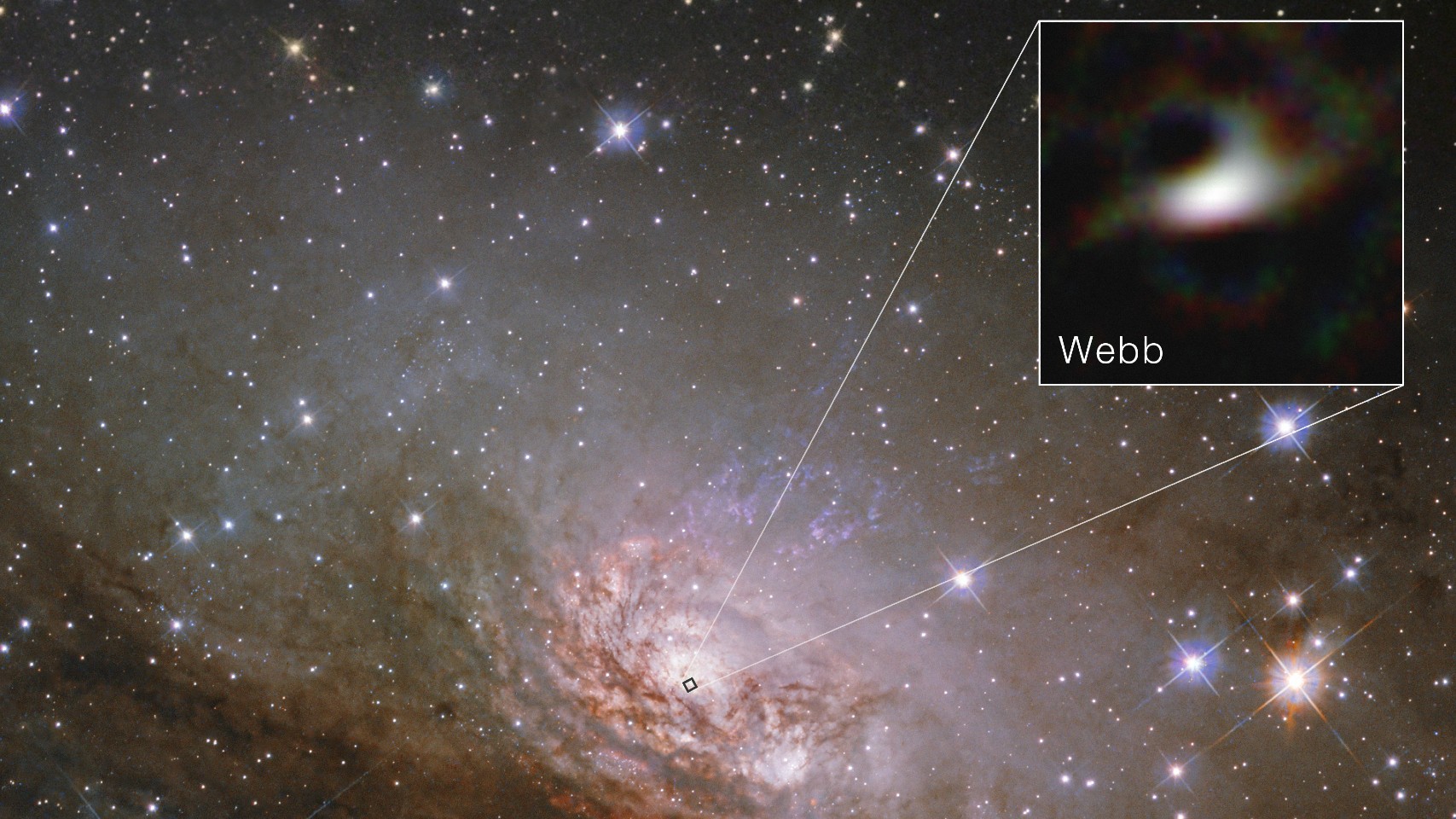 James Webb telescope reveals sharpest-ever look at the edge of a supermassive black hole
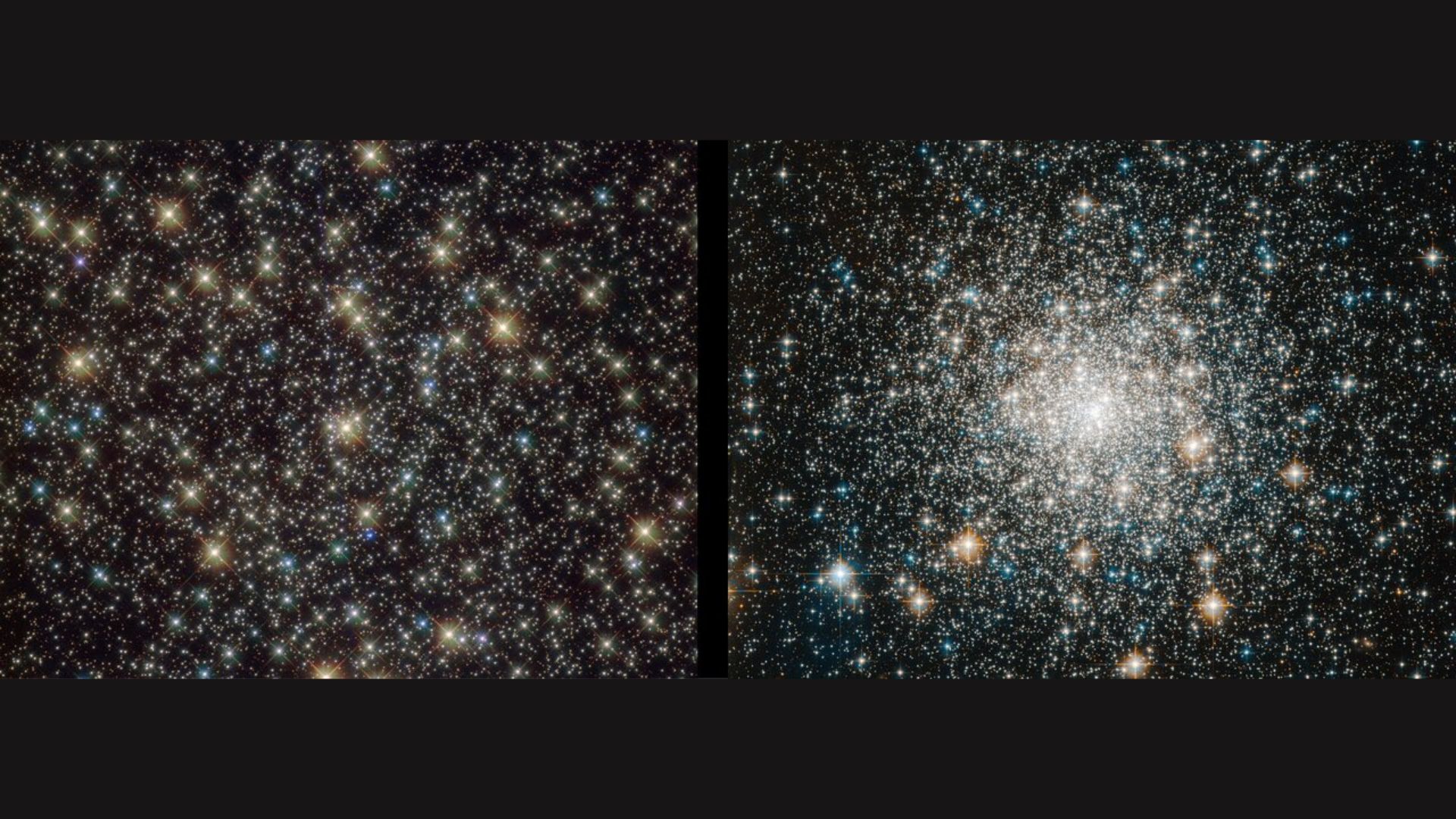 James Webb telescope solves mystery of 'forever young' vampire stars from the dawn of time
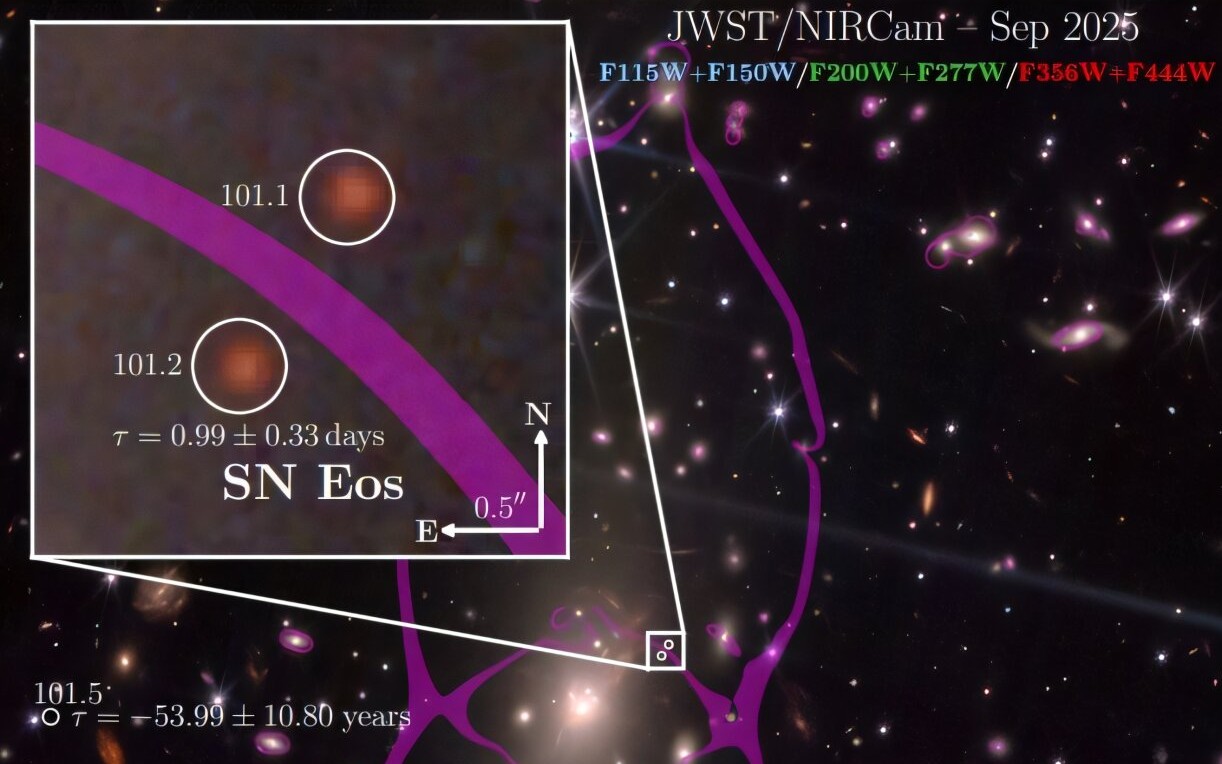 James Webb telescope discovers earliest Type II supernova in the known universe
Latest in Astronomy
James Webb telescope discovers earliest Type II supernova in the known universe
Latest in Astronomy
 'Blood moon' total eclipse dazzles millions around the world (photos)
 NASA telescope spots first alien 'astrosphere' around a sun-like star: Space photo of the week
 Science history: Stephen Hawking writes a tiny paper — and turns our understanding of black holes inside out — March 1, 1974
 Giant string of organic molecules on Mars may be one of the best signs of life yet
 The sun just experienced its first 'spotless days' in 4 years — but we're not in the clear yet
 March could be the best month for the northern lights for nearly a decade
Latest in News
March could be the best month for the northern lights for nearly a decade
Latest in News
 NASA fixes Artemis II rocket for April launch to take astronauts around moon
 Chewed-up orca fins on Russian beach point to cannibalism, and scientists say it may explain why some pods are so tight-knit
 Birds are declining faster and faster in 3 US hotspots, new study finds
 Stone Age woman was buried like a man, revealing flexible gender roles 7,000 years ago in Hungary
Mysterious 'dots' discovered by Webb telescope may be the first stars in the universe on the verge of collapse
Stone Age woman was buried like a man, revealing flexible gender roles 7,000 years ago in Hungary
Mysterious 'dots' discovered by Webb telescope may be the first stars in the universe on the verge of collapse
 Gold coin discovered by a metal detectorist in the UK may have been dropped by a Viking invader from the Great Heathen Army
LATEST ARTICLES
Gold coin discovered by a metal detectorist in the UK may have been dropped by a Viking invader from the Great Heathen Army
LATEST ARTICLES- 1NASA fixes Artemis II rocket for April launch to take astronauts around moon
- 2Birds are declining faster and faster in 3 US hotspots, new study finds
- 3'Seeing how important agriculture was for daily livelihoods, and how uncertain and precarious agriculture had become in these times, it just made me feel very passionate about working on this issue'
- 4Meet the world's smallest AI supercomputer — it packs 'doctorate-level intelligence', its makers say, and can fit into your pocket
- 5When was the last time Antarctica was ice-free?