- Archaeology
- Vikings
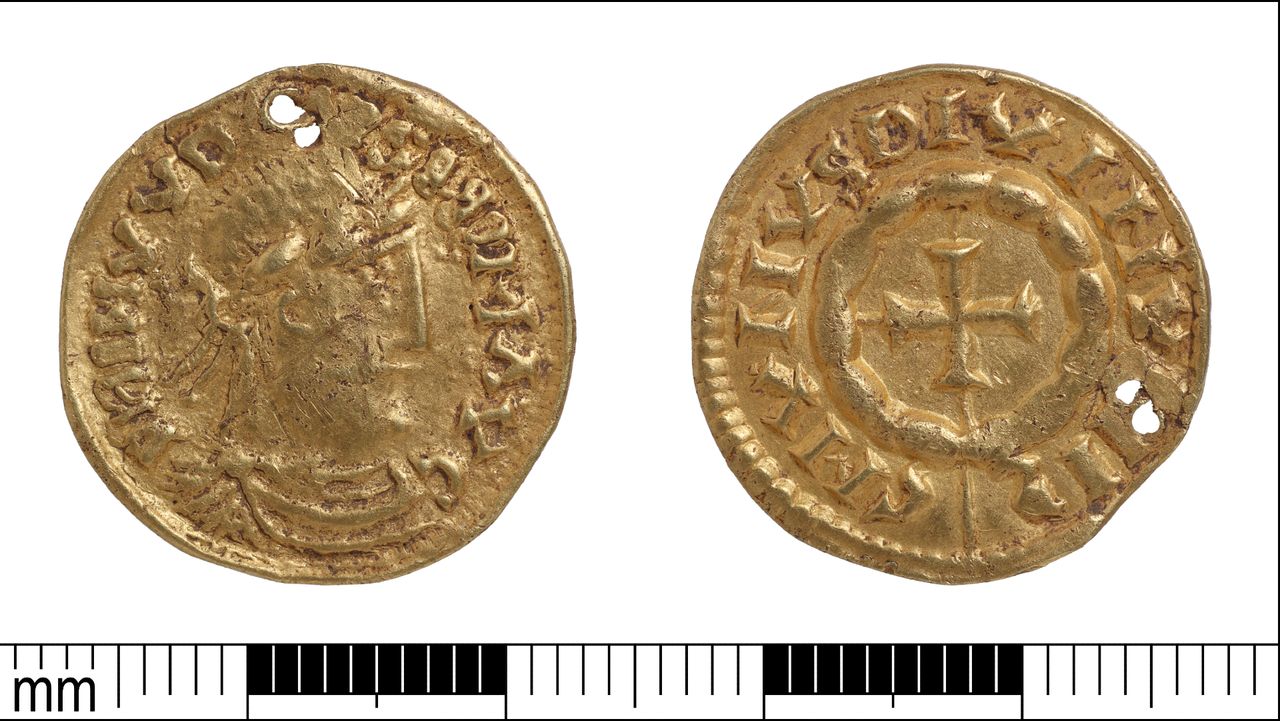
A gold coin featuring the son of Charlemagne may have been a keepsake from a Viking invader who fought in the Great Heathen Army.
When you purchase through links on our site, we may earn an affiliate commission. Here’s how it works.
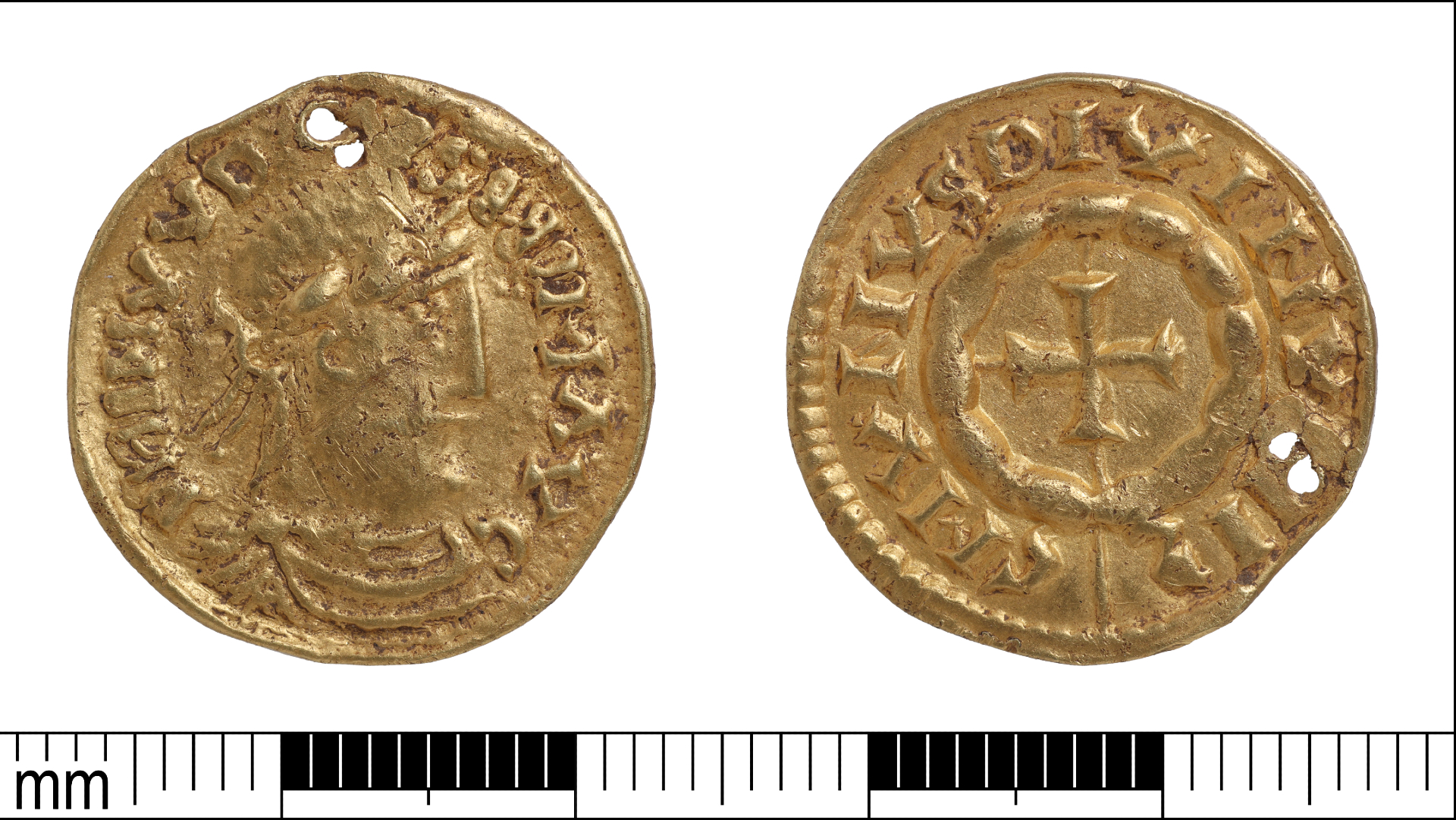 The coin has been pierced twice above the head it portrays, indicating this side was meant to face forward when it was worn as a pendant.
(Image credit: Norfolk County Council; CC BY-SA 4.0; Record ID: NMS-448BFB - EARLY MEDIEVAL pendant)
The coin has been pierced twice above the head it portrays, indicating this side was meant to face forward when it was worn as a pendant.
(Image credit: Norfolk County Council; CC BY-SA 4.0; Record ID: NMS-448BFB - EARLY MEDIEVAL pendant)
- Copy link
- X
Get the world’s most fascinating discoveries delivered straight to your inbox.
Become a Member in Seconds
Unlock instant access to exclusive member features.
Contact me with news and offers from other Future brands Receive email from us on behalf of our trusted partners or sponsors By submitting your information you agree to the Terms & Conditions and Privacy Policy and are aged 16 or over.You are now subscribed
Your newsletter sign-up was successful
Want to add more newsletters?

Delivered Daily
Daily Newsletter
Sign up for the latest discoveries, groundbreaking research and fascinating breakthroughs that impact you and the wider world direct to your inbox.
Signup +
Once a week
Life's Little Mysteries
Feed your curiosity with an exclusive mystery every week, solved with science and delivered direct to your inbox before it's seen anywhere else.
Signup +
Once a week
How It Works
Sign up to our free science & technology newsletter for your weekly fix of fascinating articles, quick quizzes, amazing images, and more
Signup +
Delivered daily
Space.com Newsletter
Breaking space news, the latest updates on rocket launches, skywatching events and more!
Signup +
Once a month
Watch This Space
Sign up to our monthly entertainment newsletter to keep up with all our coverage of the latest sci-fi and space movies, tv shows, games and books.
Signup +
Once a week
Night Sky This Week
Discover this week's must-see night sky events, moon phases, and stunning astrophotos. Sign up for our skywatching newsletter and explore the universe with us!
Signup +Join the club
Get full access to premium articles, exclusive features and a growing list of member rewards.
Explore An account already exists for this email address, please log in. Subscribe to our newsletterA gold coin minted more than 1,000 years ago as an imitation of a more famous coin may be a relic of the "Great Heathen Army" that invaded England in 865 — an invasion that led to the Viking kingdom there known as the Danelaw.
According to the Portable Antiquities Scheme, which is run by the British Museum and Amgueddfa Cymru - Museum Wales, a metal detectorist discovered the coin in 2024 in a field near Elsing, a village in Norfolk on England's east coast, which was among the areas first invaded by the Viking army.
You may like-
 Detectorists find Anglo-Saxon treasure hoard that may have been part of a 'ritual killing'
-
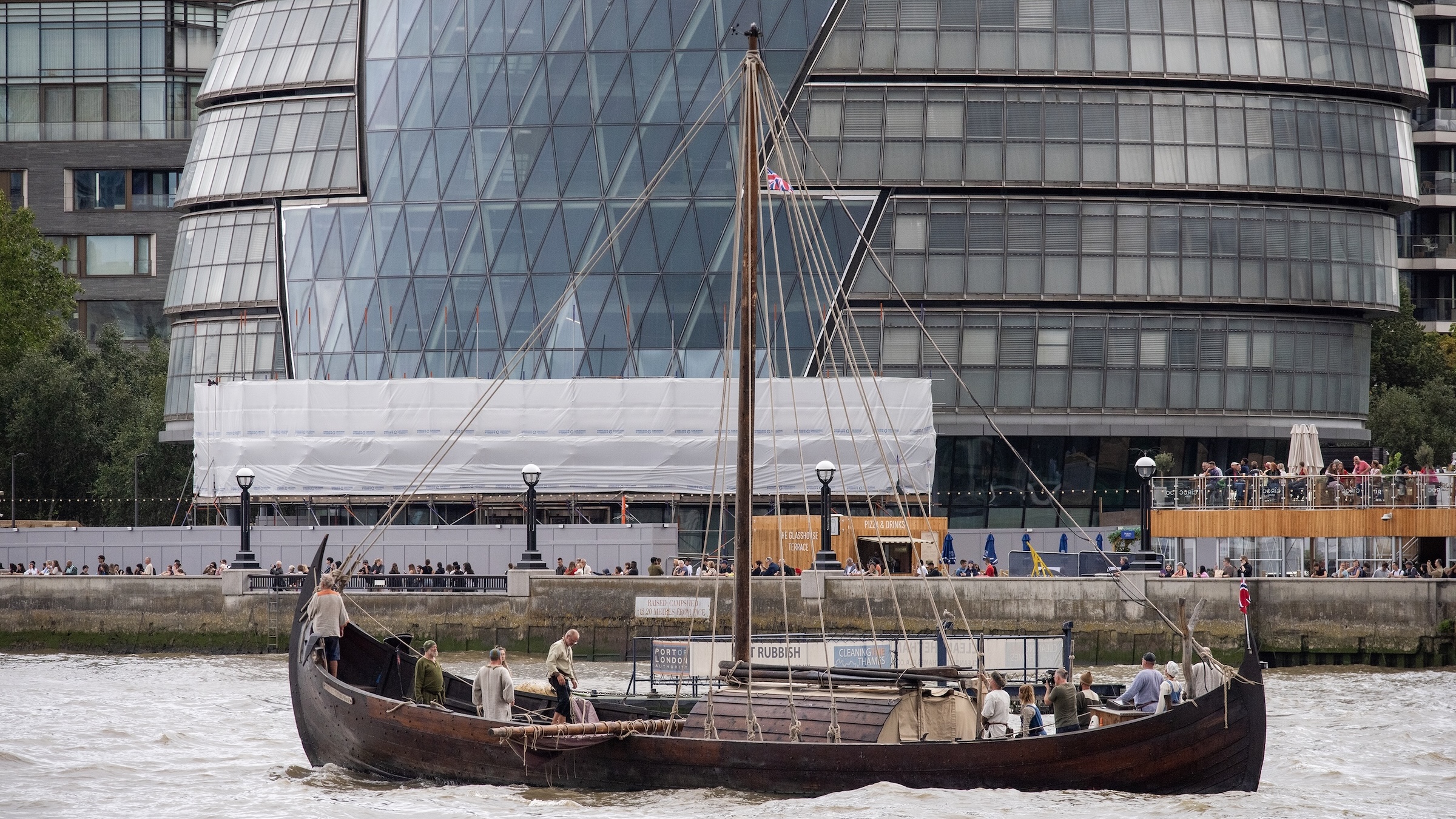 Did the Vikings reach Maine?
-
 2,300-year-old Celtic gold coins found in Swiss bog
Importantly, the coin was a solid-gold imitation of earlier "solidus" coins minted by the Carolingian emperor Louis the Pious — the son of Charlemagne — about 50 years earlier.
The original solidi were awarded to high-ranking Carolingian nobles, but the later copies — probably made in Frisia, an area now covered by the northern Netherlands and the western edge of Germany — were used as "portable wealth" throughout Scandinavia, he said.
It is likely this one was worn as an amulet by one of the Viking invaders. "The Norfolk find is a particularly fine specimen compared with most," Coupland said.
Gold pendant
The object is now going through an official inquiry to determine if it is "treasure" that must be given or sold to a museum, and Norfolk's Norwich Castle Museum has expressed interest.
Sign up for the Live Science daily newsletter nowContact me with news and offers from other Future brandsReceive email from us on behalf of our trusted partners or sponsorsBy submitting your information you agree to the Terms & Conditions and Privacy Policy and are aged 16 or over.According to its entry on the Portable Antiquities Scheme's website, the gold coin is pierced through twice above the head of the emperor Louis it portrays, which suggests the "head" side was meant to be facing forward when it was worn as a medallion.
The other side of the coin features a Christian cross, which probably wasn't favored by the Viking invader who wore it. (The Vikings and other Norse, beginning in the central Danish kingdom, didn't start converting to Christianity until the late 10th century.)
The Viking force, which the Christian English dubbed the "Great Heathen Army," began their invasion in 865 under the Danish chieftains Ivar the Boneless (it is unclear what his name means), Halfdan and Ubba. All three chieftains claimed to be sons of the legendary Viking hero and king Ragnar Lothbrok, who appeared in Norse sagas.
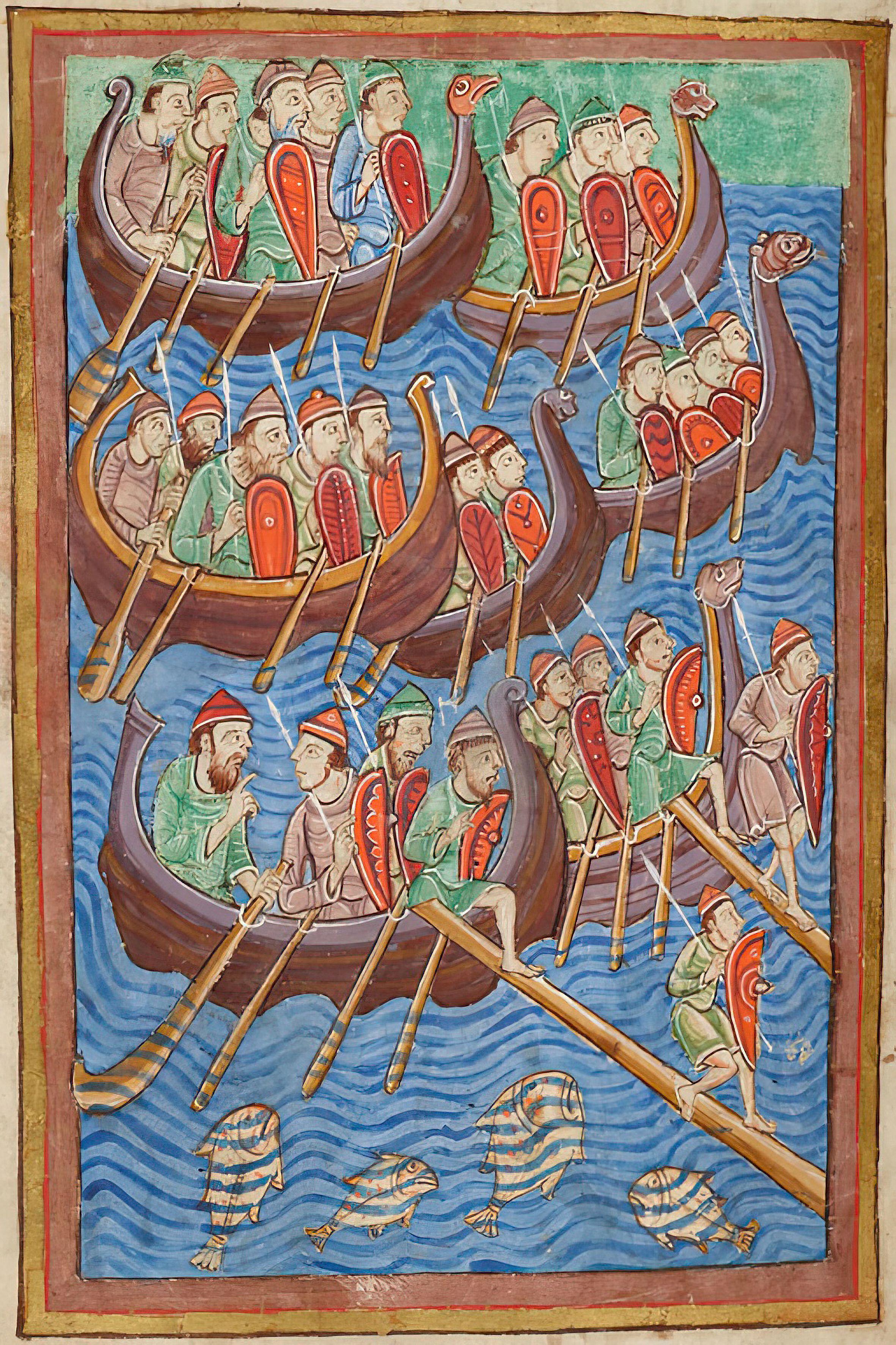
—Did the Vikings reach Maine?
—Viking Age mass grave holds mysterious mix of dismembered human remains and complete skeletons, including a 'giant' who'd had brain surgery
—1,000-year-old 'king' game piece with a distinctive hairstyle is 'as close as we will ever get to a portrait of a Viking'
Experts debate whether the army comprised as few as 1,000 Viking warriors or more than 5,000, but as the fighting continued, they were reinforced from Scandinavia in 871, and in 878, Viking leaders negotiated the Danelaw with the English king Alfred the Great.
The deal kept the invaders out of Alfred's lands and established a Viking kingdom — with unique laws — over much of eastern and northern England for more than 50 years. In the following decades, Alfred's successors once again amalgamated the Viking territories into the English kingdom, which fell to the Norman Conquest in 1066.
Viking quiz: How much do you know about these seaborne raiders, traders and explorers?
TOPICS gold Tom MetcalfeSocial Links NavigationLive Science ContributorTom Metcalfe is a freelance journalist and regular Live Science contributor who is based in London in the United Kingdom. Tom writes mainly about science, space, archaeology, the Earth and the oceans. He has also written for the BBC, NBC News, National Geographic, Scientific American, Air & Space, and many others.
View MoreYou must confirm your public display name before commenting
Please logout and then login again, you will then be prompted to enter your display name.
Logout Read more
Detectorists find Anglo-Saxon treasure hoard that may have been part of a 'ritual killing'
2,300-year-old Celtic gold coins found in Swiss bog
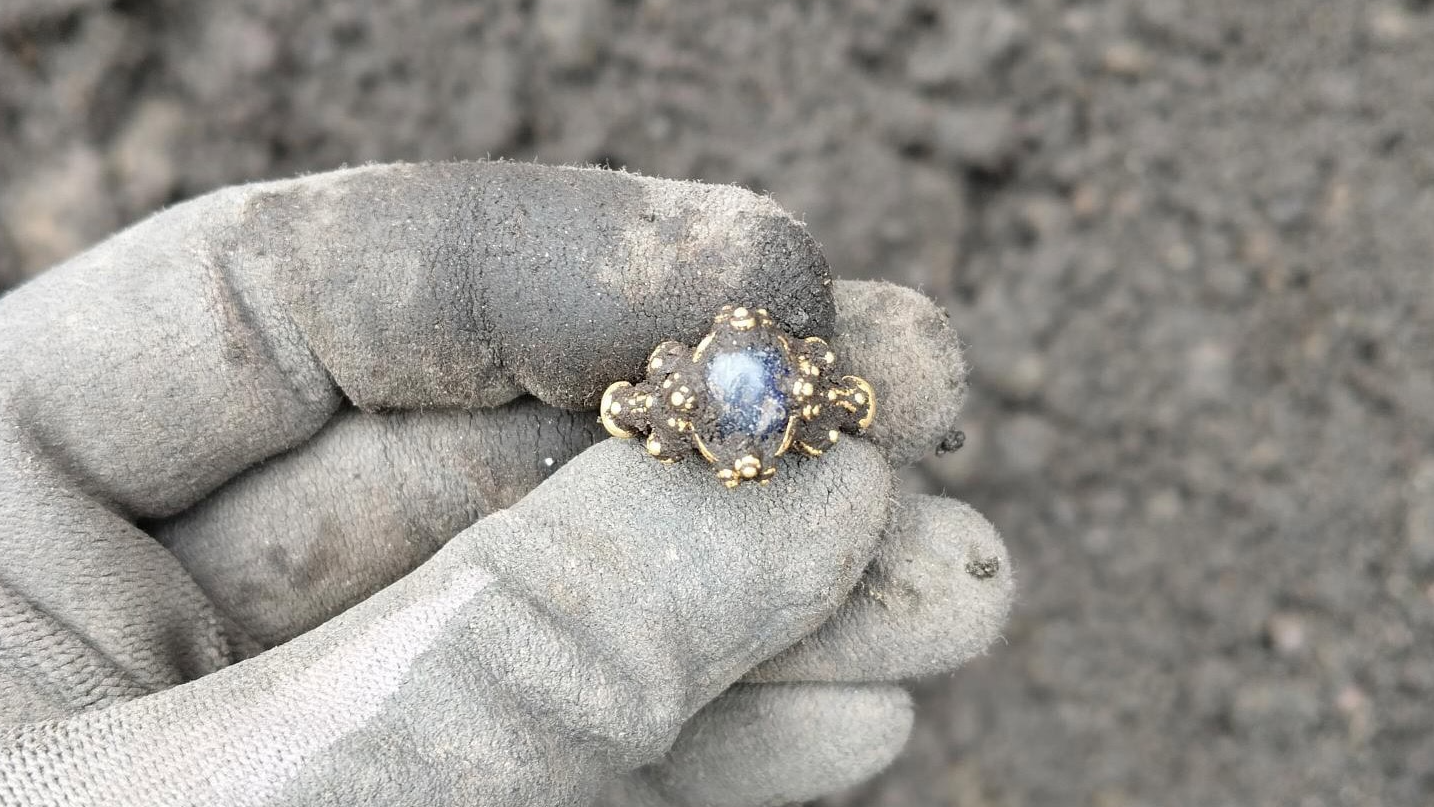 Medieval gold ring with dazzling blue gemstone discovered in Norway is a 'fantastically beautiful and rare specimen'
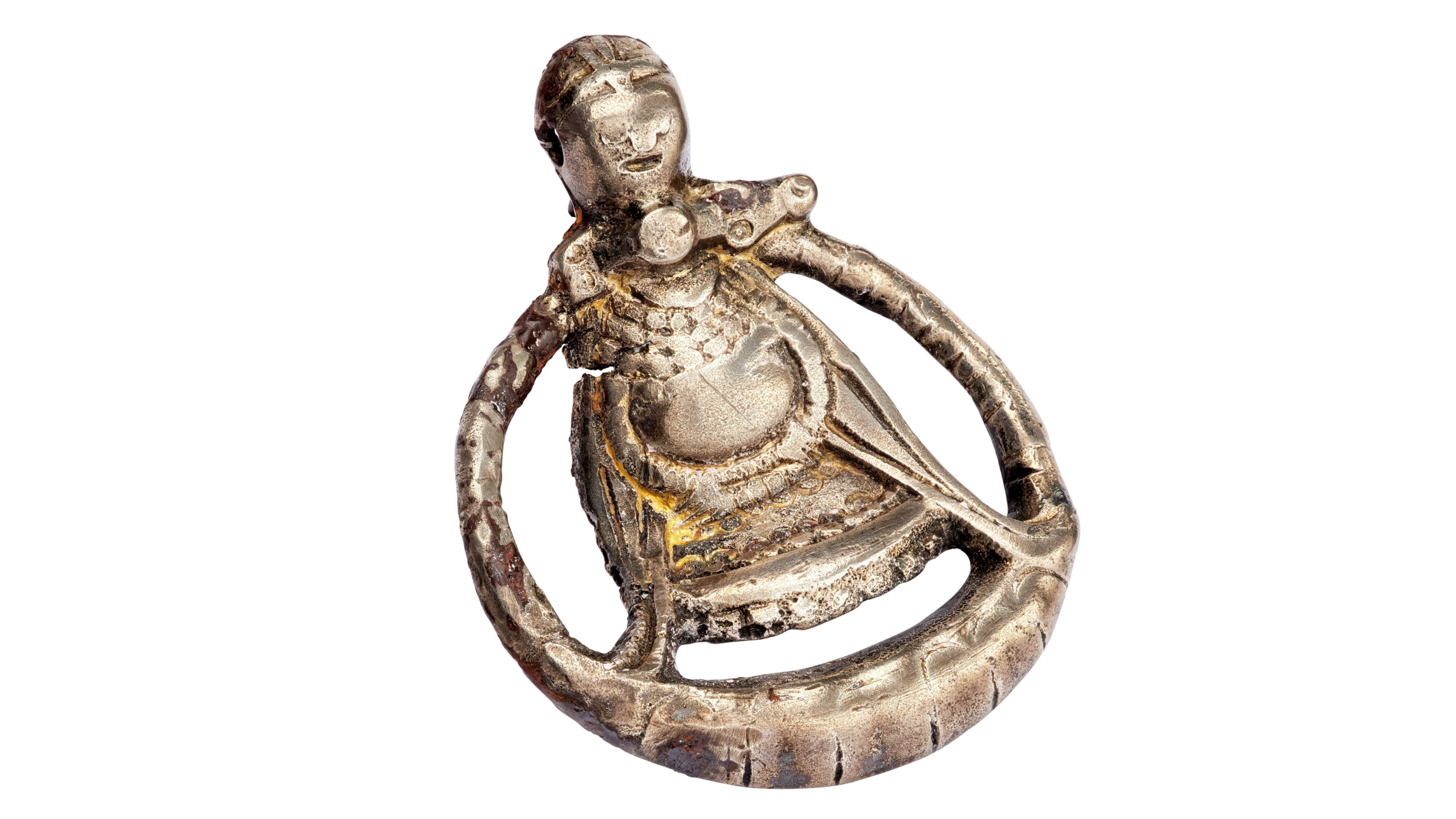 Ash Pendant: The only known depiction of a pregnant Viking woman
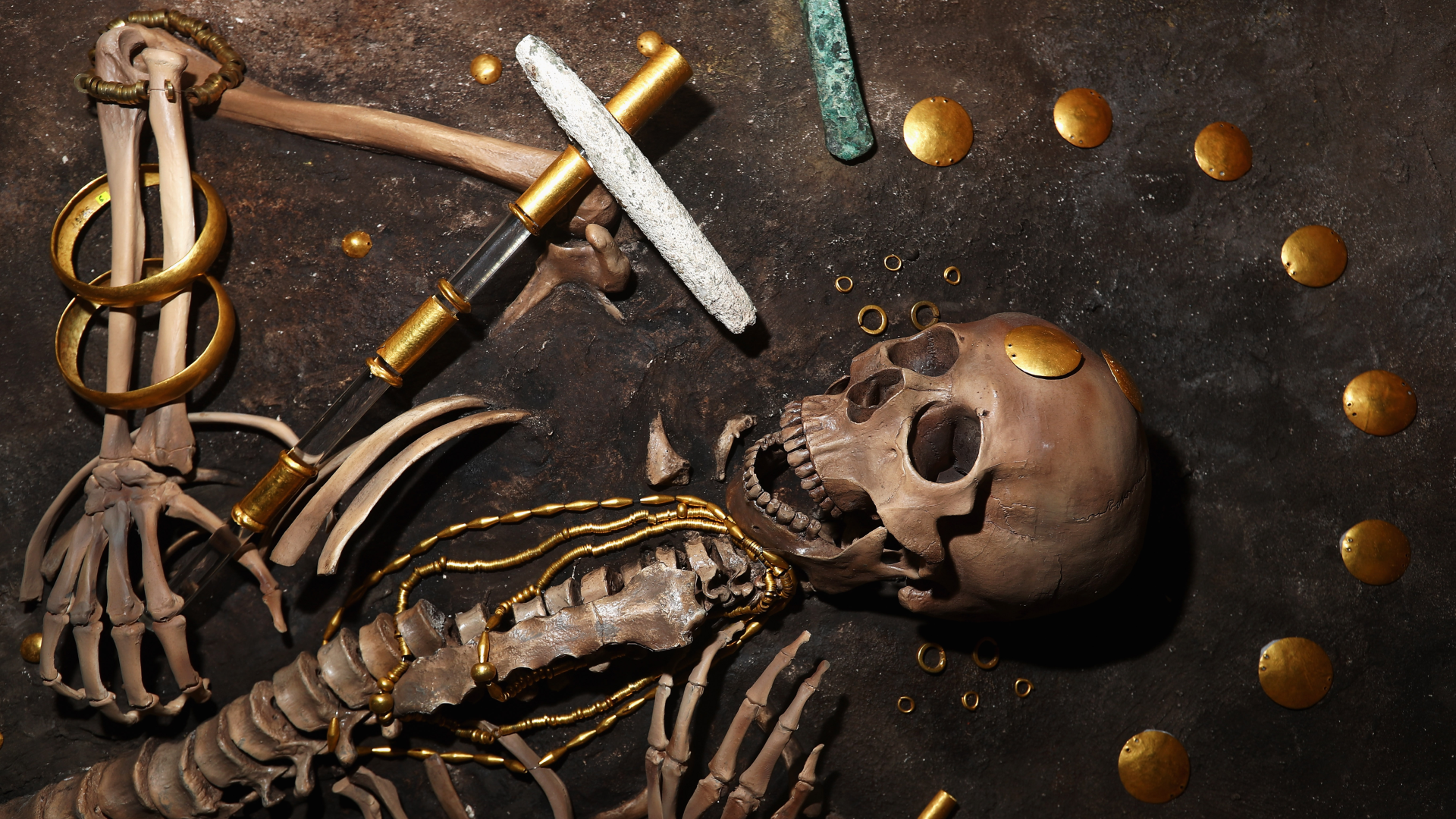 Varna Gold: Humanity's first gold jewelry was found in a cemetery with a gold 'penis sheath'
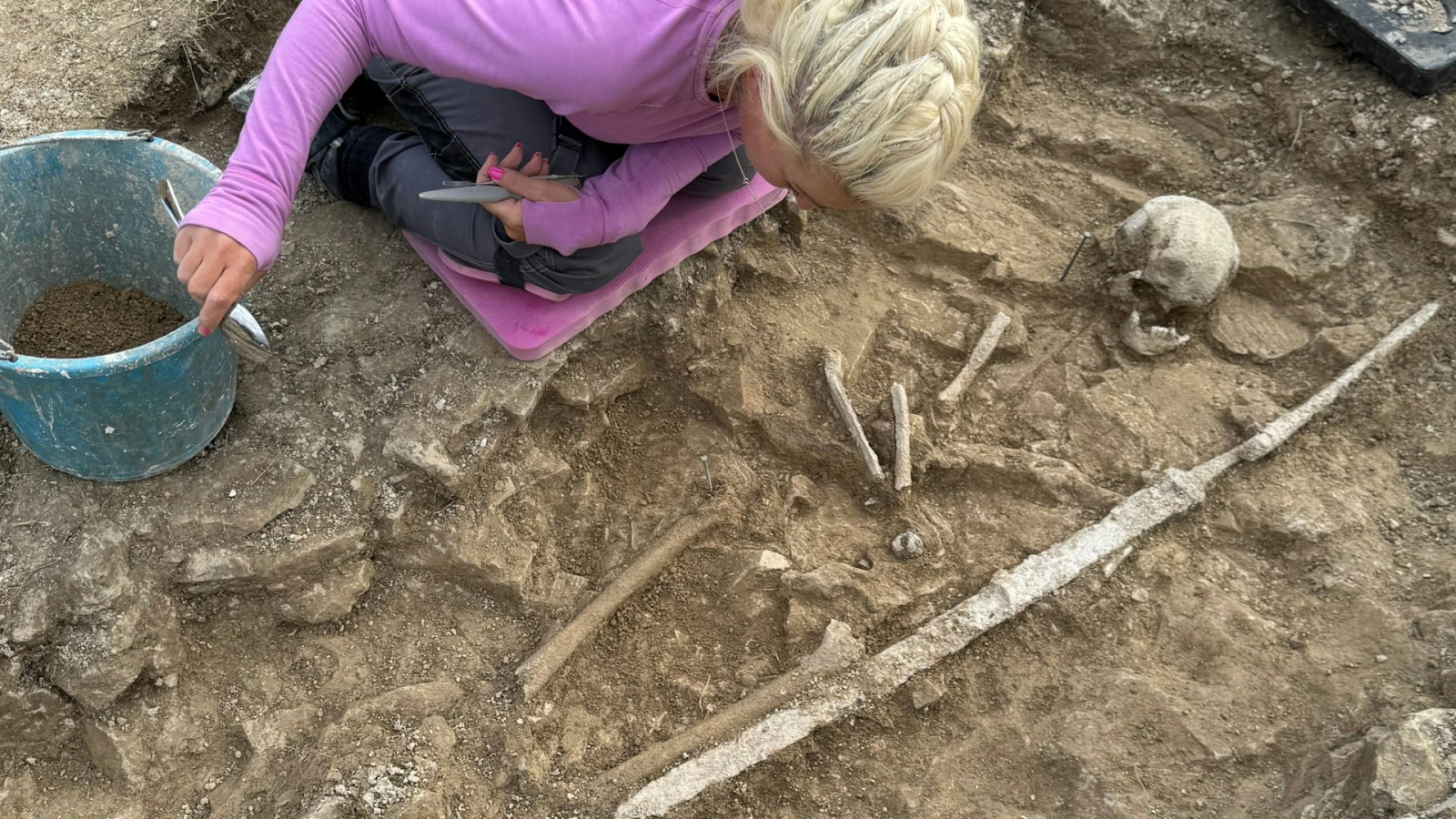 Anglo-Saxon children discovered buried with warrior gear in UK — perhaps as a nod to 'the men these children might have become'
Latest in Vikings
Did the Vikings reach Maine?
Anglo-Saxon children discovered buried with warrior gear in UK — perhaps as a nod to 'the men these children might have become'
Latest in Vikings
Did the Vikings reach Maine?
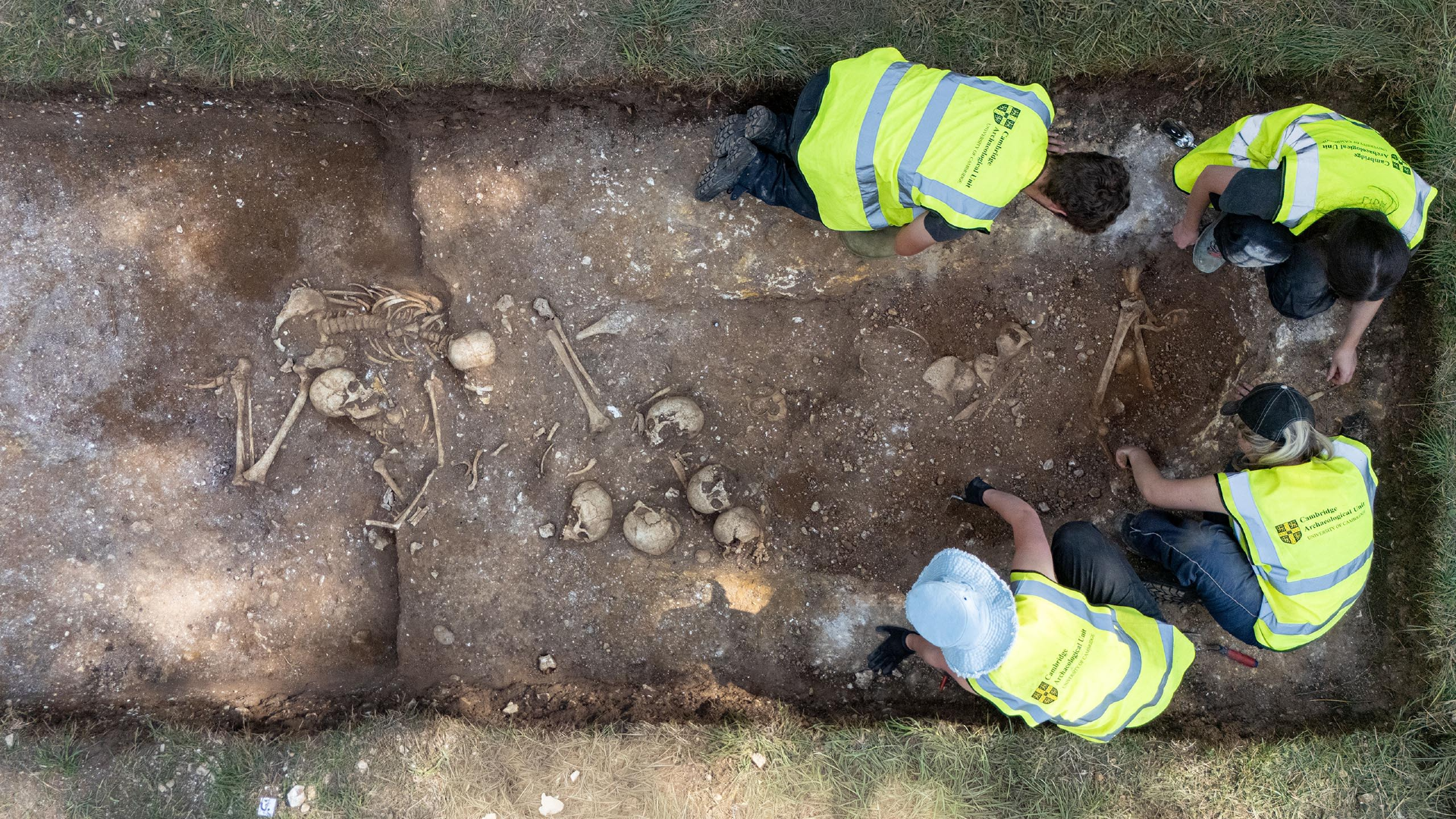 Viking Age mass grave holds mysterious mix of dismembered human remains and complete skeletons, including a 'giant' who'd had brain surgery
Ash Pendant: The only known depiction of a pregnant Viking woman
Viking Age mass grave holds mysterious mix of dismembered human remains and complete skeletons, including a 'giant' who'd had brain surgery
Ash Pendant: The only known depiction of a pregnant Viking woman
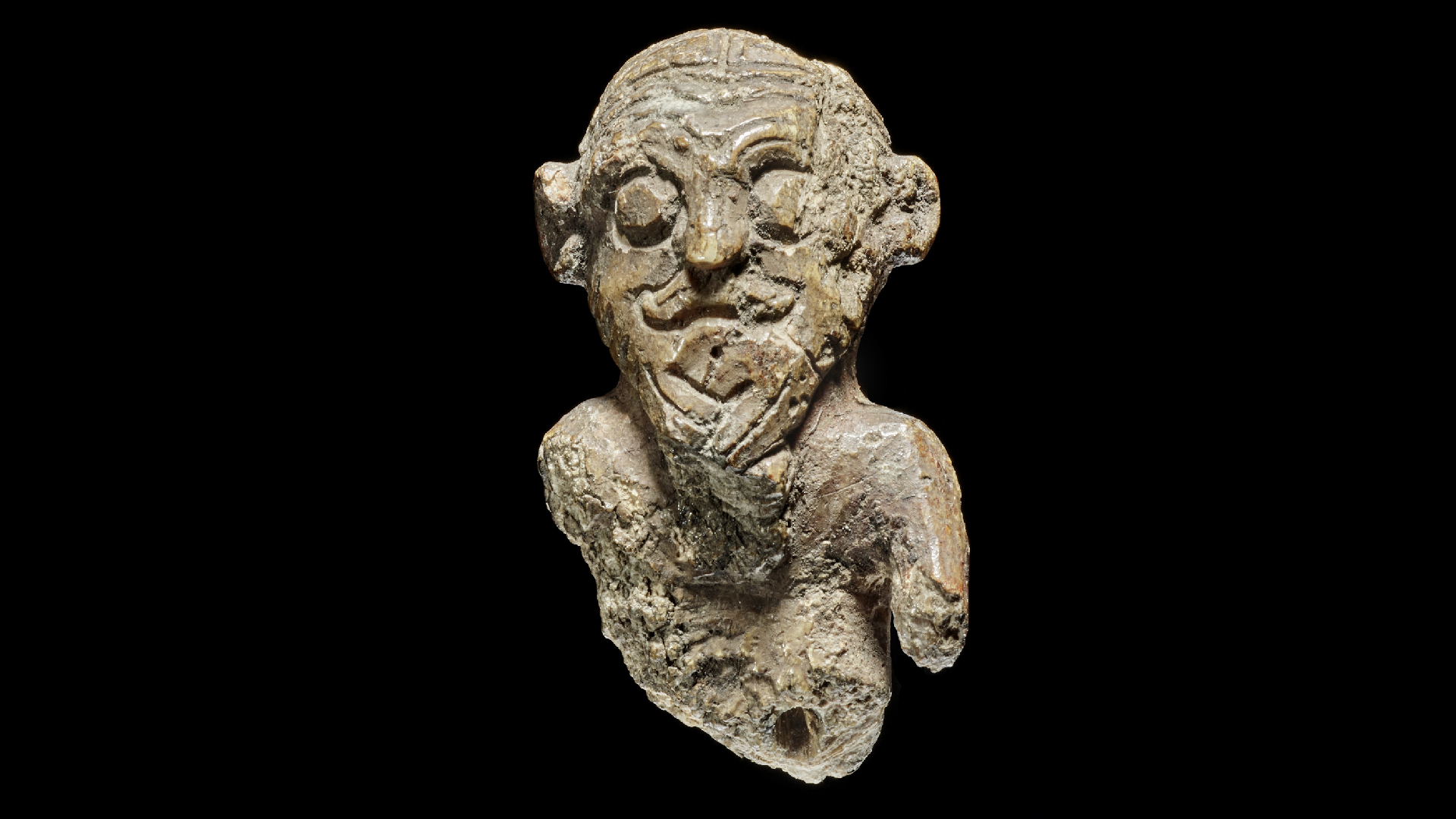 1,000-year-old 'king' game piece with a distinctive hairstyle is 'as close as we will ever get to a portrait of a Viking'
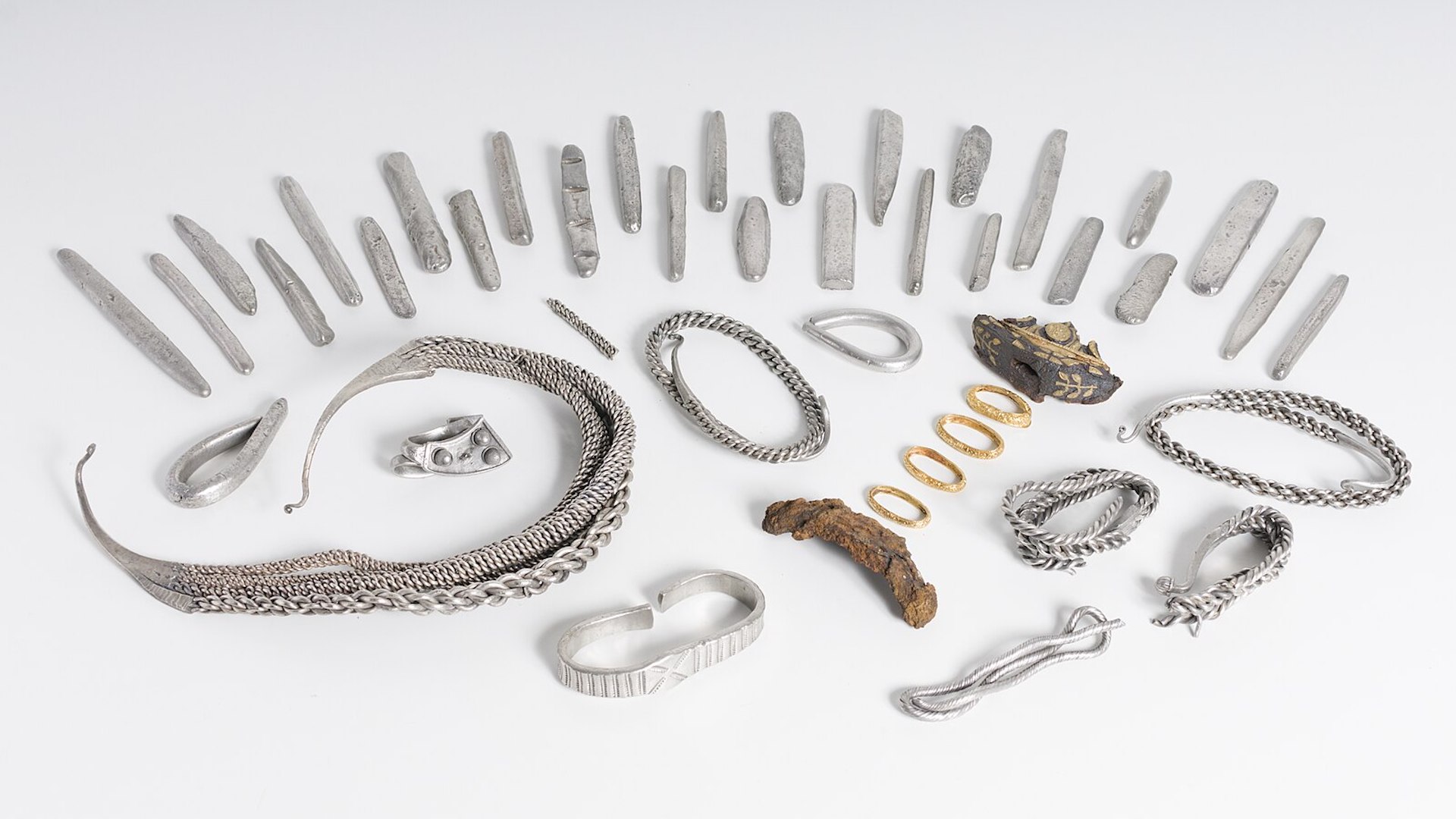 1,100-year-old Viking hoard reveals raiding wealthy only 'part of the picture' — they traded with the Middle East too
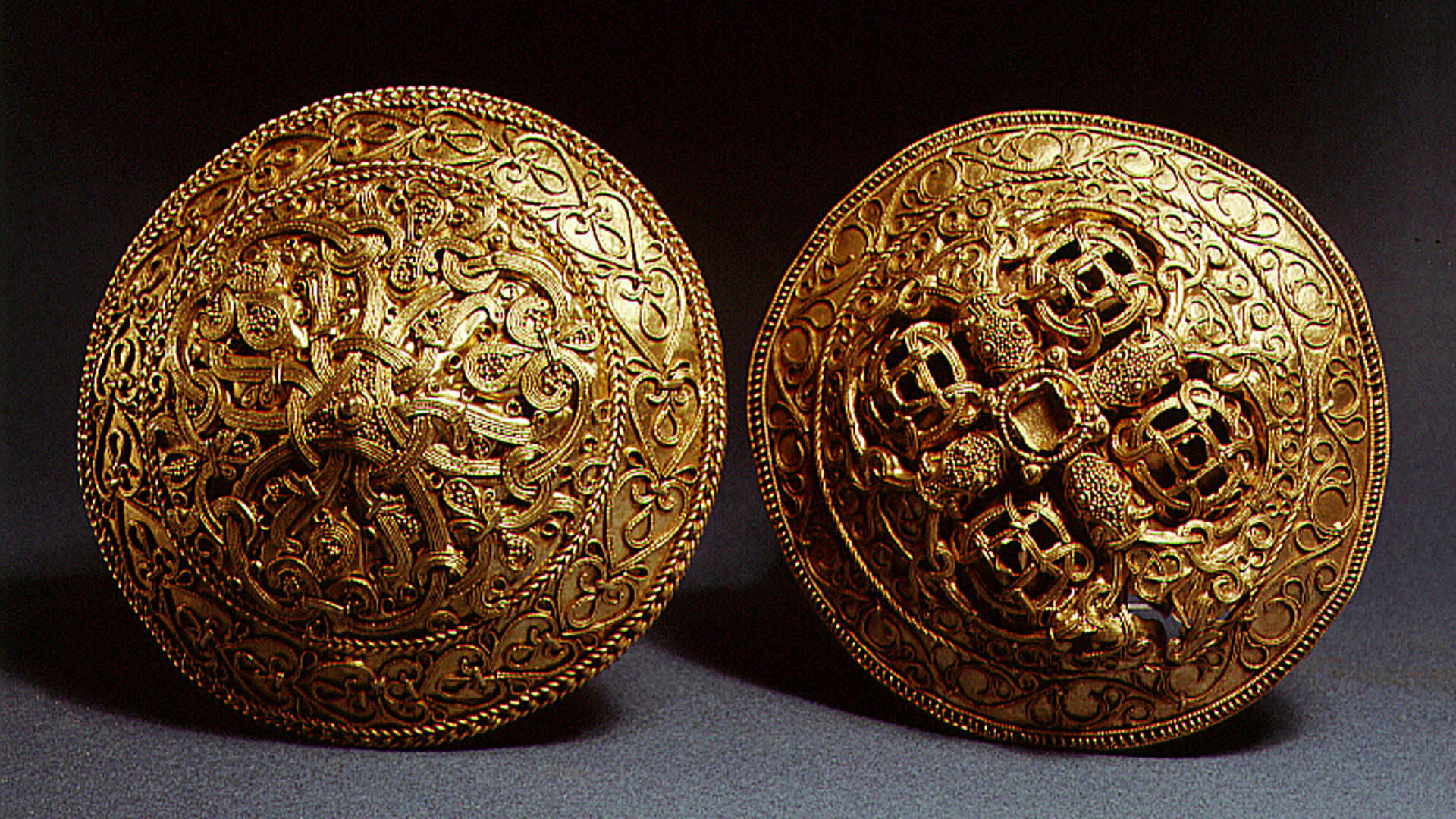 Hornelund Brooches: Viking age gold ornaments mysteriously buried in Denmark 1,000 years ago
Latest in News
Gold coin discovered by a metal detectorist in the UK may have been dropped by a Viking invader from the Great Heathen Army
Hornelund Brooches: Viking age gold ornaments mysteriously buried in Denmark 1,000 years ago
Latest in News
Gold coin discovered by a metal detectorist in the UK may have been dropped by a Viking invader from the Great Heathen Army
 'Blood moon' total eclipse dazzles millions around the world (photos)
 Every ant is a queen in this parasitic species — and they reproduce by cloning themselves and hijacking other ant colonies
 Vanuatu's 'barefoot volcanologist' stands at ash- and sulfur-spewing Mount Yasur in award-winning photograph
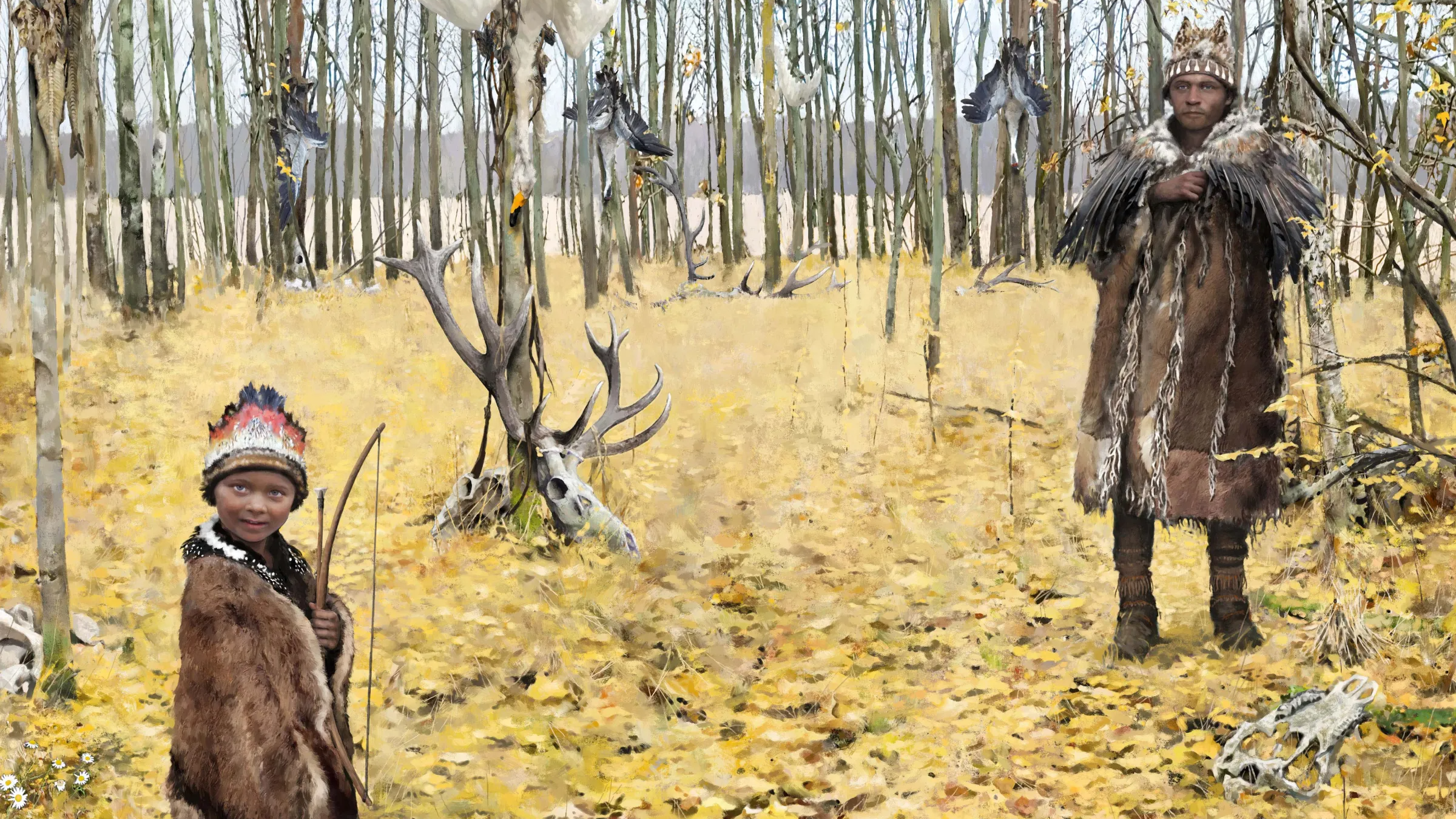 Stone Age boy in Sweden was buried in deerskin and a woodpecker headdress, archaeologists discover
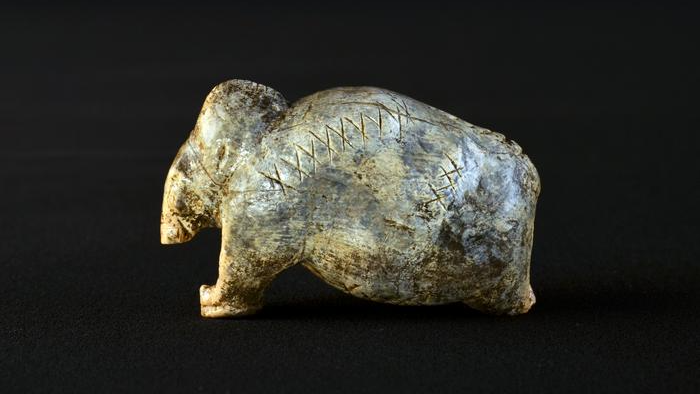 Paleolithic humans invented an 'early predecessor to writing' at least 40,000 years ago, carved signs suggest
LATEST ARTICLES
Paleolithic humans invented an 'early predecessor to writing' at least 40,000 years ago, carved signs suggest
LATEST ARTICLES- 1'Blood moon' total lunar eclipse dazzles millions around the world (photos)
- 2Every ant is a queen in this parasitic species — and they reproduce by cloning themselves and hijacking other ant colonies
- 3Vanuatu's 'barefoot volcanologist' stands at ash- and sulfur-spewing Mount Yasur in award-winning photograph
- 43 rivers merge into striking half-and-half waterway in Guyana — Earth from space
- 5Lady of Elche: A 2,400-year-old bust of a mysterious 'highborn' woman from pre-Roman Spain