- Archaeology
The ancient coin was probably minted in what is now Spain in the first century B.C., but no one knows why it was used to pay a 1950s transport fare.
When you purchase through links on our site, we may earn an affiliate commission. Here’s how it works.
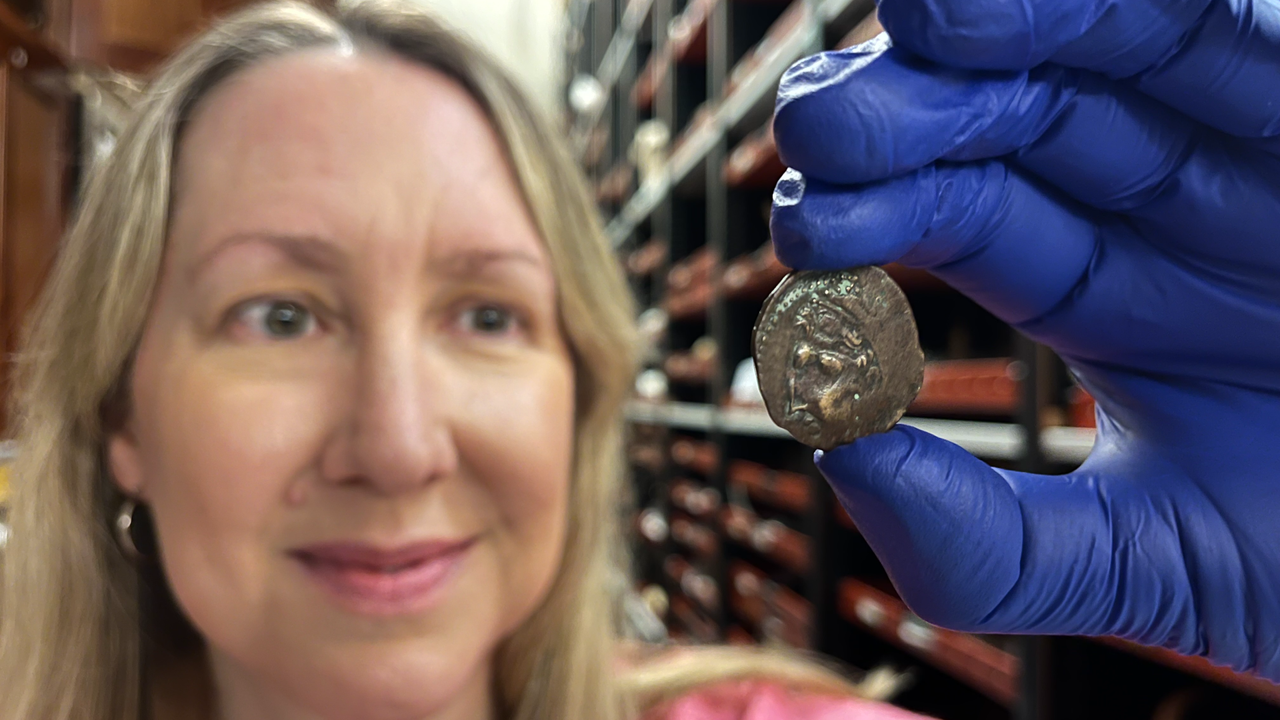
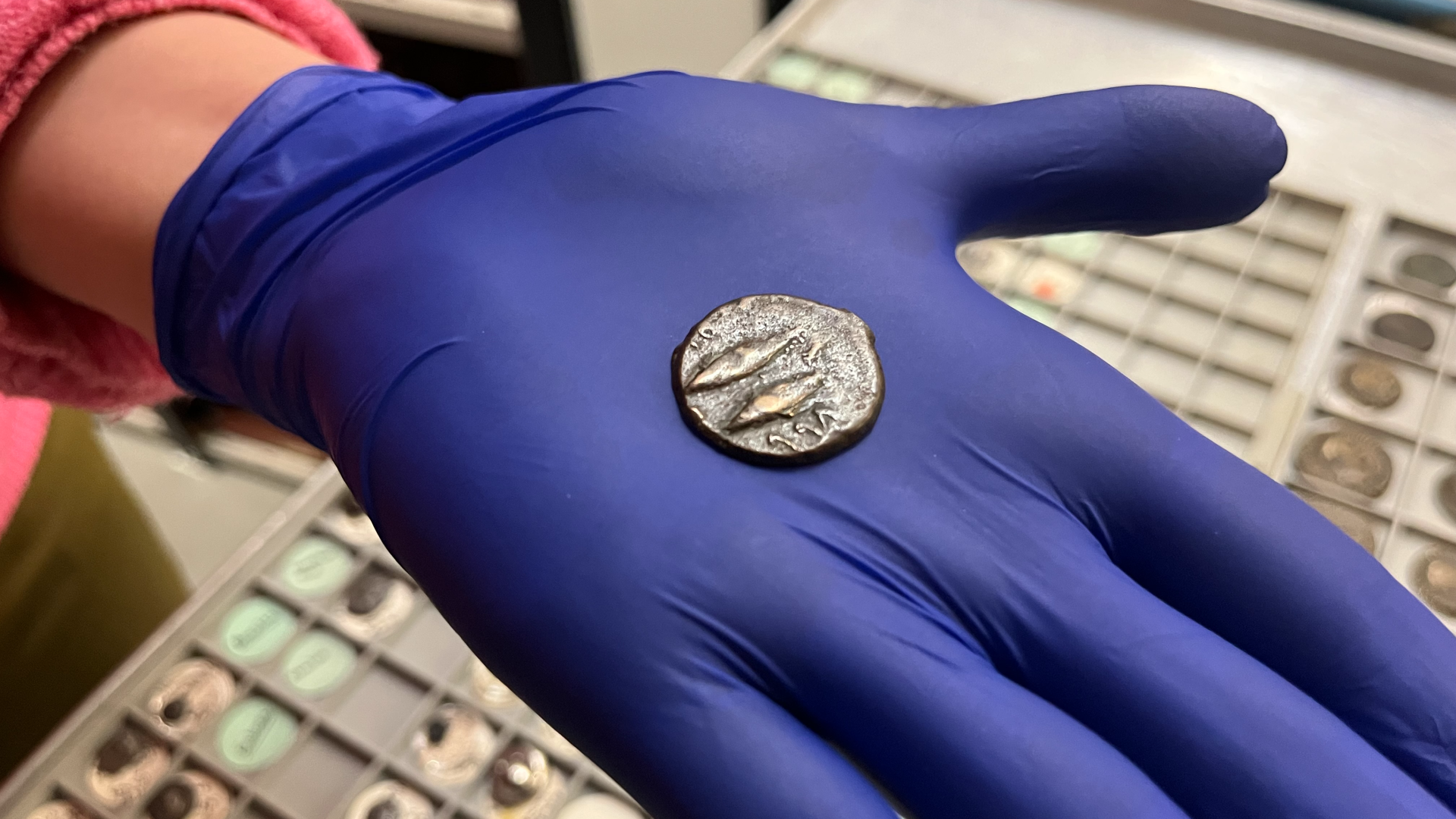
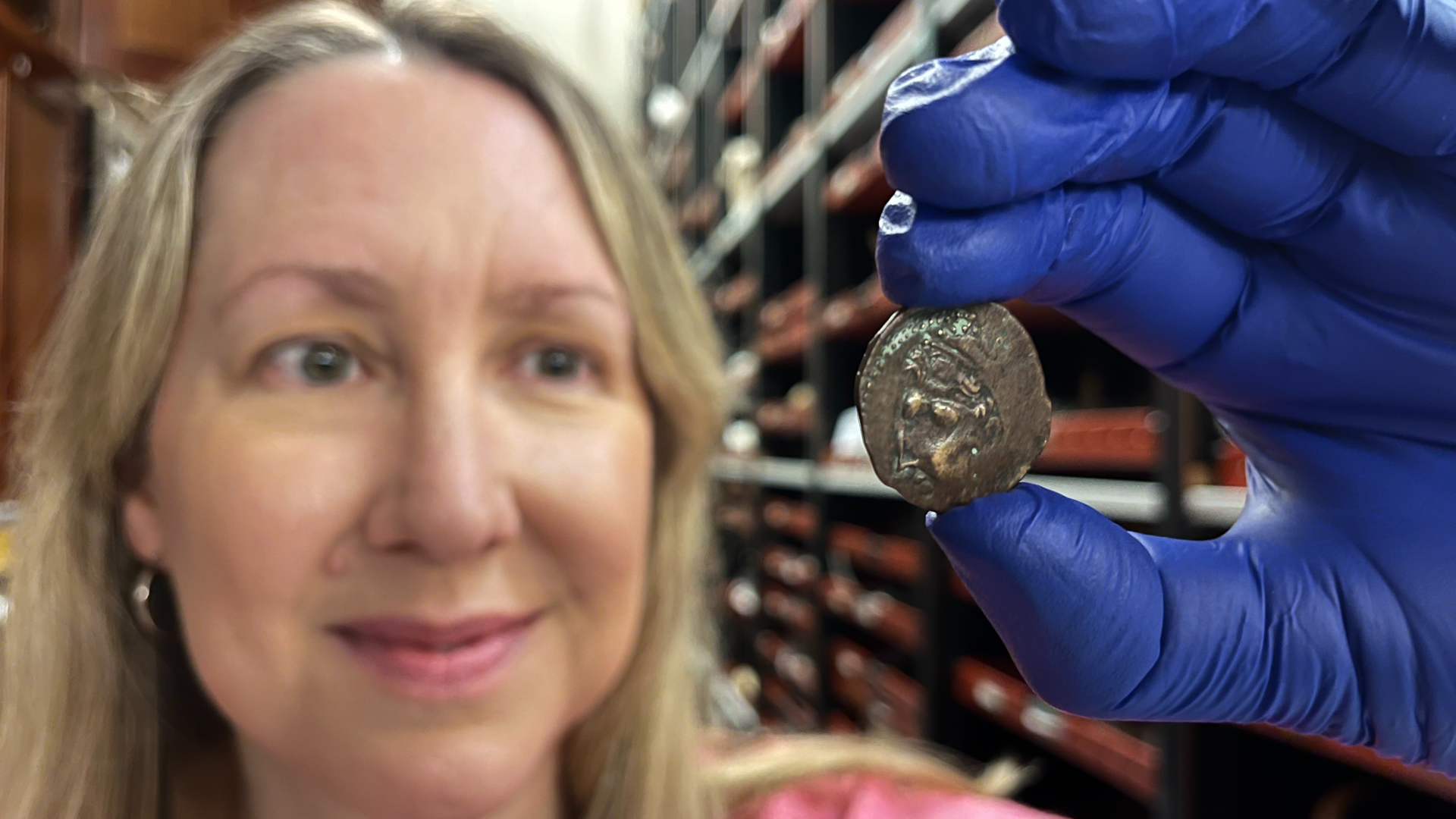 Kat Baxter, Leeds Museum and Galleries' curator of archaeology and numismatics, shows the front of the ancient coin.
(Image credit: Leeds City Council)
Kat Baxter, Leeds Museum and Galleries' curator of archaeology and numismatics, shows the front of the ancient coin.
(Image credit: Leeds City Council)
- Copy link
- X
Get the world’s most fascinating discoveries delivered straight to your inbox.
Become a Member in Seconds
Unlock instant access to exclusive member features.
Contact me with news and offers from other Future brands Receive email from us on behalf of our trusted partners or sponsors By submitting your information you agree to the Terms & Conditions and Privacy Policy and are aged 16 or over.You are now subscribed
Your newsletter sign-up was successful
Want to add more newsletters?

Delivered Daily
Daily Newsletter
Sign up for the latest discoveries, groundbreaking research and fascinating breakthroughs that impact you and the wider world direct to your inbox.
Signup +
Once a week
Life's Little Mysteries
Feed your curiosity with an exclusive mystery every week, solved with science and delivered direct to your inbox before it's seen anywhere else.
Signup +
Once a week
How It Works
Sign up to our free science & technology newsletter for your weekly fix of fascinating articles, quick quizzes, amazing images, and more
Signup +
Delivered daily
Space.com Newsletter
Breaking space news, the latest updates on rocket launches, skywatching events and more!
Signup +
Once a month
Watch This Space
Sign up to our monthly entertainment newsletter to keep up with all our coverage of the latest sci-fi and space movies, tv shows, games and books.
Signup +
Once a week
Night Sky This Week
Discover this week's must-see night sky events, moon phases, and stunning astrophotos. Sign up for our skywatching newsletter and explore the universe with us!
Signup +Join the club
Get full access to premium articles, exclusive features and a growing list of member rewards.
Explore An account already exists for this email address, please log in. Subscribe to our newsletterAn intriguing coin deposited into a bus driver's till in England in the 1950s turned out to have ancient origins: It was minted 2,000 years ago in what is now southern Spain. Now, more than 70 years later, the grandson of the former transport cashier has donated the mysteriously acquired coin to a museum.
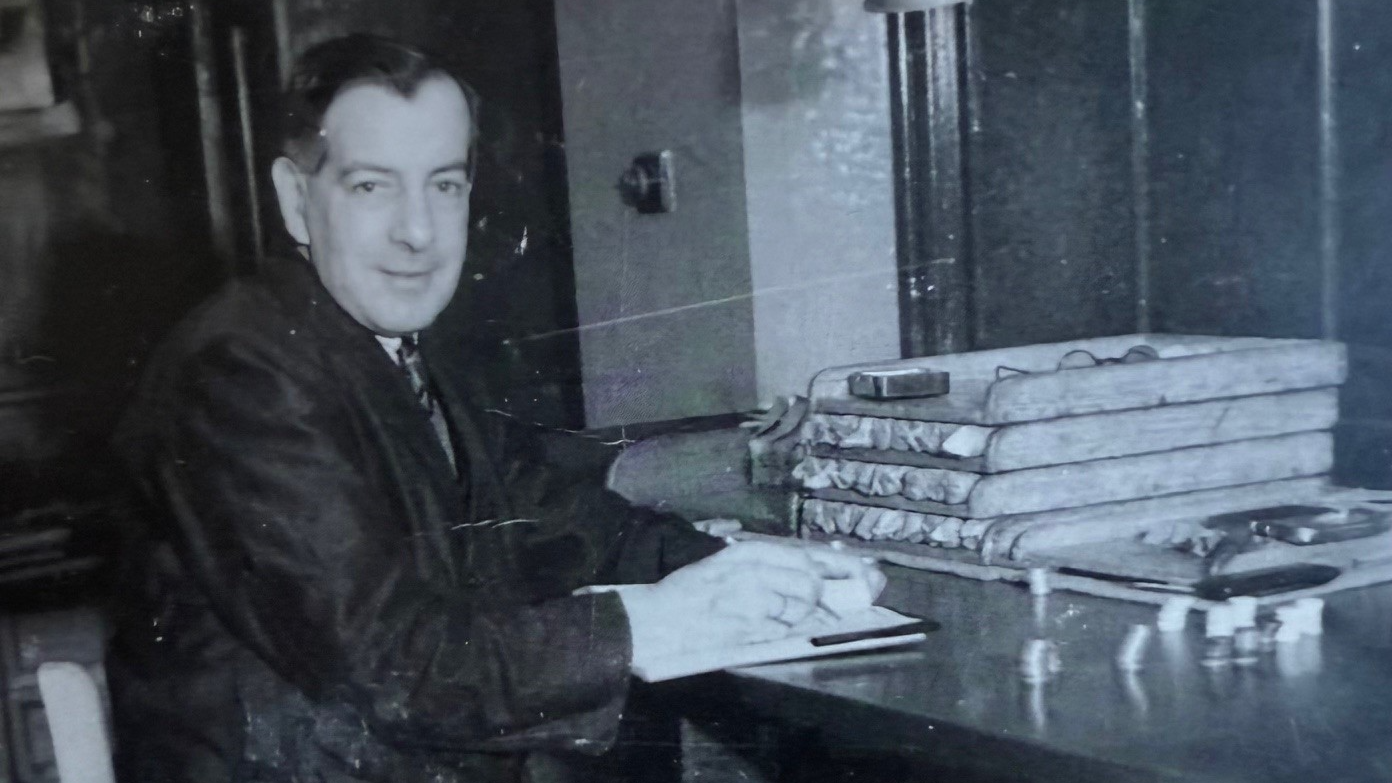
The cashier, James Edwards, worked for Leeds City Transport and was tasked with gathering and counting fares from bus and tram drivers. Whenever he discovered fake or foreign coins, he would bring them home for his grandson, Peter.
"Neither of us were coin collectors, but we were fascinated by their origin and imagery — to me, they were treasure," Peter Edwards said in a March 9 statement.
Article continues below You may like-
 2,300-year-old Celtic gold coins found in Swiss bog
-
 Gold coin discovered by a metal detectorist in the UK may have been dropped by a Viking invader from the Great Heathen Army
-
 Rare 2,000-year-old war trumpet, possibly linked to Celtic queen Boudica, discovered in England
But one particular coin intrigued Peter, whose research into the designs on the coin revealed that it was minted more than 2,000 years ago in a Phoenician settlement called Gadir (now known as the city of Cádiz) in Spain's Andalusia region.
Gadir was founded by the Phoenicians, who also settled Carthage in what is now Tunisia, as their earliest colony in Western Europe in the 12th century B.C. Gadir came under Carthaginian control after the First Punic War in the early third century B.C. and then under Roman rule less than a century later.
The front side of the bronze coin bears the visage of the god Melqart — a Phoenician god who was the chief deity of Gadir, Carthage and Tyre — wearing the lion-skin headdress of Hercules. On the back of the coin are two bluefin tuna (Thunnus thynnus), likely a reference to the importance of the fishing industry in Gadir.
How the coin ended up in Leeds is unclear, but "it was not long after the war, so I imagine soldiers returned with coins from countries they had been sent to," Edwards said.
Edwards has donated the coin to the Leeds Museums and Galleries so experts can study it as part of the museum's collection of ancient currency. Kat Baxter, the curator of archaeology and numismatics for the museums, confirmed in the statement that the coin is around 2,000 years old and was minted in Gadir.
RELATED STORIES—Gold coin discovered by a metal detectorist in the UK may have been dropped by a Viking invader from the Great Heathen Army
—1,800-year-old 'piggy banks' full of Roman-era coins unearthed in French village
—2,300-year-old Celtic gold coins found in Swiss bog
"Museums like ours are not just about preserving objects, they're also about telling stories like this one and inspiring visitors to think about the history that's all around us, sometimes in the most unlikely of places," Leeds City Councillor Salma Arif said in the statement.
"My grandfather would be proud to know, as I am, that the coin is coming back to Leeds," Edwards said. "However, how it got there will always be a mystery."
Archaeology Fragments Quiz: Can you work out what these mysterious artifacts are?
 Kristina KillgroveSocial Links NavigationStaff writer
Kristina Killgrove is a staff writer at Live Science with a focus on archaeology and paleoanthropology news. Her articles have also appeared in venues such as Forbes, Smithsonian, and Mental Floss. Kristina holds a Ph.D. in biological anthropology and an M.A. in classical archaeology from the University of North Carolina, as well as a B.A. in Latin from the University of Virginia, and she was formerly a university professor and researcher. She has received awards from the Society for American Archaeology and the American Anthropological Association for her science writing.
View MoreYou must confirm your public display name before commenting
Please logout and then login again, you will then be prompted to enter your display name.
Logout Read more Rare medieval seal discovered in UK is inscribed with 'Richard's secret' and bears a Roman-period gemstone
Rare 2,000-year-old war trumpet, possibly linked to Celtic queen Boudica, discovered in England
Rare medieval seal discovered in UK is inscribed with 'Richard's secret' and bears a Roman-period gemstone
Rare 2,000-year-old war trumpet, possibly linked to Celtic queen Boudica, discovered in England
 Did the Vikings reach Maine?
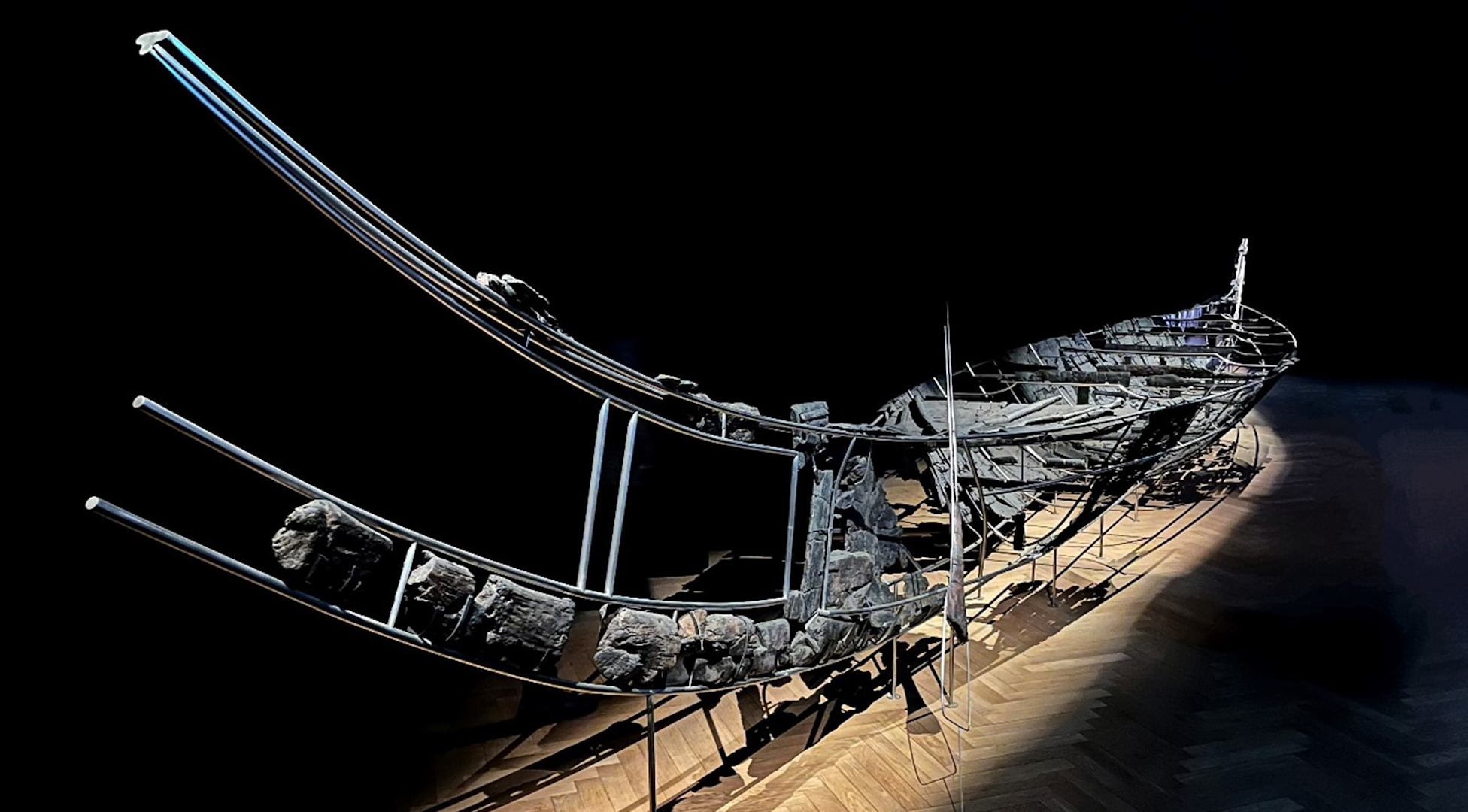 2,400-year-old fingerprint from mysterious sea raider found preserved on Scandinavia's oldest plank boat
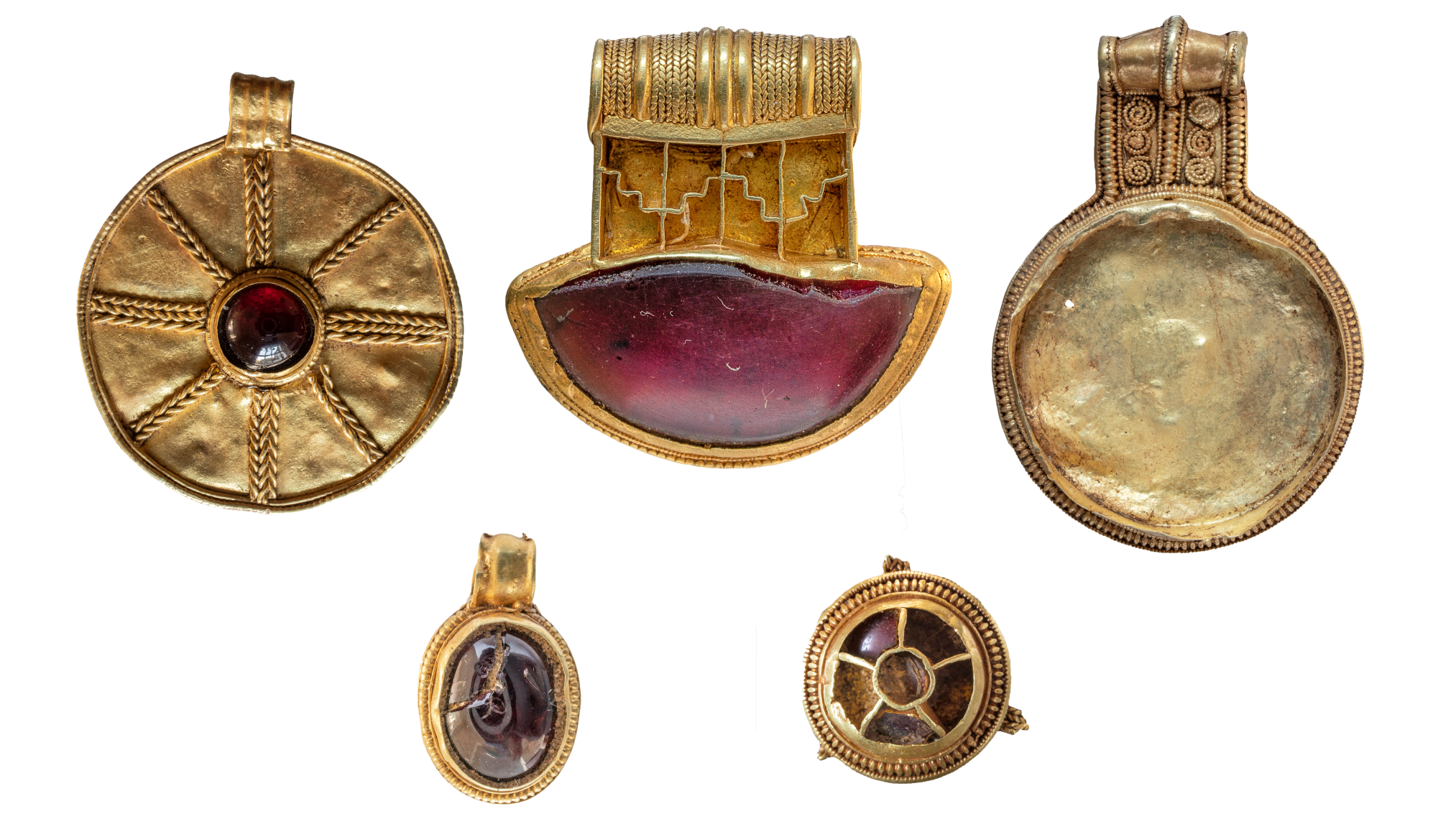 Detectorists find Anglo-Saxon treasure hoard that may have been part of a 'ritual killing'
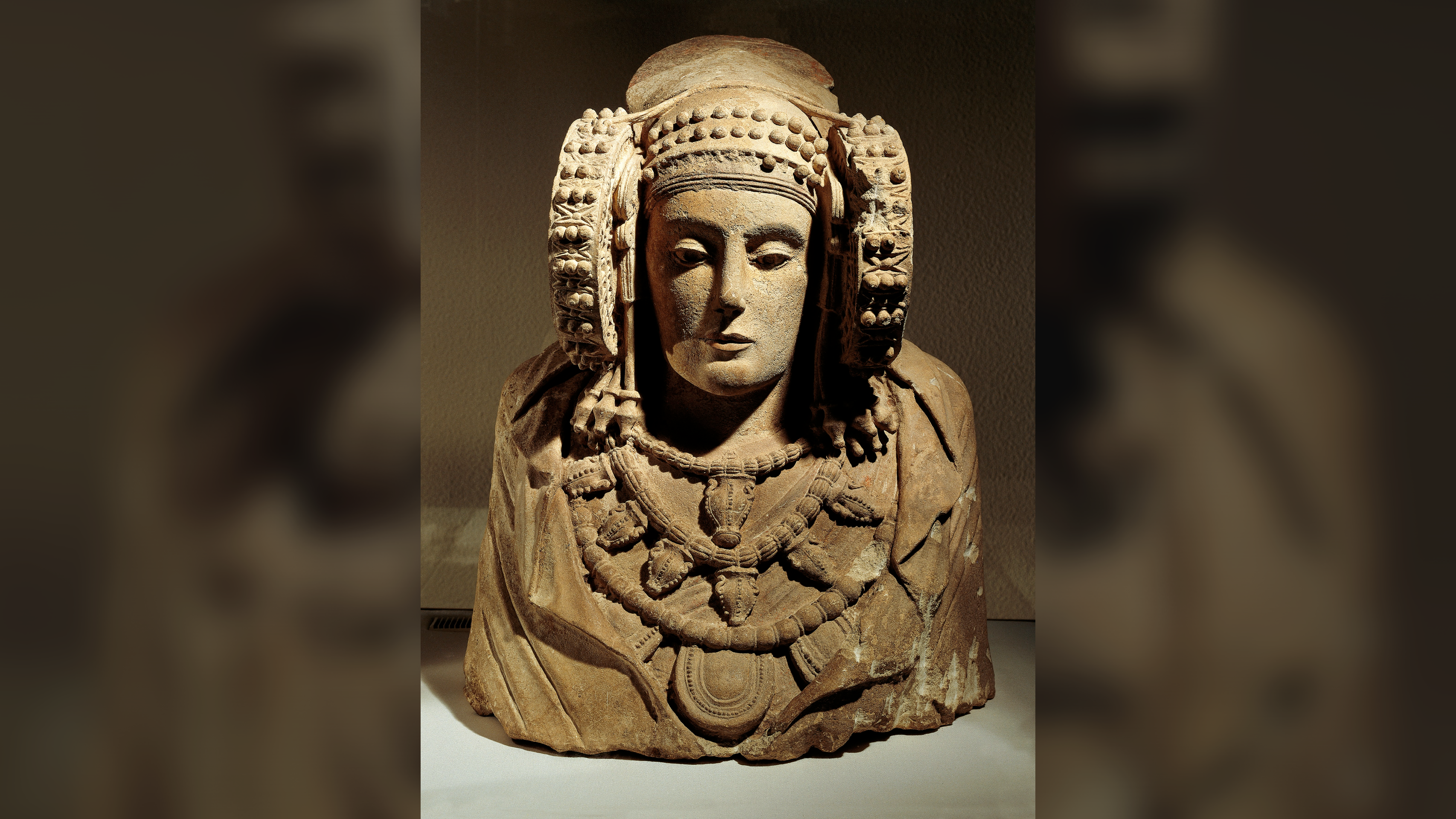 Lady of Elche: A 2,400-year-old bust of a mysterious 'highborn' woman from pre-Roman Spain
Latest in Archaeology
Lady of Elche: A 2,400-year-old bust of a mysterious 'highborn' woman from pre-Roman Spain
Latest in Archaeology
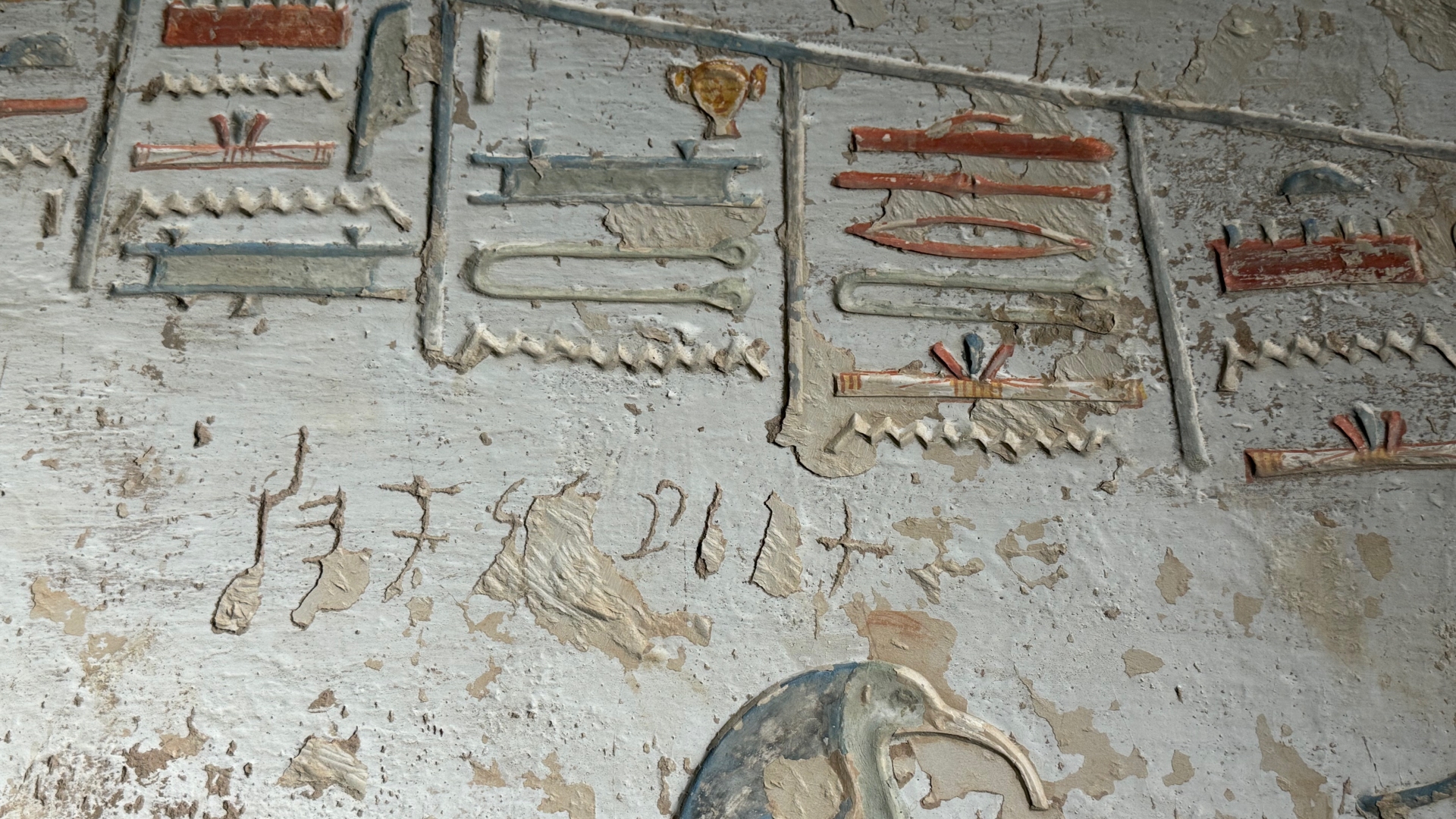 'Cikai Korran came here and saw': Visitors from India graffitied dozens of Egyptian tombs 2,000 years ago
 The sword in the sea: How one lucky graduate student found his second Crusader sword while taking a swim off Israel's coast
 Climate disasters caused societal upheaval 3,000 years ago in China, study of 'oracle bones' hints
 'More advanced' farming women married hunter-gatherer men in Europe thousands of years ago, ancient DNA reveals
 Stone Age woman was buried like a man, revealing flexible gender roles 7,000 years ago in Hungary
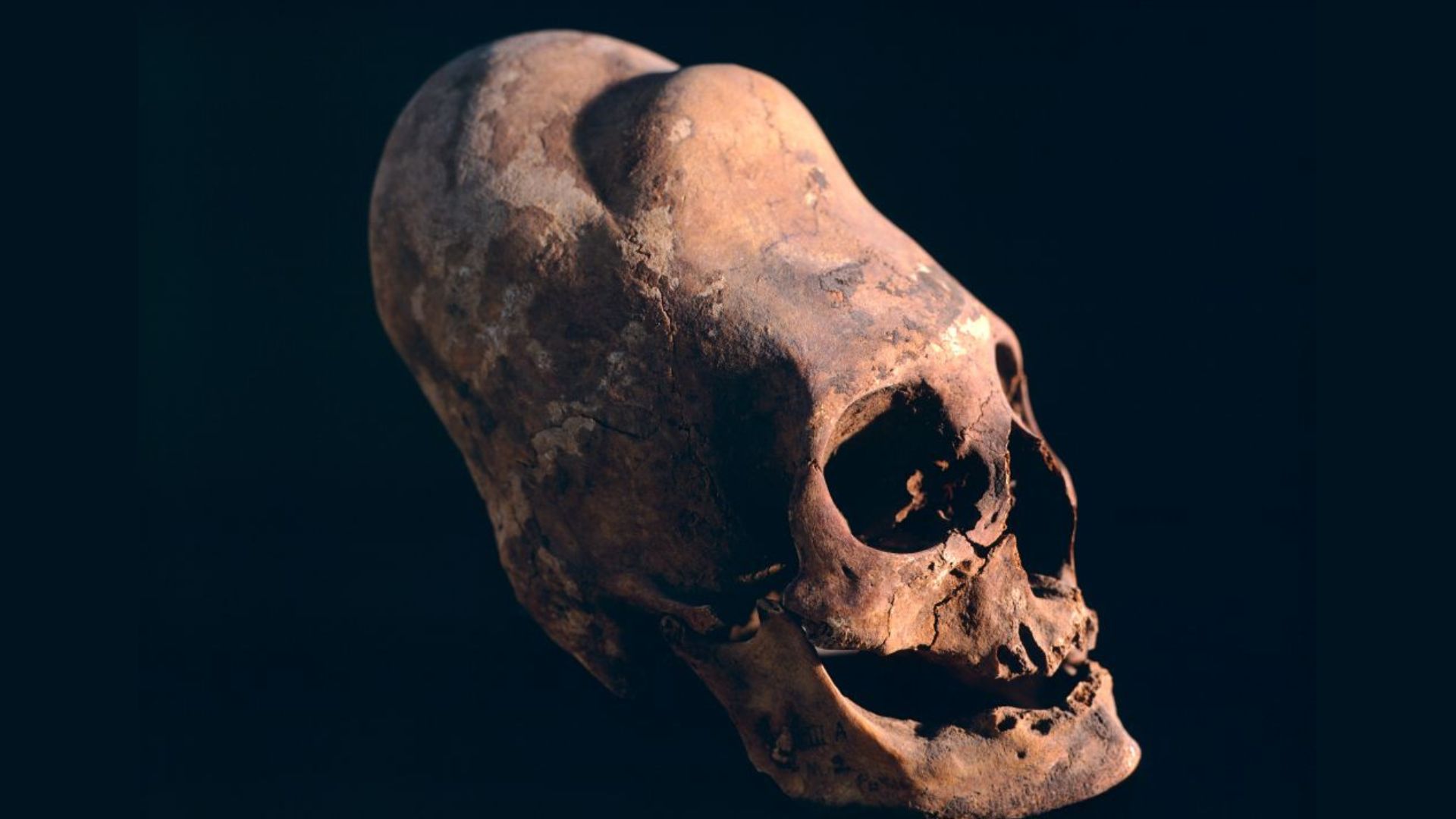 9 ways people have modified their bodies since the dawn of time, from foot binding to castration
Latest in News
2,000-year-old Phoenician coin was used as bus fare in England, but 'how it got there will always be a mystery'
9 ways people have modified their bodies since the dawn of time, from foot binding to castration
Latest in News
2,000-year-old Phoenician coin was used as bus fare in England, but 'how it got there will always be a mystery'
 Wildfire season is shifting, but its new time windows vary across Canada and the US drought-prone West
 In people with epilepsy, sleeping after a seizure may trigger more seizures
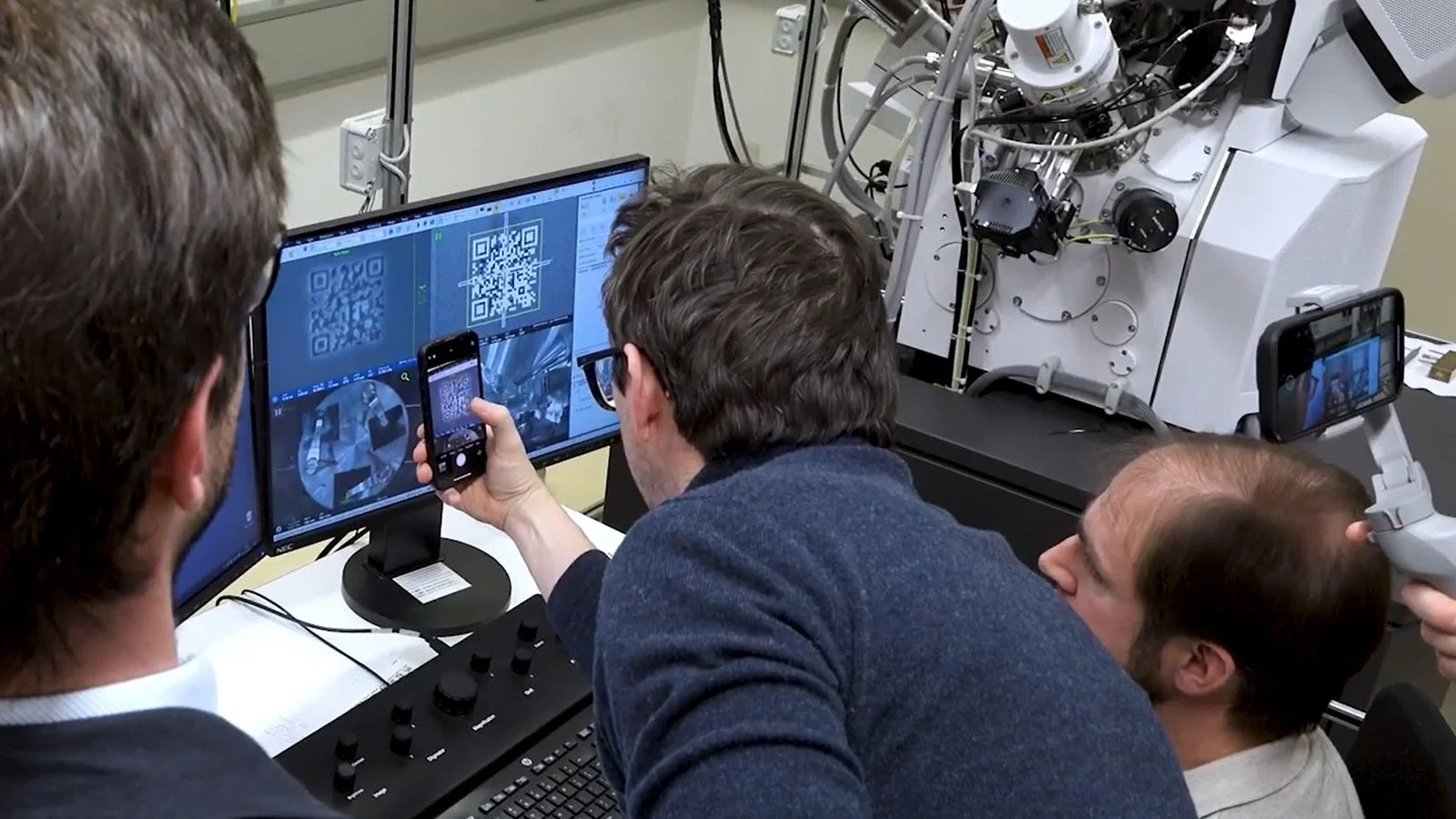 World's smallest QR code can store data for thousands of years — but you need an electron microscope to see it
 'The warming trend nearly doubled after 2014': The rate of global warming has accelerated more in the past decade than ever before
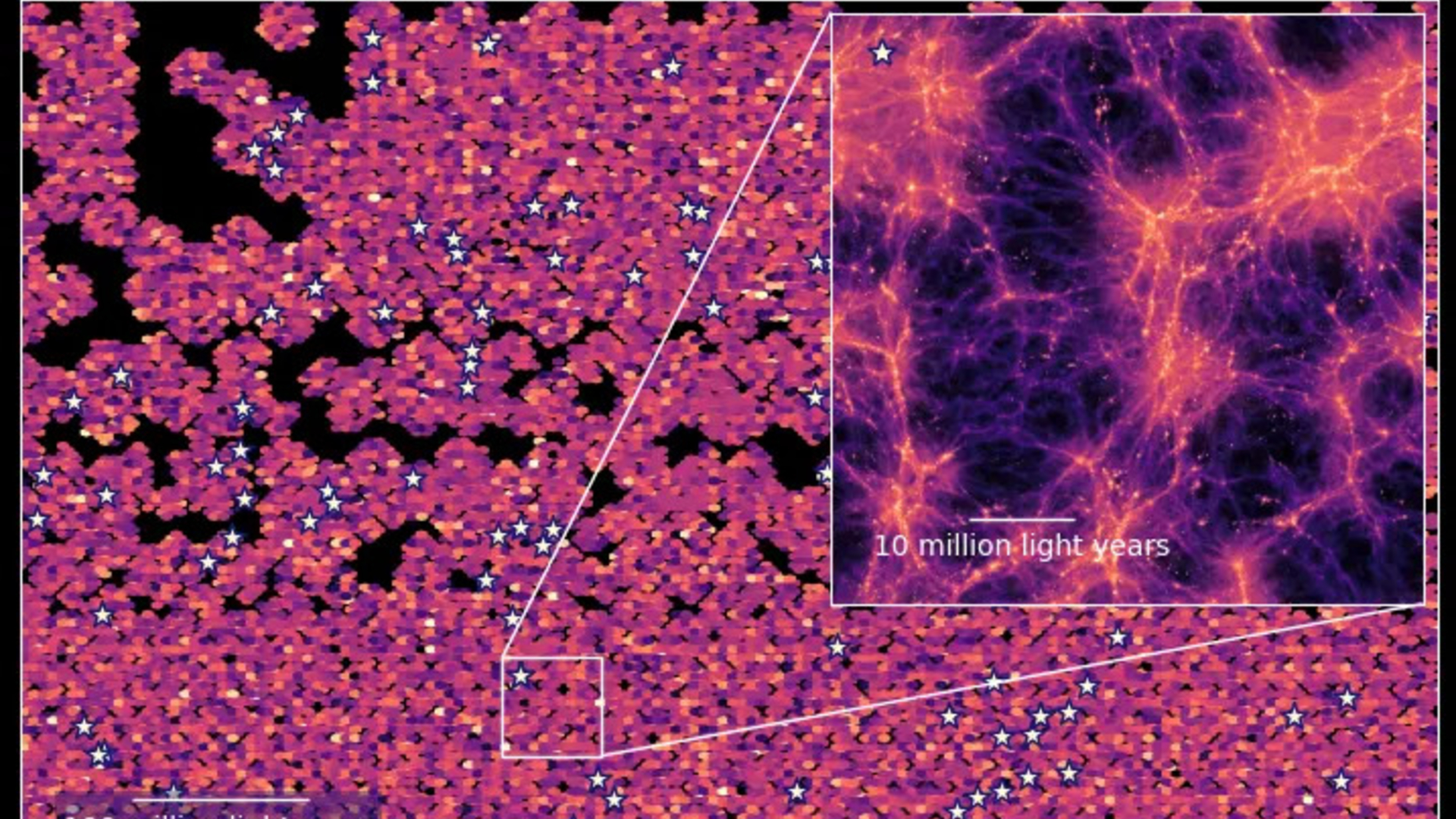 Enormous 3D map of the universe shows brilliant 'sea of light' near the cosmic dawn
LATEST ARTICLES
Enormous 3D map of the universe shows brilliant 'sea of light' near the cosmic dawn
LATEST ARTICLES- 1In people with epilepsy, sleeping after a seizure may trigger more seizures
- 2Wildfire season is shifting, but its new time windows vary across Canada and the US drought-prone West
- 3World's smallest QR code can store data for thousands of years — but you need an electron microscope to see it
- 4Asante spider: A rare African sword ornament from Ghana's Gold Coast that later helped a man in Texas barter for his life
- 5Making a 'digital twin' of yourself could revolutionize future surgeries, making medical procedures much more personal