- Space
- Space Exploration
New photos show off NASA's newly constructed Roman Space Telescope, which will soon help researchers unravel the mysteries of the cosmos. Experts have also revealed when the next-gen spacecraft is set to launch and begin collecting data.
When you purchase through links on our site, we may earn an affiliate commission. Here’s how it works.
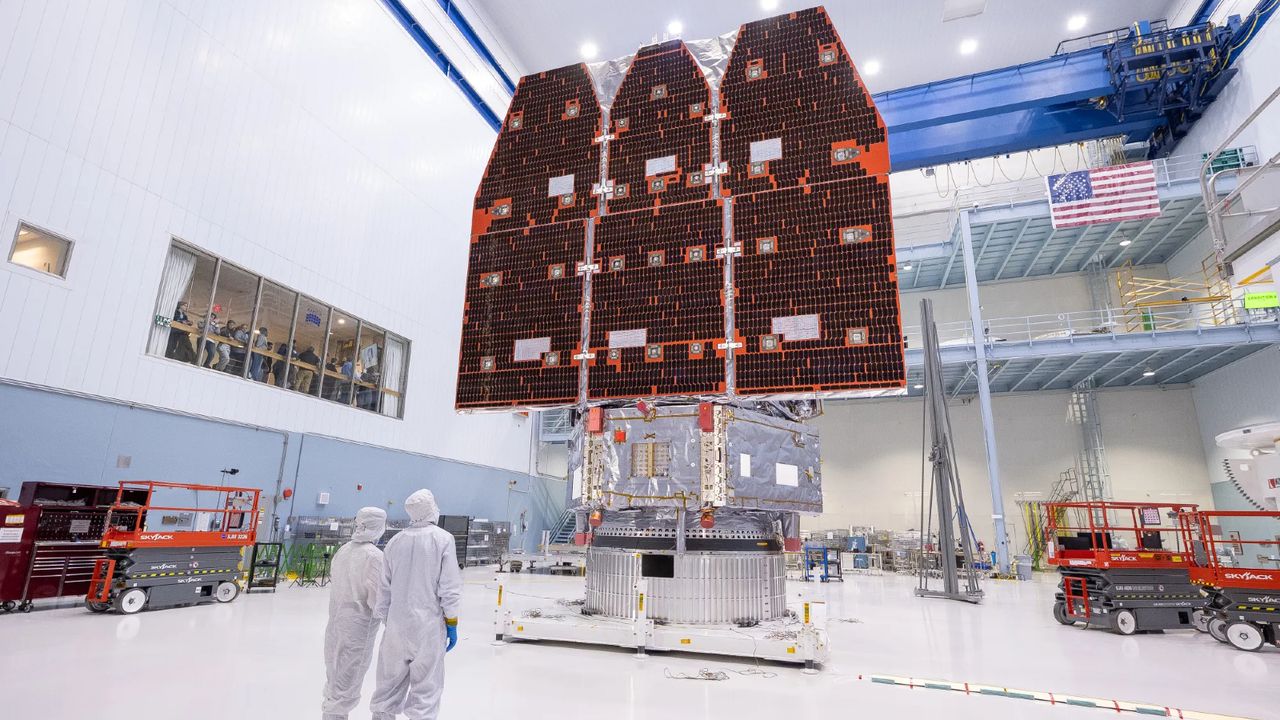
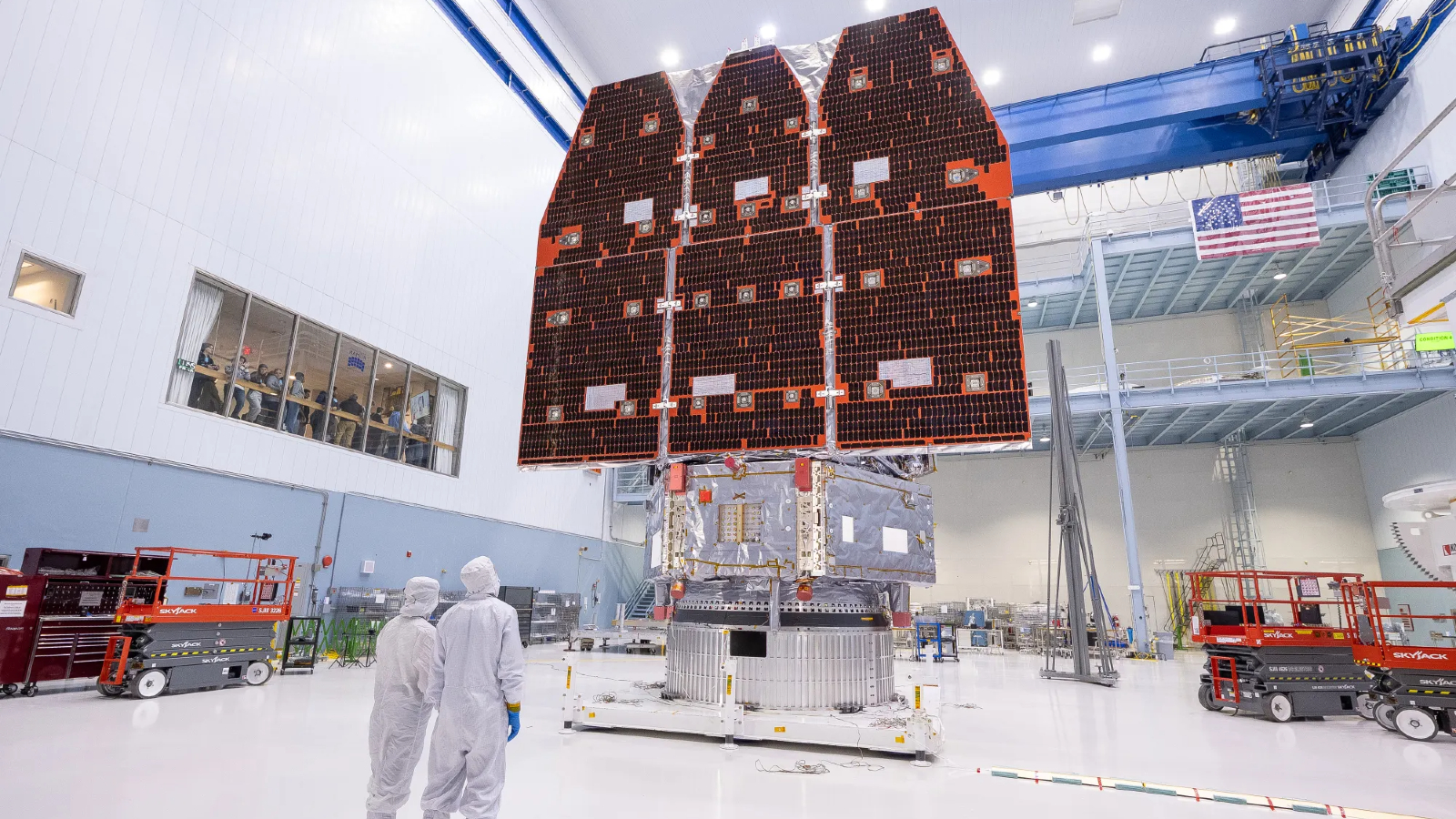 NASA recently revealed new photos of the fully completed Nancy Grace Roman Space Telescope at the agency's Goddard Space Flight Center. The orbital observatory is ready to launch into space later this year.
(Image credit: NASA/Jolearra Tshiteya)
Share
Share by:
NASA recently revealed new photos of the fully completed Nancy Grace Roman Space Telescope at the agency's Goddard Space Flight Center. The orbital observatory is ready to launch into space later this year.
(Image credit: NASA/Jolearra Tshiteya)
Share
Share by:
- Copy link
- X
NASA recently revealed the first pictures of its newly constructed Nancy Grace Roman Space Telescope, which could soon help researchers hunt for exoplanets, map the Milky Way and unravel some of the universe's biggest mysteries, such as the true nature of dark matter.
Experts have also revealed the most probable launch date for the next-generation spacecraft, confirming that it will likely lift off ahead of schedule — and could begin collecting data before the end of 2026.
You may like-
 Science history: James Webb Space Telescope launches — and promptly cracks our view of the universe — Dec. 25, 2021
-
 NASA telescope combines 100 maps of the universe into one, promising huge discoveries
-
 NASA launches Pandora telescope, taking JWST's search for habitable worlds to a new level
New photos, released Dec. 4, show Roman standing upright in a clean room at NASA's Goddard Space Flight Center in Greenbelt, Maryland. The telescope is around 42 feet (12.7 meters) tall and weighs a hefty 9,184 pounds (4,166 kilograms). It began construction in February 2016, and the project has so far stayed within its initial budget of $4.3 billion, researchers say.
Once launched, Roman will be positioned around 1 million miles (1.6 million kilometers) from Earth at a Lagrange point — a fixed point relative to our planet where the gravity of two objects cancels out. Its specific Lagrange point will be Sun-Earth L2, where JWST and the European Space Agency's Gaia and Euclid space telescopes already reside.
Image 1 of 3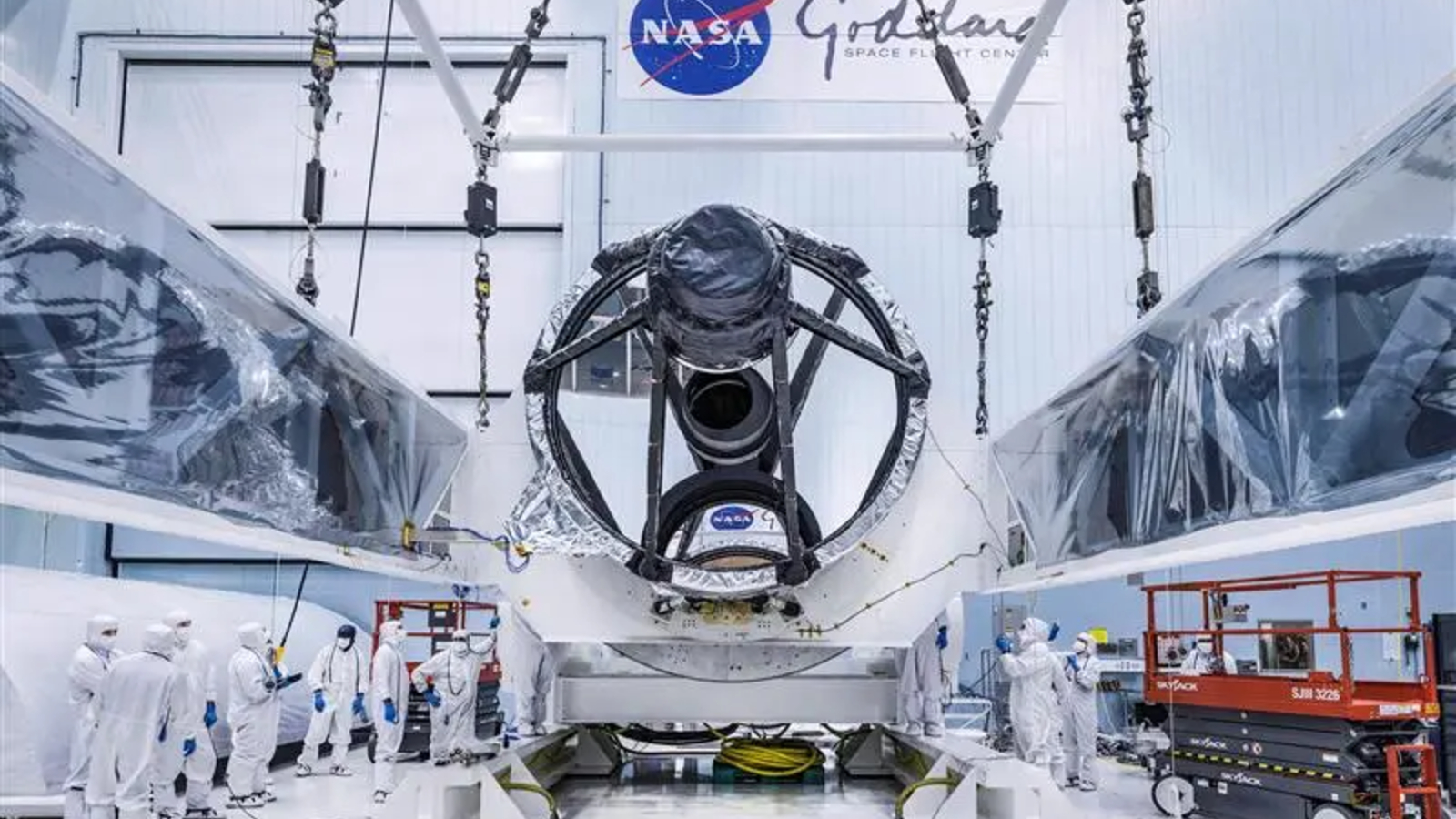 (Image credit: NASA/Chris Gunn)
Roman's 7.9-foot (2.4 meters) mirror will focus light from the cosmos toward a powerful 288-megapixel camera.
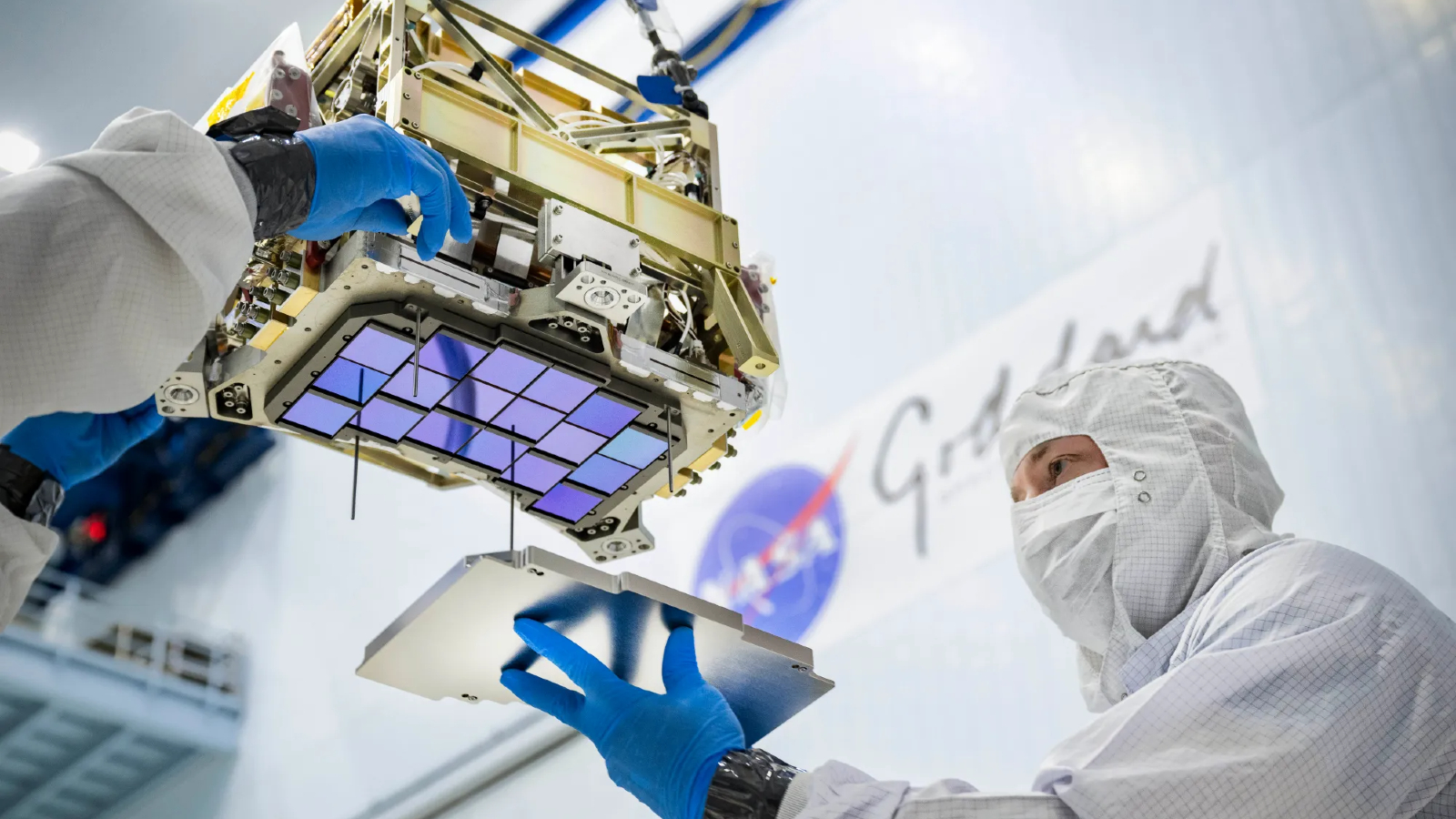 (Image credit: NASA/Chris Gunn)
Researchers at NASA's Goddard Space Flight Center have been assembling Roman piece by piece for several years.
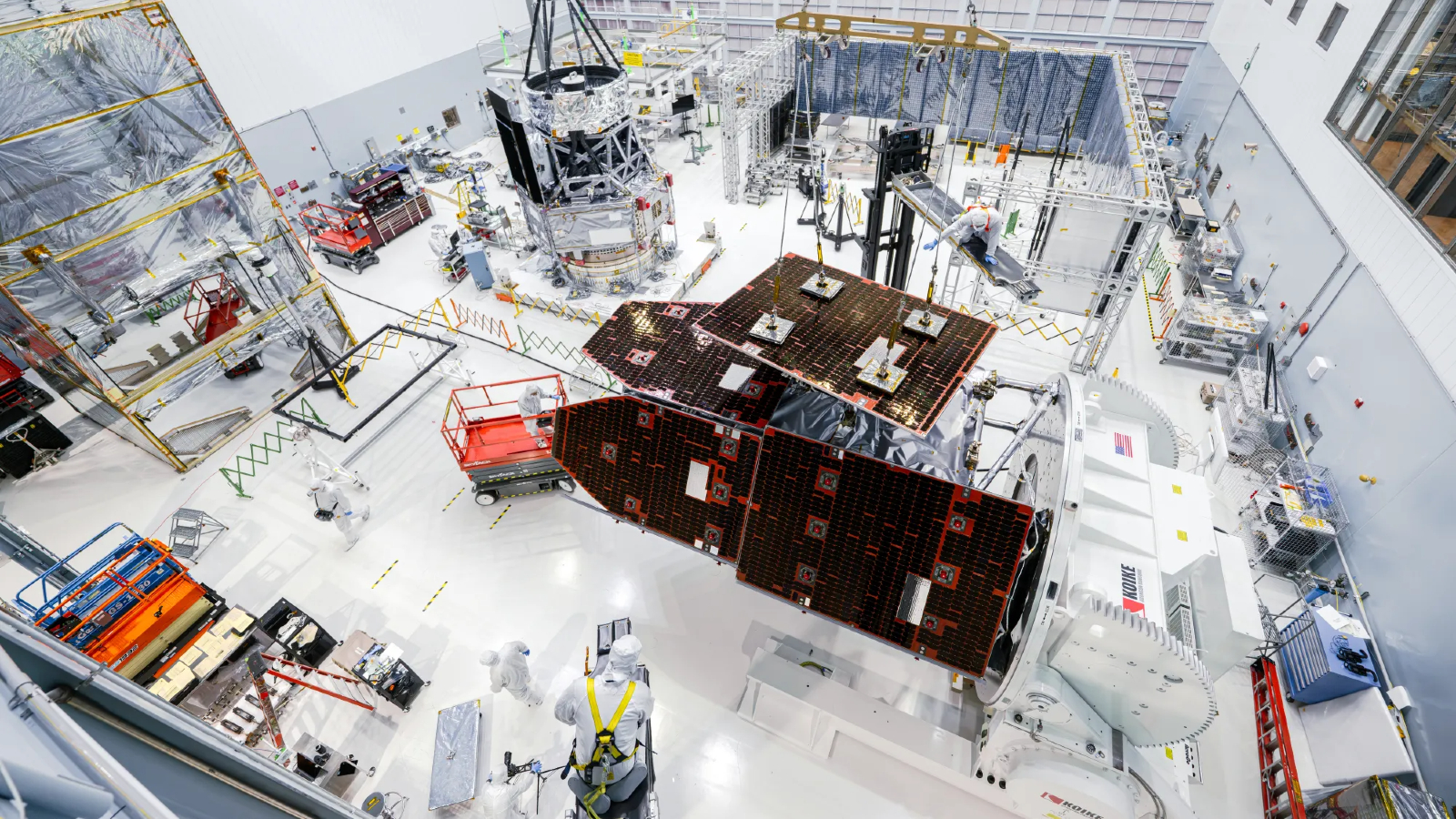 (Image credit: NASA/Sydney Rohde)
Roman will be powered by six massive solar panels that will harness the energy of the sun.
"Completing the Roman observatory brings us to a defining moment for the agency," NASA Associate Administrator Amit Kshatriya said in a statement. "Transformative science depends on disciplined engineering, and this team has delivered — piece by piece, test by test — an observatory that will expand our understanding of the universe."
"With Roman's construction complete, we are poised at the brink of unfathomable scientific discovery," Julie McEnery, an astrophysicist at NASA Goddard and Roman's senior project scientist, said in the statement. "In the mission's first five years, it's expected to unveil more than 100,000 distant worlds, hundreds of millions of stars, and billions of galaxies."
Sign up for the Live Science daily newsletter nowContact me with news and offers from other Future brandsReceive email from us on behalf of our trusted partners or sponsorsBy submitting your information you agree to the Terms & Conditions and Privacy Policy and are aged 16 or over.What will Roman do?
Roman is equipped with two key instruments, which will define its objectives throughout its initial five-year mission. (Roman will likely remain operational beyond five years, but researchers have only planned what it will do until then.)
The first is the Wide Field Instrument (WFI), a 288-megapixel camera attached to a 7.9-foot (2.4 meters) mirror, capable of capturing high-definition photos of the outer solar system, the edges of the visible universe and anything in-between in infrared light too faint to be seen by human eyes.
One of Roman's main goals will be to create the most detailed map of the Milky Way's center yet in the Galactic Plane Survey, which will account for at least 25% of its total observing time. But it will also search the wider universe for things like distant galaxy clusters and giant "cosmic voids," which could help reveal the identity of dark matter and dark energy, NASA recently announced.
You may like-
Science history: James Webb Space Telescope launches — and promptly cracks our view of the universe — Dec. 25, 2021
-
NASA telescope combines 100 maps of the universe into one, promising huge discoveries
-
NASA launches Pandora telescope, taking JWST's search for habitable worlds to a new level
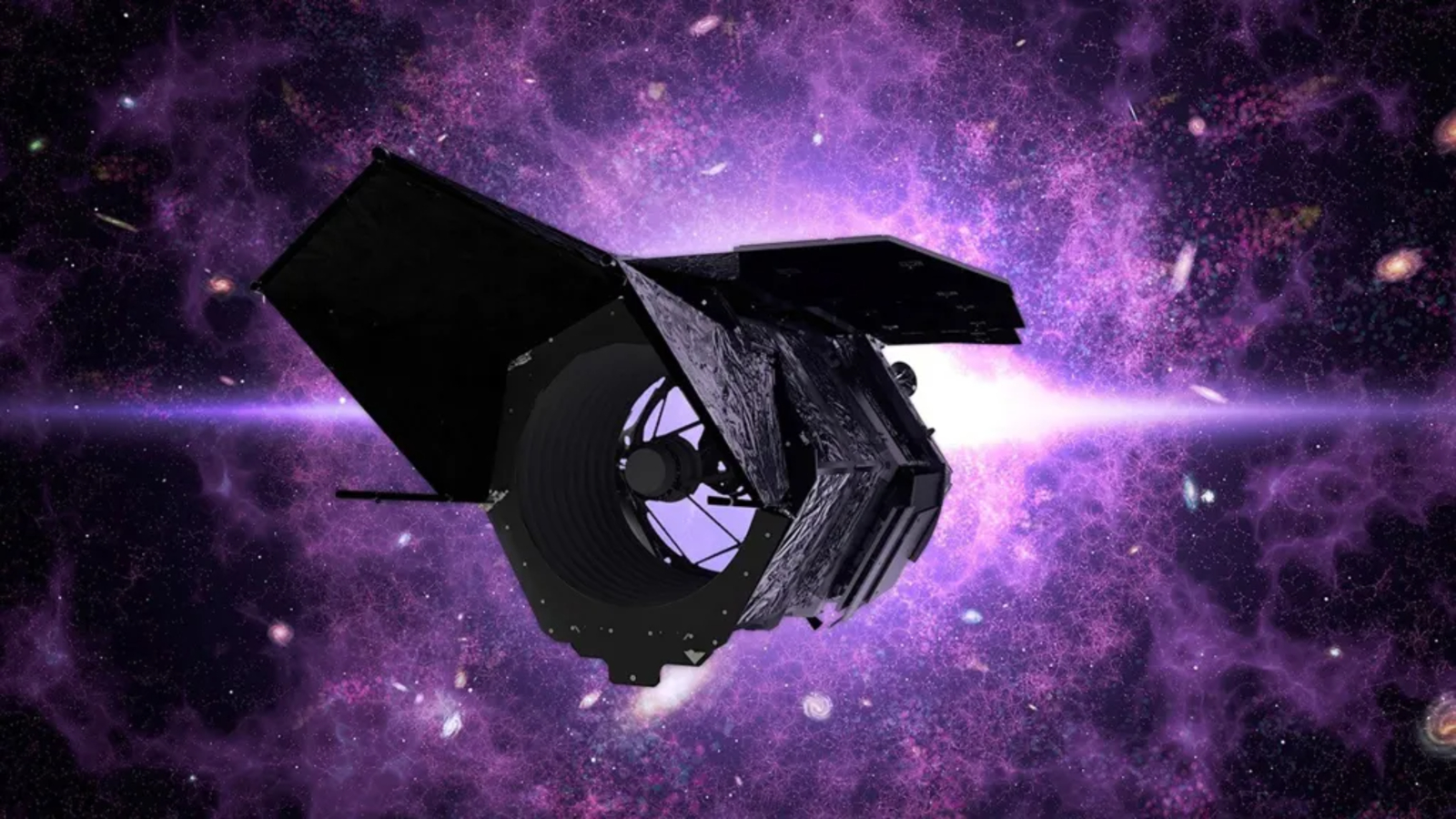
But the telescope's secret weapon is arguably its Coronograph Instrument, which will block out the light from distant stars, allowing WFI to snap photos of their surrounding exoplanets, which would normally be obscured by stellar glare.
As of September 2025, scientists have discovered more than 6,000 exoplanets in roughly 30 years. However, Roman is expected to find more than 15 times as many in half a decade, which would be a huge boon to scientists exploring the possibility of extraterrestrial life.
"The question of 'Are we alone?' is a big one, and it's an equally big task to build tools that can help us answer it," Feng Zhao, a researcher at NASA's Jet Propulsion Lab in California and the Roman Coronagraph Instrument manager, said in the statement. This device could "bring us one step closer to that goal," Zhao added.
In total, Roman is expected to collect more than 20,000 terabytes of data over the course of its initial five-year mission, which is equivalent to the storage space of around 3,000 iPhones: "The sheer volume of the data Roman will return is mind-boggling," Dominic Benford, a NASA researcher and Roman's program scientist, said in the statement.
When will Roman launch?
For years, Roman's prospective launch has been earmarked for May 2027, with some predicting this date would be pushed back, like other previous NASA missions. For example, JWST was originally planned to launch in 2014, according to the Planetary Society.
However, early last year, rumors began to spread that Roman would not only meet its deadline but may actually launch early.
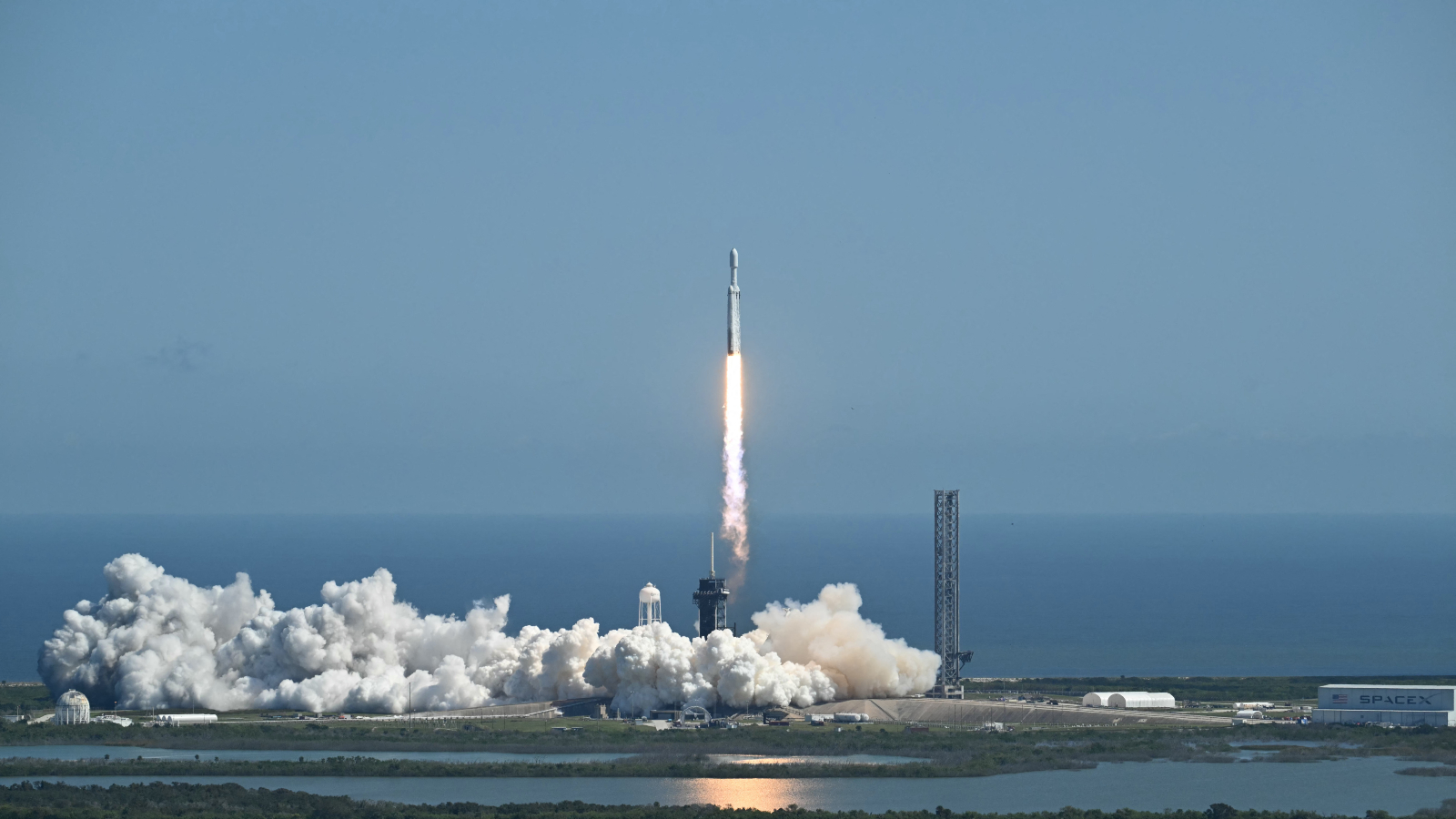
And on Jan. 5, at the 247th Meeting of the American Astronomical Society in Phoenix, Arizona, project scientists confirmed that these rumors were true, revealing that, as it stands, the earliest likely launch date for Roman is Sept. 28, according to Space News.
RELATED STORIES—James Webb telescope finds that galaxies in the early universe were much more chaotic than we thought
—'Not so exotic anymore': The James Webb telescope is unraveling the truth about the universe's first black holes
—'Puzzling' object discovered by James Webb telescope may be the earliest known galaxy in the universe
Roman will launch onboard one of SpaceX's Falcon Heavy rockets from NASA's Kennedy Space Center in Florida, meaning it will need to be transported more than 900 miles (1,450 km) from Goddard before lift-off. This is scheduled to occur in June, and whether or not this happens on time will give us a better indication of how likely a September launch date really is.
Once Roman is in orbit, it will take approximately 90 days for mission scientists to carry out the necessary steps to start collecting data, according to NASA. Therefore, if the telescope does launch on Sept. 28, it will likely start collecting data around Dec. 27.
NASA's Roman Space Telescope: Systems, Assemble! - YouTube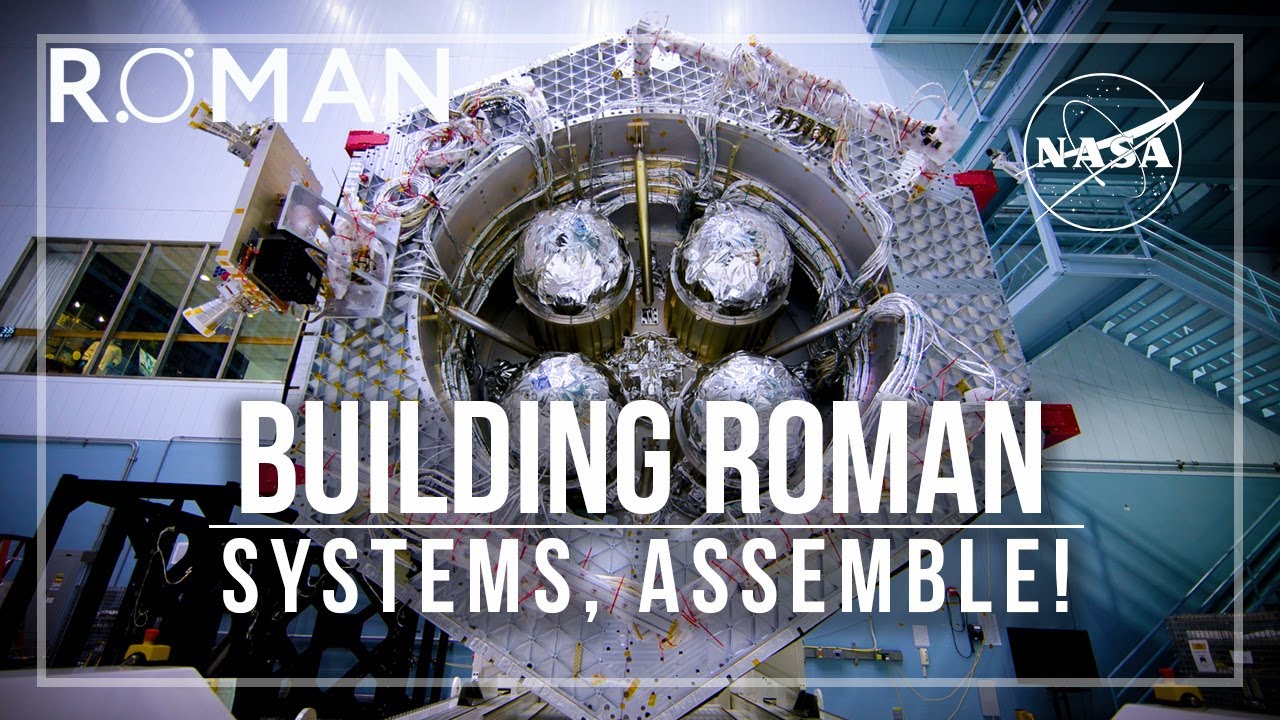 Watch On
TOPICS
NASA
Watch On
TOPICS
NASA
 Harry BakerSocial Links NavigationSenior Staff Writer
Harry is a U.K.-based senior staff writer at Live Science. He studied marine biology at the University of Exeter before training to become a journalist. He covers a wide range of topics including space exploration, planetary science, space weather, climate change, animal behavior and paleontology. His recent work on the solar maximum won "best space submission" at the 2024 Aerospace Media Awards and was shortlisted in the "top scoop" category at the NCTJ Awards for Excellence in 2023. He also writes Live Science's weekly Earth from space series.
Show More CommentsYou must confirm your public display name before commenting
Please logout and then login again, you will then be prompted to enter your display name.
Logout Read more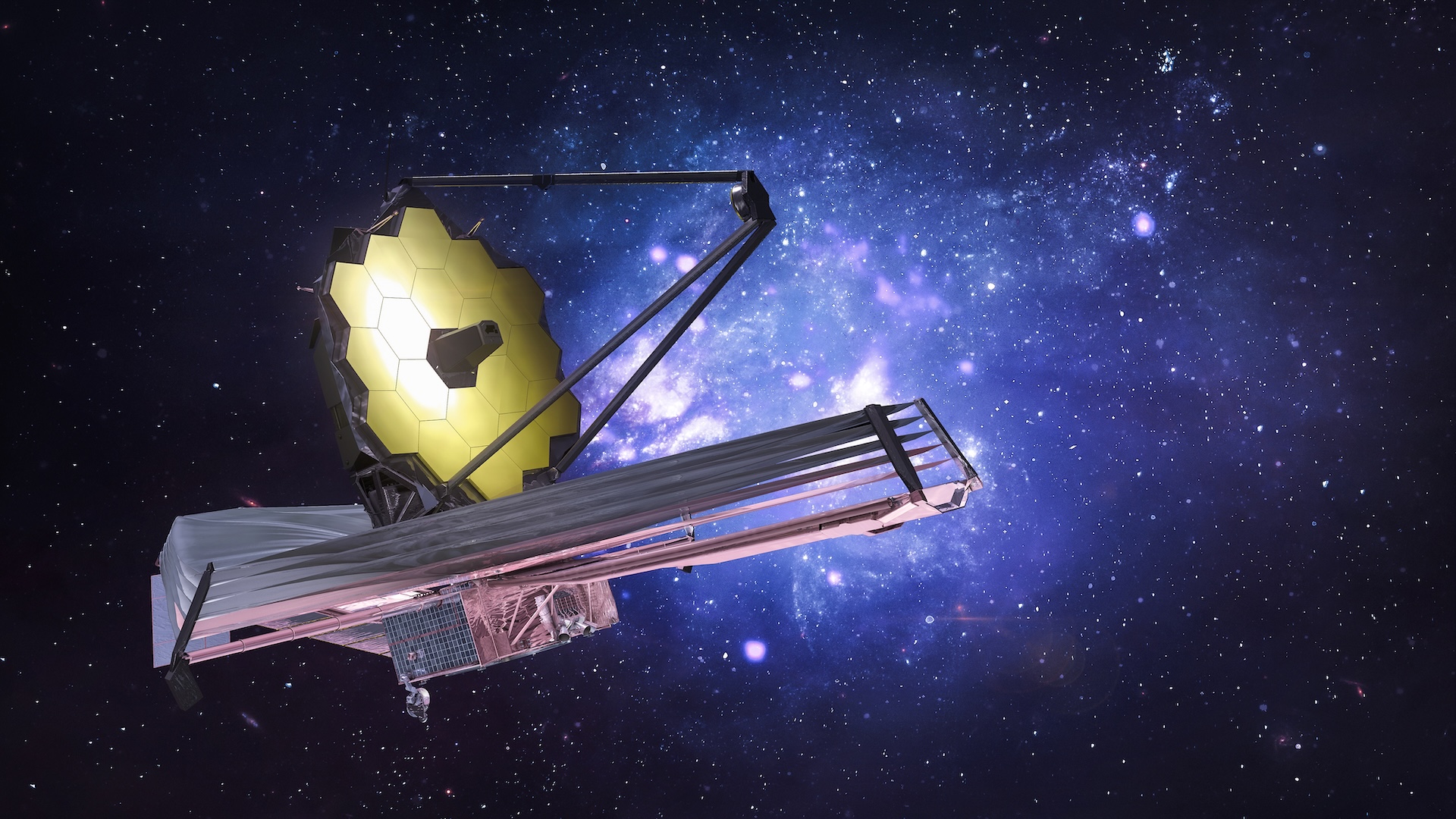 Science history: James Webb Space Telescope launches — and promptly cracks our view of the universe — Dec. 25, 2021
 NASA telescope combines 100 maps of the universe into one, promising huge discoveries
 NASA launches Pandora telescope, taking JWST's search for habitable worlds to a new level
 Best space photos of 2025
 We sharpened the James Webb telescope's vision from a million miles away. Here's how.
 New 3I/ATLAS images show the comet getting active ahead of close encounter with Earth
Latest in Space Exploration
New 3I/ATLAS images show the comet getting active ahead of close encounter with Earth
Latest in Space Exploration
 Watch NASA roll its historic Artemis II moon rocket to the launch pad this weekend
 NASA astronauts back on Earth after unprecedented medical emergency on ISS
 Artemis 2 mission update: Rollout imminent as NASA prepares first crewed Artemis mission to the moon
 NASA announces unprecedented return of sick ISS astronaut and crew
 Orbiting satellites could start crashing into one another in less than 3 days, theoretical new 'CRASH Clock' reveals
 Should humans colonize other planets?
Latest in News
Should humans colonize other planets?
Latest in News
 Ever seen a pet cow pick up a broom and scratch herself with it? You have now
 James Webb telescope reveals sharpest-ever look at the edge of a supermassive black hole
 Why is flu season so bad this year?
 Strange discovery offers 'missing link' in planet formation
 Remnants of spills on Renaissance-era textbook reveal recipes for 'curing' ailments with lizard heads and human feces
 Romans regularly soaked in filthy, lead-contaminated bath water, Pompeii study finds
LATEST ARTICLES
Romans regularly soaked in filthy, lead-contaminated bath water, Pompeii study finds
LATEST ARTICLES- 1Ever seen a pet cow pick up a broom and scratch herself with it? You have now
- 2HP Omen Max 16 (2025) review: This heavyweight pushes everything to the max
- 3Eerie 'sand burials' of elite Anglo-Saxons and their 'sacrificed' horse discovered near UK nuclear power plant
- 4Last year, the oceans absorbed a record-breaking amount of heat — equivalent to 12 Hiroshima bombs exploding every second
- 5Remnants of spills on Renaissance-era textbook reveal recipes for 'curing' ailments with lizard heads and human feces