- Space
- Astronomy
- The Moon
 Why does the moon look larger when it's on the horizon?
Features
By
Alice Sun
published
25 January 2026
Why does the moon look larger when it's on the horizon?
Features
By
Alice Sun
published
25 January 2026
The moon looks enormous when it's near the horizon — why is that?
When you purchase through links on our site, we may earn an affiliate commission. Here’s how it works.
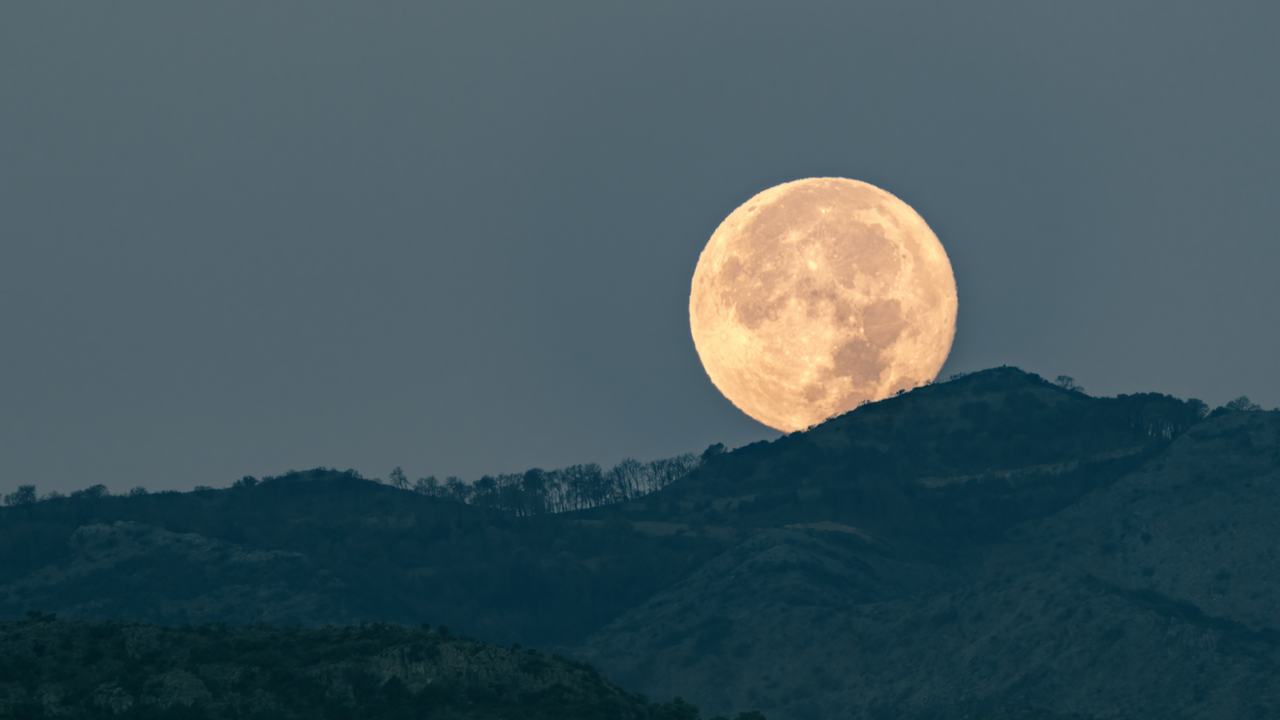
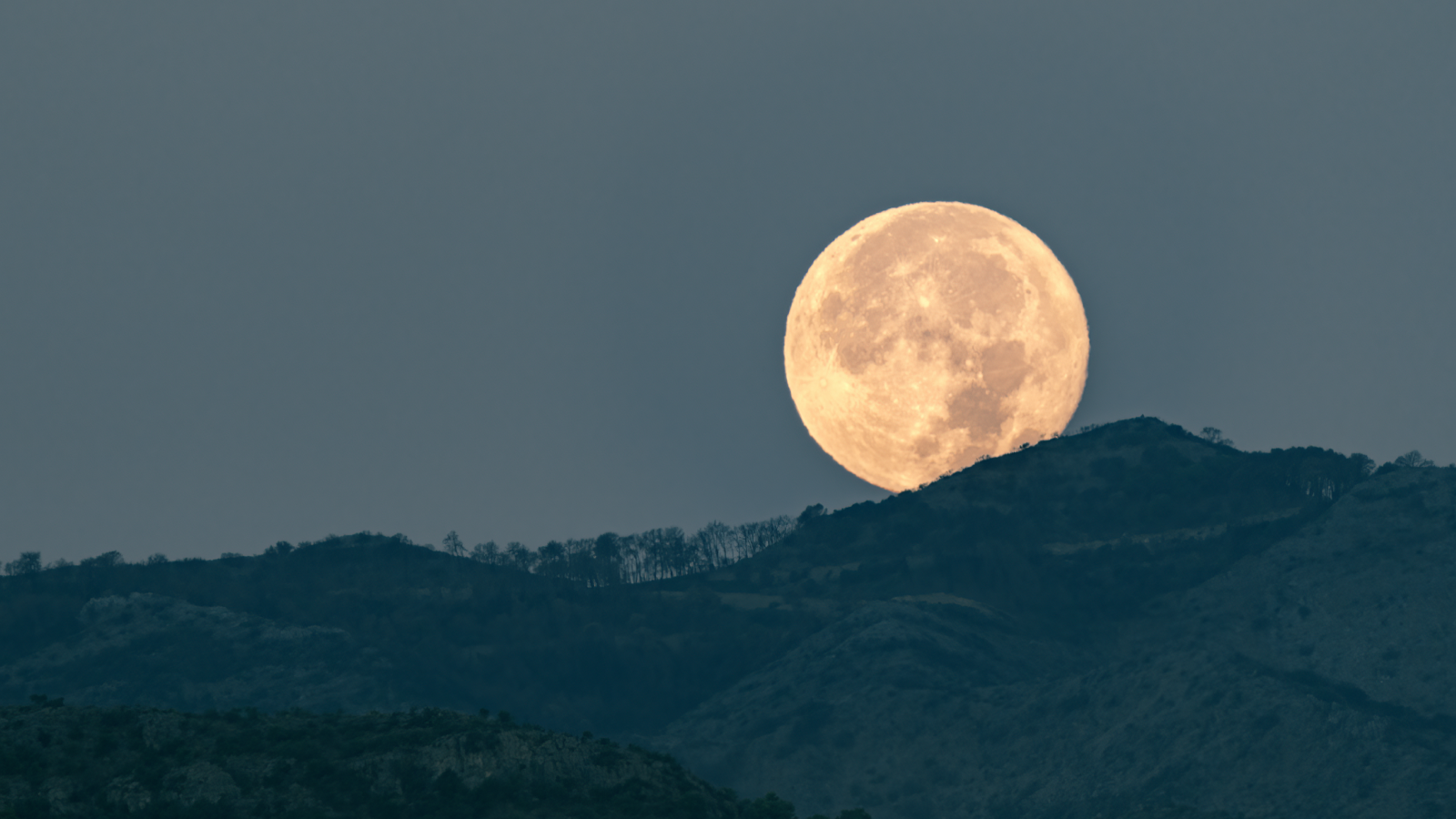 A very large full moon sets behind the mountains.
(Image credit: Daniel Garrido/Getty Images)
Share
Share by:
A very large full moon sets behind the mountains.
(Image credit: Daniel Garrido/Getty Images)
Share
Share by:
- Copy link
- X
When a full moon peeks just above the horizon, it appears enormous. This is a curious phenomenon, as when it is at this position, the moon is the furthest away from us and so should appear about slightly smaller than when it is at its zenith.
"You actually have to look across the distance of the Earth, so [the moon is] one Earth radius further away than when it's directly overhead," Susanna Kohler, an astronomer and spokesperson for the American Astronomical Society, told Live Science.
You may like-
 Scientists finally find explanation for lopsided cloud that follows Earth's moon through space
-
 Earth had a secret neighbor, and it may explain our moon
-
 The moon has been secretly feasting on Earth's atmosphere for billions of years
This mystery, dubbed the "moon illusion," has baffled skywatchers for millennia — and to this day, "we don't fully understand how it works," Kohler said. Early explanations, including ideas from Aristotle, blamed the illusion on the magnifying properties of mist or the refraction of light in the atmosphere. However, photographs taken in modern times debunk this theory, showing how refraction instead makes the moon look squished rather than enlarged.
Sign up for our newsletter

Sign up for our weekly Life's Little Mysteries newsletter to get the latest mysteries before they appear online.
So instead, the moon illusion is probably "something that happens inside the brain" when we construct our perceptions of size, said Bart Borghuis, a neuroscientist at the University of Louisville who wrote a literature thesis on the subject during his undergraduate studies and now researches visual processing.
Researchers have proposed many explanations for how the moon size tricks our brains, Kohler noted. One idea is that when the moon is closer to the horizon, it is held in contrast with the smaller objects, such as trees and buildings, on Earth's surface. However, Kohler added that the moon still appears larger even on a "featureless plane," like the ocean, which suggests there are more factors at play.
The theory backed by the most evidence, and frequently cited in textbooks, focuses on the fallacies of how we often use distance to perceive size. According to Borghuis, size perception is a "two-step process." First, our retinas record the size of the object. And second, we judge its size by accounting for its perceived distance away from us, a visual perception principle known as Emmert's Law.
Sign up for the Live Science daily newsletter nowContact me with news and offers from other Future brandsReceive email from us on behalf of our trusted partners or sponsorsBy submitting your information you agree to the Terms & Conditions and Privacy Policy and are aged 16 or over.This principle is at play when it comes to the moon, according to research published in the journal Science in 1962. The study found that when a simulated moon is shown at the end of a horizon, people perceive it to be larger because the terrain makes it seem like it is farther away. In contrast, when a moon is shown without any terrain, where it lacks indicators suggesting visual distance, the augmenting illusion disappears.
This was an observation "that was repeated many times in psychophysics experiments": A filled-in space is perceived to be more extended and longer than an empty space," Borghuis told Live Science.
As a result, "most of us perceive the sky as kind of a flattened bowl," Kohler said, even though the sky is technically a half sphere. This is another way to think about the moon illusion. With a flattened sky, when something is on the horizon, we think it is farther away than if it's overhead, which tricks us into thinking that a same-sized object is larger when it's lower in the sky.
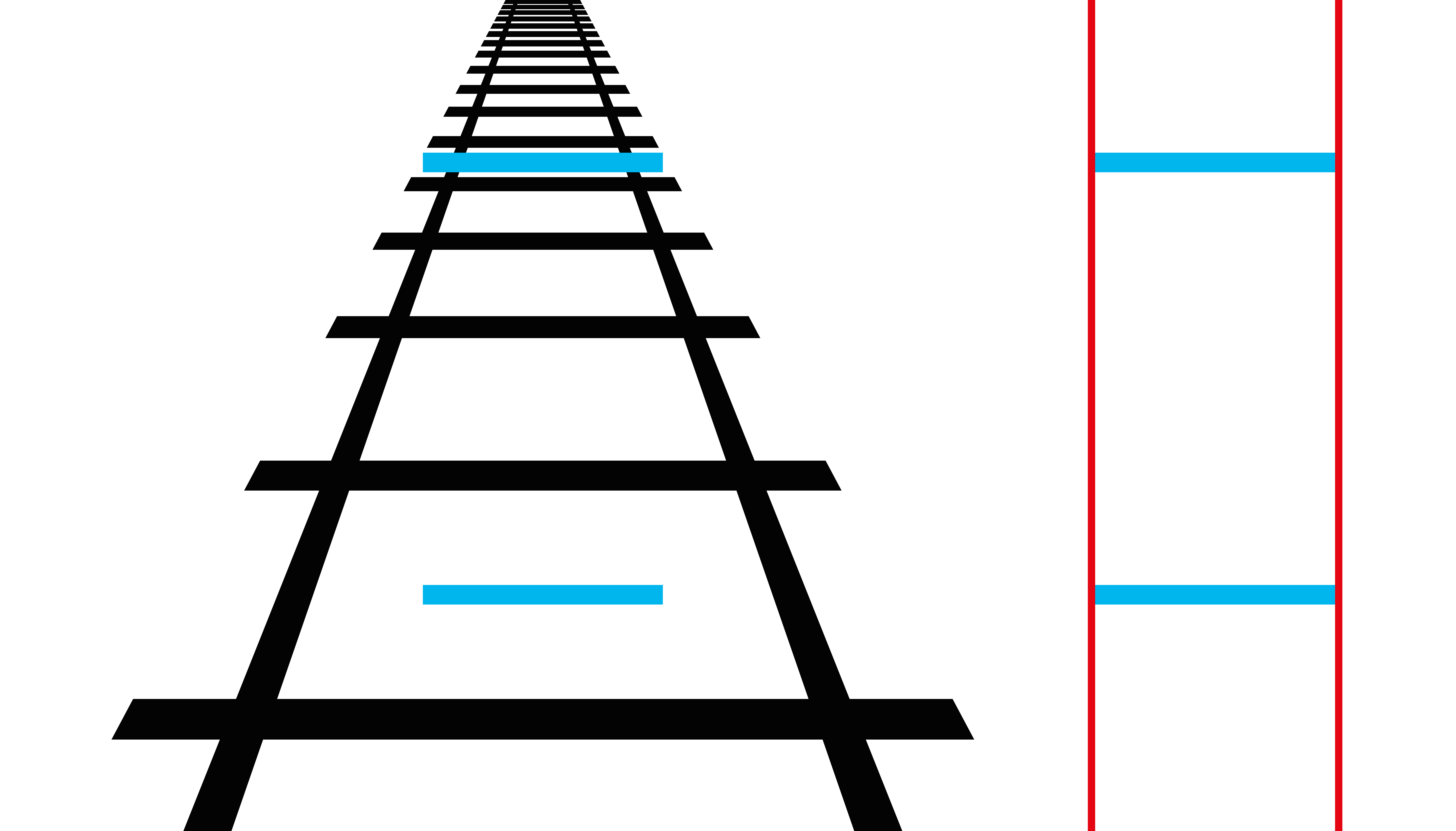
This idea is similar to the basis of the Ponzo illusion, in which the same-sized lines appear to differ in length because they are placed at different perspectives.
RELATED MYSTERIES—What are the mysterious lights sometimes seen on the moon?
—Why can't we see the far side of the moon?
—Why does the moon sometimes have a 'halo'?
You can also see this illusion in action through an at-home experiment. If you stare at a bright object, like a light bulb, for a few seconds and then look at a blank wall, you'll likely see a darker shadow, which should stay the same size no matter what you look at. However, as you switch from looking at a faraway wall to a closer one, you may notice that the size of the spot changes. "It's the most illustrating little test or experiment that you can do," Borghuis said.
These illusions persist even if we know our brain's limits in estimating size. Regardless, "checking out the moon in all of its phases is always a great idea, because it's really cool," Kohler said. "But being able to also look at the cool side of brain science at the same time is neat."
Moon quiz: What do you know about our nearest celestial neighbor?
TOPICS Life's Little Mysteries Alice SunLive Science Contributor
Alice Sun is a science journalist based in Brooklyn. She covers a wide range of topics, including ecology, neuroscience, social science and technology. Her work has appeared in Audubon, Sierra, Inverse and more. For her bachelor's degree, she studied environmental biology at McGill University in Canada. She also has a master's degree in science, health and environmental reporting from NYU.
Show More CommentsYou must confirm your public display name before commenting
Please logout and then login again, you will then be prompted to enter your display name.
Logout Read more Scientists finally find explanation for lopsided cloud that follows Earth's moon through space
 Earth had a secret neighbor, and it may explain our moon
 The moon has been secretly feasting on Earth's atmosphere for billions of years
 Why don't you usually see your nose?
 When is the next full moon?
 Beaver Supermoon: The biggest, brightest full moon of the year rises tonight
Latest in The Moon
The moon has been secretly feasting on Earth's atmosphere for billions of years
Beaver Supermoon: The biggest, brightest full moon of the year rises tonight
Latest in The Moon
The moon has been secretly feasting on Earth's atmosphere for billions of years
 'Wolf Supermoon' gallery: See the first full moon of 2026 in pictures from across the world
 Full moons of 2026: When to see all 13 moons rise next year
 Cold Moon 2025: See the last and highest full moon of the year
Scientists finally find explanation for lopsided cloud that follows Earth's moon through space
Beaver Supermoon: The biggest, brightest full moon of the year rises tonight
Latest in Features
Why does the moon look larger when it's on the horizon?
Cold Moon 2025: See the last and highest full moon of the year
Scientists finally find explanation for lopsided cloud that follows Earth's moon through space
Beaver Supermoon: The biggest, brightest full moon of the year rises tonight
Latest in Features
Why does the moon look larger when it's on the horizon?
 Chocolate Hills: The color-changing mounds in the Philippines that inspired legends of mud-slinging giants
 Giant underwater plumes triggered by 7-story waves at Nazaré captured off Portuguese coast
 Could there ever be a worldwide internet outage?
Why don't you usually see your nose?
Could there ever be a worldwide internet outage?
Why don't you usually see your nose?
 How much of your body could you lose — and still survive?
LATEST ARTICLES
How much of your body could you lose — and still survive?
LATEST ARTICLES 12,500 years ago, people in Bulgaria ate dog meat at feasts and as a delicacy, archaeological study finds
- 2480,000-year-old ax sharpener is the oldest known elephant bone tool ever discovered in Europe
- 3AI can develop 'personality' spontaneously with minimal prompting, research shows. What does that mean for how we use it?
- 4Science news this week: The world's oldest rock art, giant freshwater reservoir found off the East Coast, and the biggest solar radiation storm in decades
- 5Why the rise of humanoid robots could make us less comfortable with each other


