- Physics & Mathematics
- Dark Energy
The six-year Dark Energy Survey has released its full results, showing that two leading models of cosmology are equally valid — but both fail to explain one key observation.
When you purchase through links on our site, we may earn an affiliate commission. Here’s how it works.
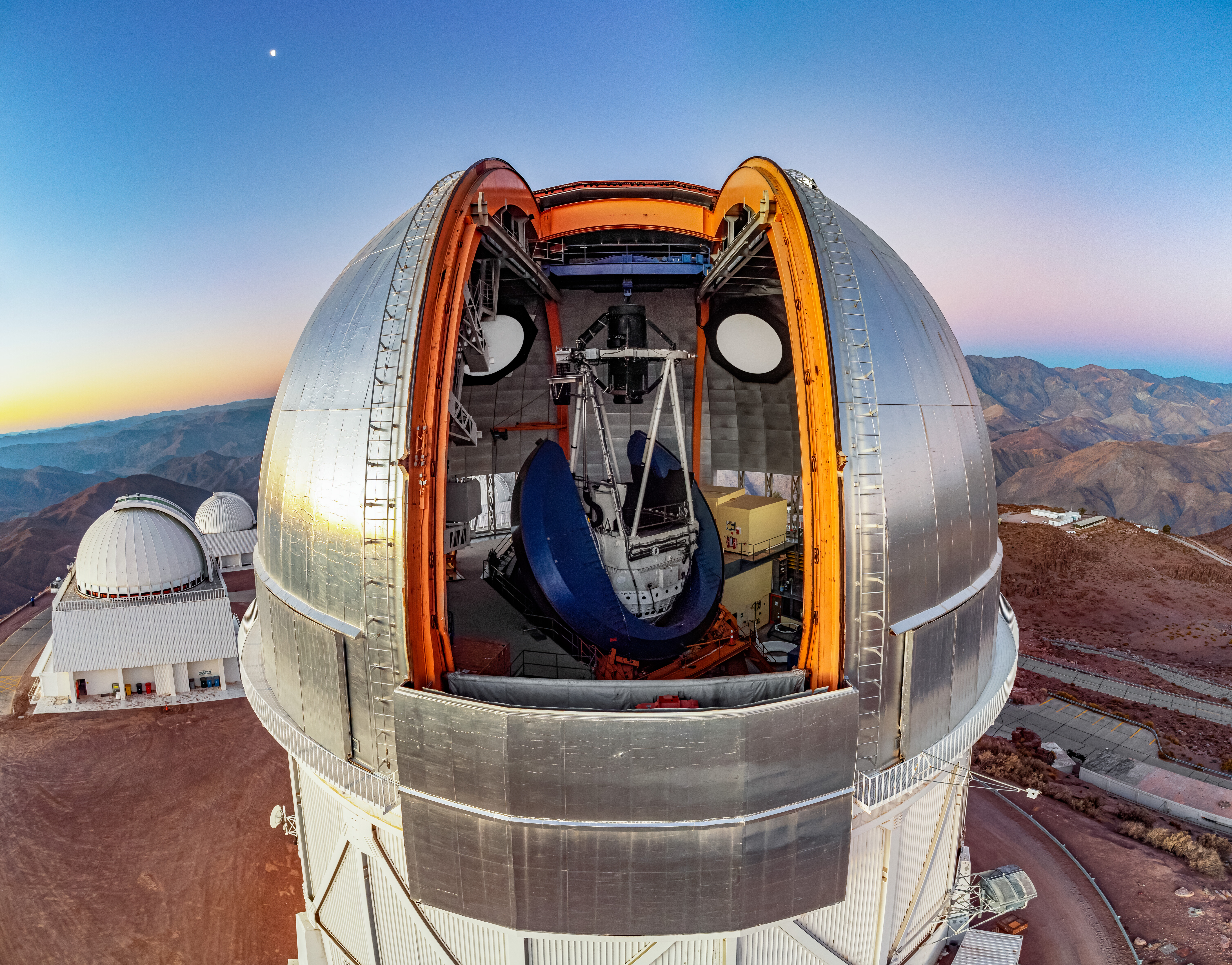
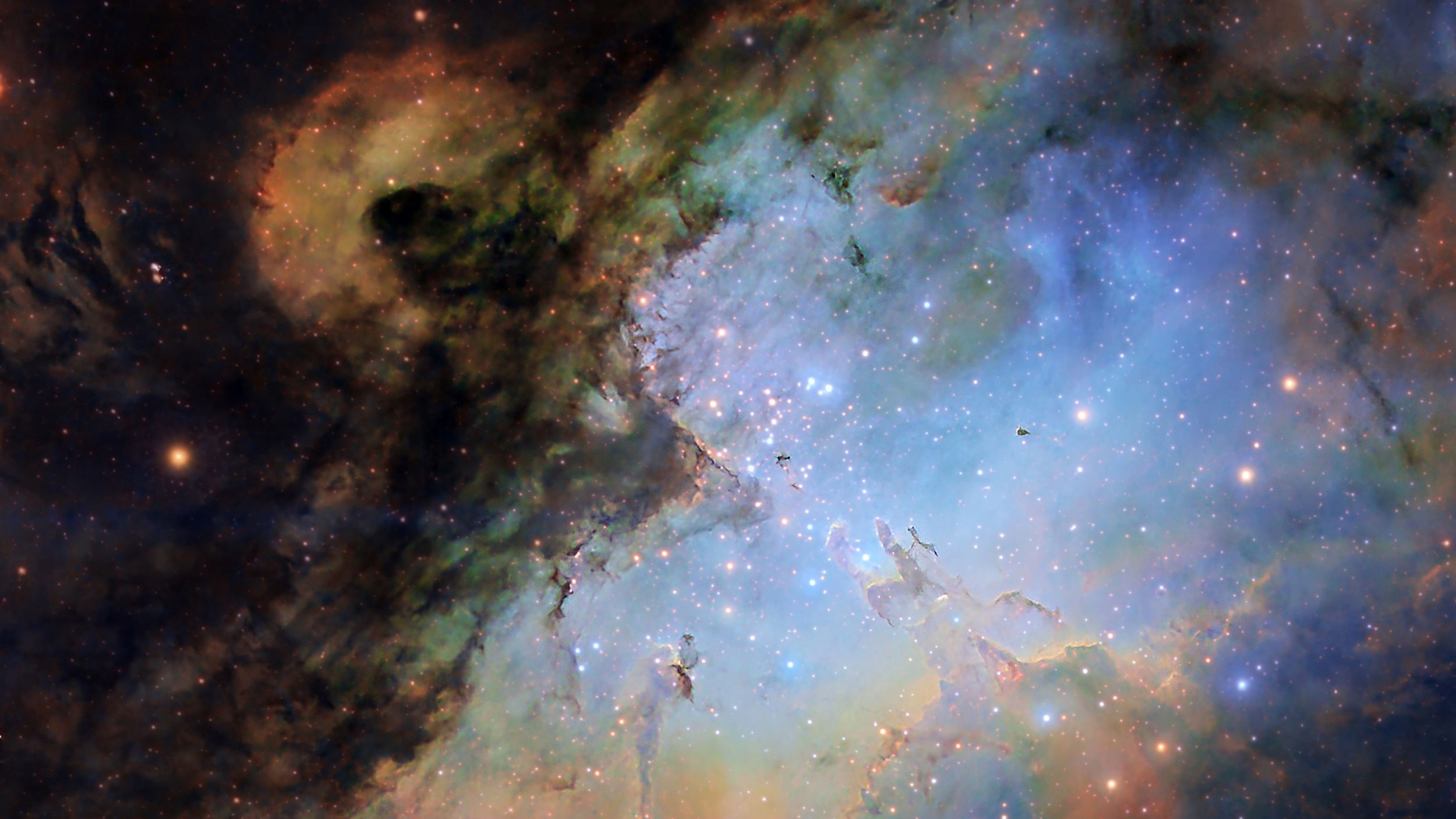
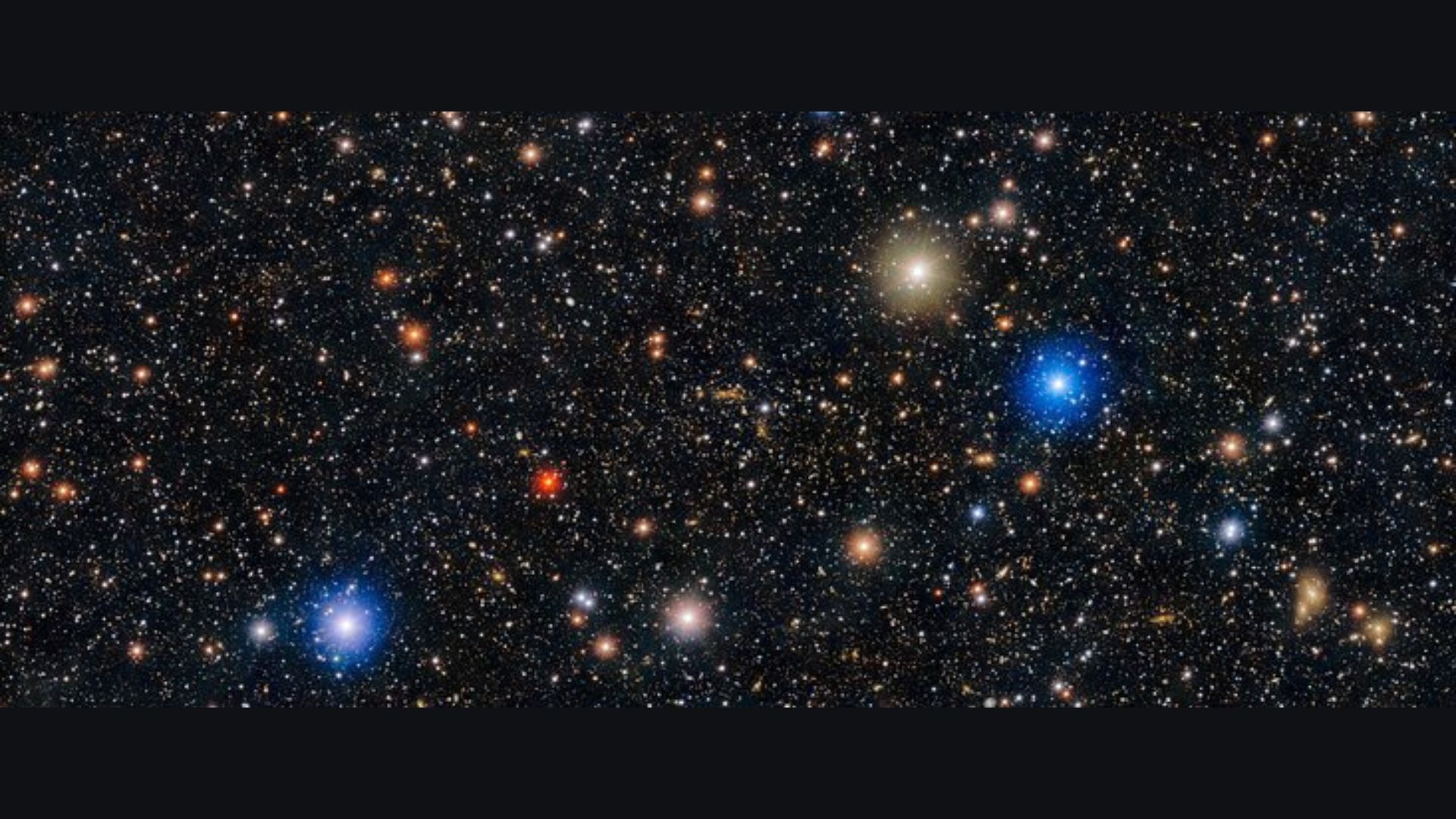 The Dark Energy Survey collected data from hundreds of millions of galaxies over six years to build on our understanding of the universe's expansion history.
(Image credit: CTIO/NOIRLab/DOE/NSF/AURA)
Share
Share by:
The Dark Energy Survey collected data from hundreds of millions of galaxies over six years to build on our understanding of the universe's expansion history.
(Image credit: CTIO/NOIRLab/DOE/NSF/AURA)
Share
Share by:
- Copy link
- X
A six-year survey covering 669 million galaxies has revealed insight into dark energy, the mysterious phenomenon driving the universe's accelerating expansion.
The landmark survey paints a complicated picture about our understanding of the universe, showing that two leading theories of cosmology are both equally good fits for the new cosmic expansion observations. However, both theories still fall short in explaining why matter clusters in the universe the way it does, hinting that there’s more work yet to be done.
You may like-
 30 models of the universe proved wrong by final data from groundbreaking telescope
-
 Our model of the universe is deeply flawed — unless space is actually a 'sticky' fluid
-
 Historic search for 'huge missing piece' of the universe reveals new secrets of particle physics
"These results from the Dark Energy Survey shine new light on our understanding of the Universe and its expansion," Regina Rameika, associate director of the U.S. Department of Energy's Office of High Energy Physics, said in a statement. "They demonstrate how long-term investment in research and combining multiple types of analysis can provide insight into some of the Universe's biggest mysteries."
Expanding our knowledge
Dark energy is thought to make up about 70% of the total energy in the universe, but astronomers still know very little about its true nature. Scientists proposed the concept to explain observations that suggest the universe is expanding at an ever-accelerating rate. The DES is one of several collaborations developed to study the phenomenon in more detail.
In a new paper posted to the preprint server arXiv Jan. 21, DES scientists used four kinds of markers to probe the universe's expansion: baryonic acoustic oscillations, or fluctuations in the density of normal matter throughout the universe; Type Ia supernovas, stellar explosions that can help scientists gauge the distance of cosmic objects; galaxy clusters; and weak gravitational lensing, which occurs when a galaxy cluster warps space-time, distorting the apparent shapes of objects behind it. A series of 18 supporting papers dig into the findings in detail.
Altogether, the data and analysis are consistent with previous studies of dark energy, though the new work places tighter constraints on models of how the universe behaves. The data mostly align with the standard model of cosmology, in which the density of dark energy is constant. The data also fit with a related model in which the dark energy density varies over time, but it didn't align any better than it did with the standard model.
Sign up for the Live Science daily newsletter nowContact me with news and offers from other Future brandsReceive email from us on behalf of our trusted partners or sponsorsBy submitting your information you agree to the Terms & Conditions and Privacy Policy and are aged 16 or over."It is an incredible feeling to see these results based on all the data, and with all four probes that DES had planned," study co-author Yuanyuan Zhang, an astronomer at the National Science Foundation's NOIRLab, which manages the telescope, said in the statement. "This was something I would have only dared to dream about when DES started collecting data, and now the dream has come true."
related stories—'The universe has thrown us a curveball': Largest-ever map of space reveals we might have gotten dark energy totally wrong
—Could the universe ever stop expanding? New theory proposes a cosmic 'off switch'
—Cosmic voids may explain the universe's acceleration without dark energy
Despite the relatively good fit between the data and the standard model, some questions remain. The pattern of galaxy clustering still doesn't line up exactly with predictions from the standard model, but it's not different enough to conclude that the standard model is wrong, the team added.
Still, DES researchers will continue testing this and other models of dark energy in conjunction with the Vera C. Rubin Observatory in Chile to further refine our understanding of the mysterious phenomenon.
"Rubin's unprecedented survey of the southern sky will enable new tests of gravity and shed light on dark energy," Chris Davis, NSF program director for NOIRLab, said in the statement.
Article SourcesDES Collaboration, T.M.C. Abbott et al. (2026, January 21). Dark Energy Survey Year 6 Results: Cosmological Constraints from Galaxy Clustering and Weak Lensing. arXiv.org. https://arxiv.org/abs/2601.14559
 Skyler WareSocial Links NavigationLive Science Contributor
Skyler Ware is a freelance science journalist covering chemistry, biology, paleontology and Earth science. She was a 2023 AAAS Mass Media Science and Engineering Fellow at Science News. Her work has also appeared in Science News Explores, ZME Science and Chembites, among others. Skyler has a Ph.D. in chemistry from Caltech.
Show More CommentsYou must confirm your public display name before commenting
Please logout and then login again, you will then be prompted to enter your display name.
Logout Read more 30 models of the universe proved wrong by final data from groundbreaking telescope
 Our model of the universe is deeply flawed — unless space is actually a 'sticky' fluid
 Historic search for 'huge missing piece' of the universe reveals new secrets of particle physics
 Dark matter and neutrinos may interact, hinting at 'fundamental breakthrough' in particle physics
 'Colder and deader from now on': Euclid telescope confirms the universe has already peaked in star formation
 Did a NASA telescope really 'see' dark matter? Strange gamma-rays spark bold claims, but scientists urge caution
Latest in Dark Energy
Our model of the universe is deeply flawed — unless space is actually a 'sticky' fluid
Did a NASA telescope really 'see' dark matter? Strange gamma-rays spark bold claims, but scientists urge caution
Latest in Dark Energy
Our model of the universe is deeply flawed — unless space is actually a 'sticky' fluid
 'The universe has thrown us a curveball': Largest-ever map of space reveals we might have gotten dark energy totally wrong
 Cosmic voids may explain the universe's acceleration without dark energy
 'A frankly embarrassing result': We still know hardly anything about 95% of the universe
 The universe may end in a 'Big Freeze,' holographic model of the universe suggests
 Huge cosmological mystery could be solved by wormholes, new study argues
Latest in News
Standard model of cosmology holds up in massive 6-year study of the universe
Huge cosmological mystery could be solved by wormholes, new study argues
Latest in News
Standard model of cosmology holds up in massive 6-year study of the universe
 Creepy humanoid robot face learned to move its lips more accurately by staring at itself in the mirror, then watching YouTube
 Shark attacks in Hawaii spike in October, and scientists think they know why
 Rock climbers in Italy accidentally discovered evidence of an 80 million-year-old sea turtle stampede
 IVF hormones could be delivered with painless 'microneedle' patch someday, early study hints
 1,400-year-old Zapotec tomb discovered in Mexico features enormous owl sculpture symbolizing death
LATEST ARTICLES
1,400-year-old Zapotec tomb discovered in Mexico features enormous owl sculpture symbolizing death
LATEST ARTICLES- 1Creepy humanoid robot face learned to move its lips more accurately by staring at itself in the mirror, then watching YouTube
- 2160,000-year-old sophisticated stone tools discovered in China may not have been made by Homo sapiens
- 3Rock climbers in Italy accidentally discovered evidence of an 80 million-year-old sea turtle stampede
- 4Ancient lake full of crop circles lurks in the shadow of Saudi Arabia's 'camel-hump' mountain
- 5Shark attacks in Hawaii spike in October, and scientists think they know why