- Technology
- Artificial Intelligence
The achievements of AI-augmented science are mixed, but that doesn't mean the technology can't play a role in future endeavors.
When you purchase through links on our site, we may earn an affiliate commission. Here’s how it works.
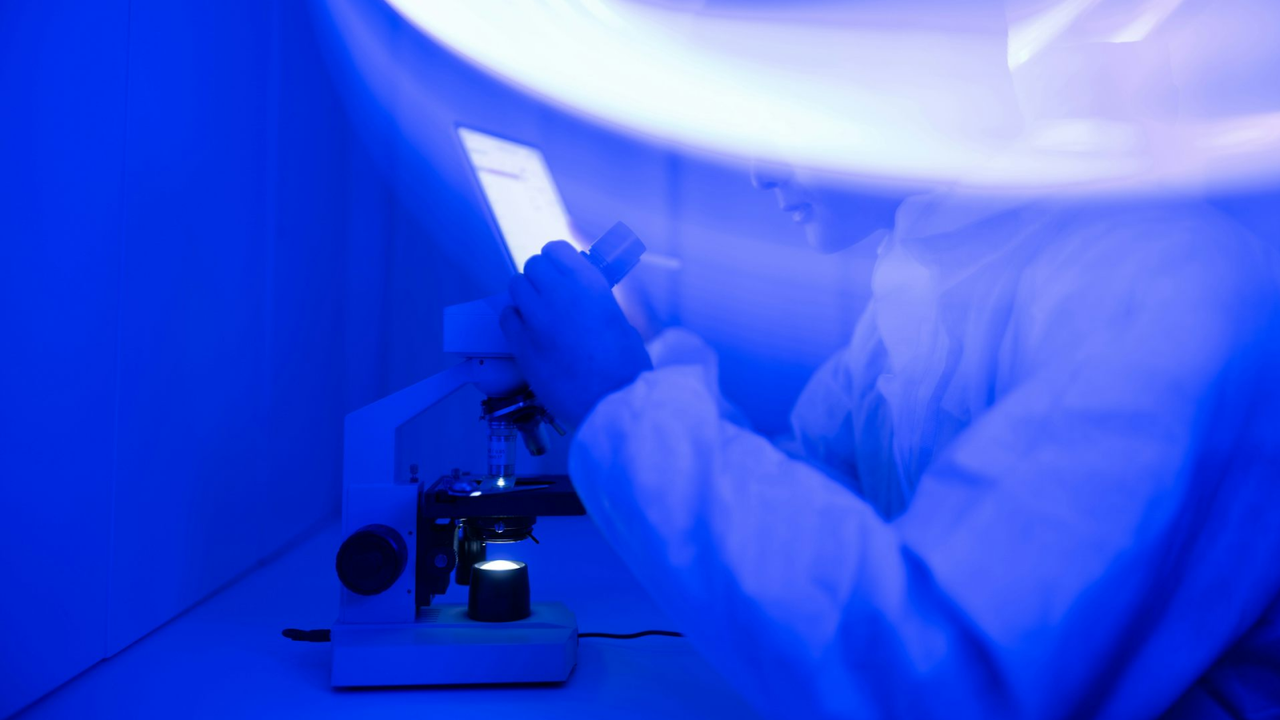
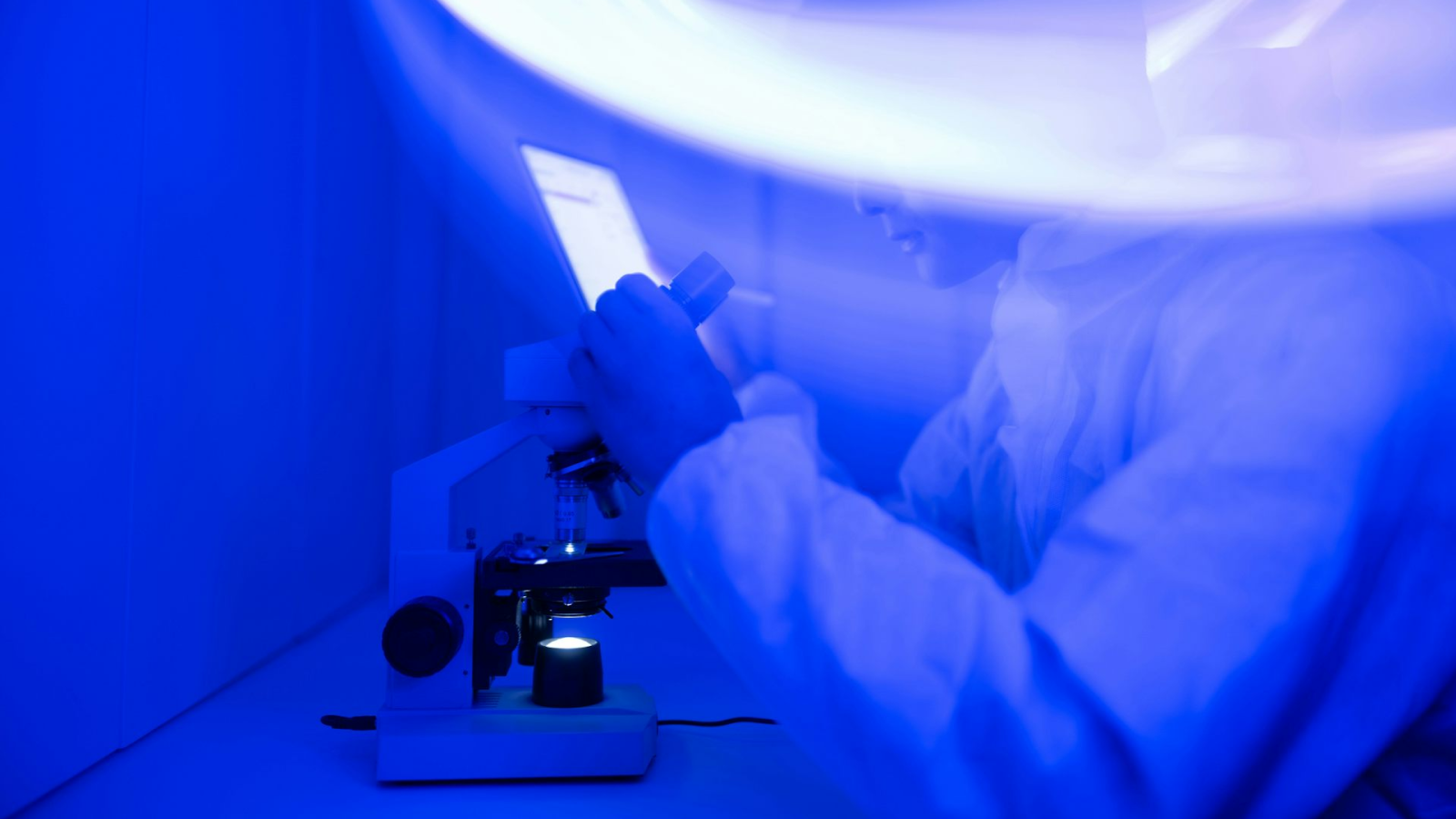 Human scientists lay the foundations for every scientific breakthrough.
(Image credit: Qi Yang/Moment via Getty Images)
Share
Share by:
Human scientists lay the foundations for every scientific breakthrough.
(Image credit: Qi Yang/Moment via Getty Images)
Share
Share by:
- Copy link
- X
Consistent with the general trend of incorporating artificial intelligence into nearly every field, researchers and politicians are increasingly using AI models trained on scientific data to infer answers to scientific questions. But can AI ultimately replace scientists?
The Trump administration signed an executive order on Nov. 24, 2025, that announced the Genesis Mission, an initiative to build and train a series of AI agents on federal scientific datasets "to test new hypotheses, automate research workflows, and accelerate scientific breakthroughs."
You may like-
 Will AI ever be more creative than humans?
-
 Even AI has trouble figuring out if text was written by AI — here's why
-
 Some people love AI, others hate it. Here's why.
While AI can assist in tasks that are part of the scientific process, it is still far away from automating science — and may never be able to. As a philosopher who studies both the history and the conceptual foundations of science, I see several problems with the idea that AI systems can "do science" without or even better than humans.
AI models can only learn from human scientists
AI models do not learn directly from the real world: They have to be "told" what the world is like by their human designers. Without human scientists overseeing the construction of the digital "world" in which the model operates — that is, the datasets used for training and testing its algorithms — the breakthroughs that AI facilitates wouldn't be possible.
Consider the AI model AlphaFold. Its developers were awarded the 2024 Nobel Prize in chemistry for the model's ability to infer the structure of proteins in human cells. Because so many biological functions depend on proteins, the ability to quickly generate protein structures to test via simulations has the potential to accelerate drug design, trace how diseases develop and advance other areas of biomedical research.
As practical as it may be, however, an AI system like AlphaFold does not provide new knowledge about proteins, diseases or more effective drugs on its own. It simply makes it possible to analyze existing information more efficiently.
Sign up for the Live Science daily newsletter nowContact me with news and offers from other Future brandsReceive email from us on behalf of our trusted partners or sponsorsBy submitting your information you agree to the Terms & Conditions and Privacy Policy and are aged 16 or over. What Is AlphaFold? | NEJM - YouTube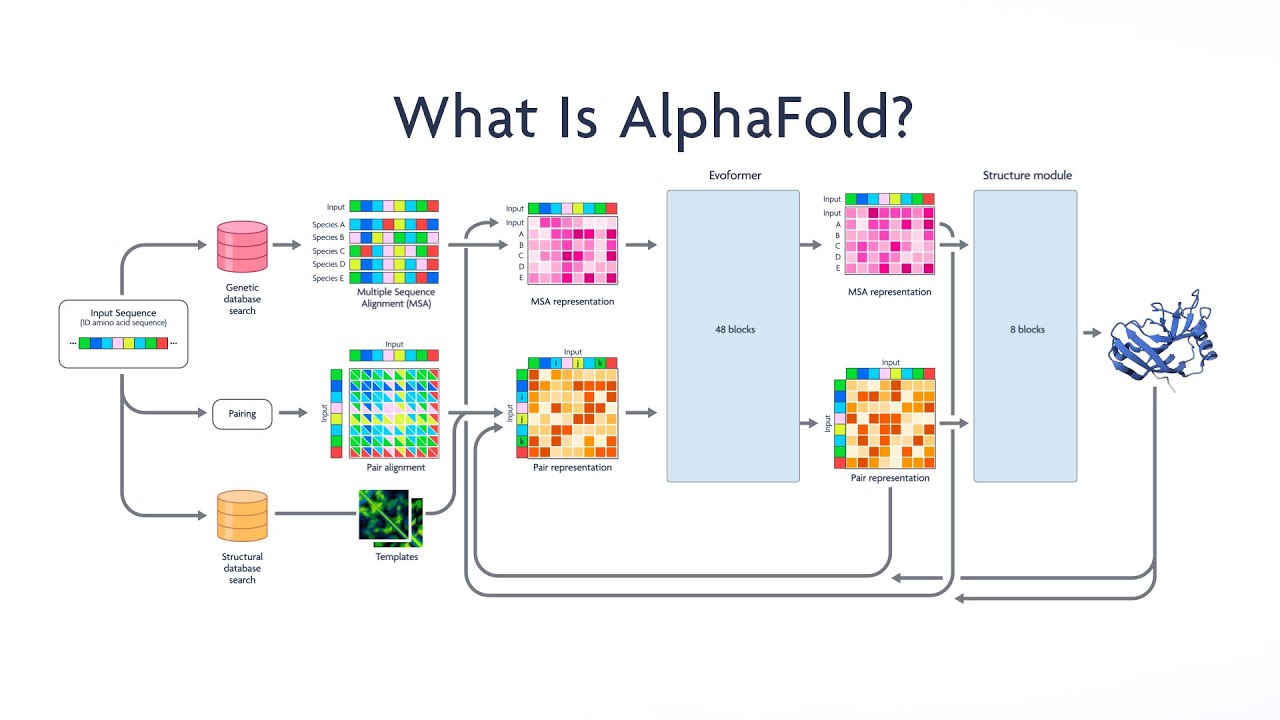 Watch On
As philosopher Emily Sullivan put it, to be successful as scientific tools, AI models must retain a strong empirical link to already established knowledge. That is, the predictions a model makes must be grounded in what researchers already know about the natural world. The strength of this link depends on how much knowledge is already available about a certain subject and on how well the model's programmers translate highly technical scientific concepts and logical principles into code.
AlphaFold would not have been successful if it weren't for the existing body of human-generated knowledge about protein structures that developers used to train the model. And without human scientists to provide a foundation of theoretical and methodological knowledge, nothing AlphaFold creates would amount to scientific progress.
Science is a uniquely human enterprise
But the role of human scientists in the process of scientific discovery and experimentation goes beyond ensuring that AI models are properly designed and anchored to existing scientific knowledge. In a sense, science as a creative achievement derives its legitimacy from human abilities, values and ways of living. These, in turn, are grounded in the unique ways in which humans think, feel and act.
You may like-
Even AI has trouble figuring out if text was written by AI — here's why
-
Some people love AI, others hate it. Here's why.
-
 'It won’t be so much a ghost town as a zombie apocalypse': How AI might forever change how we use the internet
Scientific discoveries are more than just theories supported by evidence: They are the product of generations of scientists with a variety of interests and perspectives, working together through a common commitment to their craft and intellectual honesty. Scientific discoveries are never the products of a single visionary genius.

For example, when researchers first proposed the double-helix structure of DNA, there were no empirical tests able to verify this hypothesis — it was based on the reasoning skills of highly trained experts. It took nearly a century of technological advancements and several generations of scientists to go from what looked like pure speculation in the late 1800s to a discovery honored by a 1953 Nobel Prize.
Science, in other words, is a distinctly social enterprise, in which ideas get discussed, interpretations are offered, and disagreements are not always overcome. As other philosophers of science have remarked, scientists are more similar to a tribe than "passive recipients" of scientific information. Researchers do not accumulate scientific knowledge by recording "facts" — they create scientific knowledge through skilled practice, debate and agreed-upon standards informed by social and political values.
AI is not a 'scientist'
RELATED STORIES—AI is transforming every aspect of science. Here's how.
—Researchers uncover hidden ingredients behind AI creativity
—Tapping into new 'probabilistic computing' paradigm can make AI chips use much less power, scientists say
I believe the computing power of AI systems can be used to accelerate scientific progress, but only if done with care.
With the active participation of the scientific community, ambitious projects like the Genesis Mission could prove beneficial for scientists. Well-designed and rigorously trained AI tools would make the more mechanical parts of scientific inquiry smoother and maybe even faster. These tools would compile information about what has been done in the past so that it can more easily inform how to design future experiments, collect measurements and formulate theories.
But if the guiding vision for deploying AI models in science is to replace human scientists or to fully automate the scientific process, I believe the project would only turn science into a caricature of itself. The very existence of science as a source of authoritative knowledge about the natural world fundamentally depends on human life: shared goals, experiences and aspirations.
This edited article is republished from The Conversation under a Creative Commons license. Read the original article.
 Alessandra BuccellaAssistant Professor of Philosophy, University at Albany, State University of New York
Alessandra Buccella is an Assistant Professor in the Department of Philosophy at the University at Albany - SUNY. She is also a faculty member affiliated with the University's AI+ Institute, a research institute focused on artificial intelligence and its applications, where Buccella is involved in several research grants and interdisciplinary projects, as well as a 'faculty fellow' with the Center for Technology in Government. Her current research focuses on the ethical and societal implications of AI, on the nature of AI as a unique type of cognitive agent, and on the variety of ways in which humans interact and communicate with AI systems.
Show More CommentsYou must confirm your public display name before commenting
Please logout and then login again, you will then be prompted to enter your display name.
Logout Read more Even AI has trouble figuring out if text was written by AI — here's why
 Some people love AI, others hate it. Here's why.
 'It won’t be so much a ghost town as a zombie apocalypse': How AI might forever change how we use the internet
 AI is solving 'impossible' math problems. Can it best the world's top mathematicians?
 'Artificial intelligence' myths have existed for centuries – from the ancient Greeks to a pope's chatbot
 AI can develop 'personality' spontaneously with minimal prompting, research shows. What does that mean for how we use it?
Latest in Artificial Intelligence
AI can develop 'personality' spontaneously with minimal prompting, research shows. What does that mean for how we use it?
Latest in Artificial Intelligence
 Microsoft says its newest AI chip Maia 200 is 3 times more powerful than Google's TPU and Amazon's Trainium processor
AI can develop 'personality' spontaneously with minimal prompting, research shows. What does that mean for how we use it?
Microsoft says its newest AI chip Maia 200 is 3 times more powerful than Google's TPU and Amazon's Trainium processor
AI can develop 'personality' spontaneously with minimal prompting, research shows. What does that mean for how we use it?
 Indigenous TikTok star 'Bush Legend' is actually AI-generated, leading to accusations of 'digital blackface'
Even AI has trouble figuring out if text was written by AI — here's why
Indigenous TikTok star 'Bush Legend' is actually AI-generated, leading to accusations of 'digital blackface'
Even AI has trouble figuring out if text was written by AI — here's why
 Do you think you can tell an AI-generated face from a real one?
 Will AI ever be more creative than humans?
Latest in Opinion
Will AI ever be more creative than humans?
Latest in Opinion
 Antibiotic resistance is the 'silent pandemic' — here are four steps to stop it
 Google Glass has found yet another lease of life — but is it too little too late for smart glasses?
AI may accelerate scientific progress — but here's why it can't replace human scientists
Google Glass has found yet another lease of life — but is it too little too late for smart glasses?
AI may accelerate scientific progress — but here's why it can't replace human scientists
 Why the rise of humanoid robots could make us less comfortable with each other
 Is there anything 'below' Earth in space?
 NASA launches Pandora telescope, taking JWST's search for habitable worlds to a new level
LATEST ARTICLES
NASA launches Pandora telescope, taking JWST's search for habitable worlds to a new level
LATEST ARTICLES 11,400-year-old Zapotec tomb discovered in Mexico features enormous owl sculpture symbolizing death
- 2The UK has lost its measles elimination status — again
- 3People with more 'brown fat' have healthier cardiovascular systems. A new study in mice may explain why.
- 4Microsoft says its newest AI chip Maia 200 is 3 times more powerful than Google's TPU and Amazon's Trainium processor
- 5Canon 18x50 IS UD all-weather binoculars review