
- Health
 Why don't you usually see your nose?
Features
By
Ashley Hamer
published
24 January 2026
Why don't you usually see your nose?
Features
By
Ashley Hamer
published
24 January 2026
Our nose is right in front of us. So why don't we normally notice it?
When you purchase through links on our site, we may earn an affiliate commission. Here’s how it works.
 Why don't we normally notice our noses?
(Image credit: Getty Images)
Share
Share by:
Why don't we normally notice our noses?
(Image credit: Getty Images)
Share
Share by:
- Copy link
- X
Close one eye, and focus straight ahead, without moving your eyes. You'll notice a fleshy blur in your peripheral vision — your nose. It's there every waking moment, yet you're hardly ever aware of it. So why can't we see our noses, even though they're literally right in front of us?
"You can see your nose," said Michael Webster, a vision scientist and co-director of the neuroscience program at the University of Nevada, Reno. We’re just not aware of it most of the time.
You may like-
 Why does the moon look larger when it's on the horizon?
-
 Study reveals why the brain 'zones out' when you're exhausted
-
 Brain scans reveal 'dial' that helps keep us from getting lost
"Vision is actually a prediction about what you think the world is," Webster said. "You want to be aware of, 'How does the world differ?' 'What are the surprises and errors and the things that I didn't predict?' Normally, you're not aware of your nose because you already know about it and you just don't want to be aware of it. … It's a big disadvantage to waste some of your energy attending to that."
This makes sense from a survival perspective; constantly processing unchanging features, like your nose, would be a waste of limited mental resources when you need to detect threats, find food or navigate your environment. In fact, your brain cancels out all sorts of information about your own body to help you perceive the outside world.
Sign up for our newsletter

Sign up for our weekly Life's Little Mysteries newsletter to get the latest mysteries before they appear online.
Take your eyes’ blood vessels, for example. The photoreceptors that collect light from the outside world are located in the back of the eye, behind a tangle of blood vessels.
"It's like you're sitting up in a tree of dead branches and you're actually seeing the world through all these dead branches," Webster said.
Your brain usually cancels that out, but there are ways to make your eye's blood vessels appear so your conscious mind can see them. If you’ve ever had an eye exam, you might have noticed dark squiggles in your vision when the optometrist passed a light across your eye. Those are the shadows cast by your eyes’ blood vessels.
Your brain doesn’t just cancel out unwanted information — sometimes it creates information from scratch. Take your blind spot: the blank region in your vision that corresponds to where the optic nerve leaves the eye. Your blind spot is about 5 degrees wide, or more than twice the size of the full moon's appearance in the sky. Yet we usually aren't aware of this huge gap in our vision.
"We're actually filling in that information," Webster said. "Instead of seeing the absence, we've got clues from what's around the blind spot telling us, 'OK, if I'm looking at a white piece of paper, it's very likely that the part that's in the blind spot is also white.'"
You may like-
Why does the moon look larger when it's on the horizon?
-
Study reveals why the brain 'zones out' when you're exhausted
-
Brain scans reveal 'dial' that helps keep us from getting lost
It's even easier to perceive your nose — in fact, you might be hyperaware of it right now simply because you're thinking about it.
" If you actually are consciously trying to see something, then you do become aware of it," Webster said.
related mysteries—Why does water squirt out of your eye if you blow your nose really hard?
—Why do dogs have cold noses?
—Why do smells trigger strong memories?
Our "disappearing" noses reveal something profound about how we experience reality: Our vision isn't like a camera recording what's really there; it's more akin to an artist creating a model of the world that's most useful to us.
Webster took this idea even further. We may not perceive reality at all. "Even this model itself is really just the information that you need to get by. It's not really telling you what the reality of the world is."
TOPICS Life's Little Mysteries Ashley HamerSocial Links NavigationLive Science Contributor
Ashley Hamer is a contributing writer for Live Science who has written about everything from space and quantum physics to health and psychology. She's the host of the podcast Taboo Science and the former host of Curiosity Daily from Discovery. She has also written for the YouTube channels SciShow and It's Okay to Be Smart. With a master's degree in jazz saxophone from the University of North Texas, Ashley has an unconventional background that gives her science writing a unique perspective and an outsider's point of view.
Show More CommentsYou must confirm your public display name before commenting
Please logout and then login again, you will then be prompted to enter your display name.
Logout Read more Why does the moon look larger when it's on the horizon?
 Study reveals why the brain 'zones out' when you're exhausted
 Brain scans reveal 'dial' that helps keep us from getting lost
 'Perfectly preserved' Neanderthal skull bones suggest their noses didn't evolve to warm air
 Which animals are tricked by optical illusions?
 Do people dream in color or black and white?
Latest in Health
Do people dream in color or black and white?
Latest in Health
 Antibiotic resistance is the 'silent pandemic' — here are four steps to stop it
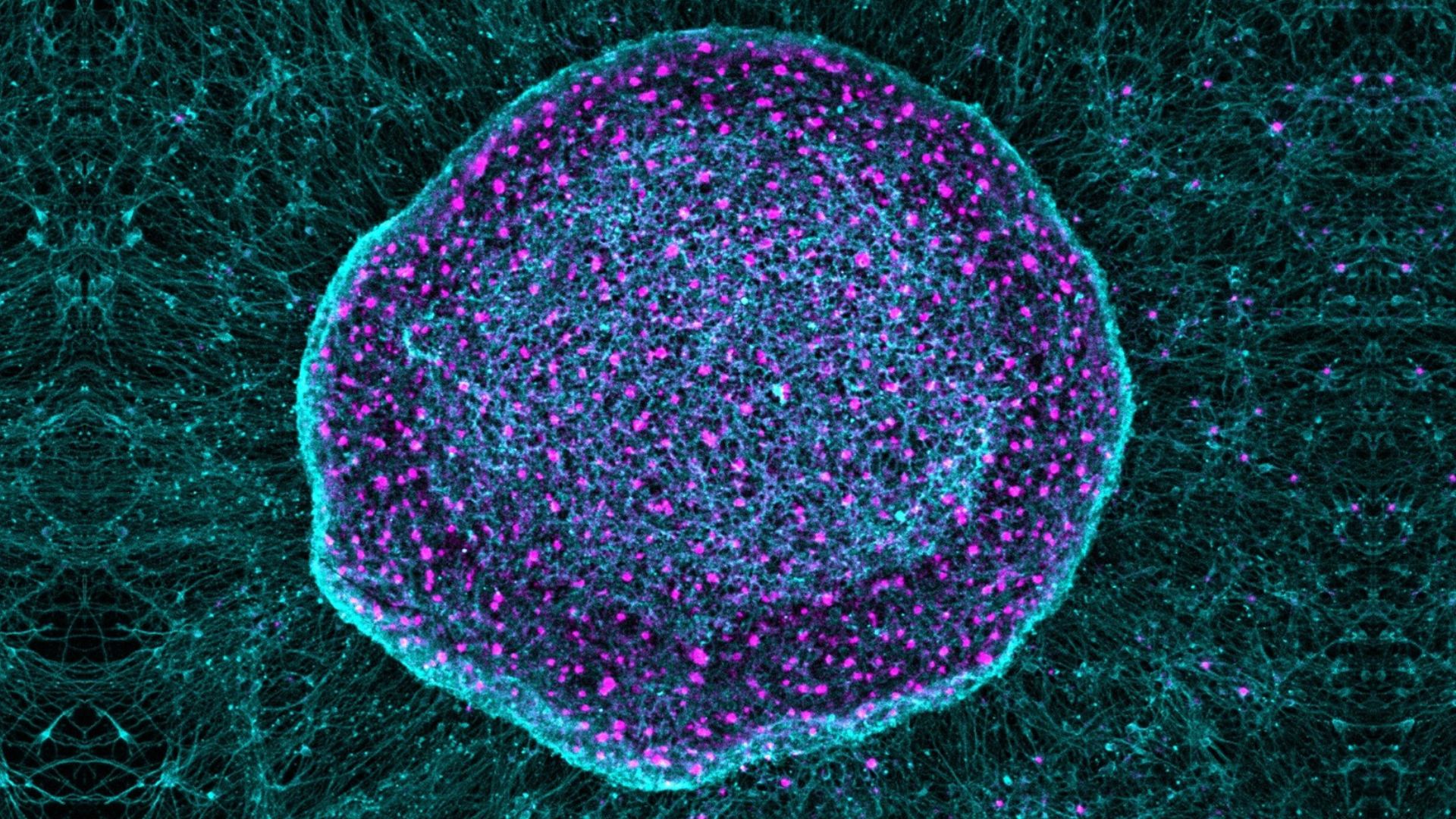 'Pain sponge' derived from stem cells could soak up pain signals before they reach the brain
 Wegovy now comes in pill form — here's how it works
 Lab mice that 'touch grass' are less anxious — and that highlights a big problem in rodent research
 Early research hints at why women experience more severe gut pain than men do
 Tiny improvements in sleep, nutrition and exercise could significantly extend lifespan, study suggests
Latest in Features
Why does the moon look larger when it's on the horizon?
Tiny improvements in sleep, nutrition and exercise could significantly extend lifespan, study suggests
Latest in Features
Why does the moon look larger when it's on the horizon?
 Chocolate Hills: The color-changing mounds in the Philippines that inspired legends of mud-slinging giants
 Giant underwater plumes triggered by 7-story waves at Nazaré captured off Portuguese coast
 Could there ever be a worldwide internet outage?
Why don't you usually see your nose?
Could there ever be a worldwide internet outage?
Why don't you usually see your nose?
 How much of your body could you lose — and still survive?
LATEST ARTICLES
How much of your body could you lose — and still survive?
LATEST ARTICLES- 1Antibiotic resistance is the 'silent pandemic' — here are four steps to stop it
- 2How to see 2 total solar eclipses in the next 2 years — including the 'eclipse of the century'
- 3 A drying climate is making East Africa pull apart faster
- 4Google Glass has found yet another lease of life — but is it too little too late for smart glasses?
- 5James Webb telescope peers into 'Eye of God' and finds clues to life's origins — Space photo of the week