- Space
- Space Exploration
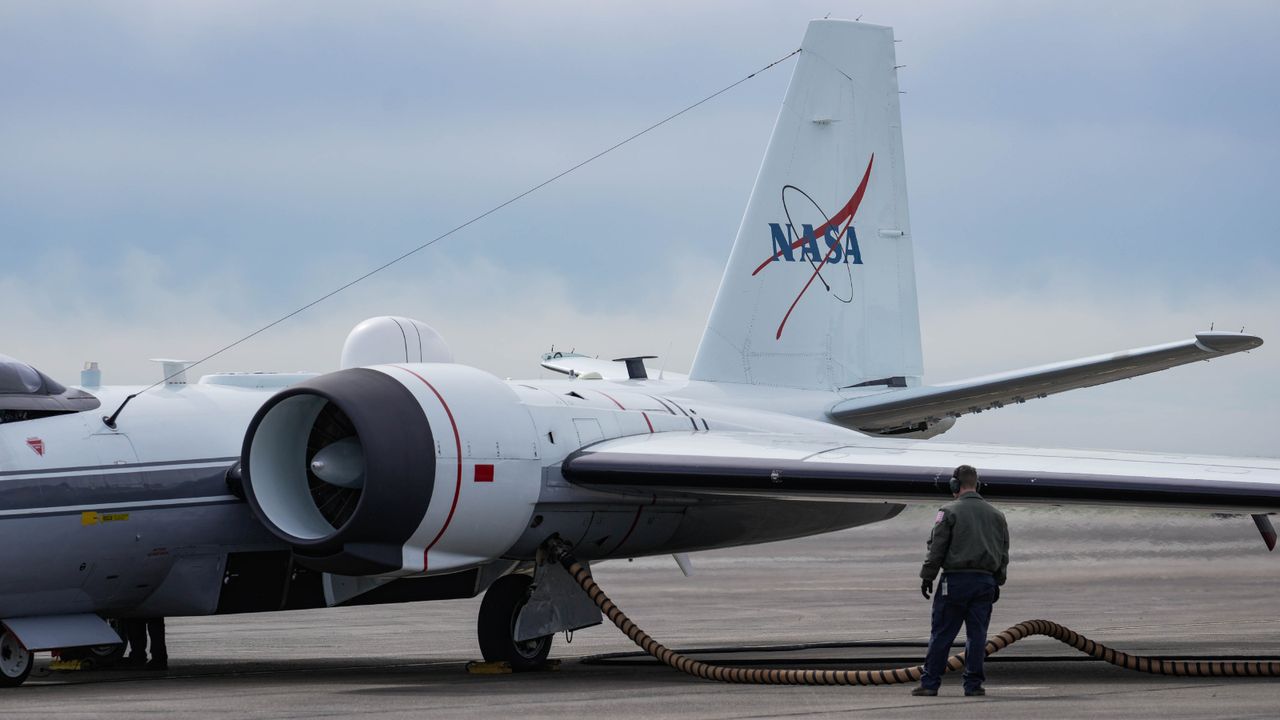
New footage shows one of NASA's WB-57 research jets spewing out flames and smoke as it skids across a runway during an emergency landing near Houston. The veteran aircraft was due to play a small role in the Artemis II mission.
When you purchase through links on our site, we may earn an affiliate commission. Here’s how it works.
Share Share by:- Copy link
- X
A 50-year-old NASA research jet has performed an emergency "belly" landing, unleashing a torrent of flames and smoke as it skidded across a runway in Texas, new footage reveals.
On Tuesday (Jan. 27), the WB-57 research jet carried out a controlled crash on a runway at Ellington Field airport, near NASA's Johnson Space Center outside Houston. The aircraft touched down at a relatively low speed and slid for several hundred yards before grinding to a halt. Local news site KHOU 11 captured a video of the event, showing plumes of yellow flames and white smoke periodically spurting from the plane's underside due to extreme friction between the fuselage and tarmac.
You may like-
 Russia accidentally destroys its only working launch pad as astronauts lift off to ISS
-
 NASA is preparing for simulated launch of Artemis II mega moon rocket — and it could happen as early as Saturday
-
 NASA astronauts back on Earth after unprecedented medical emergency on ISS
This emergency was triggered by a "mechanical issue," which prevented the aircraft's landing gear from deploying prior to touch down, ABC News reported. While the plane sustained significant damage, the plane's crew — consisting of two unnamed pilots — were unharmed, according to NASA representatives.
"Response to the incident is ongoing, and all crew are safe at this time," NASA spokesperson Bethany Stevens wrote on the social platform X. "As with any incident, a thorough investigation will be conducted by NASA into the cause," she added.
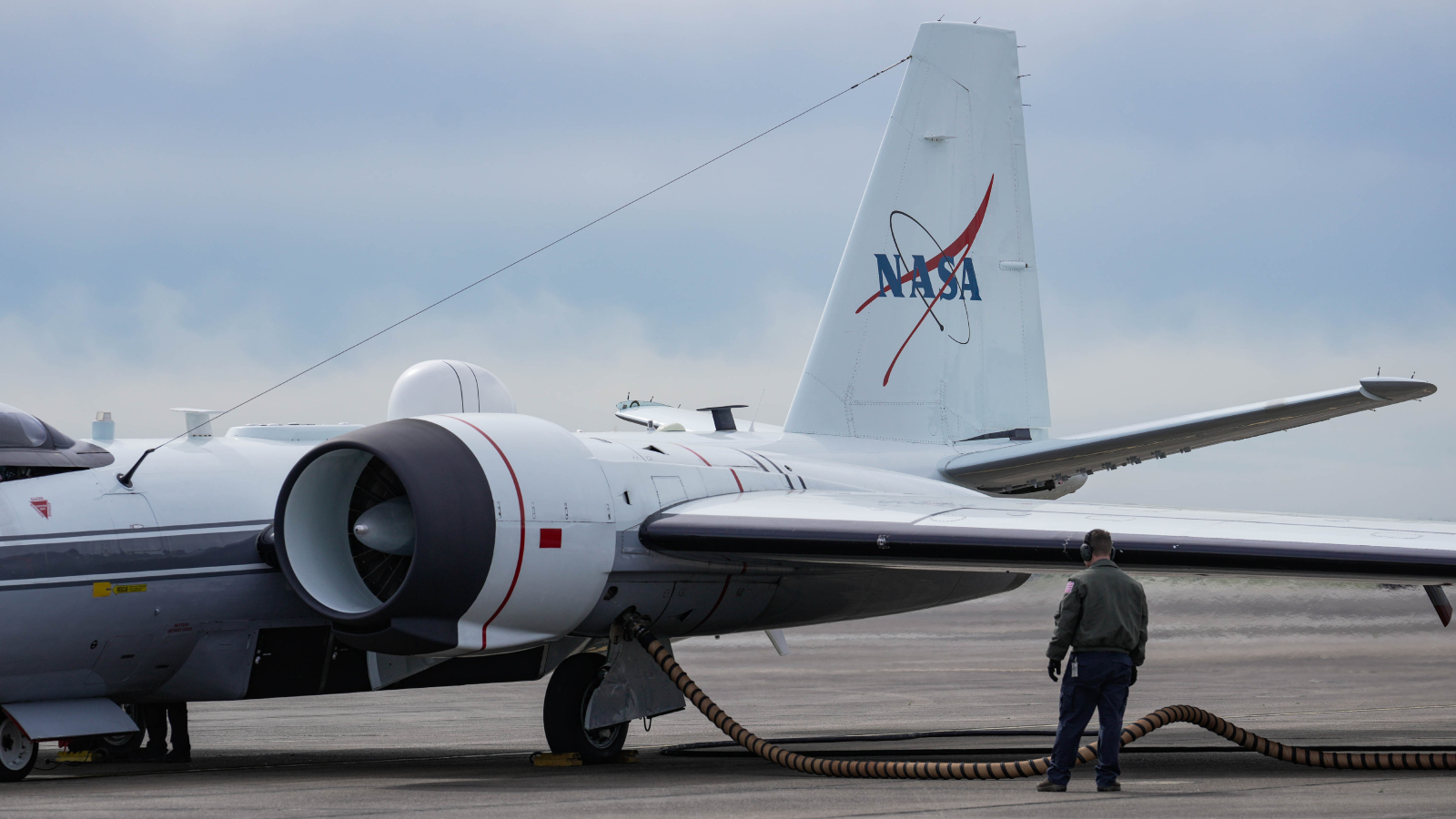
NASA's WB-57 jets are part of its High Altitude Research Program, based at Ellington Field, and are capable of flying at up to 63,000 feet (19,000 meters) — nearly twice the altitude of commercial aircraft — for up to 6.5 hours. The jets carry two crew members, one to fly the plane and another who runs scientific experiments using specialized onboard equipment.
"Mission examples include atmospheric and earth science, ground mapping, cosmic dust collection, rocket launch support and test bed operations for future airborne or spaceborne systems," according to the WB-57 website. In April 2024, the jets were also used to study the total solar eclipse over North America, and were able to extend the duration of totality by chasing the moon.
Sign up for the Live Science daily newsletter nowContact me with news and offers from other Future brandsReceive email from us on behalf of our trusted partners or sponsorsBy submitting your information you agree to the Terms & Conditions and Privacy Policy and are aged 16 or over.WB-57 jets are variants of the RB-57F Canberra — a bomber-reconnaissance hybrid that was developed by the U.S. Air Force in the 1950s and flew in conflicts such as the Vietnam War. These aircraft were lightweight and capable of carrying heavy payloads, which made them well suited to being converted into scientific vehicles.
NASA currently has three WB-57 jets: two that have been in operation since 1972 and one that was restored in 2013, after it was found in an Air Force "boneyard" in Arizona, according to Ars Technica. The three planes flew together for the first time in 2015.
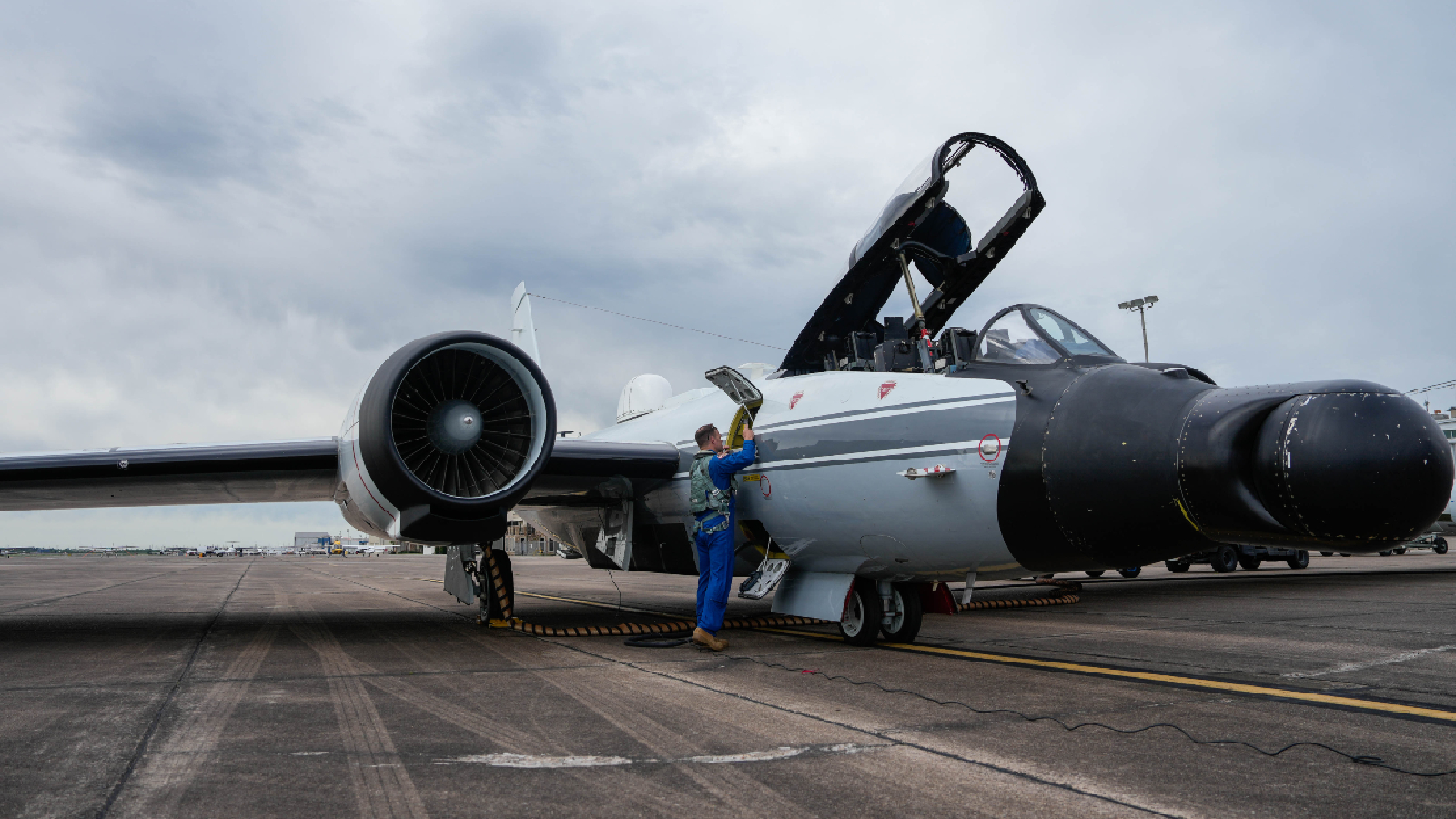
It is unclear if the crashed plane was an original or the restored version. But the other two jets are currently grounded for respective inspections, meaning that all three planes are inoperable for the time being, according to Live Science's sister site Space.com.
RELATED STORIES—NASA’s ultraquiet supersonic 'flying swordfish' makes history with first test flight
—Top-secret X-37B space plane returns to Earth in dead of night after mysterious 434-day mission, US military reveals
—NASA just sent a giant balloon around the world in 16 days. Here's why.
In the past, WB-57 planes have played a role in monitoring the exhaust plumes and reentries of NASA rockets, including the Titan, space shuttle, Delta, Atlas and Athena spacecraft, as well as SpaceX's temperamental Starship rocket, according to Ars Technica.
The crashed jet was scheduled to do the same for the Artemis II moon rocket, which is prepped and ready to launch humans to the lunar environment for the first time since 1972 (when NASA also started the WB-57 program). However, given the damage to the aircraft, it seems unlikely that it will be repaired by the mission's earliest possible launch date of Feb. 6.
TOPICS NASA Harry BakerSocial Links NavigationSenior Staff Writer
Harry is a U.K.-based senior staff writer at Live Science. He studied marine biology at the University of Exeter before training to become a journalist. He covers a wide range of topics including space exploration, planetary science, space weather, climate change, animal behavior and paleontology. His recent work on the solar maximum won "best space submission" at the 2024 Aerospace Media Awards and was shortlisted in the "top scoop" category at the NCTJ Awards for Excellence in 2023. He also writes Live Science's weekly Earth from space series.
Show More CommentsYou must confirm your public display name before commenting
Please logout and then login again, you will then be prompted to enter your display name.
Logout Read more Russia accidentally destroys its only working launch pad as astronauts lift off to ISS
 NASA is preparing for simulated launch of Artemis II mega moon rocket — and it could happen as early as Saturday
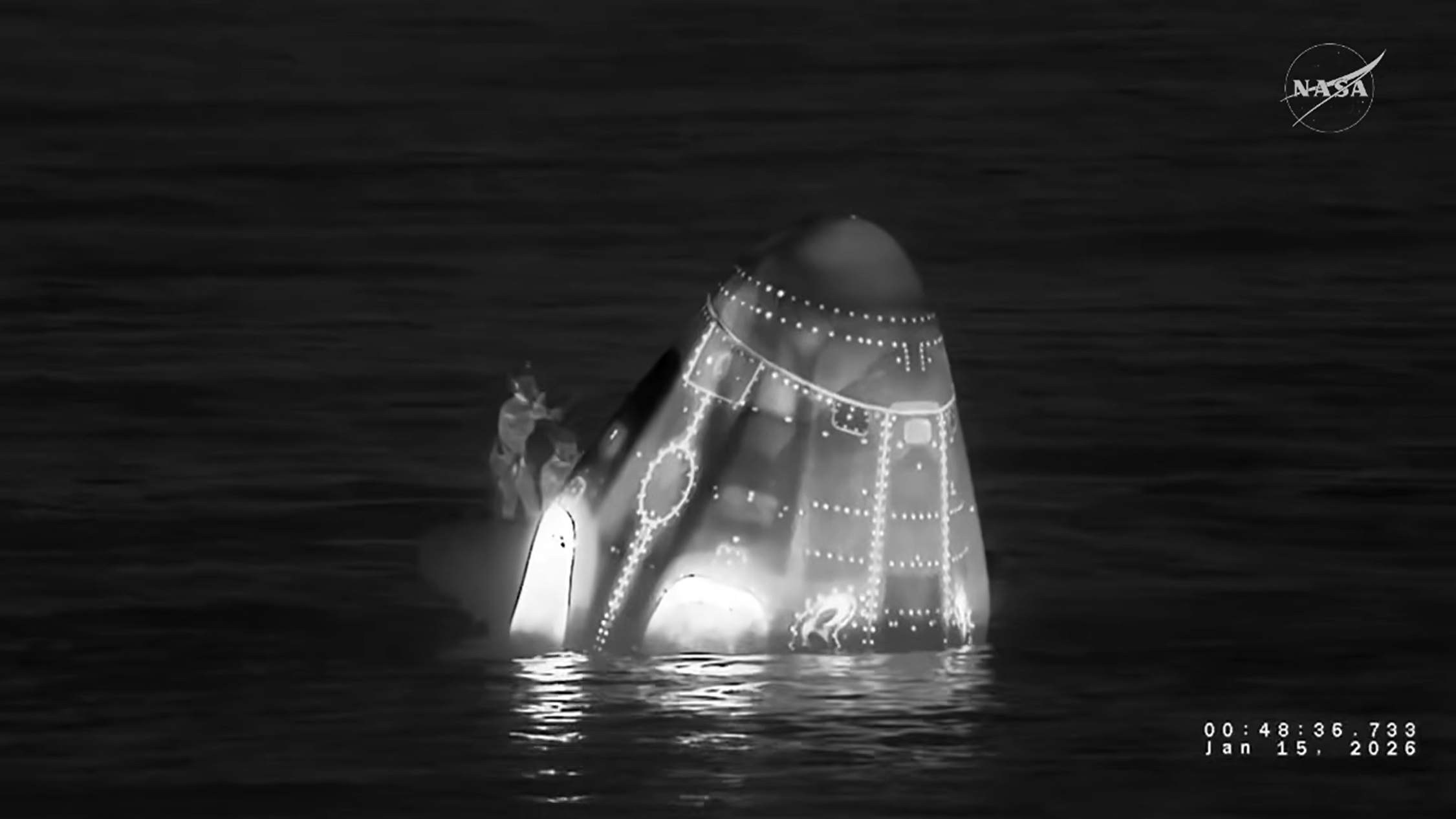 NASA astronauts back on Earth after unprecedented medical emergency on ISS
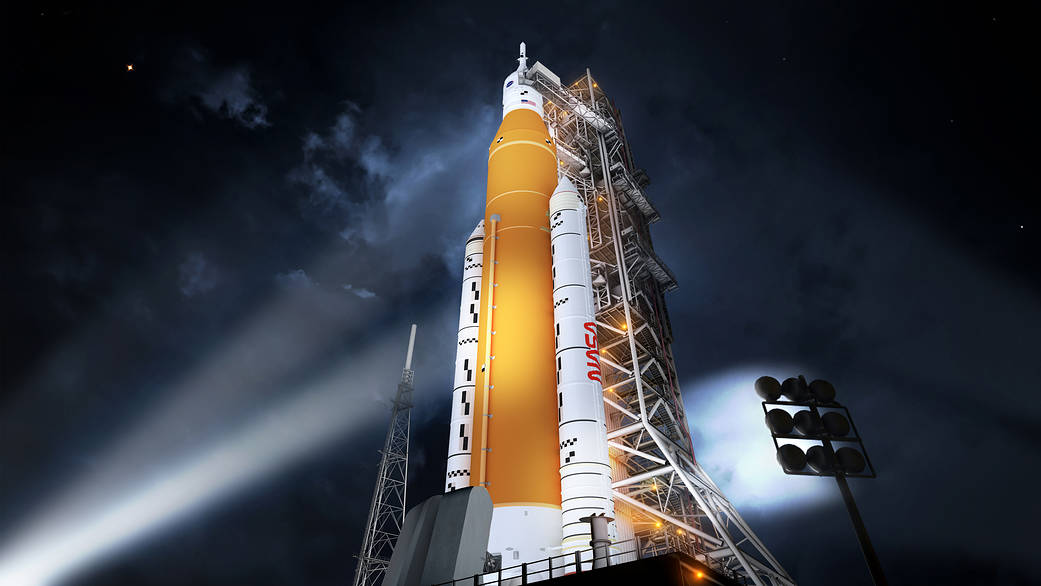 Artemis 2 mission update: Rollout imminent as NASA prepares first crewed Artemis mission to the moon
 Three Chinese astronauts stranded in space after debris hits their return capsule
 Marooned no more! Stranded Chinese astronauts finally have a way home following launch of unmanned 'lifeboat'
Latest in Space Exploration
NASA is preparing for simulated launch of Artemis II mega moon rocket — and it could happen as early as Saturday
Marooned no more! Stranded Chinese astronauts finally have a way home following launch of unmanned 'lifeboat'
Latest in Space Exploration
NASA is preparing for simulated launch of Artemis II mega moon rocket — and it could happen as early as Saturday
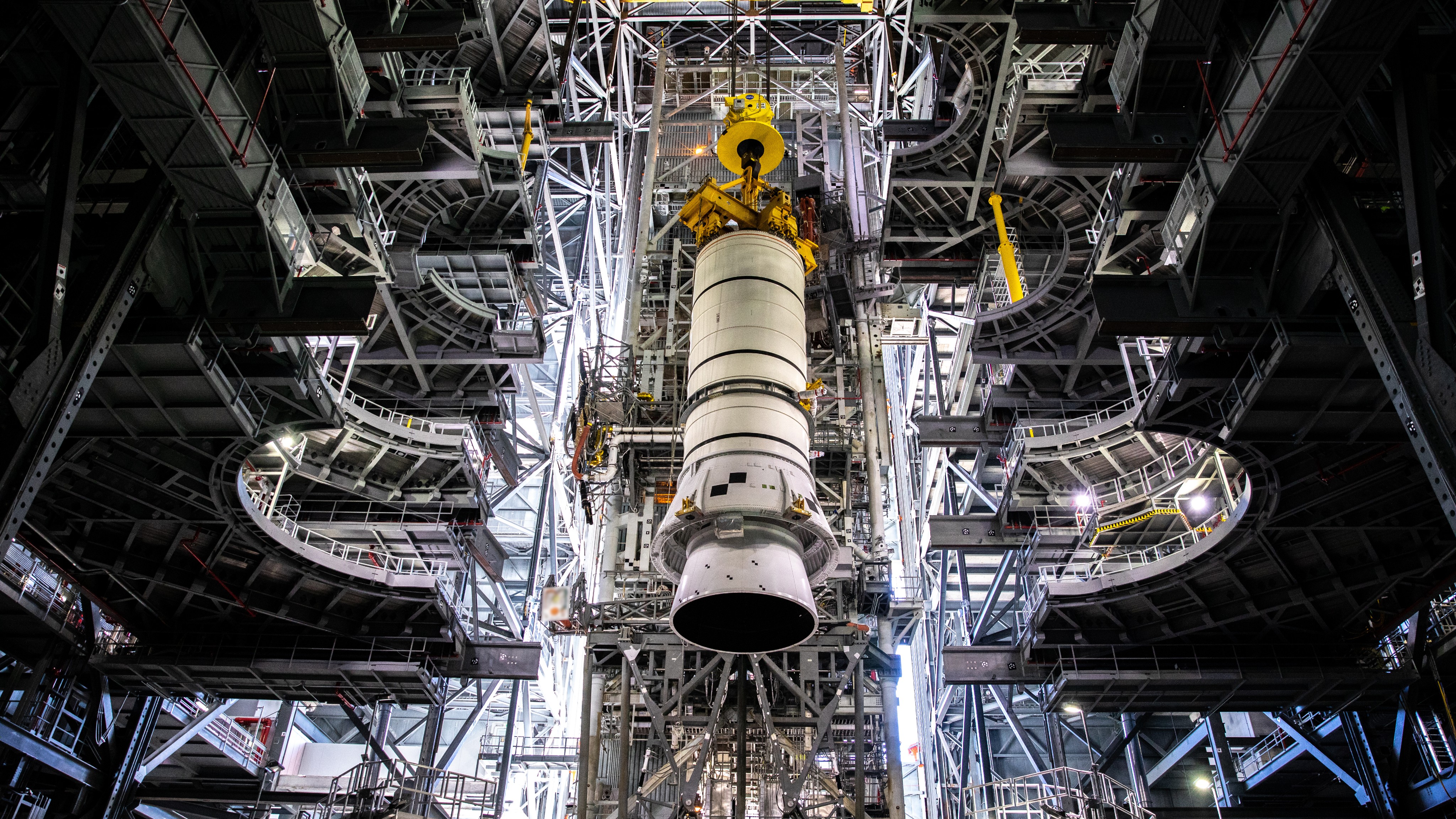 Watch NASA roll its historic Artemis II moon rocket to the launch pad this weekend
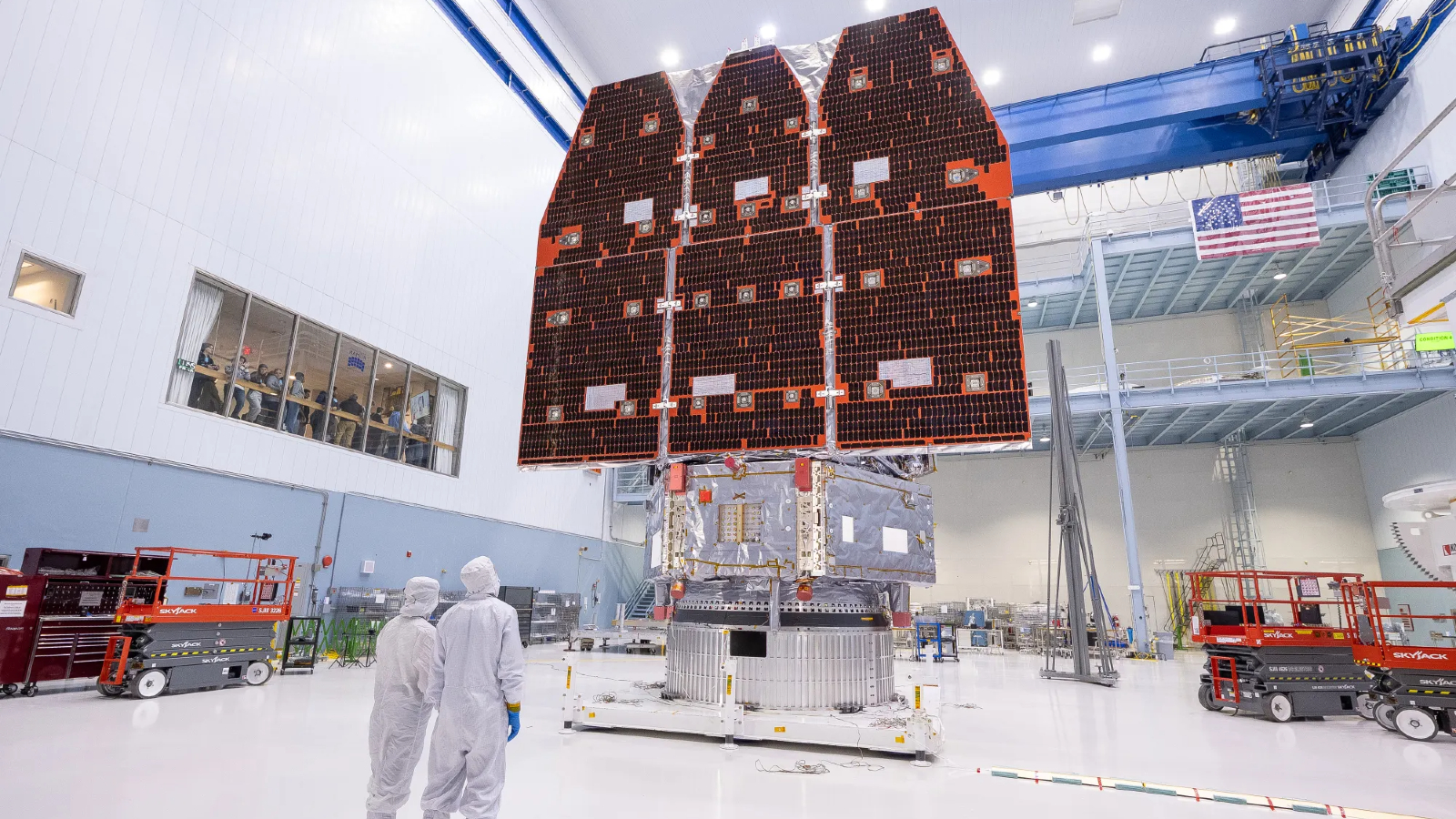 NASA's powerful new Roman Space Telescope is complete — and will soon begin mission to find 100,000 alien worlds
NASA astronauts back on Earth after unprecedented medical emergency on ISS
Artemis 2 mission update: Rollout imminent as NASA prepares first crewed Artemis mission to the moon
NASA's powerful new Roman Space Telescope is complete — and will soon begin mission to find 100,000 alien worlds
NASA astronauts back on Earth after unprecedented medical emergency on ISS
Artemis 2 mission update: Rollout imminent as NASA prepares first crewed Artemis mission to the moon
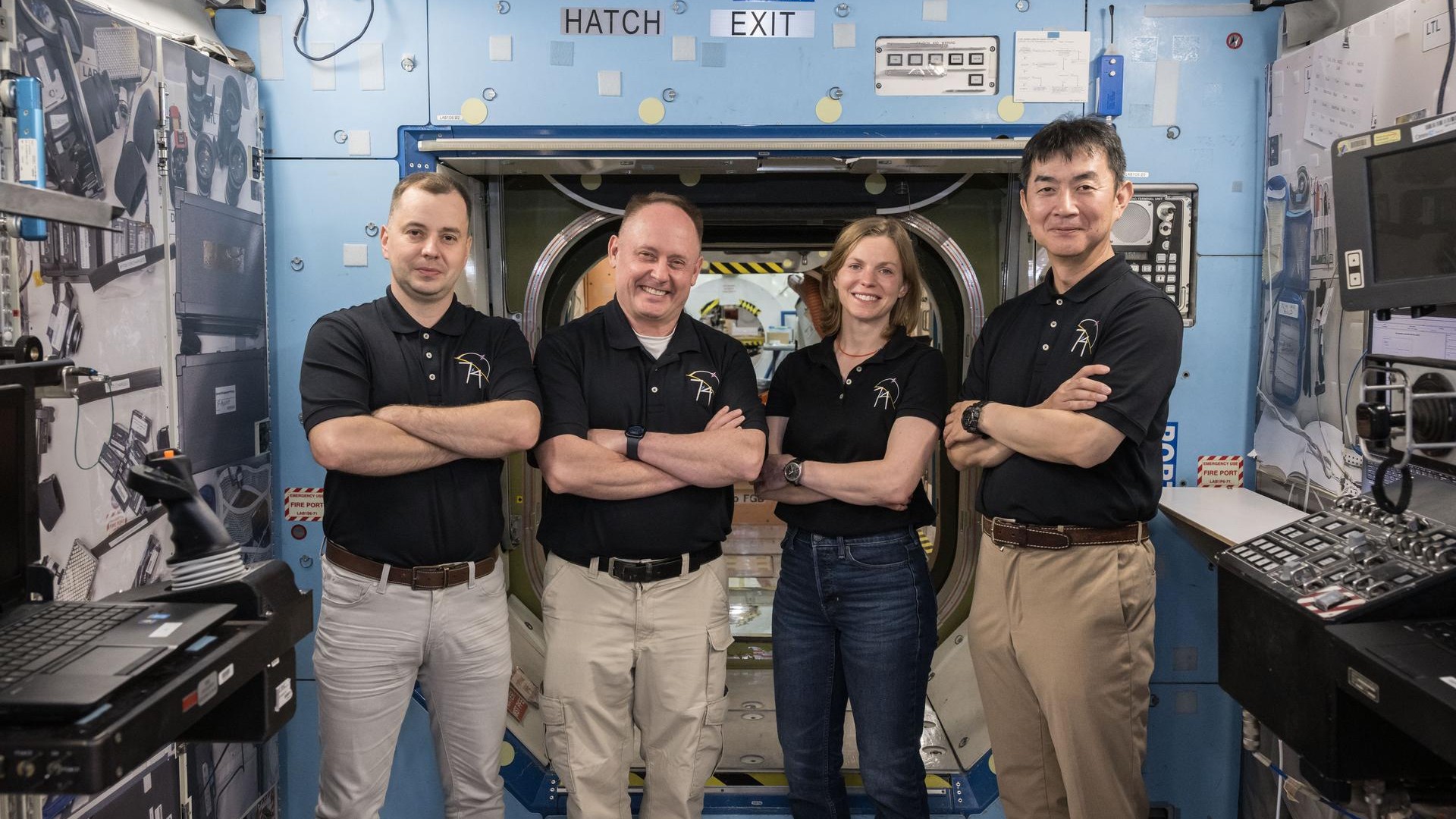 NASA announces unprecedented return of sick ISS astronaut and crew
Latest in News
NASA announces unprecedented return of sick ISS astronaut and crew
Latest in News
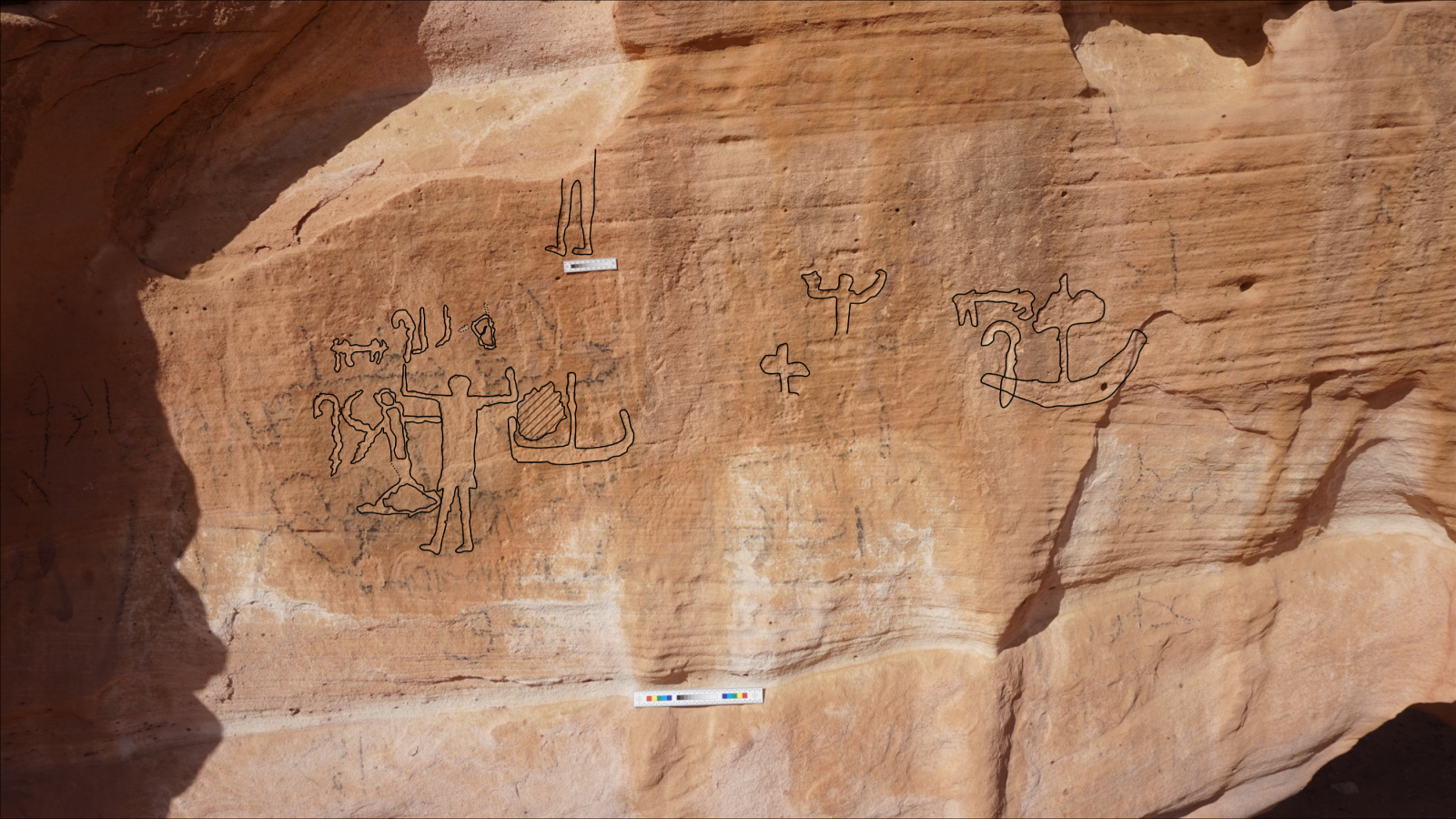 5,000-year-old rock art from ancient Egypt depicts 'terrifying' conquest of the Sinai Peninsula
 Stone Age teenager was mauled by a bear 28,000 years ago, skeletal analysis confirms
NASA jet crashes in flames on Texas runway — taking it out of the Artemis II mission
Stone Age teenager was mauled by a bear 28,000 years ago, skeletal analysis confirms
NASA jet crashes in flames on Texas runway — taking it out of the Artemis II mission
 Critical moment when El Niño started to erode Russia's Arctic sea ice discovered
 AI spots 'jellyfish,' 'hamburgers' and other unexplainable objects in Hubble telescope data
 Romans used human feces as medicine 1,900 years ago — and used thyme to mask the smell
LATEST ARTICLES
Romans used human feces as medicine 1,900 years ago — and used thyme to mask the smell
LATEST ARTICLES- 15,000-year-old rock art from ancient Egypt depicts 'terrifying' conquest of the Sinai Peninsula
- 2Stone Age teenager was mauled by a bear 28,000 years ago, skeletal analysis confirms
- 3February 2026 night sky: What to see and what you need
- 4Drones could achieve 'infinite flight' after engineers create laser-based wireless power system that charges them from the ground
- 5Critical moment when El Niño started to erode Russia's Arctic sea ice discovered