- Space
- Astronomy
- Meteoroids
A German town has been peppered by meteorites after a stunning "fireball" exploded in the skies over central Europe. One extraterrestrial fragment landed in a bedroom after punching a soccer ball-size hole through the building's roof.
When you purchase through links on our site, we may earn an affiliate commission. Here’s how it works.
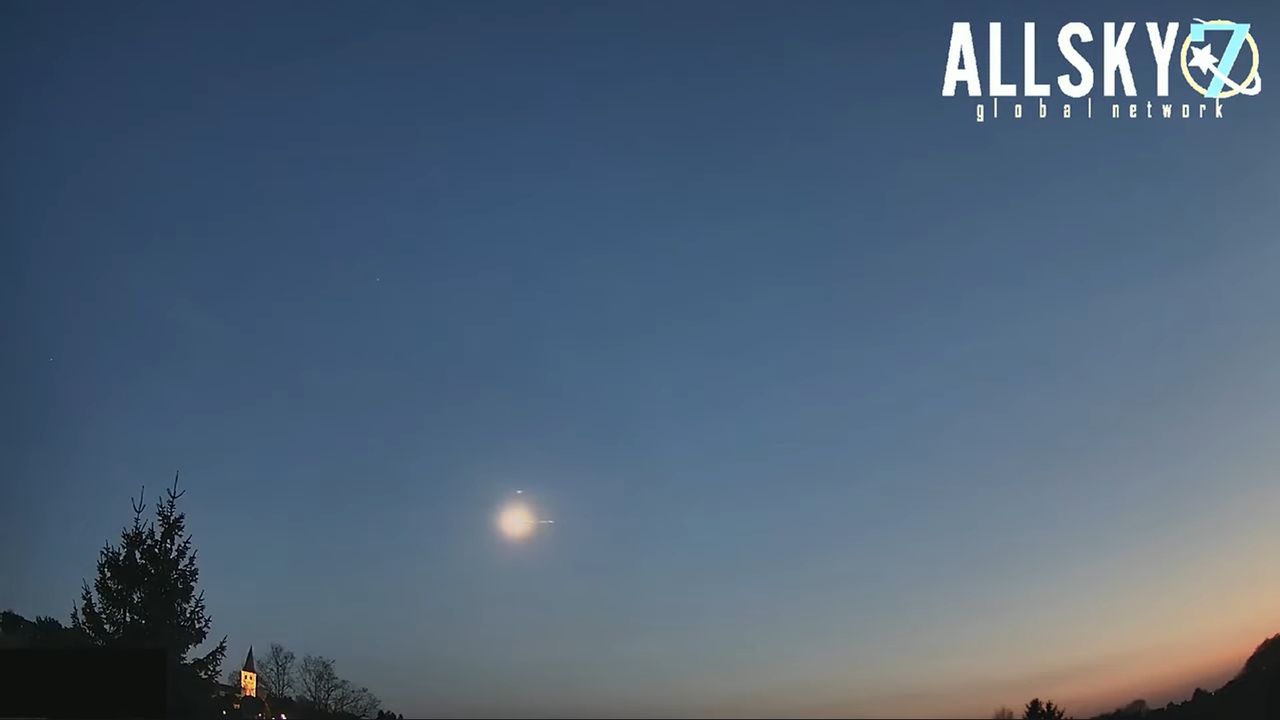
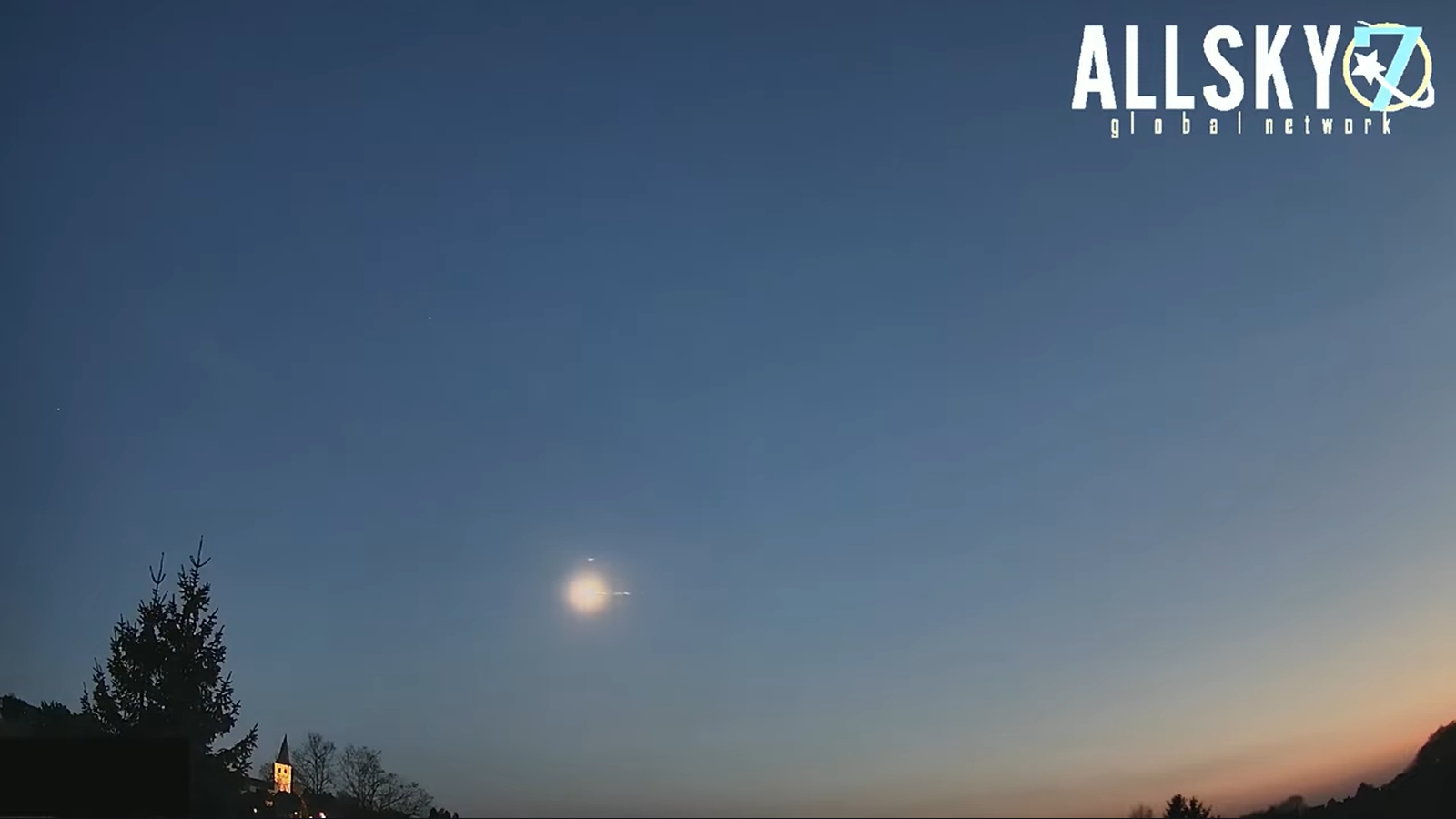
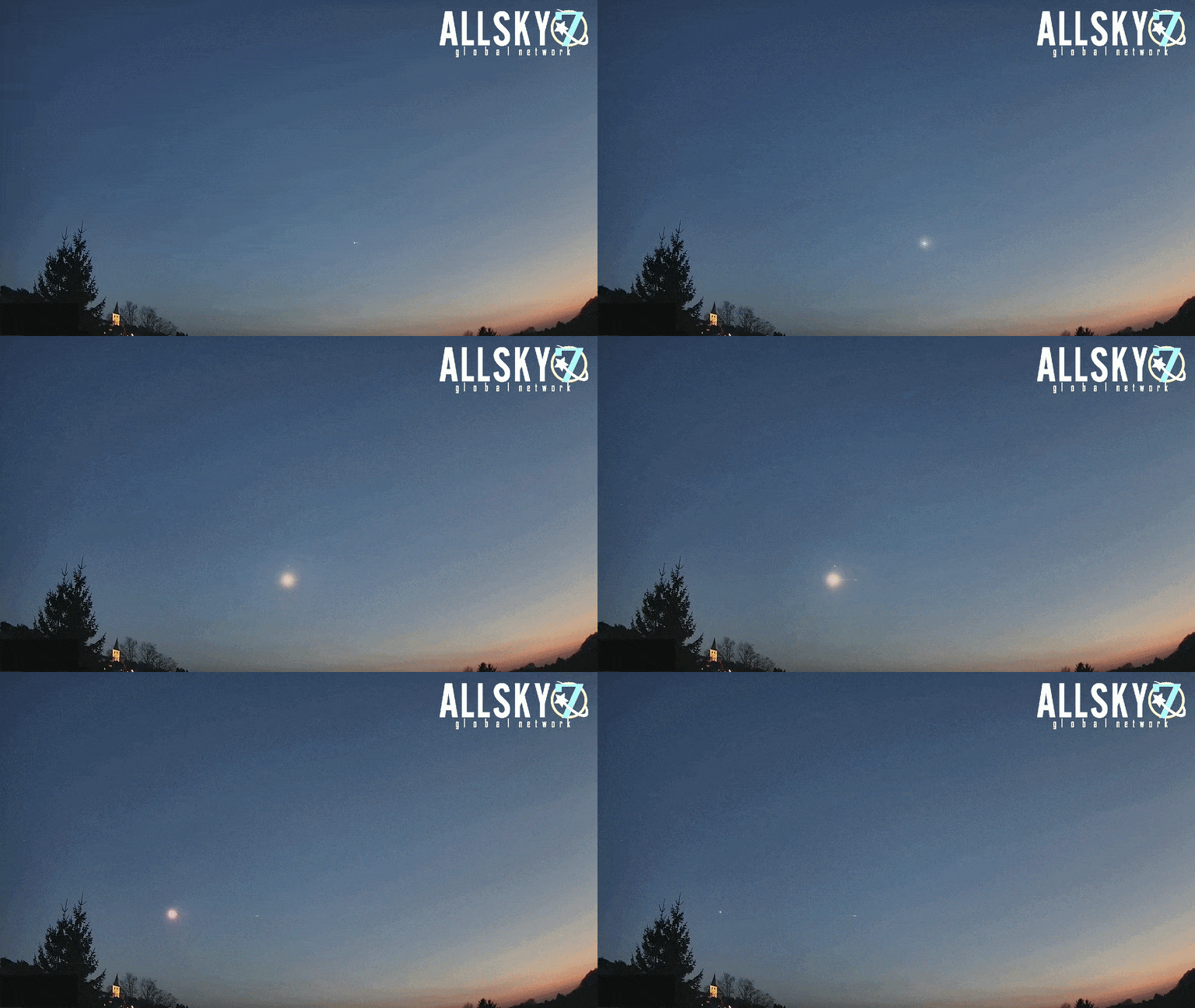 Europe's AllSky7 fireball network caught the exploding meteor on camera shortly before the resulting fragments pummeled into the German town of Koblenz-Güls.
(Image credit: ESA/AllSky7 fireball network)
Europe's AllSky7 fireball network caught the exploding meteor on camera shortly before the resulting fragments pummeled into the German town of Koblenz-Güls.
(Image credit: ESA/AllSky7 fireball network)
- Copy link
- X
Get the world’s most fascinating discoveries delivered straight to your inbox.
Become a Member in Seconds
Unlock instant access to exclusive member features.
Contact me with news and offers from other Future brands Receive email from us on behalf of our trusted partners or sponsors By submitting your information you agree to the Terms & Conditions and Privacy Policy and are aged 16 or over.You are now subscribed
Your newsletter sign-up was successful
Want to add more newsletters?

Delivered Daily
Daily Newsletter
Sign up for the latest discoveries, groundbreaking research and fascinating breakthroughs that impact you and the wider world direct to your inbox.
Signup +
Once a week
Life's Little Mysteries
Feed your curiosity with an exclusive mystery every week, solved with science and delivered direct to your inbox before it's seen anywhere else.
Signup +
Once a week
How It Works
Sign up to our free science & technology newsletter for your weekly fix of fascinating articles, quick quizzes, amazing images, and more
Signup +
Delivered daily
Space.com Newsletter
Breaking space news, the latest updates on rocket launches, skywatching events and more!
Signup +
Once a month
Watch This Space
Sign up to our monthly entertainment newsletter to keep up with all our coverage of the latest sci-fi and space movies, tv shows, games and books.
Signup +
Once a week
Night Sky This Week
Discover this week's must-see night sky events, moon phases, and stunning astrophotos. Sign up for our skywatching newsletter and explore the universe with us!
Signup +Join the club
Get full access to premium articles, exclusive features and a growing list of member rewards.
Explore An account already exists for this email address, please log in. Subscribe to our newsletterA fireball meteor spectacularly exploded in the skies over Europe before raining fiery fragments onto buildings in a German town — punching a hole through the roof of a house and into the bedroom below, according to reports.
On Sunday (March 8), at around 6:55 p.m. local time, a meteor streaked through the atmosphere over the German state of Rhineland-Palatinate before it suddenly exploded, creating a bright flash that lasted for around six seconds, according to the European Space Agency (ESA). The light show likely meant that the space rock, caught on camera by Europe's AllSky7 fireball network, was "several meters" in diameter..
More than 3,000 people — including eyewitnesses in France, Switzerland, Belgium, Luxembourg and The Netherlands — reported the explosion to the International Meteor Organization. Several people also reported hearing the atmospheric explosion from the ground.
Article continues below You may like-
 Asteroid 2024 YR4's collision with the moon could create a flash visible from Earth
-
 Newly visible, city-size 'green comet' will soon be ejected into interstellar space — just like 3I/ATLAS
-
 City-size, cold-volcano comet transforms into a glowing 'snail shell' after major explosive outburst
ESA representatives wrote that "at least one house in the German town of Koblenz-Güls is reported to have been struck by small pieces of the resulting meteorites."
Local reports have since confirmed that multiple buildings in the area were hit by fragments. Some of these meteorites have since been collected, Live Science's sister site Space.com reported. Nobody is believed to have sustained any physical injuries from the falling space rocks.
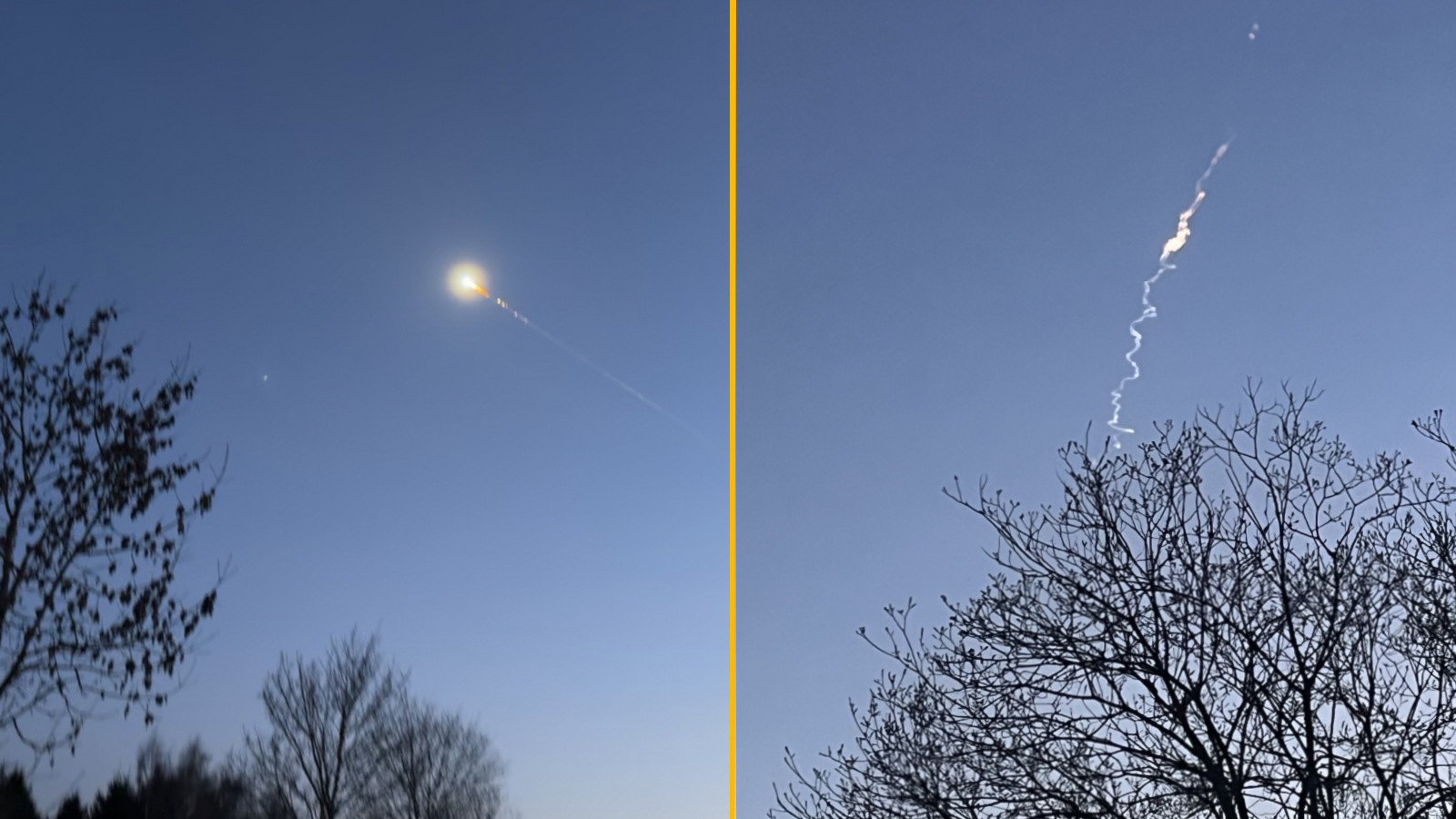
It is unclear how many buildings were hit by the extraterrestrial debris or what the total extent of the damage is. However, German news site Bild shared several photos from the town, which is home to around 110,000 people, including an image of a hole around the size of a soccer ball in one roof. The local fire department told Bild that the rock that punched this hole ended up in a bedroom, which was unoccupied at the time.
Another photo showed nine golf ball-size rocks in a brown paper bag. However, it is unclear if these were all of the fragments that were collected, and they are yet to be confirmed as true meteorites.
Sign up for the Live Science daily newsletter nowContact me with news and offers from other Future brandsReceive email from us on behalf of our trusted partners or sponsorsBy submitting your information you agree to the Terms & Conditions and Privacy Policy and are aged 16 or over.Fireball meteors occur when falling space rocks are superheated due to high levels of friction from the surrounding air, according to the American Meteor Society. This often causes the object to break apart, which creates a secondary bright flash (as seen in the latest video).
Most of the resulting fragments burn up before they hit the ground or are so small that they are never found. But occasionally, a few larger pieces can remain intact before impacting our planet's surface, especially when the fireball breaks apart close to the ground.
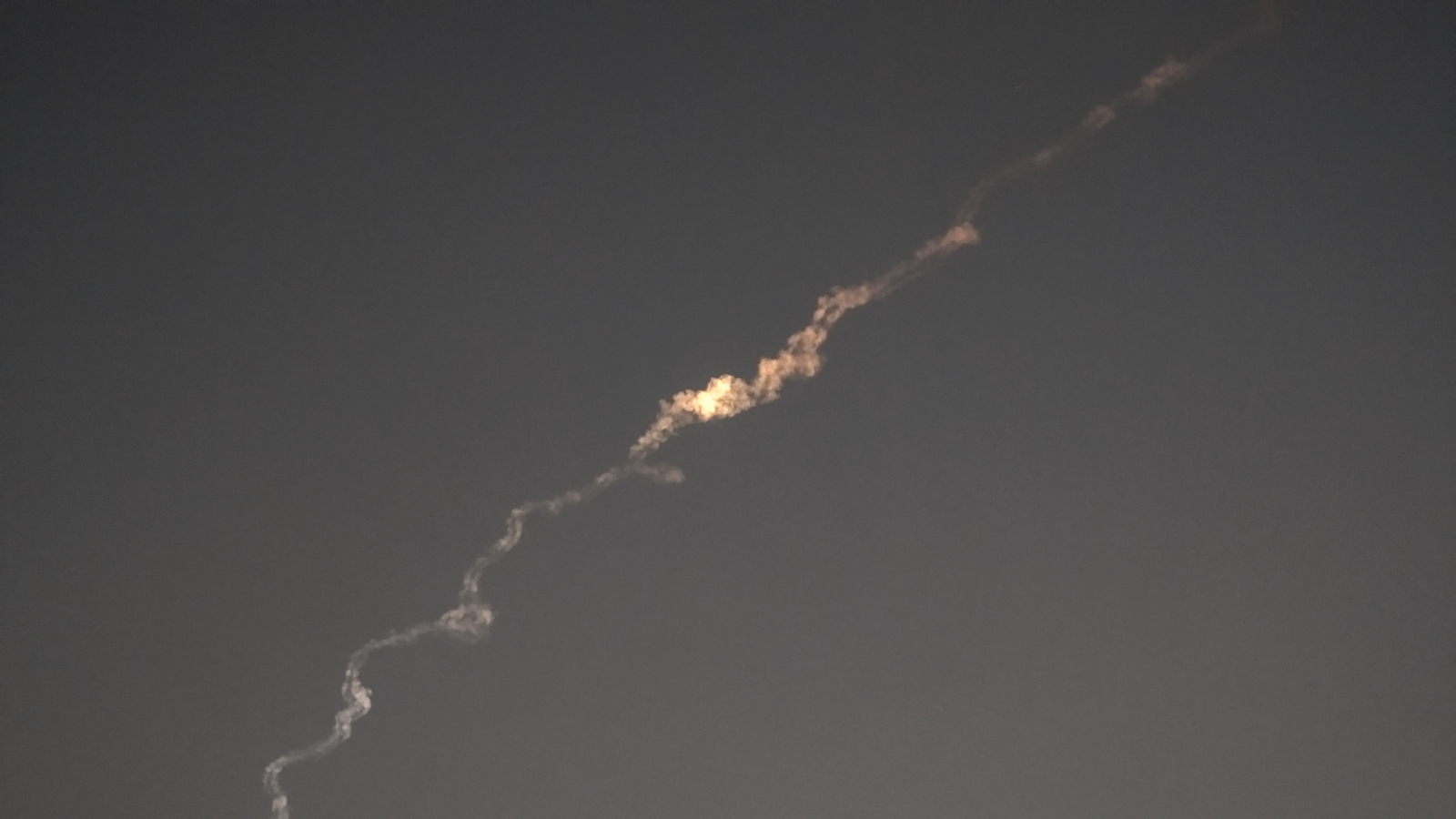
The space rock that exploded over Germany was not known to scientists before it entered Earth's atmosphere. But this is "not unusual," given that only 11 meteors have ever been detected prior to hitting our planet, according to ESA.
What to read next-
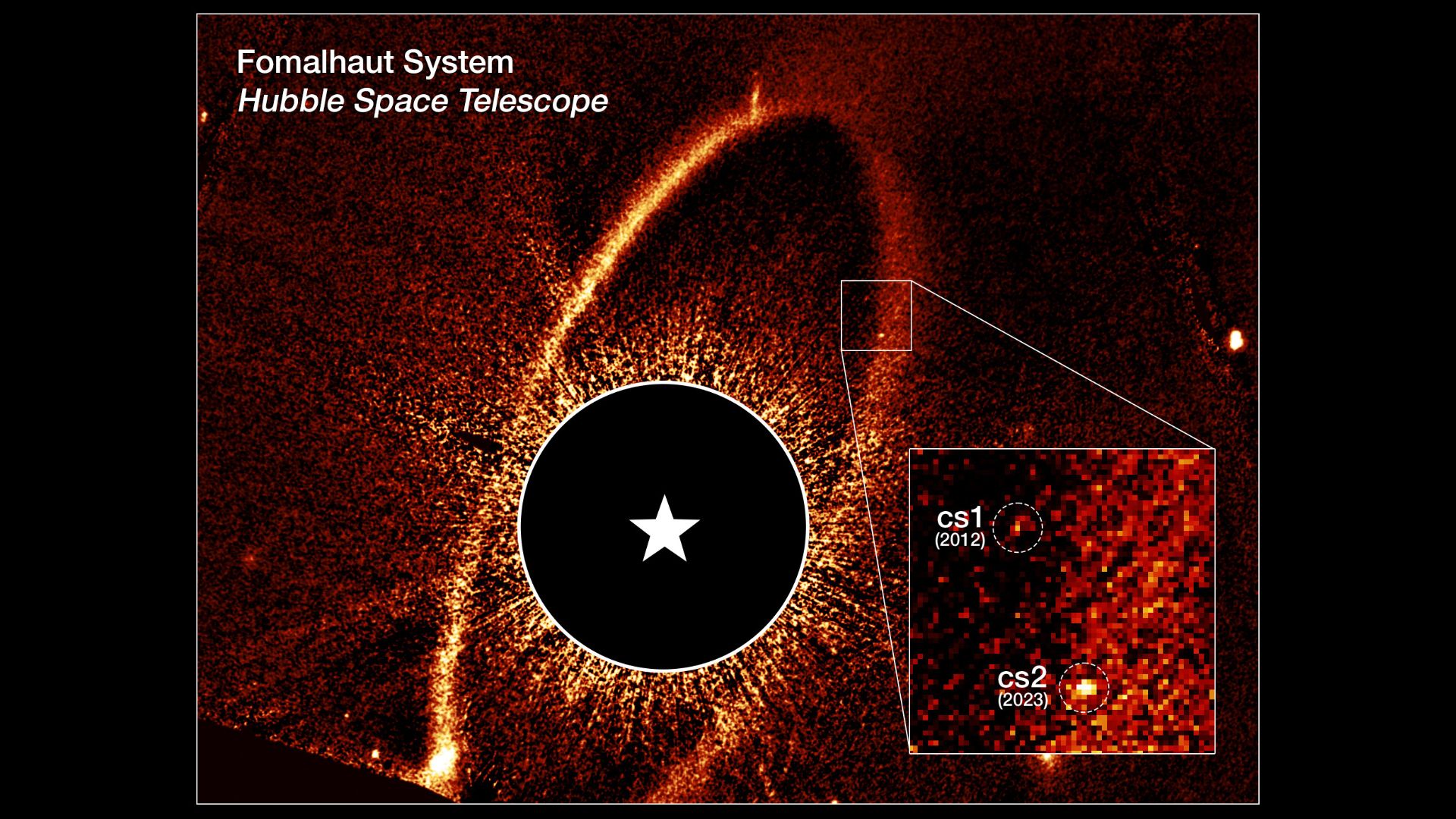 'Unprecedented' protoplanet collision spotted in 'Eye of Sauron' star system just 25 light-years from Earth
-
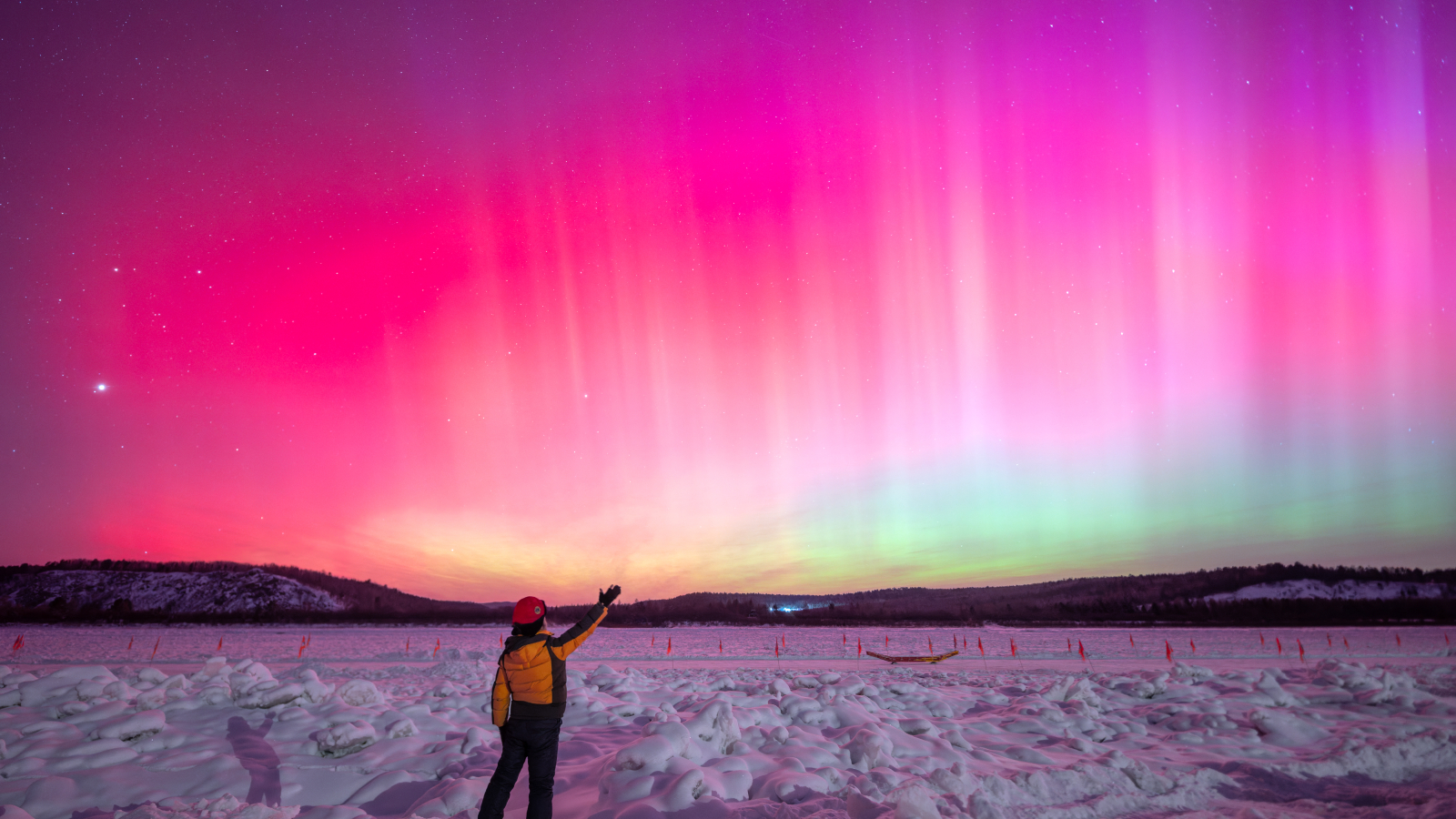 Earth hit by biggest 'solar radiation storm' in 23 years, triggering Northern Lights as far as Southern California
-
 Impossibly powerful 'ghost particle' that hit Earth may have come from an exploding black hole
Other close calls
It is extremely rare for meteorites to land in populated areas, let alone impact property or people. But it has happened before.
In June last year, a space rock that punched a hole through the roof of a home in Georgia and was later discovered to be older than Earth. Similar incidents have also seen meteorites crash into the bedrooms of homes in New Jersey in 2023 and British Columbia in 2021. And in 2022, a house in California burned down after being hit by a suspected fireball fragment — although it remains unclear if this was the true cause of the fire.
RELATED STORIES—100,000 mph 'comet fragment' explodes in green fireball over Great Lakes, eerie videos show
—Asteroid slams into Earth triggering stunning green 'fireball' above the Philippines — 8 hours after it was 1st spotted
—Rare green fireball explodes over Australia, creating bright flash visible for hundreds of miles
A tiny space rock also landed on and scorched a driveway in southwest England in 2021 and was collected for analysis. A similar encounter was filmed on a doorbell camera at a Canadian house in January 2025, which also captured the first-ever sound of a meteorite impact.
And in 2023, a French woman is believed to have been directly hit by a pebble-size meteorite while drinking coffee on her front porch, without causing any real injury. This is thought to be only the second confirmed case of a human-meteorite impact, after an Alabama woman was hit and injured by a hefty rock that crashed through her roof as she slept in 1954, according to Smithsonian Magazine.
 Harry BakerSocial Links NavigationSenior Staff Writer
Harry is a U.K.-based senior staff writer at Live Science. He studied marine biology at the University of Exeter before training to become a journalist. He covers a wide range of topics including space exploration, planetary science, space weather, climate change, animal behavior and paleontology. His recent work on the solar maximum won "best space submission" at the 2024 Aerospace Media Awards and was shortlisted in the "top scoop" category at the NCTJ Awards for Excellence in 2023. He also writes Live Science's weekly Earth from space series.
View MoreYou must confirm your public display name before commenting
Please logout and then login again, you will then be prompted to enter your display name.
Logout Read more
Asteroid 2024 YR4's collision with the moon could create a flash visible from Earth
Newly visible, city-size 'green comet' will soon be ejected into interstellar space — just like 3I/ATLAS
City-size, cold-volcano comet transforms into a glowing 'snail shell' after major explosive outburst
'Unprecedented' protoplanet collision spotted in 'Eye of Sauron' star system just 25 light-years from Earth
Earth hit by biggest 'solar radiation storm' in 23 years, triggering Northern Lights as far as Southern California
Impossibly powerful 'ghost particle' that hit Earth may have come from an exploding black hole
Latest in Meteoroids
 Ursid meteor shower 2025: When and where to see 'shooting stars' on the longest night of the year
 See up to 150 'shooting stars' per hour this weekend as the Geminid meteor shower reaches its stunning peak
 100,000 mph 'comet fragment' explodes in green fireball over Great Lakes, eerie videos show
 This week's Leonid meteor shower could be one of the best in years. Here's why.
 Orionids 2025: Meteor shower caused by Halley's Comet peaks as two new comets cross the sky
 Dramatic 'fireballs' expected during Draconid meteor shower this week: How to get the best views
Latest in News
Dramatic 'fireballs' expected during Draconid meteor shower this week: How to get the best views
Latest in News
 Falling meteorite smashes hole in roof of German house after spectacular 'fireball' explosion over Europe
 2,000-year-old Phoenician coin was used as bus fare in England, but 'how it got there will always be a mystery'
 Wildfire season is shifting, but its new time windows vary across Canada and the US drought-prone West
 In people with epilepsy, sleeping after a seizure may trigger more seizures
 World's smallest QR code can store data for thousands of years — but you need an electron microscope to see it
 'The warming trend nearly doubled after 2014': The rate of global warming has accelerated more in the past decade than ever before
LATEST ARTICLES
'The warming trend nearly doubled after 2014': The rate of global warming has accelerated more in the past decade than ever before
LATEST ARTICLES 1Gemstone-filled river and striped mountain ridge form massive 'Y' in China's revitalized desert
- 2Exotic prime numbers could be hiding inside black holes
- 32,000-year-old Phoenician coin was used as bus fare in England, but 'how it got there will always be a mystery'
- 4In people with epilepsy, sleeping after a seizure may trigger more seizures
- 5Wildfire season is shifting, but its new time windows vary across Canada and the US drought-prone West