- Archaeology
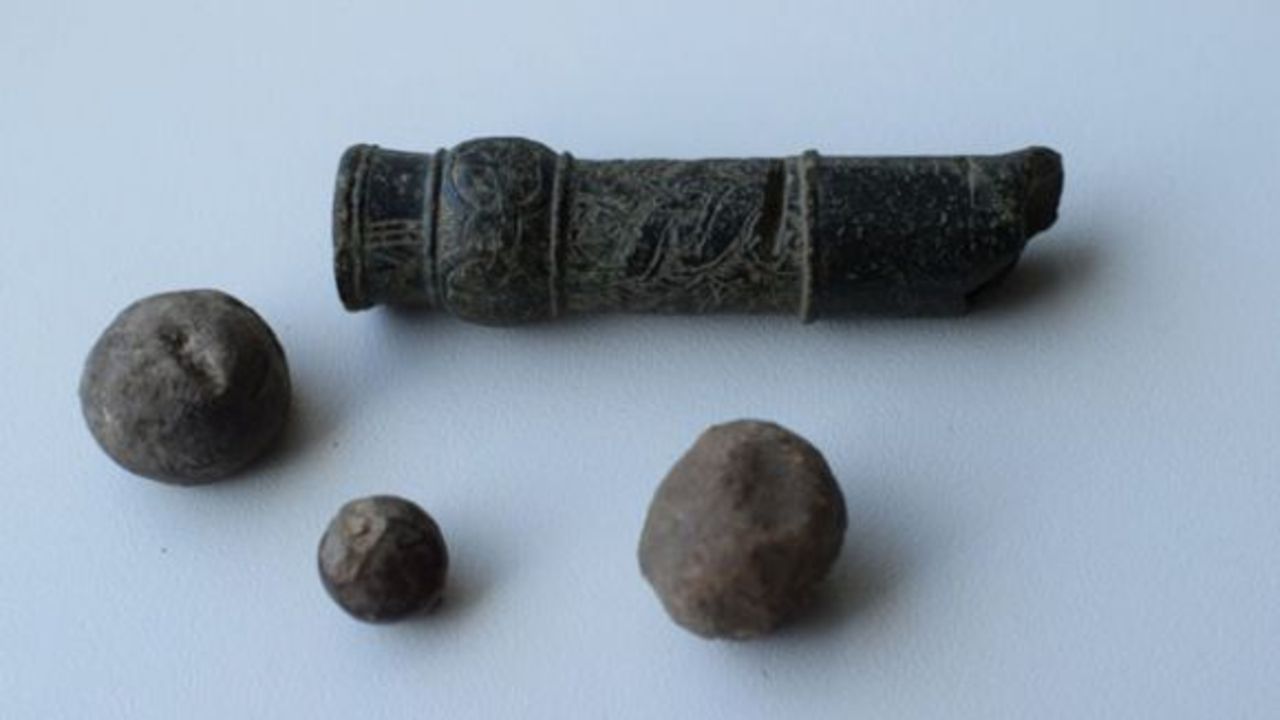
The discovery of a handgun from 1390 found in Germany reveals that portable firearms were used earlier than thought in late medieval Europe.
When you purchase through links on our site, we may earn an affiliate commission. Here’s how it works.
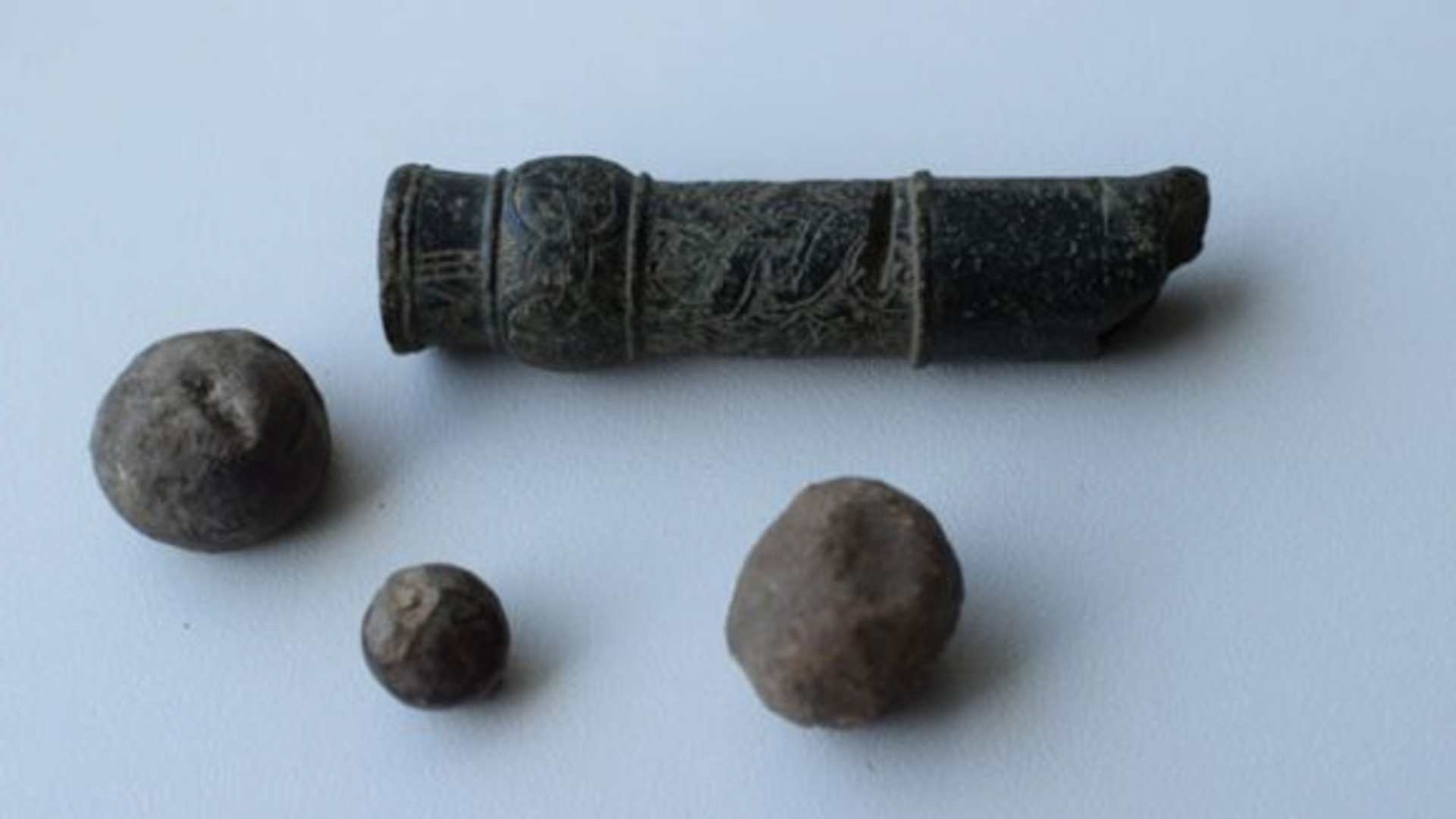 A fragment of the handgun found in 2023.
(Image credit: Prignitz District)
A fragment of the handgun found in 2023.
(Image credit: Prignitz District)
- Copy link
- X
Get the world’s most fascinating discoveries delivered straight to your inbox.
Become a Member in Seconds
Unlock instant access to exclusive member features.
Contact me with news and offers from other Future brands Receive email from us on behalf of our trusted partners or sponsors By submitting your information you agree to the Terms & Conditions and Privacy Policy and are aged 16 or over.You are now subscribed
Your newsletter sign-up was successful
Want to add more newsletters?

Delivered Daily
Daily Newsletter
Sign up for the latest discoveries, groundbreaking research and fascinating breakthroughs that impact you and the wider world direct to your inbox.
Signup +
Once a week
Life's Little Mysteries
Feed your curiosity with an exclusive mystery every week, solved with science and delivered direct to your inbox before it's seen anywhere else.
Signup +
Once a week
How It Works
Sign up to our free science & technology newsletter for your weekly fix of fascinating articles, quick quizzes, amazing images, and more
Signup +
Delivered daily
Space.com Newsletter
Breaking space news, the latest updates on rocket launches, skywatching events and more!
Signup +
Once a month
Watch This Space
Sign up to our monthly entertainment newsletter to keep up with all our coverage of the latest sci-fi and space movies, tv shows, games and books.
Signup +
Once a week
Night Sky This Week
Discover this week's must-see night sky events, moon phases, and stunning astrophotos. Sign up for our skywatching newsletter and explore the universe with us!
Signup +Join the club
Get full access to premium articles, exclusive features and a growing list of member rewards.
Explore An account already exists for this email address, please log in. Subscribe to our newsletterFragments of an early handgun found in Brandenburg, Germany, could be from Europe's oldest known portable gunpowder weapon, according to new research.
The artifact, which is about 2 inches (6 centimeters) long, may date to 1390. If so, it would be nine years older than the famous Tannenberg rifle, which dates to 1399 and is widely considered the oldest handheld firearm in Europe.
Article continues below You may like-
 2,400-year-old fingerprint from mysterious sea raider found preserved on Scandinavia's oldest plank boat
-
 60,000-year-old poison arrows from South Africa are the oldest poison weapons ever discovered
-
 Man in Czech Republic accidentally finds Bronze Age spearhead mold in his backyard
In 2023, Matthias Dasse, a volunteer heritage conservationist, discovered the handgun fragments during a field survey near Kletzke Castle in the Brandenburg region of Germany. Dasse took the pieces to Gordon Thalmann, head of the Lower Monument Protection Authority of Prignitz, who identified the bronze casting as the barrel of an early firearm.
Researchers have nicknamed the artifact the "Kletzker Handrohr," which translates to "Kletzke hand cannon," because they believe it may be linked to the famed siege of Kletzke Castle in 1390, when the stronghold became the focus of a regional conflict in Brandenburg. According to a surviving account from Franciscan monk Detmar of Lübeck, two dukes led 1,100 men in a march against the castle, which was held by the powerful von Quitzow family. The defenders managed to secure the castle and drive off the attackers. The castle was later renovated in the centuries that followed.
RELATED STORIES—Was medieval armor bulletproof?
—Mysterious ceramic jars may actually be 900-year-old Crusader hand grenades
—Oldest firearms ever found in US were abandoned by Spanish in 16th-century battle against Native Americans
If the link between the siege and the Kletzke hand cannon is confirmed, the object would provide rare physical evidence of early firearms that began to appear in late medieval warfare.
Krauskopf noted, however, that the Kletzke hand cannon was likely not made locally and may have been brought in by outside attackers.
Sign up for the Live Science daily newsletter nowContact me with news and offers from other Future brandsReceive email from us on behalf of our trusted partners or sponsorsBy submitting your information you agree to the Terms & Conditions and Privacy Policy and are aged 16 or over.The findings were presented Feb. 27 at the annual conference of the State Archaeology Department. Krauskopf plans to continue studying the fragments while Brandenburg authorities work to develop the Kletzke site for archaeological tourism.
 Kenna Hughes-CastleberryContent Manager, Live Science
Kenna Hughes-Castleberry is the Content Manager at Live Science. Formerly, she was the Content Manager at Space.com and before that the Science Communicator at JILA, a physics research institute. Kenna is also a book author, with her upcoming book 'Octopus X' scheduled for release in spring of 2027. Her beats include physics, health, environmental science, technology, AI, animal intelligence, corvids, and cephalopods.
View MoreYou must confirm your public display name before commenting
Please logout and then login again, you will then be prompted to enter your display name.
Logout Read more
2,400-year-old fingerprint from mysterious sea raider found preserved on Scandinavia's oldest plank boat
60,000-year-old poison arrows from South Africa are the oldest poison weapons ever discovered
Man in Czech Republic accidentally finds Bronze Age spearhead mold in his backyard
 Subterranean tunnel, possibly used for medieval cult rituals, discovered in Stone Age tomb in Germany
 430,000-year-old wooden handheld tools from Greece are the oldest on record — and they predate modern humans
 480,000-year-old ax sharpener is the oldest known elephant bone tool ever discovered in Europe
Latest in Archaeology
Man in Czech Republic accidentally finds Bronze Age spearhead mold in his backyard
480,000-year-old ax sharpener is the oldest known elephant bone tool ever discovered in Europe
Latest in Archaeology
Man in Czech Republic accidentally finds Bronze Age spearhead mold in his backyard
 Pre-Inca culture acquired Amazonian parrots from hundreds of miles away to use their feathers to decorate the dead, new analysis reveals
 2,000-year-old Phoenician coin was used as bus fare in England, but 'how it got there will always be a mystery'
 'Cikai Korran came here and saw': Visitors from India graffitied dozens of Egyptian tombs 2,000 years ago
 The sword in the sea: How one lucky graduate student found his second Crusader sword while taking a swim off Israel's coast
 Climate disasters caused societal upheaval 3,000 years ago in China, study of 'oracle bones' hints
Latest in News
Climate disasters caused societal upheaval 3,000 years ago in China, study of 'oracle bones' hints
Latest in News
 Scientists squished microbes into a steel 'sandwich' — and made a profound discovery about life in space
Man in Czech Republic accidentally finds Bronze Age spearhead mold in his backyard
Scientists squished microbes into a steel 'sandwich' — and made a profound discovery about life in space
Man in Czech Republic accidentally finds Bronze Age spearhead mold in his backyard
 Universe-shaking collision of black hole and neutron star could upend our understanding of monster cosmic mergers
 Vernal equinox 2026: When is the first day of spring?
Pre-Inca culture acquired Amazonian parrots from hundreds of miles away to use their feathers to decorate the dead, new analysis reveals
Vernal equinox 2026: When is the first day of spring?
Pre-Inca culture acquired Amazonian parrots from hundreds of miles away to use their feathers to decorate the dead, new analysis reveals
 1,300-pound spacecraft will crash to Earth today following intense solar activity, NASA warns
LATEST ARTICLES
1,300-pound spacecraft will crash to Earth today following intense solar activity, NASA warns
LATEST ARTICLES- 1Man in Czech Republic accidentally finds Bronze Age spearhead mold in his backyard
- 2'It's nature calling to humans, and humans deciding whether or not to reply': Why we need to start paying attention to our mutually beneficial relationships with other species
- 3Diagnostic dilemma: Woman born without a vagina or cervix went on to conceive a son naturally
- 4Universe-shaking collision of black hole and neutron star could upend our understanding of monster cosmic mergers
- 5Vernal equinox 2026: When is the first day of spring?