- Archaeology
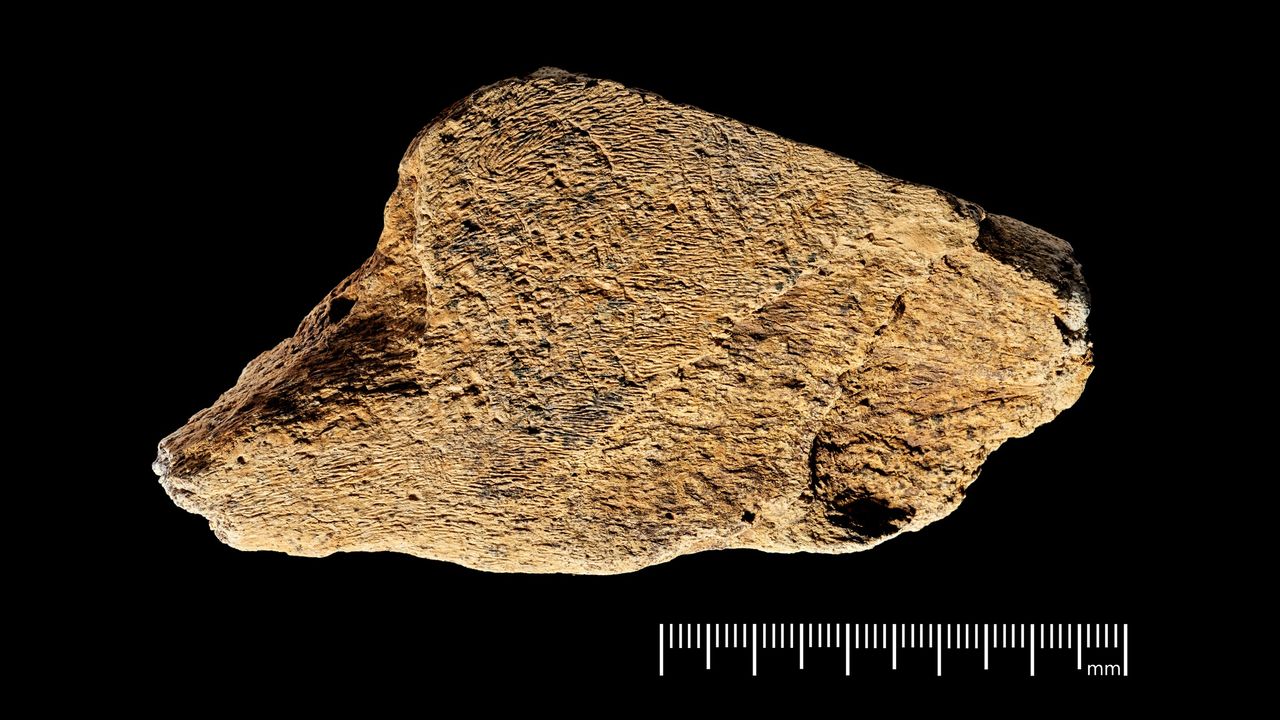
The "very rare" find provides an extraordinary glimpse into the ingenuity of early human relatives who lived around half a million years ago.
When you purchase through links on our site, we may earn an affiliate commission. Here’s how it works.
 The 480,000-year-old elephant bone tool was discovered at the Boxgrove archaeological site in the United Kingdom.
(Image credit: NHM Photo Unit)
Share
Share by:
The 480,000-year-old elephant bone tool was discovered at the Boxgrove archaeological site in the United Kingdom.
(Image credit: NHM Photo Unit)
Share
Share by:
- Copy link
- X
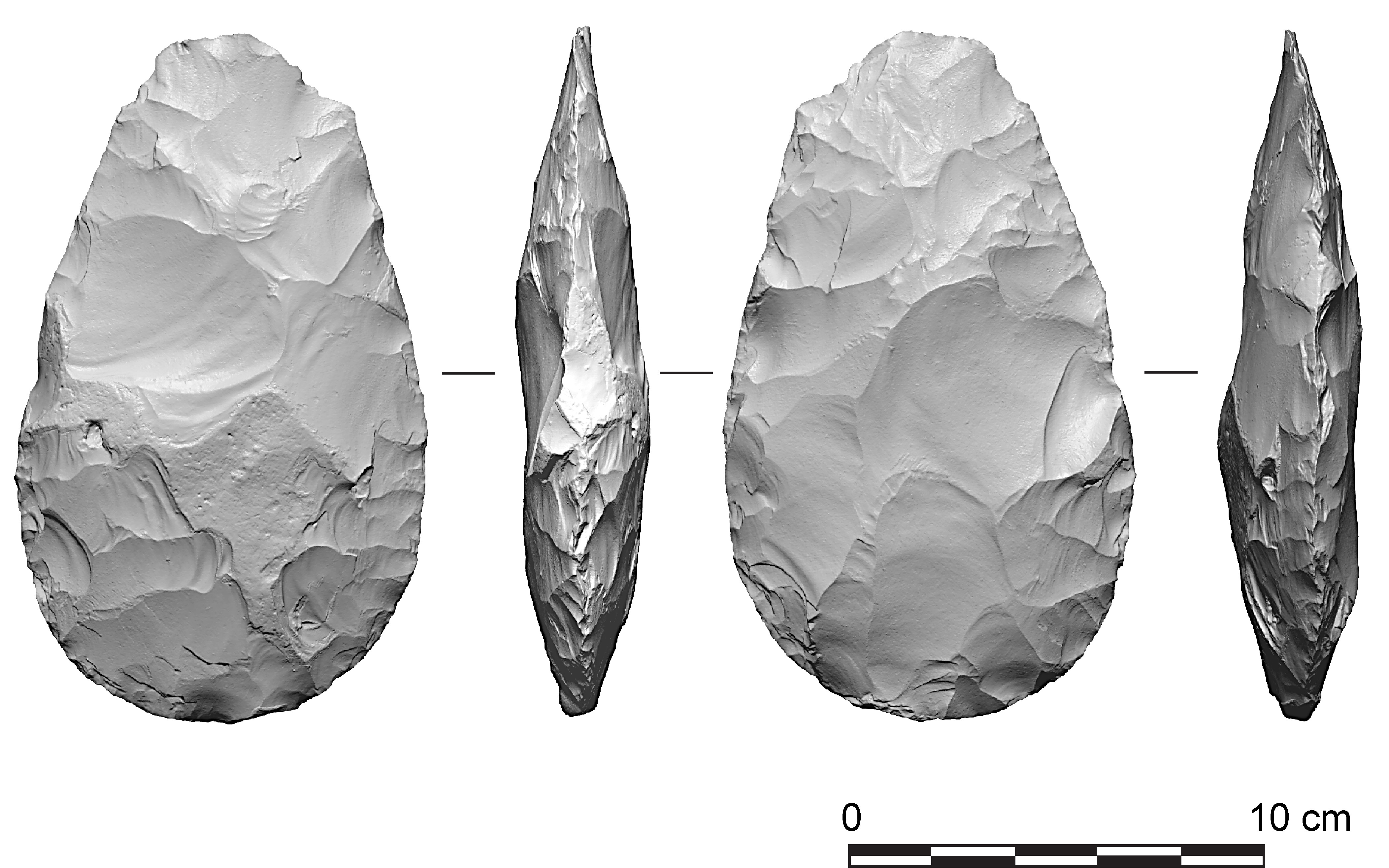
A triangular artifact crafted from elephant bone was used by archaic human relatives to sharpen hand axes around 480,000 years ago in what is now the U.K., a new analysis reveals.
The item — which measures about 4.3 by 2.3 inches (10.9 by 5.8 centimeters) — represents the oldest known elephant bone tool ever found in Europe, according to the study, which was published Wednesday (Jan. 21) in the journal Science Advances, and demonstrates human relatives' high level of resourcefulness and ability to adapt to new environments as they settled in northern climates.
You may like-
 'It is the most exciting discovery in my 40-year career': Archaeologists uncover evidence that Neanderthals made fire 400,000 years ago in England
-
 18,000 years ago, ice age humans built dwellings out of mammoth bones in Ukraine
-
 2.6 million-year-old jaw from extinct 'Nutcracker Man' is found where we didn't expect it
The "unexpected" find of one of the world's oldest elephant bone tools indicates a relatively advanced level of technological development, thus highlighting the innovation, resourcefulness and craftsmanship of archaic human relatives almost half a million years ago, the researchers said in the study.
While the researchers are unsure which group of human relatives used the elephant tool, given the age of the tool and the location where it was found, two candidates are early Neanderthals or Homo heidelbergensis, Bello told Live Science in an email.
The tool "provides an extraordinary glimpse into the ingenuity of the early human ancestors who made it," Bello said.
The fossilized bone artifact was originally uncovered in the early 1990s during excavations at the archaeological site of Boxgrove in southern England. This internationally renowned site has yielded many finds that have shed light on Paleolithic life around half a million years ago. These include various bone and stone tools, numerous animal remains displaying signs of butchery, and even the oldest human remains ever found in Britain.
Sign up for the Live Science daily newsletter nowContact me with news and offers from other Future brandsReceive email from us on behalf of our trusted partners or sponsorsBy submitting your information you agree to the Terms & Conditions and Privacy Policy and are aged 16 or over.

The significance of the bone artifact was not immediately apparent. But a recent analysis of the artifact conducted by Bello and her co-author Simon Parfitt, an archaeologist at the Institute of Archaeology at University College London, revealed that the artifact represents an elephant bone fragment deliberately shaped into a "retoucher" tool.
Retouchers were used to shape and resharpen the edges of hand axes. The elephant bone retoucher would have contributed to the production of the "finely worked" hand axes that were thought to have been used primarily as cutting tools and are typical of Boxgrove, according to the study.
"The elephant bone tool shows signs of being shaped and used to knap and re-sharpen lithic tools while the bone was still fresh, suggesting that these humans knew that elephant bone was a great material for this," Bello said.
You may like-
'It is the most exciting discovery in my 40-year career': Archaeologists uncover evidence that Neanderthals made fire 400,000 years ago in England
-
18,000 years ago, ice age humans built dwellings out of mammoth bones in Ukraine
-
2.6 million-year-old jaw from extinct 'Nutcracker Man' is found where we didn't expect it
The find represents the only documented case of elephant bone being used to make a retoucher, according to the researchers. Knapping tools made from organic materials such as bone, antler and wood were essential pieces of equipment for early humans but are rarely preserved in the archaeological record.
—1.5 million-year-old bone tools crafted by human ancestors in Tanzania are oldest of their kind
—'Giant' 300,000-year-old hand ax found in England may have been used for prehistoric butchery
—Fossil Forest, Dorset: England's 145 million-year-old tree stump fossils preserved by ancient microbes
Furthermore, prehistoric elephant bone remains are "exceptionally rare" at Boxgrove, suggesting that archaic humans in the area came across this resource infrequently, the study authors noted. Nonetheless, it appears that the creators of the tool recognized the usefulness of the material.
"This remarkable discovery showcases the resourcefulness of our ancient relatives," Parfitt told Live Science in an email. "They possessed not only a deep knowledge of the local materials around them, but also a sophisticated understanding of how to craft highly refined stone tools."
"Elephant bone would have been a rare but highly useful resource, and it's likely this was a tool of considerable value," he said in a statement.
Article SourcesParfitt, S.A., Bello, S.M. The earliest elephant-bone tool from Europe: An unexpected raw material for precision knapping of Acheulean handaxes. Science Advances 12(4) (2026). https://doi.org/10.1126/sciadv.ady1390
Human evolution quiz: What do you know about Homo sapiens?
 Aristos GeorgiouSocial Links NavigationLive Science Contributor
Aristos is a freelance science reporter who has previously worked for Newsweek, IBTimes UK and The World Weekly. He is particularly focused on archaeology and paleontology, although he has covered a wide variety of topics ranging from astronomy and mental health, to geology and the natural world. He holds a joint bachelor's degree in English and history from the University of Nottingham, and a master's from City St George's, University of London.
Show More CommentsYou must confirm your public display name before commenting
Please logout and then login again, you will then be prompted to enter your display name.
Logout Read more 'It is the most exciting discovery in my 40-year career': Archaeologists uncover evidence that Neanderthals made fire 400,000 years ago in England
 18,000 years ago, ice age humans built dwellings out of mammoth bones in Ukraine
 2.6 million-year-old jaw from extinct 'Nutcracker Man' is found where we didn't expect it
 Last common ancestor of modern humans and Neanderthals possibly found in Casablanca, Morocco
 1.5 million-year-old Homo erectus face was just reconstructed — and its mix of old and new traits is complicating the picture of human evolution
 Most complete Homo habilis skeleton ever found dates to more than 2 million years ago and retains 'Lucy'-like features
Latest in Archaeology
Most complete Homo habilis skeleton ever found dates to more than 2 million years ago and retains 'Lucy'-like features
Latest in Archaeology
 People, not glaciers, transported rocks to Stonehenge, study confirms
 Some of the oldest harpoons ever found reveal Indigenous people in Brazil were hunting whales 5,000 years ago
 World's oldest rock art, giant reservoir found beneath the East Coast seafloor, black hole revelations, and a record solar radiation storm
 5,500-year-old human skeleton discovered in Colombia holds the oldest evidence yet that syphilis came from the Americas
2.6 million-year-old jaw from extinct 'Nutcracker Man' is found where we didn't expect it
5,500-year-old human skeleton discovered in Colombia holds the oldest evidence yet that syphilis came from the Americas
2.6 million-year-old jaw from extinct 'Nutcracker Man' is found where we didn't expect it
 2,400-year-old Hercules shrine and elite tombs discovered outside ancient Rome's walls
Latest in News
480,000-year-old ax sharpener is the oldest known elephant bone tool ever discovered in Europe
2,400-year-old Hercules shrine and elite tombs discovered outside ancient Rome's walls
Latest in News
480,000-year-old ax sharpener is the oldest known elephant bone tool ever discovered in Europe
 'Pain sponge' derived from stem cells could soak up pain signals before they reach the brain
 An ocean the size of the Arctic once covered half of Mars, new images hint
 Arctic blast probably won't cause trees to explode in the cold — but here's what happens if and when they do go boom
 Wegovy now comes in pill form — here's how it works
 AI can develop 'personality' spontaneously with minimal prompting, research shows. What does that mean for how we use it?
LATEST ARTICLES
AI can develop 'personality' spontaneously with minimal prompting, research shows. What does that mean for how we use it?
LATEST ARTICLES- 1AI can develop 'personality' spontaneously with minimal prompting, research shows. What does that mean for how we use it?
- 2World's oldest rock art, giant reservoir found beneath the East Coast seafloor, black hole revelations, and a record solar radiation storm
- 3Why the rise of humanoid robots could make us less comfortable with each other
- 4Why don't you usually see your nose?
- 5People, not glaciers, transported rocks to Stonehenge, study confirms

